Good outdoor lighting is not measured by the number of fittings installed or by how bright a property looks from the street. It is measured by whether someone can find the gate, notice a change in level, unlock the door and walk along a route without visual discomfort. In a house, apartment building or small condominium, this should be planned before choosing fittings: light should guide, reveal hazards and make an arrival feel welcoming, without turning the façade into a stage set.
The common mistake is a powerful, unshielded front-facing light. It produces a bright patch near the fitting, leaves other areas in shadow and may dazzle people arriving on foot, by car or along the public pavement. A more effective solution is quieter: light aimed at the ground, consistent levels between adjacent areas, suitable controls and outdoor-rated materials designed for rain, dust and maintenance. It should be coordinated with decisions about non-slip outdoor flooring, drainage and accessible movement.
Start with the actual route, not the catalogue
Before selecting products, walk the approach after dark or simulate it with a torch. Mark where a person changes direction, passes through a gate, reaches a stair, crosses a parking area or looks for a lock. These are the places that need visual information. A blank wall or a tree canopy does not need light simply because it appears decorative.
Make a simple map of the pedestrian entrance, vehicle entrance, letterbox, doorbell, house number, steps, ramps and changes in paving texture. Portugal’s accessibility rules underline the importance of safe, continuous and comfortable routes, including paths, ramps and stairs. Review the technical accessibility standards in Decree-Law No. 163/2006 where work affects access arrangements subject to those requirements.
At home, lighting cannot fix a poorly designed route. Uneven steps, slippery finishes, low obstacles or inadequate drainage must be addressed in the construction work. Lighting comes afterwards as a layer of wayfinding and safety, not as camouflage.
Build the scheme in layers
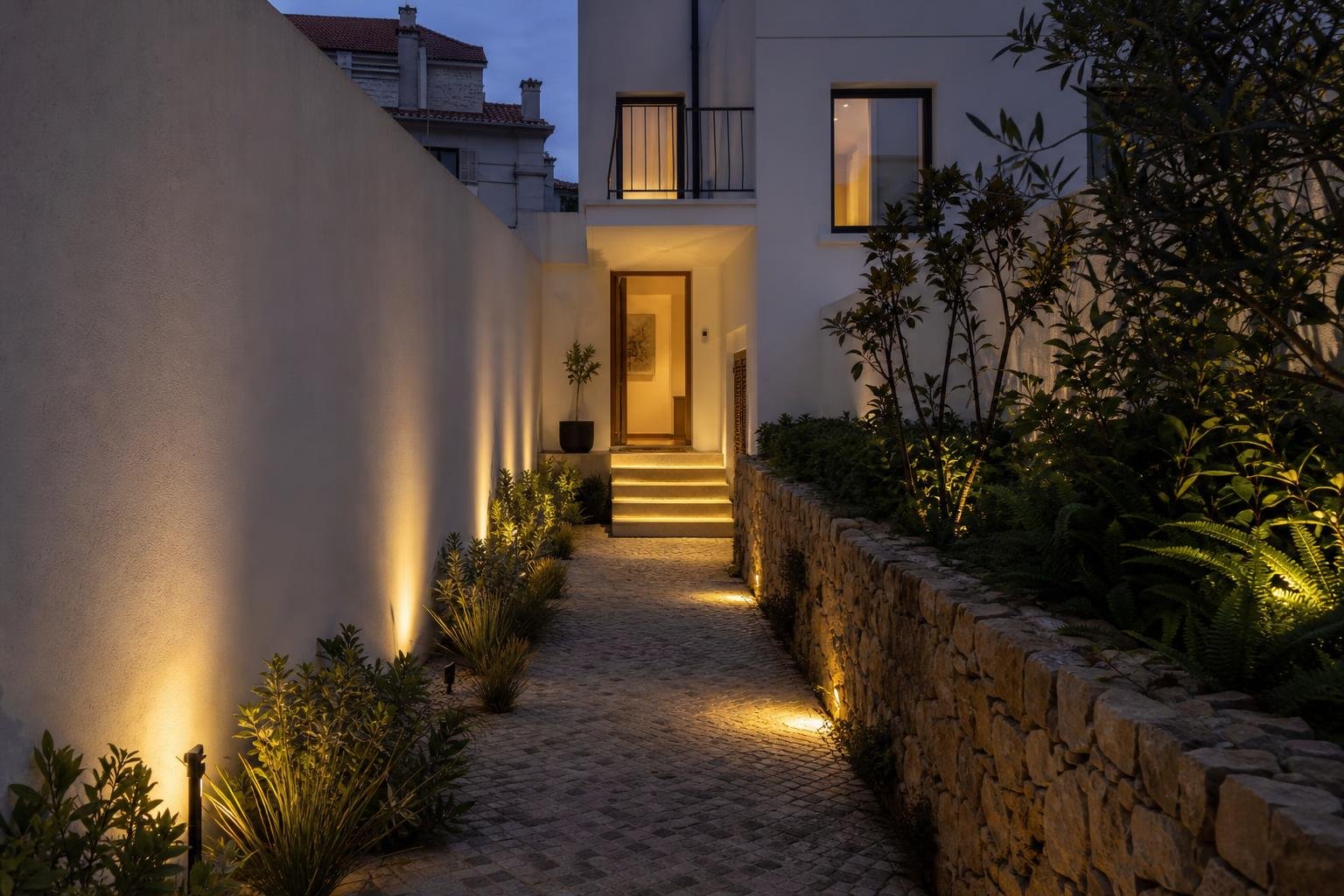
A balanced entrance usually combines three layers. The first is approach lighting, helping people recognise the route from the site boundary or parking space. The second is circulation lighting, lower and more continuous, for paths, landings and stairs. The third is task lighting, placed at the door, lock, intercom or letterbox.
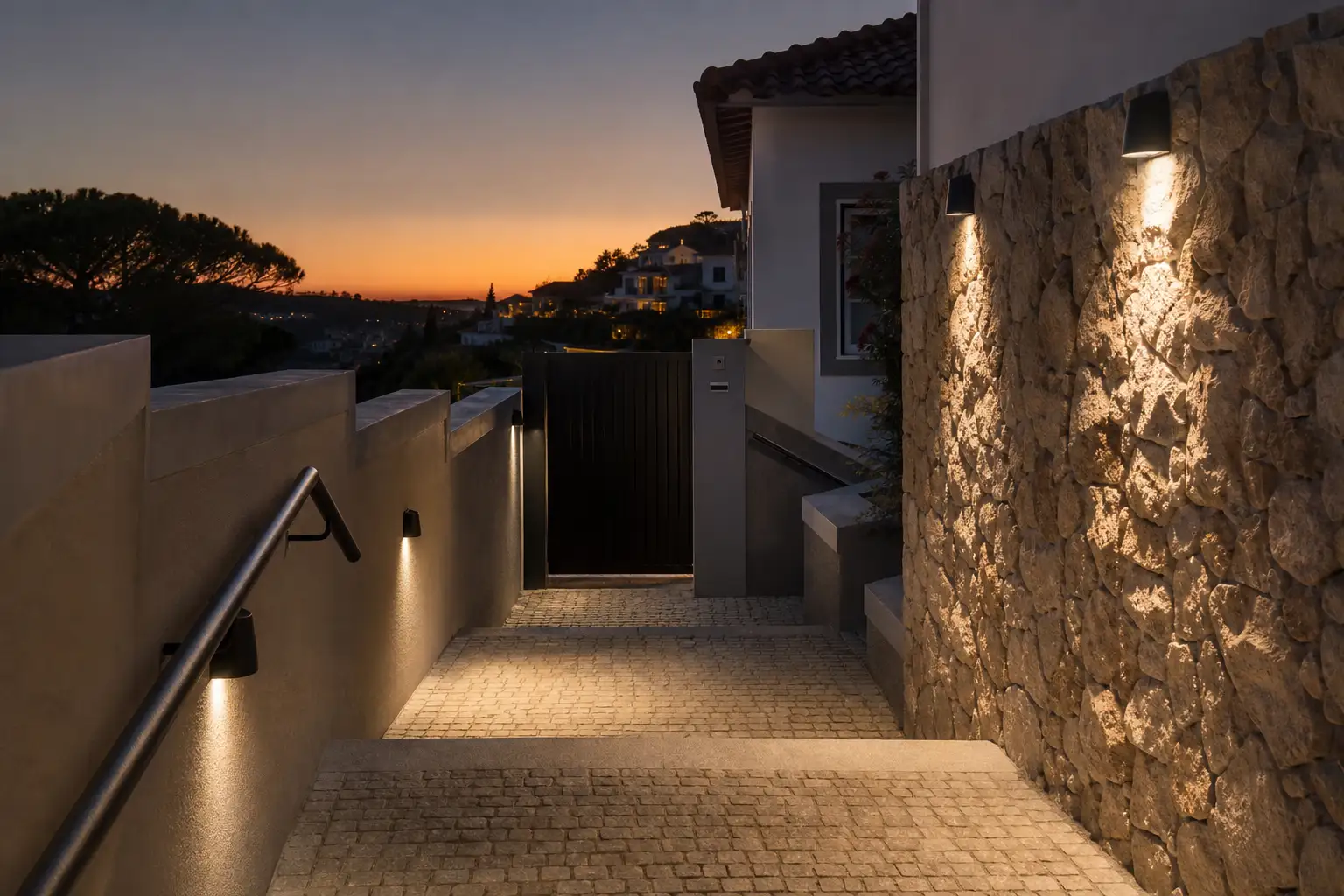
Rather than one powerful floodlight above the entrance, use several lower-output fittings with controlled distribution. Low bollards can mark a turn; downward-facing wall lights can reveal both wall and ground; side lighting at the door makes faces, keys and controls easier to see. On stairs, light the beginning, end and every change of direction, while avoiding fittings that sit directly in the upward line of sight.
On longer routes, a calm sequence works better than abrupt jumps between brightness and darkness. People adapt to the overall scene, not to each individual fitting. Visual continuity should also follow the design of exterior guardrails and handrails, particularly where there are changes in level.
Prevent glare and unwanted spill light
If the lamp or LED module is clearly visible, the fitting is often badly positioned. Glare reduces contrast perception and makes it harder to identify steps, obstacles and irregularities in the surface. Choose luminaires with shielded optics, hoods or suitable diffusers; position them outside the normal sightline; and test them from the point of arrival, rather than only while facing the façade.
Light should not unnecessarily enter bedrooms, neighbouring properties or the public realm. Requirements vary according to the project, but a planning regulation published in Portugal’s official journal establishes a useful principle: lighting should not be intrusive or cause glare, and efficient equipment, LED technology and flow control should be favoured. See the technical framework on lighting, efficiency and luminous-flux control.
Avoid uplighters, exposed bulbs in low walls and fittings directed towards windows. They waste energy and create reflections on glass, metal and wet paving. A well-shielded fitting, installed precisely, will usually deliver a better result at lower wattage.
Choose colour temperature and colour rendering thoughtfully
For residential entrances, warm white or warm-neutral light often gives a more comfortable reading of stone, timber, render and planting. More important than following a trend is consistency: combining very yellow lamps with bluish ones along the same route makes the setting feel disjointed and can distort colour perception.
Select colour temperature after viewing the façade finishes at night. Pale stone, glossy tiles and polished metal reflect more light; dark or textured materials absorb it and may need a different fitting position rather than a more powerful lamp. Also check the fitting’s ingress-protection rating, corrosion resistance and whether it can be serviced without removing finishes.
Clear ground visibility matters especially where children, older residents or visitors use the route. The Portuguese Directorate-General of Health notes that falls are frequent accidents in childhood. Outdoors, reducing that risk depends on the combined effect of light, paving, handrails, drainage and a route free from objects.
Use controls that match how the home is used
Leaving every outdoor light on until morning may be convenient, but it is rarely the best arrangement. Controls should reflect each function. A dusk sensor can switch on a modest base level at nightfall; a timer limits operating hours; and a movement sensor can temporarily increase lighting at the door, gate or side path.
Do not install motion sensors without testing their angle and sensitivity. A badly aimed sensor can react to street traffic, moving branches or animals and turn security lighting into a continuous nuisance. Use low, steady welcome lighting where it is genuinely needed, and reserve brighter temporary light for tasks or localised risks.
Energy use should be assessed across the full system: wattage, number of fittings, operating hours, controls and maintenance. ADENE’s lighting calculator sets out the logic for estimating consumption, savings and payback when changing lighting systems, including outdoor lighting. For a home, that comparison helps prevent decisions based solely on purchase price.
Make the installation durable and maintainable
The appearance of a luminaire is no substitute for a sound installation. Before closing walls, boundary walls or paving, define cable routes, accessible junction boxes, control points, earthing arrangements where applicable and maintenance locations. In gardens, do not leave inaccessible connections buried in soil; near irrigation areas, protect cables and equipment from water and impact; and coordinate electrical outlets in walls with finishes and joints.
Plan periodic cleaning of diffusers, pruning of planting that blocks the light and checks of fixings. A dirty or partly covered luminaire loses performance, often leading to the mistaken belief that more wattage is required. It is also worth photographing the installation before surfaces are closed and keeping a record of fittings, drivers and compatible lamps.
If the work includes changes to paving, steps or drainage, coordinate everything from the beginning. You may also find our guide to outdoor stair grip, drainage and safety useful. A safe entrance results from several small decisions working together, particularly on wet nights.
Renovating an entrance, courtyard or building access route? Obra Lisboa can help turn circulation, safety, drainage and lighting needs into a coordinated construction plan, with solutions proportionate to the space and everyday use.
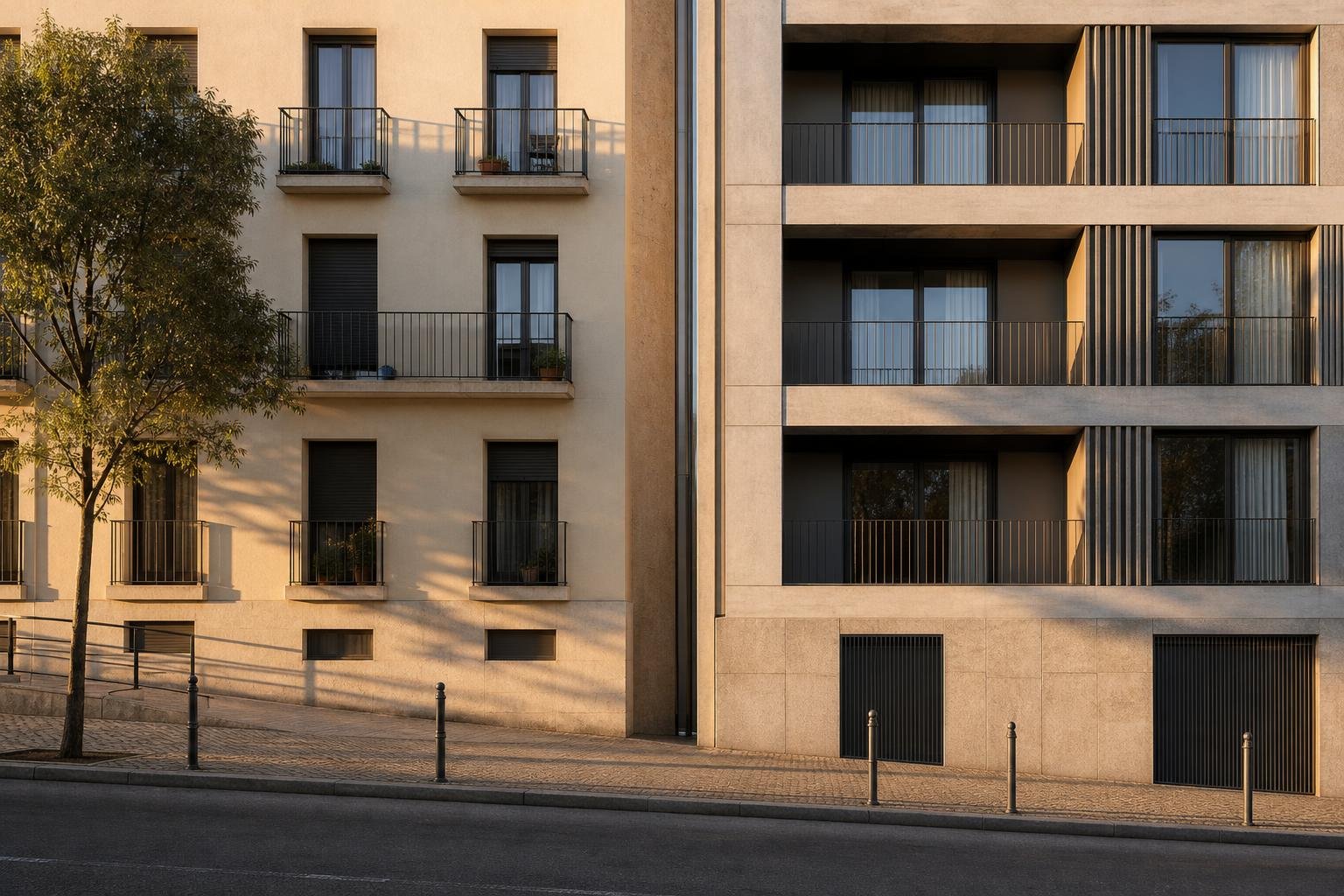
Editorial image; it does not depict an Obra Lisboa project.

Obra Lisboa