
In a small kitchen, a dog or cat bowl rarely stays where it should. It ends up beside the fridge, against the sink cabinet or in the middle of the route through the room. That is not only a visual problem. A poorly chosen spot catches splashes, blocks doors and drawers, collects crumbs and makes everyday cleaning slower.
A good arrangement treats feeding as a small working area within the kitchen. It needs water, simple cleaning, nearby storage and a stable position that does not interfere with meal preparation. The Portuguese Directorate-General of Health guidance on hygiene and protecting food from contact with animals supports a useful rule: keep bowls away from food-preparation surfaces and routes.
Choose a quiet place outside the kitchen work triangle
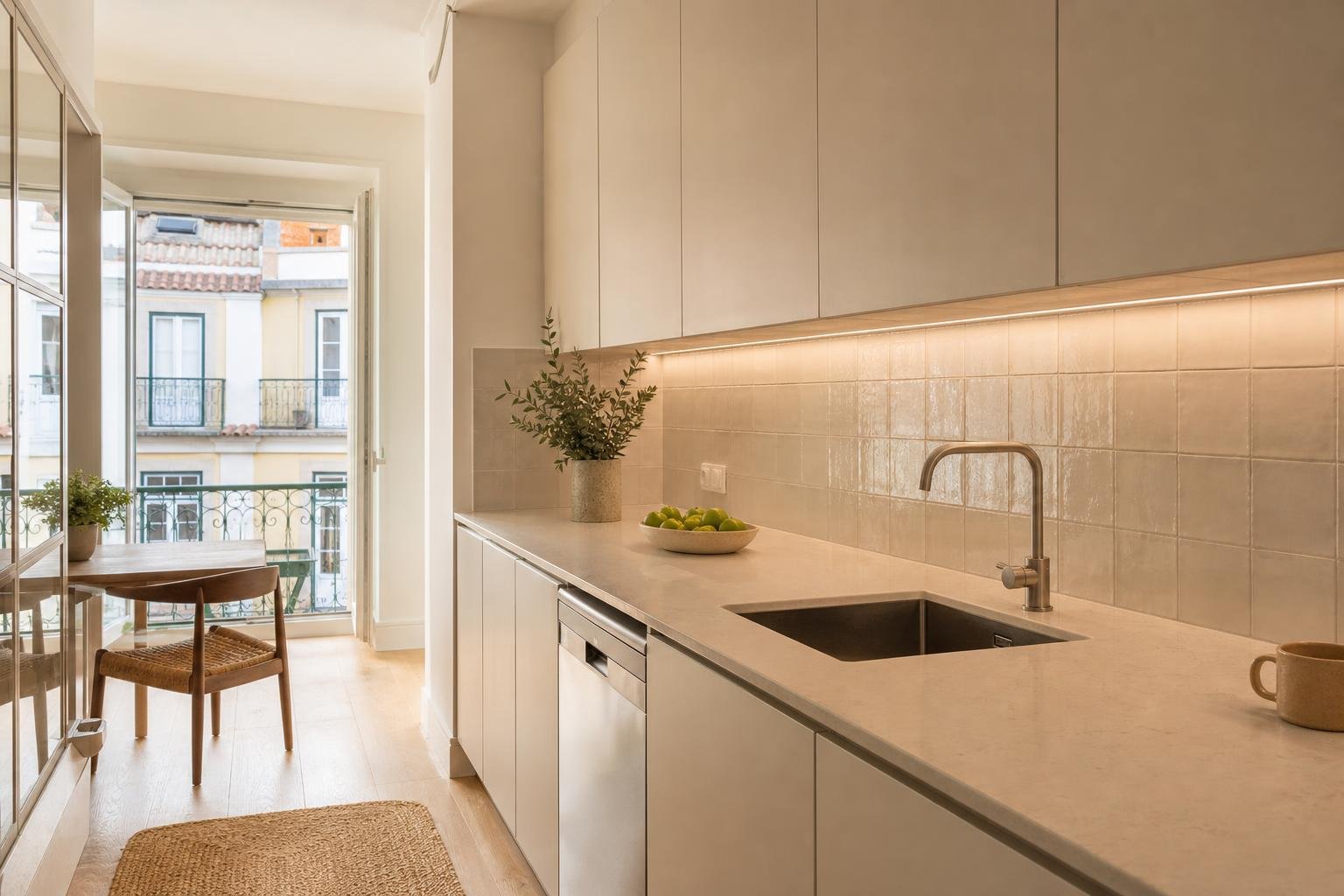
Start by watching three repeated movements: opening the fridge, using the sink and cooking. The pet zone should not sit inside that triangle. In a narrow Lisbon flat kitchen, a corner at the end of the run, a side wall near an enclosed balcony or the final stretch beside a tall unit will often work better than the gap between hob and sink.
Avoid four positions in particular: beneath cabinet doors that open downwards, beside the dishwasher, in front of cutlery drawers and in the passage between kitchen and living room. A bowl tight against the skirting may look discreet, but it becomes awkward when someone has to step around the animal while preparing dinner.
Keep a clear separation from worktops used for food, plates or shopping bags. The health guidance recommends clean surfaces and utensils and keeping food protected from animals. In practical terms, do not place bowls on a low worktop extension or in an open niche directly beside food preparation.
If you are redesigning the room, review kitchen planning first. A feeding area works only when it respects real door swings, drawers, appliances and routes.
Create a base that contains water, kibble and mess
The base should be larger than the combined footprint of the bowls. It catches water splashes, loose kibble and drips before they reach the floor or skirting. A rigid tray with a shallow edge is generally easier to wash than a thick textile mat; a washable mat can work well if it lies flat and does not move underfoot.
In kitchens with vinyl, floating timber or moisture-sensitive joints, do not rely solely on the claimed water resistance of the finish. Repeated water beside a joint or perimeter detail can stain it, lift an edge or reach the substrate. Keep the tray a few centimetres away from the wall so the area behind it can be cleaned and checked.
If renovation includes a new floor, favour a continuous, low-porosity surface that is easy to clean in this area. There is no need to create a decorative patchwork of finishes: too many material changes introduce more joints and more maintenance. In a home with pets, compare scratch resistance, comfort and cleaning before selecting the final surface.
A washable wall finish to a modest height behind the bowls can also be worthwhile, especially for enthusiastic drinkers. Tile, glass or paint intended for regular cleaning can all work; the key is not to place the tray against an already damaged skirting board.
Keep drinking water away from food preparation
Available water does not mean putting a bowl beside the sink. That is exactly where food remnants, detergents, washing-up and busy hands tend to be. Choose a position that is easy to refill but does not share the worktop or draining area.
In a very compact kitchen, a practical approach is to place the water bowl beside the outer face of a cabinet, keeping a bottle or jug in the cabinet directly above or below. Whoever looks after the pet does not then need to cross the room carrying a full bowl. If there are young children or a pet that tips containers over, choose a heavy, wide-based bowl and a tray with an edge.
Do not hide the water inside a closed cabinet or drawer. It makes access difficult for the animal and turns any spill into concealed damp. Where the feeding point is close to the sink cabinet, make sure that cabinet does not already have a moisture issue. This guide to under-sink cabinet ventilation can help distinguish condensation, odours and small leaks.

Store food and accessories without losing the worktop
A bag of pet food against the fridge may look temporary, but it quickly becomes part of the kitchen. Plan a dedicated compartment instead: a deep drawer, an easy-opening low unit or an airtight container on an accessible shelf. Measure the bag size you usually buy before ordering cabinetry. A handsome drawer that is too shallow will only hold small packets.
Do not store food beside cleaning products, dishwasher capsules or rubbish bags. Keep pet items — scoop, cloth, brush and spare mat — separate from tools used for preparing human food. That simple division reduces rushed mix-ups and makes the cleaning routine clearer.
For cats, decide where the litter tray belongs before locating the food station. Food and water should not compete with a point that creates dust or needs frequent cleaning. For dogs, allow enough room to eat comfortably without their body or tail occupying the route through the kitchen.
The principle is straightforward: daily-use items should be close by, but not permanently on display. The room feels calmer when the pet area has its own place instead of spreading across worktops, window sills and spare corners.
Protect circulation and cabinet doors
Before making the location permanent, test it for a week with masking tape on the floor or with the empty tray. Open the fridge, oven, dishwasher and nearby drawers fully. Walk through with a shopping bag and imagine one person cooking while the pet is eating. It is a simple check that prevents a decision based only on where space appeared to be left over.
In a galley kitchen, place bowls on the side without appliance doors or, if that is impossible, at the least-used end. In an open-plan kitchen, avoid the threshold between rooms: it is the place crossed by people, chairs, bags and toys.
A raised feeder may suit some animals, but it should not be chosen for appearance alone. Check that it is stable, bowls can be removed without spilling and it does not create a tripping edge. For an older pet, comfortable access and a non-slip base usually matter more than a tall, rigid stand.
If you are replacing the floor, read the practical guidance on flooring for homes with pets before fixing the station in place. Bowl location should work with the floor’s performance, not fight against it.
Make cleaning a short, repeatable routine
A well-designed zone reduces cleaning, but does not remove the need for it. Keep a washable cloth and a product suitable for the floor finish nearby, while storing them separately from pet food. Wipe up water as soon as it spills; left too long, moisture can work into joints, skirting or beneath the tray.
Wash bowls regularly and clean the base before dried residue and sticky marks build up. The Portuguese health authority’s information on indoor air notes that people, pets, cooking activities and humidity all influence the indoor environment. This does not mean turning a kitchen into a laboratory. It means avoiding standing water, food residue and corners that cannot be properly cleaned.
Finally, review the position when routines change. A new automatic feeder, another pet, a child’s chair or a replacement appliance can alter circulation. The feeding zone should serve the household every day, not merely fit into a kitchen photograph.
Lisbon’s municipal rules state that animal feeding must respect animal and human health and public hygiene; consult the municipal regulation published in the Diário da República for the framework that applies outside the home. Indoors, the soundest answer remains a separate, washable and easy-to-maintain area.
Planning a small kitchen renovation and want to accommodate your pet without losing storage or clear movement through the room? Obra Lisboa can help coordinate the layout, materials and everyday details before the design is finalised.
AI-generated editorial image; it does not depict an Obra Lisboa project.

Obra Lisboa