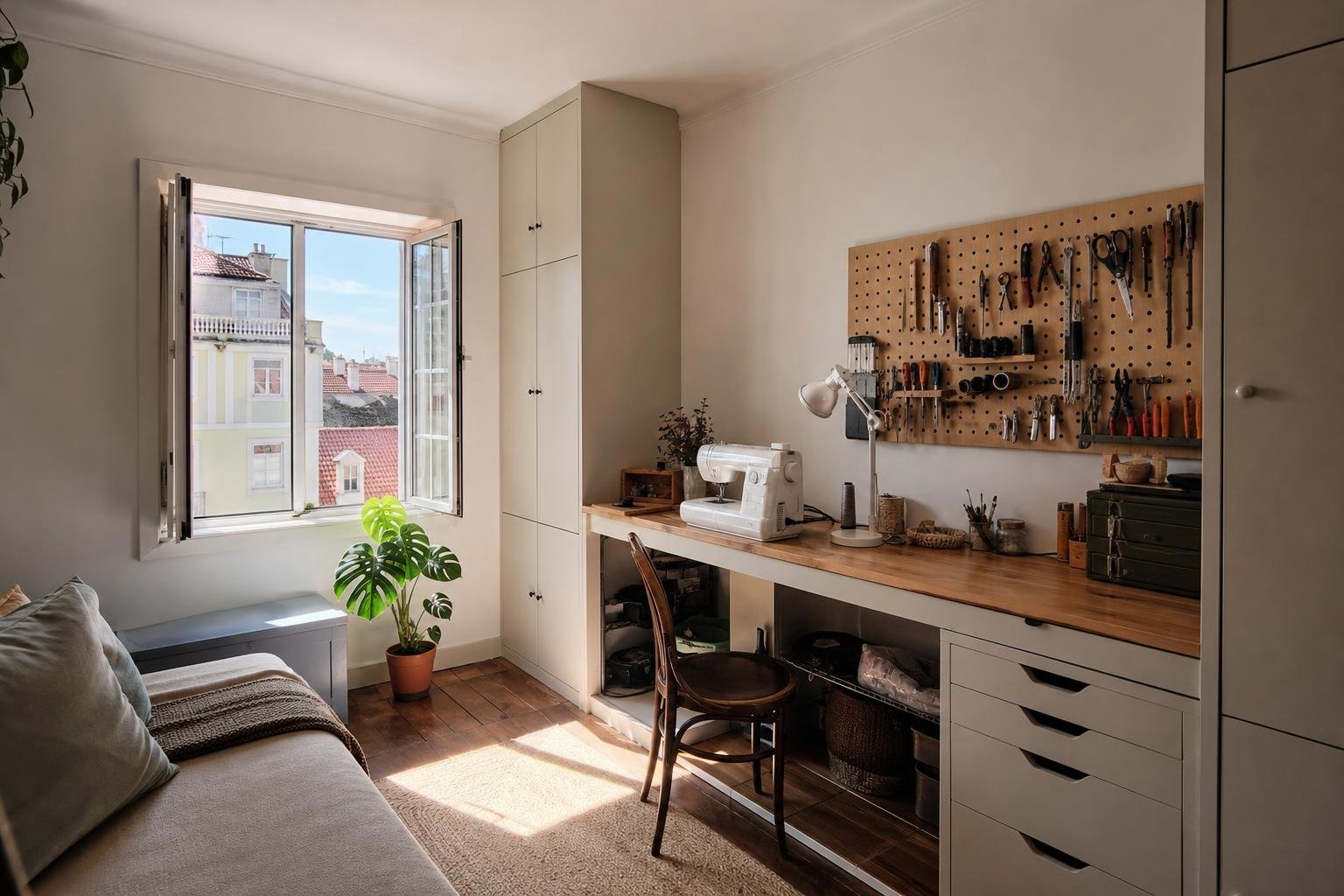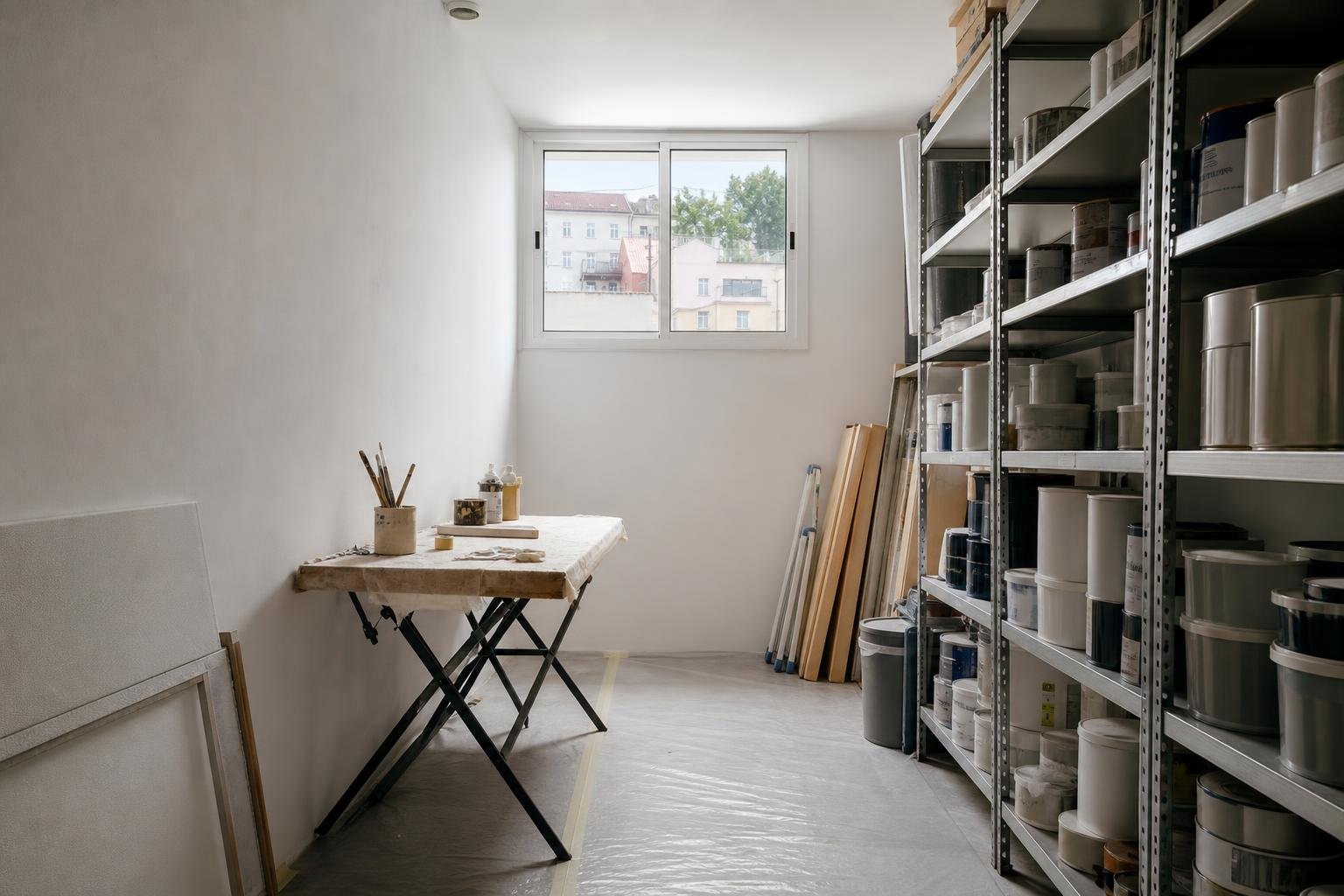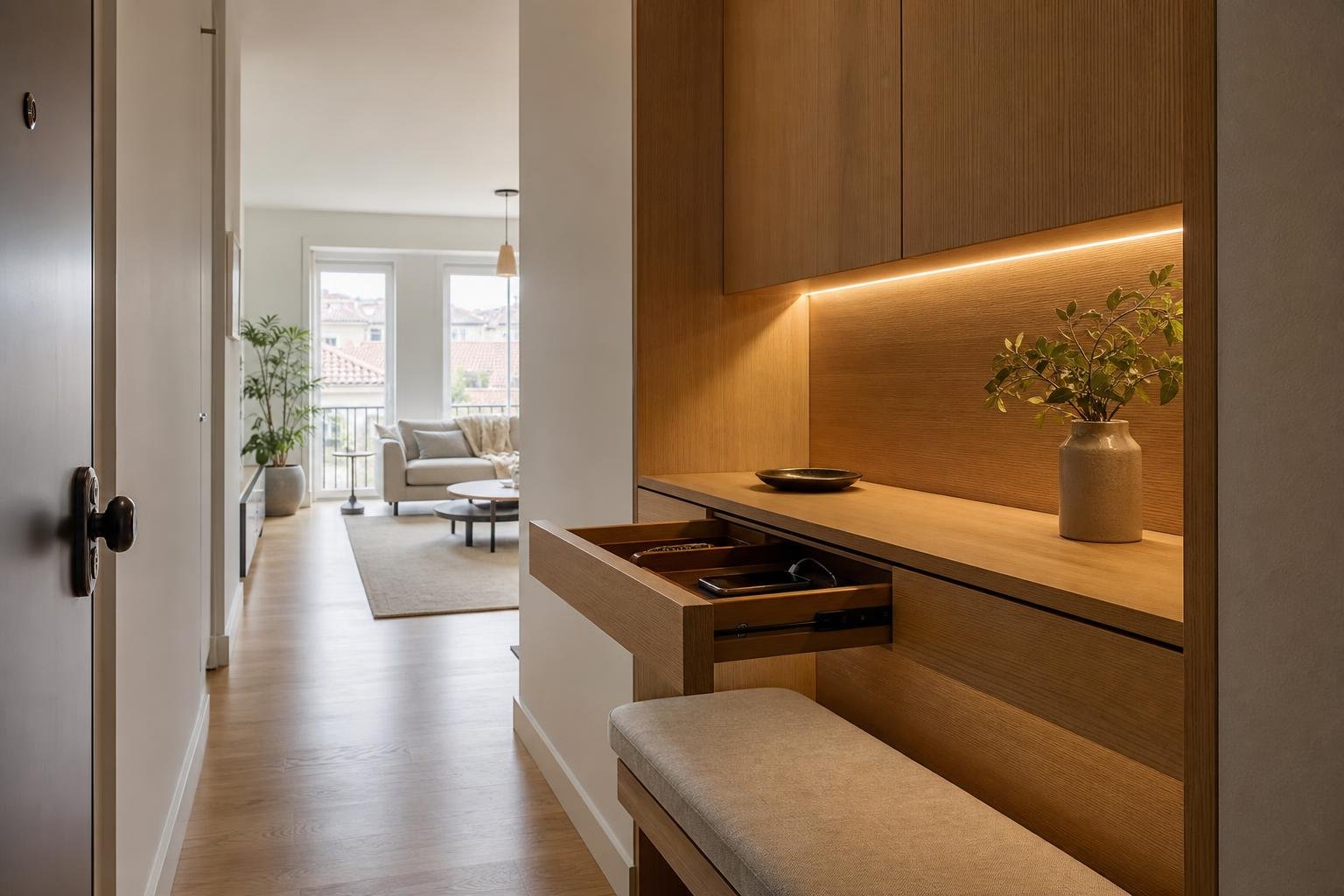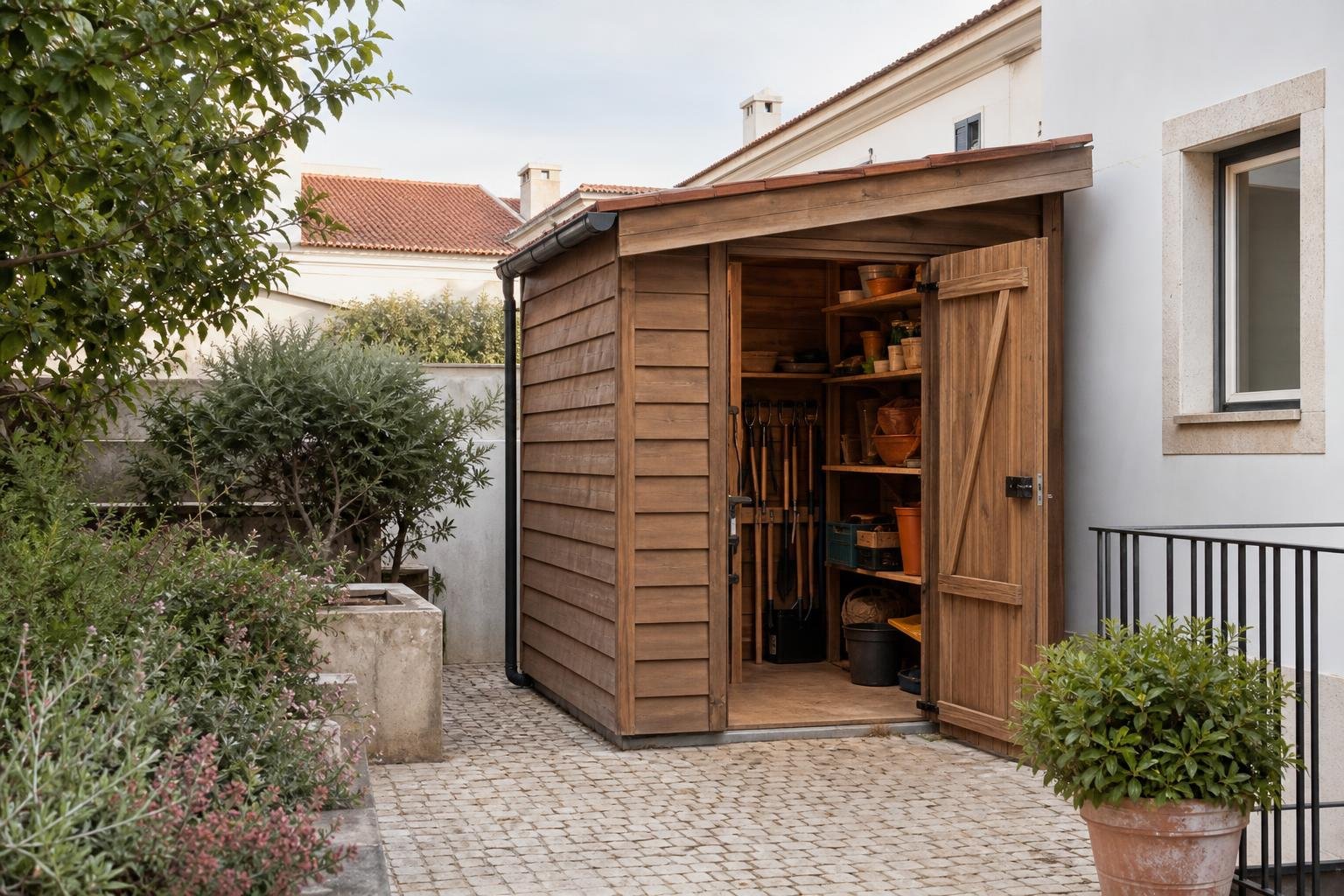

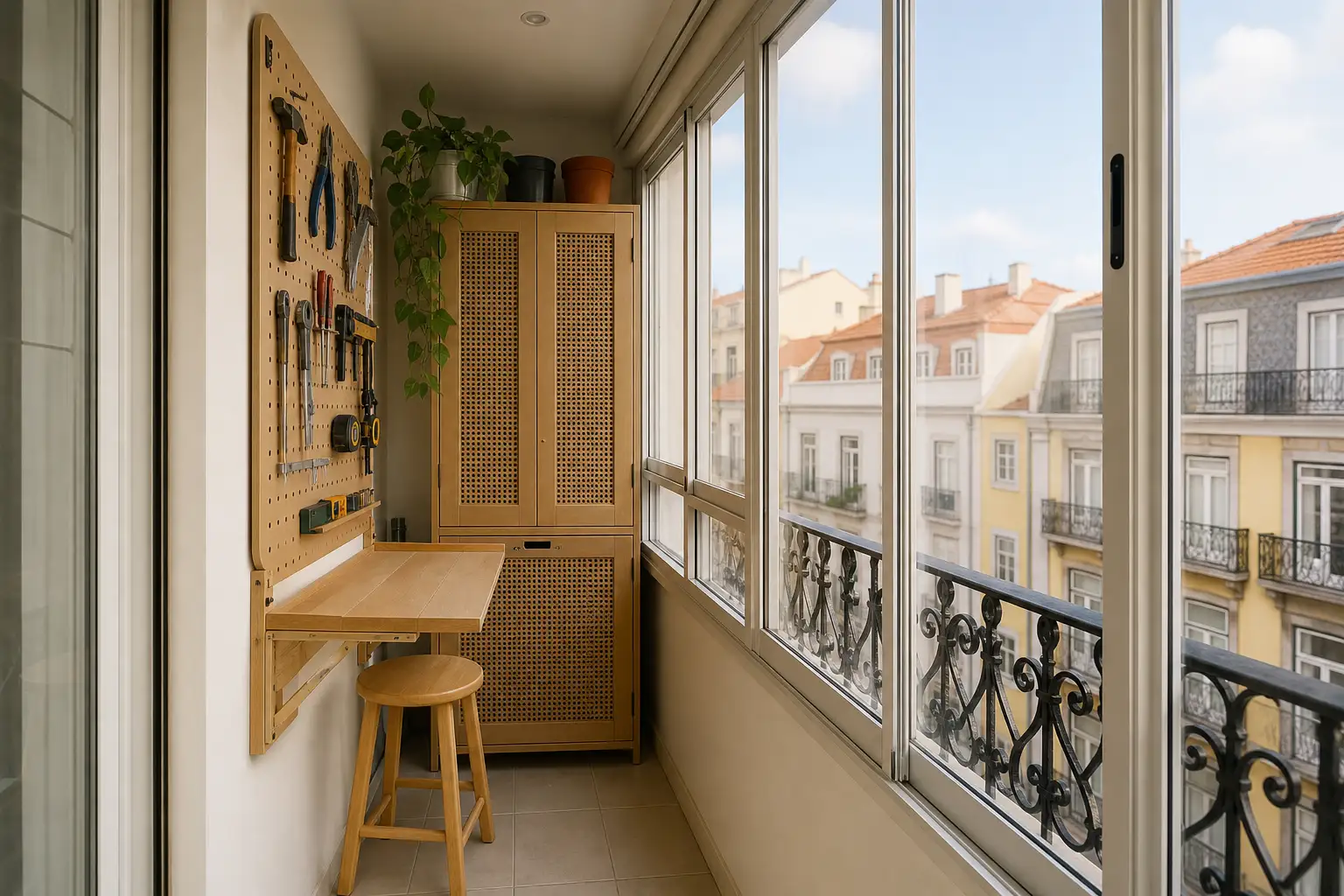
An enclosed balcony often ends up with two unhappy roles: a dumping ground for things without a home, or an improvised extension of the kitchen. There is another practical use for a Lisbon apartment: a compact bench for tightening a hinge, repairing a chair, repotting plants, assembling a delivery or keeping occasional-use tools together.
The starting point is not a pegboard or a wall full of plastic boxes. It is protecting what makes the balcony usable in the first place: daylight, openable windows, easy cleaning and an unobstructed route through the space. The DGS guidance on setting up a space at home is useful here: natural light, fresh air, tidiness and posture still matter, even when the bench is used only for short domestic jobs.
This guide sets out how to create a small, reversible and realistic repair area without turning the enclosed balcony into a gloomy annex.
Map the route and every opening first
Before measuring furniture, open every window and door in the enclosed balcony. Check the movement of each sash, the position of handles and the space needed to clean glazing, shutters and frames. A bench should never force you to squeeze sideways or climb over boxes to reach an opening.
In a narrow space, keep one continuous clear strip beside the windows or along the connection to the living room. A bench 35 to 45 cm deep is enough for many light jobs and takes less room than a standard table. If even that depth is too much, a fold-down top is more useful than a permanently deep cabinet.
Also confirm that the enclosure itself is regular and that any planned alteration respects the building and condominium. For the wider considerations around this kind of space, see Obra Lisboa’s guide to enclosing a balcony. The aim here is to equip an existing interior area, not to create a new room at the expense of light and ventilation.
Choose a bench for light jobs, not a workshop
An apartment balcony is not the right place for prolonged cutting, heavy sanding, strong-smelling paints or tools that transmit vibration through the structure. Keep the brief to clean, occasional tasks: gluing, assembling, sewing, changing hardware, tending plants, sorting fixings or charging cordless tools.
A varnished marine plywood top, compact laminate or durable laminated board is practical because it handles small knocks and wipes clean quickly. Avoid heavily textured tops that trap dust, and avoid heavy stone on lightweight brackets. Where there is a sound wall, properly sized brackets can free the floor; where the wall construction is uncertain, do not assume an older wall will carry a concentrated load.
For a flexible setup, plan two positions: closed for daily life and open only when needed. A low stool that tucks beneath the top and a removable protective mat can make the work surface comfortable while keeping the route clear.
Use vertical storage, but keep windows free
The common mistake is moving every tool in the home into the balcony. Start with the kit that genuinely fits in a portable box: tape measure, screwdrivers, pliers, a small hammer, wall plugs, screws, suitable adhesive and basic protection. Everything else can stay in a dry indoor cupboard or storage room.
Above the worktop, fit a short shelf or organiser only on a solid blank section of wall. Do not cover vents, shutter boxes, window mechanisms or areas needed for maintenance. Clear, closed boxes with simple labels make small parts easier to find, limit dust and keep screws away from children.
If the plan includes hooks, check wall thickness, finish and load first. For heavy items or loaded shelves, read the guide to heavy shelves on old apartment walls before drilling. The wrong fixing can damage a narrow wall and leave little scope for correction.
Protect daylight and manage glare
Place the bench beside the window whenever possible. Working directly towards glazing creates reflections on a laptop screen and encourages you to close blinds; working with your back to it can cast a shadow over the top. A side-on position gives better working light while preserving the view and window access.
Add an adjustable task light with even output and no direct glare. Mount it under a shelf or on a side wall, never on a window frame. DGS guidance advises people to adjust available light and add local lighting where needed; this straightforward rule is useful when handling small parts in the late afternoon.
Window performance also affects comfort, air movement and daylight control. The ADENE guide on efficient windows notes the role windows play in managing light and air within a home. Do not push tall cabinets against the glass or make the lower window area permanently opaque if that makes the balcony warmer or harder to air.
Set firm limits for ventilation, dust and materials
Even minor repairs create particles, packaging and odours. Sanding, spray application, solvents, resins and timber cutting belong in another suitable place or with a professional who has the right conditions. Opening a window for a few minutes does not turn an enclosed balcony into a safe space for work that produces emissions.
Keep only small quantities of products in this area and leave them in their original, tightly closed packaging. Adhesives, paints and batteries should not sit in direct sun, close to heat or within children’s reach. Keep a washable cloth and a small vacuum, brush or dustpan nearby so residue is cleared after every use rather than collecting in window tracks.
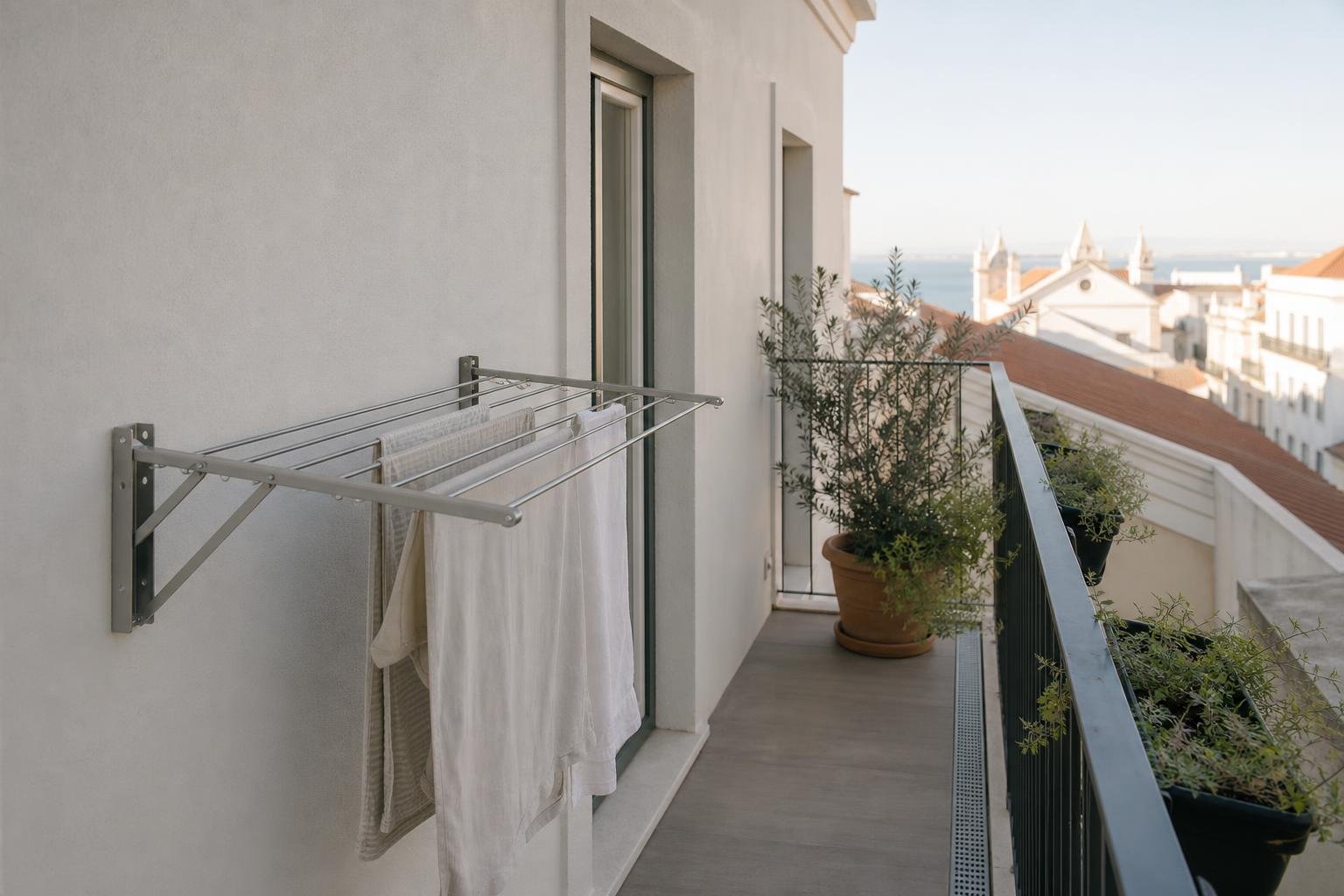
If the balcony is also used for drying clothes, separate that routine from the repair bench. Humidity, metal tools and cardboard boxes are a poor match. Obra Lisboa’s article on drying laundry indoors explains why moisture control and air renewal matter in an apartment.
Plan power and finishes for real daily use
A coiled extension lead across the floor does not belong in a tight route. If you expect to use a drill driver, charger, lamp or compact vacuum, plan an accessible socket above the worktop or at a protected side position. Do not hide plugs behind drawers or install outlets where they may be exposed to rain through an open window or water from plant care.
Finishes should withstand regular cleaning. A washable skirting board, a small splashback behind the top and an easy-to-sweep floor solve more problems than fragile decorative materials. On the walls, a light washable matt paint helps retain brightness and makes dust or signs of damp easier to spot.
Portuguese technical standards value spaces that are functional, versatile, safe, easy to maintain and capable of accommodating the furniture they need; see the document published in Diário da República. In an enclosed balcony, that becomes a simple test: every element should support a task and move out of the way when that task is finished.
Planning to renovate an enclosed balcony or reorganise an apartment? Obra Lisboa can help turn everyday needs into sound choices for layout, lighting, storage and finishes within the space available.
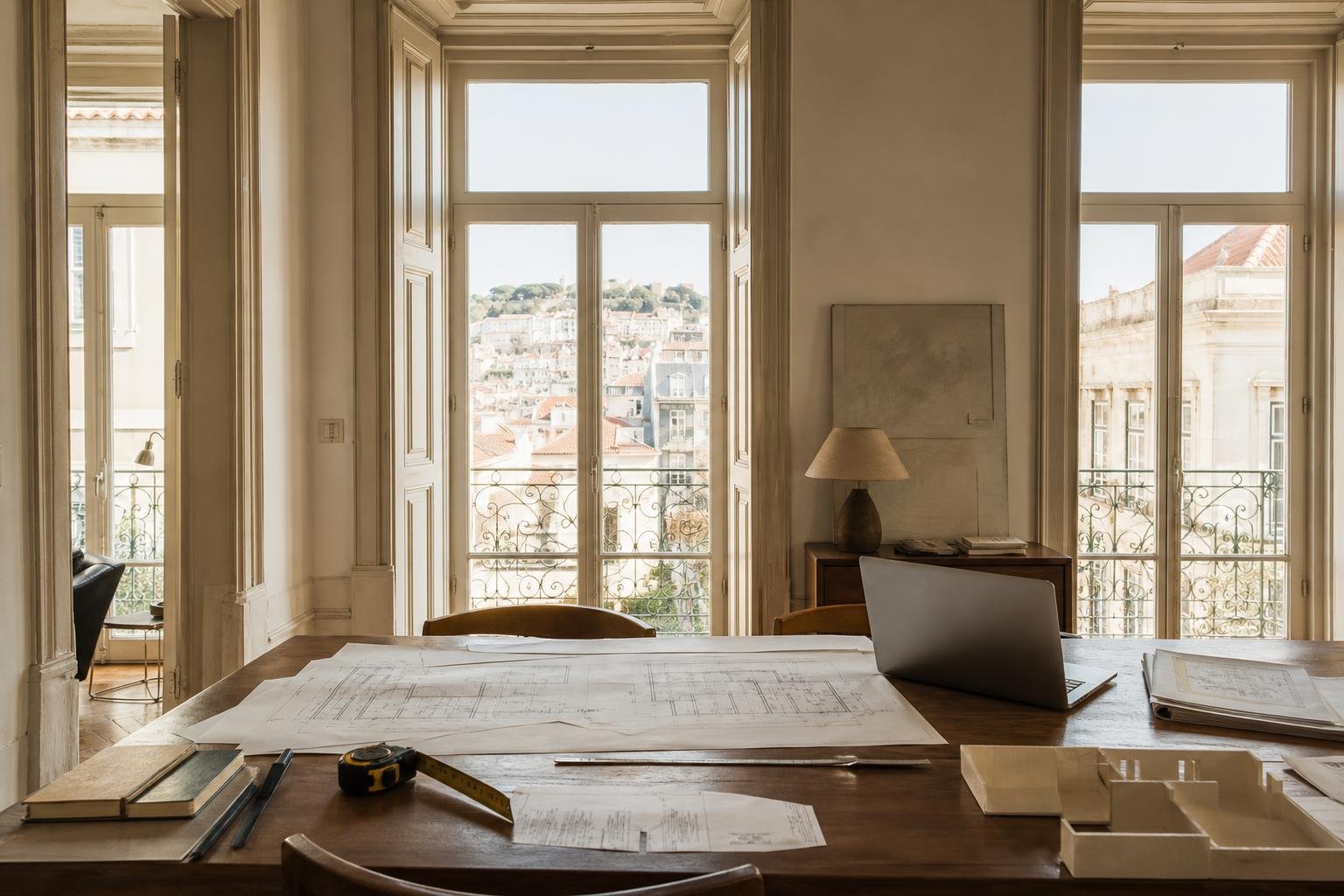
AI-generated editorial image; it does not depict an Obra Lisboa project.

Obra Lisboa