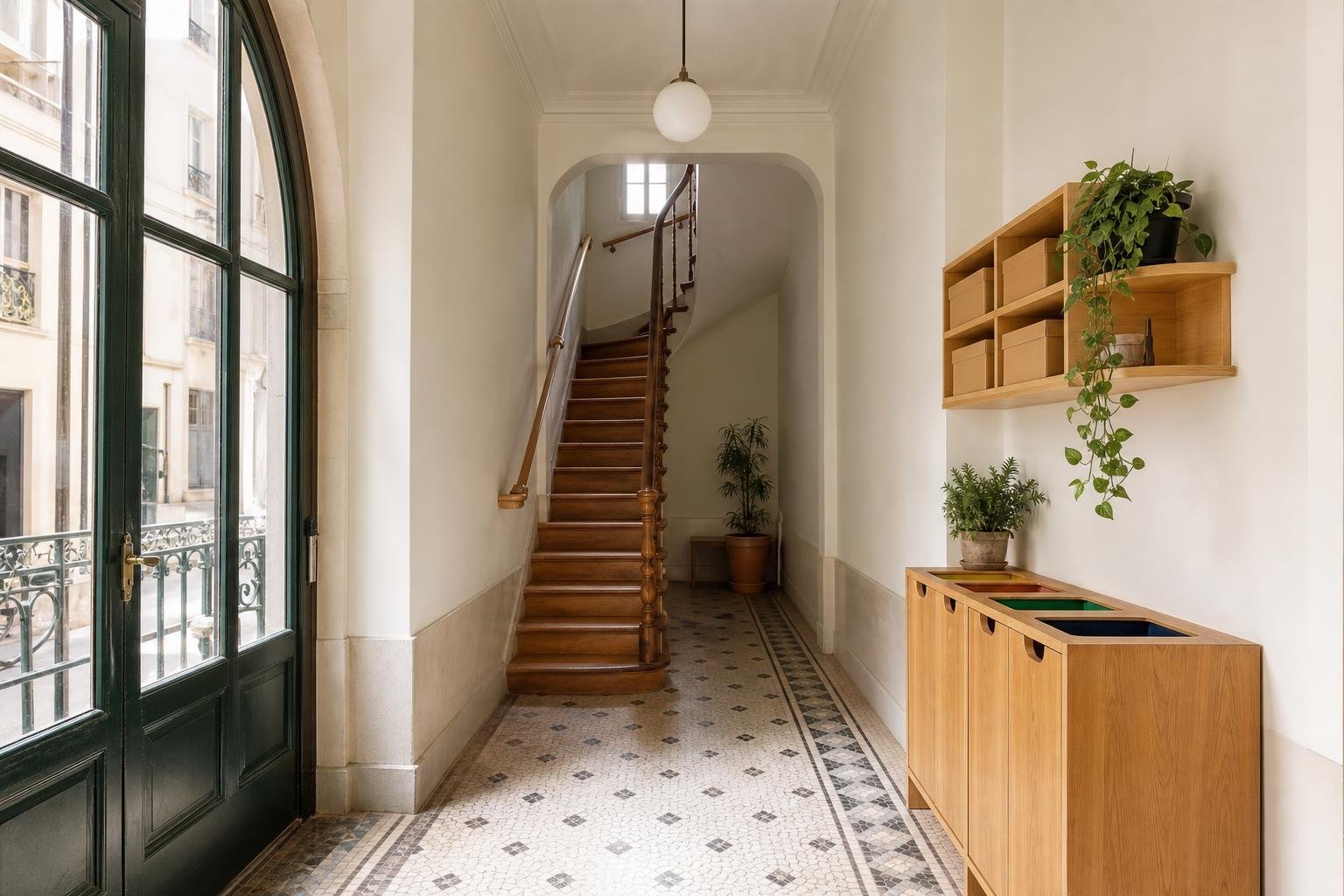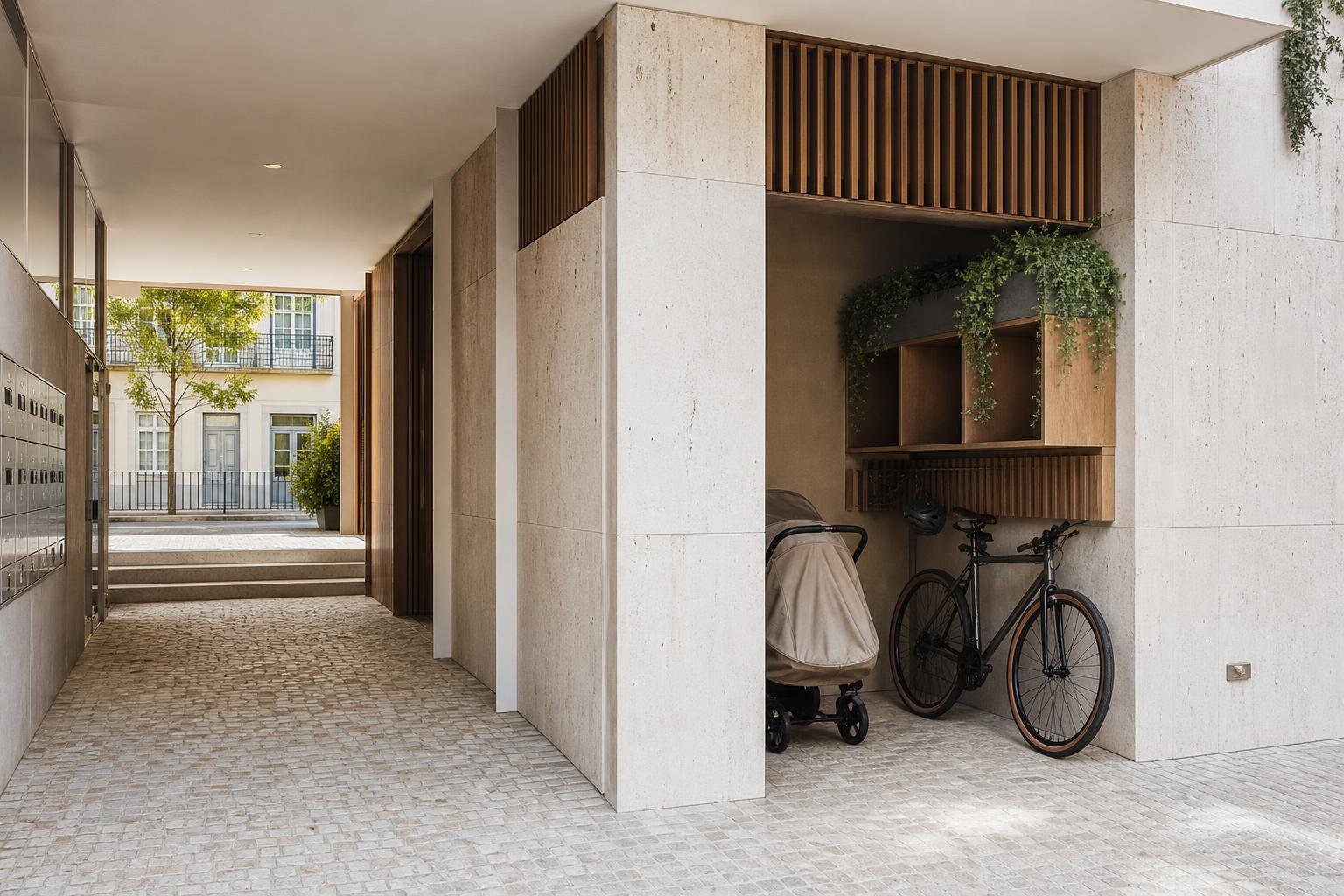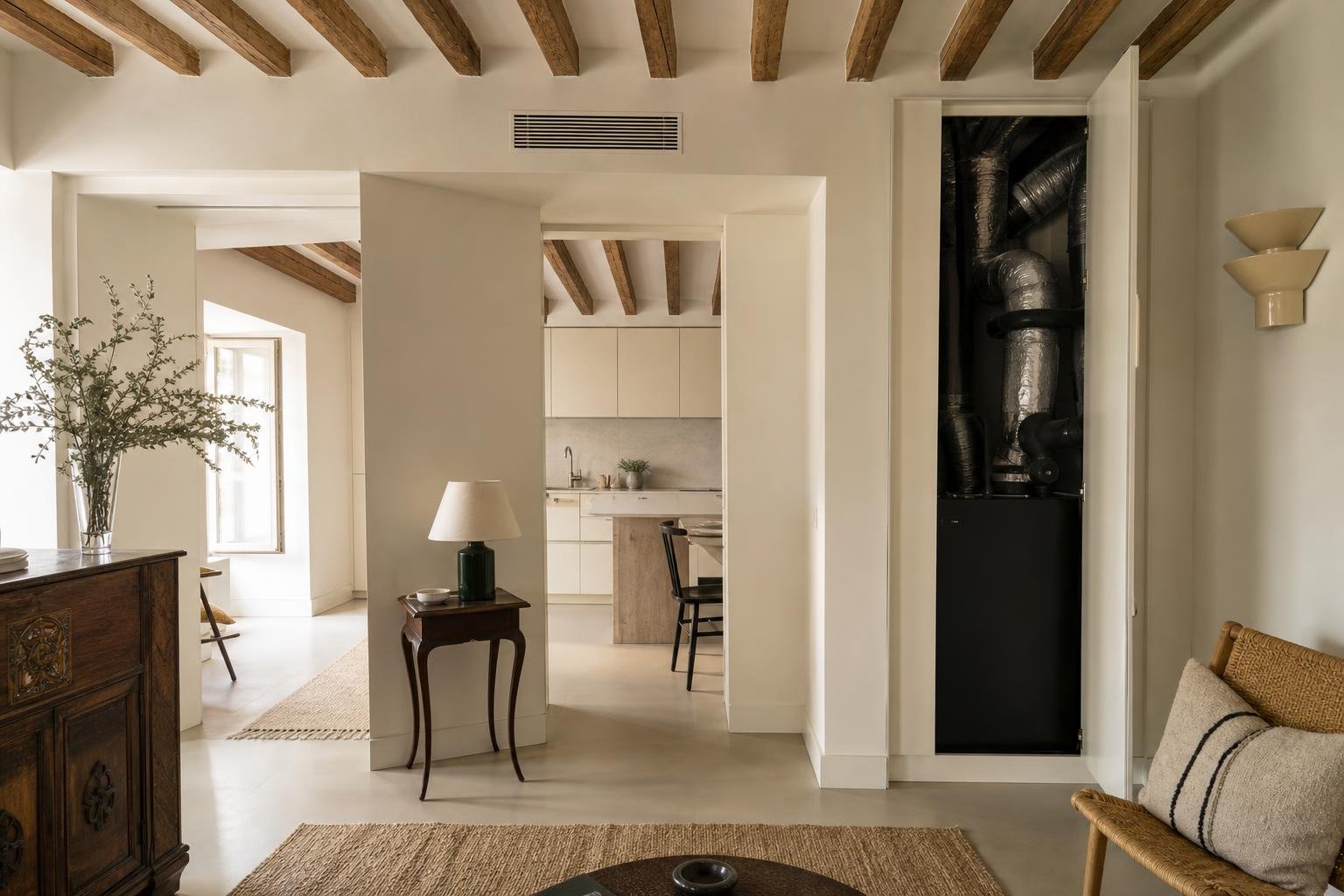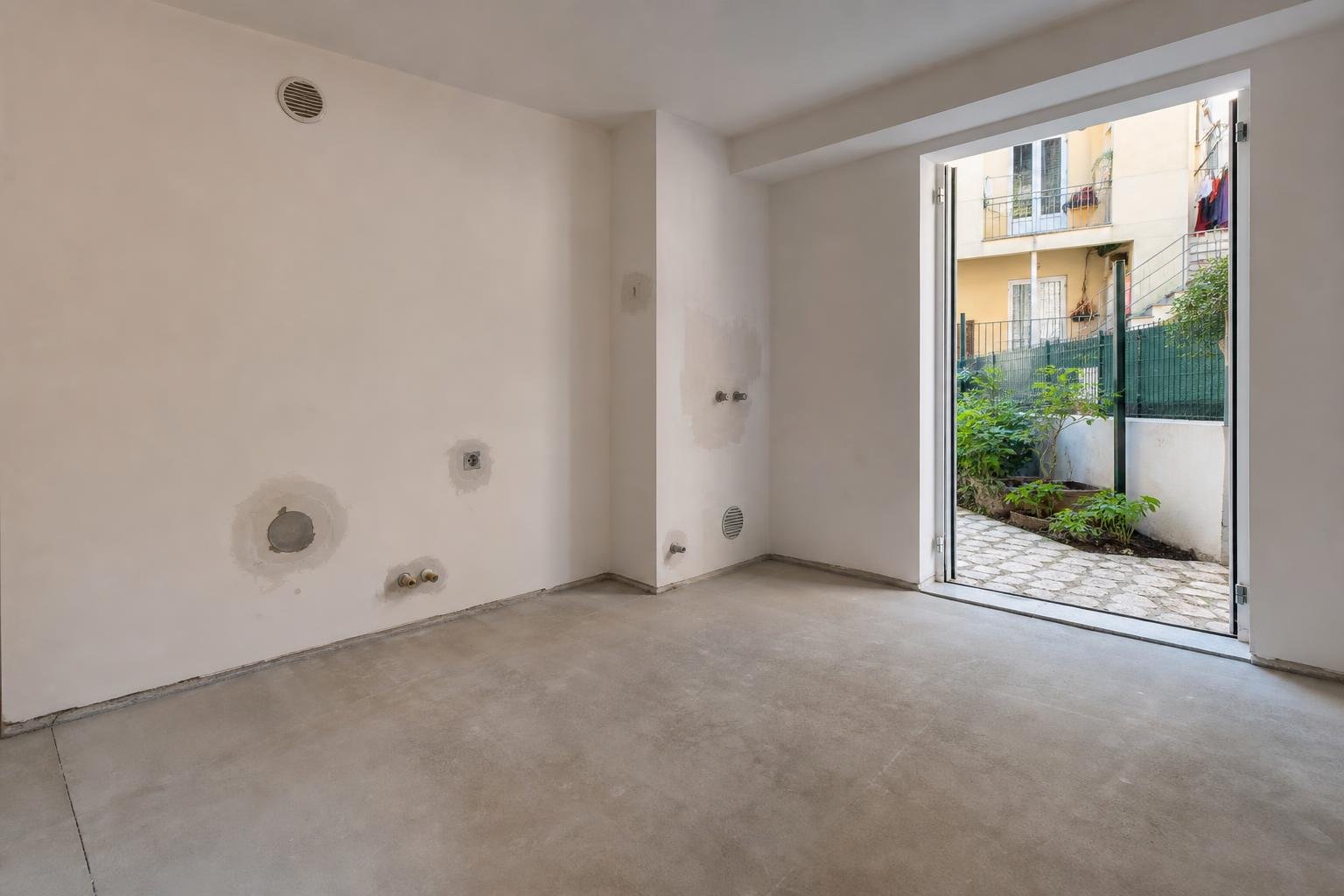

Choosing flooring for a home with dogs or cats is not about finding an “indestructible” surface. It is about deciding where wet paws, litter, dragged toys, pet hair, water bowls and frequent cleaning will happen — then balancing all of that with human comfort.
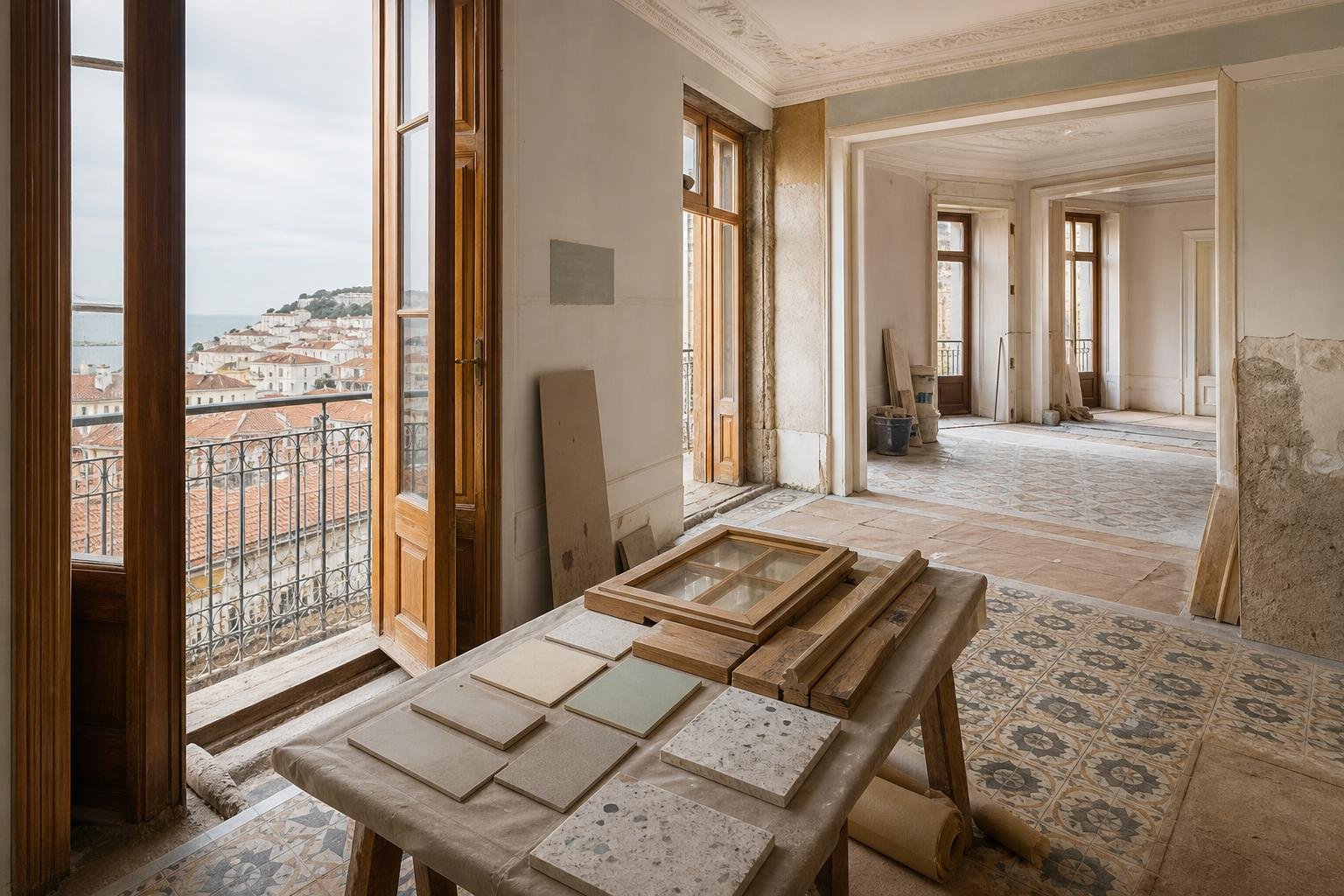
In a Lisbon renovation, a continuous floor is often chosen to make an older flat feel larger. That only works when the subfloor is dry and level, the joints suit the product, and the transitions to the kitchen, bathroom or balcony are planned before materials are ordered. Portugal’s Directorate-General of Health advises reducing carpets and rugs, vacuuming rather than sweeping, and dealing with damp as soon as it appears; those are especially useful principles in a home with pets. Read the DGS guidance on indoor-air quality.
This guide compares the main choices and helps you specify a realistic solution without turning the home into a cold, slippery or difficult-to-repair space.
Start with a use map, not a showroom sample
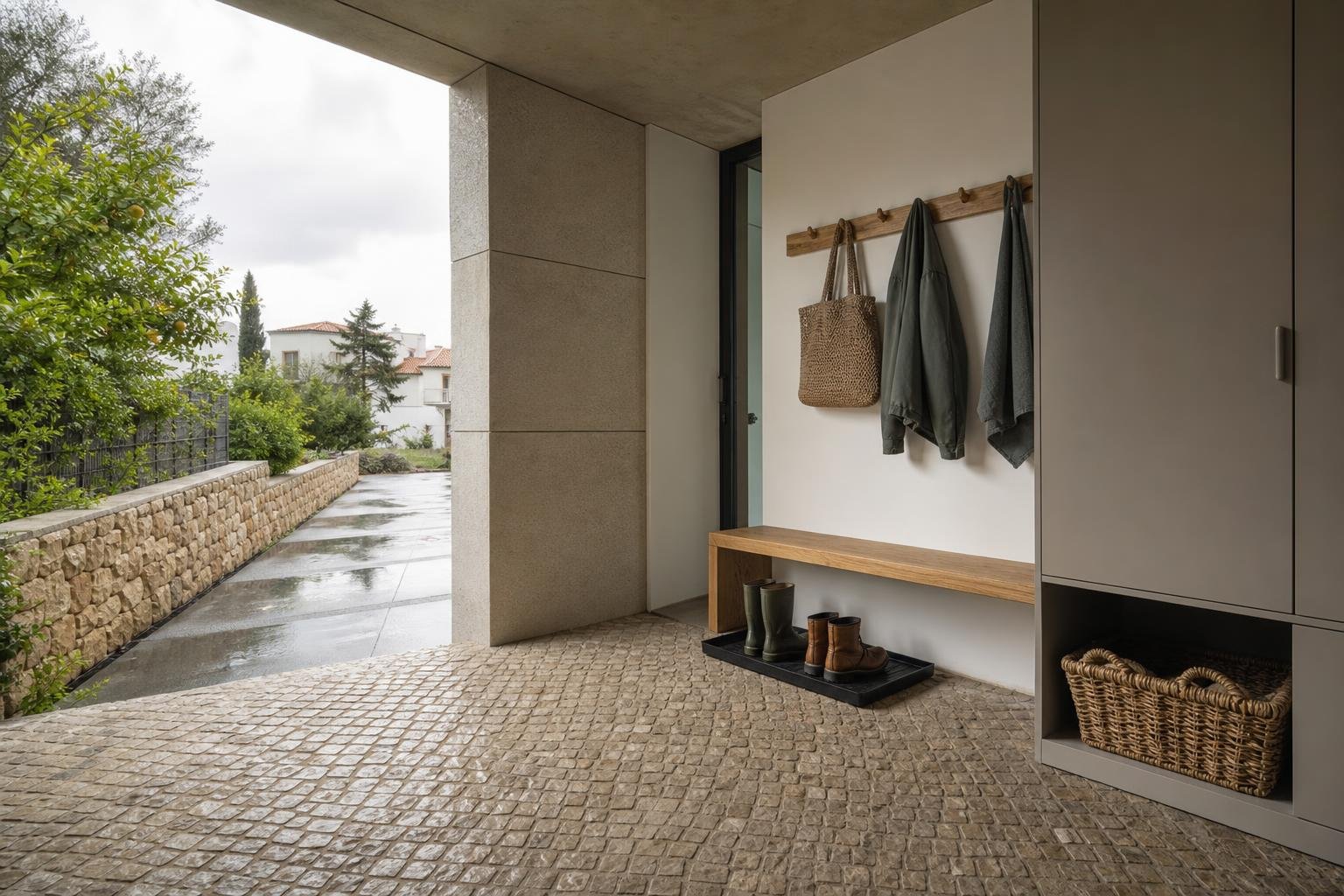
Before comparing timber, tile or vinyl, draw a simple plan and mark the demanding areas: the entrance after walks, the route between bedrooms, the space around water bowls, the kitchen, balcony access and the litter-box location. A small dog racing down a corridor creates different wear from two dogs arriving through the front door on a wet day; a cat may spread litter through a circulation route, particularly when the tray sits near a doorway.
Then separate four criteria: water resistance, grip, scratch tolerance and ease of cleaning. No single floor comes first in every category. Matte ceramic tile can cope very well with water and regular cleaning, but feels harder and cooler; well-selected timber is comfortable and quieter, but needs faster attention when spills occur.
Indoor-air quality also matters. People and companion animals contribute to odours and pet hair indoors, so the floor should allow effective cleaning without relying on thick rugs to hold dirt. The DGS sets out the factors affecting indoor air. For a broader material comparison, see our guide to flooring options.
Ceramic and porcelain tile: robust, provided it is not slippery
Porcelain stoneware and good-quality ceramic tile are strong choices for entrances, kitchens, laundry spaces and areas leading outdoors. When properly installed, they handle routine washing and accidental spills well. In a home with pets, favour a matte or lightly textured finish rather than polished surfaces: grip when water is present matters more than a perfect reflection.
Very rough tiles come with a trade-off too: they retain more dirt and make mopping less effective. Ask for a sample, wet it and test it with footwear and by hand; compare how easily the texture can be cleaned. Choose grout in a mid-tone and specify a suitable grout for the setting, because white joints by a balcony door rarely keep their original appearance.
The hardness of tile needs compensating measures. Use washable beds in resting areas, protect chairs that are moved often, and avoid high thresholds between rooms. Housing floor finishes must meet applicable accessibility requirements, which reinforces the value of limiting obstacles and abrupt level changes. See the Diário da República document covering floor-finish requirements.

Vinyl, laminate and timber: distinctions that change the choice
“Wood look” does not describe one material family. Vinyl flooring can be practical in interior areas that need frequent cleaning, provided that the subfloor is even, joints and edge details follow the system, and standing water is not left in place. It feels warmer than tile and usually creates less footfall noise, which is useful in an apartment.
Laminate may offer good surface resistance, but should not be selected on its commercial rating alone. Check its stated joint-water resistance, how it performs at the entrance door, and the manufacturer’s cleaning rules. A spill wiped up quickly is very different from an overturned bowl left for several hours.
Solid or engineered timber can work beautifully in living rooms and bedrooms, especially where some patina and maintenance are accepted. Do not expect it to be scratch-proof: claws, grit and furniture will leave marks. The better question is whether those marks will be objectionable or become part of the floor’s natural ageing. In older buildings, it is also worth assessing whether original timber flooring can be repaired before covering it.
Paw comfort, noise and temperature matter every day
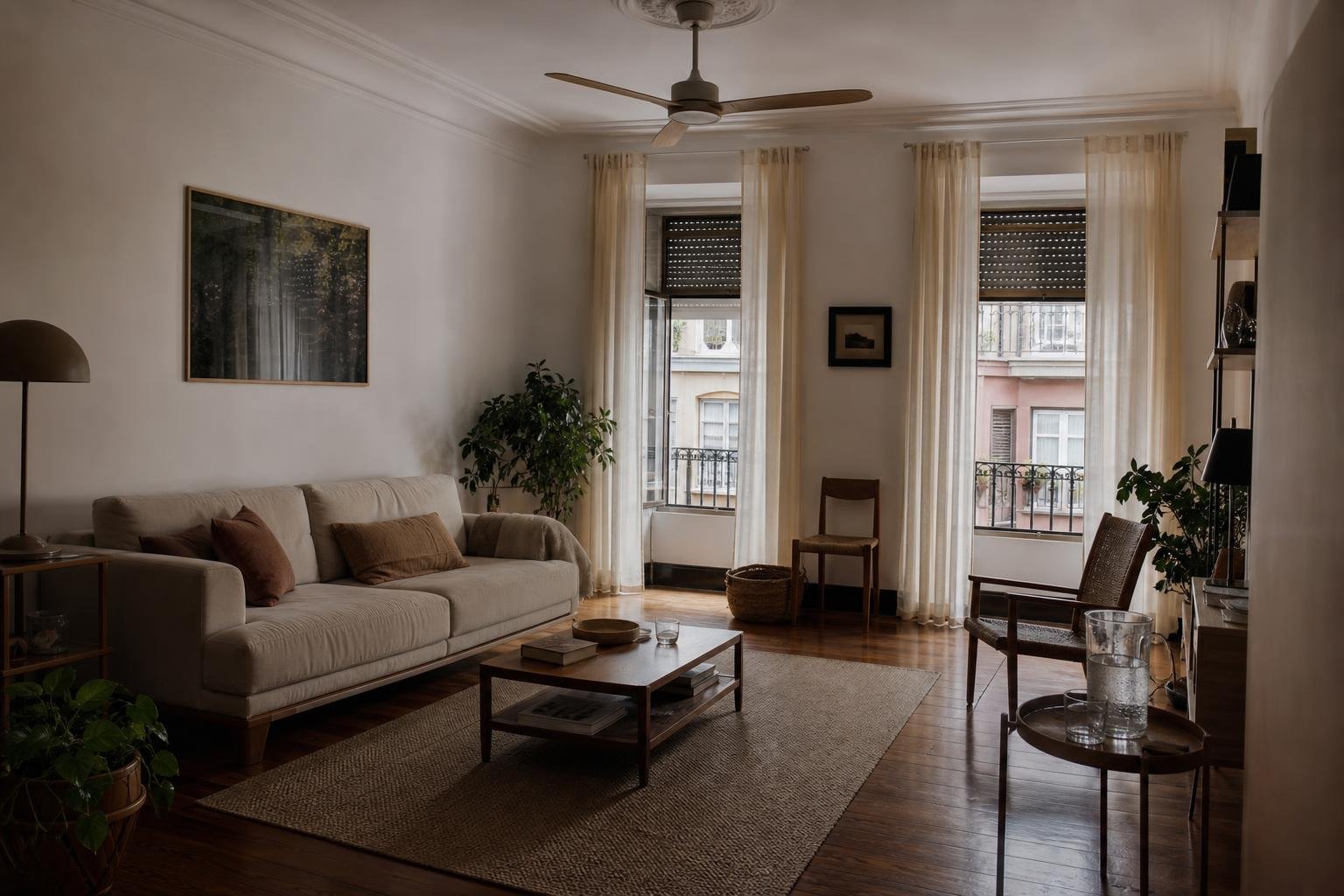
A hard-wearing but overly smooth floor may make an animal hesitate, slip when turning or constantly seek out rugs. Yet a whole home covered with difficult-to-wash rugs gathers pet hair and creates continuous maintenance. The balance is usually a stable floor with a few washable, non-slip-backed rugs where the animal sleeps or changes direction.
In Lisbon, rigid slabs and close neighbouring walls can make noise more noticeable. Ceramic tile over a poorly prepared base can amplify claw sounds; resilient finishes or timber can soften them, but the whole build-up — subfloor, acoustic layer, floor finish and skirting — determines the result. Do not add a generic acoustic underlay without checking both compatibility with the floor and the available finished height.
If the renovation includes bedrooms, plan resting areas without draughts, less cold floor surfaces and low-emission materials. The DGS advises care with paints and surface treatments that may release unwanted compounds. Read the DGS advice on materials and cleaning products. Comfort is not only about the finish itself: it also depends on ventilation, cleaning and moisture control.
Edges, skirtings and wet areas prevent the most frustrating repairs
The costliest flooring failures often begin at its edges: beside kitchen cabinets, door linings, balcony doors, skirting boards and transitions between materials. Plan where water can reach and how it will be removed. By the water bowl, a shallow washable tray protects the finish; at the entrance, a low-profile technical mat can reduce grit and moisture without creating a trip edge.
In kitchens and laundry areas, do not trap a floating floor against fixed cabinetry without respecting the movement gaps required by its system. In bathrooms, do not automatically extend the living-room finish if that compromises waterproofing, falls to drain or safety on a wet surface. Where materials change, use a discreet, firmly fixed profile rather than a raised strip that catches paws, slippers and vacuum heads.
In an older home, check whether previous finishes require special care. The DGS notes that asbestos may be present in some floor materials, and removal should follow appropriate procedures rather than improvised demolition. See the DGS information on asbestos in buildings. Before approving a quotation, ask for the subfloor, preparation, profiles, skirtings and making-good work to be described — not merely a price per square metre.
Renovating a home shared with pets? Obra Lisboa can help coordinate flooring, transitions, damp control and the wider renovation decisions before work begins.
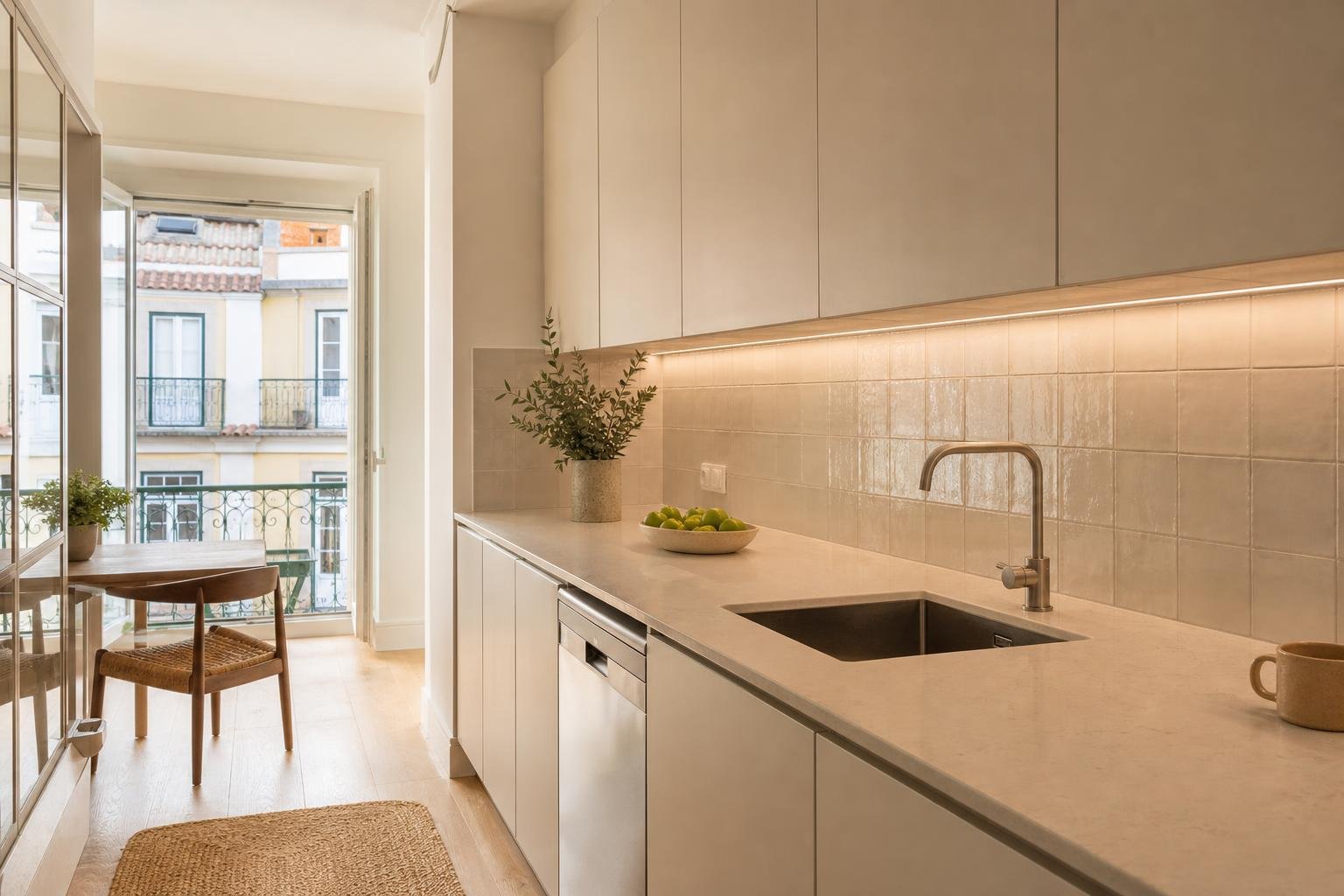
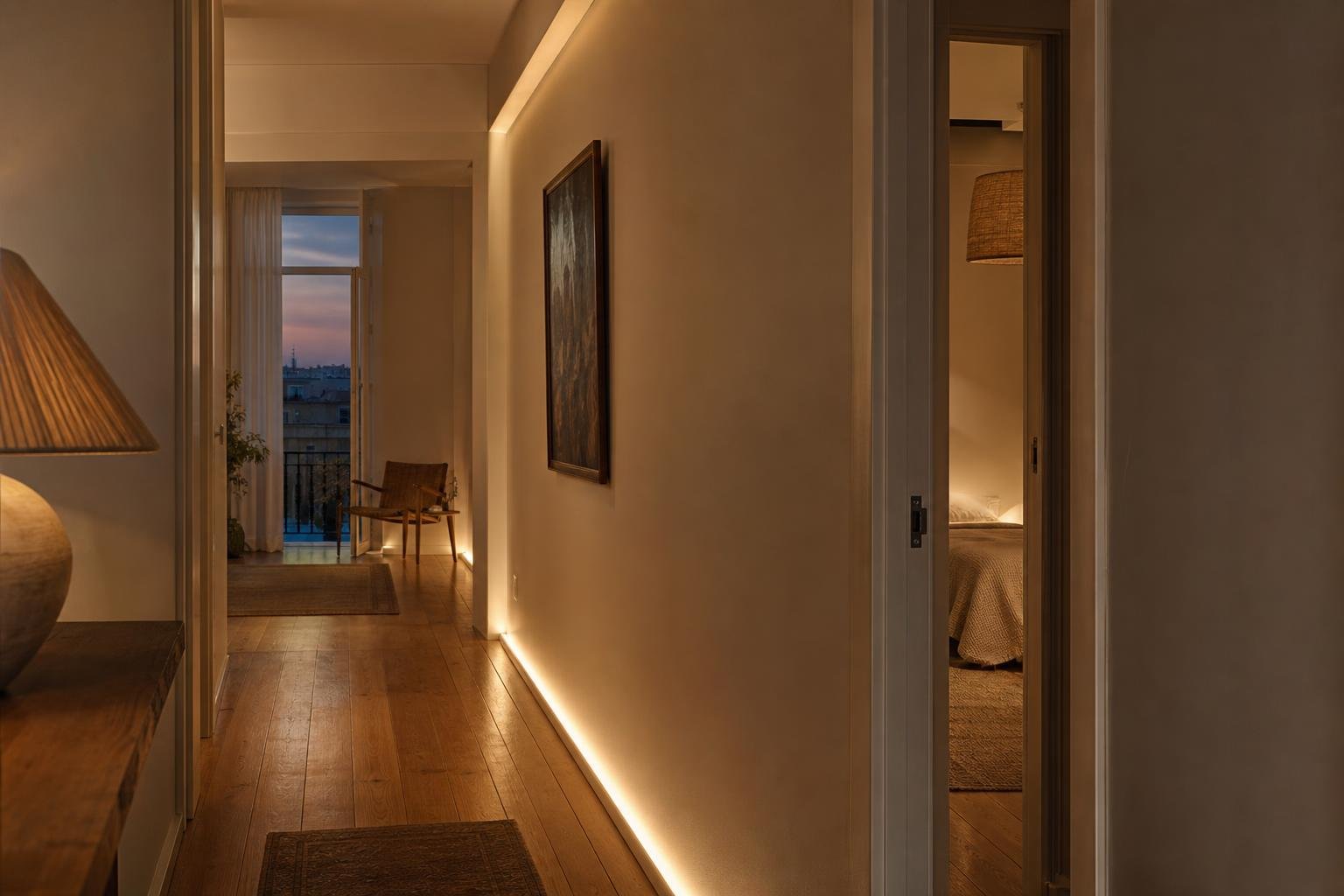
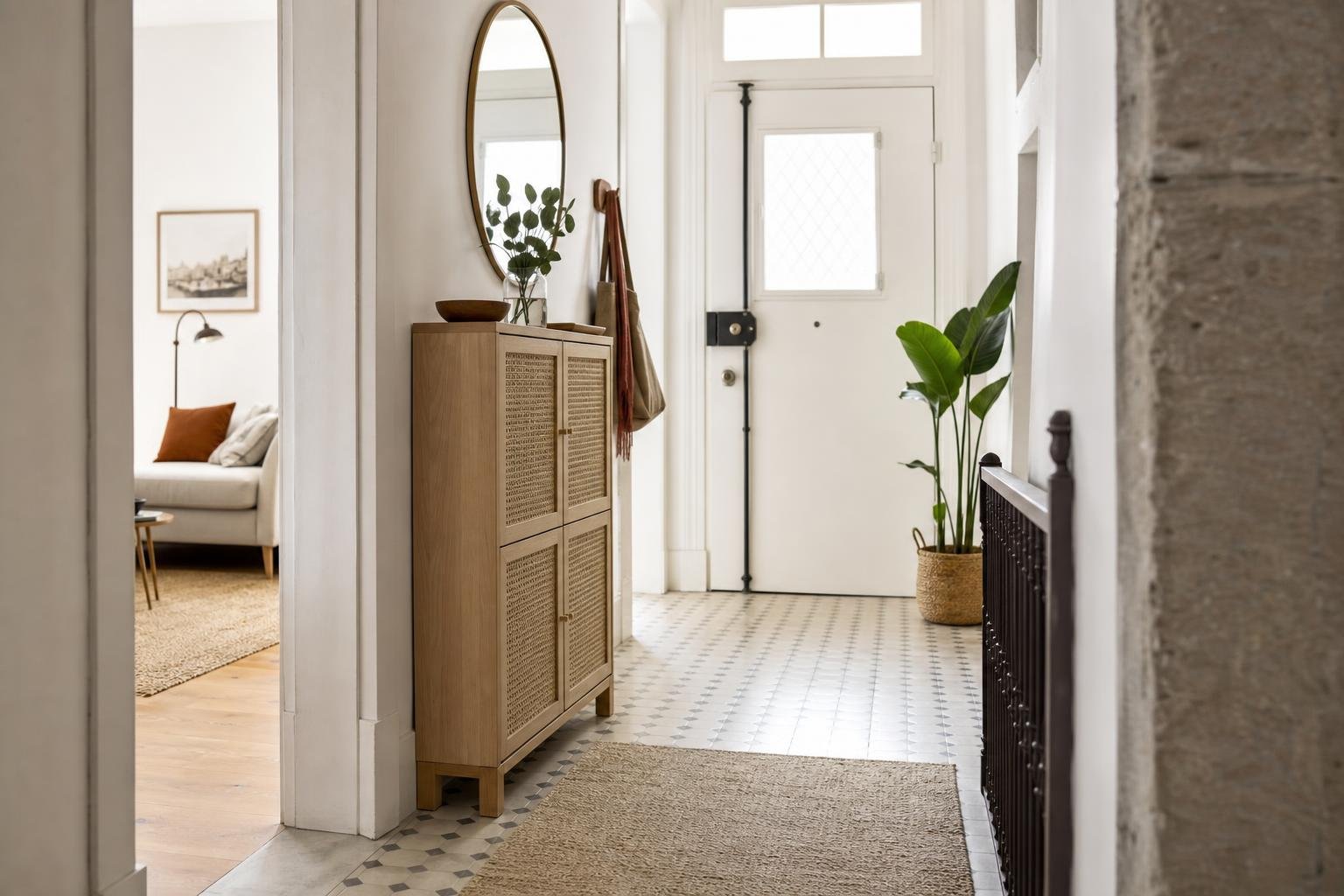
AI-generated editorial image; it does not depict an Obra Lisboa project.

Obra Lisboa