
A tumble dryer can solve a genuine problem in a Lisbon apartment: little outdoor space, washing that builds up during damp weeks, and clothes racks taking over the living room or bedroom. Yet buying the appliance is only one part of the decision. When installation is treated as a last-minute gap in a cabinet, the result can be doors that do not open, trapped heat, neglected filters, vibration, overloaded sockets and condensation where there was none before.
A sound solution starts by deciding where the appliance will breathe, drain water and be maintained. This matters even more in a rented flat: reversible work is generally preferable, the landlord’s permission should be clear, and changes affecting façades, shared systems or common areas should never be assumed. Portugal’s Directorate-General of Health advises airing the home while washing and drying clothes indoors and afterwards; it also notes that excess moisture can lead to surface condensation and mould. Read DGS guidance on indoor air.
This guide explains how to plan a condenser or heat-pump dryer in a kitchen, utility area, enclosed balcony or service cupboard without turning laundry into a lasting damp problem.
Choose the dryer type before choosing the empty space
Different dryers need different conditions. Vented machines require ducting to discharge moist air; in an apartment, adding that outlet can affect the façade, weatherproofing and the appearance of the building. That is why a condenser or, more commonly, a heat-pump dryer is often easier to integrate, provided its cleaning needs and collected water are properly dealt with.
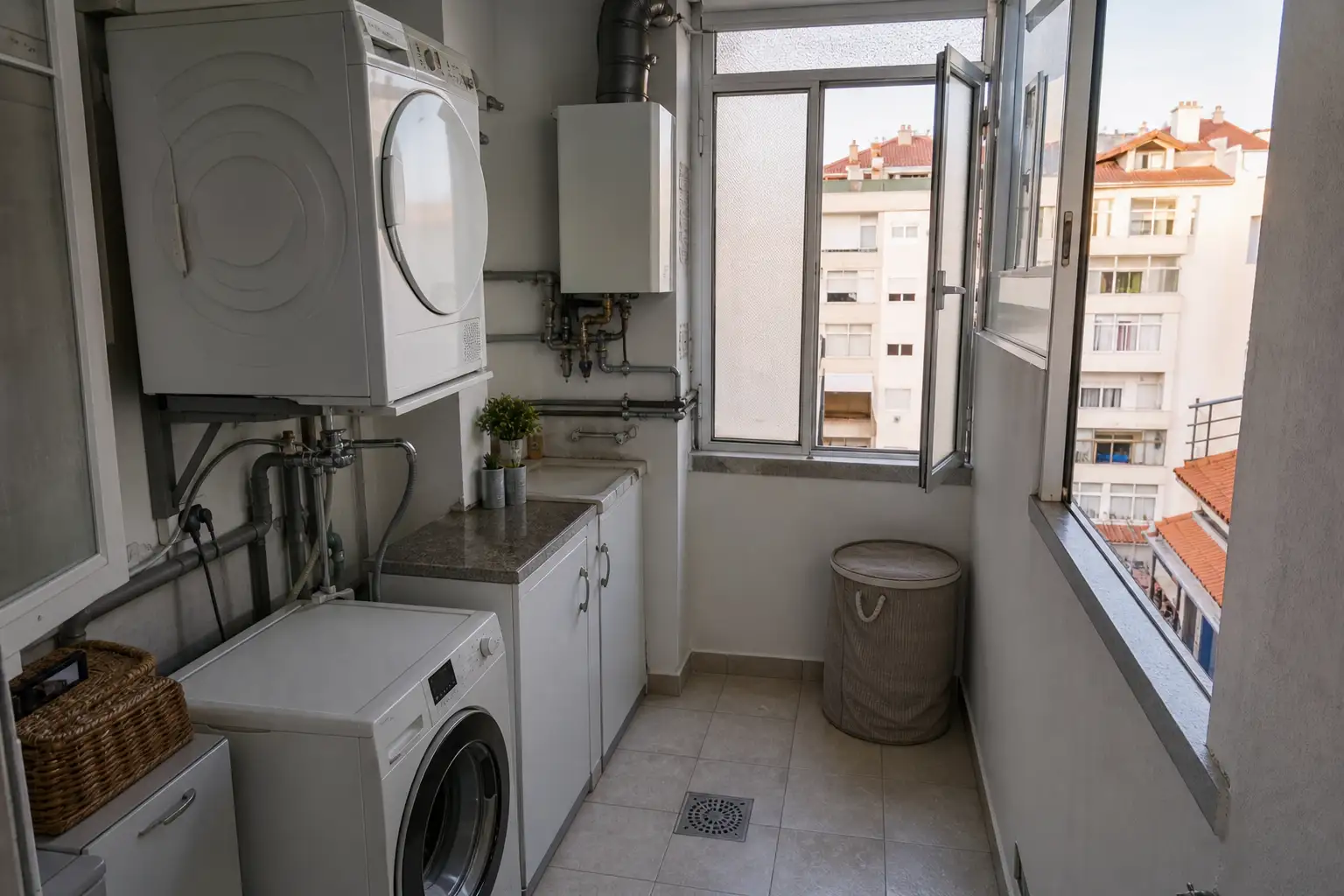
Do not decide by drum capacity alone. Check the true depth once hoses, plug, ventilation clearances and the door swing are included. If the dryer is stacked over the washing machine, use a joining kit compatible with both appliances. Stacking without an appropriate restraint turns weight and vibration into an avoidable risk.
Before changing cabinetry or worktops, review the principles of planning an apartment laundry area. The best location is one where the appliances can be used, cleaned and repaired without dismantling half the kitchen.
Ventilation: a sealed cupboard is not a laundry room
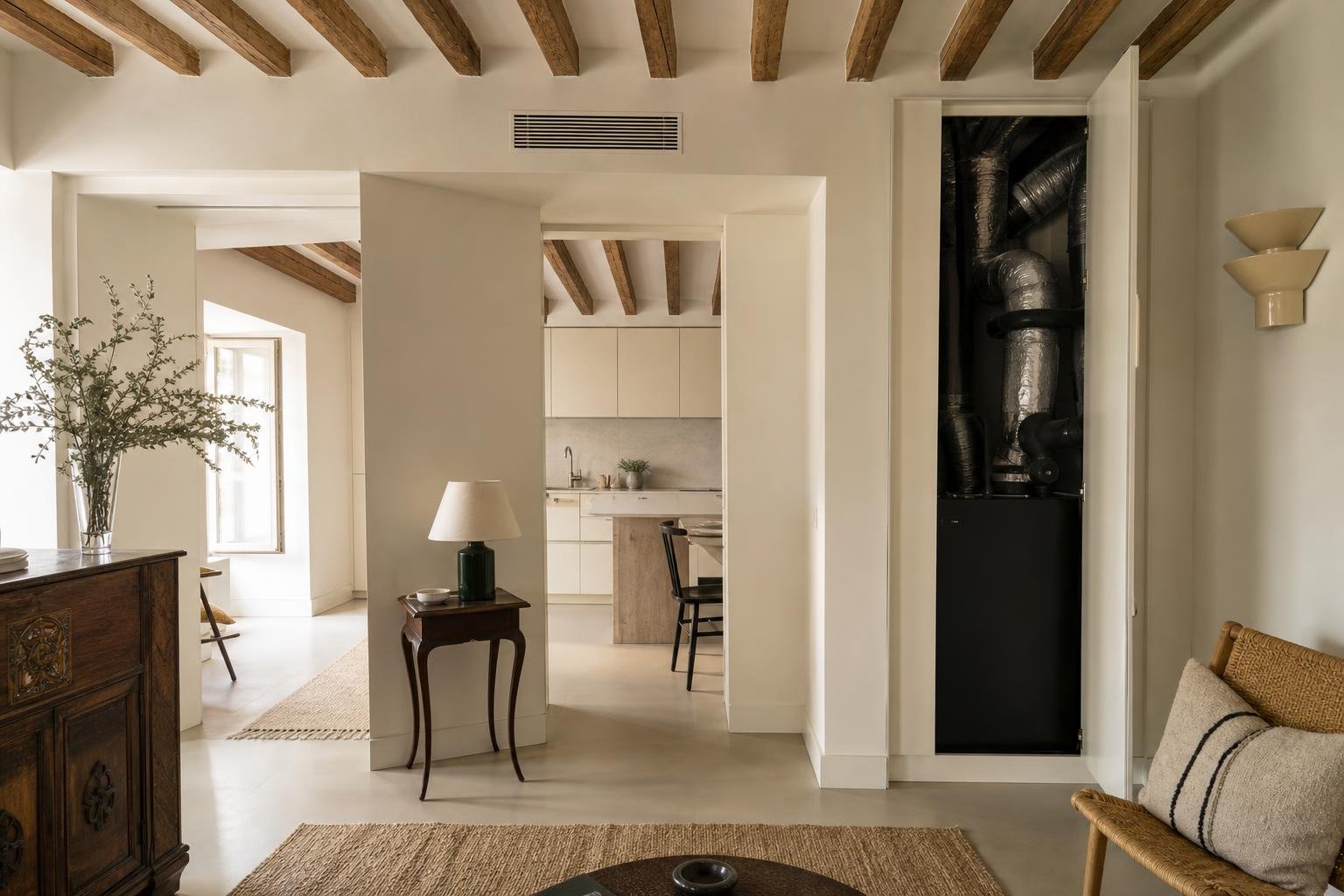
Even a heat-pump dryer releases some heat into its surroundings and increases the need for effective air renewal. A machine inside a completely sealed cabinet operates under poorer conditions, may overheat and makes hidden moisture harder to spot. Keep the manufacturer’s required clearances and provide air intake and outlet within the cabinet, without blocking grilles with baskets, laundry or plinths.
An enclosed balcony with opening windows, a utility room with daylight, or a kitchen with sound air renewal is usually a better setting than an internal storage room with no air path. Leaving a window open for the whole cycle is not always enough if air cannot move through the space; consider both where it enters and where it leaves.
The DGS identifies ventilation and temperature as important ways to control moisture and prevent condensation that can lead to mould. See its indoor-air information. If there are already stains, persistent odours or wet window frames, identify the cause before introducing another heat-producing appliance.
Condensate drainage: tank emptying or a permanent connection
Condenser dryers collect water in a tank, and many models can also be connected to a drain. A tank is useful for a temporary arrangement, but it depends on routine: if it leaks, overflows or is refitted badly, it can wet flooring, furniture and electrical connections. A permanent drain reduces that task, but it must be designed with service access, a protected route and a proper waste connection—not improvised towards a balcony or outdoors.
If the utility area already contains a washing machine, check whether the trap, waste point and pipe arrangement can accept another discharge without backflow or kinked hoses. Do not conceal joints behind an appliance that cannot be moved. A small inspection panel or removable shelf can prevent opening walls for a minor repair.
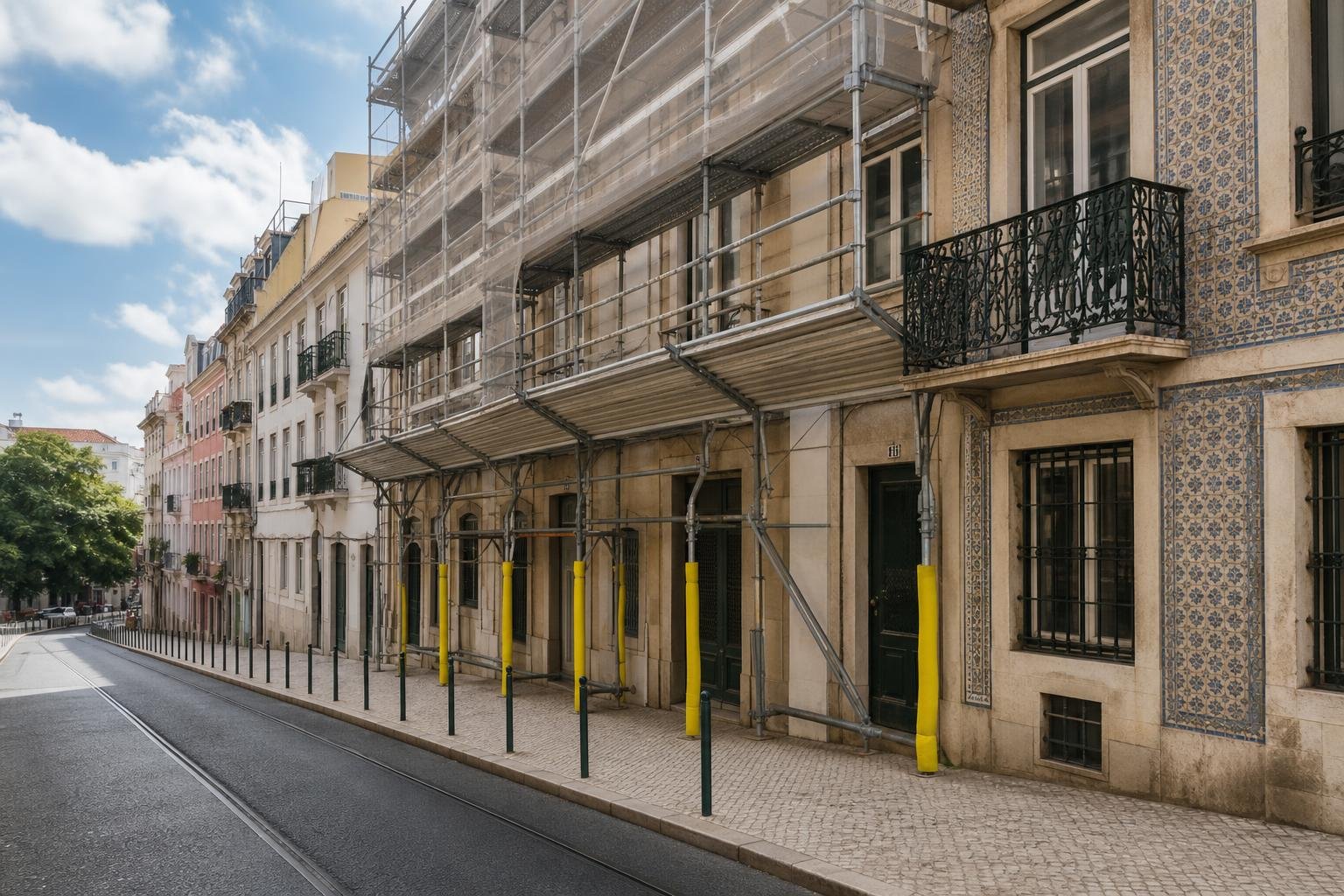
In Lisbon, any work that takes ducts or equipment outdoors needs particular care. The municipal regulation published in the Diário da República says external ventilation ducts must be harmoniously integrated into the architecture and, in buildings under condominium ownership, may require owners’ authorisation. Read the relevant regulation.
Electrical supply, load and vibration: decide before closing the cabinet
A dryer should not run from a coiled extension lead, a multi-plug adaptor or a circuit already serving a washing machine, water heater and countertop appliances. Confirm available load, socket condition and circuit protection before the cabinet is built around it. In an older electrical installation, this check is more important than selecting a more attractive cabinet door.
Weight and movement matter too. The floor should be level, firm and protected against small leaks. Adjust the feet, keep the plug reachable for isolation, and avoid fixing the arrangement against a lightweight partition without considering vibration transfer. In older apartment buildings, washing-machine spin noise is often the greater nuisance; separating washing and drying schedules can make the whole setup less intrusive.
If the project includes new outlets or wall alterations, plan them before finishes are closed. Our guide to sockets and switches in a renovation explains how to organise circuits, positions and access in advance.
Where to install one in a rented apartment
In a rented home, favour solutions that do not permanently alter the kitchen or exterior. A stacked washing-and-drying arrangement on an internal balcony, a freestanding module in an existing utility room, or an under-counter dryer with designed ventilation can all be sensible options. Before drilling, cutting plinths, changing doors or connecting to drainage, confirm the rules with the landlord and keep the approval in writing.
Avoid placing the appliance in a bedroom, an escape route, beside combustible materials or inside an unventilated wardrobe. A balcony is not an automatic destination for hoses, condensate or grilles either: beyond the risk of leaks and condominium disputes, the solution may be incompatible with the building façade.
A straightforward layout generally works best: reachable appliance, a small folding surface, shelf space for detergents and a basket, direct lighting, and enough room to open the door fully. The aim is not a showroom laundry room; it is a reliable routine that does not block the home or hide risks behind closed doors.
Maintenance that protects the appliance and indoor air
Good installation does not remove the need for maintenance. Clean the lint filter as the manufacturer directs, check the tank or drain connection, vacuum accessible grilles and do not leave damp clothes in the drum. On machines with a condenser or secondary filters, the specified cleaning affects performance, drying time and heat build-up.
Watch the room during the first few weeks. Is there a damp smell? Do cabinet doors become unusually hot? Is there water on the floor or condensation on the window? These signs call for an early correction—not air freshener or a dehumidifier placed beside the machine. The DGS advises dealing with moisture problems as soon as they appear and maintaining ventilation systems properly. Review the guidance here.
A well-integrated dryer can reduce the amount of washing dried indoors, but it does not replace ventilation, cleaning or attention to leaks. Treat the appliance as part of the laundry design, not as an isolated purchase.
Planning a kitchen, enclosed balcony or utility-area renovation in Lisbon? Obra Lisboa can help coordinate appliances, ventilation, electrical work, drainage and finishes before the build closes off essential access.
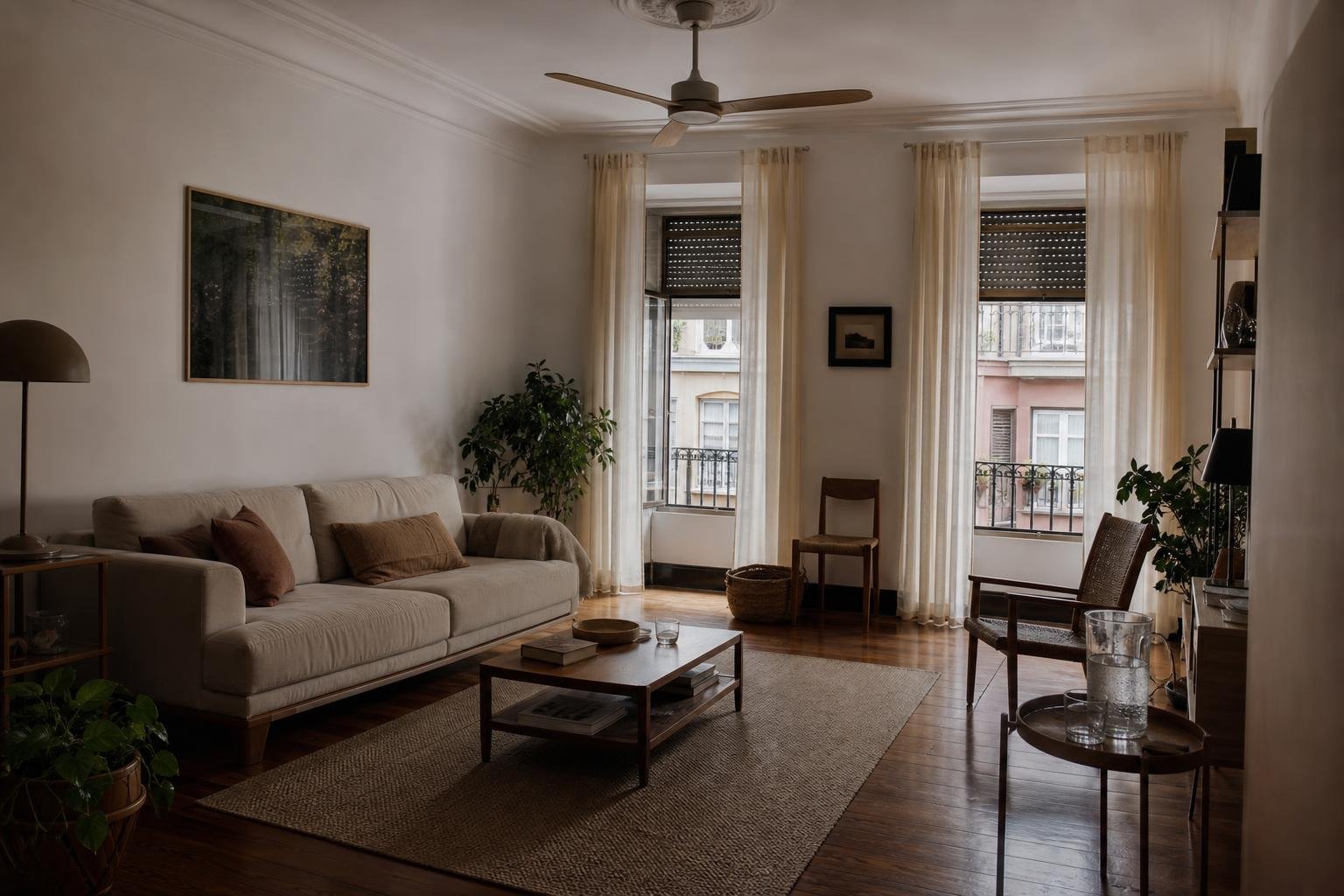
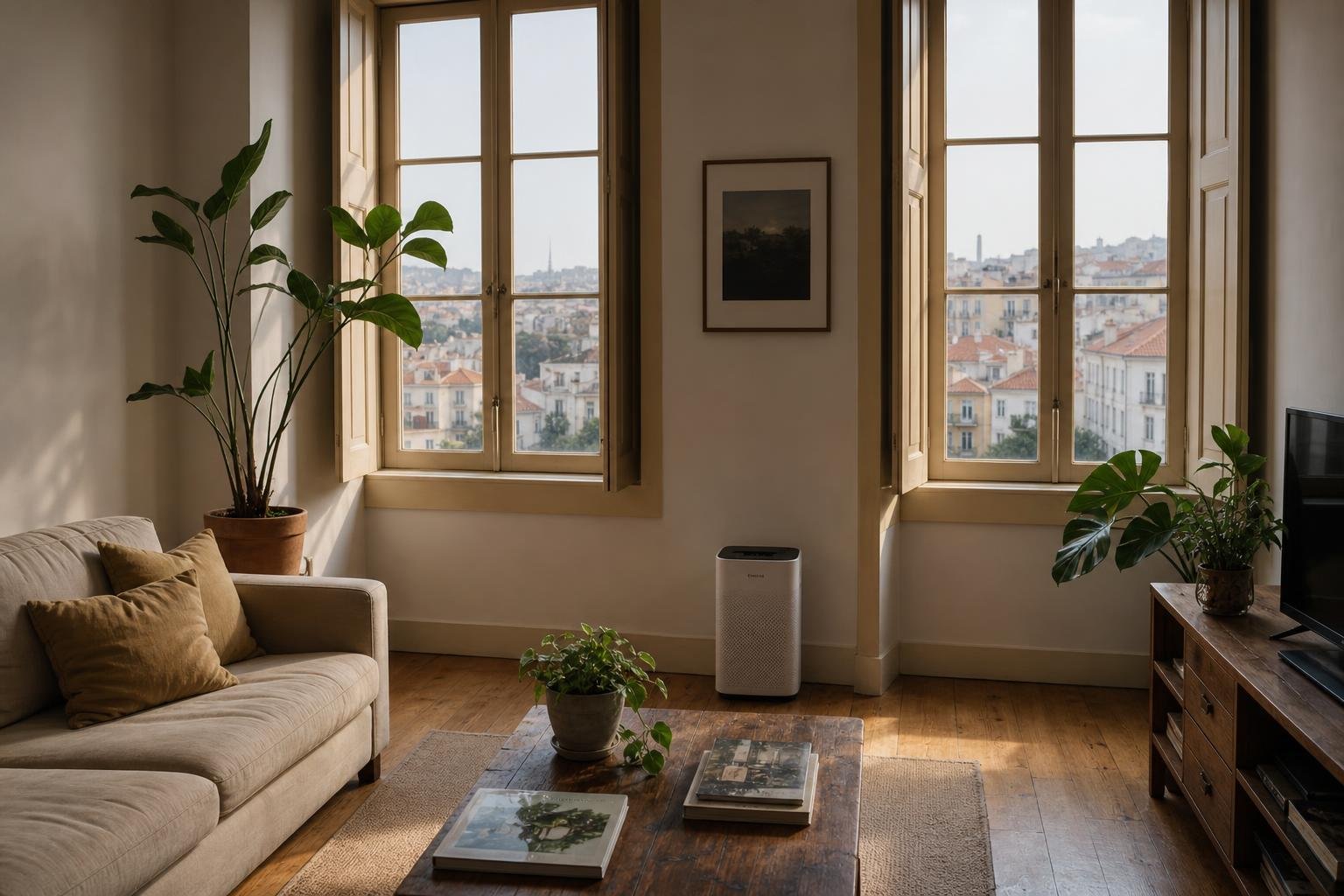
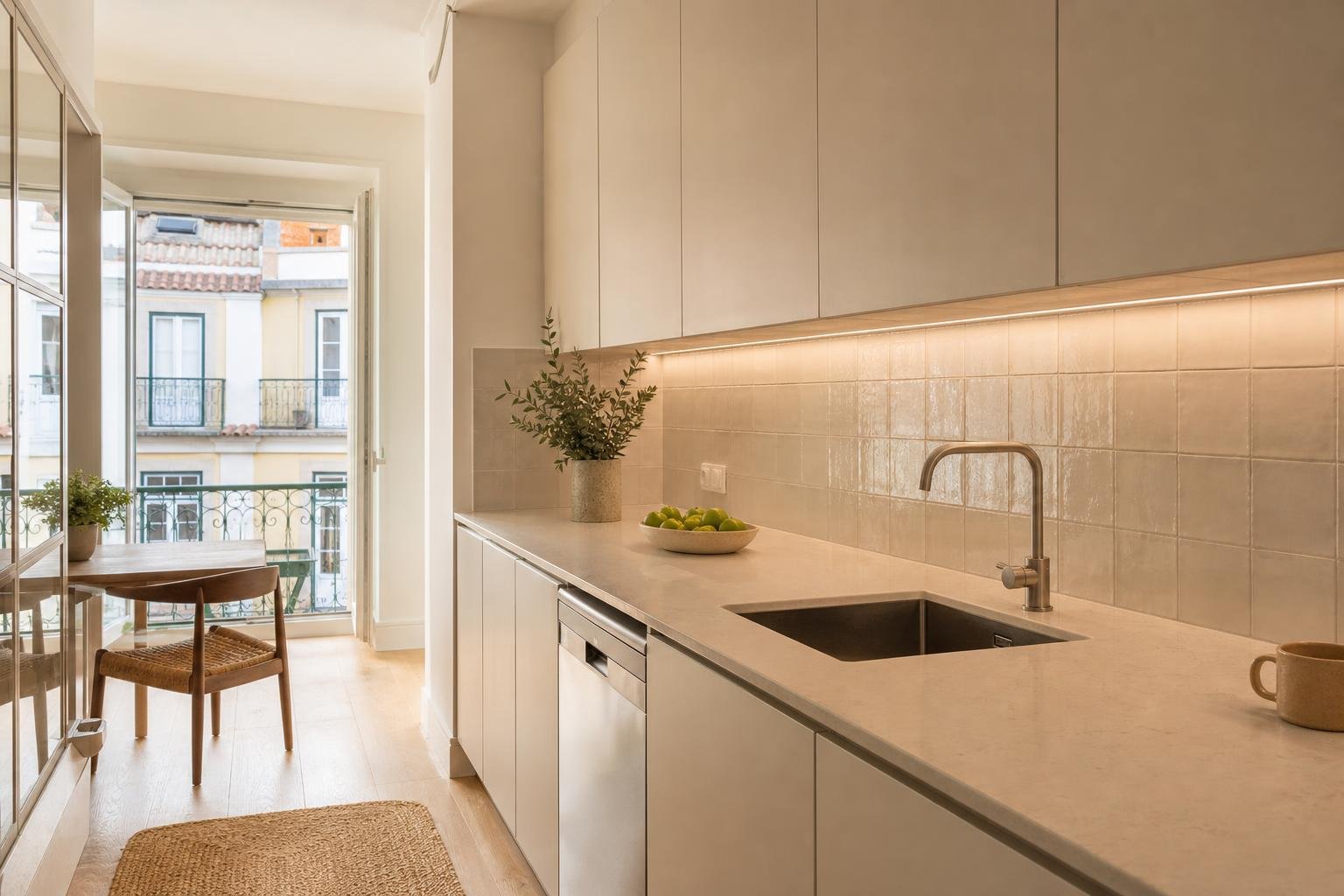
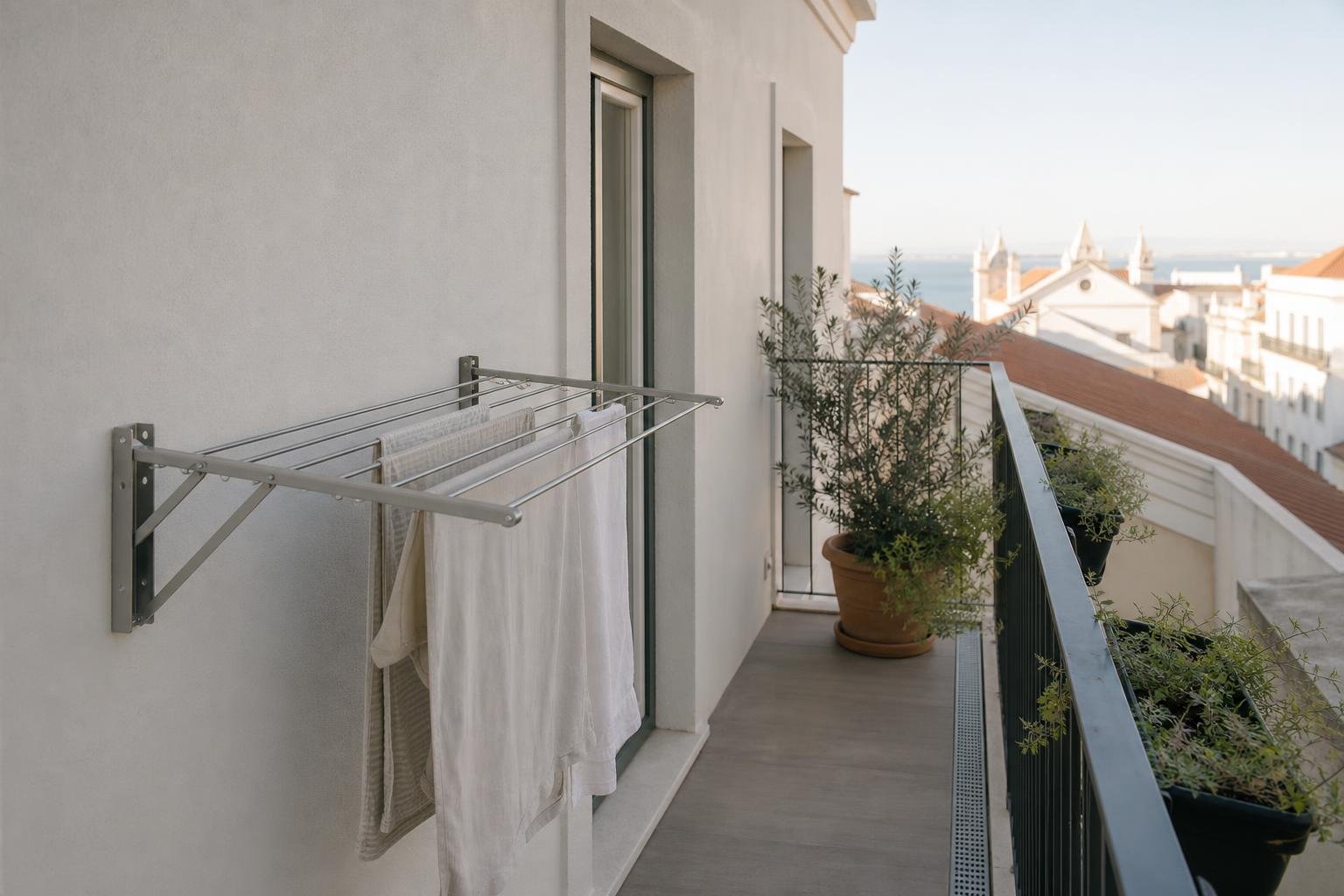
AI-generated editorial image; it does not depict an Obra Lisboa project.

Obra Lisboa