
In a Lisbon kitchen, summer discomfort rarely has one single cause. Late-afternoon sun comes through the glazing, the oven and hob release heat while dinner is being made, the fridge works harder, and an open window facing a hot street may not cool anything at all. Air conditioning can be appropriate, but it should not be the automatic answer to a room that gains heat quickly and releases it poorly.
The most effective order is straightforward: stop sun before it passes through the glass, reduce heat generated in the kitchen, remove steam and warm air while cooking, then use the hours when outdoor air is cooler. ADENE identifies shading and night-time natural ventilation as key summer-comfort strategies. Read ADENE’s guidance on summer thermal comfort.
This guide sets out what can be improved immediately, what is worth including in a renovation, and when technical advice is needed.
Find out when and where the heat is entering
Before buying equipment, watch the kitchen over three or four warm days. Note when sunlight reaches the glazing, when worktops become hot, and whether the room worsens before or after cooking. A west-facing kitchen may overheat mainly from mid-afternoon until dinner; in an enclosed balcony or sunroom, the greenhouse effect can begin much earlier.
Separate solar gains from internal gains. If the room heats up when no one is using it, focus first on the window, exterior shading, shutter box and any exposed wall or roof. If the problem appears only when the hob is on, review extraction, cooking routines and kitchen layout. That distinction prevents spending money on an appliance that is merely compensating for an avoidable daily problem.
Also check whether the fridge receives direct sun, sits too close to an oven, or has ventilation grilles blocked by an incorrectly cut plinth. It will not cool the room, but an appliance working under strain adds heat and electricity use exactly where both are least welcome.
Stop sunlight outside the glass whenever possible
An internal blind helps with glare, but it receives solar radiation after it has crossed the glazing. To reduce heat build-up, exterior protection is usually more effective: adjustable shutters, external blinds, a correctly sized awning or the shade from an overhang can intercept sunlight before it reaches the window.
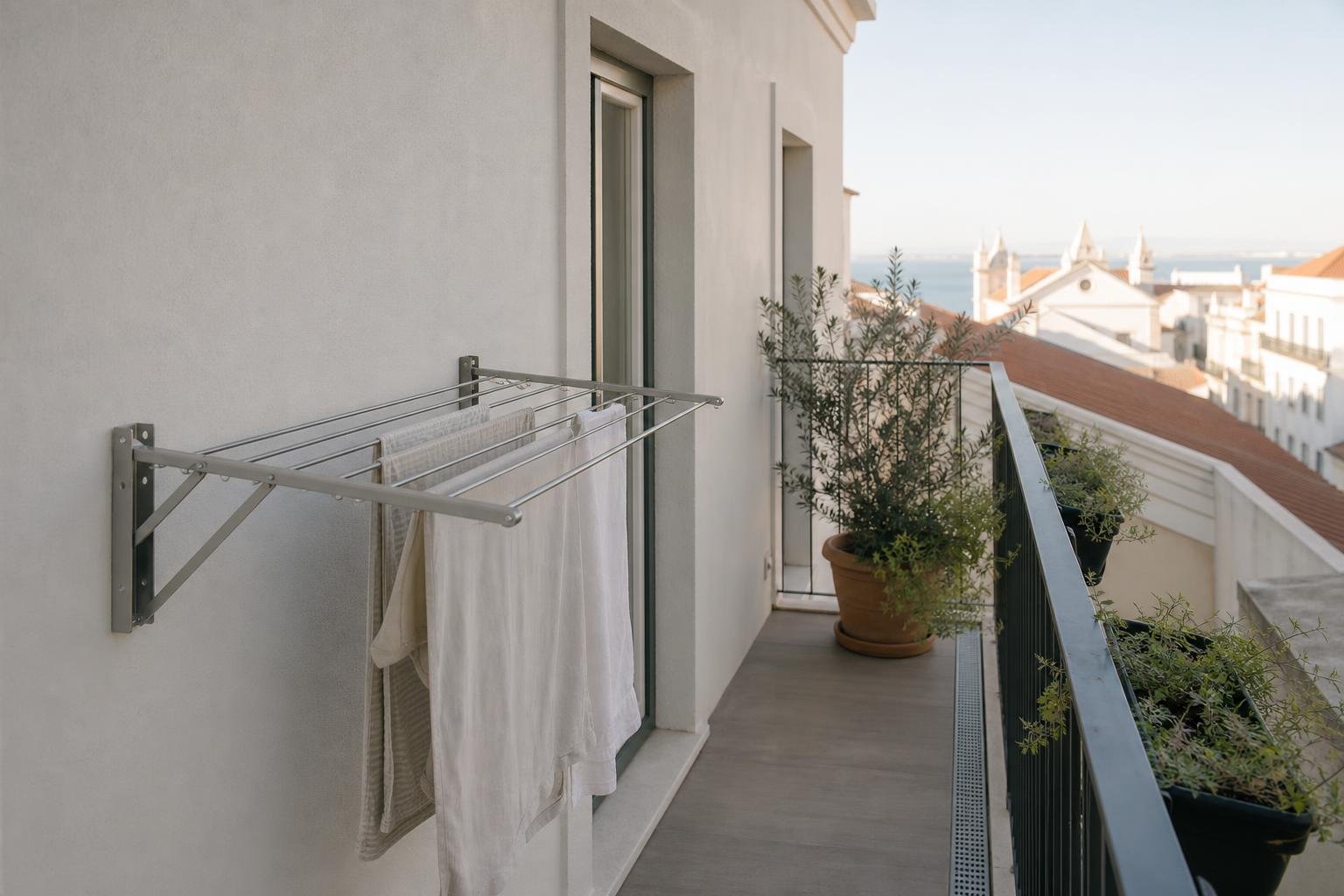
In a west-facing kitchen, close or angle the protection before direct sun arrives, without turning the room into a dark box. Keep useful diffuse daylight and make sure the solution does not prevent window opening or make cleaning difficult. In apartment buildings, awnings, fixed elements and visible façade changes are not individual decisions: check condominium and municipal requirements. Lisbon’s Urbanisation and Building Regulation sets conditions for awnings and restricts visible installation of equipment on façades. Consult Lisbon’s RMUEL before changing a façade.
If you are replacing windows, do not choose only by frame appearance. Ask about the glazing’s summer performance, the actual orientation of the opening, and compatibility with shading. Window and shade should be planned as one system.
Remove steam and heat while you cook
Extraction is not only about odours. Boiling, frying and simmering release steam, particles and heat; if that air stays in the kitchen, perceived temperature rises and moisture spreads around the home. Portugal’s Directorate-General of Health recommends ventilating while cooking as well as ventilating the home daily. See DGS recommendations for ventilation and indoor air.
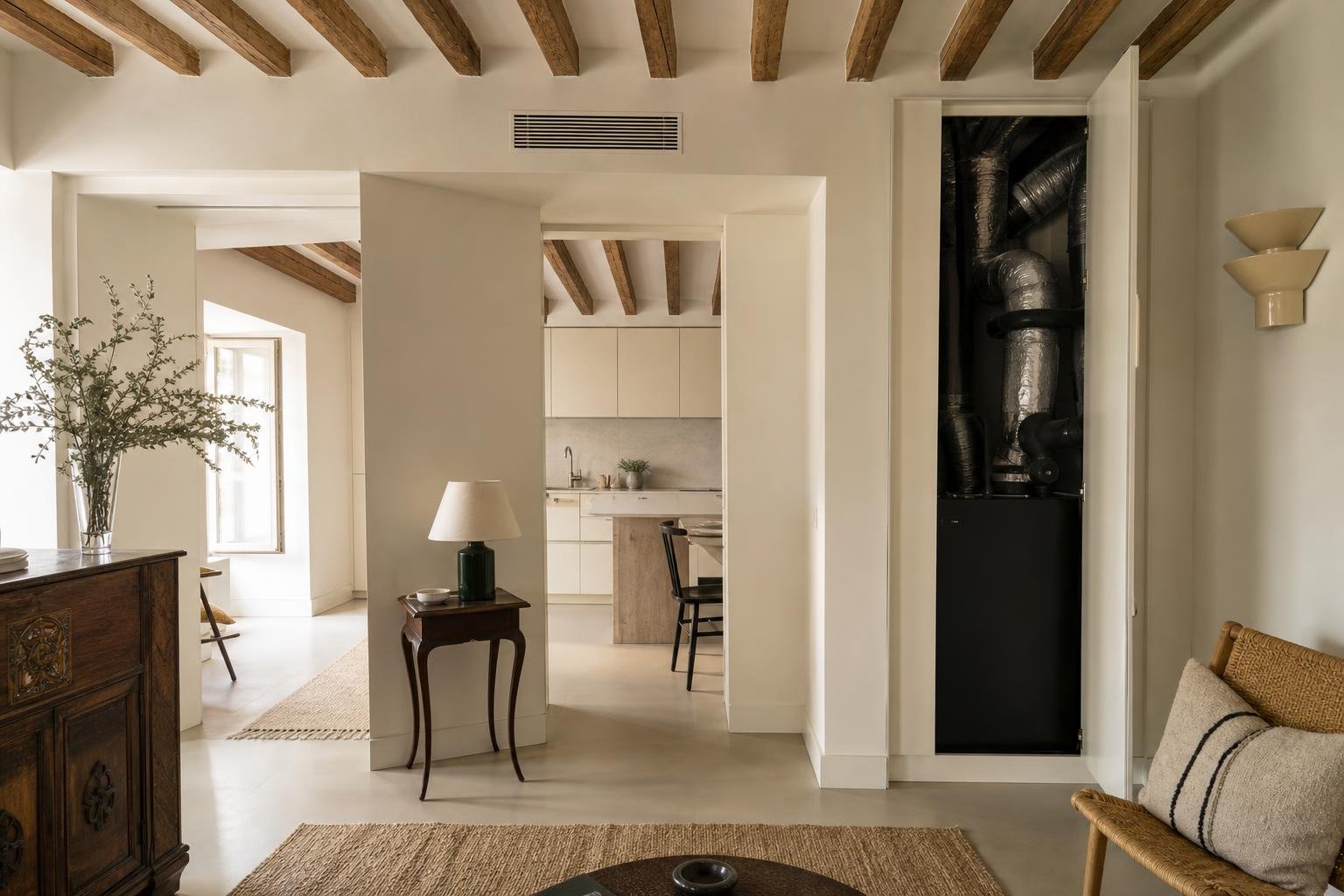
Switch the extractor on at the start, not after the kitchen is full of steam. Where there is external discharge, check that the duct route makes sense, the outside grille is clean, and there are no improvised reductions. A recirculating hood can help with grease and odours, but it does not send humidity or warm air outside; it needs the right filters and regular maintenance.
If the window is near the cooking area, open it only enough to support extraction without creating a draught that affects the flame of a gas appliance. Ventilation is never a reason to overlook poor appliance condition, unsafe connections or damaged ducts.

Change small routines that multiply heat
On hot days, treat the menu as part of the home’s comfort plan. Choose shorter cooking methods, use lids, use the microwave where suitable, prepare cold meals earlier, or use the oven during cooler hours. An uncovered pan heats the room and makes extraction work longer; repeatedly opening the oven does the same.
You do not need to avoid using the kitchen. The aim is to avoid stacking the oven, dishwasher, indoor clothes drying and several cooking zones into the period between roughly 6 pm and 9 pm. After cooking, let the extractor run for a few more minutes and move hot dishes away from the preparation area.
Food safety still matters: do not leave perishable food on the counter to cool slowly in a hot kitchen. Prepare food in stages, chill leftovers in shallow containers where appropriate, and reduce the time the refrigerator door stays open.
Use cross-ventilation and night cooling carefully
The best moment to refresh indoor air is not necessarily the hottest one. When outdoor temperatures fall in the evening or overnight, open two sides of the home for a short period if the layout allows: for example, the kitchen window and a window in an opposite room. Open internal doors to create a route, then close solar protection before sunlight returns.
If the kitchen has only one external wall, use its window together with the door to the hall, provided there is an air outlet elsewhere in the home. A fan can strengthen this movement, but it cannot replace an exit route for warm air. On a very hot night, avoid bringing in outdoor air that is warmer than indoor air.
During intense heat, DGS recommends closing blinds or shutters and keeping air circulating indoors. Read DGS recommendations for hot-weather periods. Older people, young children and people with health conditions need extra attention: thermal comfort is also a preventative health issue.
When the renovation needs to go beyond a new extractor
If the kitchen remains uncomfortably hot after improving sun control, cooking practices and ventilation, move on to renovation decisions. This is the time to review shutter boxes, window airtightness, insulation to exposed walls or ceilings, fridge location, the extraction-duct route, and electrical points for a future fan or cooling system.
Do not enclose a balcony, change a façade or fit an outdoor unit without checking technical implications and applicable rules. Equipment needs condensate drainage, maintenance access and a location that does not transfer noise or hot air to neighbours. For a larger intervention, bring comfort, ventilation and kitchen design together instead of treating each as an optional extra.
It is also useful to review kitchen planning, kitchen extraction without a direct outdoor vent and external shading for apartments. These are connected decisions: a comfortable summer kitchen depends less on one standalone appliance and more on a well-resolved sequence.
If your kitchen overheats and you are preparing a renovation, Obra Lisboa can help bring shading, ventilation, equipment and finishes into one coordinated work plan.
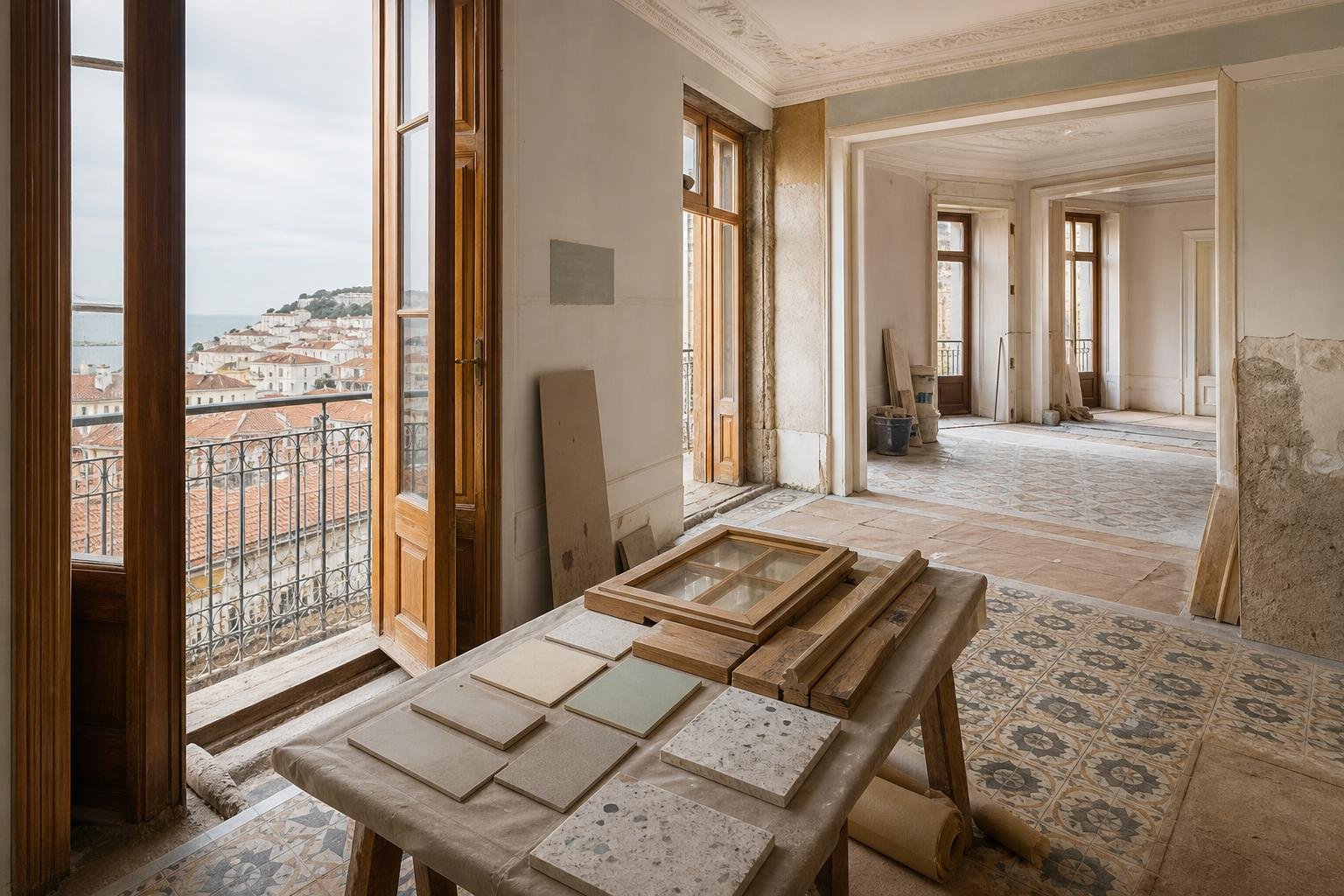
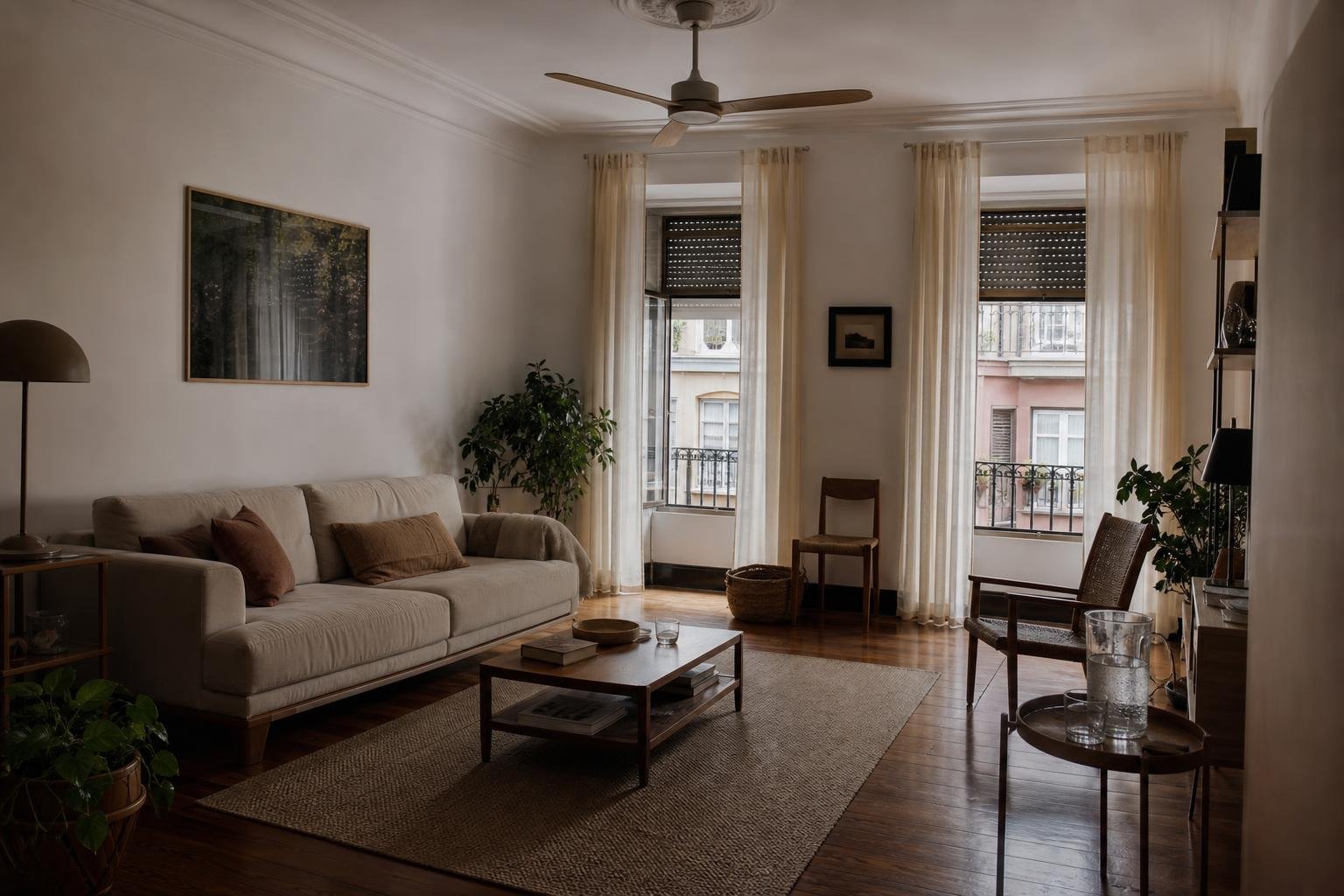
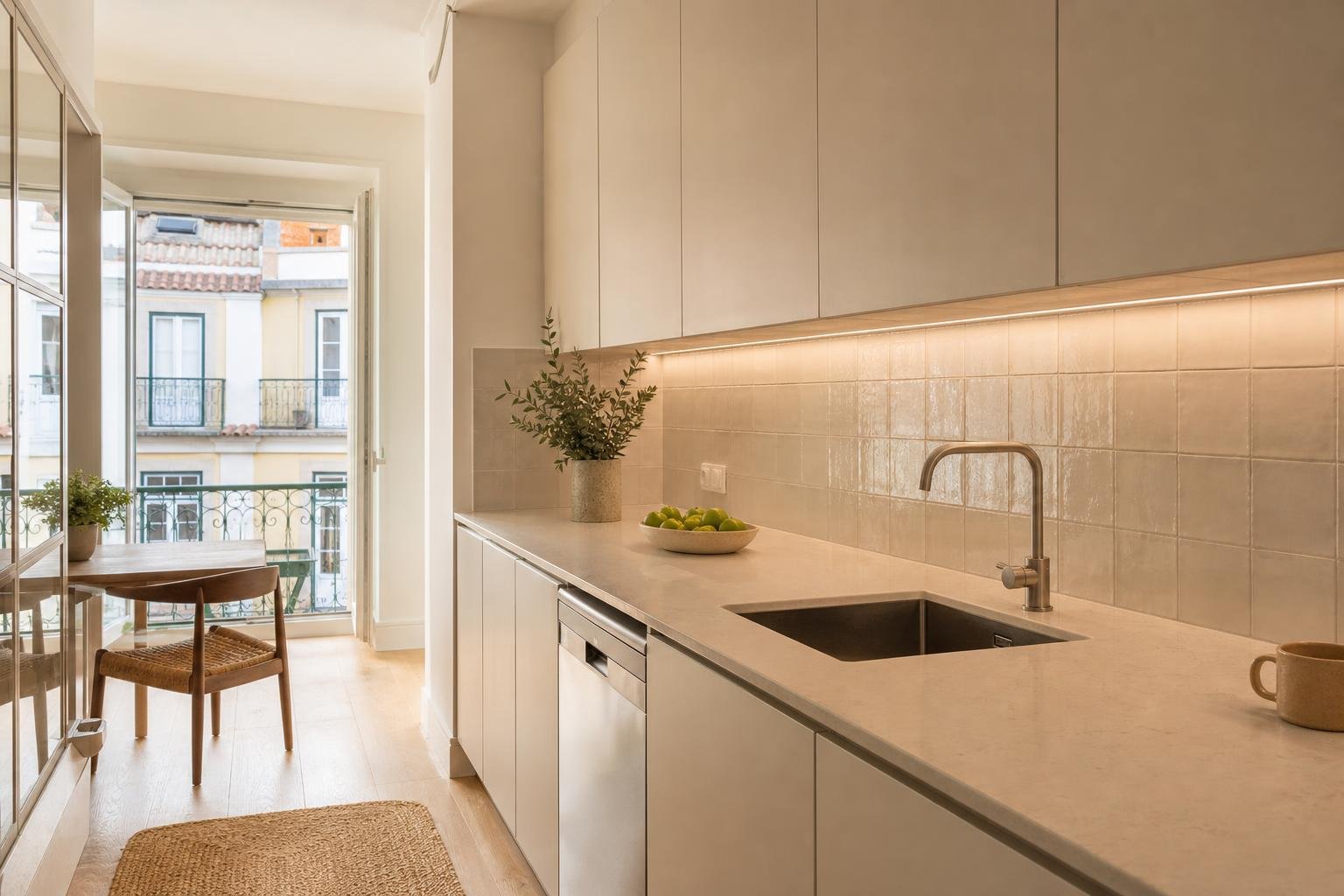
AI-generated editorial image; it does not depict an Obra Lisboa project.

Obra Lisboa