Before handing over keys or paying a deposit, get written confirmation of who is responsible for the work, which employers’ accident insurance is active, and how damage, changes and stoppages will be reported. This check does not replace the building contract or the owner’s home-insurance policy, but it prevents a common mistake: assuming that any insurance connected to a renovation automatically covers workers, neighbours, common areas and belongings stored in the home.
In a Lisbon renovation, a leak during demolition, a scratch in the lift or an inadequately covered subcontractor can trigger urgent decisions. The useful time to separate responsibilities is before the first delivery of materials.
Contents
- Why insurance is not one single issue
- Which documents to request from the contractor
- How to allocate responsibilities in the contract
- What changes in a condominium apartment
- Mistakes that leave an owner more exposed
- A checklist for the week before work starts
Why insurance is not one single issue
There are at least three areas to separate. The first is employers’ accident insurance for people carrying out the work. The second is liability for damage caused to third parties or property. The third is the owner’s home-insurance policy, which may contain its own conditions, exclusions or notification duties when significant work is planned.
IMPIC requires contractors holding a licence or certificate to have employers’ accident insurance for workers they employ or who perform work under their responsibility in Portugal. Its control documentation also states that, for private works, the insurer’s declaration must identify construction activity, policy details and validity. Review the IMPIC list of required documents rather than accepting only a photograph of an insurance policy.
This does not mean that every material loss is covered. Ask the contractor to explain the coverage supplied in writing, and ask your home insurer whether demolition, service alterations or a temporarily empty home require notification before work starts.
| Area | Practical question | Useful record |
|---|---|---|
| Site team | Who is covered by employers’ accident insurance? | Current insurer declaration |
| Third-party damage | Who receives and reports a complaint from a neighbour or condominium? | Written contact and procedure |
| Home and contents | Does the owner’s policy require notice or an additional measure? | Written reply from insurer or broker |
| Common areas | Who protects, photographs and reinstates the lift, stairs and corridors? | Condition record and protection plan |
Which documents to request from the contractor
Request documents before appointing the contractor, rather than when the crew is already at the door. For a construction company, confirm its tax identification, relevant qualification, the named person responsible on site, employers’ accident insurance and the contacts to use if something happens. The IMPIC guidance on qualification requirements confirms that employers’ accident insurance is part of the requirements for private-works contractor licences and certificates.
Do not leave attachments scattered through phone messages. Create a shared digital folder or a paper file with dated versions. Link each document to the contract: appointed company, site address, covered work and planned period. If outside teams will handle electrics, windows, stonework or air conditioning, ask who appointed them and who remains accountable to you for coordination.
The contract should identify the responsible contractor and should not leave the subcontracting chain invisible. Law 41/2015 frames construction activity and includes duties concerning project participants and site documentation; use the version made available by IMPIC as a reference point.
How to allocate responsibilities in the contract
Turn broad questions into working clauses. Rather than stating only that “the contractor provides insurance”, identify who supplies evidence, by what date, who reports an incident, who files a claim and who retains photographs, invoices and affected samples.
Also define what happens to materials bought by the owner. A kitchen, taps or flooring delivered early do not automatically become protected through a generic phrase. Record who accepts delivery, where items are stored, how they are protected and who checks quantities and damage on arrival. This connects directly with change control: see how to approve material substitutions without losing control when an item is unavailable or arrives different from the agreed specification.
Include a simple decision route: incident identified, photographs taken on the same day, notice to the client, temporary protective action and a repair proposal. If the cause is unclear, do not immediately accept blame or authorise a repair that removes evidence needed for assessment.

What changes in a condominium apartment
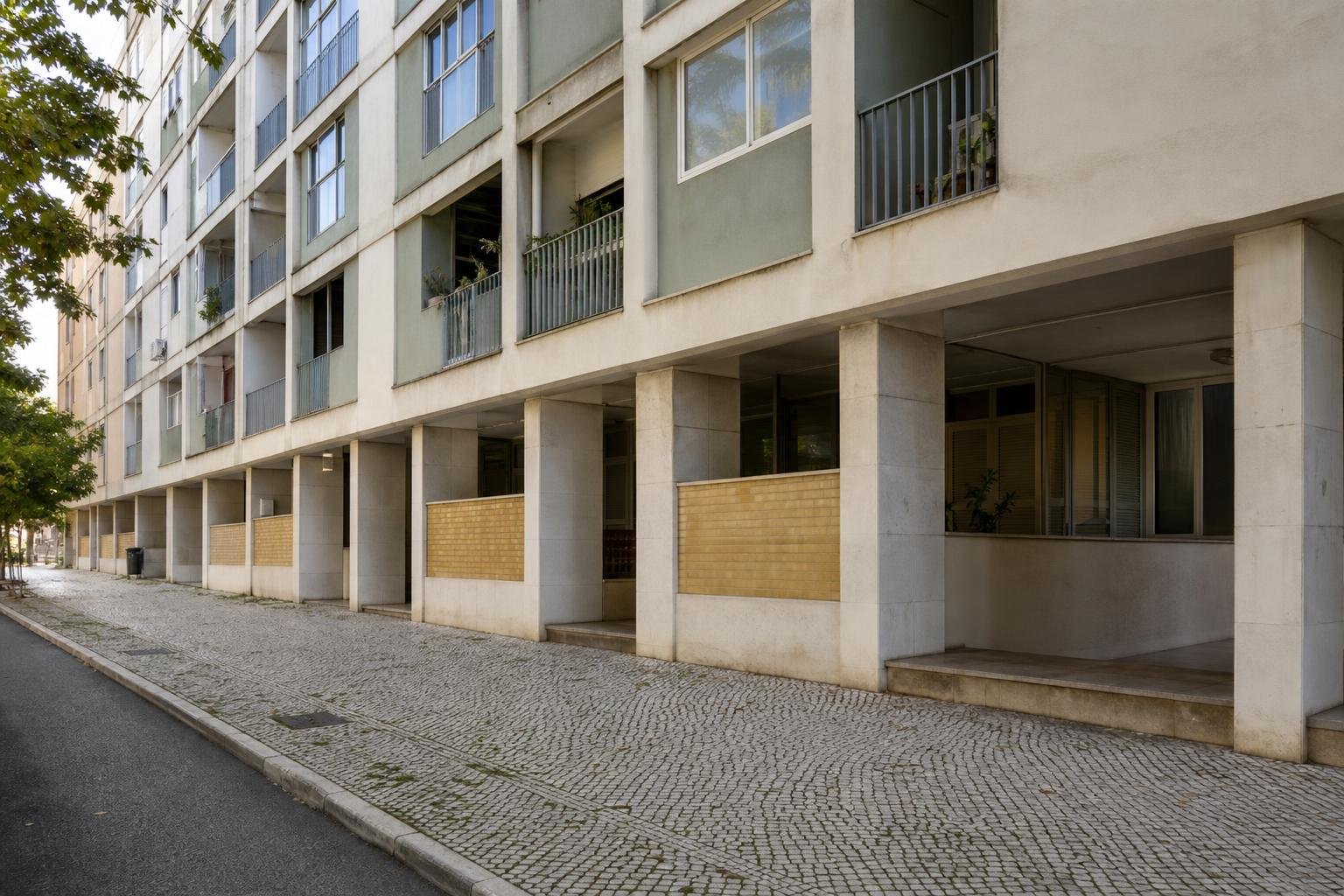
In an apartment building, the risk does not stop at the flat door. Lifts, landings, doors, handrails, meters and finishes in shared areas need a clear rule for access, protection and cleaning. Prepare a condition record with dated photographs of every route people and materials will use; include meters, thresholds, the lift cabin, walls and floor finishes along the route.
The record is there to compare before and after, rather than to turn every old mark into a dispute. Share it with the contractor and, where appropriate, the building manager. Read a practical method in our guide to a pre-renovation condition record for an apartment building.
Agree delivery hours, temporary material storage, lift protection and daily waste removal. Where public space, a skip or access changes are needed, confirm the applicable Lisbon process. Even works exempt from prior planning control may require a start notice: the municipality says this is submitted up to five days before work begins through its information on notifying the start of work.
Mistakes that leave an owner more exposed
The first mistake is treating a company certificate as a guarantee against every future loss. It may confirm qualification and requirements, but it does not replace reading the contract, defining the scope and understanding the incident procedure.
The second is accepting “we are insured” without asking whose policy it is, whether it is current, which activity it covers and whether the actual site team is included. The third is allowing additional work to start without a written instruction. A change made “while the wall is open” can affect time, cost, liability and the need for notification.
Also avoid payments disconnected from confirmation. Before releasing an instalment, check what has been completed, delivered and left outstanding. Rising costs are no reason to lose traceability: follow the context in our article on construction costs and budget control.
A checklist for the week before work starts
Review this short list with the contractor, condominium manager and, where needed, the insurer:
- Confirm the final contract, quotation, programme and emergency contacts.
- File contractor qualification and employers’ accident-insurance evidence.
- Ask the home insurer in writing whether the work requires notice, altered terms or specific precautions.
- Photograph the flat, shared areas and meters before the first material delivery.
- Set out keys, codes, access hours, route protection and storage locations.
- Create one channel for approving changes, extras and incidents.
- Record who may authorise spending and up to what limit.
If damage, an accident or a safety concern arises, stop the affected work, protect people and property, and use the contact route defined in the contract and policies. Do not try to settle a serious issue through informal messages alone.
A well-managed renovation starts with readable responsibilities. It then becomes easier to discuss programme, cost and quality using records rather than conflicting memories.
Key takeaways
- Request current evidence and link it in writing to the company, site and planned dates.
- Separating work accidents, third-party damage and home insurance avoids false assumptions.
- Photograph the flat and common areas before the first delivery.
- Set one procedure for incidents, changes and spending approvals.
If you are preparing a renovation in Lisbon, bring together the contract, scope, team documents and initial condition record before scheduling the first delivery. Obra Lisboa can help structure the work and coordinate the decisions needed to start with clear information.
Sources and further reading
- IMPIC list of required documents
- IMPIC guidance on qualification requirements
- version made available by IMPIC
- information on notifying the start of work
Editorial image; it does not depict an Obra Lisboa project.

Obra Lisboa