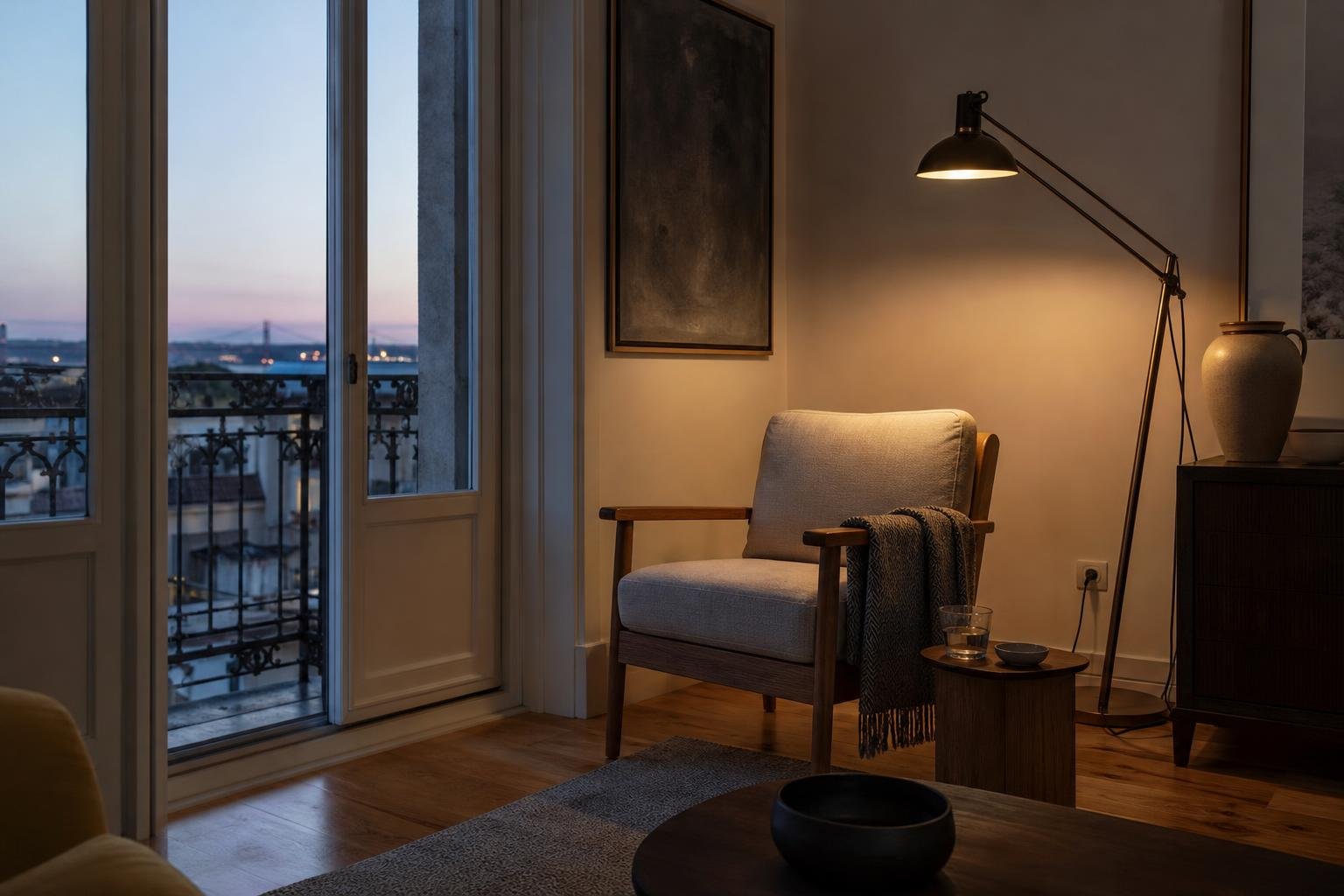
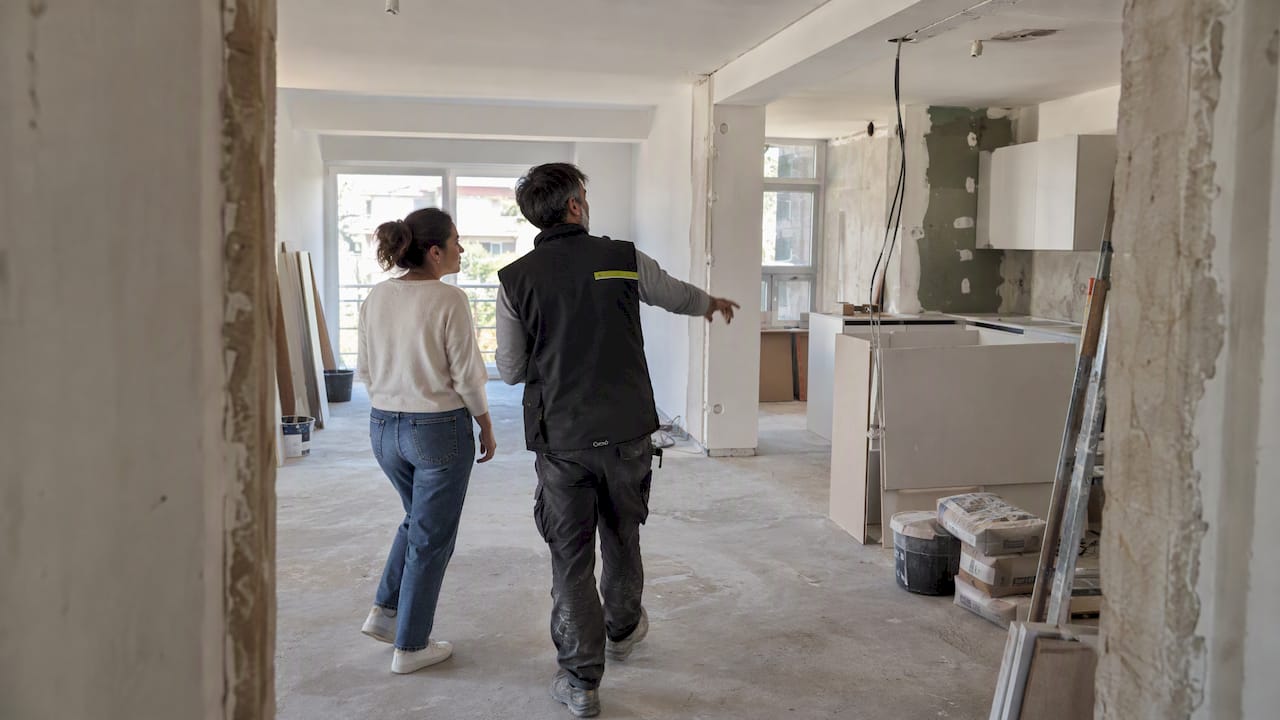
In a small living room, a rug should connect the seating area while leaving a clear route between the door, sofa and window. One that is too small looks stranded; one that is too large presses against every edge and makes the room feel heavy. Before choosing colour or pattern, mark the intended area on the floor with painter’s tape and walk around it. This quick test prevents difficult returns and shows whether the rug should serve only the coffee table or also take the front feet of the sofa.
Contents
- Start with the route through the room, not the catalogue
- What size makes a small room feel settled?
- Rectangle, round rug or runner?
- Choose colour, pattern and texture without adding weight
- The material needs to suit everyday life
- Grip, maintain and review before buying another one
Start with the route through the room, not the catalogue
Watch how the room is actually used over an ordinary day. The route to a balcony, hallway, shelving or kitchen should not make anyone step on a curling edge. Portugal’s Directorate-General of Health advises good lighting throughout the home and warns against loose rugs as a fall risk; that matters in a living room as much as on stairs or in an entrance hall. Read the DGS guidance on preventing falls at home before treating a rug as decoration alone.
Mark the footprint with low-tack tape, newspaper or a flat throw. Open doors, pull out chairs, run the vacuum and try sitting down on the sofa. If the outline crosses the route people use most, reduce it or turn it. In a narrow room, a rectangular rug placed along the longer dimension often works best; in an almost square room, a square or broader rectangle may organise the furniture more convincingly.
- Keep access to the door and window outside the high-friction area.
- Do not leave an edge directly under a chair that is pulled out every day.
- If there are children, reduced mobility or pets at home, favour a flat surface and discreet floor grip.
What size makes a small room feel settled?
The safest rule of thumb is to relate the rug to the largest furniture pieces. In a compact seating area, it can sit wholly in front of the sofa and hold the coffee table; where there is enough room, let the sofa’s two front feet rest on it. This second arrangement usually creates more continuity, provided it does not take away the walking route.
Do not buy from a shop photograph alone. Measure the sofa width, coffee-table depth and distance to the furniture opposite. Then decide how much visible floor you want around the rug. That band of flooring gives the eye breathing room and makes the room’s shape easier to read. A tiny rug between sofa and table, especially on a broad floor, tends to break the composition into pieces.
There are three useful arrangements. A rug only beneath the coffee table can suit a very narrow seating area or a sofa close to circulation, provided it still extends clearly beyond the table. With the sofa’s front feet on the rug, sofa, chair and table become one grouping; check the clearance to the route through the room. Covering almost the whole seating area works best in an open room with limited furniture, without pushing the rug against walls or blocking doors.
If the sofa opens into a bed, test the layout with it unfolded. Our guide to small living-room sofa beds can help you check circulation and storage before fixing the arrangement.
| Position | When it works | Watch out for |
|---|---|---|
| Only beneath the coffee table | A very narrow seating area or a sofa close to circulation | The rug should still extend clearly beyond the table |
| Sofa front feet on the rug | The sofa, chair and table form one grouping | Check the clearance to the route through the room |
| Across almost the whole seating area | An open room with limited furniture | Do not push the rug against walls or block doors |
Rectangle, round rug or runner?
The shape should follow the rug’s job. A rectangle is the most predictable choice for framing a two- or three-seat sofa. A round rug can soften a room full of rigid geometry, but it needs enough empty space around it for the curve to read clearly. In a long room, a runner works only when it serves a circulation strip; do not use one as a substitute for a living-room rug that is too costly or too large.
There is a familiar Lisbon-flat situation: a narrow room, a window at one end and a sofa along the long wall. Here, a rectangle with its long side parallel to the sofa usually makes the space easier to understand. If a dining table is nearby, keep the two rugs clearly separate. Two rugs that nearly touch, without forming a deliberate composition, make a room feel unsettled.
Do not block daylight with tall furniture beside the window simply to create room for a larger rug. ADENE advises occupants not to obstruct natural-light openings and to switch lighting by zone according to how the space is used; see this ADENE note on using interior lighting. The rug should support the room’s organisation, not force the seating area away from the window without a good reason.

Choose colour, pattern and texture without adding weight
In a compact space, continuity matters more than absolute neutrality. You can use colour, provided the scale of the pattern suits the room. A tight, high-contrast pattern constantly pulls attention down to the floor; a more open motif, a restrained stripe or tonal texture adds character without competing with curtains, shelving and cushions.
Look at a sample at three moments: morning by the window, late afternoon and under the artificial light you actually use. The DGS notes that windows, lighting and orientation affect indoor comfort, and that living spaces need control of excessive light and heat. It is worth reviewing the DGS technical sheet on wellbeing and environmental comfort at home when the room gets direct sun or little daylight.
For an easy-care base, choose a mid-tone that tolerates light marks between cleans. Very pale rugs quickly show dust and stains; very dark ones can reveal hair, fibres and crumbs. If you want a light rug, balance it with a short, dense texture, particularly near a balcony or an area where shoes come in.
The material needs to suit everyday life
No single fibre is right for every living room. Wool has body and comfort, but needs attention to cleaning instructions and may not be the most carefree option in a home with frequent spills. Cotton and washable fibres make routine care easier, although they may crease or slip more. Synthetic fibres often cope well with heavy use, but compare their feel, thickness and edge finish: a rug that looks practical on display may curl after some use.
Avoid deep pile beside a low table, a sofa bed or chairs with narrow legs. Cups, toys and furniture legs become less stable, while vacuuming takes more effort. A low or medium weave is usually more predictable in a room that also hosts informal meals, occasional work or play on the floor.
If floating flooring transmits footfall or sounds hollow, do not expect a rug to be a complete acoustic fix. The system beneath the floor has a separate role; see how to compare cork, foam and rubber underlay for floating floors before a renovation.
Grip, maintain and review before buying another one
A good-looking rug fails quickly if it moves. Check whether the back already has a non-slip finish; if it does not, use a proper underlay cut slightly smaller than the rug so it remains hidden. Do not improvise with ordinary tape: it can leave residue or affect the floor finish. On timber, vinyl or floating flooring, check with the underlay manufacturer that it is compatible with the surface.
- Vacuum both sides before first use and regularly afterwards.
- Rotate the rug periodically to spread daylight exposure and wear.
- Deal with a spill immediately by blotting rather than rubbing it outwards.
- If one edge keeps lifting, stop hiding it under furniture: correct the underlay or choose a different rug.
In practice, the best purchase is the one that leaves the room usable after it is in place. Take the sofa measurements, a straight-on photo of the room and a simple plan of the routes with you. If the rug choice is part of a larger change to layout, lighting or fixed furniture, speak to Obra Lisboa so those decisions can be included in the renovation plan before bespoke pieces are ordered.
Key takeaways
- Mark the intended footprint on the floor and walk through the room before settling on a final size.
- Relate the rug to the sofa and coffee table instead of treating it as an isolated small accent.
- Keep doors, windows and everyday routes clear, especially with soft pile or flexible edges.
- Use a non-slip underlay compatible with the floor to reduce sliding and curling.
Planning changes to your living room or fitted furniture? Ask Obra Lisboa to include layout, lighting and material choices in your renovation planning before you commit to orders that shape the room.
Sources and further reading
- DGS guidance on preventing falls at home
- DGS technical sheet on wellbeing and environmental comfort at home
- ADENE note on using interior lighting
Editorial image; it does not depict an Obra Lisboa project.

Obra Lisboa