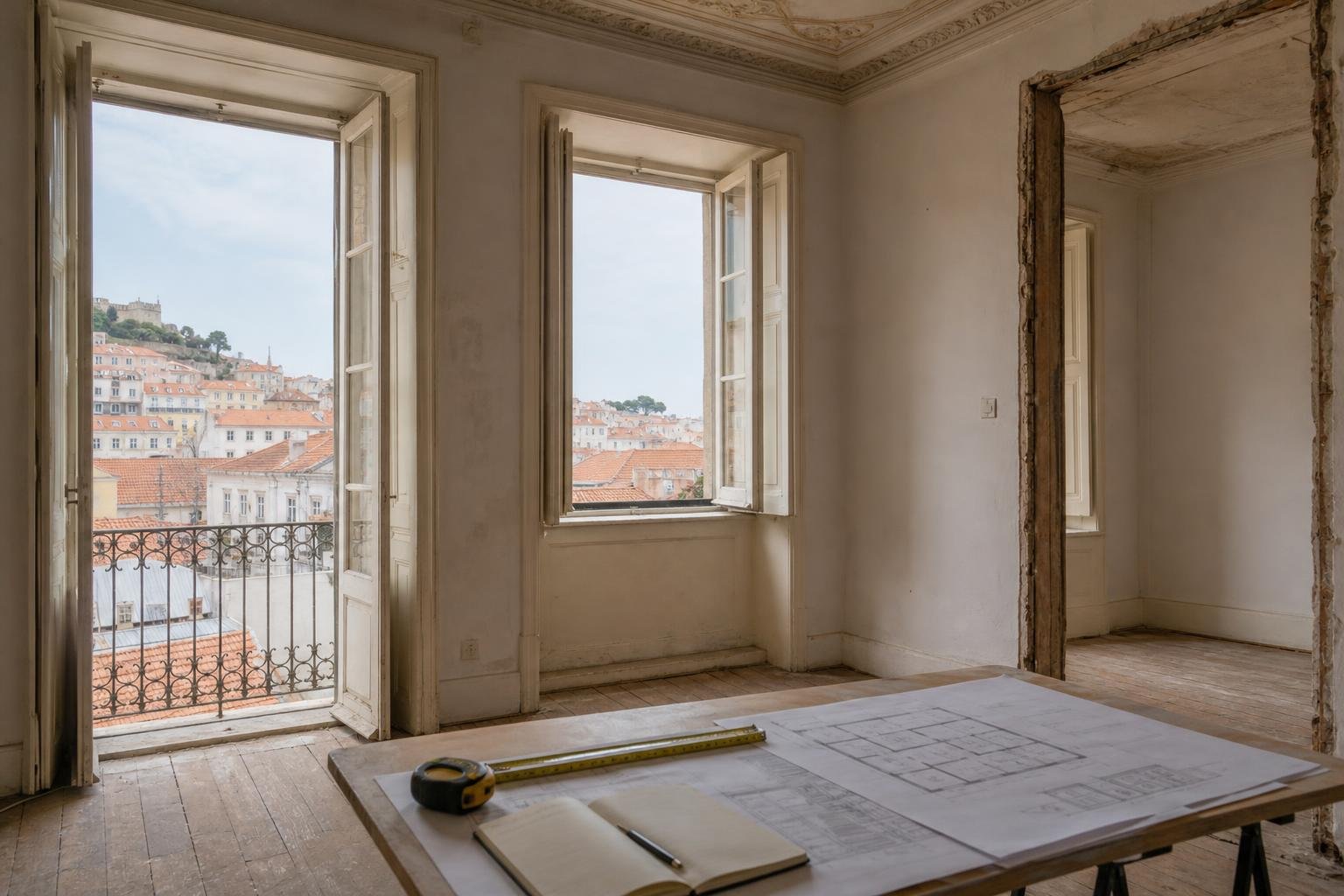
After painting, air the home in short repeated cycles, remove tins and cloths straight away, and do not use a bedroom while the smell remains strong. Leaving one window open for hours can cool walls and fabrics without changing the air effectively; sealing everything to “keep the warmth in” can prolong odours and moisture. In a Lisbon renovation, the practical choice is to create a clear air path, avoid adding steam to the finished room, and check whether the issue is ordinary curing or an overlooked emission source.
Contents
- Why does the smell remain when paint feels dry?
- How to ventilate an apartment effectively
- What to avoid in the first days after painting
- Which materials to specify before the next job starts
- When does the smell stop being a normal drying issue?
- Close out the work with a simple air and cleaning routine
Why does the smell remain when paint feels dry?
Paint being dry to the touch does not mean that every component released by the product has stopped entering the air. Paints, varnishes, sealants, adhesives and some cleaning products can contribute to volatile organic compounds indoors. The Portuguese Directorate-General of Health explains that construction materials, furniture and household activities affect indoor-air quality.
The smell often concentrates in small, lightly used or closed rooms: bedrooms finished before furnishing, new wardrobes, internal corridors and windowless bathrooms. It may also linger because poorly closed tins, rollers, trays, cloths or stained protective cardboard were left behind. Before blaming the wall finish, remove those sources and check cupboards, storage rooms and enclosed balconies.
Do not use air fresheners, incense or candles to cover the smell. They add further substances to the air and make it harder to tell whether conditions are improving.
How to ventilate an apartment effectively
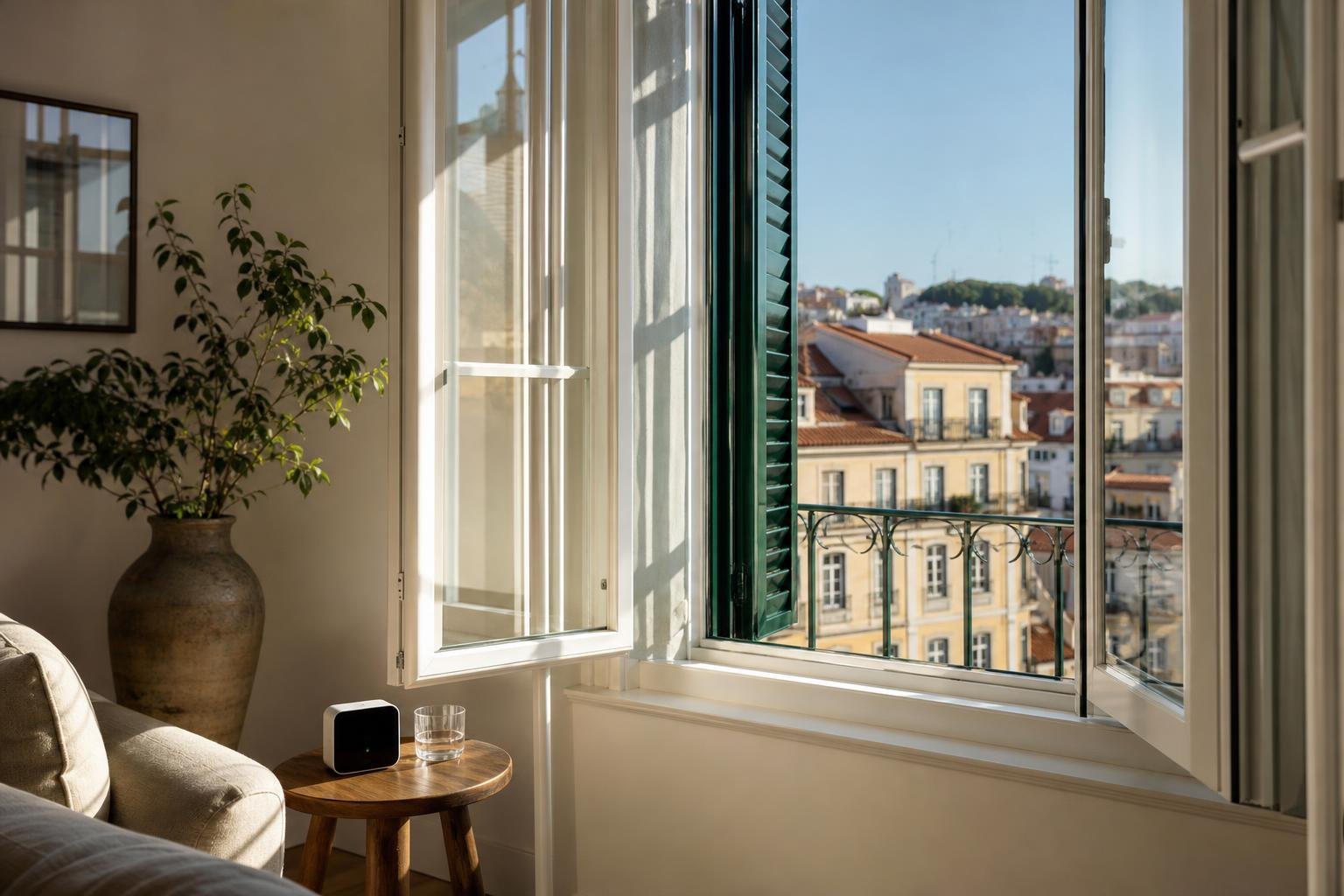
Try to create an air route. Open a window in the painted room and another opening on an opposite side or in another part of the home, leaving internal doors open only where that improves airflow. In a single-aspect flat, open the window and the door towards a ventilated area of the home, without leaving the shared entrance door open or compromising security.
- Ventilate in the morning and late afternoon in short, effective periods.
- Move curtains, internal blinds and furniture that block the window.
- Close windows afterwards if rain, heavy dust or outdoor smoke is entering.
- Repeat the cycle rather than leaving a narrow opening all day.
The DGS recommends ventilating homes for at least 10 minutes a day and during activities that release moisture or pollutants. It also advises maintaining ventilation and air-conditioning systems. Read the DGS general indoor-air recommendations. Where there is mechanical extraction in the bathroom or kitchen, check that it genuinely extracts outdoors and is not blocked.
What to avoid in the first days after painting
Do not turn the freshly painted room into a laundry area, dry clothes on an indoor rack or take long showers with the door open. Water vapour can condense on colder surfaces and delay the room settling into stable conditions. Excess humidity encourages condensation and mould, particularly in cold corners and behind furniture placed against walls, as noted in the DGS guidance on indoor-air quality.
Also postpone storing clothes, books, textiles and mattresses in a wardrobe or bedroom that still has a strong odour. These materials absorb smells and reduce the clear space available for air movement. When furniture must be assembled soon after painting, leave a gap near external walls and do not cover grilles, air inlets or technical-access points.
If the renovation includes floating flooring, follow the cleaning and drying sequence before covering it with rugs or heavy furniture. A new finish does not remove the need to ventilate the room as a whole.

Which materials to specify before the next job starts
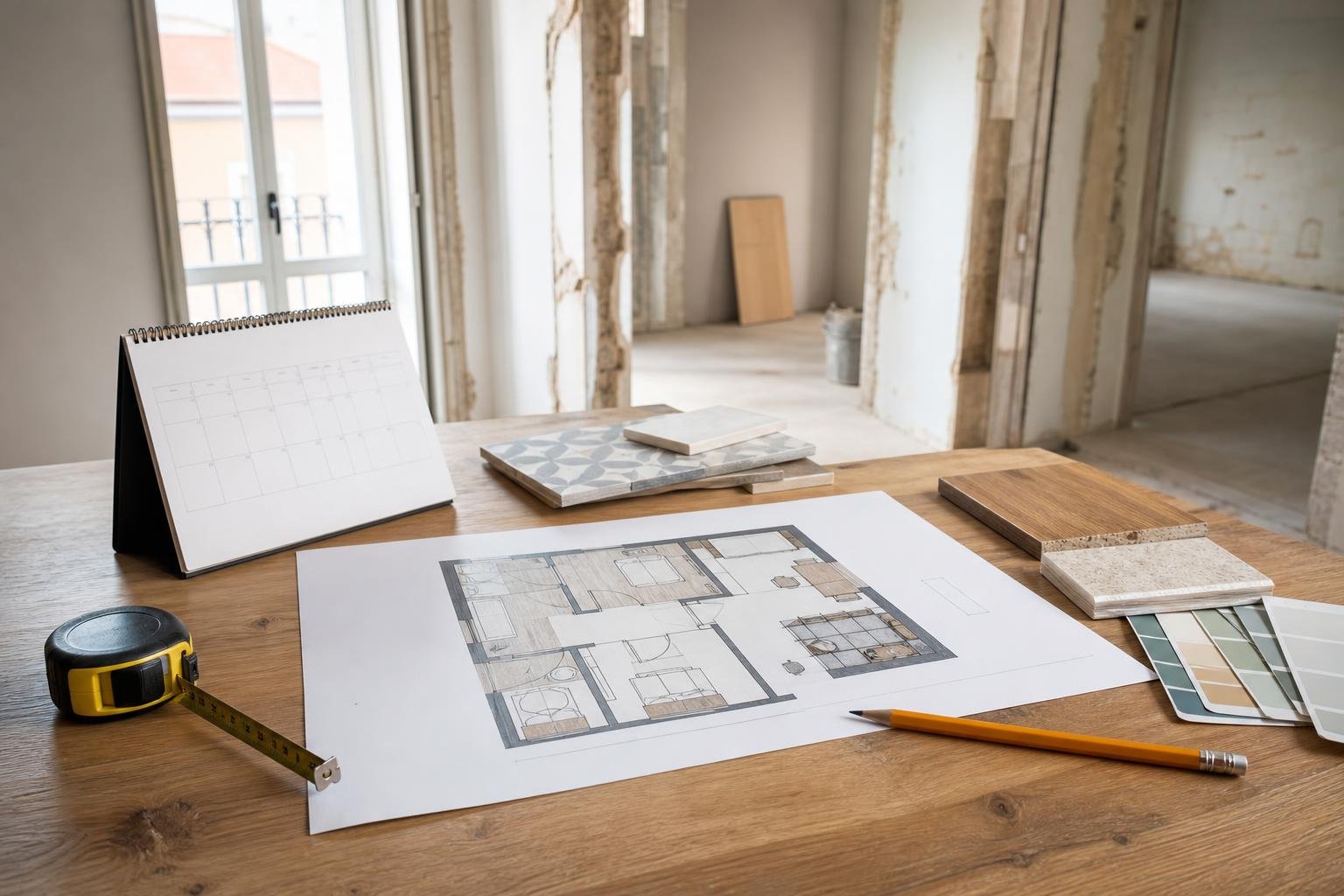
Make the choice before ordering, rather than when the team is ready to apply a product. Ask for technical and safety data sheets for paint, primer, varnish, flooring adhesive, sealant and expanding foam. Match each product to its use: a bedroom wall, interior timber, wet area and window frame call for different solutions.
ADENE states that paints, coatings, sealants and solvents with lower VOC concentrations can support indoor-air quality and occupants’ wellbeing. See its guide to materials and indoor-air quality in sustainable housing. “Low odour” is not enough on its own; check the intended application, the drying time given by the manufacturer and ventilation requirements.
In the quotation, identify every product by brand, reference, colour and application area. This prevents last-minute substitutions and gives you a reliable record if an unusual smell, stain or reaction appears.
When does the smell stop being a normal drying issue?
Arrange a technical assessment if the smell becomes stronger or causes eye or throat irritation, headache, dizziness, nausea or breathlessness; leave the room if symptoms occur. Take the same approach if the odour resembles a harsh solvent, fuel, mould or sewage, as its source may not be the paint.
A bedroom also needs checking if a strong smell continues after packaging has been removed, the room has been aired for several days and no painting, bonding or sealing work remains in progress. Do not try to solve it with another paint coat, a dehumidifier or fragrance before identifying the product or moisture route involved.
The measurement thresholds and methods in Portuguese Ordinance No. 138-G/2021 apply to indoor-air assessment in commercial and service buildings; they are not a household rule for an “acceptable smell”. They do, however, show why meaningful testing needs suitable methods and, where necessary, qualified professionals.
Close out the work with a simple air and cleaning routine
Before using the room fully, make one final check: collect waste, remove dust with a damp cloth or a well-filtered vacuum, wash trays outside the living area where the product instructions allow, and confirm that windows, grilles and extraction points work. Do not obstruct airflow with boxes or furniture immediately after handover.
If the work included lightweight partitions, coordinate the check of joints, services and finishes with the decision to occupy the room. Our guide to gypsum board or fibre-gypsum for a lightweight wall helps frame material choices; to avoid reopening walls during later work, also plan access to technical risers.
Keep a record of applied products, dates and final photographs in the handover file. It is a small step that makes maintenance easier and avoids guessing what was used months later.
Key takeaways
- Use two openings where possible, in short and repeated ventilation cycles.
- Remove tins, cloths and trays: they are often the source of persistent odours.
- Avoid drying clothes and pressing furniture against walls in a newly finished room.
- If symptoms, an unusual odour or worsening conditions occur, leave the space and seek a diagnosis.
If you are closing out a painting or renovation stage, ask Obra Lisboa to define materials, drying periods, ventilation and maintenance access before the room is handed over.
Sources and further reading
- DGS general indoor-air recommendations
- Portuguese Directorate-General of Health explains that construction materials, furniture and household activities affect indoor-air quality
- guide to materials and indoor-air quality in sustainable housing
- Portuguese Ordinance No. 138-G/2021
Editorial image; it does not depict an Obra Lisboa project.

Obra Lisboa