A recessed curtain track works best when it is decided before the suspended ceiling, lighting layout and furniture positions. It may look like a small detail, yet it determines whether curtains open fully, whether blackout fabric actually covers the window and whether the track clears handles, radiators or air-conditioning units. In a Lisbon flat, it can make a living room or bedroom feel calmer without filling the walls with visible hardware.
Contents
- What it improves — and what it cannot fix
- Where should the track sit in relation to the window?
- One channel, two channels or a blackout roller blind?
- Coordinate the ceiling, lighting and curtains
- Mistakes that make curtains awkward to use
- Checklist before the ceiling is closed
What it improves — and what it cannot fix
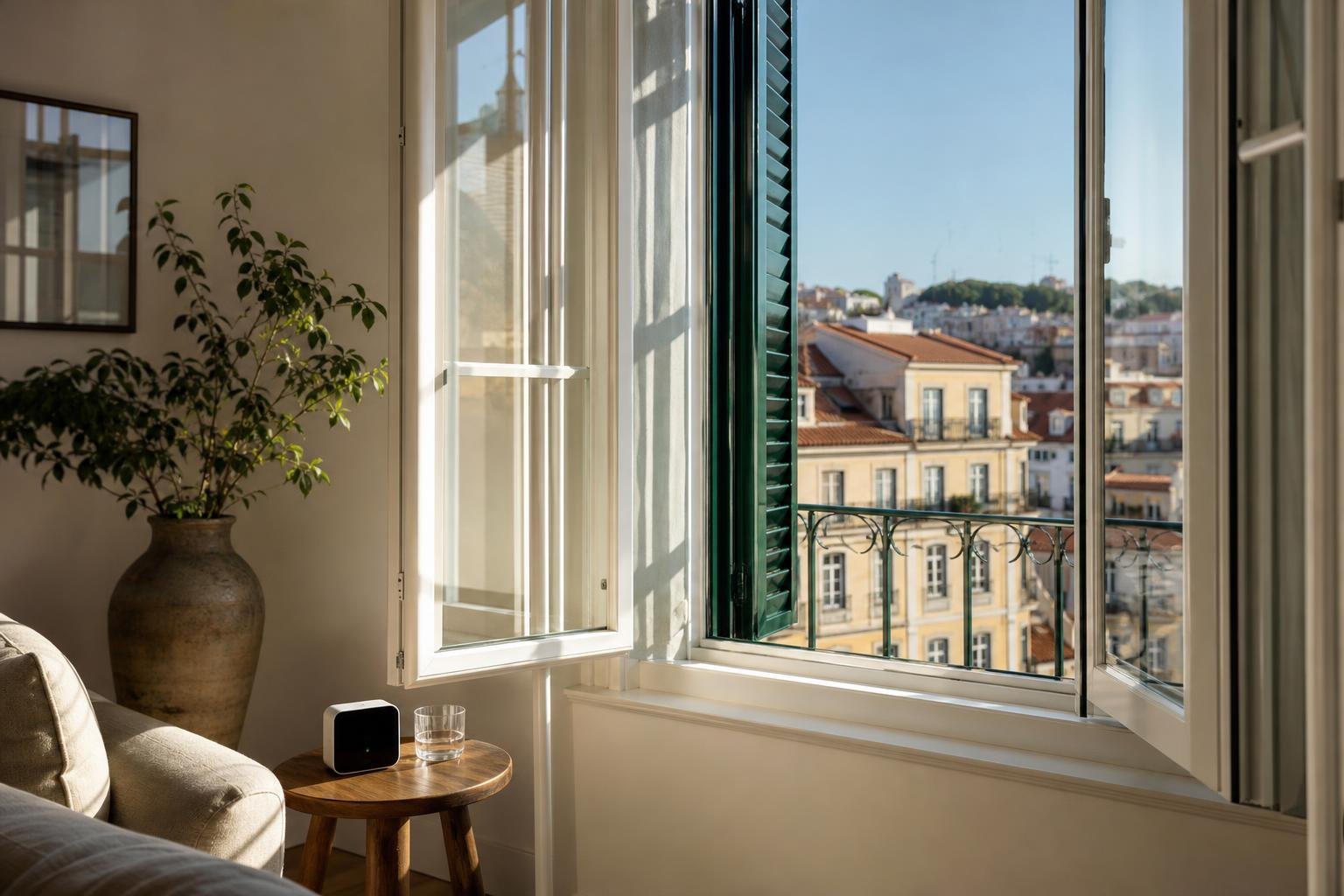
A concealed track creates a continuous line from ceiling to fabric. It is especially useful with tall openings, windows with internal blinds, balcony doors and walls where a curtain mounted above the opening would feel too prominent. With two channels, a sheer curtain can remain closed during the day while blackout fabric works at night, preserving privacy without permanently darkening the room.
It will not fix a leaking window, poor seals or west-facing overheating. Nor does it replace external shading where that is feasible. Portugal’s Directorate-General of Health notes that openings should balance daylight, ventilation, views and protection suited to their orientation; settle the window strategy before choosing the interior finish. See the DGS guidance on environmental comfort in homes.
- Use one channel for a single decorative sheer.
- Allow two channels for sheer and blackout, or curtain and thermal lining.
- Use three channels only when every layer has a real purpose; otherwise the recess becomes deep and awkward to clean.
In a small living room, the curtain should frame the opening without taking over the seating area or competing with the rug. Use this guide to rug size and placement in a small living room before fixing the composition.
Where should the track sit in relation to the window?
Set out the track from the item that projects furthest: a handle, shutter box, deep sill, radiator, air-conditioning unit or inward-opening door. The curtain needs to fall freely without rubbing against any of them. Rather than copying a fixed distance from another home, ask the installer to mark the chosen fabric projection on the ceiling and test the window opening.
In a narrow living room, let the curtain run beyond the window at each side so the glass is clear when the curtain is open. In a bedroom, check the headboard position and whether the curtain can be drawn without catching bedside tables. When a bed sits against the window wall, a curtain that stacks to one side is often more practical than two equal panels.
Do not use the recess to hide improvised cabling. If you are reorganising the room, coordinate this detail with a renovation baseline programme before ordering ceilings, windows and curtains.
One channel, two channels or a blackout roller blind?
The right option follows daily routines. A south-facing living room may benefit from a filtering fabric that reduces glare while keeping the view. A bedroom used by a shift worker may need blackout with generous side overlap, but blackout should not be expected to solve severe heat gain. For a frequently used balcony door, choose a system that allows passage without fabric dragging across the floor.
In a home-working area, side daylight and an adjustable curtain can help limit screen reflections. The DGS advises assessing available light and using local lighting where needed. Do not therefore select fabric on the colour of a sample alone.
| Option | Best use | Check before work starts |
|---|---|---|
| One channel with a sheer curtain | Living room with moderate privacy needs | Check whether the fabric filters the glare you need to control |
| Two channels: sheer and blackout | Bedroom or TV room | Allow enough depth for both fabrics to run without catching |
| Track plus roller blind | Window requiring strong darkening | Coordinate boxes, controls and access to the mechanism |

Coordinate the ceiling, lighting and curtains
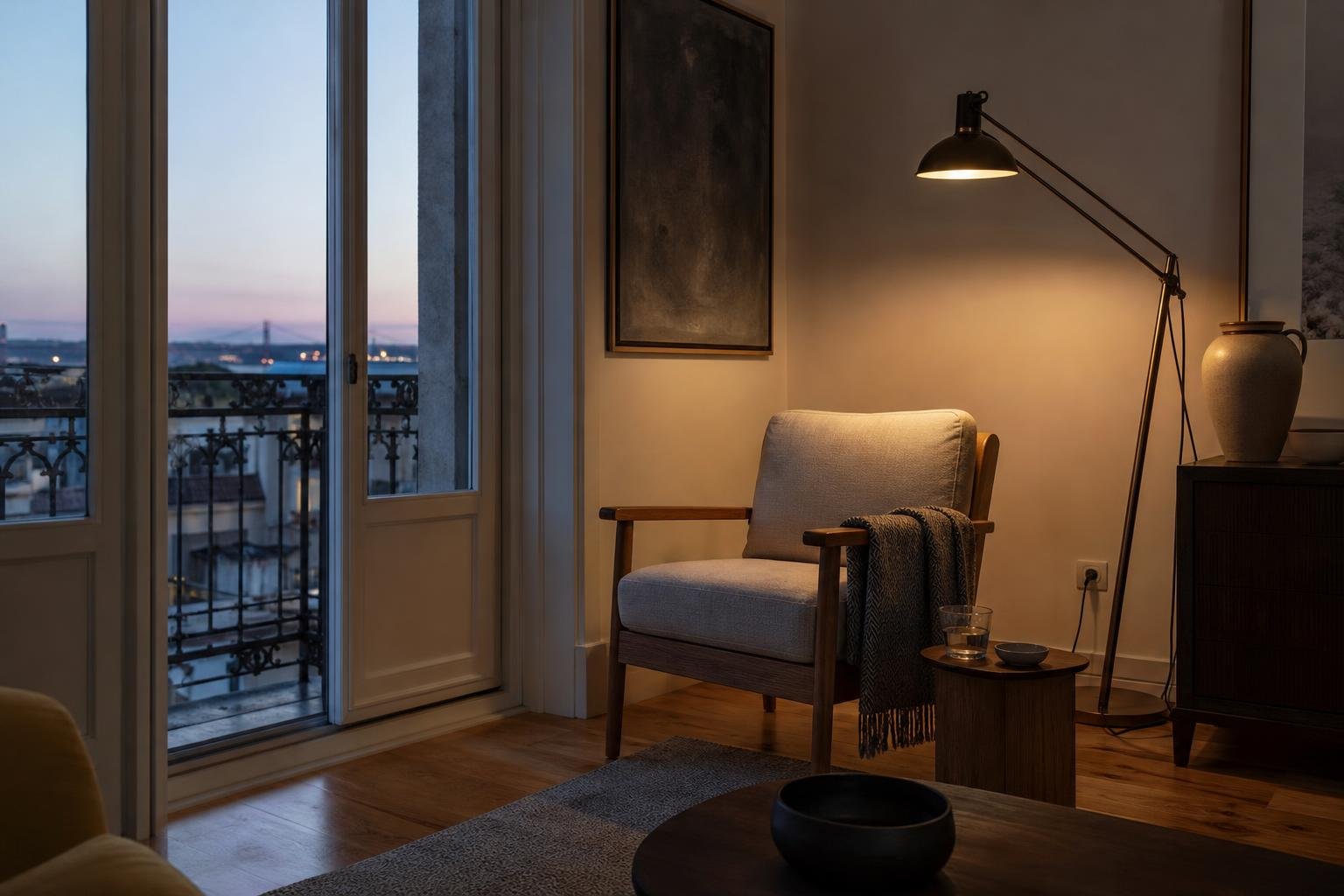
Choose the track type and fabric sample before finalising the ceiling drawing. The recess must conceal rails, hooks and curtain heading, without sitting so close to the fabric that it restricts movement. If you want an LED strip washing the curtain, specify a proper profile, an accessible driver and a control separate from the general lighting. At night, the light should reveal texture rather than turn the window into a glare source.
- Mark the final track position and opening direction on the ceiling.
- Confirm the route of cables, pipework and electrical boxes.
- Choose lighting for reading, dining or television before fixing the ceiling recess line.
- Provide an inspection opening where motors, power supplies or connections may need work.
In Lisbon, internal works that do not affect structural stability, façades, roofs or façade tiles may fall within works exempt from prior control, but the specific case should be checked, especially in protected buildings or wider alterations. Read the municipal guidance on exempt works and public-space occupation.
Mistakes that make curtains awkward to use
The most common mistake is ordering the ceiling before choosing the curtain system. Other frequent problems are a track that is too short, fabric hitting a handle and no room to remove curtains for washing. Motors for blinds or LED drivers are also often concealed without access, turning a simple repair into disruptive work.
- Do not automatically centre the track on the window; centre it on the visible composition and the fabric’s usable travel.
- Do not let fabric rest on the floor where pets, young children or a busy balcony door are involved.
- Do not place an exposed LED diffuser where the source is directly visible from the sofa or bed.
- Do not fix heavy poles or brackets to a suspended ceiling without confirming reinforcement and the structural backing.
When the project includes new sockets, lighting, ceilings and made-to-measure furniture, record the curtain-track decision like any other site change: model, finish, opening direction, fabric, controls and responsible supplier. It prevents late substitutions that make the finished recess incompatible with the purchased system.
Checklist before the ceiling is closed
Carry out an on-site check with the contractor, electrician and curtain supplier. Bring a simple plan, photos of the windows and fabric samples. Confirm cleaning access too: high tracks collect dust, and maintenance is easier when gliders can be removed without taking down the ceiling.
- Track type and number of channels confirmed.
- Opening direction decided for every window and door.
- Conflicts with blinds, handles, radiators and air conditioning checked.
- Lighting, controls and maintenance access drawn.
- Fabric chosen for privacy, daylight control and washable care.
If you are also planning climate control, coordinate the track with indoor units and condensate drainage. This guide to reversible air conditioning in a renovation can help sequence that decision before ceilings and walls are closed.
If your renovation has several moving parts, add this list to the finishes meeting. Obra Lisboa can coordinate the interior layout, specialist work and construction sequence so that ceilings, lighting and curtains are fitted without last-minute patches.
Key takeaways
- Choose the track and fabric before designing the suspended ceiling.
- Measure from the element that projects furthest beside the window, rather than from the frame alone.
- Two channels are worthwhile only when each fabric has a clear daily function.
- Plan access to motors, LED drivers and gliders before the ceiling is closed.
Renovating a living room or bedroom in Lisbon? Put tracks, lighting and electrical points into the decision schedule before appointing the ceiling contractor; Obra Lisboa can coordinate these details within the renovation plan.
Sources and further reading
- DGS guidance on environmental comfort in homes
- DGS advises assessing available light and using local lighting where needed
- exempt works and public-space occupation
Editorial image; it does not depict an Obra Lisboa project.

Obra Lisboa