When a tile, tap or door is no longer available, the safe response is to pause the order, compare the proposed replacement with the agreed item and approve it in writing before it is installed. Without that step, a seemingly minor swap can affect dimensions, trims, programme dates, warranties, final cleaning and cost.
In a Lisbon renovation, deliveries, building access and specialist trades often need to fit into the same week. Treat every substitution as a limited scope change. The aim is not to ban alternatives; it is to know exactly what changes, who makes the decision and which work stage depends on it.
Contents
- Why does a material swap affect more than the finish?
- What should you request before accepting an alternative?
- How can you decide without stopping the whole project?
- When should an alternative be rejected or reviewed by a professional?
- Price, time and payments: what must change in the record?
- The simple file that prevents lost decisions
Why does a material swap affect more than the finish?
A specified material carries more information than the colour on a sample. It may define thickness, weight, fixing method, water resistance, joints, trim pieces, delivery time and compatibility with the existing base. A different tile may require door clearances to be checked; a wall-hung WC may require a different support frame; flooring with another click system may change subfloor preparation.
A building contract should identify the object of the work, price, timescale and payment terms, including written and drawn documents where they exist. That is the practical reason to retain datasheets, finish schedules and quoted documents rather than relying on scattered messages. Read the IMPIC guidance on construction contracts before assuming that a verbal choice has become an agreement.
Start by separating three cases:
- Equivalent replacement: the alternative maintains the approved function, performance, appearance and installation conditions.
- Upgrade or downgrade: quality, durability, brand, warranty or maintenance changes.
- Technical change: a new detail, extra work, coordination or permission is required.
Only the first case is usually straightforward. The other two need a confirmed price and programme effect before approval.
What should you request before accepting an alternative?
Ask for a short proposal identified by room and by the code of the originally specified item. A catalogue image is not enough. The proposal should show the former and replacement references, availability, unit price, quantity, delivery lead time, technical sheet, finish and every accessory that will no longer work or will now be required.
For visible materials, also check batch, shade, sheen, layout and special pieces. An alternative described as “matt white” may have a colour temperature or texture that clashes with tiles already installed. For equipment, compare electrical supply, flow rate, fixings, maintenance space and replacement parts.
Public-contract documentation provides a useful technical discipline: where a different material is proposed, the proposal should be justified and supported by information allowing the new material, execution method and price change to be assessed. See the specification published in Diário da República as a method reference, without treating it as an automatic legal regime for a private residential project.
| Check | Practical question | Useful record |
|---|---|---|
| Compatibility | Does it fit the detail and services already installed? | Technical sheet and sample photograph |
| Total cost | Does it change materials, labour, accessories or waste? | Itemised difference, including VAT |
| Timing | Will it arrive before the work stage needs it? | Confirmed order and delivery date |
| Appearance | Does it match what has been approved or installed? | Identified physical sample |
| Warranty | Does it retain manufacturer support and conditions? | Reference and warranty document |
How can you decide without stopping the whole project?
Create a 48-hour decision route for routine items and a longer route for items that determine dimensions or services. The contractor reports the shortage with supplier evidence; the person coordinating the works checks the technical effect; the client approves, rejects or asks for another option. The final confirmation goes into one record available to the team.
- Mark the item as pending: do not authorise purchase or installation.
- Identify dependent tasks: waterproofing, joinery, painting, handover or fitting.
- Compare at least one technically compatible alternative.
- Record cost, timing, drawing or sample, and the decision owner.
- Issue a dated approval with an instruction to order.
- Update the work programme and payment schedule if they are affected.
This process works best when connected to a renovation baseline programme. A delayed door then stops being an isolated issue and becomes visible in the sequence of skirtings, final painting, ironmongery and cleaning.

When should an alternative be rejected or reviewed by a professional?
Do not approve by visual comparison materials involved in safety, waterproofing, structure, electrical work, gas or fire performance. A membrane, adhesive, cable, fire door or façade profile is not interchangeable merely because it looks similar or has a comparable size.
Pause and ask the designer, site manager, supervisor or competent installer to validate the change when it:
- alters a drawn or specified solution;
- affects walls, slabs, waterproofing or service penetrations;
- reduces resistance, insulation or reaction-to-fire performance;
- requires adaptation to a circuit, ventilation, drainage or fixing;
- affects a shared part of the building or a condominium approval.
Materials offered from stock without packaging, a reference or a declaration of performance also deserve caution. The initial saving can leave you without compatible parts during maintenance. In occupied buildings, check that delivery fits the lift, follows agreed routes and does not create prolonged storage in common areas.
Price, time and payments: what must change in the record?
A replacement is only closed when its financial effect is explicit. Record whether the value rises, falls or remains unchanged, including transport, returns, waste, accessories, adaptation and labour. “No extra cost” should mean no total cost to the client, rather than no difference in the main item alone.
INE reported a year-on-year increase of 6.8% in new-housing construction costs for July 2026; the indicator includes distinct pressures on materials and labour. It does not set the price of your renovation, but it explains why it is worth separating a genuine supply issue from a poorly supported commercial change. Consult the INE construction-cost release, the IMPIC cost indices and Obra Lisboa’s guide to construction costs and setting a renovation budget for context, without applying public-works formulas to a private contract on your own initiative.
If the replacement changes the programme, update the partial handover date and payments linked to genuinely confirmed work. This prevents a stage being paid as complete while the equipment needed to test or finish it is still missing.
The simple file that prevents lost decisions
Use a shared spreadsheet or a control PDF, provided there is one current version. Each line should include: change number, room, original item, alternative, reason, link to technical sheet, cost before and after, deadline, decision, decision owner and a sample photograph. Retain the order and delivery confirmation as well.
Avoid four common mistakes:
- approving by voice message and trying to reconstruct the decision weeks later;
- accepting a sample without checking the reference on the purchase order;
- replacing an item already used in another room without checking visual consistency;
- leaving critical choices until walls are closed or joinery has been ordered.
At handover, include this record with manuals, warranties and product references. It will help when a part needs replacing, support is required or you need to establish what was actually installed. A well-documented substitution does not remove uncertainty; it makes it reviewable and decidable before it becomes rework.
Key takeaways
- Do not accept an alternative without a reference, technical sheet, total cost and delivery date.
- A visual sample does not prove compatibility with fixings, joints, services or warranties.
- Connect every approval to the work programme so dependent tasks are visible.
- Safety, waterproofing and service materials require technical validation before ordering.
Before appointing a contractor or ordering finishes, ask Obra Lisboa to incorporate a materials and approvals register into your renovation planning. It is a practical way to coordinate choices, deliveries and work stages with fewer last-minute decisions.
Sources and further reading
- IMPIC guidance on construction contracts
- specification published in Diário da República
- IMPIC cost indices
- INE construction-cost release
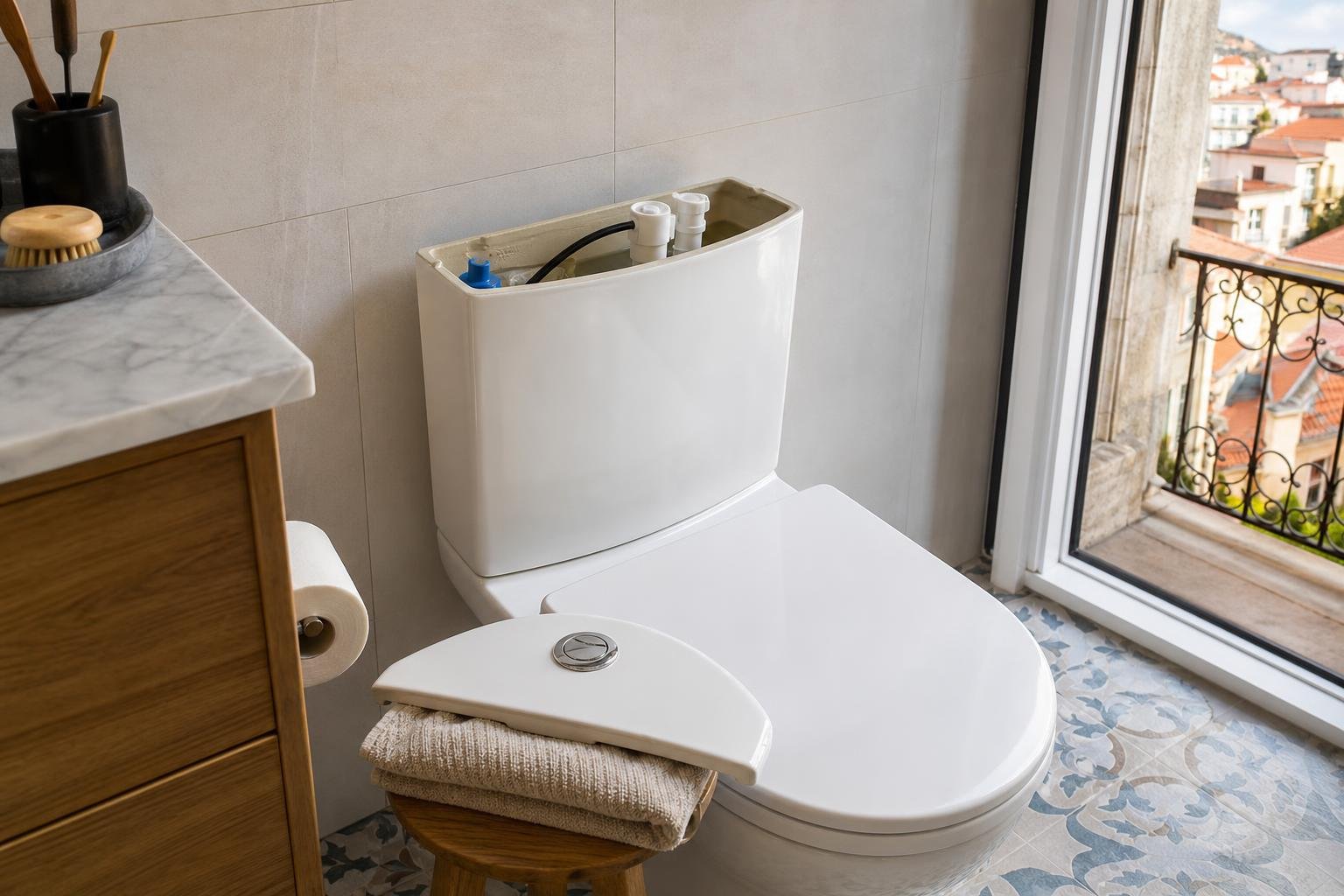
Editorial image; it does not depict an Obra Lisboa project.

Obra Lisboa