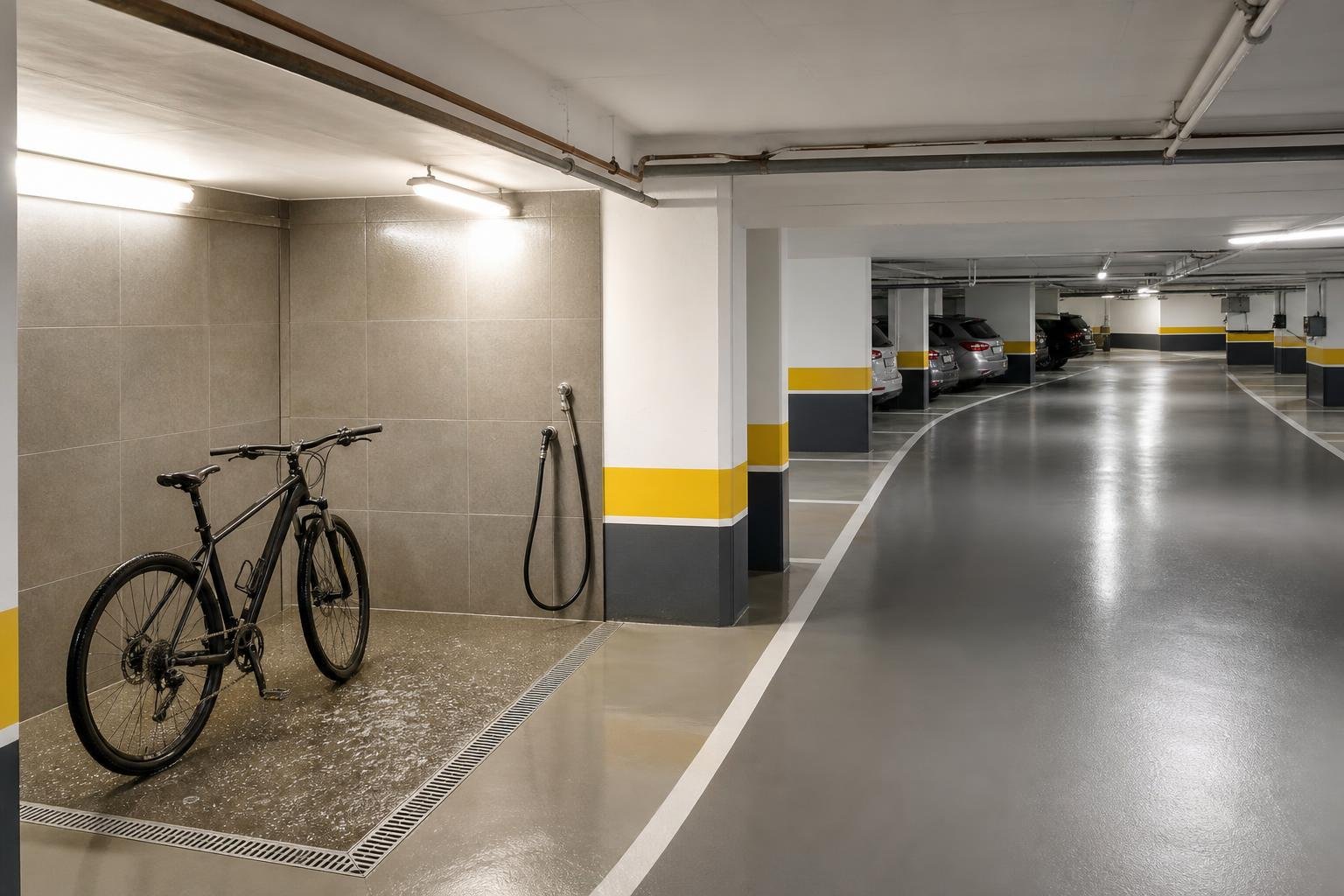
Washing a bicycle in a garage sounds straightforward until water reaches the vehicle route, mud collects by fire doors or a hose is left across a turning area. In a Lisbon apartment building, where garages often combine tight parking bays, storage rooms, bicycles and technical services, the answer is not simply adding a tap in an unused corner. It is creating a small, predictable washing point that is easy to clean and does not interfere with the building.
The aim is not to turn the garage into a workshop. It is to allow residents to rinse wheels, frames and equipment after wet or muddy journeys without sending water to unsuitable drains or creating trip and vehicle hazards. Portugal’s Directorate-General of Health notes that garages and washing areas are commonly humid and that ventilation and maintenance matter. Read the DGS guidance on indoor air and moisture before choosing finishes and establishing the cleaning routine.
First, establish whether the space can be used in common
A circulation area, garage wall or existing water point may form part of the common property. Before buying equipment, check the condominium’s deed, regulations and the intended use of the garage. Where there are more than four owners, condominium rules should govern the use, enjoyment and upkeep of common areas under the legal framework published in the Portuguese Official Gazette’s property-horizontal and condominium-rules legislation.
Give the building manager a clear proposal: a simple marked plan, dimensions, water supply, drainage route, installation and maintenance costs, plus rules for residents. This is far better than a vague agreement that “washing can happen there”, which later leaves unanswered questions about hours, detergents, abandoned bicycles and liability for damage.
- Choose a common area that is not part of an escape route.
- Do not take over bays, turning areas or garage gates.
- State whether use is limited to residents or may include visitors.
Protect movement routes before designing the washing bay
The right place is one that still works when cars are arriving, residents are carrying shopping or a storage-room door is open. Avoid the ramp, exit doors, electrical panels, fire equipment and meter access. Do not measure only the bicycle at rest: allow for handlebars, pedals, a turned front wheel, a bucket and the person using the area.
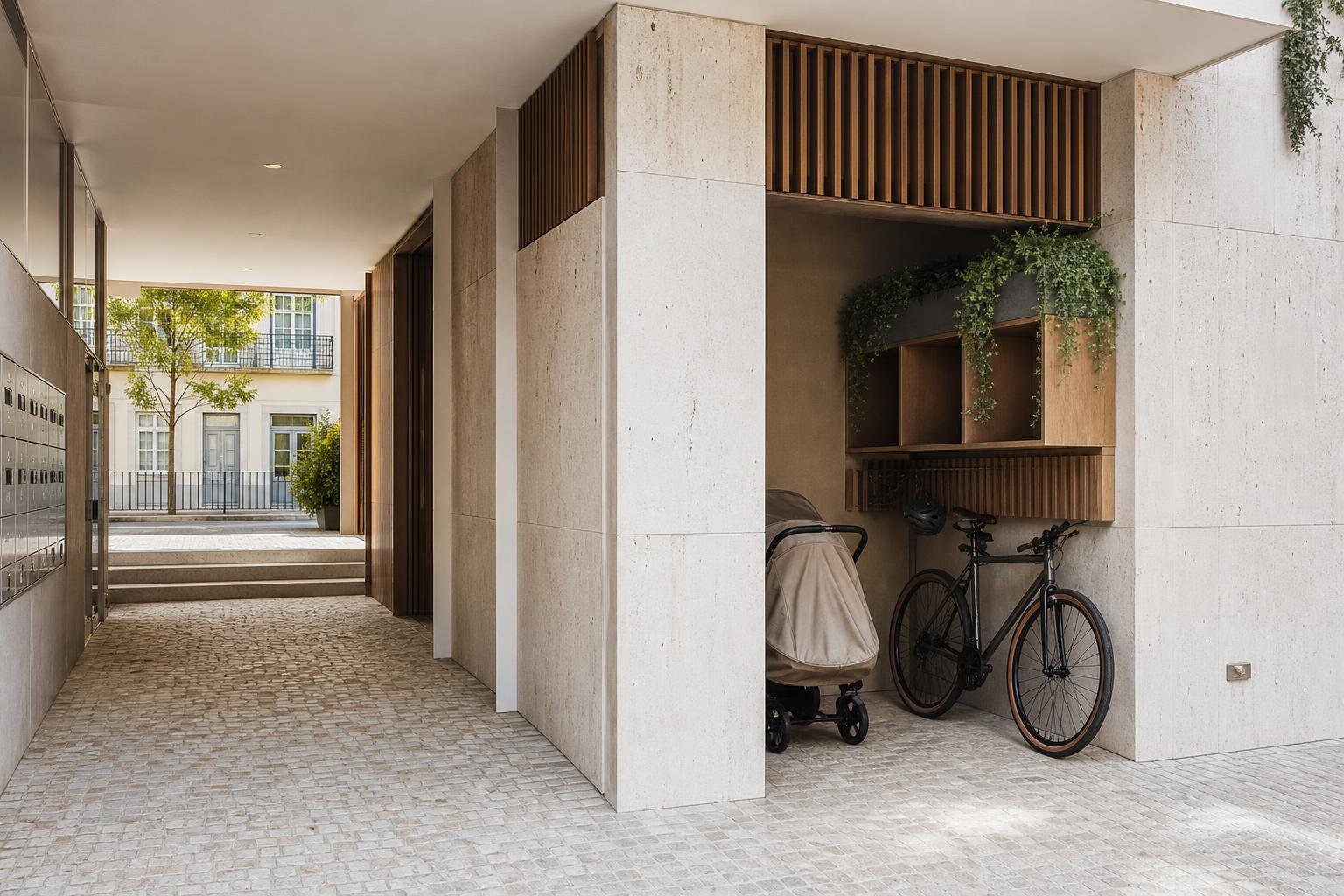
In many garages, a bay against a long wall is safer than an island in the middle of the floor. Mark the area without making a raised edge: a durable finish change or simple floor marking is usually enough. Washing should stay fully within that strip, with no hose crossing the driving lane. For related planning principles on bikes, shared access and safety, see Obra Lisboa’s guide to a bicycle repair area in a condominium garage.
Do not rely on simply pushing water towards a drain
The usual mistake is assuming that the nearest drain is suitable without knowing where it discharges, whether it is designed to receive washing water or whether it can be cleaned. A washing point needs a floor with controlled falls towards a suitable collection point, with no standing water beside walls, car wheels or doors. Do not direct water to an inspection chamber, gully or grate unless its purpose and condition have been checked.
In Lisbon, public-network records can support drainage and connection design, although they do not replace a survey of the existing private system. The municipality explains how to request a public sewer-network record plan; for internal alterations, a qualified professional should still verify actual pipe routes, traps, levels and the viability of any connection.
Provide a modest solid-debris control point as well. Leaves, grit, mud and hair should not go straight into the drainage pipework.

Choose water points, finishes and equipment for short use
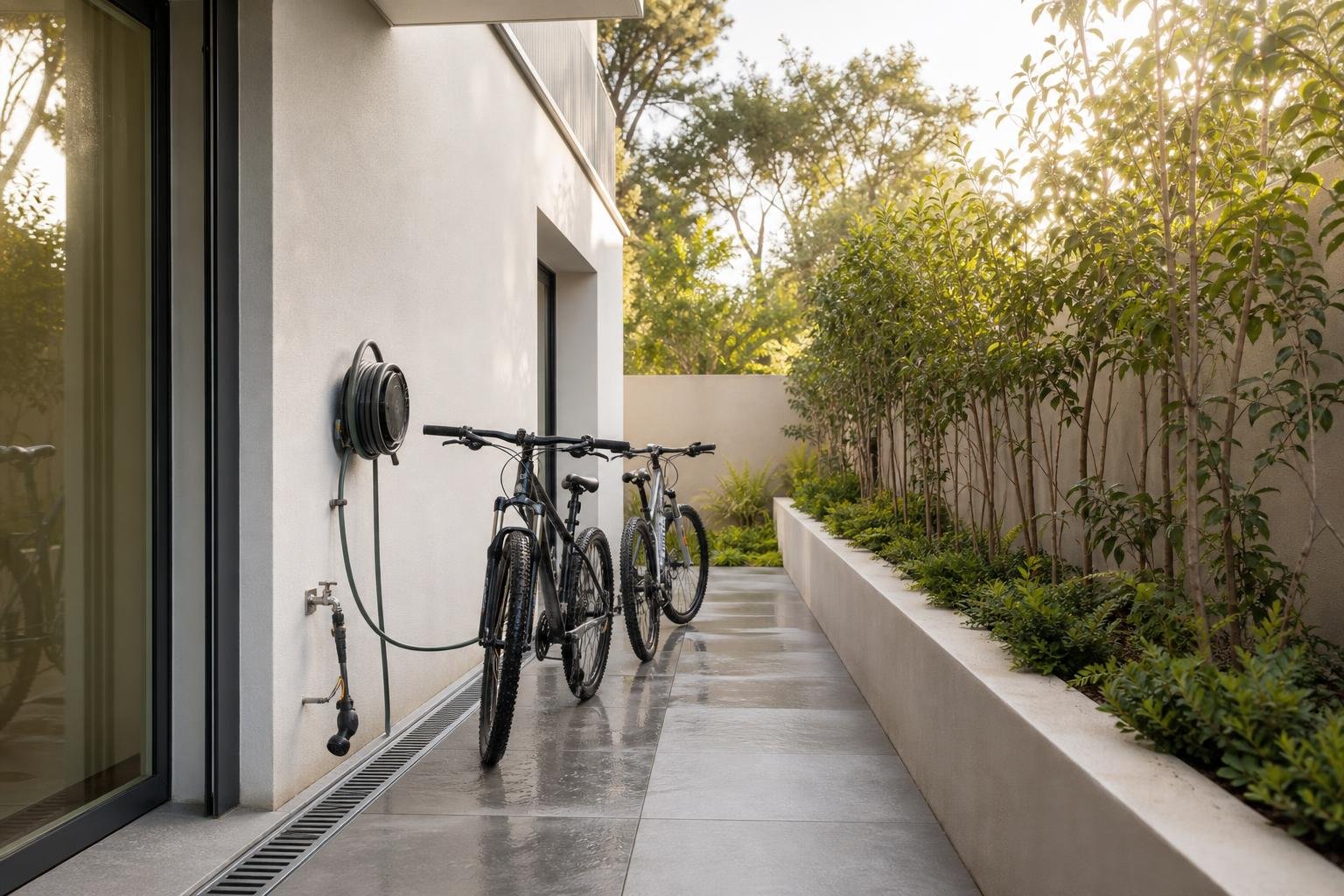
A tap with an accessible isolation valve is more useful than an over-engineered installation. Position it away from pedal impacts and protect it against knocks. Use a short hose, reel or wall holder so that it cannot be left on the floor. A low-pressure spray gun is generally more appropriate than a pressure washer, which can spread dirt, wet walls and drive water towards joints, electrical points or neighbouring vehicles.
For the floor, select a washable surface that resists water and retains grip when wet. Do not cover drains or use finishes that hide cracks and prevent inspection. If the work includes floor repairs or a new drainage point, treat it as work to a common element: Lisbon’s services state that applicable procedures for works affecting common parts require proof of condominium authorisation. See the municipality’s guidance on condominium authorisation for works affecting common areas.
Stop mud, water and products before they reach the drain
A well-planned washing station begins before the tap is turned on. Add a simple bicycle stand, a brush reserved for wheels, a container for solid debris and a removable perforated mat, provided it does not block drainage. A rider arriving with mud can scrape off the excess and wipe the chain before using water. That reduces wet floor time and lowers maintenance demands on the drainage system.
Avoid aggressive detergents, excessive degreasers and prolonged rinsing of oil-covered parts. The rule can stay simple: use very small amounts of product, apply it to a cloth or brush where possible, and never pour leftover products into the drain. After every use, the resident should rewind the hose, remove larger debris and leave no water pooling on the floor.
If the garage already has condensation, persistent odours or damp patches, deal with ventilation, leaks and drain cleaning first. A washing point must not conceal an existing building defect.
Turn the arrangement into visible, workable rules
The equipment will last longer if the rules fit on one small sign beside the tap. Set out permitted hours, a maximum use time, the requirement to keep access routes clear, a ban on vehicle washing, limits on products and a contact for faults. Long sets of rules tend to be ignored; a short list approved by the owners’ meeting is more likely to work.
Assign maintenance too: who clears the debris basket, how often the drain is checked, who isolates the water if there is a leak, and how faults are reported. The same preventive-maintenance approach applies throughout the garage. A worn hose, loose seal or blocked grate is much cheaper to address before it becomes an infiltration issue.
If the condominium is also considering bicycle parking, lighting or charging, phase those decisions. A compact, well-drained washing point with clear rules is preferable to adding several facilities without enough electrical capacity, ventilation or manoeuvring room.
A garage washing area depends on coordinated decisions about flooring, water, drainage and shared use. For an integrated assessment within a Lisbon condominium renovation, contact Obra Lisboa.
AI-generated editorial image; it does not depict an Obra Lisboa project.

Obra Lisboa