
A pump, a bike stand and a small workbench may look harmless. In a condominium garage, however, they can become a daily obstruction when placed beside a ramp, an exit door, technical equipment or someone else’s parking bay. The right answer is not to claim any spare corner: it is to plan the repair area as a small shared amenity, with a defined location, simple rules and a layout that can be put away after use.
This guide explains how to create that space without turning a garage into a workshop, blocking circulation or creating another source of noise, waste and neighbour disputes.
Start with the building documents, rules and condominium approval
Before measuring walls, establish whether the proposed area is a common part, an exclusively allocated parking bay or an independent storage unit. That distinction affects who may authorise its use and who pays for the installation. Where a condominium regulation exists, it should govern the use, enjoyment and maintenance of common parts; the legal framework is available in the Portuguese Civil Code published in Diário da República.
Give the manager or owners’ meeting a specific proposal: a simple plan, the occupied area, photographs, equipment list, permitted hours and the person responsible for tidying up. Avoid broad requests such as “a bike space”. A reversible arrangement — for example, a folding bench and a lockable tool panel — is easier to approve than permanent occupation with no boundaries.
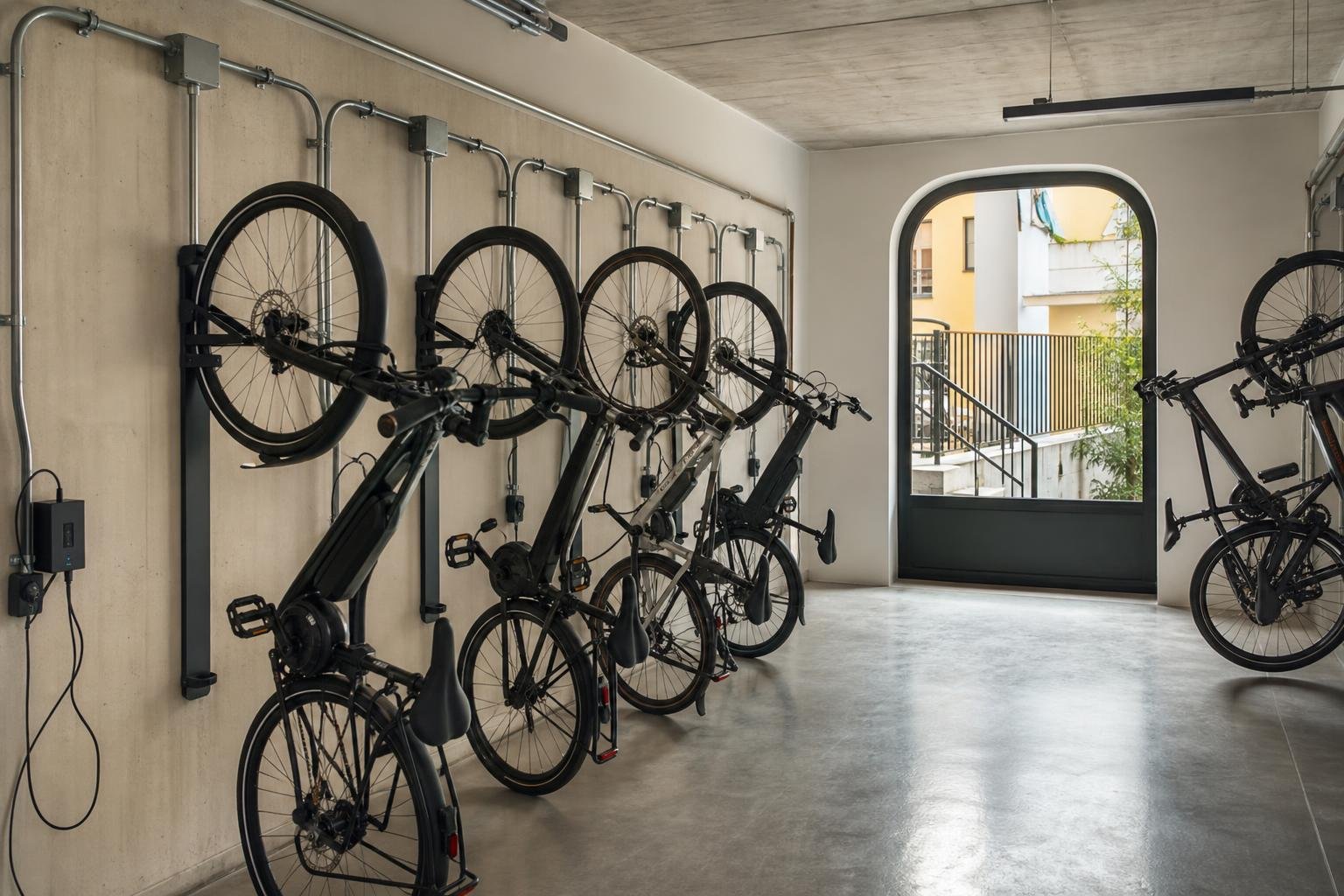
If the garage already has an area for bicycles, do not assume it can also absorb repairs. Storing a bicycle and working on one require different space: a removed wheel, a bike on a stand and a person working over the drivetrain take up much more room than a parked bicycle.
Choose a corner that is not a route through the garage
The best location is rarely the apparently empty space beside the vehicle ramp. Prefer a wall away from doors, electrical boards, fire equipment, ventilation plant, technical cabinets and access to storage rooms. It should also sit outside the normal line taken by vehicles entering, leaving or manoeuvring.
Run a practical test before buying furniture: use removable tape on the floor to mark the depth of the open bench, the repair stand and a bicycle in use. Then walk the garage, push a pram or a bicycle through it and observe a vehicle manoeuvre. If the area only works when no one passes by, it does not work.
Fire-safety rules for enclosed car parks treat evacuation as a core requirement: routes must remain usable and travel distances to exits are regulated. Read the technical fire-safety regulation for parking facilities before fixing equipment close to any exit route.
Design a compact station that closes away
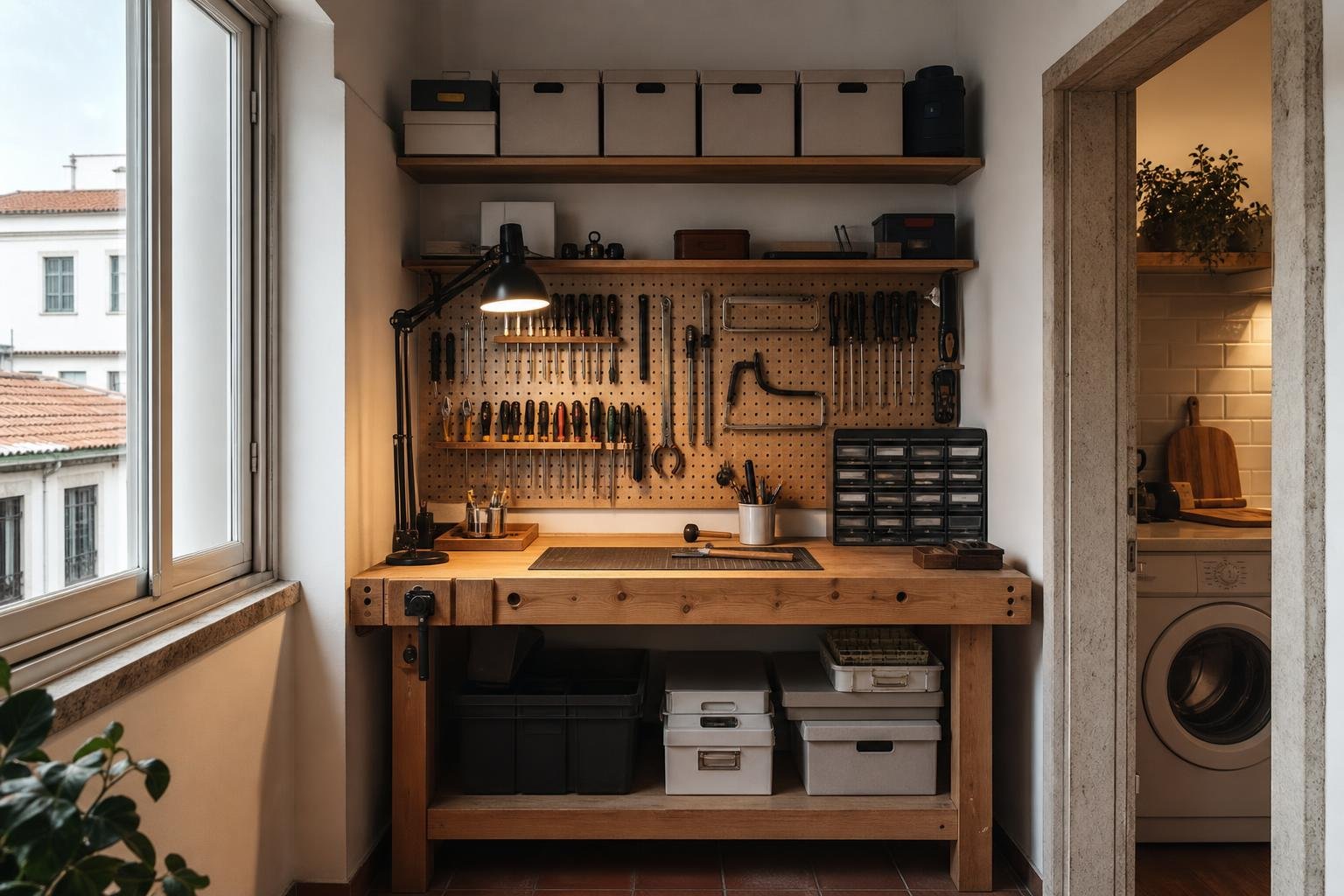
In a condominium, the best repair station is intentionally modest. Think in three elements: a wall- or floor-based stand for one bicycle, a narrow workbench and a lockable cabinet. A folding worktop allows the area to be used for a quick adjustment and returned to garage use afterwards. The cabinet should hold spanners, inner tubes, a pump, lubricants and cloths; loose tools on open shelves soon migrate around the building.
Choose surfaces that are easy to wipe down and resistant to small oil splashes. A metal tray or containment mat below the drivetrain area helps prevent drips reaching the floor. Do not use cardboard boxes as permanent storage: they deteriorate in damp conditions, collect dust and quickly make the area look unmanaged.
Be equally clear about what is excluded: no abandoned bicycles, bulky parts, stacks of old tyres, paints, solvents, fuel or improvised battery charging. The station should support light maintenance, not indefinite storage or work that changes the risk profile of the garage.

Lighting, electricity and fixings need more thought than they seem to
A portable lamp may be enough to inspect brakes or replace an inner tube. A new socket, added fixed lighting, a stand anchored to a structural element or a heavy cabinet fixed to the wall deserve technical assessment. In garages, existing circuits may serve shared systems and should not be overloaded with extension leads, multi-plugs or improvised permanent connections.
Ask for the proposal to state the expected electrical load, mechanical protection for cables, switch locations and how leads will be kept off the floor. If construction work is involved, check that the contractor is properly qualified: IMPIC sets out the requirements for national construction companies to access the activity.
It is also sensible to separate repair from charging. E-bike batteries should not be charged unattended in a shared corner, especially near combustible material or escape routes. If the condominium wants charging points, it should treat that as a separate project, with suitable rules, electrical capacity and safety assessment.
Protect the floor, manage waste and set limits on the work
Even minor bicycle maintenance creates waste: brake dust, packaging, chain links, punctured tubes, lubricant-soaked cloths and sometimes sealant. Provide one bin for ordinary waste and a separate closed container for dirty materials, with frequent removal. Do not pour liquids into garage drains or wash bicycles with a hose where drainage was not designed for that purpose.
The house rules can set out a short list of allowed tasks: inflating tyres, dry cleaning, moderate lubrication, brake adjustment and replacing small consumables. Work that produces prolonged noise, sparks, dust, fumes or extensive dismantling should happen elsewhere. That boundary stops a useful shared facility becoming an informal workshop.
A simple cleaning rule resolves most disputes: when finished, remove the bicycle, fold the bench, sweep the floor and return all tools to the cabinet. If the space cannot be returned to a tidy condition within minutes, it is probably too large for the garage.
Make the rules easy to follow every time
Place a short, legible notice beside the area: residents only, light maintenance only, do not obstruct doors or routes, do not leave bicycles or waste, do not run cables across the floor and restore the area immediately after use. It does not need severe wording; it needs to be clear enough for everyone to know what is expected.
A rotating contact person or the building manager can receive reports of damage. For shared equipment, a basic inventory and controlled key access reduce losses. For personal equipment, the rule should be even simpler: each user brings their own tools and takes everything away afterwards.
If the building already has circulation problems, begin by improving bike organisation with our guide to condominium bicycle storage. For wider garage safety decisions, see our practical articles on emergency lighting in condominium corridors and garages and condominium garage gates.
A well-planned shared area needs sound design, workable rules and careful delivery. If your condominium is considering adapting a garage or another shared space, Obra Lisboa can help turn practical needs into a clear, coordinated intervention.
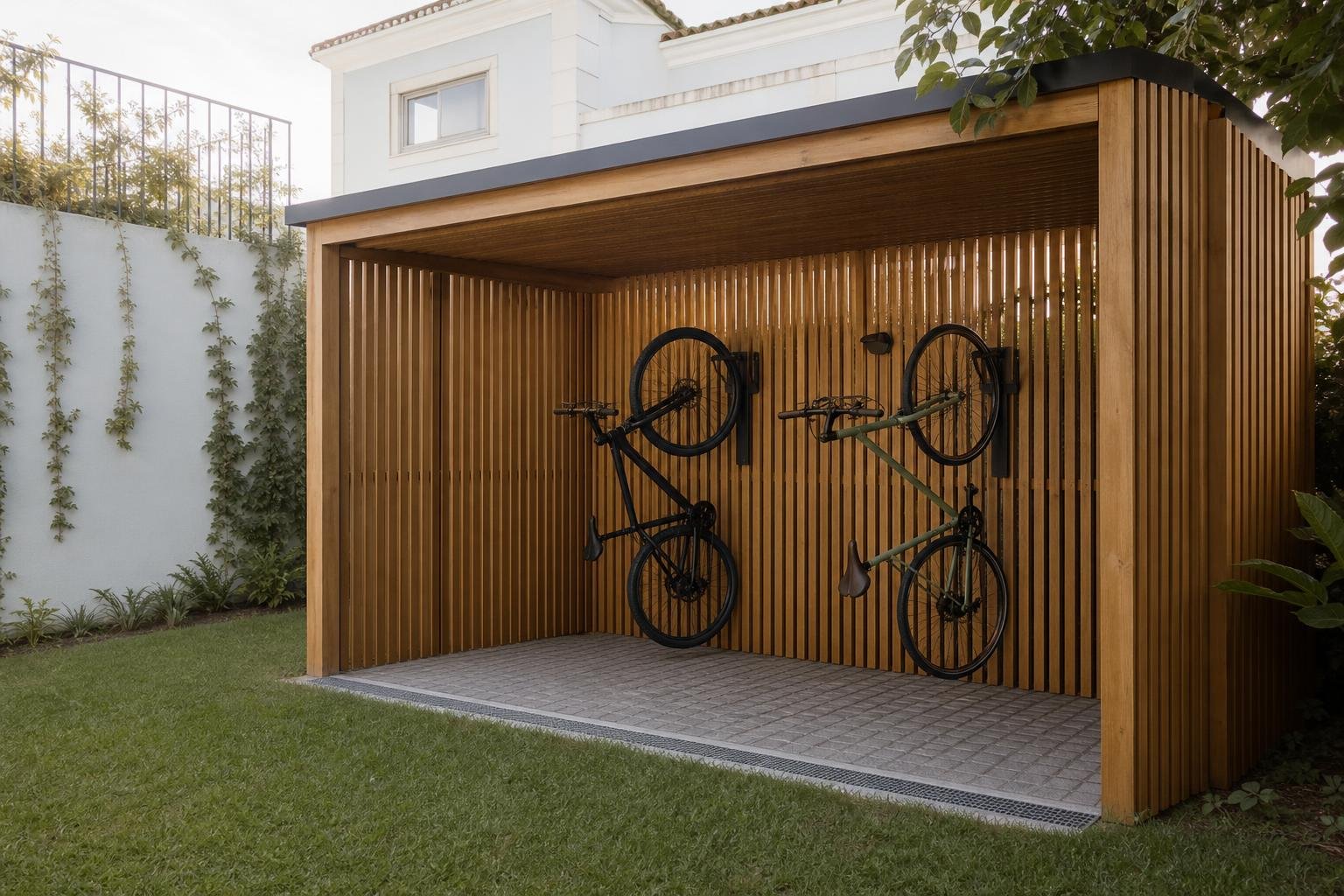
AI-generated editorial image; it does not depict an Obra Lisboa project.

Obra Lisboa