A desk by a window works best when daylight comes from the side, the chair has clear space behind it and glare can be adjusted quickly. In a small Lisbon living room, placing the desk against the window may seem obvious, yet it can turn video calls into silhouettes, make the workstation too hot late in the day or force everyone to walk around the chair. Decide where the screen, daily route and solar control will go before ordering furniture.
Contents
- Start with screen orientation, not the empty wall
- How much room should the chair and route have?
- Control Lisbon sun without darkening the room
- Task lighting solves what the window cannot
- Make storage support the living room
- When the desk needs building work — and when it does not
Start with screen orientation, not the empty wall
Place the desk so the window is to the side of the user whenever the layout allows. Daylight then reaches the work surface without falling straight onto the monitor or sitting directly behind the user, two positions that make reflections and contrast harder to manage.
A desk set perpendicular to the façade often works well in a narrow room: it takes up less window frontage and allows a view outside without requiring the user to work permanently against the light. The Portuguese health authority advises paying attention to visual demands, available light and local task lighting when working from home.
- Avoid placing the screen directly in front of the window.
- Avoid sitting with the window directly behind you: your face will be in shadow on calls.
- If there is only one possible position, use curtains, blinds or shutters that regulate light without closing the whole opening.
How much room should the chair and route have?
Plan movement before furniture. Mark the desk depth and the fully pulled-out chair position on the floor with masking tape. Open cupboard doors, check the route to the balcony and have someone walk through the room while another person is seated.
Where the desk shares space with meals or relaxing, an armless chair that tucks under the top reduces visual bulk once work ends. If the route runs behind the chair, choose a shallower desk or move it into a corner; a large top that disrupts daily use is not worthwhile simply because it offers more surface.
When the desk sits in the living area, coordinate the outlet, lamp and charging cable with the reading-light plan for the living room, rather than creating loose extension leads across the route.
Control Lisbon sun without darkening the room
Orientation changes the answer. An east-facing window may need light control in the morning; a west-facing one is more likely to bring glare and heat late in the day. Treat curtains as more than decoration: they should let you shade the screen area while keeping diffuse daylight in the rest of the room.
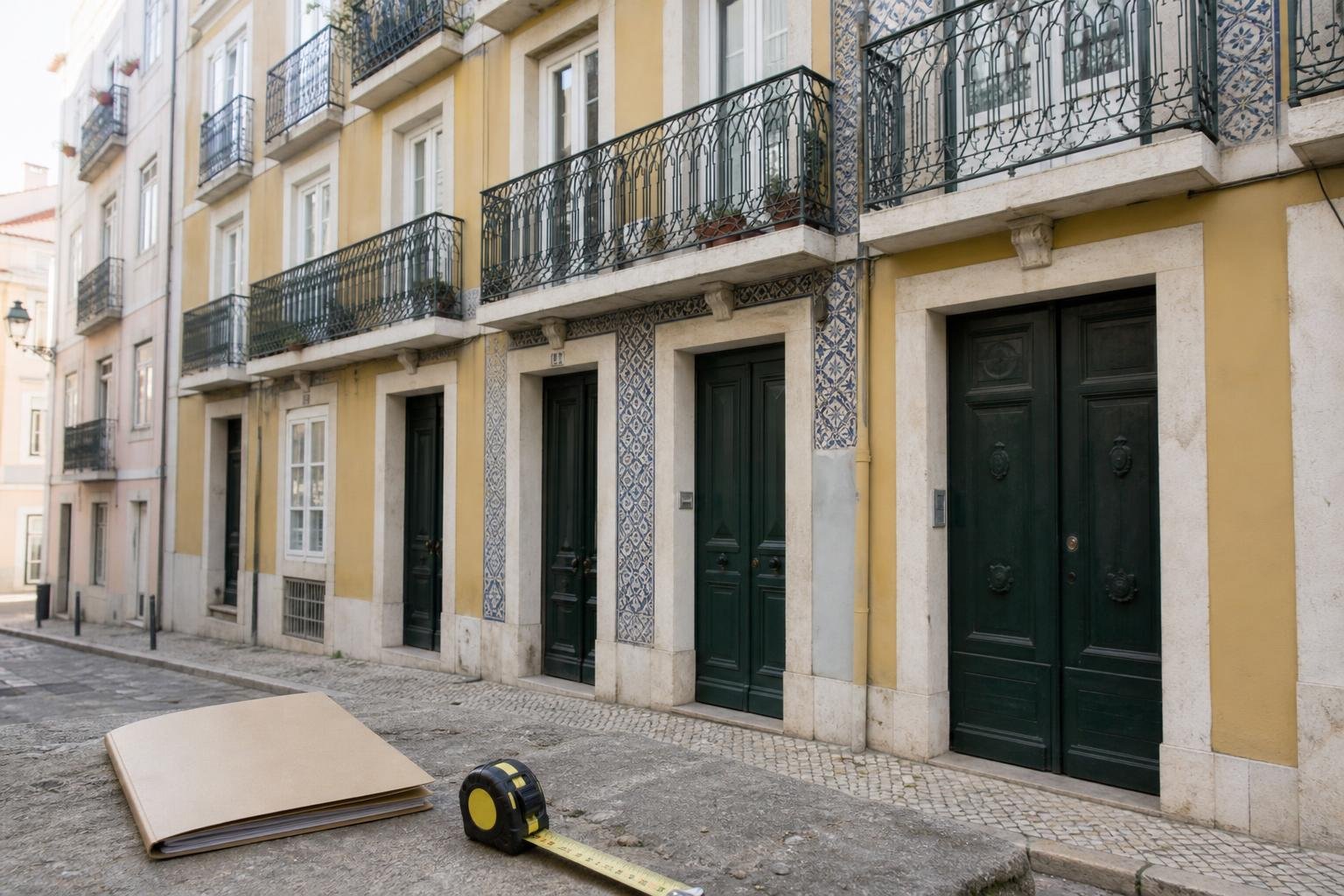
Lisbon’s municipal building regulation calls for reducing summer solar gains, particularly on east and west orientations, and for solar protection suited to orientation. Check the Lisbon municipal urbanisation and building regulation before considering exterior changes or replacement windows.
For a straightforward interior adjustment, test the room for one week:
- work at your usual hours;
- note when glare appears on the screen;
- close only the amount of shading required;
- add task lighting if the desk becomes too dim.

Task lighting solves what the window cannot
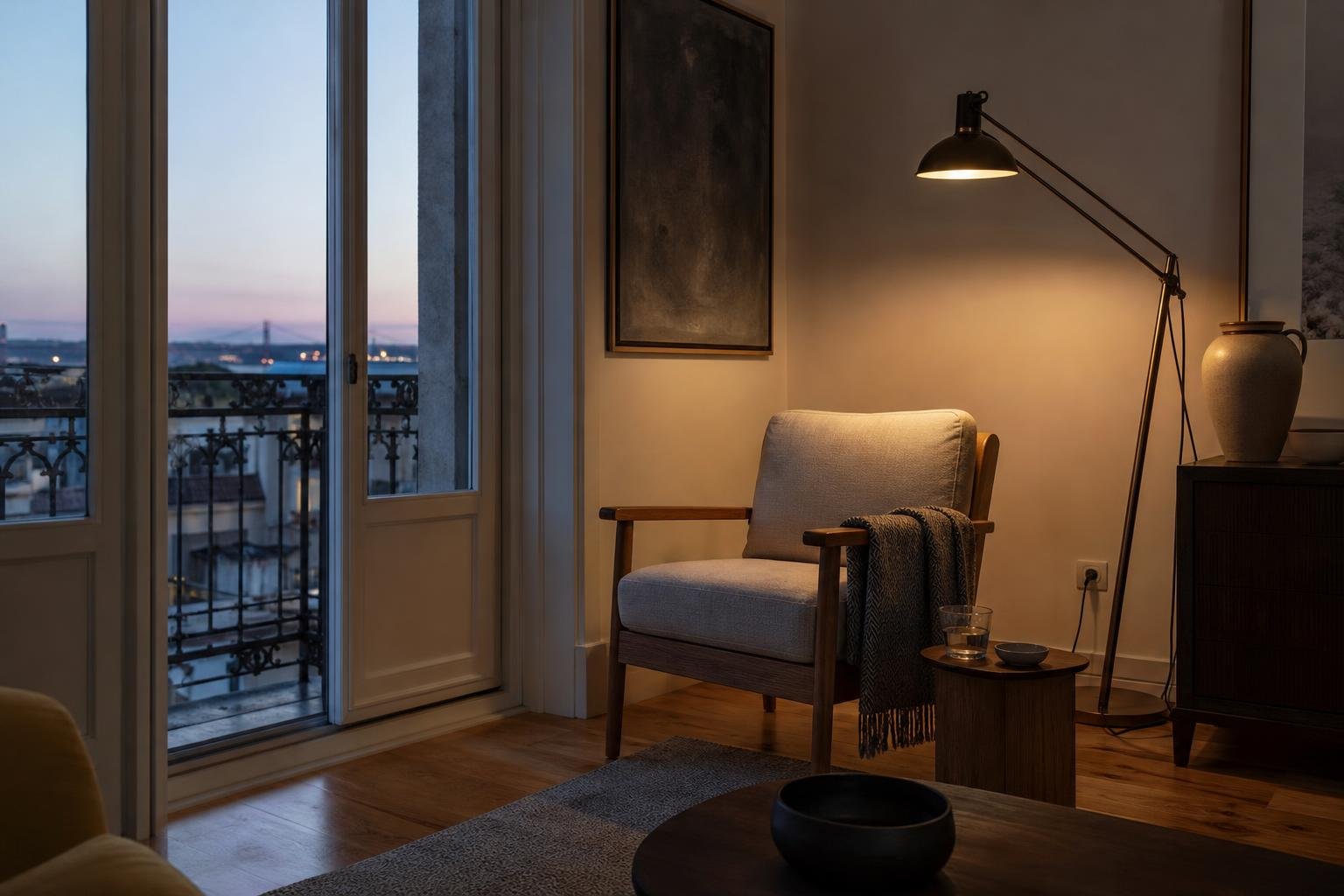
Daylight changes between morning, overcast days and late afternoon. An adjustable desk lamp means the user does not have to rely on the central living-room fitting, which often casts a shadow over the keyboard or creates monitor glare.
Place it on the opposite side from the writing hand: to the left for right-handed users and to the right for left-handed users. Choose controlled light over documents rather than an exposed bulb in the field of view. General room lighting is still useful, so the contrast between the screen and the room does not become excessive.
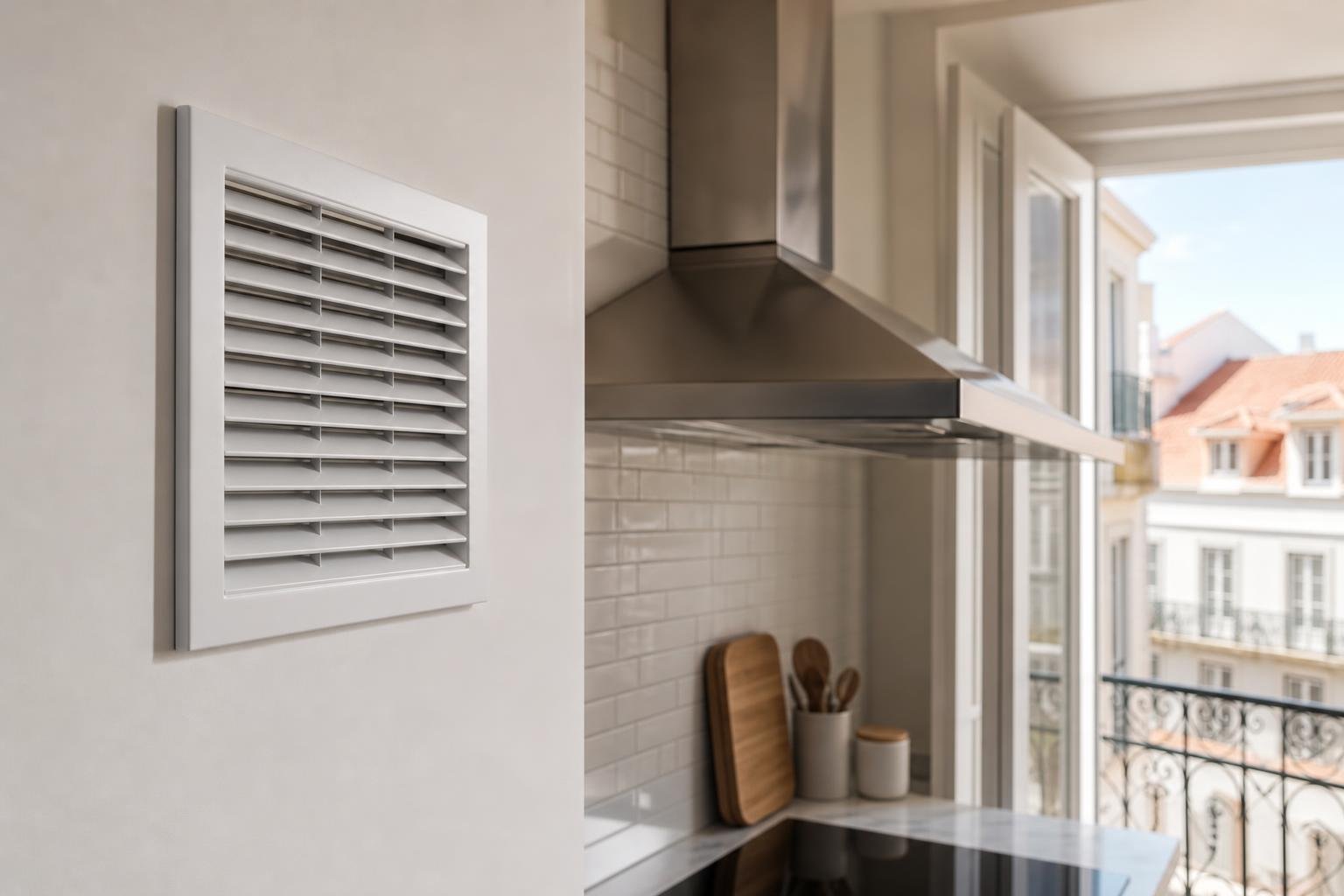
Do not use the desk to cover ventilation grilles, leave windows only partly operable or pin curtains over air inlets. The Portuguese health authority’s guidance on indoor air helps frame ventilation as part of room comfort. Keep the desk lamp, charging base and cables out of the walking route as well.
Make storage support the living room
The workstation should be able to recede visually without a difficult end-of-day routine. Keep only everyday items in a shallow drawer, closed box or low unit: laptop, charger, notebook and headphones. Occasional material can go on a high shelf or in a nearby cupboard.
Avoid tall units that block a meaningful portion of the window. Portugal’s health authority notes that windows should provide daylight, ventilation and outside views; a desk by the opening should not compromise those roles. See its guidance on well-being and environmental comfort inside the home.
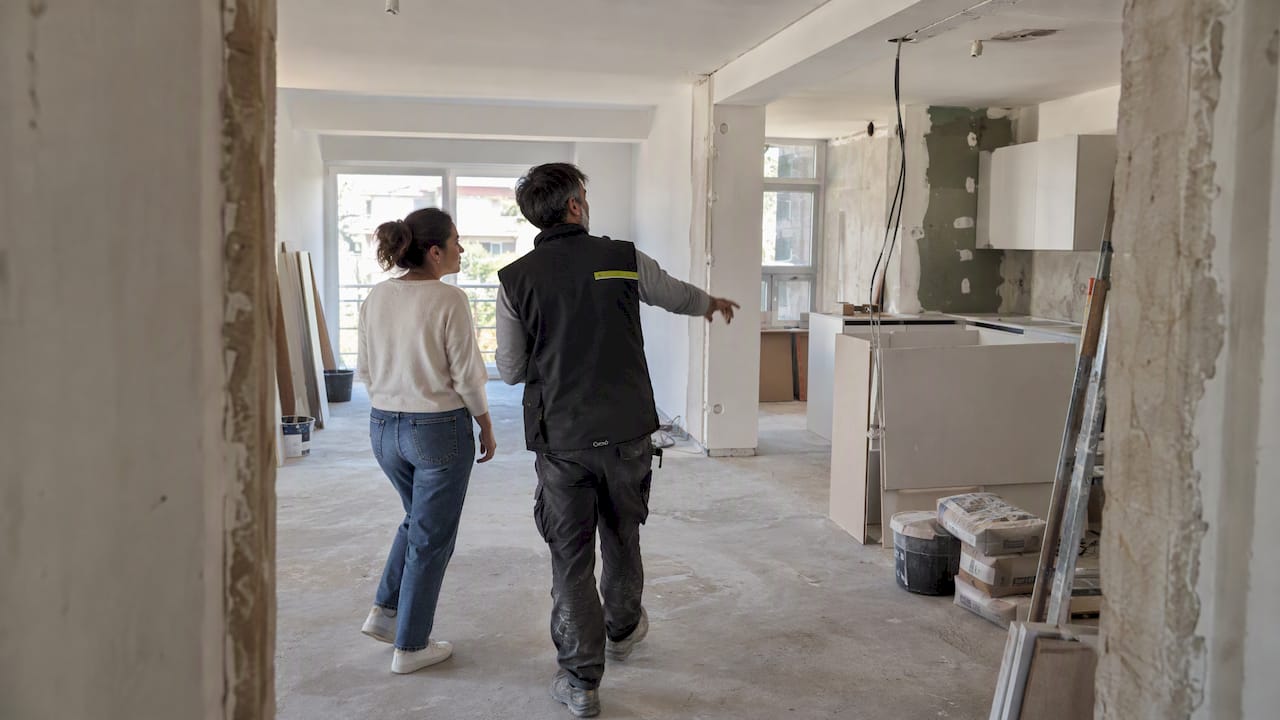
If you are renovating, plan outlets and cable routes before closing walls. A simple arrangement can include an accessible outlet beneath the desk and a discreet charging point, rather than a power strip left on the floor.
When the desk needs building work — and when it does not
You do not need renovation work to move a desk, fit curtains or add a lamp. A new outlet, circuit alteration, heavy wall-mounted unit or work on a wall containing services does require proper planning and execution.
If the desk is to be fixed in place, confirm the wall build-up and load before choosing floating drawers. In older apartments, do not assume that a wall that looks solid will take the same fixing everywhere. For a wider renovation, plan the workstation together with all outlet decisions; this guide to outlet locations in everyday-use areas explains why small decisions prevent later improvisation.
The final test is straightforward: sit down, open the solar shading, switch on the screen and ask someone else to cross the room. If there is glare, a chair across the route or cables on the floor, change the layout before making it permanent.
Key takeaways
- Keep the screen sideways to the window to reduce glare and backlighting.
- Mark out the desk and chair on the floor before buying furniture.
- Use adjustable solar shading and task light instead of permanently closing the window.
- Plan outlets and cables so the living-room route stays clear.
If the desk is part of a living-room renovation, ask Obra Lisboa to include outlet positions, lighting and fixed furniture in the plan before walls are closed or joinery is ordered.
Sources and further reading
- Portuguese health authority advises paying attention to visual demands, available light and local task lighting
- Portuguese health authority’s guidance on indoor air
- well-being and environmental comfort inside the home
- Lisbon municipal urbanisation and building regulation
Editorial image; it does not depict an Obra Lisboa project.

Obra Lisboa