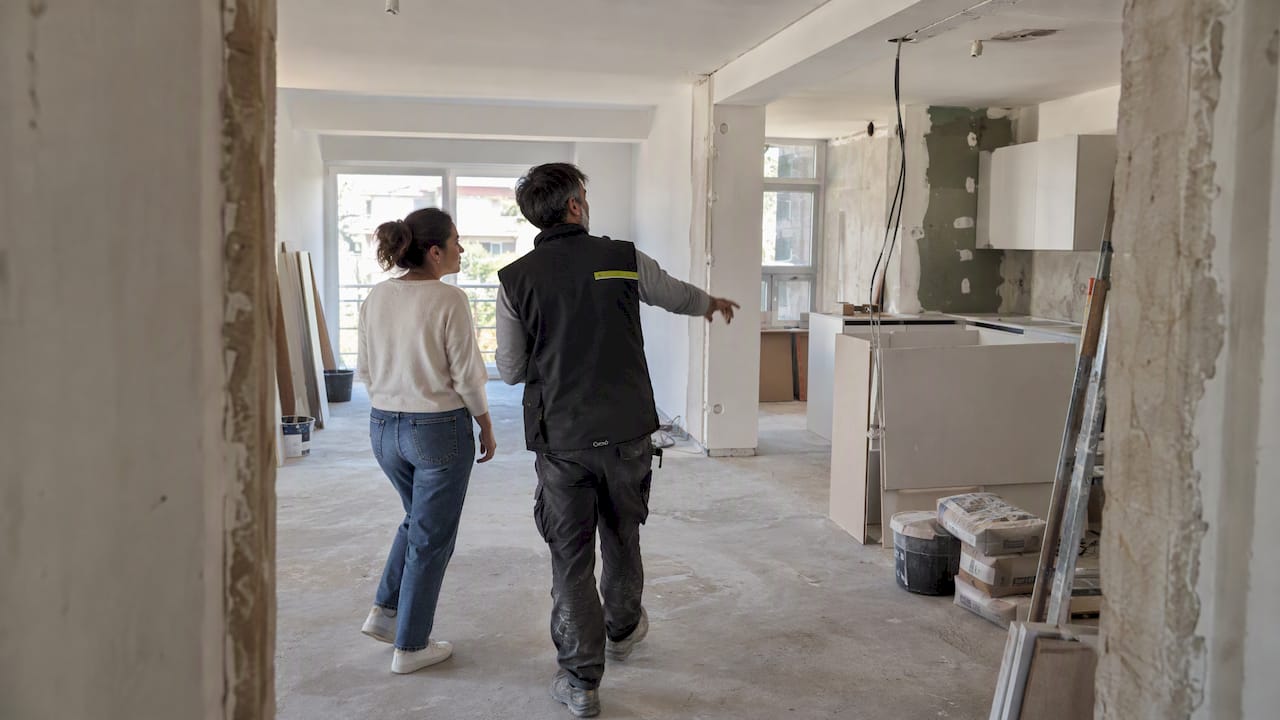
A well-organised handover file shows what was built, where services run and which records to use when a fault or question arises. It should be assembled during the works, rather than rushed together before the final payment. In a Lisbon apartment, this file can prevent drilling into pipework, uncertainty over approved changes and the loss of manuals, invoices or warranties when repair, replacement or sale becomes necessary.
Contents
- What does a handover file solve?
- Which documents should be requested at close-out?
- How should changes be recorded without losing control?
- Which photographs should be taken before walls are closed?
- How should warranties, manuals and maintenance records be kept?
- How can handover be completed without postponing snags?
What does a handover file solve?
A handover file turns scattered information into a record that remains useful after the team leaves site. It does not replace the contract, the design or professional site oversight where that exists. Its purpose is to make those records easy to find and to connect every decision with the room, built element and person or company responsible.
Decide where it will be kept from the outset: a digital folder controlled by the owner, arranged by room and trade, plus a physical folder only for important originals. A straightforward structure might include “contract”, “changes”, “kitchen”, “bathroom”, “electrics”, “equipment”, “photos before closing up” and “maintenance”.
This approach follows the contractual foundation of the work. Law no. 41/2015, published in Portugal’s Official Gazette, sets form and content requirements for certain private building contracts, including identification of the parties, the work, its value and the completion period. Even where a particular situation does not call for the same formalities, keeping these elements easy to locate makes close-out much clearer.
From the beginning, add the date by which each supplier must provide a manual, product reference, installation photograph or warranty. This works best alongside a renovation procurement plan that connects decisions, deliveries and work stages. An item is not genuinely closed because it has arrived on site: it still needs to be installed, tested and recorded.
Which documents should be requested at close-out?
The file should match the scale of the intervention. Repainting and replacing skirting boards does not call for the same documentation as a renovation with new water services, an electrical board, air conditioning, a bespoke kitchen and waterproofing. Even so, several records are worth gathering in almost every project.
- Appointment basis: contract, accepted quotation, schedule of works, appendices, programme and approved drawings or finish schedules.
- Changes: requests, approvals, cost and time effects, product sheets and drawings that replaced the original solution.
- Technical records: available final drawings, circuit schedules, isolation valves, water points, equipment and maintenance access.
- Installed products: manuals, technical sheets, references, colours, finishes, cleaning instructions and service contacts.
- Financial close-out: invoices, measurement sheets or payment certificates, payment evidence, a snag list and confirmation that each item was resolved.
Avoid accepting loose files called “final”, “final 2” or “really final”. Use a naming rule anyone can understand: year-month, room, element and version. For example: “2026-10-kitchen-water-layout-final.pdf”. For drawings, retain the technical file provided by the designer and a copy in a format that is easy to open for everyday reference.
You do not need an encyclopaedia. A short, indexed folder with clearly named records is better than dozens of attachments that nobody can search.
How should changes be recorded without losing control?
Nearly every renovation includes changes. An outlet may move, a niche may be dropped, a tap may be changed, a service door may become larger or the position of an appliance may be revised. The risk begins when the decision exists only in a call, voice note or message without context.
- Record the request with its date, room, location and reason.
- Describe the approved solution and identify the affected drawing, photograph or technical sheet.
- State whether the change affects cost, programme, procurement or work already completed.
- Keep the approval before instructing the work to proceed.
- Add the built version to the index once the work is complete.
A small change can have wider effects. Moving one outlet can alter cabinetry, lighting, finishes, wall chases and the timing for closing walls. The change record should therefore say who has been informed: owner, contractor, electrician, joiner or supplier.
To avoid confusing anticipated work with completed work, connect every change to a measurement sheet or payment certificate. Our guide to renovation measurement sheets and payment certificates sets out a practical way to pay for verified work while keeping decisions and amounts traceable.
Where the works involve a planning procedure, do not treat a late change as purely decorative before its implications have been checked with the responsible professionals. The file should retain the approved decision, without attempting to replace applicable designs, permissions or notifications.

Which photographs should be taken before walls are closed?
The most useful photographs are rarely the finished-room images. They are taken while pipework, cables, ducts, reinforcement, technical boxes, waterproofing and routes for equipment remain visible. Make this record before wall chases, suspended ceilings, plasterboard walls and finishes are closed up.
Photograph each wall straight on, using a wide enough frame to include doors, windows or corners. Then take closer images of the services. Where the future position matters, place a tape measure in the frame and identify the room in the file name. An image of a pipe on its own may seem clear at the time, yet be of little use a year later.
Create a short sequence for each room:
- an overall view before closing up;
- a close view of pipework, cables or ducts;
- the position of isolation valves, junction boxes, accessible traps and reinforcement;
- a photograph after closing up, linking the service installation to the finished surface.
These images are not permission to drill blindly into a wall. Routes may deviate, cross or have been altered later. Before fixing heavy furniture, confirm the substrate, load and presence of services. Bathrooms and areas close to electrical boards leave less room for improvisation. For those locations, also review bathroom electrical-safety planning for outlets, lighting and equipment.
How should warranties, manuals and maintenance records be kept?
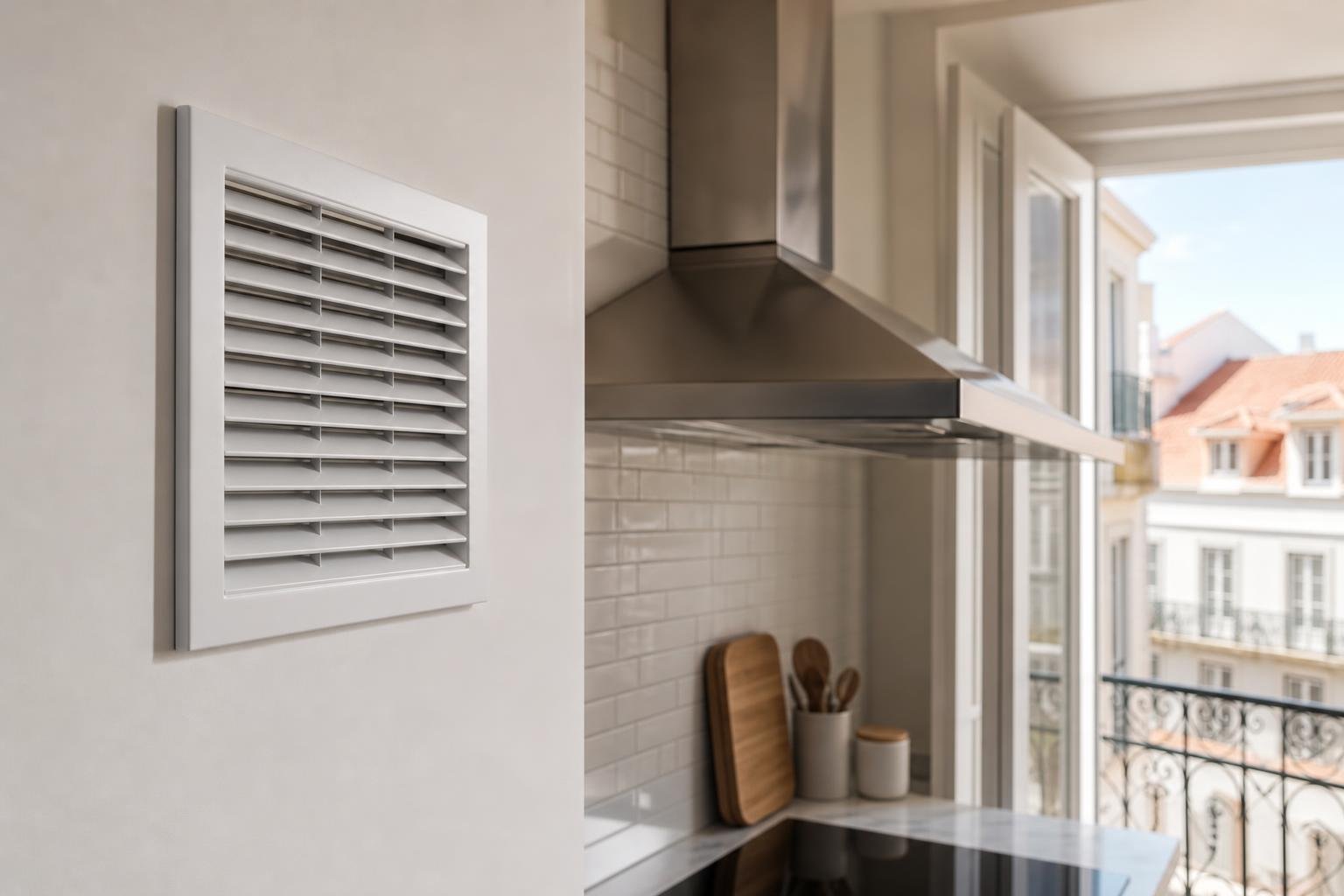
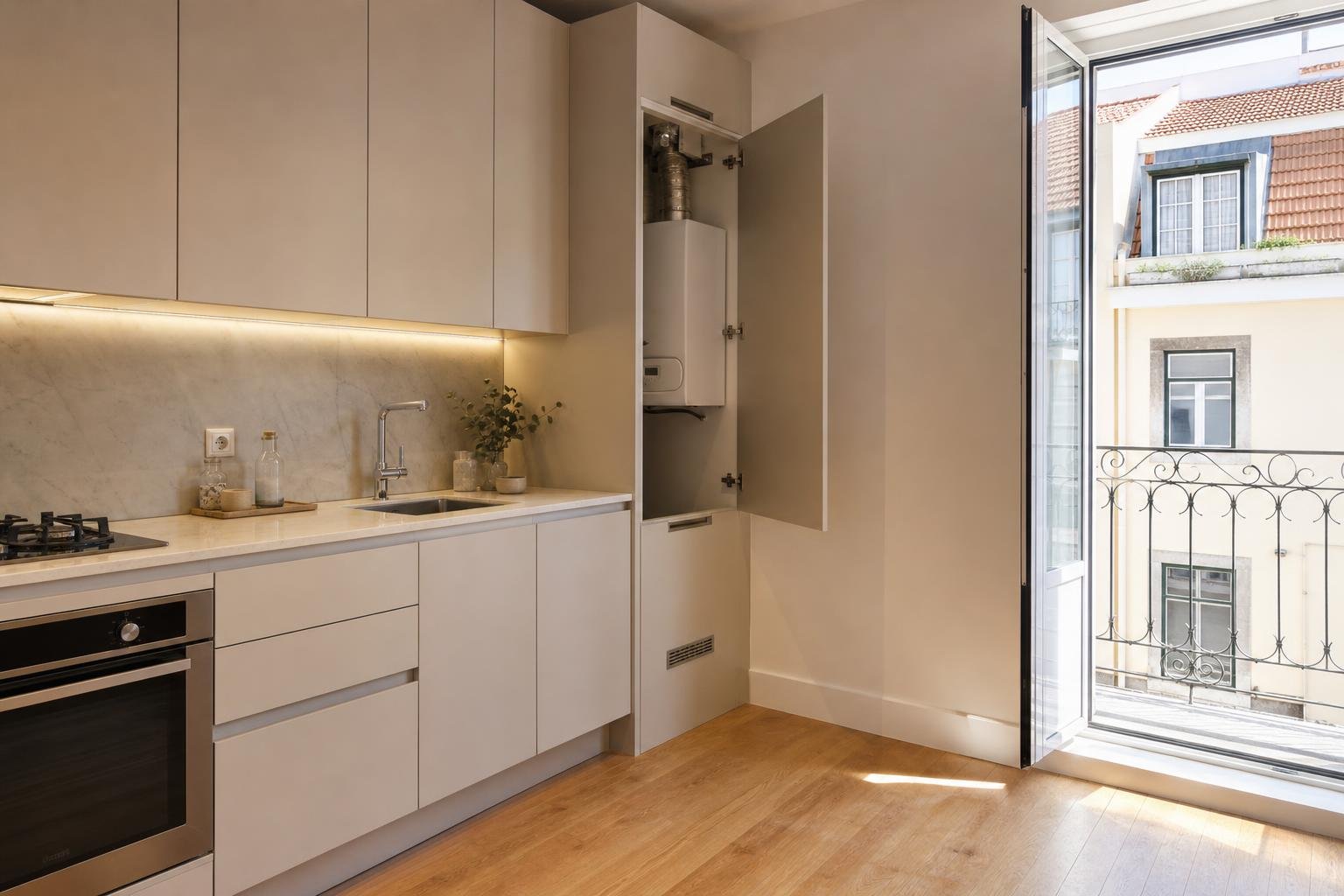
Match every commercial warranty with its invoice, exact product reference and installation date. A manual without an identifiable model, or an invoice that does not distinguish the installed appliance, can delay a simple service call. For extractor fans, hot-water cylinders, heat pumps, built-in appliances and air-conditioning systems, add the service contact, serial number where available and the maintenance conditions set by the manufacturer.
There is an important difference between a commercial warranty, a manufacturer warranty and statutory consumer rights. Decree-Law no. 84/2021 regulates consumer rights in the sale of goods, including remedies where goods do not conform. Keep proof of purchase and delivery for that reason; do not rely solely on a warranty card left inside a box.
Create a front page for routine maintenance, limited to tasks the owner can carry out safely: cleaning accessible filters, observing silicone joints, checking seals, confirming that accessible valves have not seized and reading instructions before using an aggressive cleaning product.
Gas work, electrical boards, pressurised equipment, recurring faults, complex waterproofing and signs of leakage should go to a qualified professional. The file helps explain the issue and locate the equipment; it does not replace technical diagnosis.
How can handover be completed without postponing snags?
Set the handover inspection before settling the final balance. Walk through the home room by room with the quotation, file index and snag list. Test doors, ironmongery, lighting, taps, drainage, accessible outlets, installed appliances and equipment that needs a demonstration.
Record every snag objectively: location, issue, photograph, person responsible and planned correction date. “Finish bathroom” is not useful; “adjust basin-unit door, which catches on the skirting board” gives everyone a clear result to verify. When it is resolved, add the date and a final photograph to the same record.
If a site logbook applies to the work, treat it as a separate document rather than a substitute for the handover folder. Ministerial Order no. 1268/2008 set out the model and requirements for the site logbook, including records of facts and observations relating to the execution of works. For homes covered by a housing technical file, retain the original documentation as well: Decree-Law no. 68/2004 frames that file as information on the dwelling’s technical and functional characteristics.
Provide two digital copies: one complete and protected from accidental edits, and another for everyday reference. Keep the first in an owner-controlled account and maintain a backup beyond a phone. The aim is simple: any future repair should begin with findable information rather than trial and error.
Key takeaways
- Set the handover-file index before work starts and update it whenever a change is approved.
- Photograph services and reinforcement before walls are closed, always with clear visual references.
- Link every warranty to its invoice, product reference and installation date.
- Carry out a room-by-room handover inspection and record snags, responsible parties and dates in writing.
If you are preparing a renovation in Lisbon, ask Obra Lisboa for a proposal with a clear scope, work stages and a practical method for recording decisions, deliveries and changes from the outset.
Sources and further reading
- Law no. 41/2015, published in Portugal’s Official Gazette
- Decree-Law no. 84/2021
- Ministerial Order no. 1268/2008
- Decree-Law no. 68/2004
Editorial image; it does not depict an Obra Lisboa project.

Obra Lisboa