A pendant light works when it lights the table, respects seated people and does not interrupt the route around it. In a small apartment, choose it alongside the table, chairs and path to the kitchen or balcony, rather than for appearance alone. Dining light often also serves conversation, quick work and late meals, so a dimmable, well-positioned fitting is usually more useful than an oversized shade or an overly powerful bulb.
Contents
- Start with the table, not the light fitting
- How low should the pendant hang?
- Choose a form that follows the tabletop
- What light works for meals, conversation and quick tasks?
- Deal with glare and shadows before replacing the fitting
- What to decide before the ceiling is closed
Start with the table, not the light fitting
The table establishes the useful centre of the arrangement. Mark its footprint on the floor, pull the chairs out as they would be during a normal meal and walk the routes around it. Only then mark the ceiling light position. This order prevents a common mistake: aligning the pendant with the centre of the room when the table has been moved aside to free up a route.
In narrow Lisbon living rooms, the table often sits by a wall, window or kitchen threshold. In those cases, centring the light over the table matters more than centring it within the room. An extendable table needs an extra check: decide whether the fitting should serve the everyday position or also cover the opened table. A linear fitting can work well over a rectangular top; above a round or square table, one pendant or a compact cluster often looks calmer.
Before closing a ceiling during renovation, confirm what will sit below: a sideboard, child’s chair, built-in bench or occasional work area. Portugal’s health authority advises adjusting available light and using localised lighting where visual tasks require it; the same principle applies to a table that becomes more than a place to eat during the day. See the DGS guidance on visual comfort when working from home.
How low should the pendant hang?
There is no single height that suits every home. The starting point should allow people to see one another across the table without looking directly into the lamp, stand up without touching the fitting and keep the light focused on the top. Test the height with card or a light temporary shade attached to the cable before shortening the drop.
When seated, look at the lower edge of the fitting from every place at the table. If it cuts across the face of the person opposite, raise it. If the bulb is too exposed, creating reflections in glasses, glossy crockery or a lacquered top, lower it or choose a more enclosed diffuser. Where children use the table, do not leave cables within reach or select a fragile fitting that can be pulled.
Avoid choosing the height while standing in a shop. At home, the relationship changes with ceiling height, chair height, tabletop thickness and even a tall serving dish in the centre. If the room has a tight side route, check the fitting from that angle too: the pendant should not become the first object someone hits while walking around the table.
Choose a form that follows the tabletop
Scale is easier to get right when the fitting follows the geometry of the table without trying to fill the entire volume of the room. A very wide shade over a small table can feel heavy and throw light into the eyes of people walking past. A tiny fitting over a long table leaves the ends without presence and tempts you to raise brightness too far.
- Round table: one central pendant with distributed light keeps the arrangement simple.
- Rectangular table: a linear fitting or two smaller pendants can give continuity along the top.
- Table against a wall: check that light reaches the inner side without casting a hard shadow onto the wall.
- Extendable table: favour a solution that still works when the top opens, without moving the electrical point.
Opaque materials direct light downward and create stronger contrast; clear glass exposes the light source and calls for a visually comfortable bulb; fabric softens light but needs cleaning consideration. If the dining area is close to the lounge, coordinate the choice with living-room reading light so each point has a clear job instead of adding decorative fittings without control.
| Table type | Lighting approach | Main point to check |
|---|---|---|
| Round or square | One central pendant with a diffuser | Avoid a shade that is too wide for the tabletop |
| Rectangular | A linear fitting or two aligned pendants | Cover the length without over-lighting circulation |
| Extendable | A light that suits the usual opened position | Test the table open before fixing the light point |

What light works for meals, conversation and quick tasks?
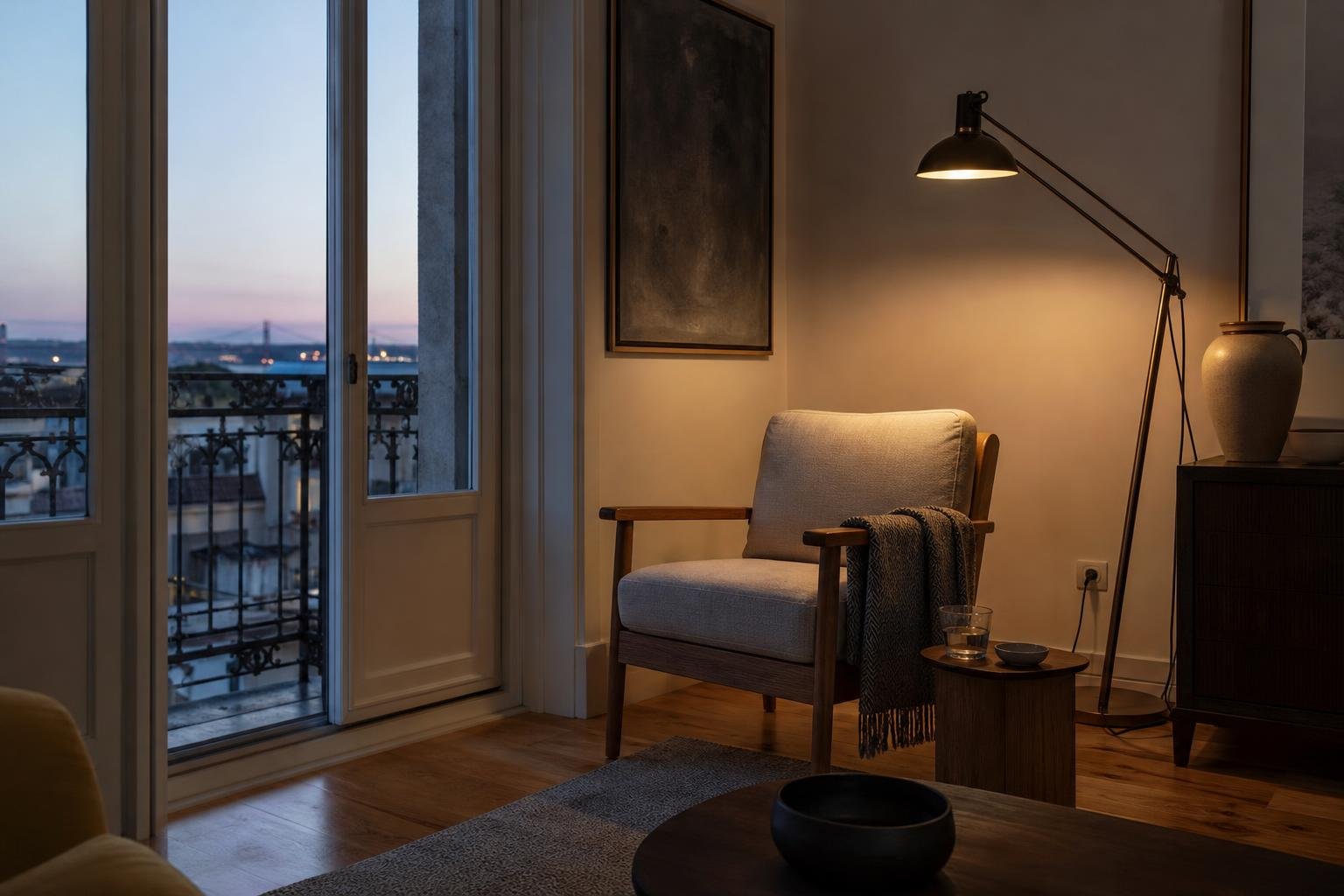
Good table lighting should make food and faces easy to read without turning the living room into a permanent workstation. Choose a warm or warm-neutral LED lamp with good colour rendering, and add dimming when the table is used at different times of day. You can lower it for dinner and raise it for homework, games or paperwork without relying only on general room lighting.
The control should sit on the natural route into the room. If the table is also used as a workstation, a pendant does not necessarily replace a side task light: DGS notes that visual needs may require localised lighting. That second light should be adjustable and separately controlled, so nobody has to sit under bright task lighting unnecessarily.
Use daylight to support the space, but do not treat it as the only answer. DGS notes that windows, views, airing and solar control form part of residential comfort; a table by a window may need a curtain to reduce late-afternoon reflections and properly placed artificial light after dark. Read the DGS note on environmental comfort in housing.
Deal with glare and shadows before replacing the fitting
Glare is rarely solved by increasing wattage. First identify what is uncomfortable: an exposed bulb, a shiny surface, a clear shade, light reflected in a mirror or low natural light arriving head-on. Then correct the cause. A frosted bulb, lower diffuser, adjusted height or filtering curtain may be enough.
Run an evening test with every seat occupied. Put white plates, glasses and a phone on the table; they reveal reflections quickly. Also check whether hand shadows fall across a notebook when someone writes. Household accident prevention includes maintaining good lighting in rooms and stairs, according to DGS accident-prevention guidance; in a social area, that means enough light on routes without harsh spotlights aimed at people’s eyes.
Do not hide an electrical limitation with extension leads crossing the room. If the existing point is wrong, a surface-mounted track may be acceptable as a temporary measure, but a permanent alteration should provide secure fixing, an appropriate connection and controls that match the way the room is used.
What to decide before the ceiling is closed
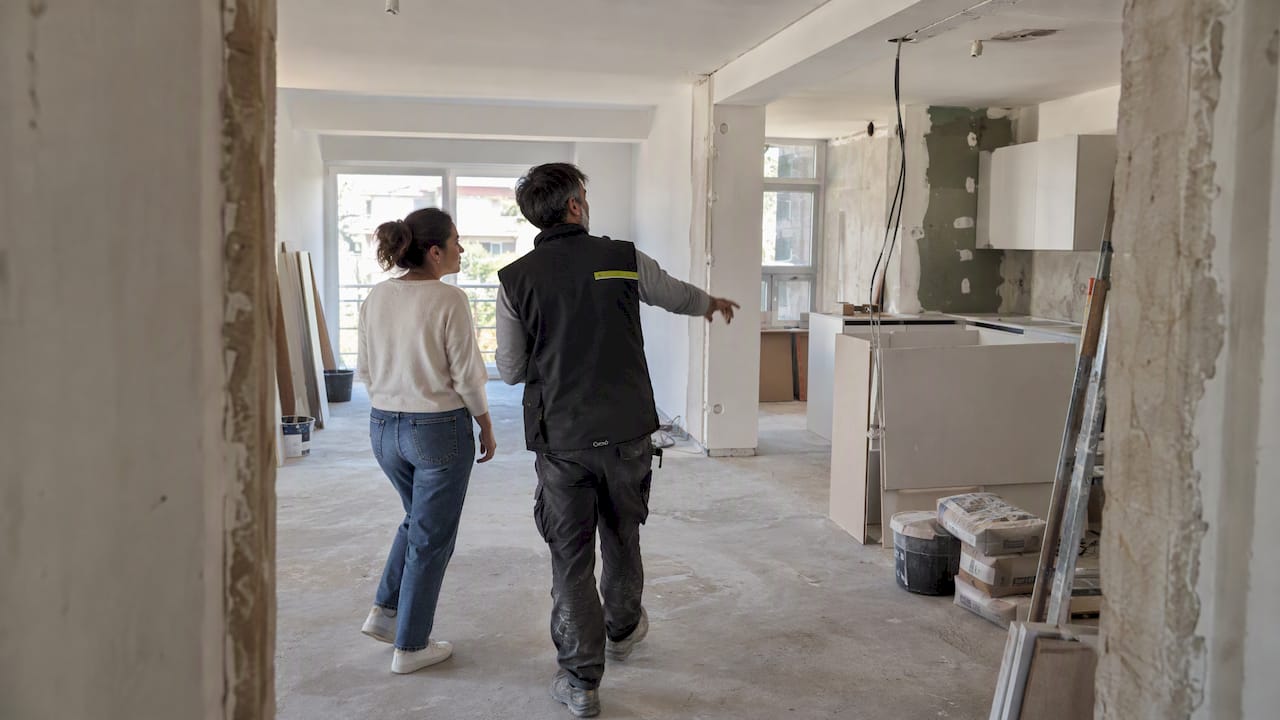
Set the actual table, its normal position, the opened position of an extendable top and the pendant type before cables are run. Ask for enough cable allowance for final adjustment and confirm that the ceiling fixing is suitable for the fitting’s weight. A heavy pendant or large ceiling rose should not become an afterthought once painting is complete.
- Draw the table, chairs and routes on the plan or directly on the floor.
- Mark the centre of the table, rather than an abstract centre of the room.
- Choose whether there will be dimming and where it will be controlled.
- Check the relationship with curtains, tall cabinets, ventilation and doors.
- Test the pendant temporarily before making the final cable cut.
If the room has several functions, plan sockets and charging away from chair routes as well. The article on a robot vacuum outlet is useful for thinking through low-level outlets and circulation; the same discipline prevents visible cables by the dining table. Do not position a tall sideboard or heavy curtain so that it limits air renewal by the window; see the DGS recommendations on indoor air for ventilation and home-maintenance guidance. For a renovation, Obra Lisboa can help turn this usage plan into coordinated decisions for ceilings, electrical work, furniture and finishes.
Key takeaways
- Centre the pendant over the table and the room’s real use, rather than the geometric centre of the room.
- Test the hanging height both seated and standing before cutting the cable or closing the ceiling.
- Pair a dimmable table light with separate task lighting when the table is also used for work.
- Check reflections and circulation with the table laid, rather than in an empty room.
Planning a living-room or dining-area renovation? Bring a simple sketch showing the table, chairs and routes: Obra Lisboa can coordinate light points and sockets with the renovation plan before ceilings and walls are closed.
Sources and further reading
- DGS note on environmental comfort in housing
- DGS accident-prevention guidance
- DGS guidance on visual comfort when working from home
- DGS recommendations on indoor air
Editorial image; it does not depict an Obra Lisboa project.

Obra Lisboa