Good reading light in a living room places the light beside and slightly behind the seat, with an accessible outlet and no cable crossing the route through the room. This reduces shadows across the page, screen reflections and trip risks near the sofa. Before buying a lamp, settle the armchair, side table and curtains; only then should you choose the height, beam type, bulb and electrical connection.
Contents
- Start with the seat where you actually read
- Which lamp works best beside an armchair?
- Where should the outlet and switch go?
- How to aim the light without creating glare
- Build layers of light for the room's different uses
- What you can do yourself and when to stop
Start with the seat where you actually read
Do not choose a lamp from a catalogue photograph. Sit in the usual place at the time you tend to read, then look at the window, the chair back, the television and the route between the entrance and sofa. In a Lisbon living room with a west-facing window, for example, late-afternoon sun can make a book or tablet uncomfortable before you need to switch on a lamp.
- Mark the final position of the armchair or sofa corner.
- Allow a small surface for a book, glasses, remote control or drink.
- Check whether curtains, blinds or shutters can control window glare.
- Measure the route to the outlet without accepting a cable stretched across the floor.
- Make sure the light will not shine into the eyes of someone sitting opposite.
Carry out this test after dark, with curtains closed. That is when an overly dark wall behind the chair, a reflection on a glossy table top or an awkwardly visible bulb becomes clear. If the armchair only works beside a window, resolve solar control and curtain fabric first; changing the lamp will not solve direct glare.
Which lamp works best beside an armchair?
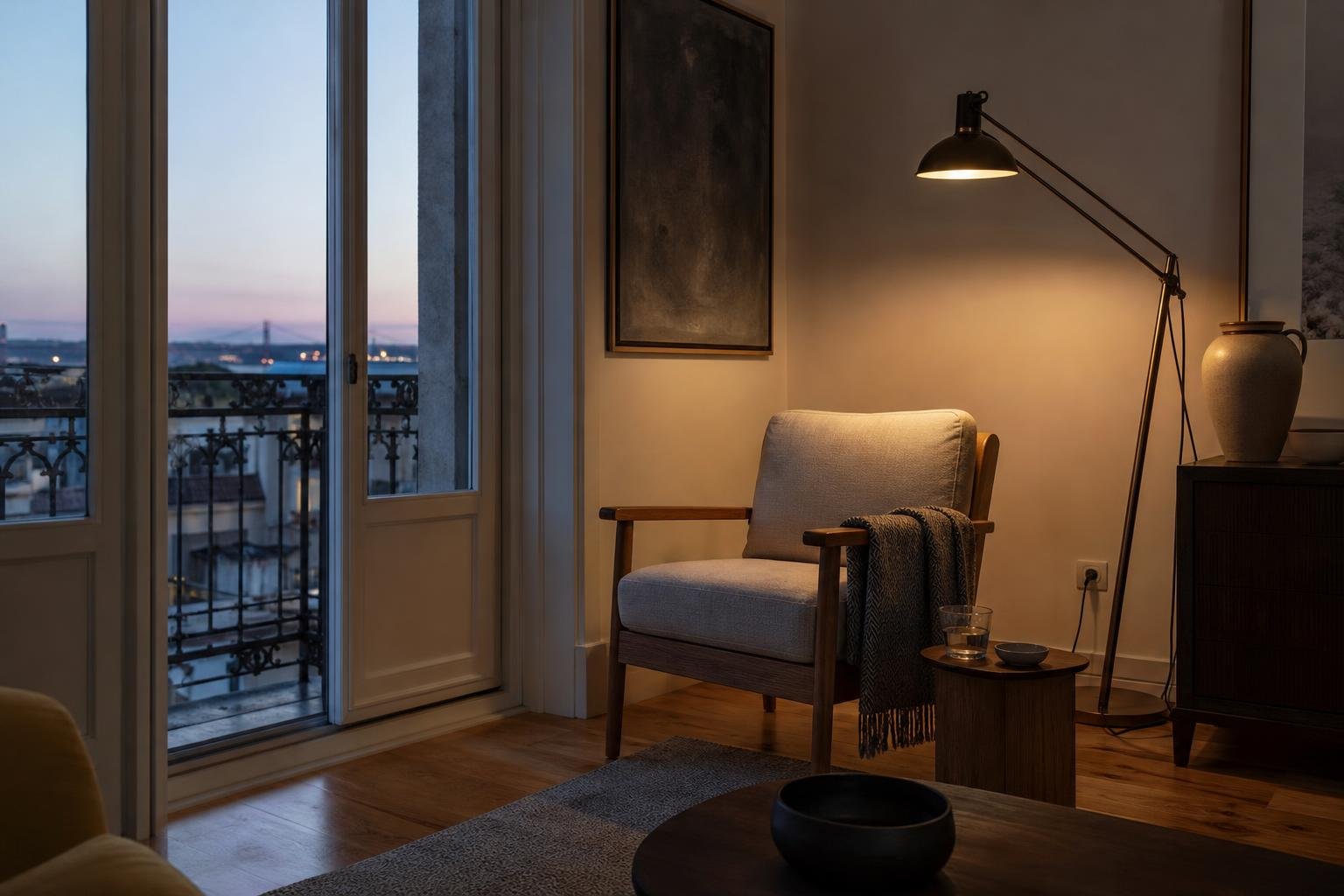
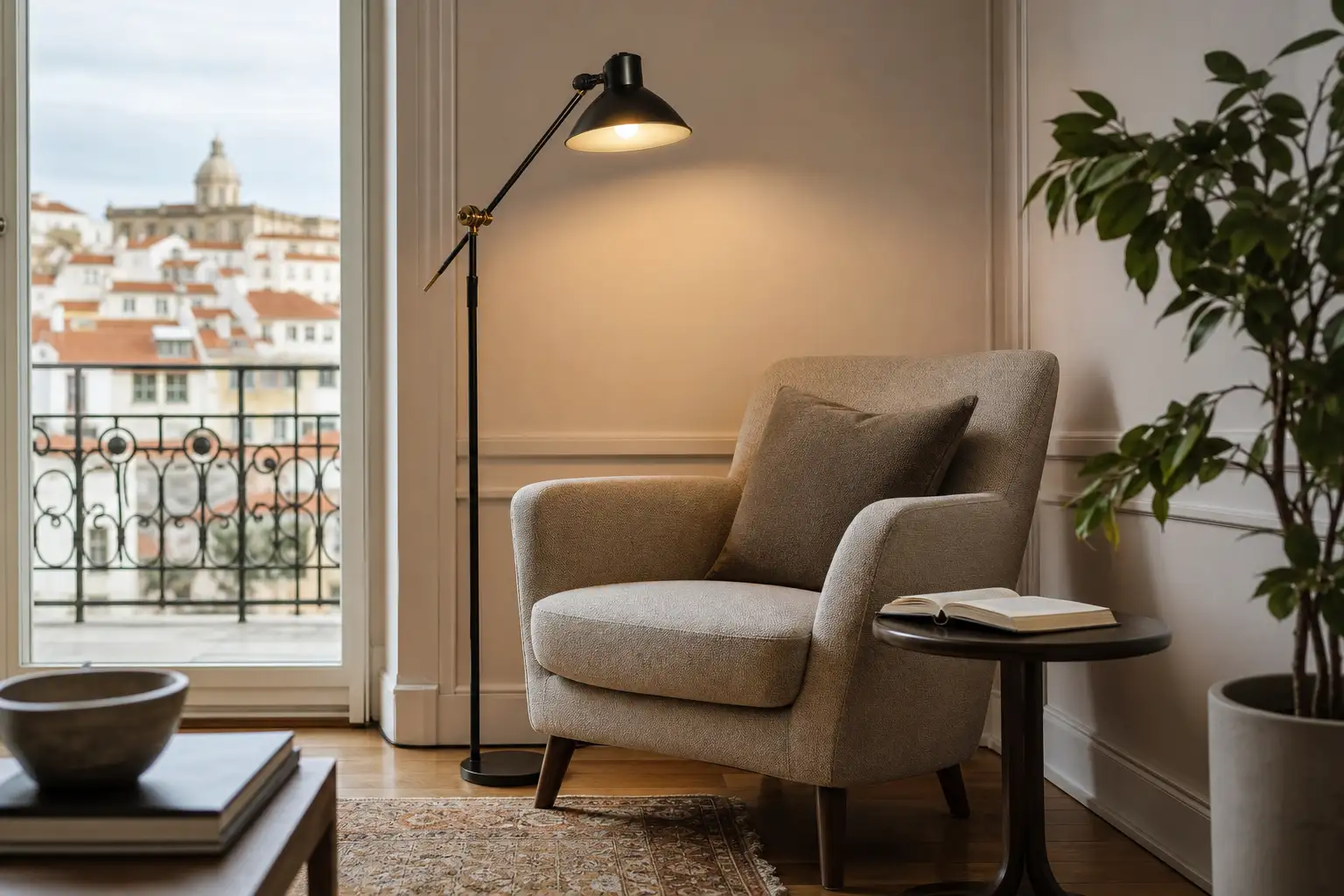
A floor lamp with an adjustable arm or head is the simplest option when the renovation is complete or the armchair may move. Look for a stable base and a head that directs light onto the page while keeping the bulb set back from your direct view. An uplighter can create atmosphere, but it is usually inadequate for extended reading on its own.
If the seat is permanent, a wall light can free up the floor and side table. This option needs a decision before decorating or closing a wall: the electrical point, switch height and fixing method depend on the fitting selected. When reorganising a living room, it also helps to plan outlets around real furniture, as explained in this guide to placing outlets without compromising circulation.
A table lamp only works well where the table has enough depth and does not become crowded with objects. The shade should send light towards the page without interrupting conversation or the view of the television. Before deciding, picture where an open book will sit: if that means moving the lamp or reaching for a hidden plug, the arrangement still needs work.
| Option | When it works | Main point to check |
|---|---|---|
| Adjustable floor lamp | A movable armchair or completed renovation | Stable base and cable outside the walking route |
| Wall light | A permanent reading position | Electrical point and height set before decorating |
| Table lamp | A wide, stable side table | Shade must not obstruct the line of sight |
Where should the outlet and switch go?
The outlet should remain reachable without moving heavy furniture, while avoiding a position where the chair or table can knock against it. On a side wall, leave room for skirting, curtains and the side table. If you use a phone charger, e-reader or second light, account for those connections from the start rather than stacking adapters and multi-plugs.
A sound extension lead can help you test a position for a few days. It is not a permanent answer where the lamp is used daily. Avoid cables beneath rugs, behind curtains or pinched under furniture feet. The DGS guidance on accident prevention includes good lighting and removing loose electrical wires from walking routes.
Changing circuits, cutting into walls and adding electrical points should not be treated as decorative DIY. The Portuguese framework for private electrical installations published in Diário da República sets out provisions for execution, testing and technical responsibility. If an outlet becomes hot, feels loose, smells burnt or trips the breaker, disconnect the equipment and ask a qualified professional to assess it.
How to aim the light without creating glare
The aim is to light the page, not turn the room into a spotlight. Direct the lamp head downwards and slightly forwards so that light reaches the book without the bulb appearing when you look up. If you write or make notes, try placing the light on the opposite side to your dominant hand to reduce hand shadow; for many right-handed readers, that means light from the left.
When reading on a tablet, shift the screen until it is out of the reflection line from both the window and lamp. Test with a dark page and a light one, because reflections do not always appear in the same way. Lacquered tops, glass, polished metal and glossy frames can bounce direct light back towards your eyes.
- Choose a shade or diffuser where the source is close to eye level.
- Avoid bare bulbs facing someone who is seated.
- Use dimming where the same chair is used for reading, talking and watching television.
- Keep task lighting outside the direct angle of the screen.
Do not choose only by the wattage shown on the box. Light direction, colour appearance and the ability to dim it make more difference to comfort than an excessively bright bulb. A light that seems pleasant in a shop should also be tested with your book, viewing distance and actual room finishes.
Build layers of light for the room's different uses
A comfortable living room needs separate functions: general light for entering and moving around, task light by the seat and, where needed, lower indirect light to avoid harsh contrast across the room. One person can then read clearly without forcing everyone else to sit in bright light.
- Use ceiling or wall light to enter the room and find objects.
- Switch on the reading lamp only when sitting down.
- If the wall behind the chair feels too dark, add discreet indirect lighting.
- Try the combination at night, with curtains closed and the television on.
For energy use, a suitable LED bulb is generally the sensible choice, provided it gives the light you need and works with any dimmer. ADENE identifies efficient lighting, including LED bulbs, as a practical energy-efficiency measure. Choose light quality and control first, then check compatibility between the bulb, fitting and dimmer.
In summer, the room layout should also respect ventilation. Do not place the lamp, armchair or shelving so that it prevents doors from helping air move through the home; see when leaving interior doors open can help cool a Lisbon apartment.
What you can do yourself and when to stop
You can test positions with an existing lamp, replace a compatible bulb, adjust the lamp-head direction, secure a cable in a safe route and rearrange light furniture. This is a useful way to confirm the solution before buying a more expensive fitting or commissioning electrical work.
Stop and ask for help when the work involves opening a wall, moving or adding outlets, extending circuits, altering the consumer unit, fixing a wall light to a wall of unknown build-up or dealing with abnormal electrical signs. A well-planned room should not hide connections under a rug or turn a temporary extension lead into a permanent installation.
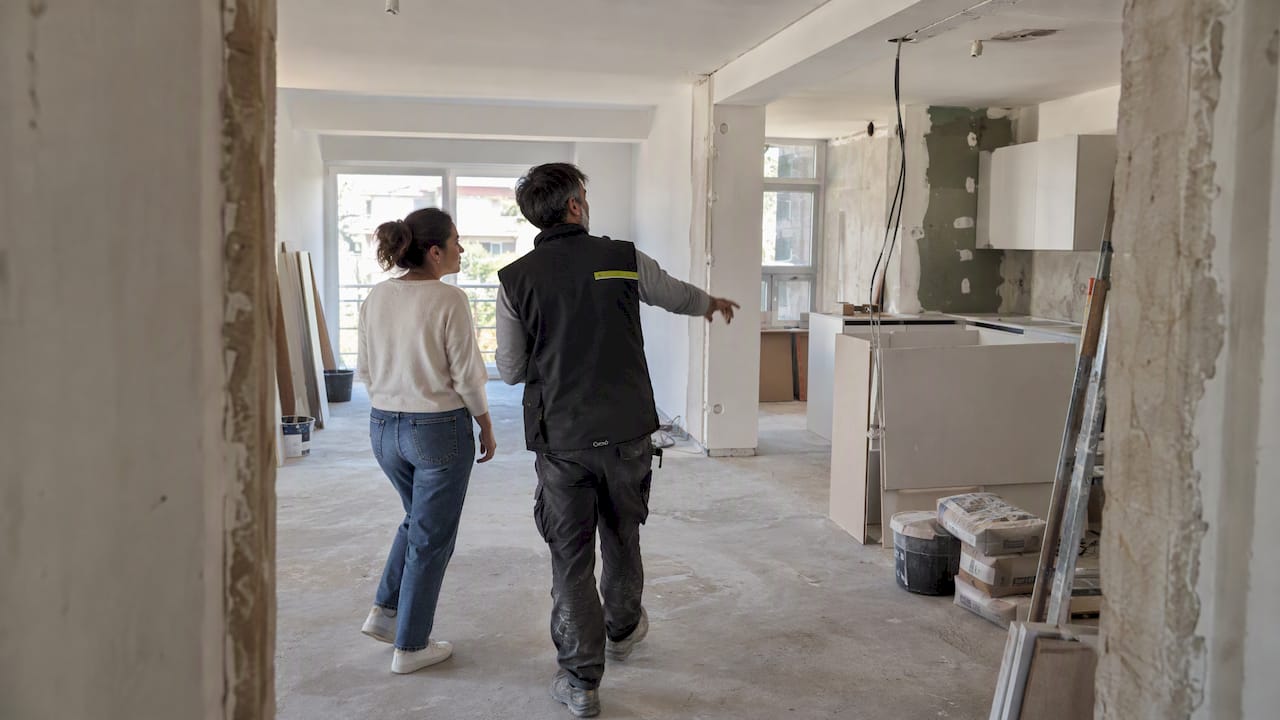
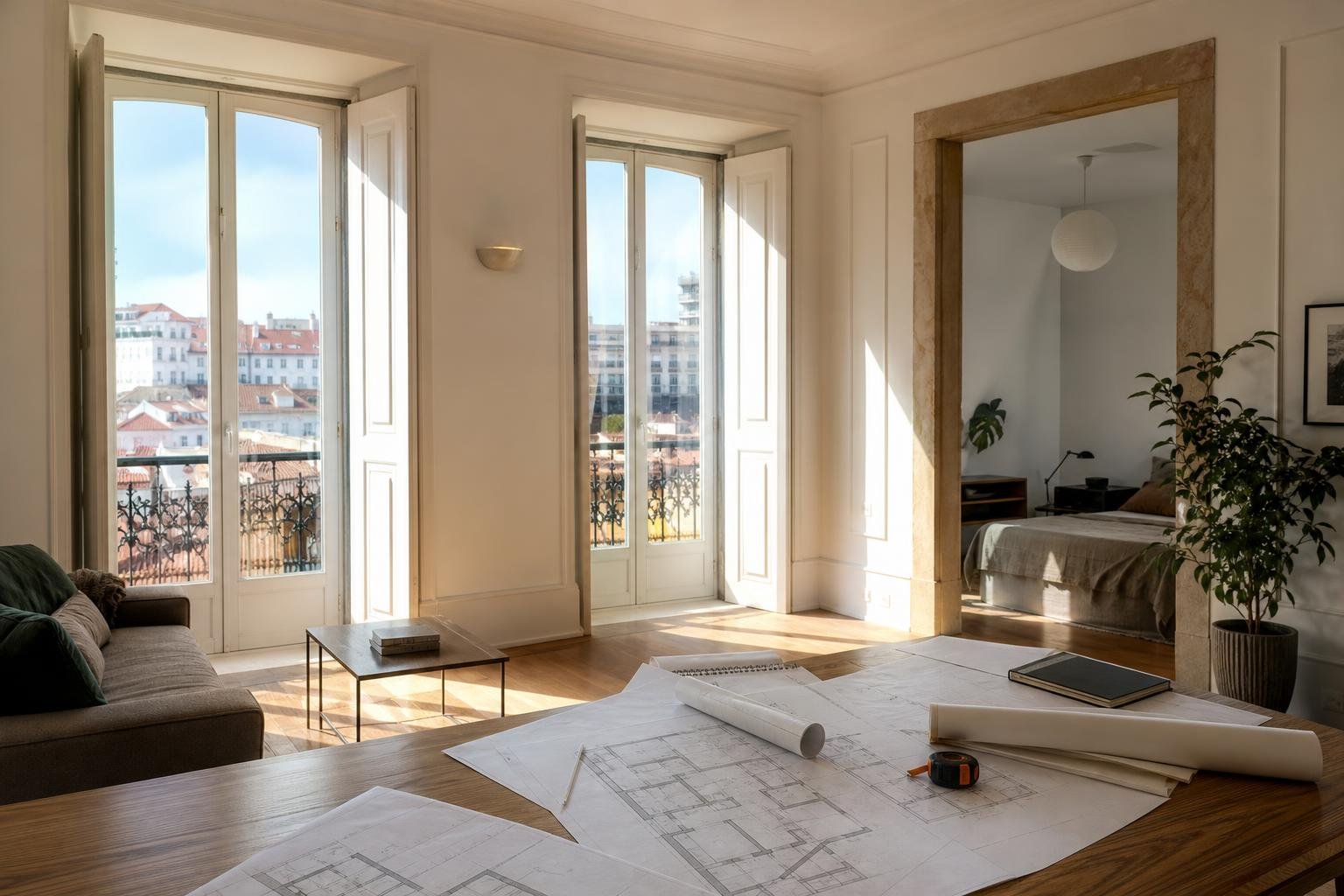
Before proceeding, make a short brief with the room layout, chair position, preferred light height, equipment that needs power and photographs of the wall. It helps set the electrical point before decorating and prevents outlets from ending up behind the armchair back. If the room is being renovated, confirm positions once furniture has been marked out on the floor, rather than relying only on the drawing.
Key takeaways
- Test the chair and lamp position after dark before buying.
- Aim light at the page and keep the bulb out of your direct eyeline.
- Plan an outlet nearby; cables beneath rugs are not a permanent solution.
- Use a qualified professional for new electrical points, circuits or overheating signs.
If your living room is part of a renovation, include the reading area in the electrical drawing and furniture plan from the start. Obra Lisboa can help coordinate lighting, outlets and finishes within a clearly defined refurbishment.
Sources and further reading
- DGS guidance on accident prevention
- Portuguese framework for private electrical installations published in Diário da República
- ADENE identifies efficient lighting, including LED bulbs, as a practical energy-efficiency measure
Editorial image; it does not depict an Obra Lisboa project.

Obra Lisboa