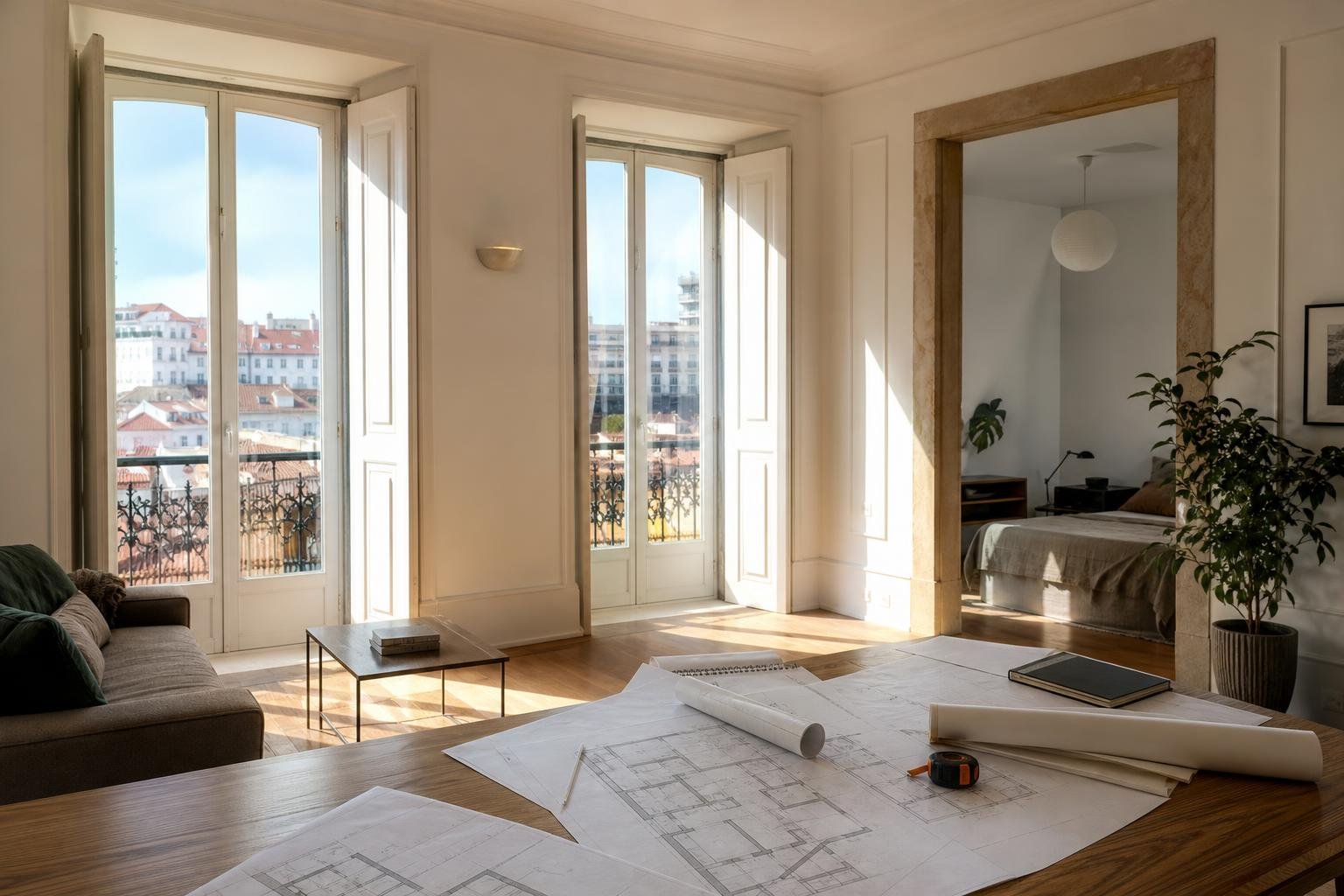
A fall in rehabilitation licences is not a reason to postpone a Lisbon renovation, nor does it prove that contractors are immediately available. In the second quarter of 2026, rehabilitation licensing in Portugal fell 11.9% year on year, while newly licensed dwellings rose 10.8%. For anyone planning to renovate a home, the useful conclusion is straightforward: prepare the project before requesting prices, because national figures do not replace real trade availability, delivery lead times or the rules of the building.
Contents
- What changed in the second quarter of 2026?
- Does the decline make it easier to hire a renovation team?
- What should you prepare before requesting quotations?
- When do the council, condominium and street occupation enter the programme?
- How can you reduce delays without buying everything too early?
- What is the practical decision for a Lisbon renovation?
What changed in the second quarter of 2026?
The figures released by Statistics Portugal on 11 September 2026 show a market moving in different directions. About 6,200 buildings were licensed in Portugal during the second quarter, down 7.1% on the same period in 2025. Rehabilitation works fell by 11.9%, while completed buildings also declined by 4.2%, to about 3,900.
At the same time, within family housing, newly licensed dwellings increased 10.8% and completed dwellings increased 11.6%. See the publication timetable and release from Statistics Portugal on licensed and completed works in the second quarter of 2026.
This does not prove that demand for renovation is lower in every Lisbon neighbourhood. The indicator measures national licensing and does not capture all routine maintenance, interior works exempt from prior urban-planning control, or the existing workload of each contractor. It is still useful for rejecting a common assumption: fewer licences do not automatically mean free slots in contractors’ diaries.
Does the decline make it easier to hire a renovation team?
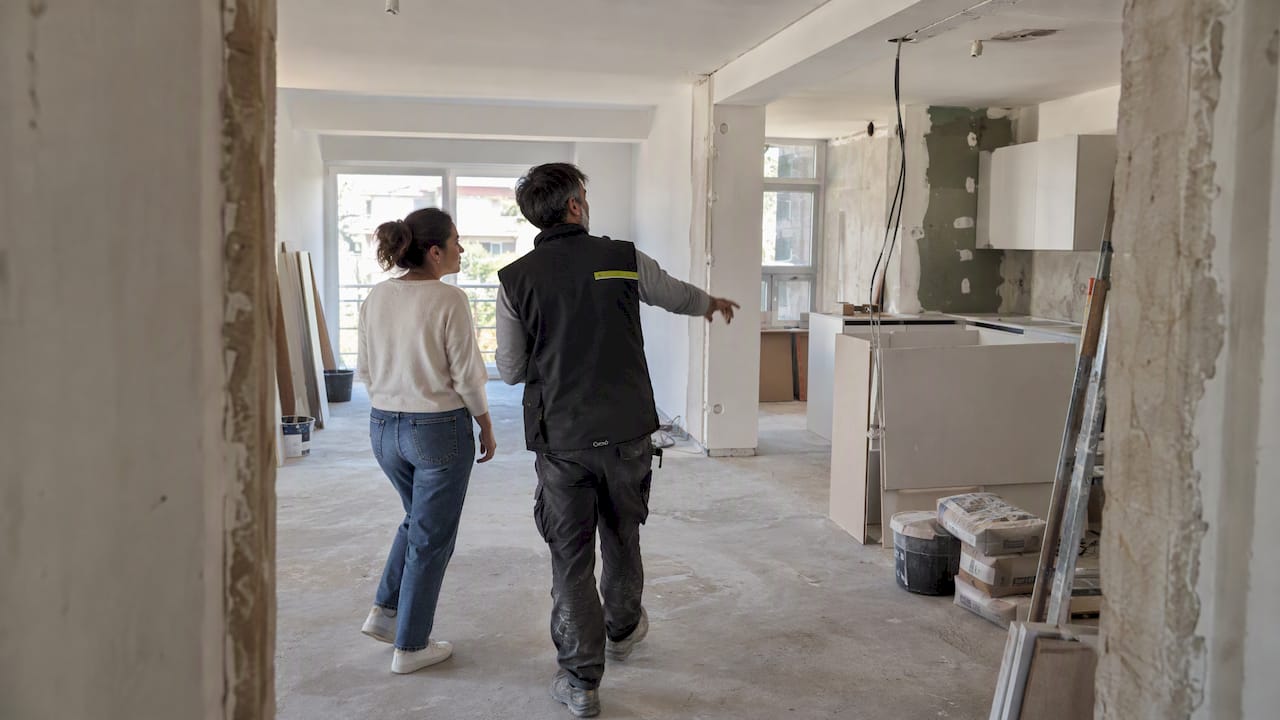
Not necessarily. An apartment renovation relies on a sequence of people and decisions: demolition, plumbing, electrical work, windows, finishes, joinery, painting and often coordination with the condominium. One busy trade can delay the start date or extend the whole programme.
In Lisbon, the difference between a short internal fit-out and a more demanding rehabilitation job matters greatly in older buildings. Walls may be out of square, services may have no reliable survey, lifts may be small, condominium rules can limit deliveries and working times, and there may be nowhere to unload materials. Those constraints affect planning before the first tool arrives.
Rather than asking only, “When can you start?”, request three separate dates: survey visit, delivery of a complete proposal and a realistic first day on site. Ask which materials are subject to ordering lead times. This helps distinguish a sales estimate from a programme that can actually be coordinated.
Before appointing anyone, it is sensible to check the company through the IMPIC consultation for companies holding a private-works contractor licence. This check helps confirm the identity and title of the party you are about to contract with, although it does not replace reviewing the quotation, references and contract terms.
What should you prepare before requesting quotations?
In a less predictable market, a vague brief produces vague quotations. First define what you want to compare. You do not need every decorative choice settled, but you should remove the uncertainties that alter demolition, technical services or ordered dimensions.
- Set the perimeter. List rooms, walls to retain or remove, equipment to replace and areas outside the works.
- Collect building information. Keep available plans, condominium rules, access limits and contacts for delivery coordination.
- Identify blocking decisions. Kitchen, bathrooms, windows, climate control and layout changes should be clarified before appointment.
- Separate essential work from desirable work. An alternatives list lets you postpone items without changing work already completed.
- Request explicit exclusions. Waste removal, protection, unforeseen repairs, permits, supplied equipment and works to common parts should never be left implied.
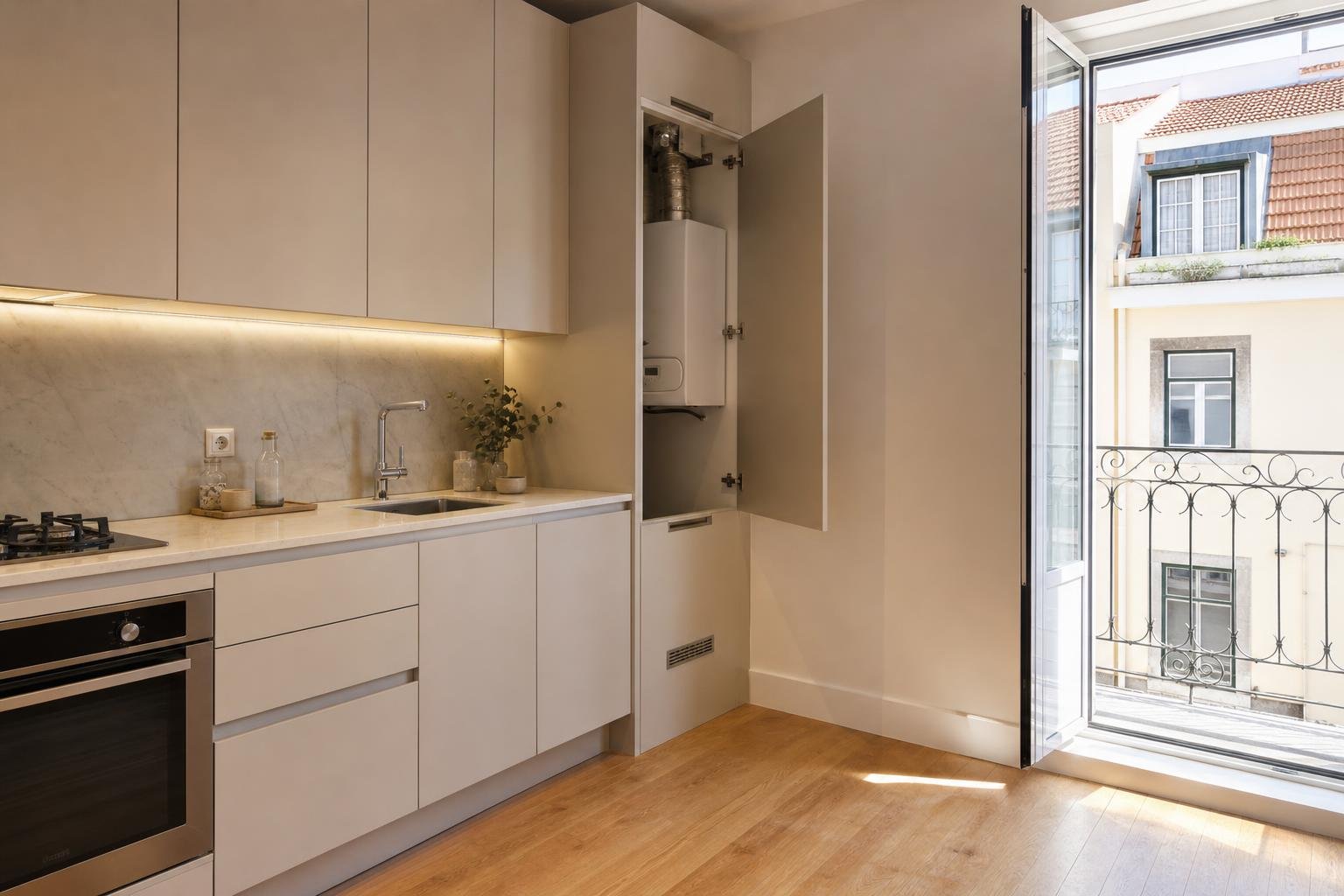
If the project will be phased, define the boundary between phases from the start. For example, leaving a kitchen until later may require electrical circuits, pipework and connection points to be prepared now; doing it afterwards can mean reopening finished walls.
For a method of comparing quotations against work that has actually been confirmed, read about renovation measurement sheets and payment certificates.

When do the council, condominium and street occupation enter the programme?
A technical schedule does not replace urban-planning requirements. Internal work may be exempt from prior control under certain conditions, but that does not authorise alterations to façades, common elements, structure or use. It also does not remove the need to organise building access and protect shared areas.
Where prior communication is required, Lisbon City Council states that work may begin after the procedure has been correctly submitted and the applicable fees have been paid. The council page on building works subject to prior communication explains the framework and should be considered against the specific case, especially for protected buildings, restricted areas or external works.
Prepare a focused discussion with the condominium manager: intended dates, working hours, material route, protection for the lift and stairs, waste collection point and the site contact. Condominium approval may be needed where common parts are affected; simply giving notice does not settle that issue.
Another frequent mistake is setting a start date before knowing whether a skip, unloading area or scaffold will require use of the public street. When site logistics depend on the street, the application and municipal decision can determine the genuine start date.
How can you reduce delays without buying everything too early?
Buying every material on the appointment date can feel prudent, but it may create a different problem: lack of storage, damage, difficult returns or products kept before final dimensions are confirmed. A safer method is to link each order to a confirmation point.
- Order long-lead items early, but only after dimensions, opening direction, finishes and technical compatibility have been checked.
- Keep contingency for items revealed by strip-out, such as substrate repairs, replacement pipe sections or local strengthening.
- Do not close walls without a record. Photograph services, boxes and routes before covering them; confirm equipment positions and maintenance access.
- Link payments to verifiable milestones, rather than simply to elapsed weeks or promised deliveries.
Hold points prevent irreversible decisions made under pressure. Checking before closing a suspended ceiling, waterproofing a shower base or fitting joinery can avoid later demolition. Use a simple list based on renovation hold points to turn the programme into clear confirmations.
What is the practical decision for a Lisbon renovation?
The second-quarter 2026 figures call for preparation rather than speculation. The fall in rehabilitation licensing is a national snapshot for one period; it is neither a price list nor a guarantee of local availability. The strongest position when approaching the market is still to arrive with enough information to obtain comparable proposals and make decisions without changing the scope every week.
Start with a decision sheet containing plans, photographs, required work, materials still open for selection, building constraints and your preferred date. Then ask for the proposal to separate included work, exclusions, client-supplied items, planned sequence and the method for approving changes. At completion, retain updated drawings, photographs of concealed services and warranty documents; a renovation handover file helps structure that stage from the beginning.
If structural damage, active leaks, degraded electrical installations or planning doubts appear, do not use market timing as a reason to rush forward. Pause, obtain the appropriate assessment, then agree the price and dates.
Key takeaways
- The 11.9% fall in rehabilitation licensing is national data and does not measure immediate crew availability in Lisbon.
- Request separate dates for the survey, quotation and site start; one start date rarely explains the real programme.
- Compare proposals with scope, exclusions, supplied items and payment milestones clearly identified.
- Confirm planning requirements, condominium arrangements and street logistics before ordering materials or announcing a start date.
If you are preparing a renovation in Lisbon, Obra Lisboa can help turn the initial decisions into a works proposal with a clear scope, phases and confirmation points. The next modest step is to gather plans, photographs and your priority list before requesting a quotation.
Sources and further reading
- Statistics Portugal on licensed and completed works in the second quarter of 2026
- IMPIC consultation for companies holding a private-works contractor licence
- building works subject to prior communication
Editorial image; it does not depict an Obra Lisboa project.

Obra Lisboa