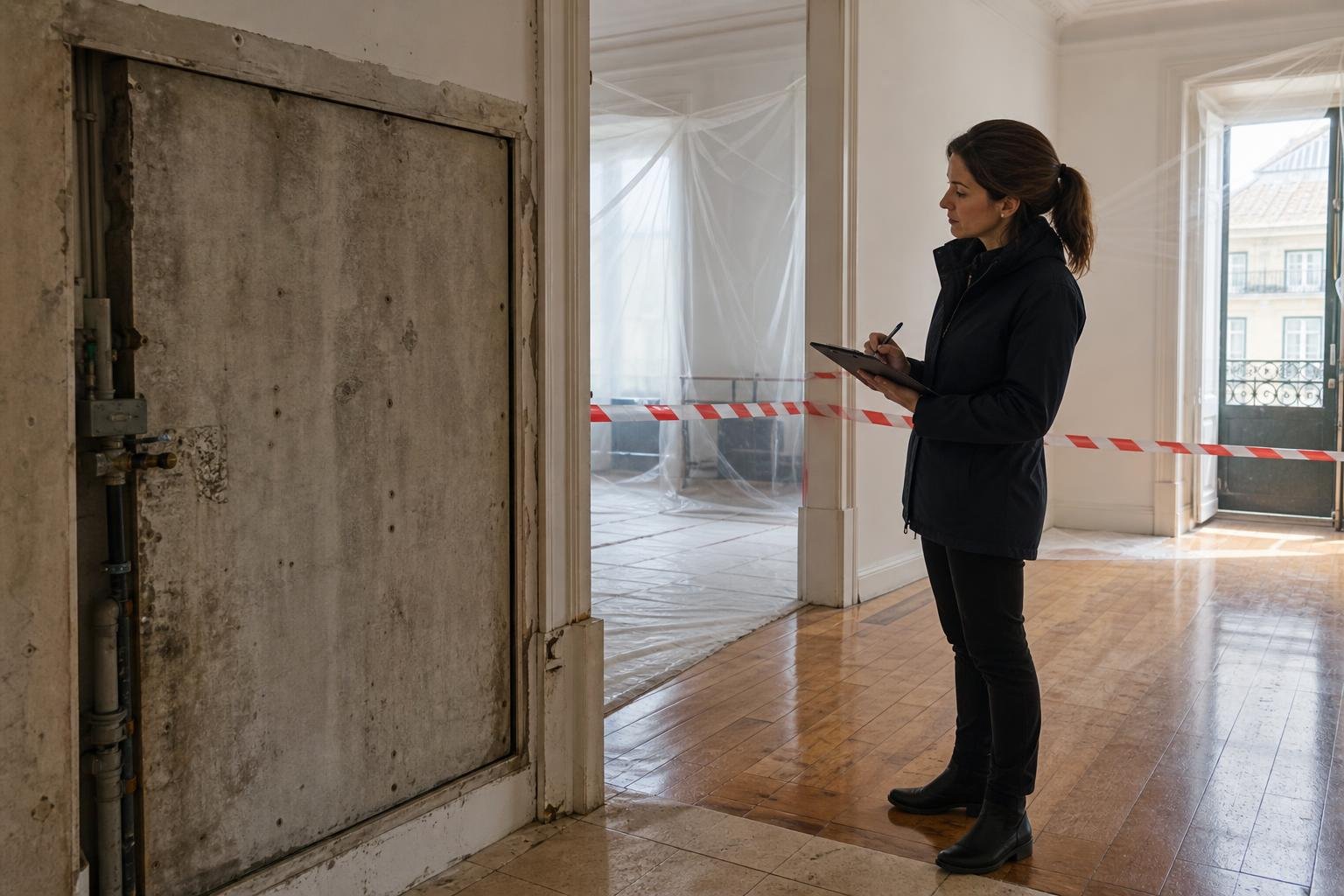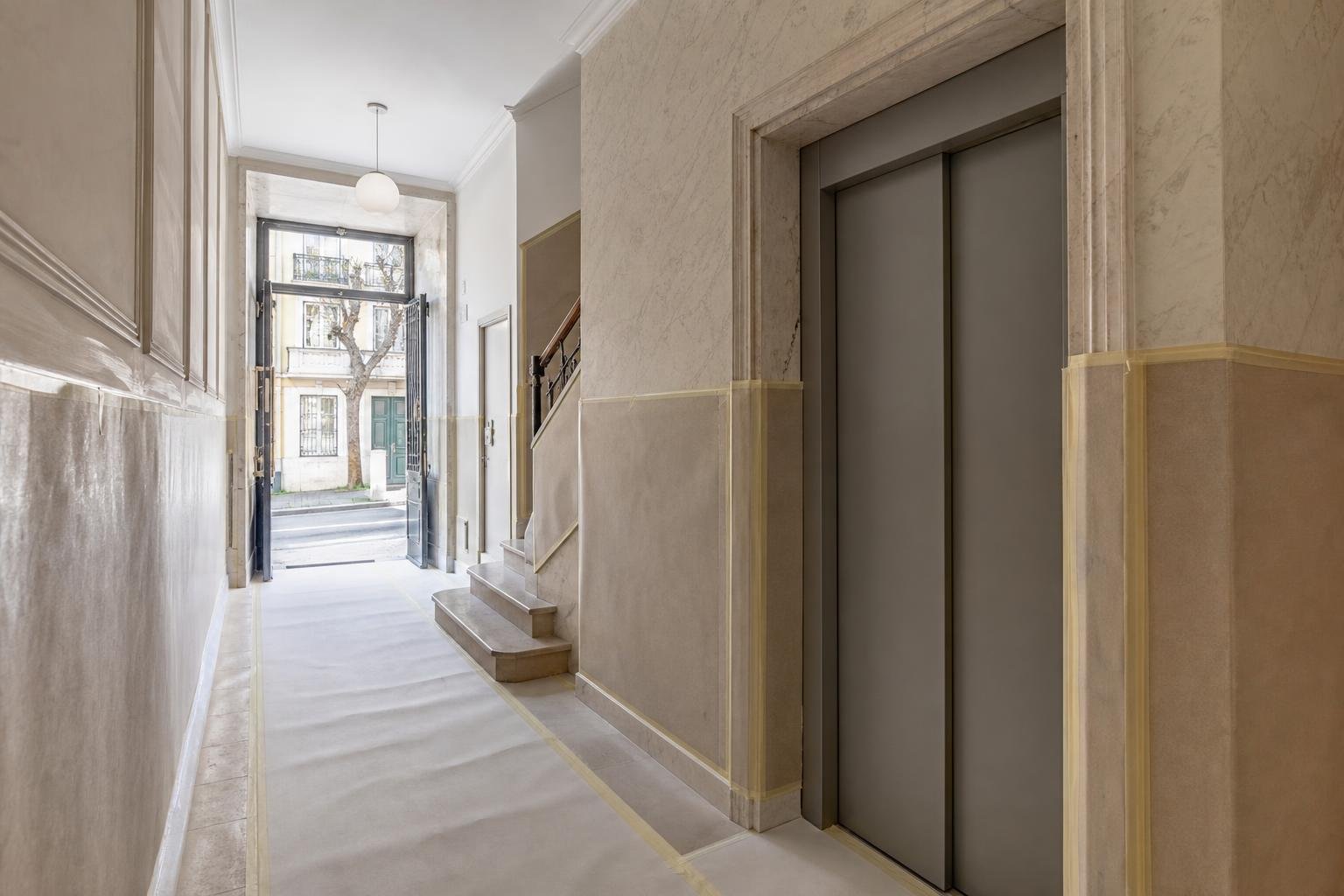

A tap that takes too long to fill a glass, a shower that weakens when someone uses the kitchen sink, or a washing machine with inconsistent performance can all have very different causes. In a Lisbon apartment, the issue may sit in the fitting itself, a partly closed valve or blocked filter, but it may also be in the building riser, meter or ageing internal pipework.
For that reason, low pressure is not a diagnosis. It is a symptom that should be located before you order sanitaryware, close walls or replace an entire pipe network. This matters even more during a kitchen or bathroom renovation: moving fixtures, adding thermostatic mixers or installing higher-flow equipment can expose a constraint that was already there.
The aim is not to turn a flat into an over-engineered technical system. It is to separate a straightforward fault from work that requires coordination with the condominium, a designer or the utility provider.
First establish whether the problem is general or local
Carry out a simple comparison before taking anything apart. Check cold and hot water, kitchen and bathrooms, and observe flow with one tap open and then with two in use at the same time. If only one outlet performs poorly, start with its aerator, flexible connector, angle valve, mixer cartridge or local filter. If cold water is acceptable but hot water is not, follow the hot-water route: water heater, valves, mixer and pipework.
When every outlet has the same weakness, particularly at the busiest times in the building, the issue may be upstream of the apartment network. Note when it happens and ask the technician to measure static pressure and pressure while water is running. A comparison is more useful than the general impression that the water feels weak.
Do not confuse flow with pressure. A narrow spout can feel forceful while delivering little water, and an efficient tap can restrict flow without being faulty. The ADENE guidance on water efficiency helps distinguish controlled consumption from poor performance.
Map the pipework before changing the kitchen or bathroom
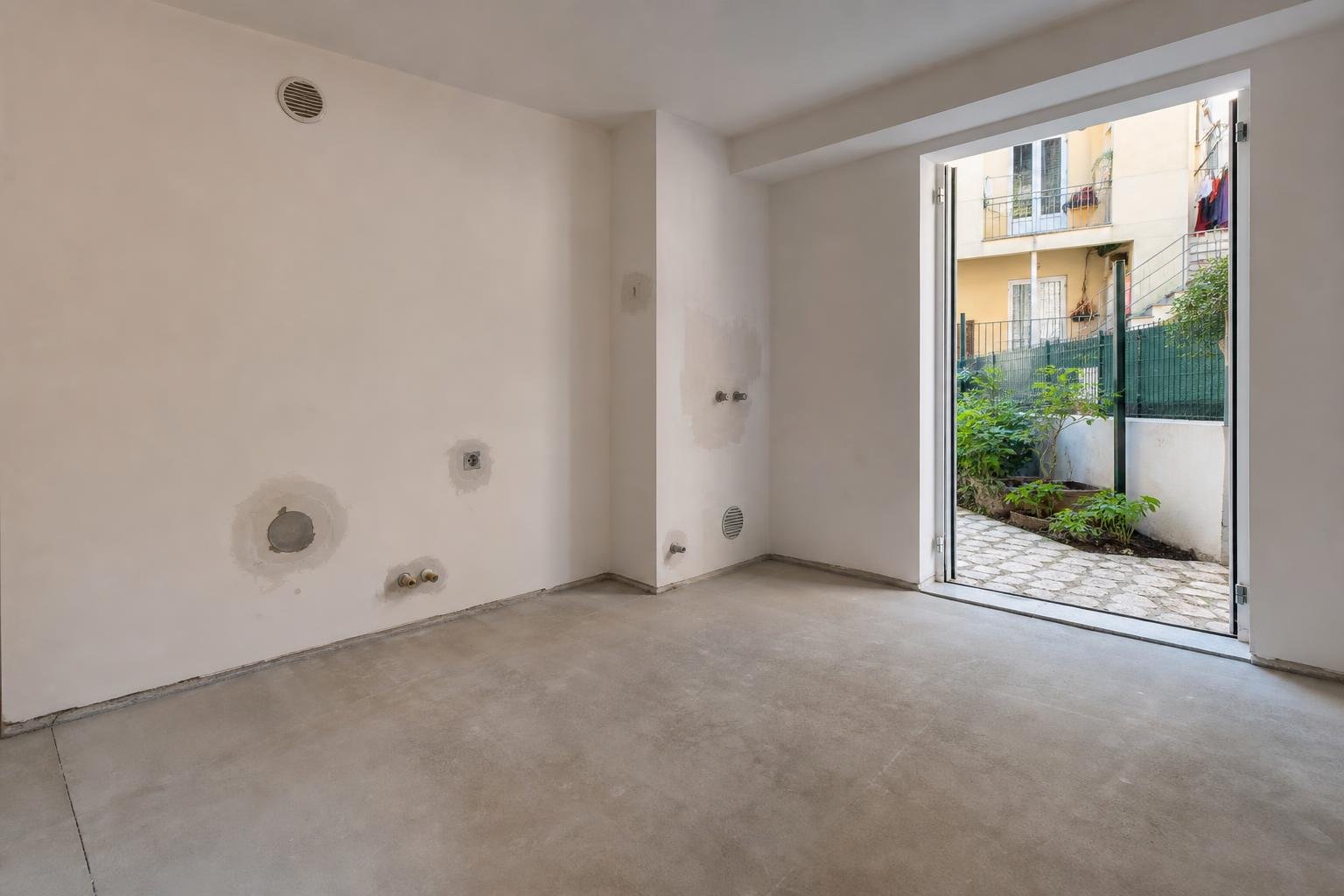
During a renovation, draw both the actual route of the existing pipes and the intended new route, including meters, isolation valves, hot-water equipment and outlets. It is not enough to show the sink, basin and shower on a furniture plan. You need to know where water arrives, what pipe sizes exist, where concealed joints are located and which sections will become inaccessible once finishes are installed.
Moving a kitchen to the other side of a home, for example, can create long hot-water runs and longer waits at the tap. Extra changes of direction, unnecessary reductions and excessive flexible connectors can also affect performance. Whenever a wall is opened, consider accessible and clearly labelled isolation valves for the kitchen and for each sanitary area.
This approach complements planning for drainage and plumbing before renovation: supply and drainage need to be coordinated, but they are different systems with different faults and requirements.
Do not try to solve a building limitation only inside the flat
In older buildings, an ageing shared riser, undersized connection, restricted meter or poorly executed earlier alteration can affect several apartments. The automatic answer should not be a booster pump inside the flat. A badly specified pump can add noise, vibration and energy use, create disputes around the shared network and still fail to solve the root cause.
Before deciding, ask the building manager whether other residents report the same issue, whether work has been carried out on risers, whether there are tanks or pressure-boosting systems, and who is responsible for each section. The technical framework for building water-distribution systems remains linked to the Portuguese General Regulation for Public and Building Water Distribution and Wastewater Drainage Systems.
If the renovation materially changes the network or crosses common elements, record the decision. Photos before closing, a pipework drawing and valve identification make a later repair far less uncertain.
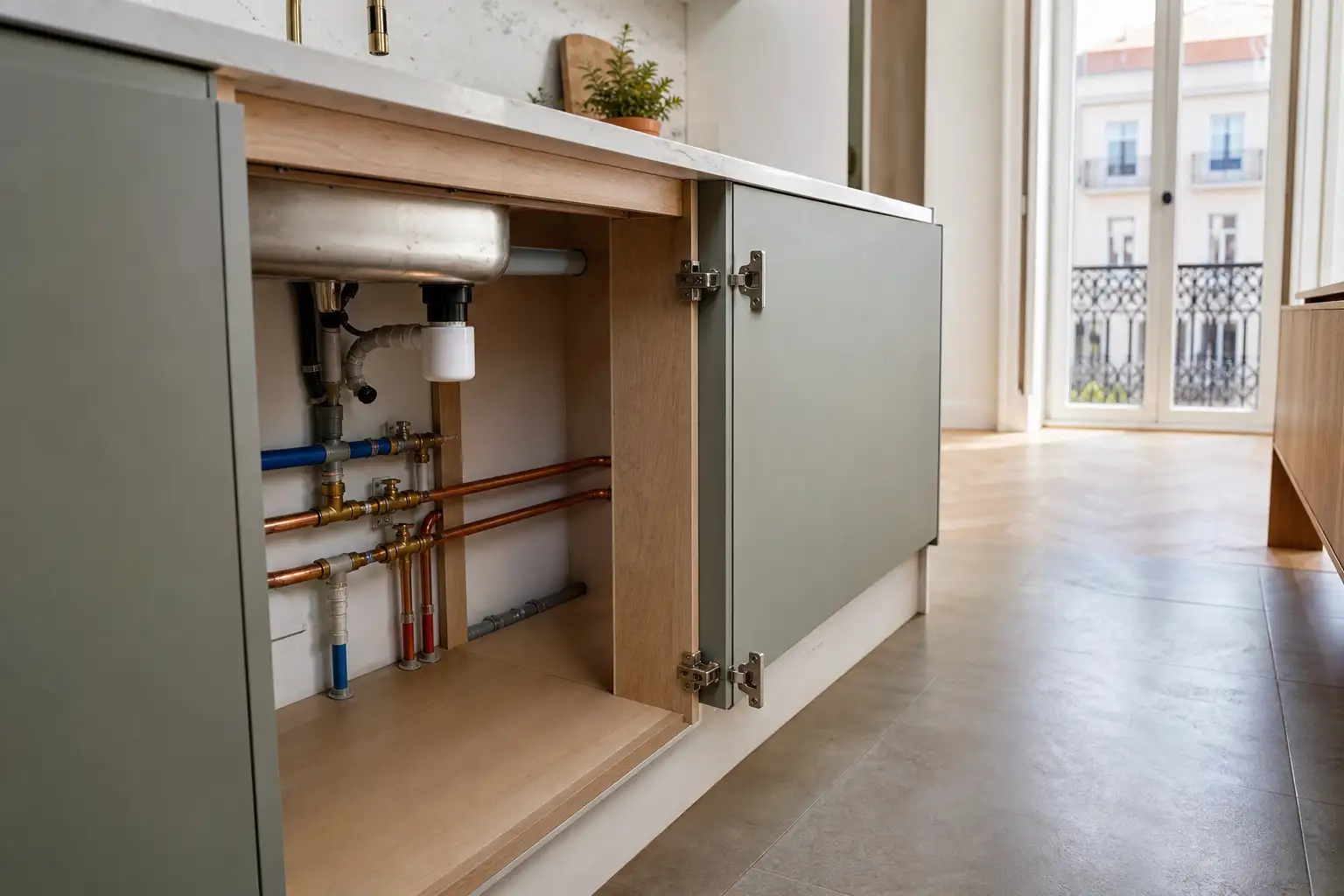
Choose taps and equipment after the diagnosis
A good tap cannot compensate for poorly resolved pipework, but the wrong selection can make an existing limitation more noticeable. Check the technical documentation for shower heads, shower columns, thermostatic mixers, gas water heaters, storage heaters, washing machines and filters. Some equipment requires minimum operating conditions; other products are designed to work at moderate flows.
Rather than selecting only by appearance, ask for a shortlist compatible with the measured pressure and flow. In a compact bathroom, a straightforward, properly regulated shower arrangement may be more reliable than a large multi-jet column that performs unevenly. In the kitchen, a flow limiter can lower consumption without compromising comfort when the tap and expected use are suitable.
Efficiency does not mean discomfort. ADENE identifies taps, showers, toilet flushes, washing appliances and domestic hot water among the elements that influence a property’s water performance.
Protect water quality and avoid dead legs
Work intended to improve pressure should not create long unused branches, improvised connections or sections where water remains stagnant. This is especially important when an outlet is moved, a bathroom is removed or a capped “future provision” is left inside a wall. If no use is planned, removing the redundant section is usually more sensible than abandoning it.
Portugal’s Directorate-General of Health notes that stagnation should be avoided in hot- and cold-water systems and highlights temperature as part of preventing microbial multiplication. Particularly in larger systems, hot water above 50°C and cold water below 20°C are relevant preventive references. See the DGS guidance on Legionella prevention and control.
In an apartment, that means direct routes, correctly insulated pipes where appropriate, access for maintenance and responsible adjustment of the hot-water system.
Request tests and leave useful information for the future
Before finishes and cabinets are handed over, test the network with key outlets operating: shower, basin, kitchen sink, toilet flush and planned appliances. Check joints for leaks, tap stability, pipe noise, hot-water waiting time and correct drainage. A modest test at this stage can prevent demolition of a finished wall because an isolation valve cannot be reached.
Keep dated photographs, a route diagram, valve locations and equipment data sheets. In Lisbon buildings with older construction, also confirm that chases, drilling and service penetrations do not weaken walls or timber elements. Lisbon City Council warns that cutting structural components, including timber members characteristic of the Pombaline cage, to install pipes can impair a building’s behaviour; see its seismic-resilient construction principles.
The intended result is uncomplicated: a network that can be understood, delivers pressure appropriate to its use, can be maintained and does not hide unresolved decisions behind a finished surface.
If you are renovating a kitchen or bathroom in Lisbon, Obra Lisboa can help organise the technical survey, works plan and details that should be settled before walls are closed. You may also find our guide to hot-water pipework in a renovation useful.
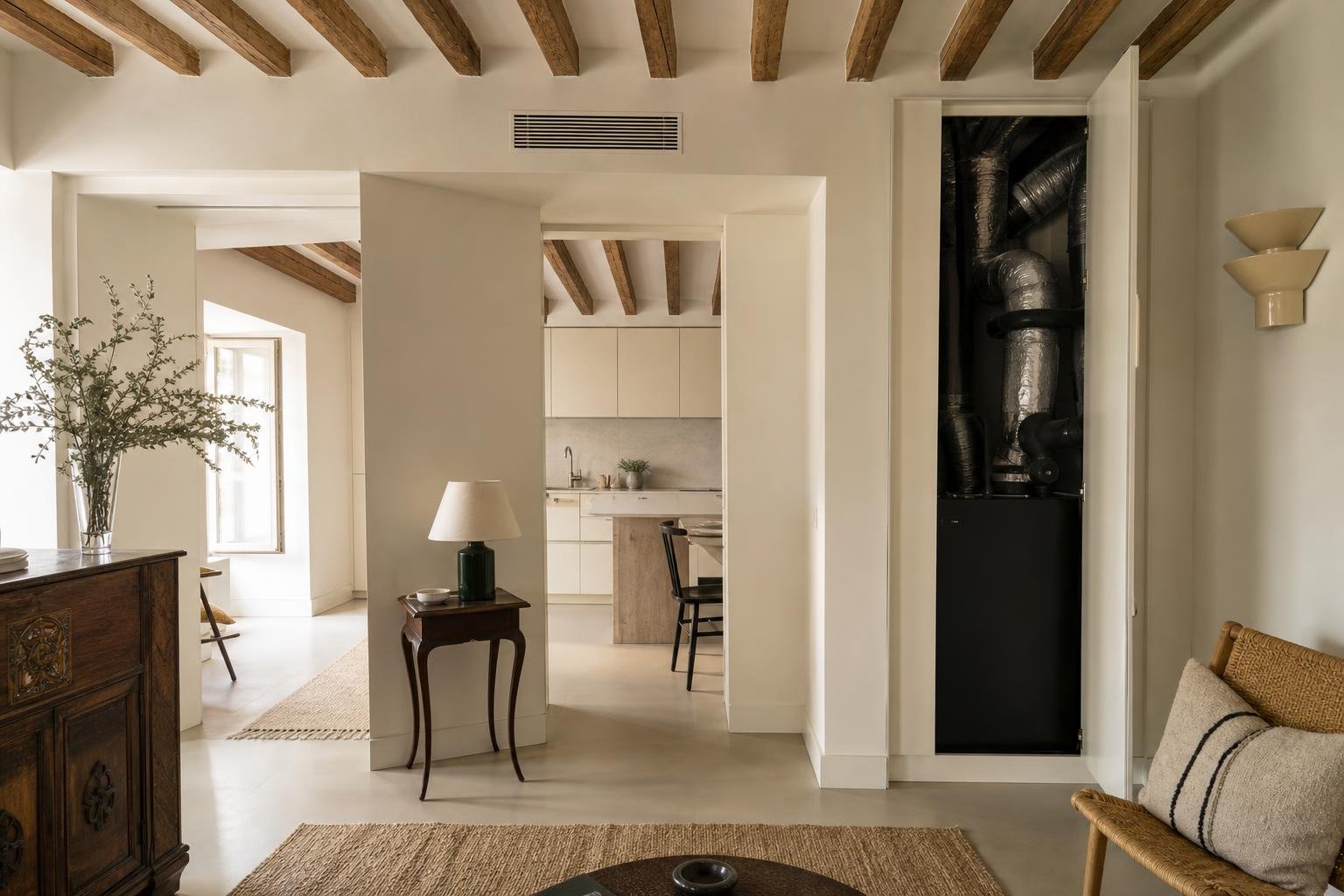
AI-generated editorial image; it does not depict an Obra Lisboa project.

Obra Lisboa