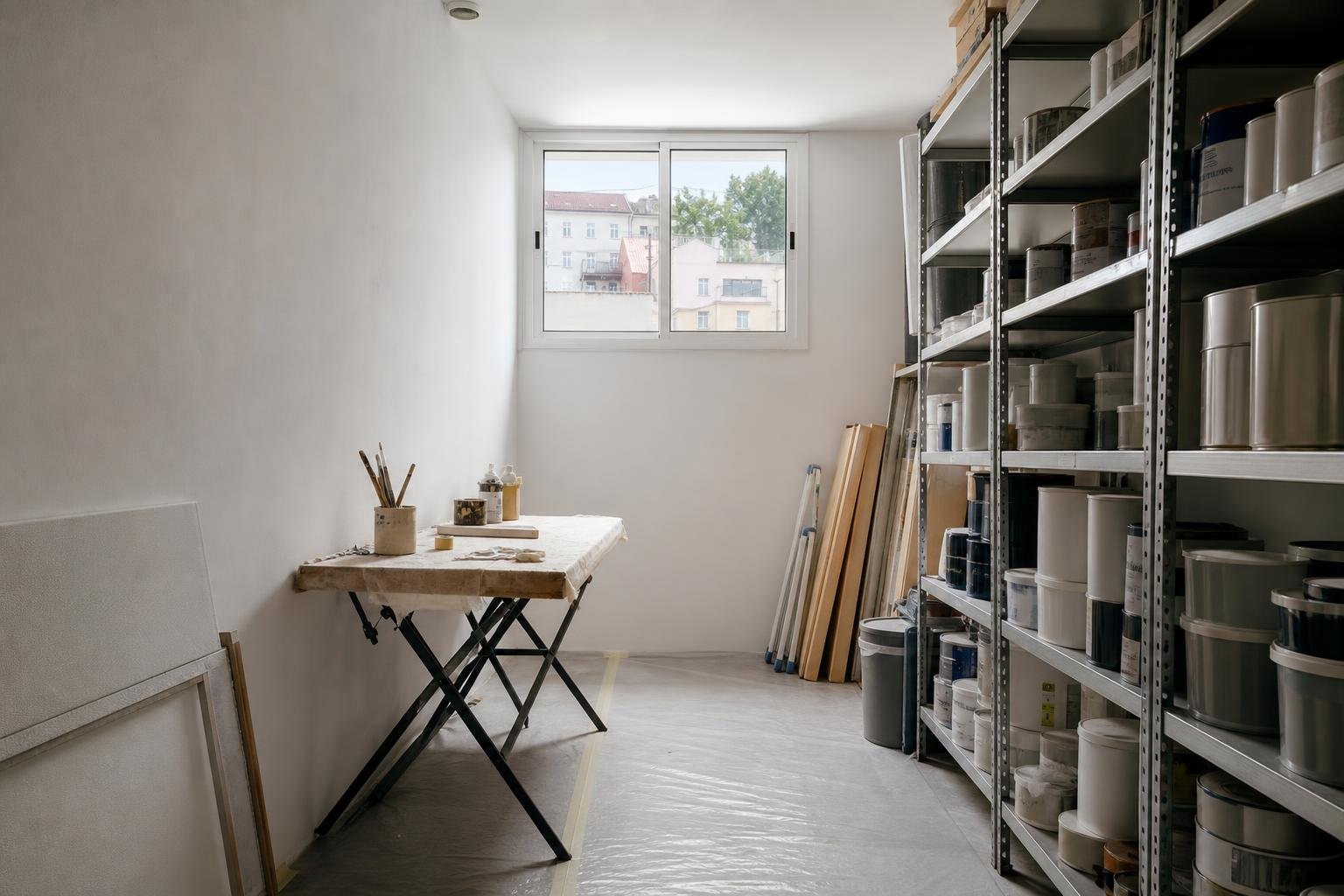
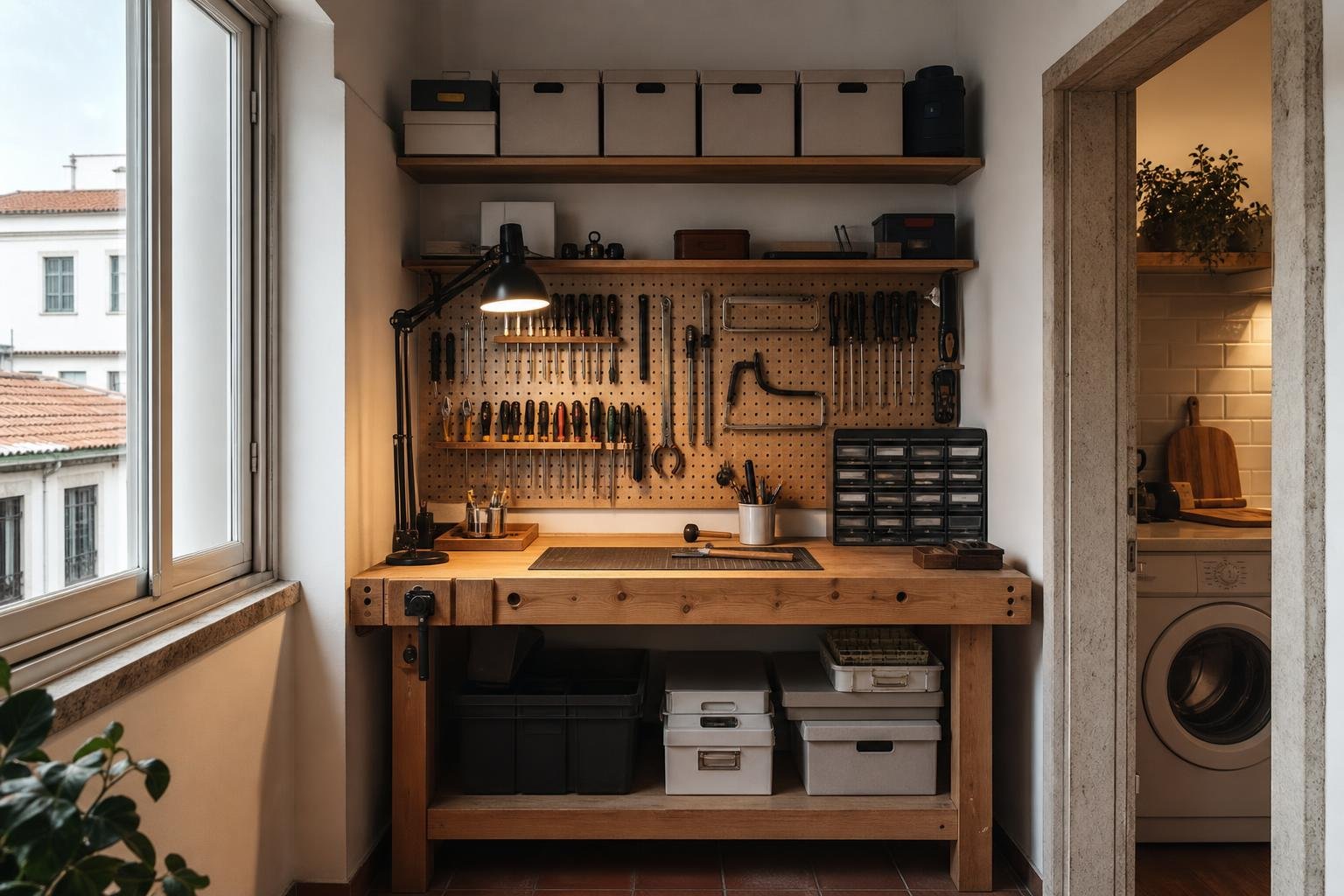
A well-planned home tool area does not require a full garage. It can fit into a storage room, utility area, large technical cupboard or enclosed balcony, provided it is designed as a small workstation rather than a place where boxes simply accumulate. The goal is straightforward: find what you need quickly, work in a reasonable position, reduce risks and leave the space clean afterwards.
In Lisbon apartments, where every square metre matters, the most effective answer is usually compact and vertical: a controlled-depth bench, closed cupboards for consumables, drawers for small parts and focused lighting over the work surface. This arrangement also prevents a household repair from turning the kitchen table into an improvised workshop.
Before buying modular units or drilling into walls, define the jobs you genuinely expect to do: assembling furniture, adjusting ironmongery, drilling small holes, fixing a tap, sanding and painting an object, or tackling more demanding work. That distinction determines the bench size, electrical requirements and, above all, what should remain the responsibility of a qualified professional.
Start with the purpose and the right location
A good tool area starts with a practical question: what will actually happen here? For light tasks, a bench around 45 to 60 cm deep may be enough; for repairing equipment or handling longer pieces, you may need a fold-down auxiliary surface. Keep clear space in front of the bench so drawers can open and a chair or step ladder can be used without blocking circulation.
Choose a dry, ventilated location away from daily routes through the home. Avoid placing a bench next to boilers, meters, electrical panels or equipment that needs regular access. In a condominium apartment, a storage room can be a useful option, but it should not become a place for noisy activities, flammable-product storage or dust-producing work without proper control.
If the proposal involves changing partitions, adding electrical points or working on building elements, check the regulatory position first. The Lisbon City Council urban planning FAQ notes that interior works affecting or adding load to the structural system require technical responsibility from a qualified professional.
Think about the route as well: where materials enter, where packaging can be placed and how waste leaves the home. A functional bench should not require you to carry timber, paint tins or dirty tools through the living room.
Build a durable bench without overbuilding
The workbench is the centre of the setup. It should be stable, washable and suited to its intended use, not necessarily expensive or excessively heavy. A properly fixed structure with a top that resists moisture and moderate impact will meet most domestic needs. Whenever possible, choose a replaceable top layer: renewing a sacrificial surface is easier than repairing an entire unit.
Keep a clear working strip and avoid filling it with permanent organisers. Frequently used tools can go on the wall or in a top drawer; everything else should come out only when needed. A small vice or clamps can be highly useful, but only if the bench and wall fixings can withstand the force involved.
It is also worth protecting the floor. A washable technical mat or thin protective sheet beneath the work area helps contain scratches, drips and small components. If you are planning a broader refurbishment, coordinate this area with decisions about flooring options, selecting a finish that is durable and easy to clean.
Do not turn the bench into permanent storage for equipment. Chargers, extension leads, screw boxes and appliances should have defined places away from the main surface, so the bench is ready when an unexpected repair appears.
Organise by frequency, risk and component type
The most effective storage is not the one that displays everything; it is the one that makes each item easy to locate without creating hazards. Divide the collection into three levels: tools used weekly or monthly, occasional tools and consumables. A tape measure, pliers, hammer, drill bits and screwdriver can remain accessible. Blades, adhesives, solvents, cutting discs, batteries and treatment products should be protected in closed boxes or cupboards.
For screws, wall plugs and fittings, use shallow drawers or durable transparent containers, grouped by purpose and size. Avoid storing loose nails, blades or driver bits in open jars. Simple labels are helpful, but they need to reflect the actual contents, so review them whenever you reorganise.
Keeping tools separate from chemicals is essential. Portugal’s Directorate-General of Health advises that potentially hazardous products should be locked away, kept out of children’s reach and stored in their original packaging; it also warns against transferring them to drinks bottles. Read the DGS guidance on preventing accidents and poisoning before choosing the cupboard for paint, thinners, cleaners or pesticides.
Store heavy objects on lower shelves. This reduces lifting effort and the chance of falling items. Tall shelving should be fixed to the wall, and heavy boxes should not sit on top of cupboards without checking the structure’s capacity.
Lighting: see clearly before cutting, drilling or measuring
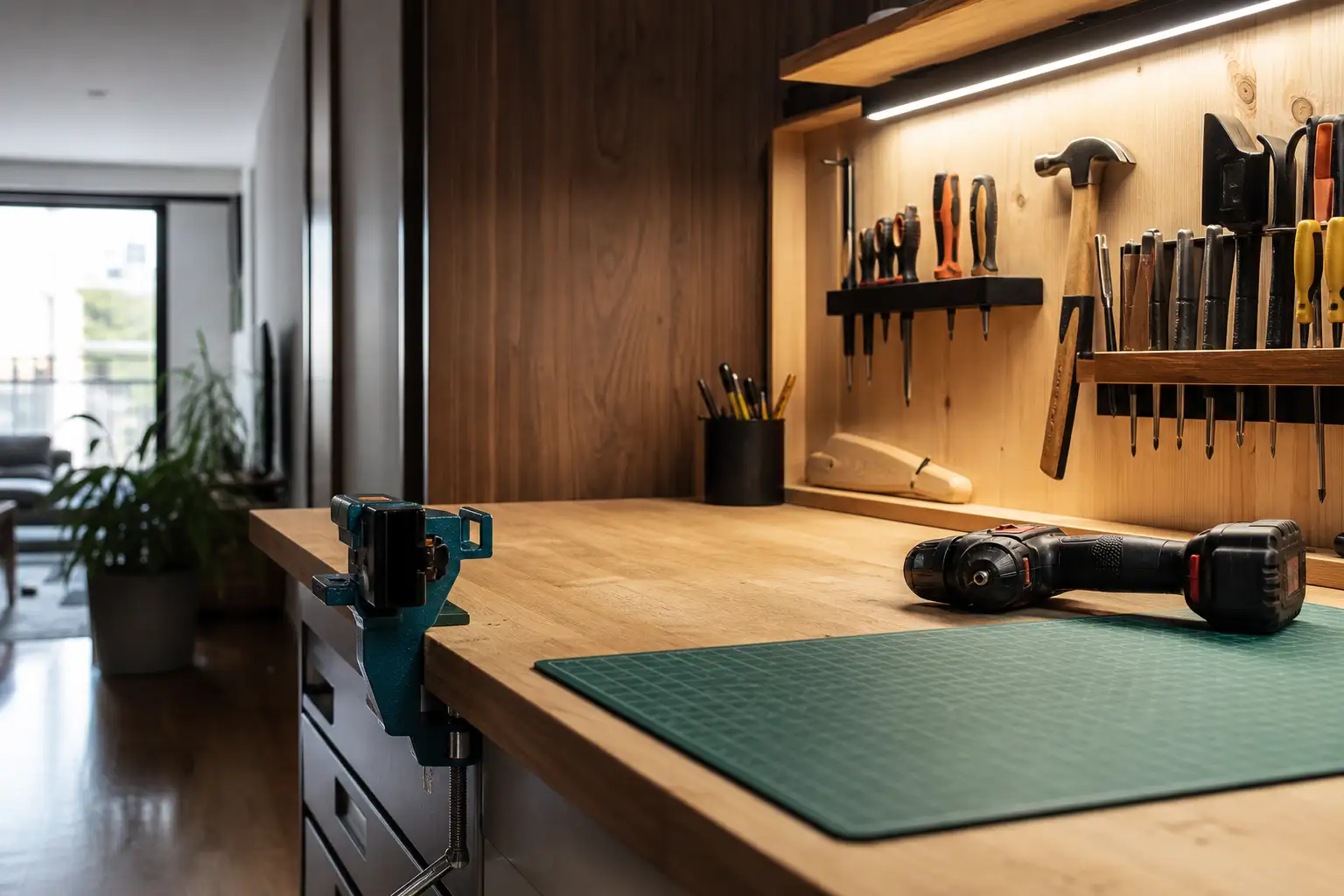
General room lighting is rarely enough for accurate work. A tool area needs directed light over the bench, positioned to limit shadows cast by your hands and body. For right-handed users, left-side lighting often reduces shadow when marking or writing; for left-handed users, the opposite normally applies. The key point is to test the position before permanently fixing the light.
An adjustable LED task light with a diffuser and good colour rendering makes it easier to see pencil lines, cracks, paint tones and surface condition. Avoid exposed bulbs near dust, solvents or flammable materials. Where splashing or damp work is possible, selection and installation need extra care.
Efficiency matters even in a room used for short periods. ADENE identifies LED lighting as a more efficient purchasing choice and recommends using available light without leaving systems on unnecessarily. See ADENE’s guidance on efficient home lighting, then pair task lighting with an accessible switch close to the entrance.
If the bench is in a windowless area, soft ambient light can prevent harsh contrasts. However, lighting does not replace ventilation or make it safe to use unsuitable materials in an enclosed compartment.
Electricity, dust and noise: set firm limits
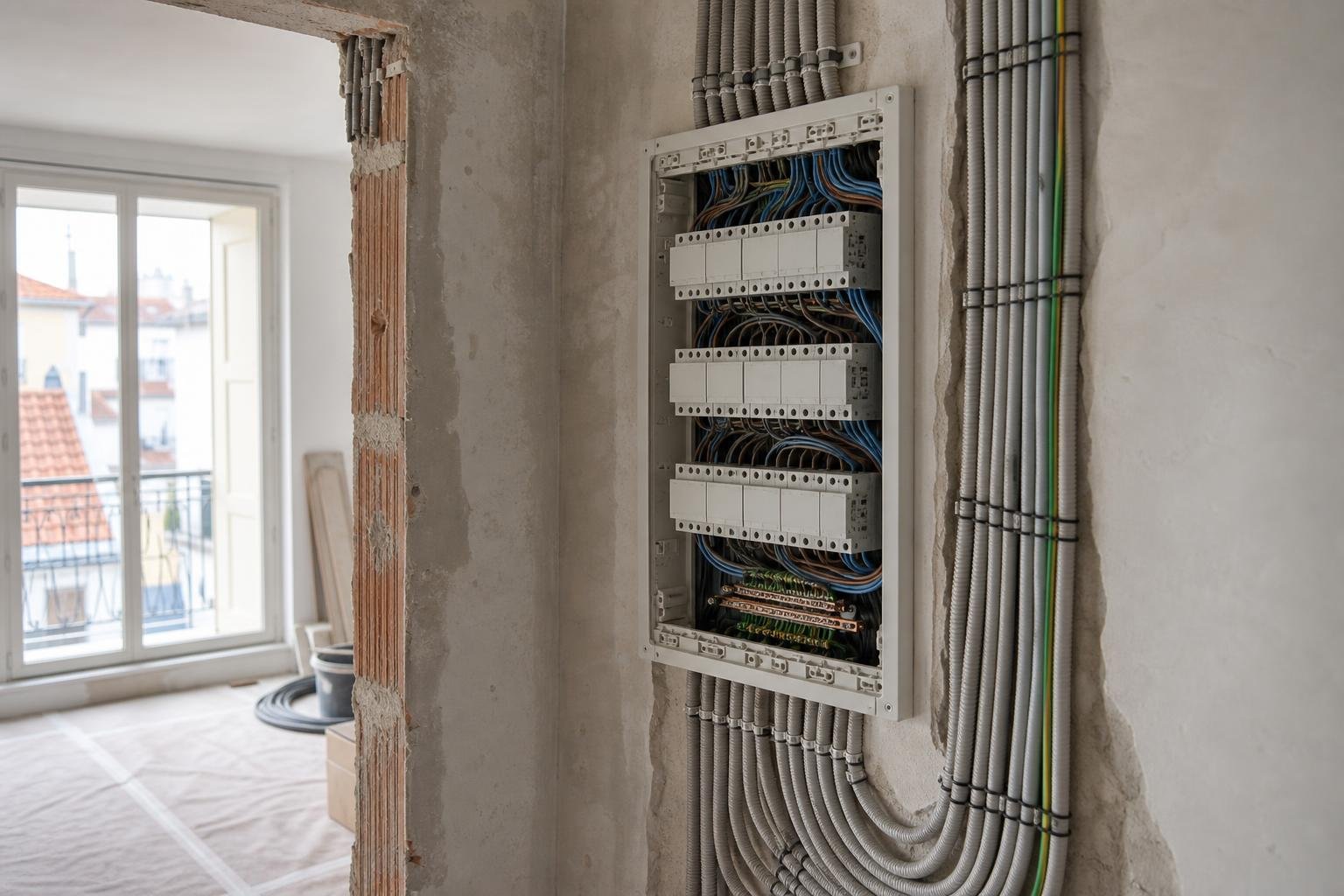
A coiled extension lead, multiple plug adaptors in series and chargers left on the floor are signs of an improvised setup. Plan enough sockets in accessible positions, away from potential splashes. Do not rely on adaptors to continually exceed a circuit’s capacity, and disconnect power tools before changing accessories, cleaning them or putting them away.
Jobs that create heavy dust, sparks or noise should be exceptional in an apartment. Cutting timber, metal or tiles, intensive sanding and repeated impact-tool use require containment, cleaning and consideration for neighbours; often, they belong in a workshop, an appropriate outdoor area or with someone equipped to carry them out. For minor drilling, protect furniture, vacuum dust immediately and check what may be inside the wall first.
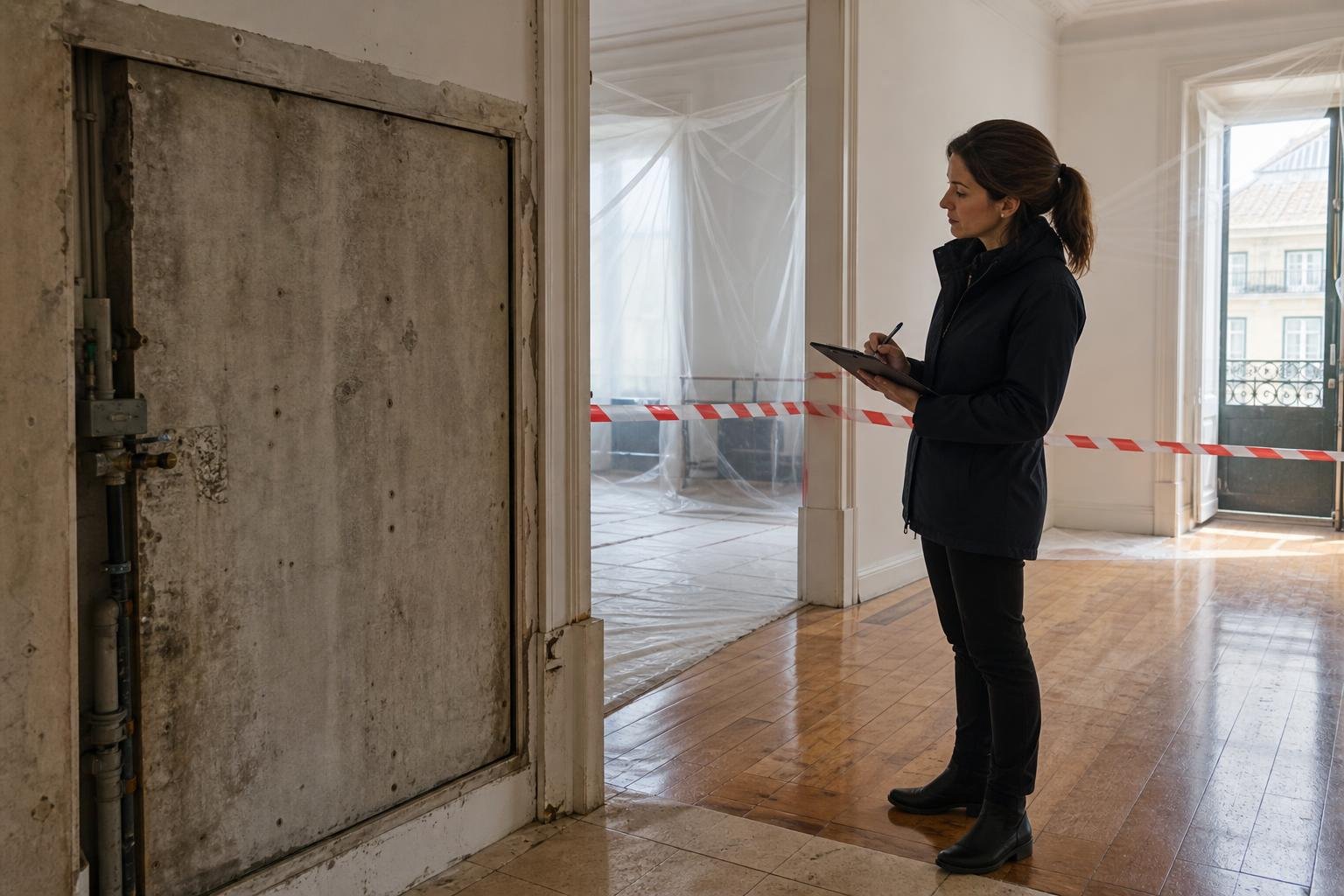
It is not sensible to drill blindly where pipes, cables or ducts may run. When hidden services are uncertain, consult available drawings or seek technical support. For larger interventions, our article on what lies behind walls explains why the unseen should be checked before work starts.
Keep a small cleaning kit, task-appropriate eye protection, gloves compatible with the material and a safe place for hot tools to cool down. Safety is not about adding equipment without thought; it is about preparing work so there is less need to improvise.
Create a closing and maintenance routine
The difference between a useful tool area and a chaotic store room is the closing routine. At the end of each session, wipe the bench, return tools to their places, remove batteries from equipment that will remain unused for long periods and collect small parts. Keep one box for items to repair, return or discard; without this separation, objects with no destination eventually take over the bench.
Every three months, review consumables, fittings and chemical products. Look for damaged packaging, rust, worn blades, damaged cables and tools you no longer use. Do not keep paint, adhesive or sealant solely because it may be useful one day: check its condition and follow suitable disposal instructions.
This simple maintenance protects your investment and lets the area evolve with the home. If you use it increasingly, it may be worth adding lighting, a drawer or a folding surface. If it stays shut most of the time, reduce the collection to the essentials and free storage for other needs.
A well-planned home workshop does not encourage unprepared building work. Instead, it helps you identify what can be handled carefully and what requires a design, technical specialist or construction supervision.
Renovating and want to include a workbench, technical storage, sockets and lighting without compromising circulation at home? Obra Lisboa can help turn practical requirements into a coherent, safe and well-executed renovation plan.
AI-generated editorial image; it does not depict an Obra Lisboa project.

Obra Lisboa