A portable air conditioner can bring genuine relief to a small, closed room, but it only works reasonably well when its hose sends hot air outside and the window is sealed around it. Without those two conditions, the unit uses electricity while drawing heat back into the home.
In Lisbon, the decision deserves some care: at the Instituto Geofísico station, the 1991-2020 climate normal shows average maximum temperatures of 28.2°C in July and 28.8°C in August. Before buying or moving a unit, reduce direct sun, choose the priority room and confirm that there is a usable window. See the IPMA climate data for Lisbon to put the issue in context rather than treating an occasional hot night as a permanent limitation of the home.
Contents
- When does a portable unit make sense?
- The window and hose determine much of the result
- How to choose the room worth cooling
- A practical routine: cool the room without making the unit work against itself
- Water, electricity and noise: three checks before the first night
- When a portable unit is no longer the right answer
When does a portable unit make sense?
It is a compromise solution, mainly suited to one living room or bedroom where installing a fixed unit is not feasible, to a rented home with limited scope for alteration, or to getting through a few exceptionally hot days. It does not replace shading, ventilation and envelope improvements; it provides comfort in one zone for a limited time.
Start by defining the use. If sleep is the priority, keep the unit in the bedroom and close doors so that it is not trying to cool the whole apartment. If the problem is a west-facing living room, use it there during the critical hours and lower shutters or blinds before the sun comes in. ADENE recommends limiting solar gains and using natural ventilation, particularly at night when outdoor air is cooler than indoor air. Read ADENE’s guidance on summer comfort.
- It is useful where there is a nearby window and a room that can be separated.
- It performs poorly in corridors, living rooms open to kitchens, or homes where several doors remain open.
- It will not solve an uninsulated roof, a highly exposed façade or glazing without solar protection; in those cases, it exposes the problem rather than correcting it.
The window and hose determine much of the result
The heat removed from the room must go outside. The hose should therefore reach a window or balcony door without tight bends, improvised extensions or being trapped behind furniture. The hotter the hose becomes inside the room, the more heat it gives back to it.
Use a sealing kit compatible with the opening, or a purpose-made solution that leaves as little gap as possible around the outlet. A wide-open window beside the hose allows a continual flow of hot outdoor air indoors. Avoid running the hose through a partly open balcony door: it loses efficiency, creates a security issue and makes normal use of the home harder.
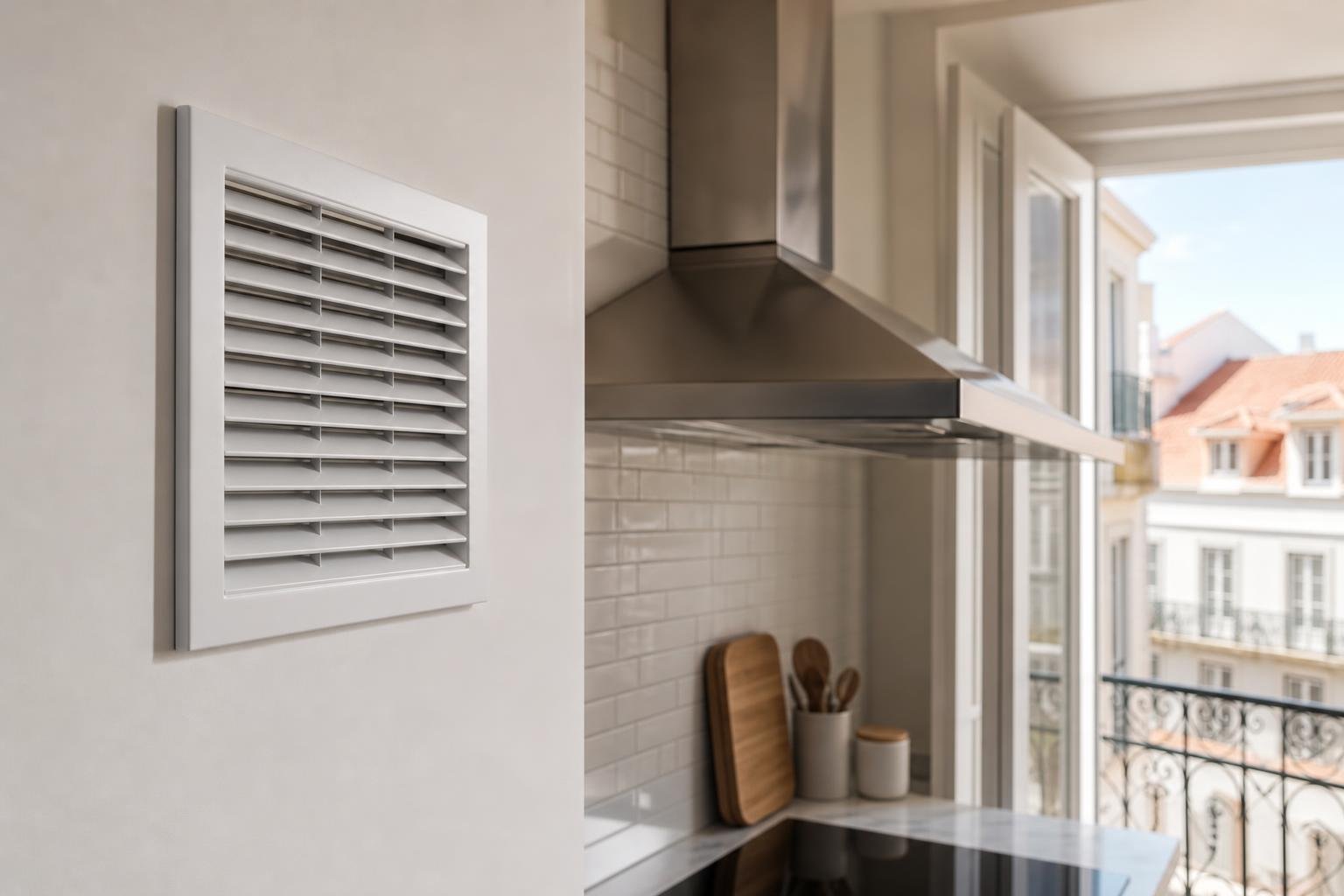
Do not cover the unit’s grilles and leave space around its air inlets and outlets. The DGS guidance on indoor air includes ensuring the proper operation, maintenance and cleaning of ventilation and air-conditioning systems. Cleaning filters in line with the manual is not cosmetic: it helps preserve airflow and stops the machine working harder than necessary.
How to choose the room worth cooling
Choose a room used during the most difficult hours, with a door and a way to fit the exhaust without crossing a route through the home. In a one-bedroom flat, keeping a bedroom comfortable at night can be more sensible than trying to lower the temperature slightly across an entire living room and kitchen. In homes with older people, small children or people with chronic illnesses, that priority matters even more: DGS advises spending two to three hours a day in a cool or air-conditioned environment during periods of intense heat.
Before switching on the unit, remove avoidable heat sources: the oven, long cooking sessions, halogen lighting or many devices charging together. Close curtains or shutters on the sunny side before the room heats up; lowering a curtain after the glass and furniture have already stored heat has less effect.
If the bedroom depends on air coming from the living room, reconsider door positions too. Our guide to interior doors in summer helps distinguish between times to open routes for fresh air and times to close them to retain cooled air.

A practical routine: cool the room without making the unit work against itself
A simple routine is usually more effective than running the equipment at full power all day.
- In the morning: close solar protection on exposed façades and keep windows shut once outdoor air has become warmer.
- When you get home: close the door to the chosen room, check the window seal and start the unit before the space reaches the point of real discomfort.
- After sunset: compare the indoor feeling with outdoor temperature. If it is cooler outside, turn off the air conditioner, open safely for fresh air and create cross-ventilation where the layout allows.
- At night: use the appropriate mode, avoid directing airflow straight at the bed and do not ignore noise, vibration or collected water.
Do not run the unit in a room with open windows “to let it breathe”. Cooling and ventilation can alternate through the day; uncontrolled use at the same time makes the unit fight outdoor conditions.
Water, electricity and noise: three checks before the first night
Portable units handle condensate in different ways: some evaporate part of the water, while others need periodic emptying or allow continuous drainage. Read the manual for the specific model and decide where the tank will sit, without placing it on timber, rugs or beside electrical extensions. Never discharge water onto a balcony without knowing where it will drain.
Plug the unit directly into a sound outlet, without overloaded adaptors or coiled extension leads. The outlet should remain accessible and the cable should not cross a route where it can be pulled or stepped on. If the consumer unit trips, the plug becomes hot, there is a burning smell, or an older installation is already serving many appliances, stop and have an electrician assess it.
Plan for sound as well. A portable unit sits inside the room, so night-time noise can be more intrusive than expected. Test it one afternoon before depending on it for sleep, and check whether vibration transfers to the floor or a lightweight piece of furniture.
When a portable unit is no longer the right answer
If you need to cool several rooms every summer, if the room remains unbearable with shutters down, or if there is condensation, water ingress or poor air renewal, address the cause. The usual order is to reduce solar gain, improve airtightness and shading, secure useful ventilation, then size fixed cooling or insulation works.
During a renovation, allow for an appropriate electrical circuit, the location of any future units and routes that do not compromise the façade, drainage or maintenance. Reading an energy certificate before buying can also identify points to investigate, such as glazing, roof and opaque-wall performance, so that buying an appliance does not postpone more effective decisions.
Seek professional help if there are abnormal electrical signs, water reaching electrical components, persistent damp symptoms or a need to alter the façade, windows or electrical installation. DGS heat guidance notes that children, older people and people with chronic disease need greater attention; during a heatwave, safety and access to a cool space come before trying to optimise an appliance to its limit.
Key takeaways
- Choose a room that can be closed off and has a nearby window; a portable unit cannot cool a whole home well.
- Seal the window around the hose and keep the hose short, clear and free of sharp bends.
- Lower shutters before direct sun arrives and use night ventilation when outdoor air cools down.
- Stop and call a professional if you notice electrical overheating, water leaks or persistent damp.
If recurring heat is exposing problems with shading, windows, ventilation or the electrical installation, include those checks in the renovation scope before choosing equipment. Obra Lisboa can help organise that work and the technical decisions that go with it.
Sources and further reading
- IPMA climate data for Lisbon
- DGS heat guidance
- ADENE’s guidance on summer comfort
- DGS guidance on indoor air
Editorial image; it does not depict an Obra Lisboa project.

Obra Lisboa