A decision and sample register stops a renovation from waiting on a tap, a tile or confirmation of a paint colour. Before demolition starts, put every choice that can hold up another work stage in one sheet: who approves it, what information is missing and the last sensible date to place the order. This is not needless paperwork for a small renovation. It prevents late choices from forcing completed work to be undone, delaying trades or leading to a rushed substitute.
Contents
- Why can a small choice delay the whole renovation?
- What should the decision sheet contain?
- How do you set realistic deadlines?
- How should a sample be approved so there is no doubt on site?
- What happens if the choice changes during the work?
- Who coordinates it, where is it stored, and when is technical help needed?
Why can a small choice delay the whole renovation?
A sample is not purely an aesthetic matter. Wall and floor finishes determine build-ups and trims; a shower tray affects drain position; kitchen units determine water points, sockets and lighting; a door can alter openings, architraves and flooring. When a decision arrives after the following trade is ready to start, the site loses its sequence.
First separate blocking decisions from finish decisions. Choices affecting services, dimensions, substrates, waterproofing, long-lead orders or several trades are blocking decisions. A final wall colour can usually wait longer than the model of a concealed shower valve. This distinction keeps site meetings brief and useful.
The contract should identify the scope, price, completion period and payment terms, as well as written and drawn documents where they exist, according to the IMPIC guidance on construction contracts. A decision register does not replace those documents; it makes them workable on site.
| Decision | What it affects | When to confirm |
|---|---|---|
| Shower tray and drain | Drainage, waterproofing and finishes | Before opening and preparing the floor |
| Kitchen and appliances | Water, waste, sockets, extraction and lighting | Before closing walls and ordering units |
| Final flooring | Levelling, thresholds, doors and skirtings | Before final subfloor preparation |
| Paint and handles | Final appearance and minor finishing work | After bases and dimensions are confirmed |
What should the decision sheet contain?
Use a straightforward table shared with the people who decide and the people coordinating the work. Each row covers one choice: living-room flooring, bathroom tiles, sanitaryware, windows, handles, lighting or paint. Avoid scattered folders of unreferenced images.
- Item and location: for example, “shower-wall tile, guest bathroom”.
- Required choice: product, reference, colour, size, orientation and trim.
- Supporting record: drawing, annotated photograph, technical sheet or physical sample.
- Approver: one named person, rather than “the household”.
- Deadline: calculated from installation, delivery and goods-checking time.
- Status: undecided, being compared, approved, ordered, delivered or installed.
Record acceptable alternatives too. If a product becomes unavailable, the replacement can then be tested against agreed criteria rather than selected under pressure at a supplier’s counter.
How do you set realistic deadlines?
Do not rely only on the supplier’s stated delivery date. Count backwards from the installation day and allow time to check quantities, batches, transport damage and compatibility with adjoining materials. A box delivered on the fitting day leaves no room to correct a mistake without changing the programme.
- Set the date when each trade needs the material on site.
- Add time for delivery receipt and checking.
- Add the supplier’s stated availability and transport lead time.
- Set the approval date before ordering.
- Link the decision to a site visit or a short meeting.
The IMPIC indices for labour, materials and equipment costs are indicators used for price revision in construction contracts. They do not predict a shop price, but they are a useful reminder that lead time, availability and cost must be considered together when critical purchases remain open.

How should a sample be approved so there is no doubt on site?
A useful approval makes clear what was seen, where it will be used and which version was accepted. Photograph the sample beside a temporary label, note the full reference and save the image in the project folder. For finishes, confirm size, shade, surface finish, grout line, layout and trim profile. For paint, view the sample on the actual wall at more than one time of day.
In Lisbon, light in a south- or west-facing room can substantially change the appearance of a white, a timber finish or a matt tile. A catalogue image cannot settle that question. Where an existing element is being retained, compare physically: the new floor may have a different thickness, and the new tap may require a connection that does not match the old one.
Do not approve verbally a change affecting dimensions, installation or price. The record should state whether it confirms the original specification or changes it, and identify the consequence before an order is placed.
What happens if the choice changes during the work?
Changing your mind is possible; the problem is instructing work before understanding the effect. Pause at the right point, request a short description of the change and confirm four matters: additional cost or saving, supply lead time, completed work that becomes redundant, and the impact on following trades.
If a change affects a project subject to planning control, it may require a specific procedure. Lisbon City Council explains that some changes to an approved or submitted project require an amended licence or prior notification, while others may be dealt with later in the situations provided for. Check its page on changes during construction work before assuming a change is purely decorative.
For ordinary interior changes, apply the same discipline: written request, written response, reference to the affected drawing or photograph, and an updated register. Link this record to renovation hold points, especially before closing walls, laying finishes or releasing payments.
Who coordinates it, where is it stored, and when is technical help needed?
Choose one channel for formal decisions: a shared folder, project email address or simple platform. Instant messages can be useful for alerts, but the final decision must be easy to find by date and subject. A prepared 20-minute weekly meeting is often enough: review overdue choices, deliveries due within two weeks and site constraints.
In apartment buildings, put logistics in the register as well. A large delivery may depend on lift protection, an agreed delivery time, landing access or street occupation. Lisbon City Council explains that a public-space occupation plan identifies items such as routes, material storage, skips and vehicle access; check the applicable rules on its page about public-space occupation for exempt works.
Bring in the designer, technical director or another qualified professional when a change touches structure, building services, safety, the façade, common parts or planning requirements. Technical design assistance includes clarifying ambiguities and supporting the assessment of technical solutions, as set out in Ordinance No. 255/2023. At handover, keep the register with the renovation handover file, making references, warranties and replacement materials easier to identify later.
Key takeaways
- Confirm choices affecting services, dimensions, waterproofing or ordering before selecting final decorative details.
- A sample approval needs a reference, application location, photograph and date; “something similar” is not enough.
- Work backwards from installation, allowing for delivery, checking and replacement time.
- Record every change in writing before ordering or carrying out the work.
Before appointing a contractor, ask Obra Lisboa to include a register of key decisions, samples and deliveries in your renovation planning. It is a practical way to align the project, budget and work sequence from the start.
Sources and further reading
- IMPIC guidance on construction contracts
- IMPIC indices for labour, materials and equipment costs
- changes during construction work
- public-space occupation for exempt works
- Ordinance No. 255/2023
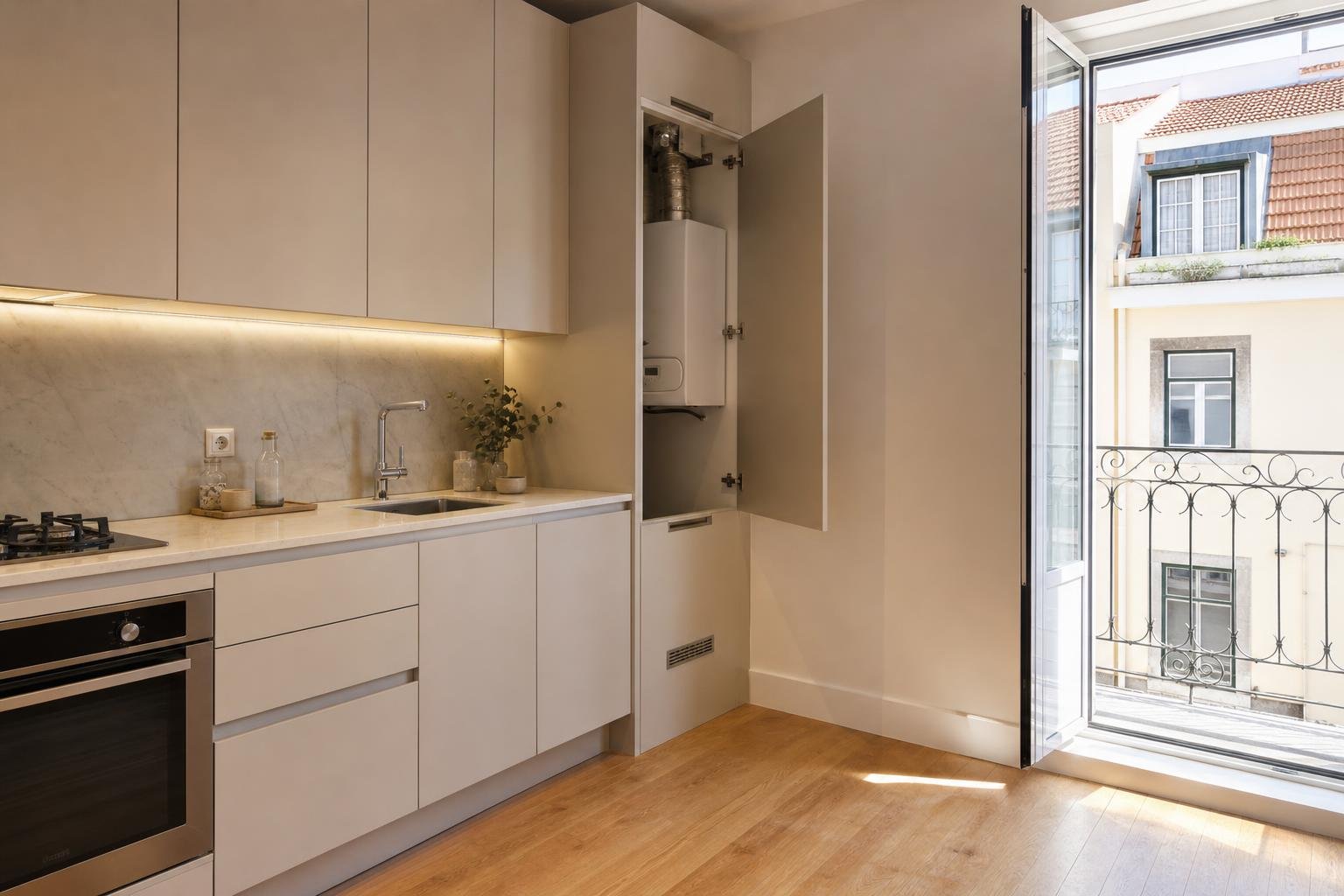
Editorial image; it does not depict an Obra Lisboa project.

Obra Lisboa