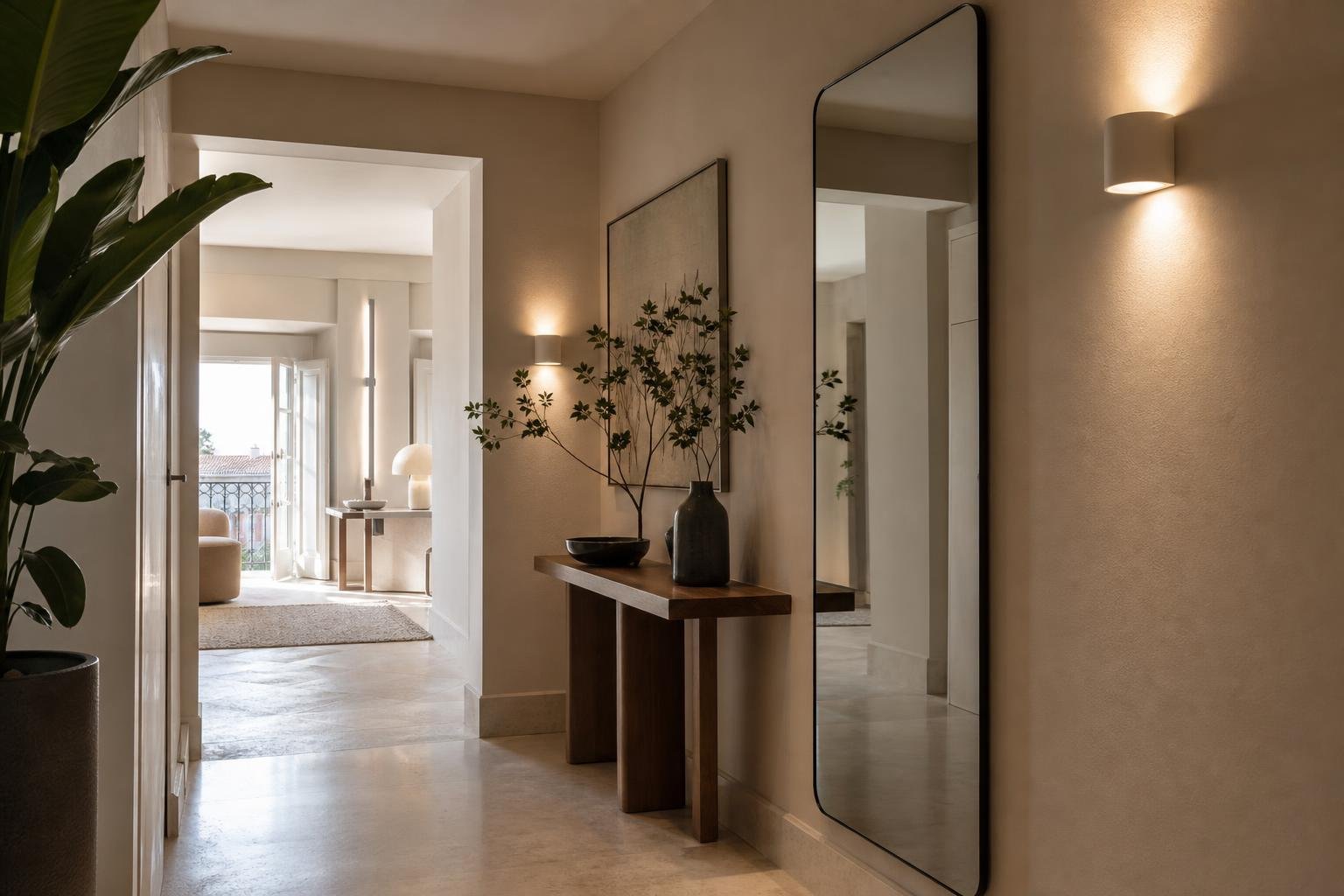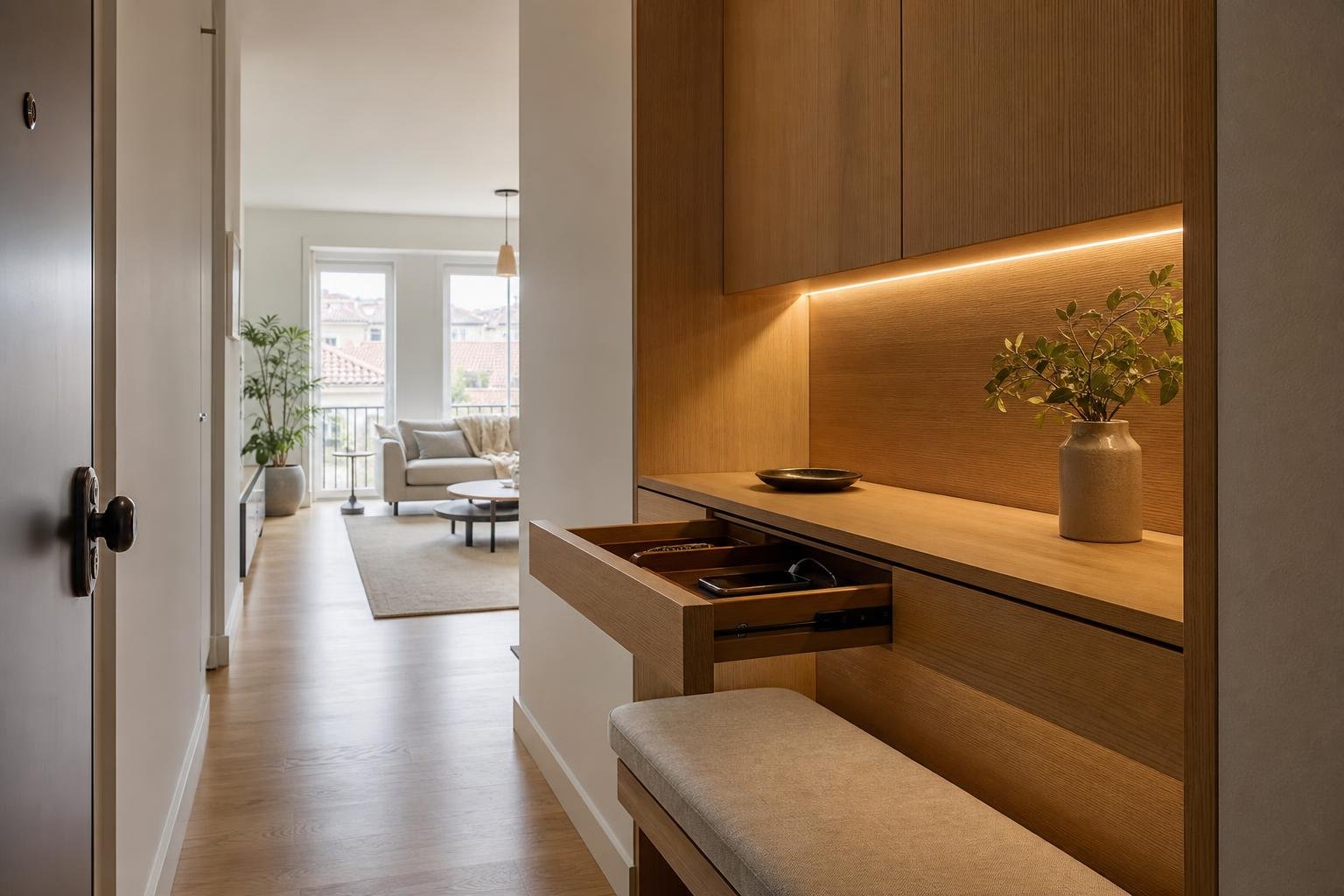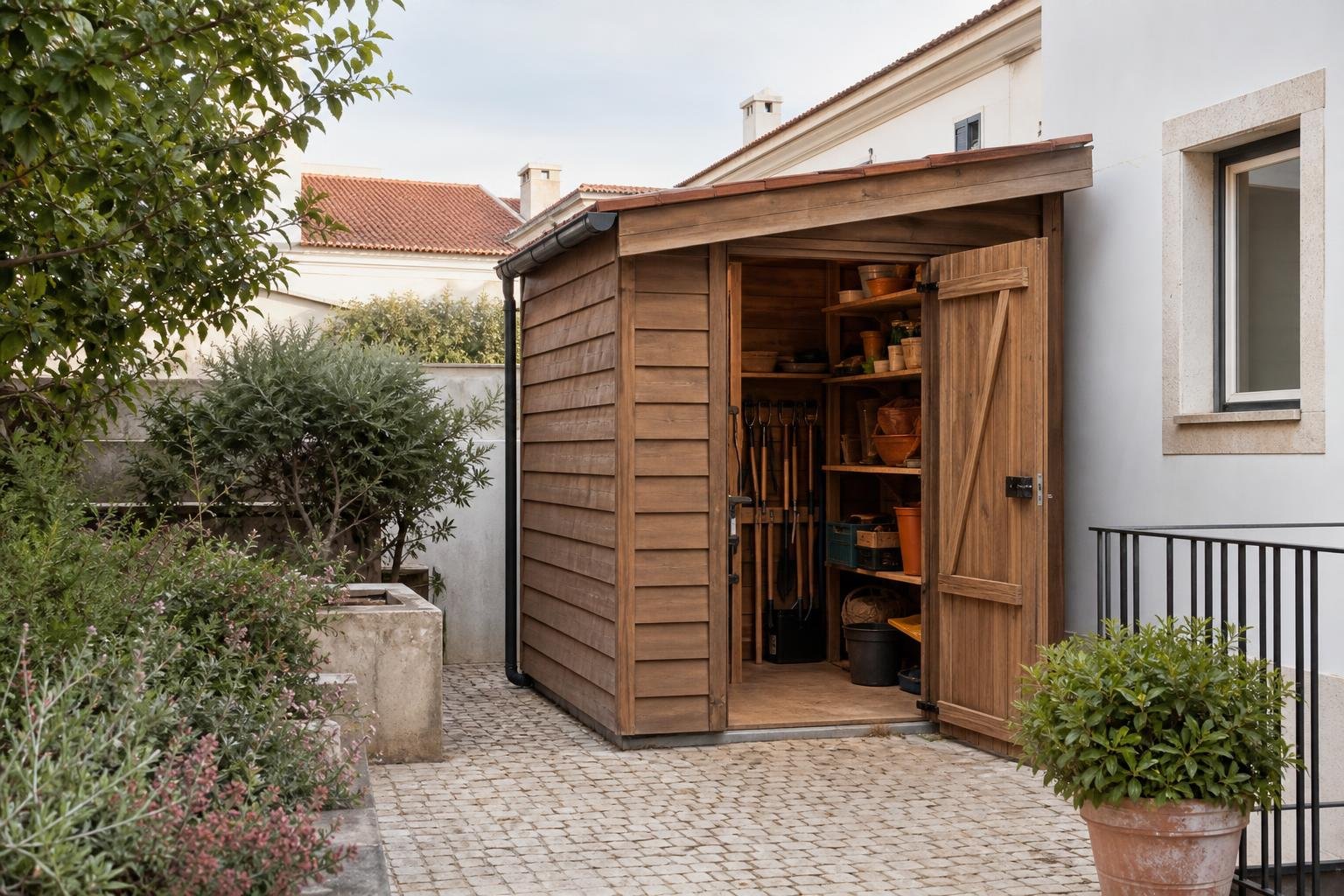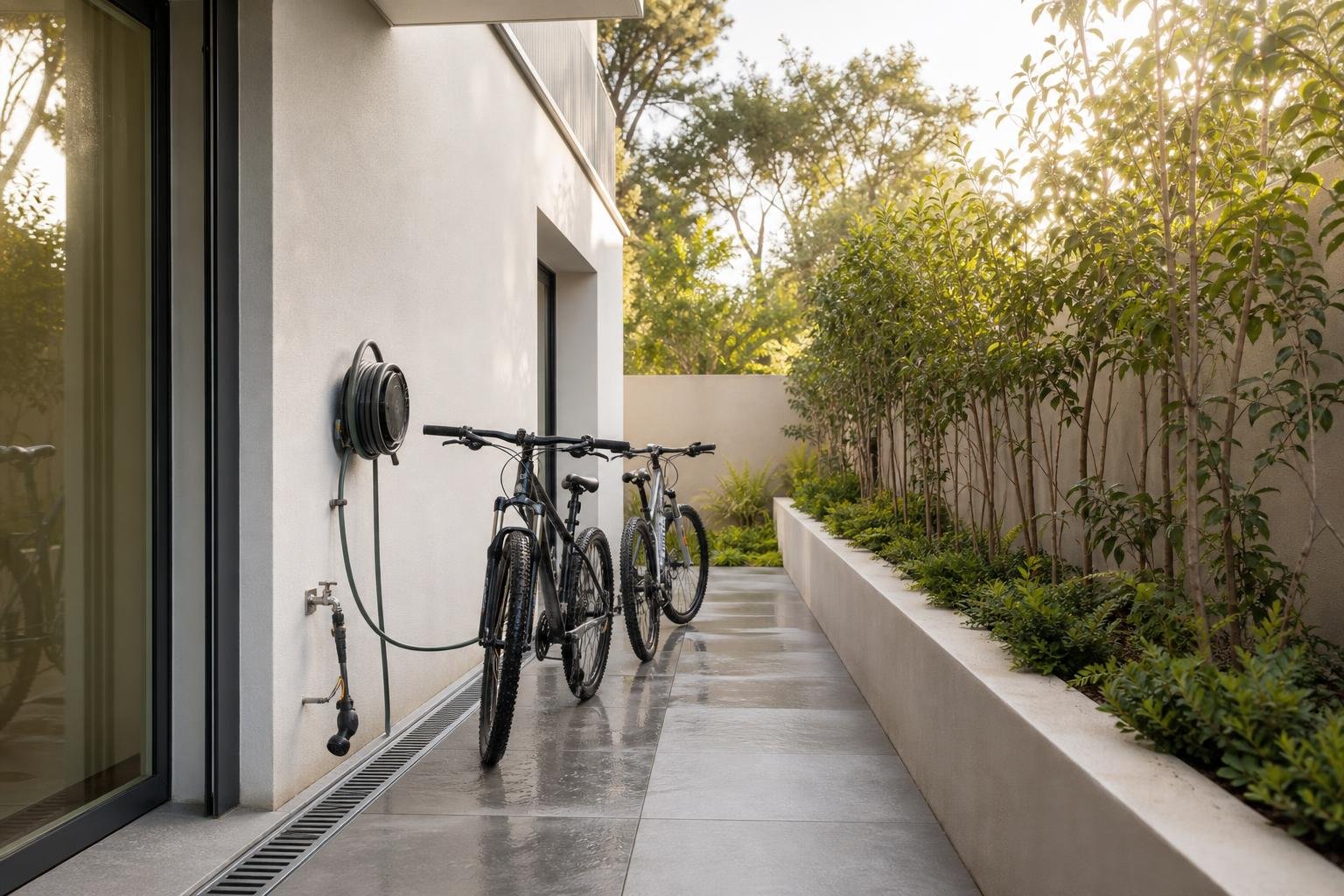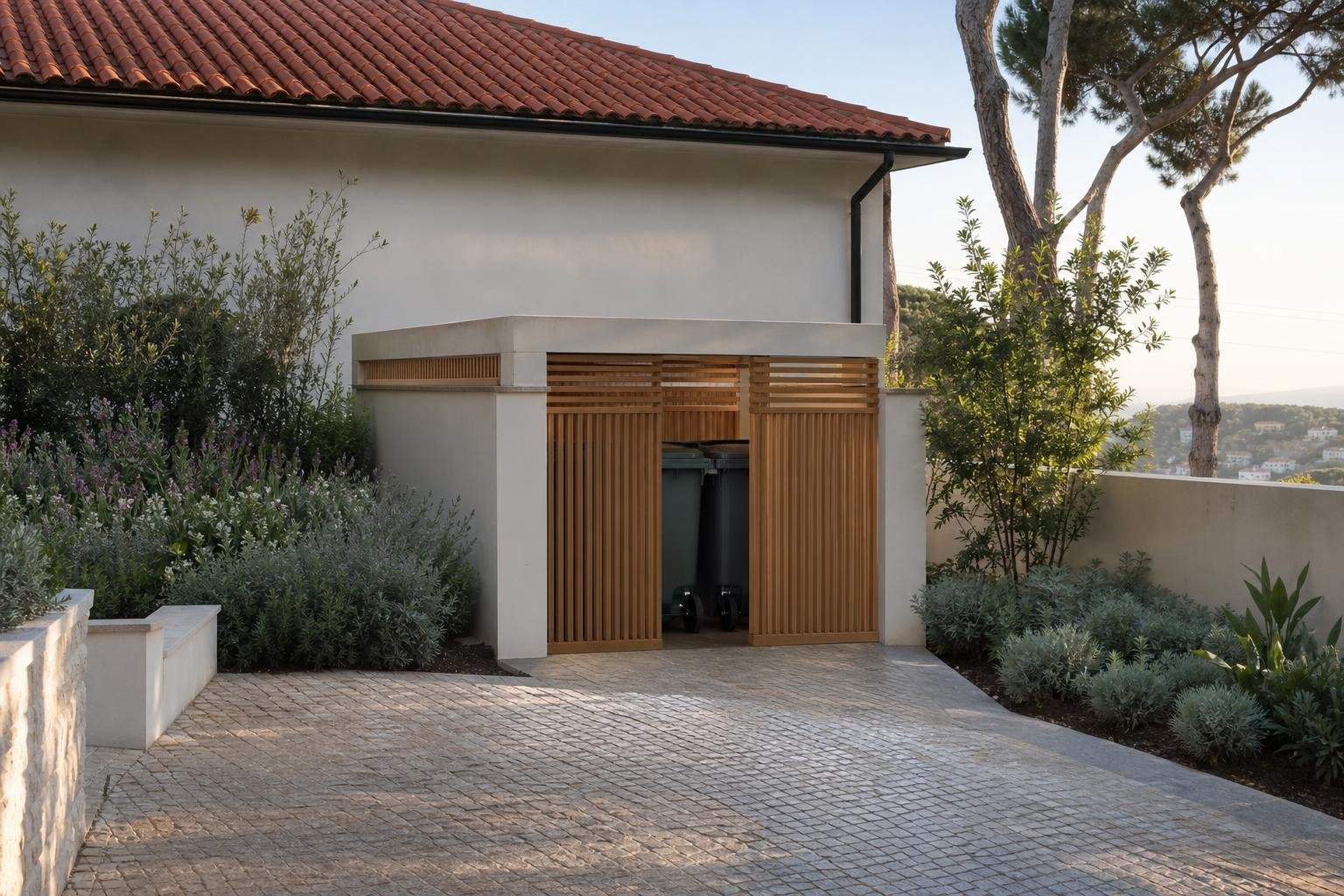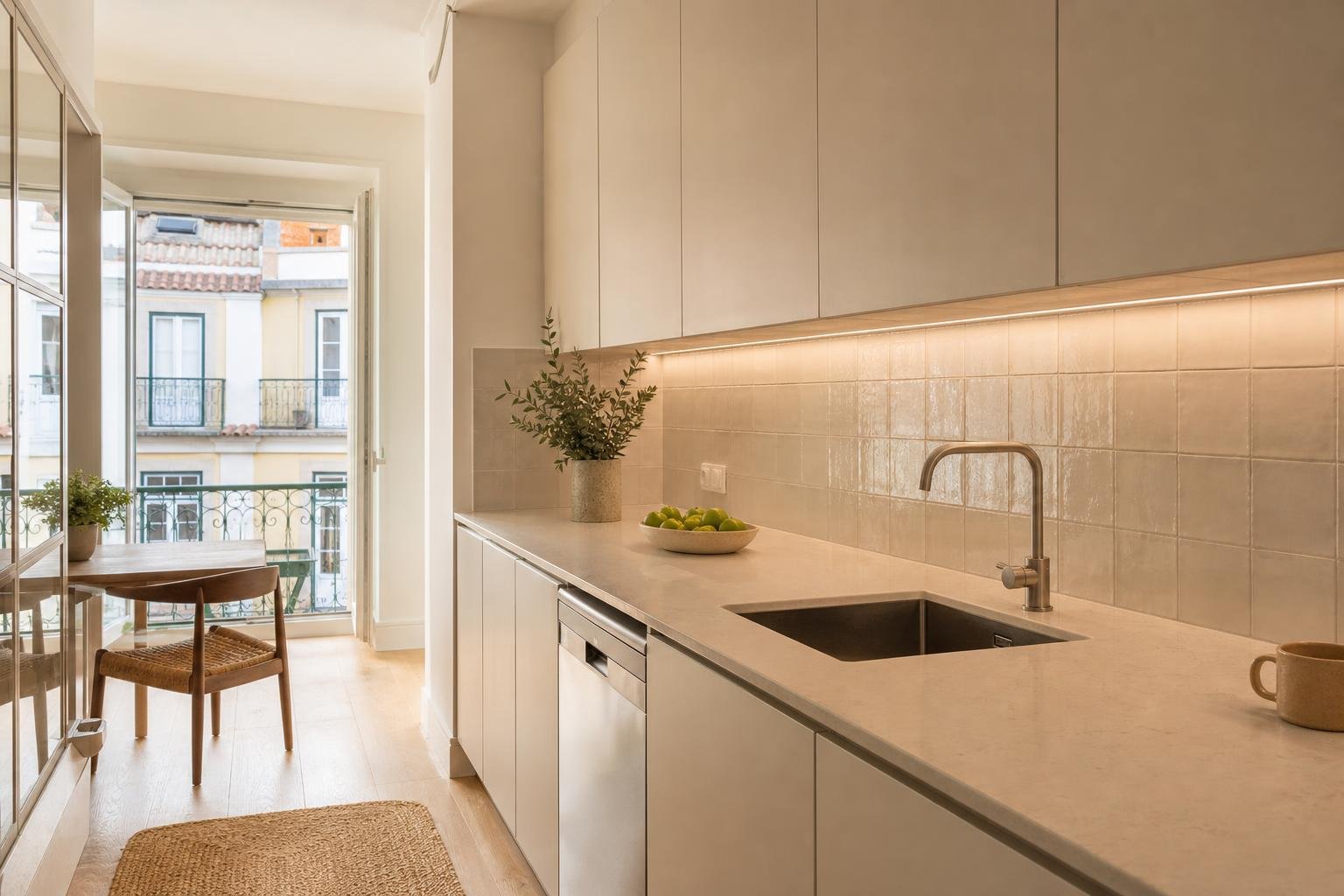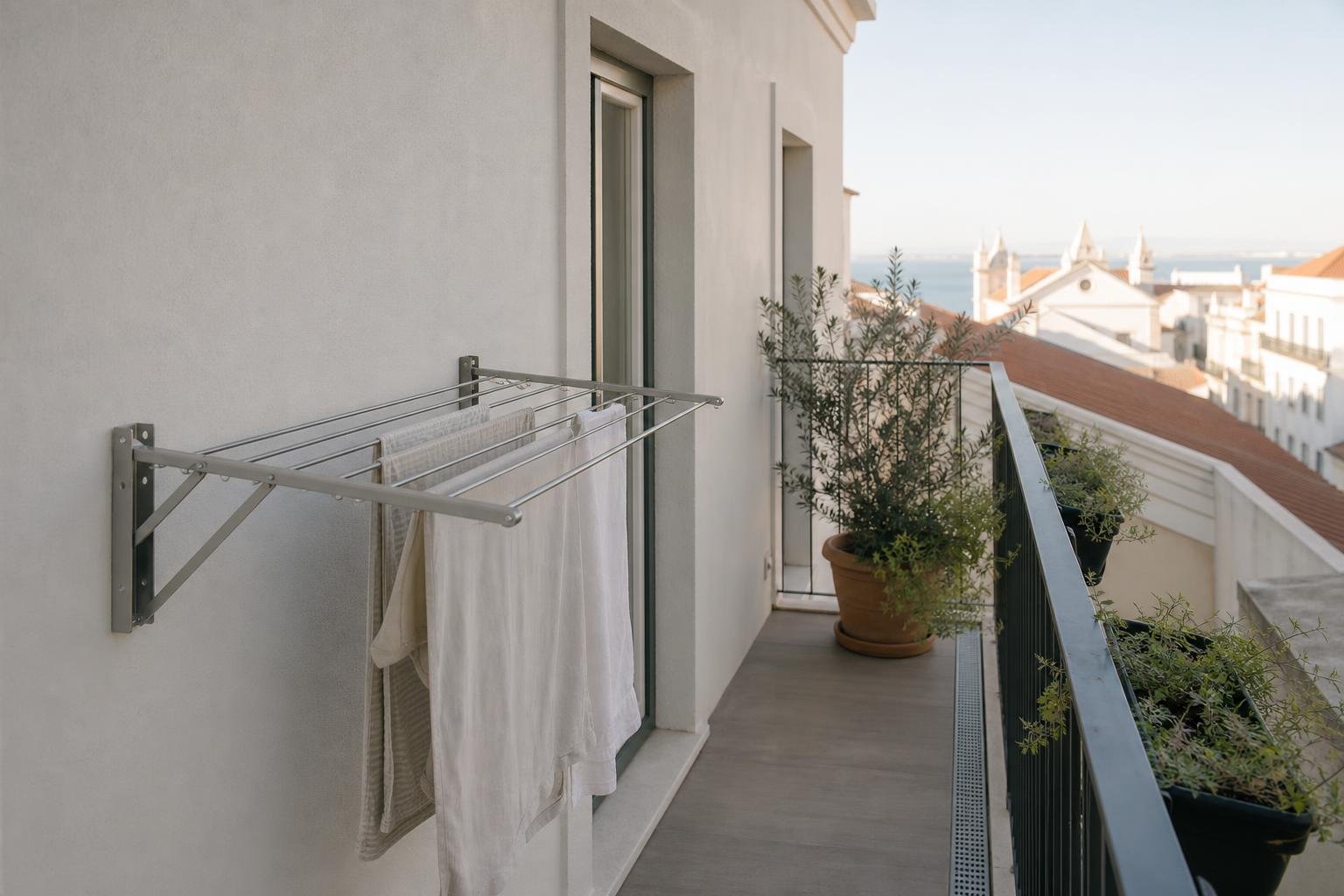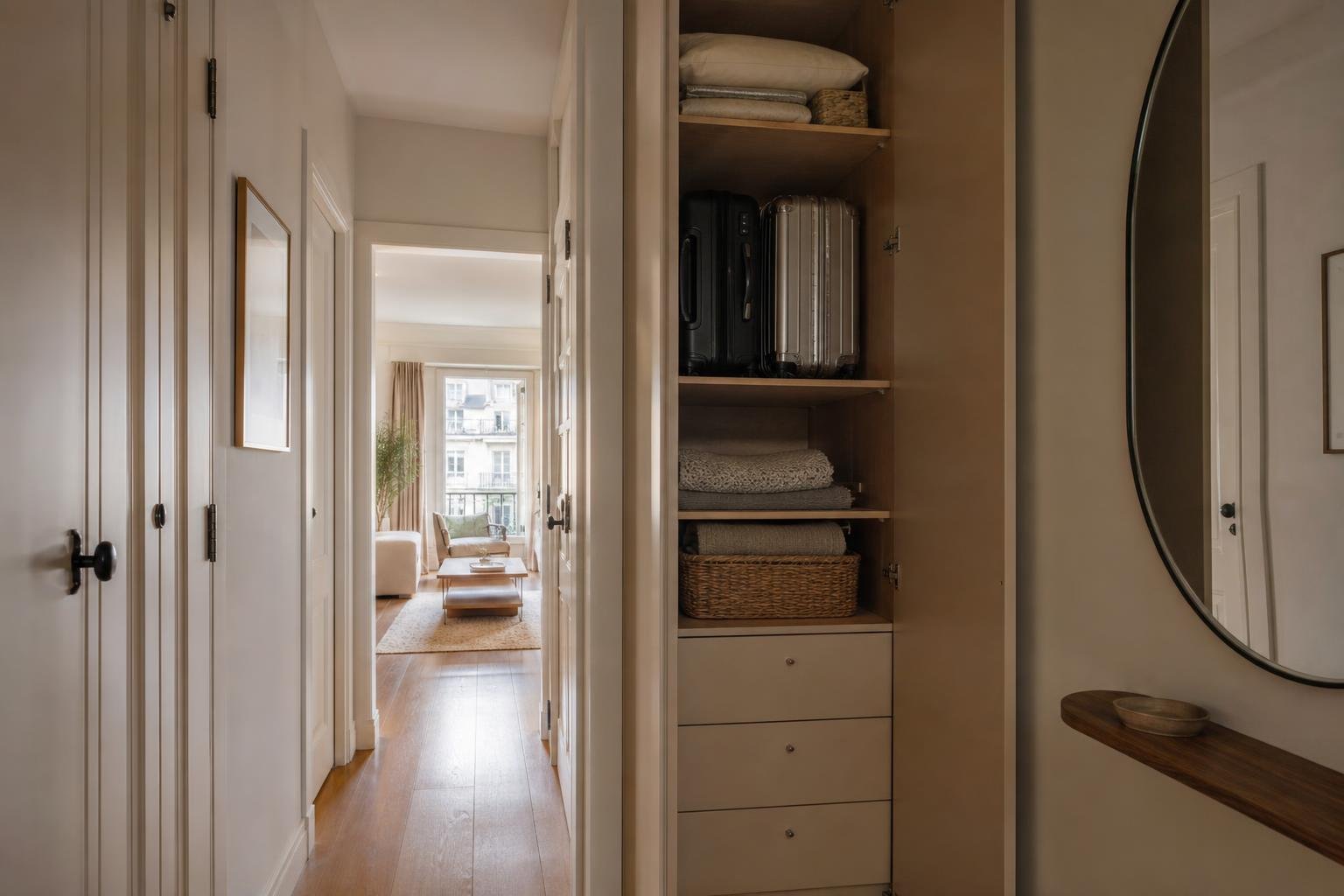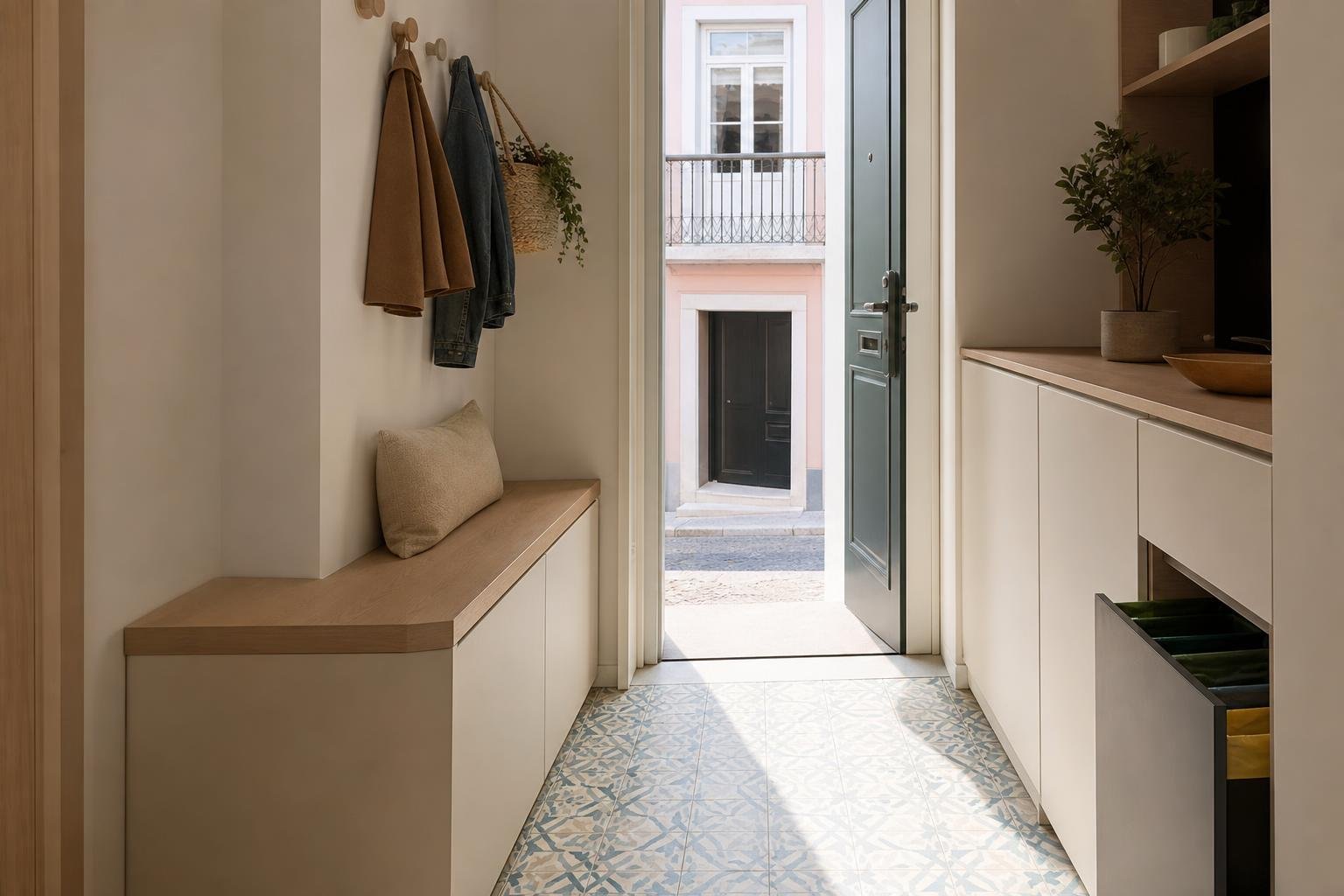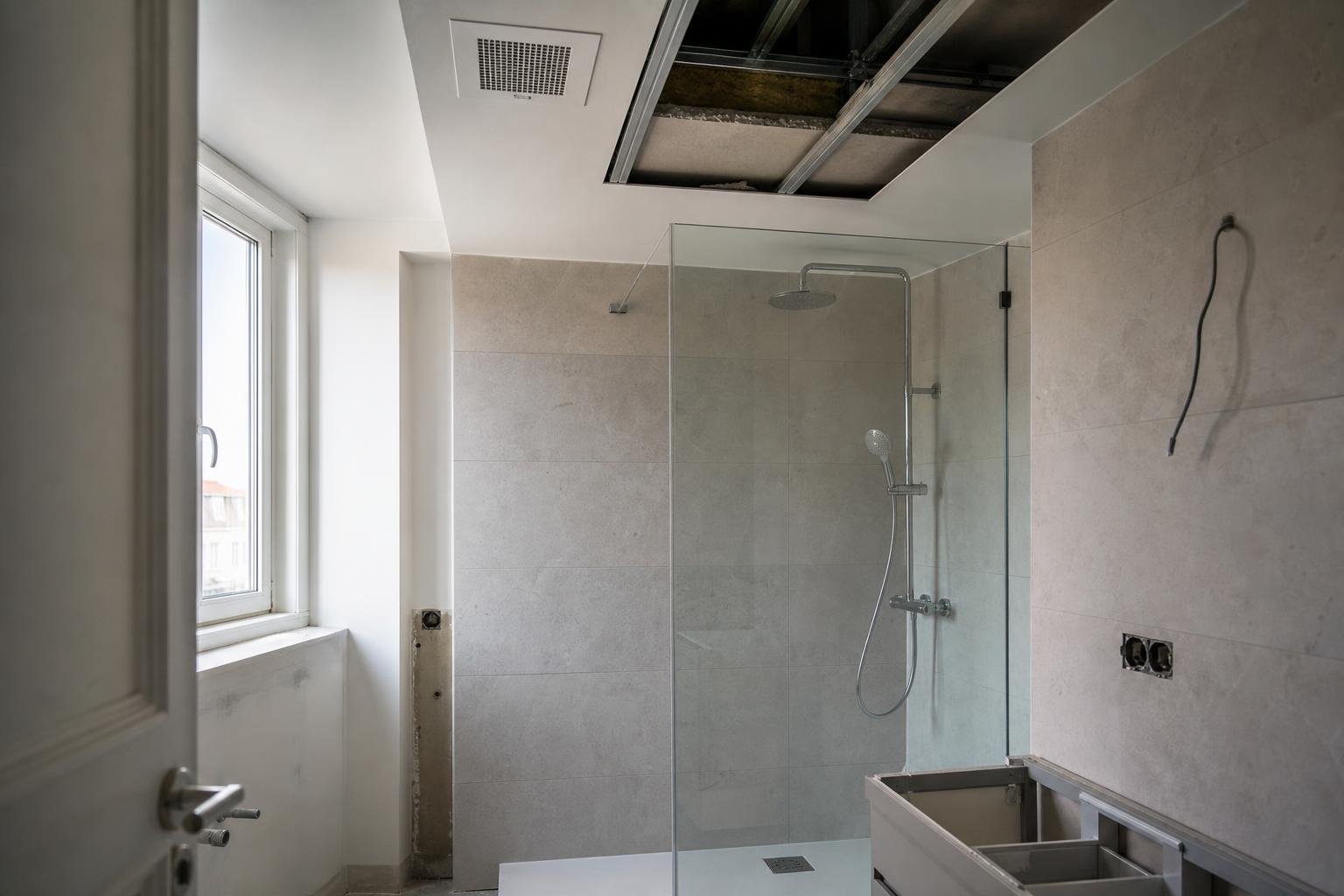
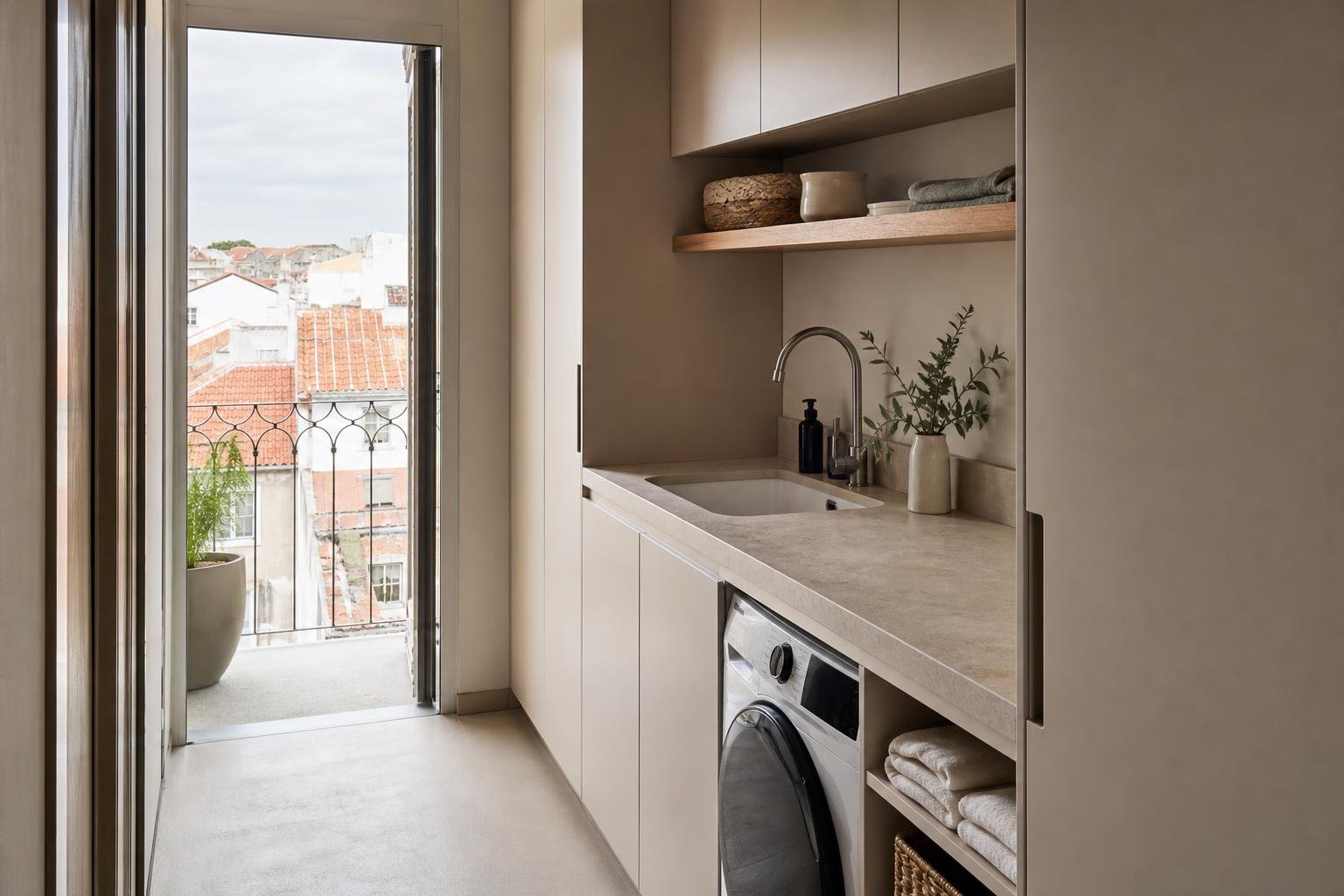
A well-planned laundry area does not need a separate room. In an apartment, it can fit into an enclosed balcony, utility cupboard, kitchen or generous bathroom — provided it is designed as a compact working area rather than simply somewhere to place a washing machine. The difference is felt every day: less moisture, less noise, fewer improvised solutions and much easier storage.
Start by considering the whole system: water, drainage, electrical supply, ventilation, maintenance access and acoustic behaviour. This approach prevents solutions that look good on a drawing but are difficult to use or repair. Where work changes walls, creates structural loads or affects technical elements of the building, check the applicable framework first; Lisbon City Council explains the rules for interior alterations on its urban planning information page.
Choose the location before choosing the cabinetry
Before selecting doors, shelves or appliances, identify the location where the laundry can work with the least disruption and risk. Being close to an existing water and drainage stack often simplifies the installation, shortens pipe runs and makes later repairs easier. A space beside the kitchen or bathroom may be efficient, but circulation, ventilation and water-resistant finishes still need proper attention.
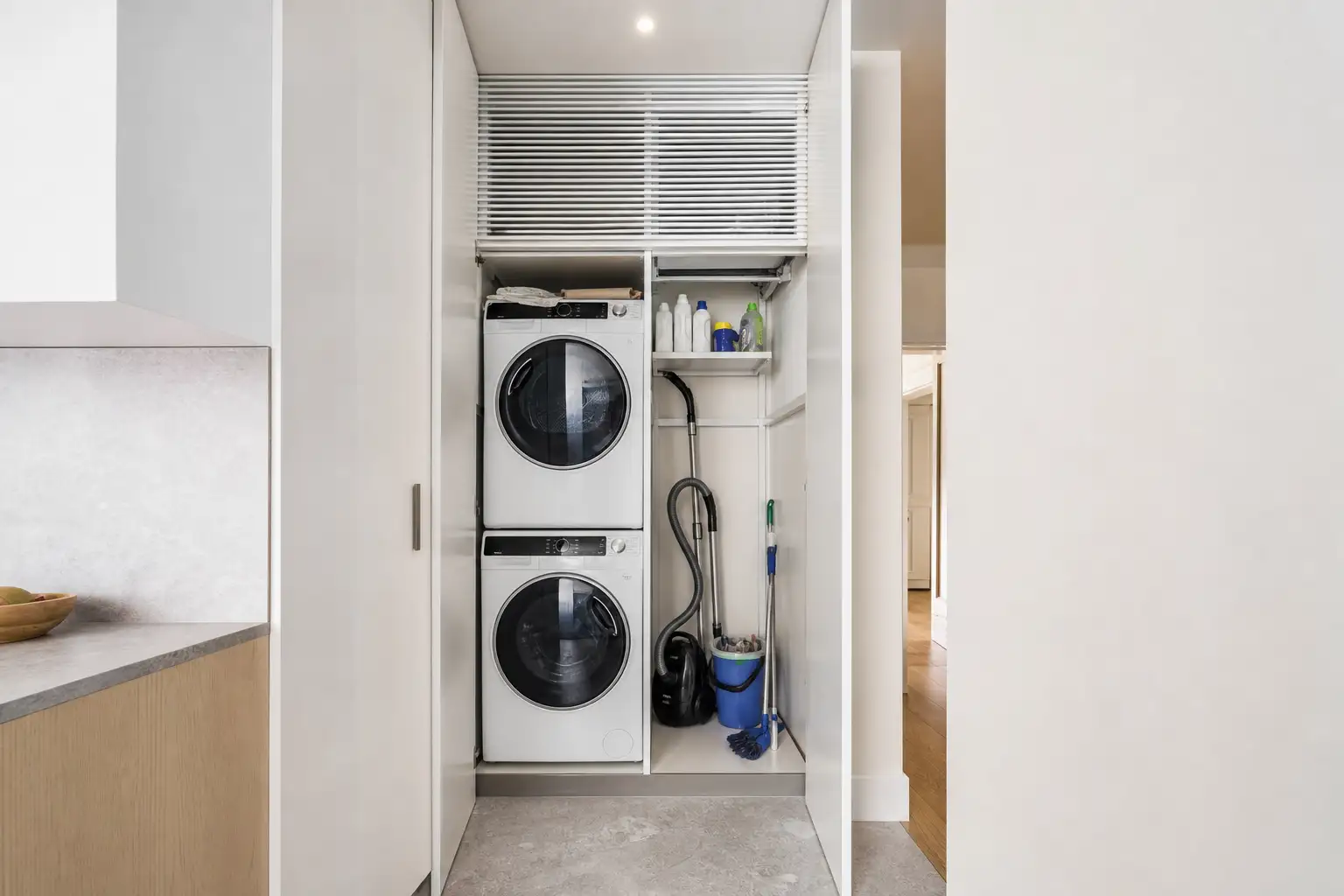
Measure the actual space with doors open, drawers pulled out and appliances accessible. Allow room to connect hoses, remove filters and move the machine when servicing is required. A stacked washer and dryer can free up valuable floor area, but only when the cabinet structure, available depth and door clearances suit the selected appliances.
Avoid placing equipment against a wall that is also a bedroom headboard where another option exists. In apartments, the laundry position affects both household comfort and neighbouring homes. For the plumbing side of the decision, see Obra Lisboa’s guide to sewer and plumbing systems before renovating.
Water, drainage and containment: plan for faults as well as normal use
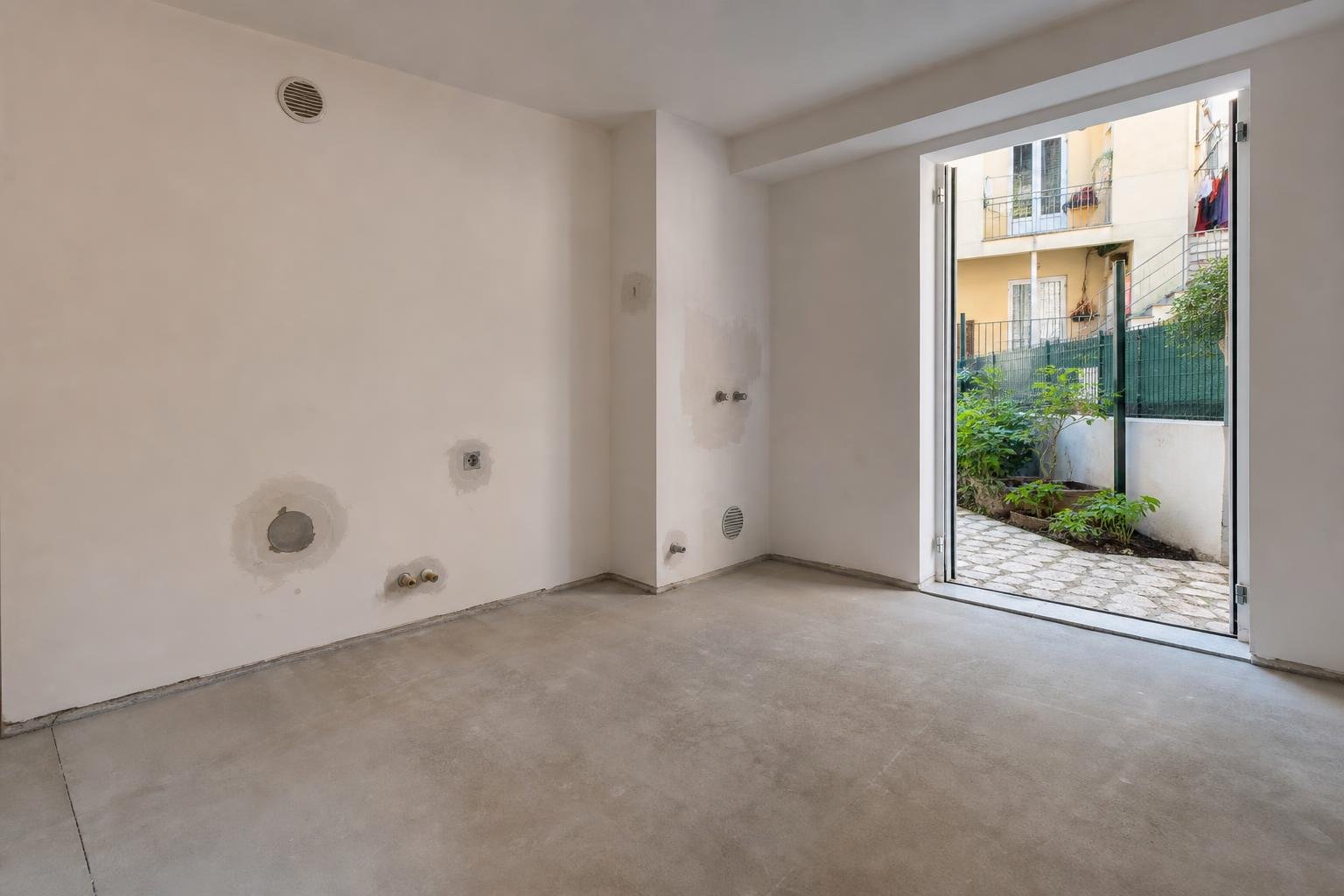
A safe laundry starts with correctly installed and accessible connections. The shut-off valve should be reachable without dismantling furniture; hoses should not be kinked, overstretched or hidden in a way that prevents inspection. It is equally important to plan an adequate drainage connection and confirm the fall and route of the waste pipe before closing walls or cabinetry.
Flooring and wall junctions should withstand splashes and frequent cleaning. In more extensive refurbishments, a floor drain or containment detail may limit the consequences of a leak, but the right option depends on existing levels, layout and technical feasibility. It is not a substitute for sound installation work or for checking connections regularly.
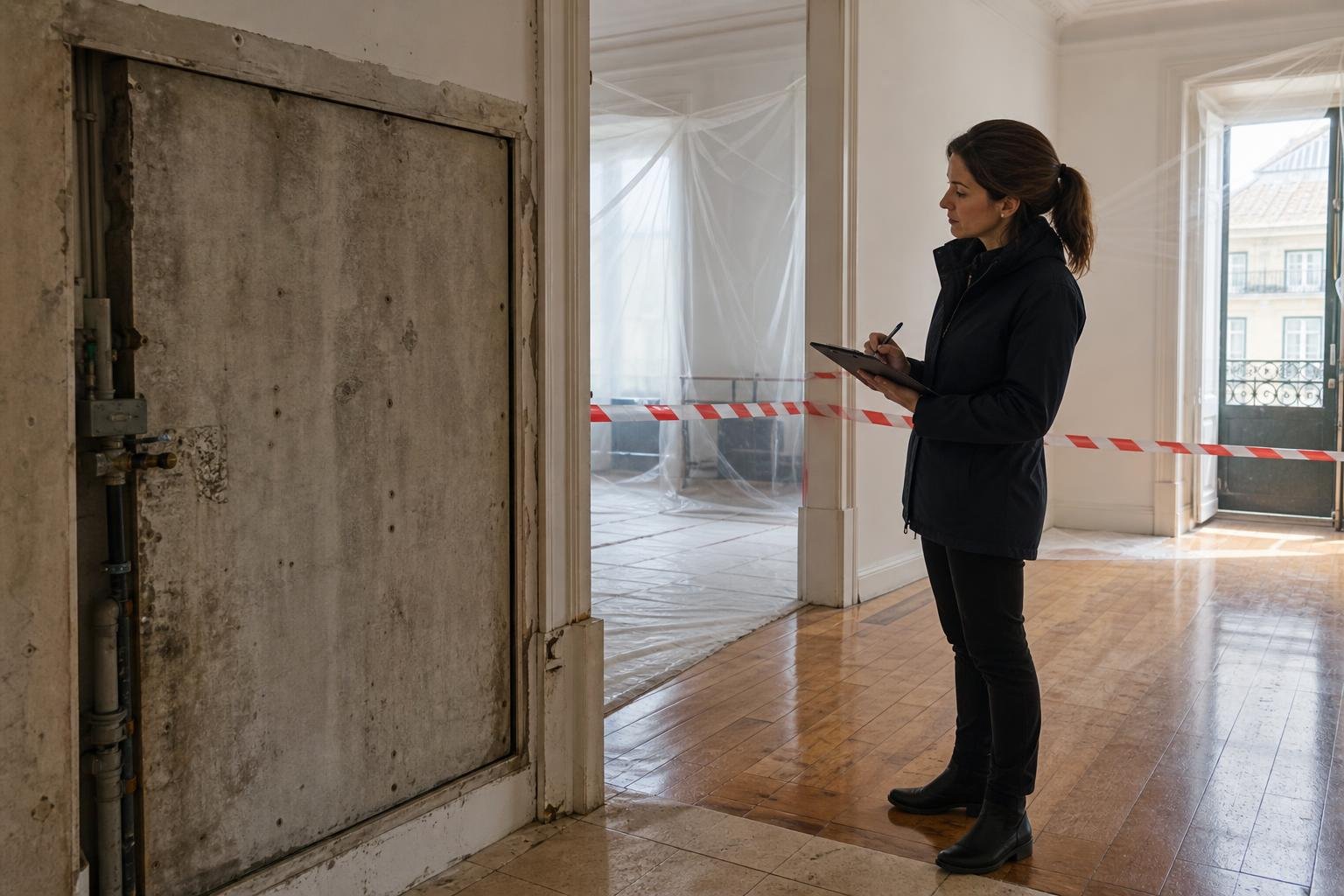
If there are damp marks, persistent odours or slow drainage, do not dismiss them as cosmetic issues. First establish the cause: a leak, water ingress, inadequate ventilation or a fault in the drainage system. This is particularly important in older buildings, where pipe routes are not always what they appear to be.
Ventilation: the detail that stops laundry from causing wider problems
Washing and drying clothes indoors adds water vapour to the home. Without sufficient air renewal, moisture can condense on cold surfaces and encourage mould growth. Portugal’s Directorate-General of Health guidance on indoor air notes that excessive humidity can lead to condensation and mould, with negative effects for occupants.
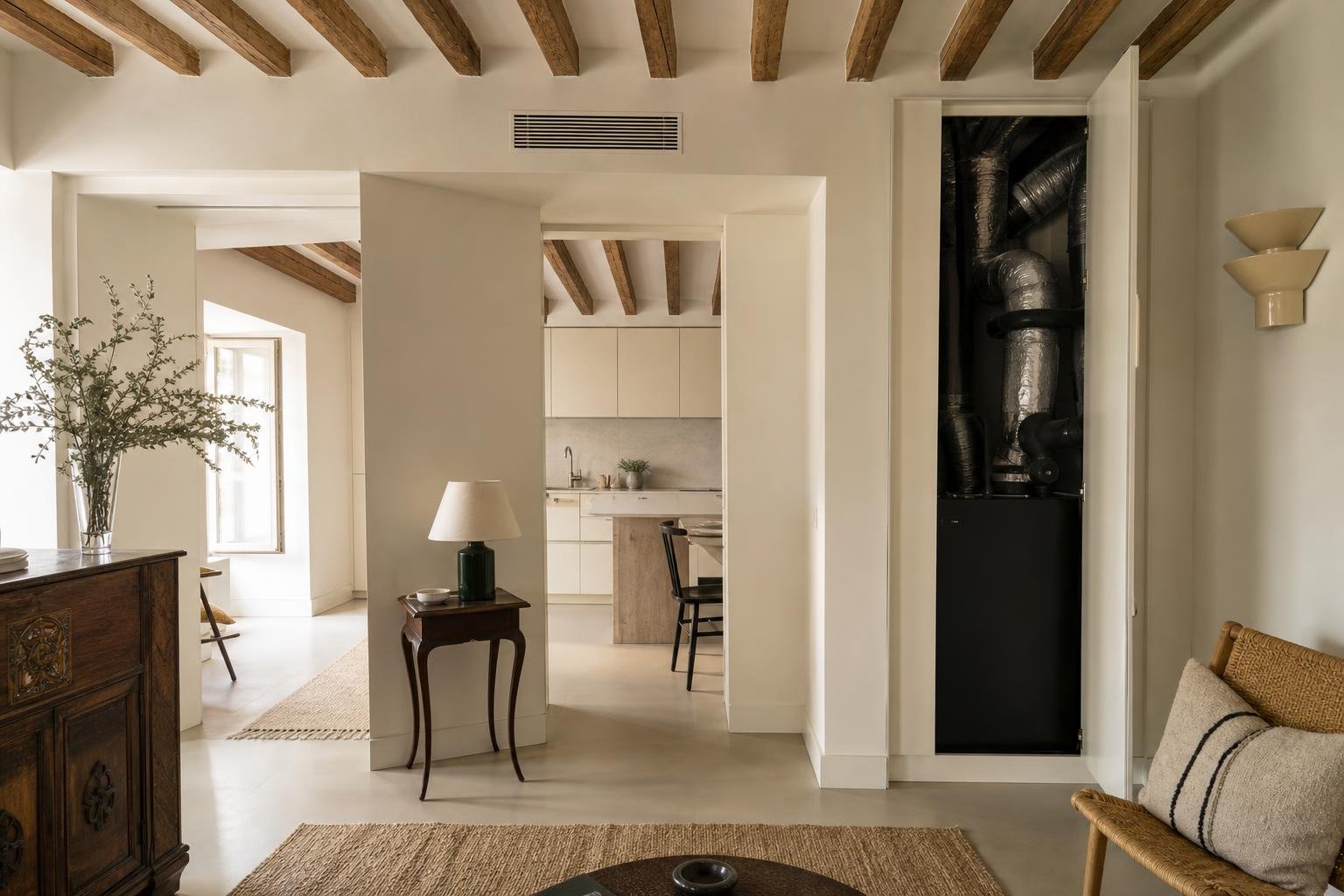
For that reason, a laundry area inside a closed cupboard should not be treated as an airtight box. Air supply and extraction need to be considered in relation to the appliance type and the building’s ventilation system. A decorative grille alone may not solve the issue. The solution should enable airflow without pushing moisture into unsuitable rooms or affecting façades and shared building elements.
For everyday use, the DGS recommends ventilating the home while washing and drying clothes indoors, as well as during or after other moisture-producing activities. Read the DGS general indoor-air recommendations. At the same time, clean filters and check ducts or extraction areas in line with the manufacturer’s instructions.
Control vibration and noise before closing the cupboard
Washing-machine noise rarely comes from the motor alone. It is often caused by poor levelling, vibration transmitted into the floor, contact with cabinet sides or an installation that is too tight. The appliance should sit level, with correctly adjusted feet, and should not press against walls, skirting boards or worktops. Resilient materials can help, but they will not fix an unstable base or poor installation.
When the laundry sits near bedrooms or a party wall between apartments, consider the full system: appliance location, cabinet clearances, properly adjusted doors and any floor intervention. Obra Lisboa’s article on acoustic floors in apartments explains why noise control should be considered from the base upward.
Daily habits also matter: do not overload the drum, distribute laundry before spinning and avoid late-night cycles in buildings with weak acoustic insulation. These small measures help, but they never replace a technically sound installation.
Organise storage around tasks, not around maximum cabinetry
A good laundry supports a straightforward sequence: sort, wash, dry, fold and put away. Keep frequently used products between waist and shoulder height; reserve high shelves for lightweight, occasional stock; and keep detergents and cleaning products away from children. A pull-out basket, a short hanging rail and a folding surface can be more useful than a full wall of deep cupboards.
Choose durable, easy-clean fronts, especially if the space has limited daylight or also stores mops, buckets and damp items. Slatted or perforated doors may contribute to ventilation, but they must support the technical strategy rather than be chosen purely for appearance.
Where the area is very small, design the essentials first: appliances, access, folding surface and basic storage. Add specialist features only afterwards. This priority avoids sacrificing maintenance access and movement for a tidier-looking image.
Electrical safety, permits and final checks
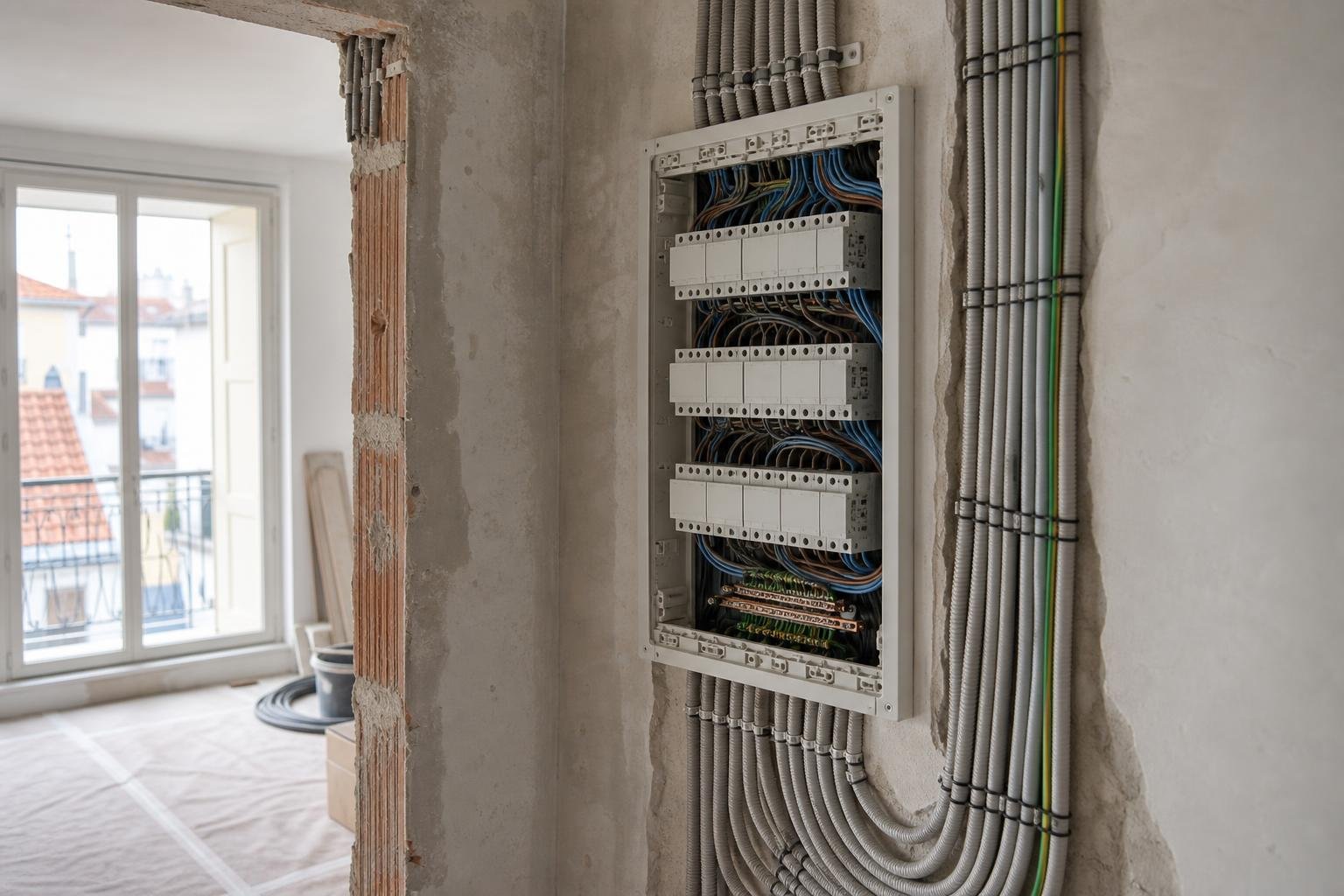
Washers and dryers require circuits, sockets and protective devices suitable for their expected load. Do not plan a laundry around permanent extension leads, overloaded plugs or sockets hidden behind inaccessible appliances. Electrical work should be assessed and carried out by a qualified professional, particularly where new appliances, circuit changes and water are involved.
In Lisbon, some interior works may be exempt from prior planning control where they do not harm structural stability, but there are specific duties and exceptions. Municipal guidance states that where interior works involve structural intervention or additional load, a qualified technician’s statement of responsibility may need to be kept on site. Check the conditions on Lisbon’s page for prior notification for building works before proceeding.
Before handover, test every function: shut-off valve, drainage, spin cycle, ventilation, door opening, filter access and the absence of unusual vibration. A laundry area is only complete when it is easy to use, clean and maintain.
Planning to include a laundry area in your apartment renovation? Obra Lisboa can help coordinate space planning, technical installations and finishes so the result works properly from day one.
AI-generated editorial image; it does not depict an Obra Lisboa project.

Obra Lisboa