
An outdoor clothesline looks like a minor feature until the first wet winter, the first strong gust, or the day someone has to cross the garden carrying a full basket. At a Lisbon house, its position affects more than drying time: it shapes ground drainage, the way the garden works, privacy from neighbours and the safety of everyone moving around the home.
The most useful solution is not always the one with all-day sun. It is the one that combines light, airflow, a short route from the washing machine, a surface that does not turn muddy and fixings designed for the real load of wet laundry. The IPMA climate normal for Lisbon / Instituto Geofísico provides useful context: summers are warm and dry, but the installation must still work through the months with more humidity and rainfall.
This guide sets out the choices worth making before buying posts, pulleys or a cover. If the work forms part of a wider garden upgrade, coordinate it with maintenance paths in a small courtyard, rather than squeezing it into leftover space.
Start with the route, not the clothesline hardware
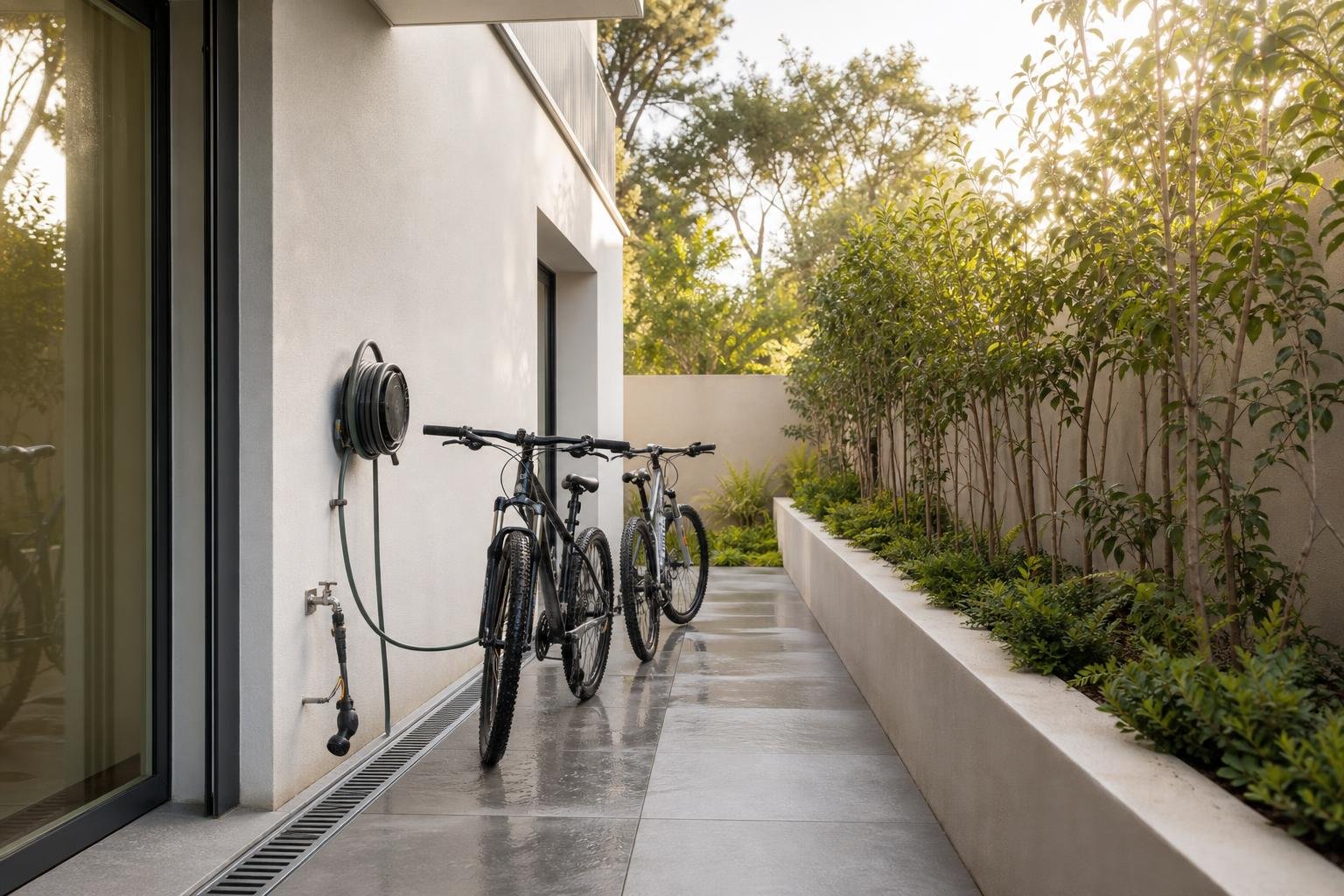
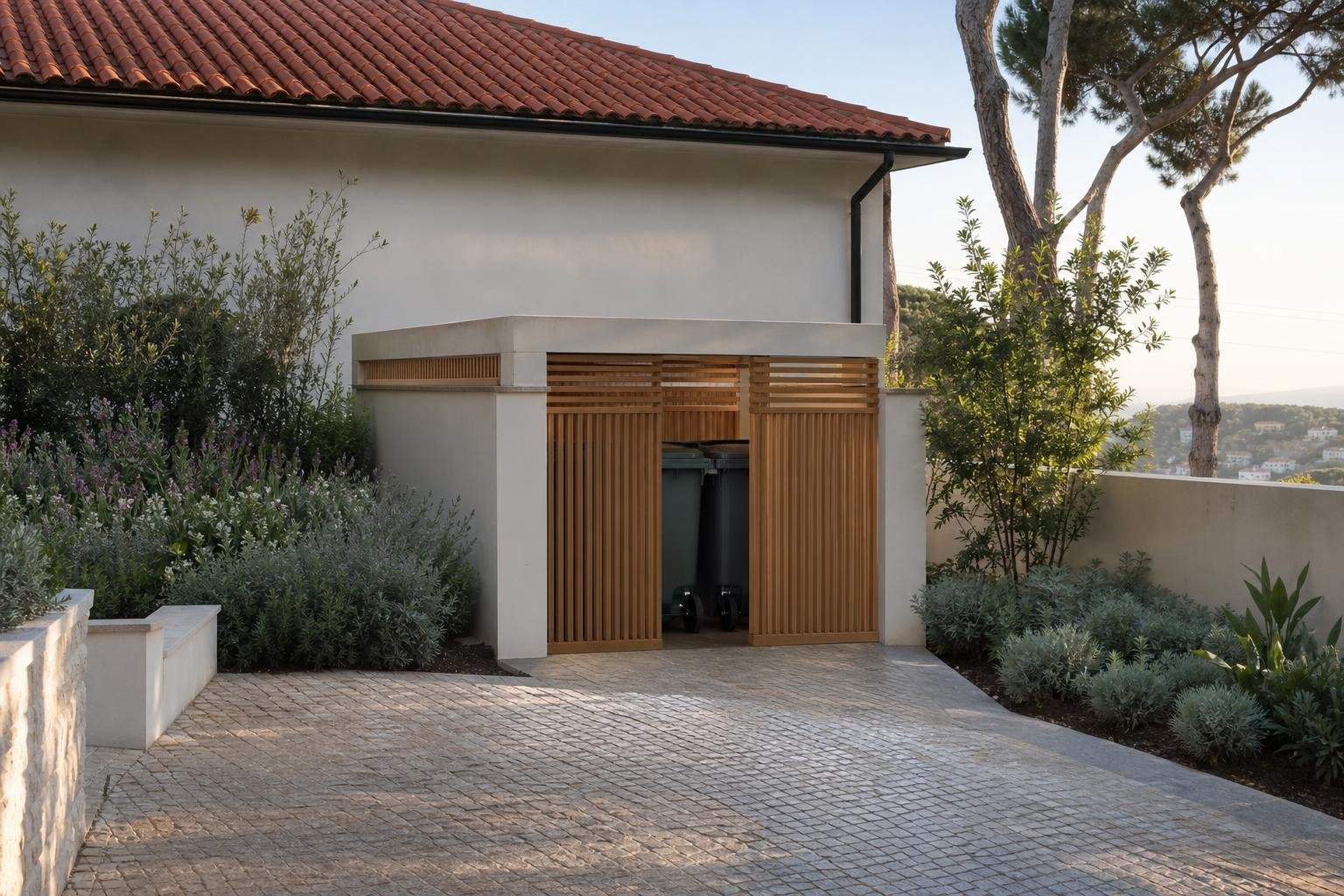
First draw the route between the laundry area and the drying point. A short, level and well-lit path matters more than gaining one extra metre of line at the bottom of the plot. Avoid making someone carry wet laundry over steps without a handrail, grass that becomes slippery, or areas used for bicycles, bins and hoses.
Allow a working strip beside the clothesline. This is where a basket is set down, a small step stool is used and higher garments can be reached without standing in flower beds. If the laundry opens directly outside, check the swing of the door and keep the lines outside its opening arc. If it is inside the house, a short cover over the route can be more useful than covering the whole drying area.
It also makes sense to separate laundry from dirty activities. A clothesline beside a barbecue, pet-washing point or workshop area is likely to pick up smoke, splashes and dust. Treat it as a compact service area: orderly, practical and properly integrated into the outdoor layout.
Look for sun and airflow, but avoid damp shade and harsh wind tunnels
In Lisbon, an area with morning or mid-day sun is often more usable than a west-facing wall, where both laundry and the person hanging it are exposed to intense late-afternoon heat. Deciduous trees can provide welcome summer shade while allowing more light in winter; dense evergreen trees, by contrast, can slow drying and drop leaves, resin or pollen onto fabrics.
Air movement matters as much as direct light. A space squeezed between two high walls may look sunny on a plan but have very little ventilation. Observe the site on different days: note where the ground stays wet longest after rain and where wind slams doors, moves pots or rattles shutters. Excessively strong gusts can twist posts, break pegs and blow laundry into the ground.
For an exposed garden, choose properly tensioned retractable lines or a pulley system that lets you bring washing in quickly. A spaced screen set back from the lines can cut some wind without turning the area into a humid enclosure.
Solve drainage before adding posts or new paving
Clean laundry should not be hung over muddy grass or a slab that leaves standing water against the house. Before drilling or casting supports, establish where rainwater, wash-down water and water from nearby taps will go. The finished fall should guide water to an appropriate collection point, never towards a threshold, a neighbour’s wall or the foot of the posts.
In a narrow side passage, a strip of permeable paving or stabilised gravel can reduce splashing and make access easier. Next to an existing paved area, review joints, falls and drain capacity; a decorative grate alone will not correct poor drainage. If there is partial cover, water running off its edge also needs a defined destination.
This check is especially important on compact plots, where every new surface can alter the path of water. For recurring puddles, leaks and overloaded drains, read Obra Lisboa’s guidance on courtyard and patio drainage in Lisbon before settling on a solution.

Match the fixings to the structure and the load of wet laundry
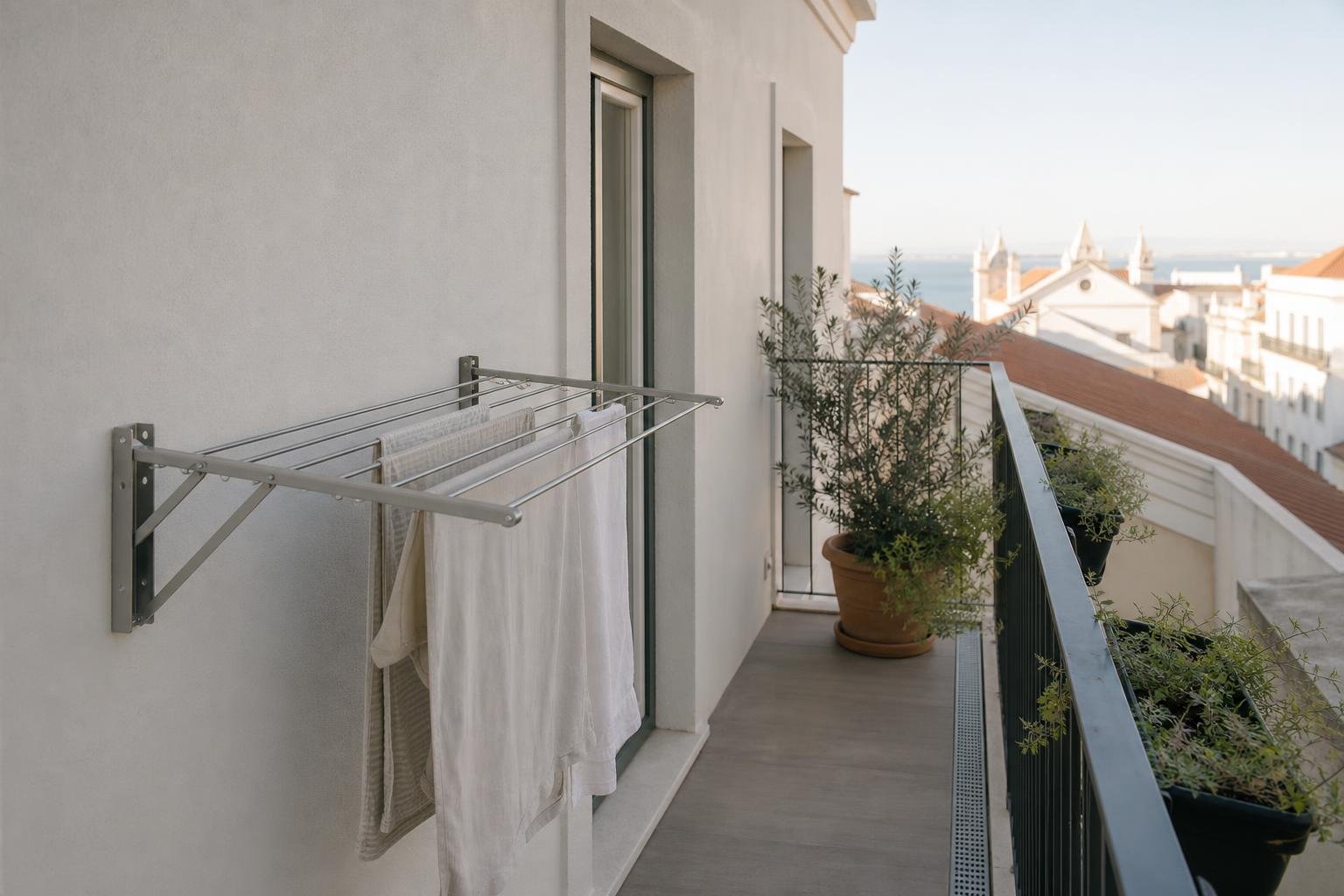
There are three common options: fixed or folding wall arms, independent posts, and pulley systems running between two supports. The choice should not be made on price alone. An old masonry wall, a thin boundary wall or an externally insulated finish requires a different approach from a structural concrete wall. Drilling without knowing what is behind the surface can damage waterproofing, services or the finish itself.
Consider moving load, not just the weight of the line. Sheets, towels and wet clothing place much greater stress on the system when wind catches them. Posts need foundations suited to both the soil and their height; plates, anchors and screws should resist corrosion. Do not attach a system to trees, railings, downpipes or pillars whose structural role is unknown.
Set the useful height as well. Lines that are too low let clothes touch the ground; lines that are too high encourage the use of improvised stools. An adjustable system works better in homes used by people of different heights and makes it possible to lower the lines on windy days.
Create privacy without blocking light, air or maintenance access
A drying area visible from the street or neighbouring windows can feel uncomfortable, but a tall solid screen is not always the answer. It can remove daylight, stop airflow and create a surface where moisture and leaves collect. Begin by setting the lines behind an existing volume, a permeable hedge or a slatted screen that still allows air to move.
In new houses or alteration projects, drying laundry deserves to be planned as part of the laundry-treatment area, not added as an afterthought. A regulation published in the Diário da República illustrates this approach by requiring organised space for washing and drying in dwellings. Local rules and plot constraints can differ, but integrating the function into the design helps avoid flimsy, visually intrusive solutions.
If privacy relies on a new structure, also check whether it affects easements, maintenance access, shared boundary walls or sightlines when leaving a garage.
When to check planning rules and how to keep the area working
A movable clothes rack without building work is not the same as a fixed cover, an outbuilding or a meaningful external alteration. Where the proposal includes permanent posts, walls, a cover, new paving, water connections or visible external changes, check the applicable process before ordering materials. In Lisbon, the municipal page on building works under prior notification explains that construction, alteration and extension works may fall under planning procedures depending on the site and the nature of the intervention.
Once installed, upkeep is straightforward but should not be ignored: clean cables and pulleys periodically, check tension, tighten hardware where needed and look for corrosion, cracking concrete or movement in the posts. Keep drains and drainage strips clear of leaves. If laundry suddenly takes much longer to dry, investigate new shade, overgrown planting or poor drainage before adding more lines to a space that no longer performs well.
A well-planned outdoor drying area makes everyday routines easier and prevents improvised additions from taking over the garden. If you are reorganising a courtyard, creating a laundry area or coordinating paving, drainage and exterior structures, Obra Lisboa can help turn these small decisions into a coherent project.
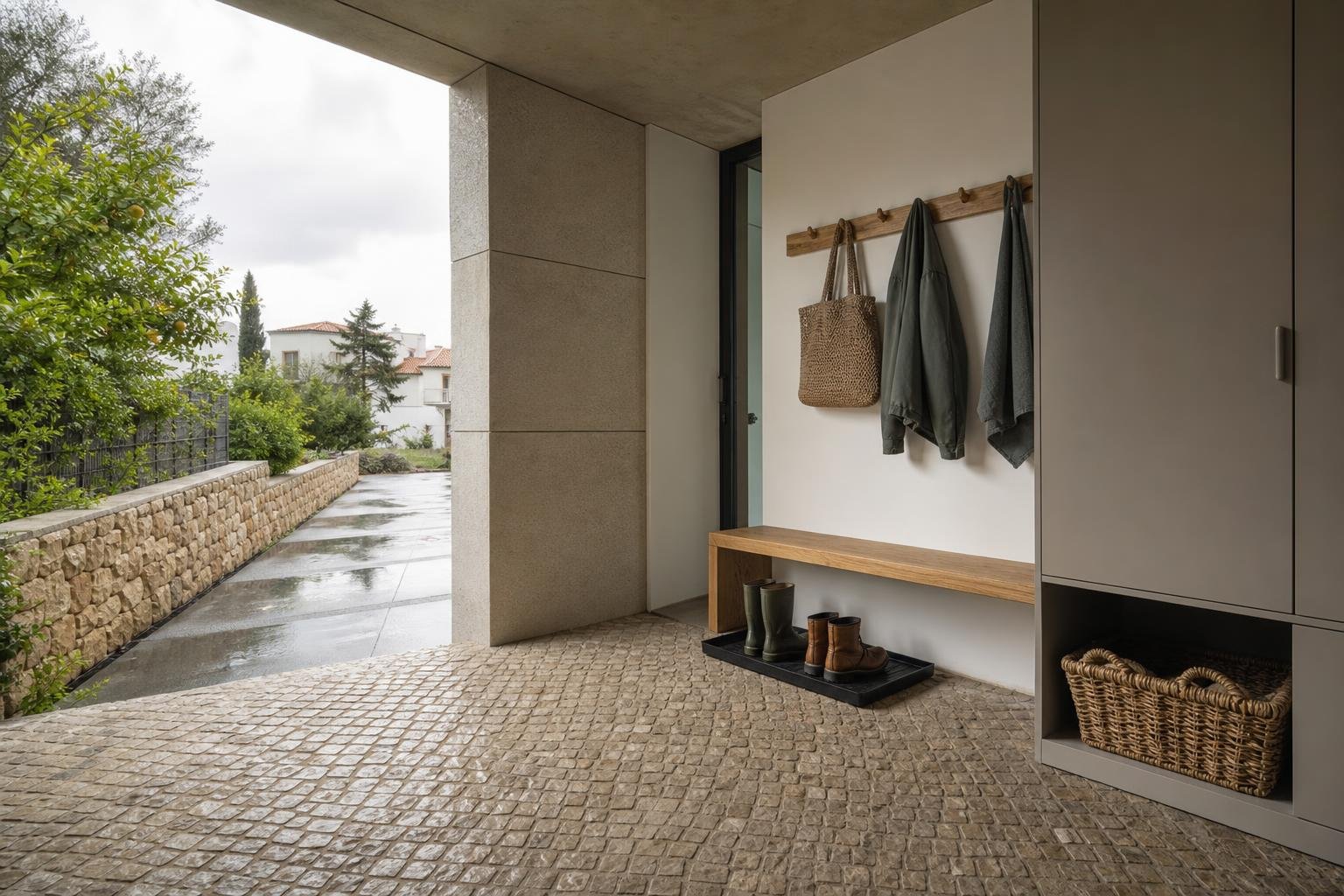
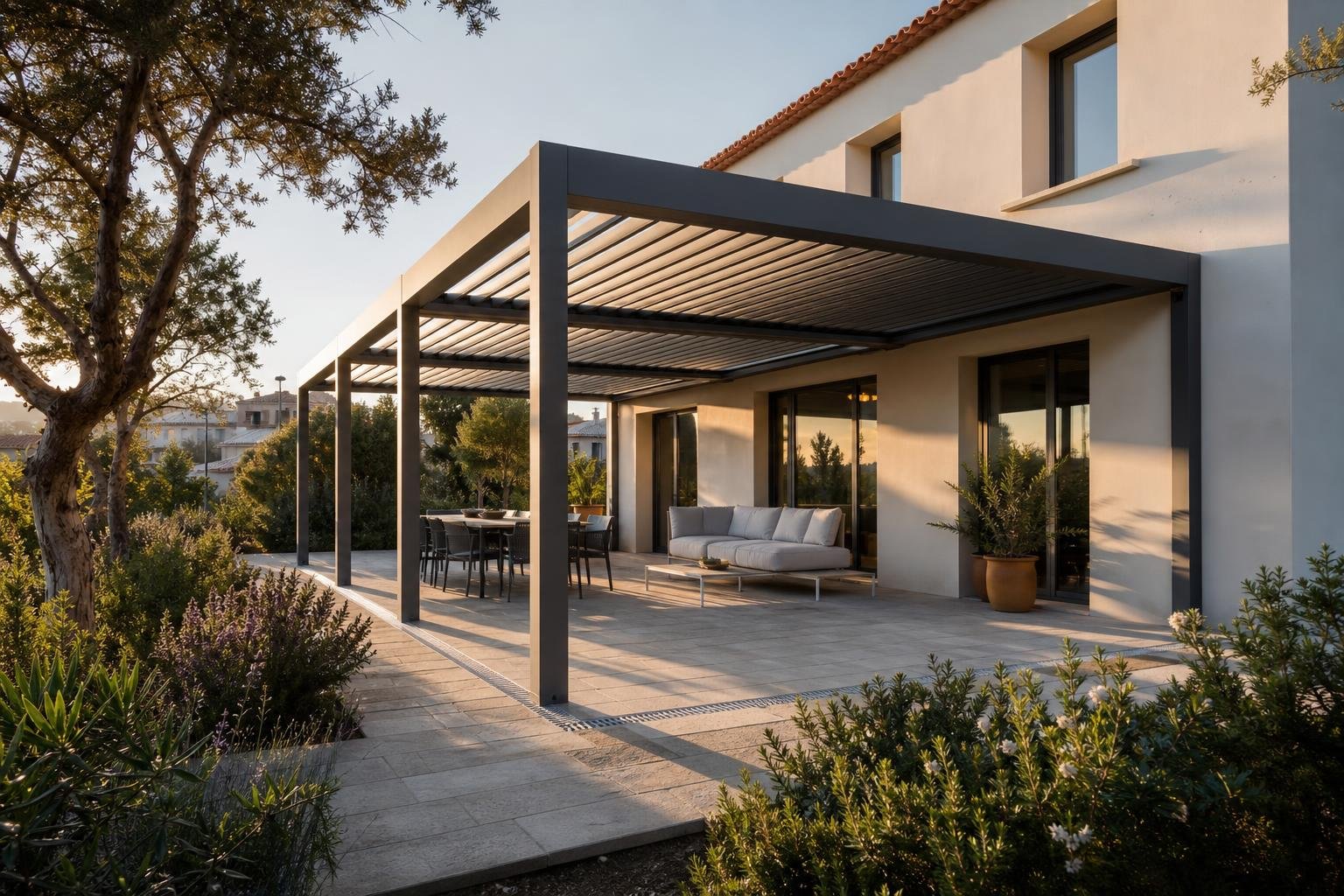
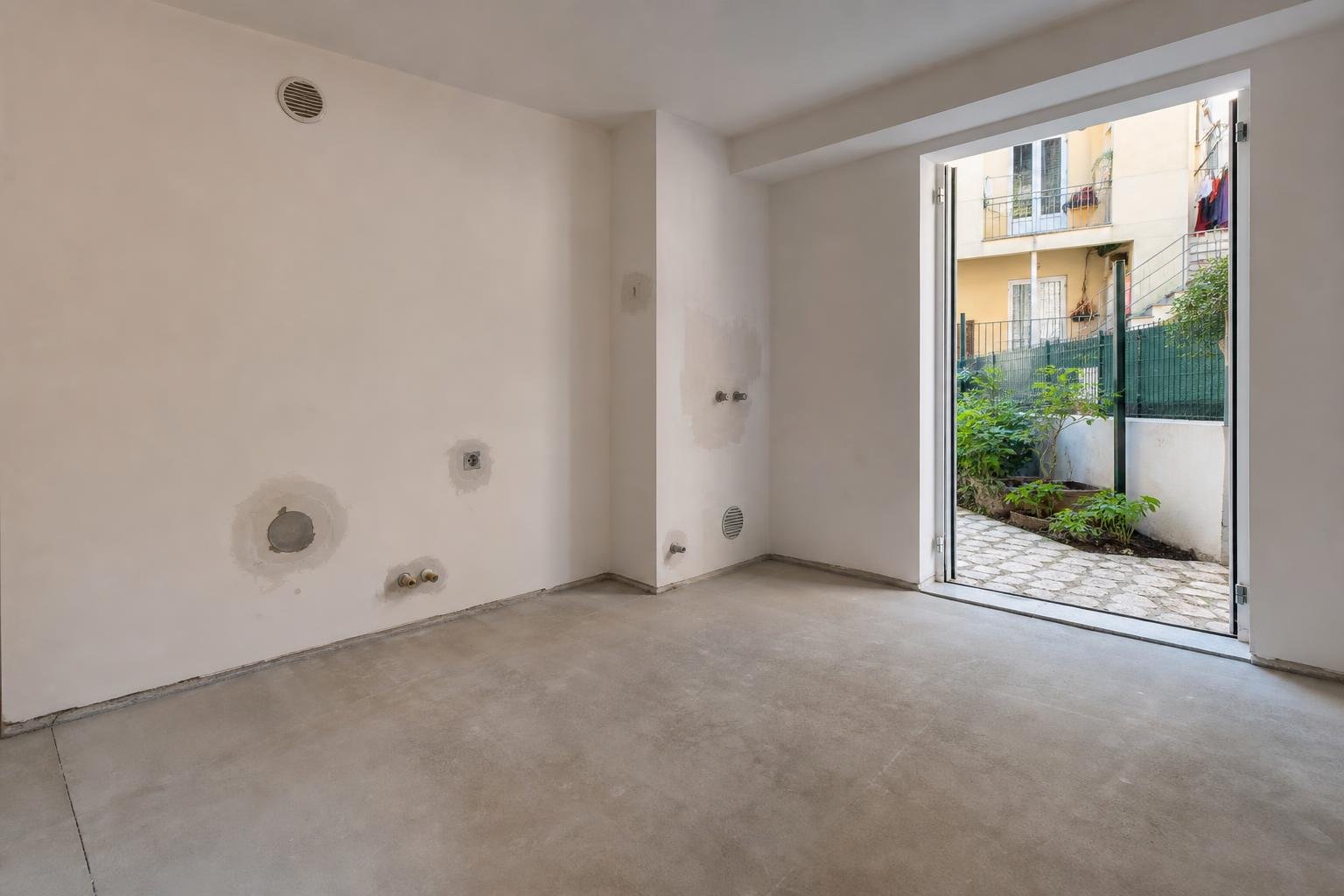
AI-generated editorial image; it does not depict an Obra Lisboa project.

Obra Lisboa