
A rooftop terrace can seem like the obvious place to dry laundry: it gets sun, keeps moisture out of a small flat and frees up the balcony. In a Lisbon apartment building, however, a poorly placed clothesline can obstruct roof access, puncture waterproofing, drip onto lower levels or create a recurring source of friction between neighbours.
The right solution does not begin with buying lines or brackets. It begins by checking who may use the space, what can be fixed where, and how water reaches the drains. Only then should the shared area be arranged: a clear route, predictable loads, fold-away equipment and rules that every resident can follow.
Check the deed and condominium rules first
Under Portugal’s horizontal property regime, roofs and roof terraces are generally common parts of the building, even where one flat has exclusive use. Exclusive use is not the same as exclusive ownership. Before installing a permanent item, review the deed, condominium regulations and recent meeting minutes. The Civil Code expressly identifies roof terraces as common parts and allows their use and upkeep to be governed by condominium rules.
Read the relevant provisions in the Portuguese Civil Code published in the Diário da República. In practical terms, bring the manager a simple proposal showing the position, number of drying bays, use times and maintenance method. It is far easier to agree this before a supposedly temporary arrangement becomes a disputed alteration.
Existing informal use of a roof does not automatically authorise new poles, covers, cupboards or screens.
Create one drying zone rather than scattered occupation
Set aside a continuous zone away from access doors, stairs, skylights, technical equipment and inspection chambers. A resident or maintenance worker should be able to cross the roof without walking beneath wet laundry, tight lines or freestanding racks.
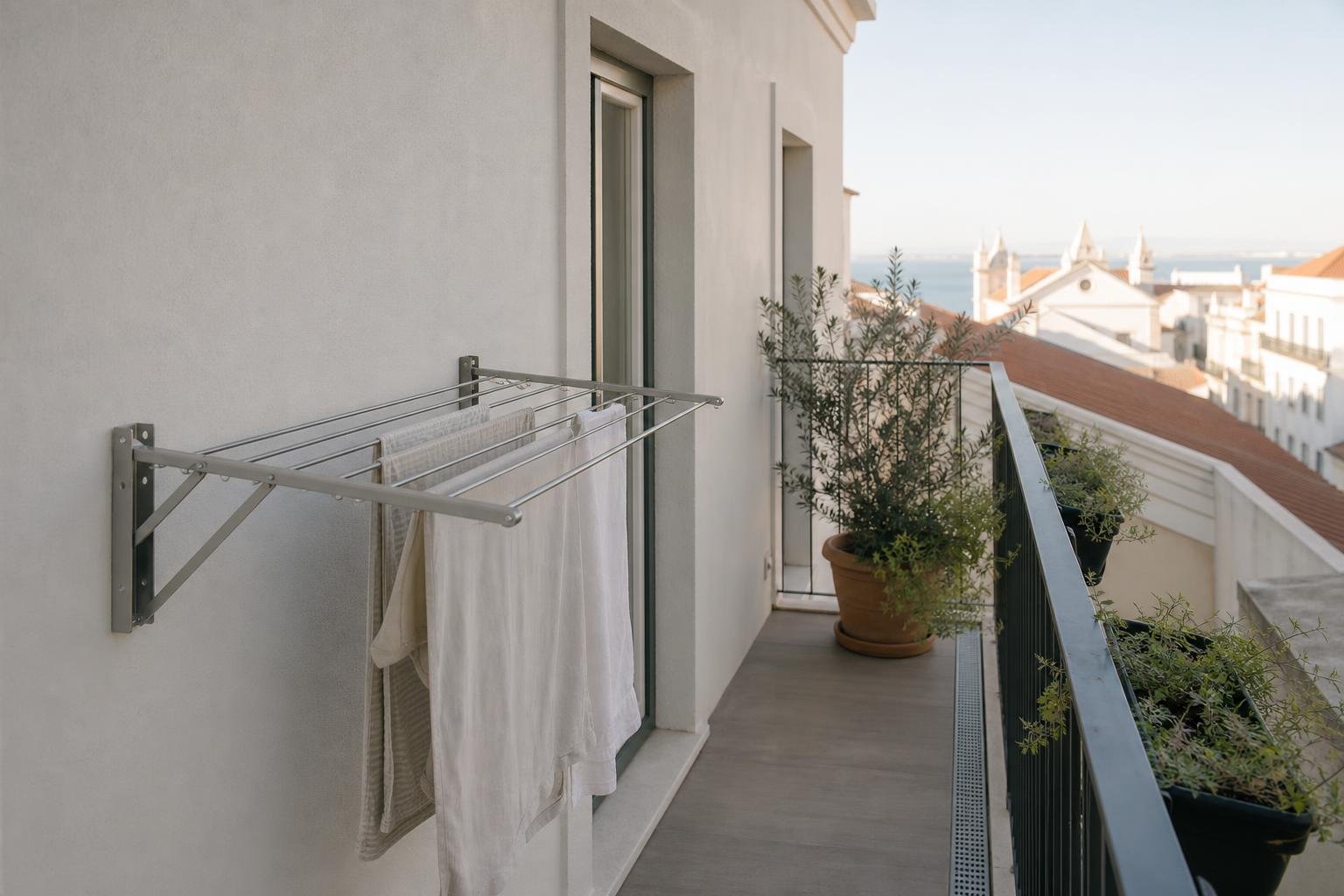
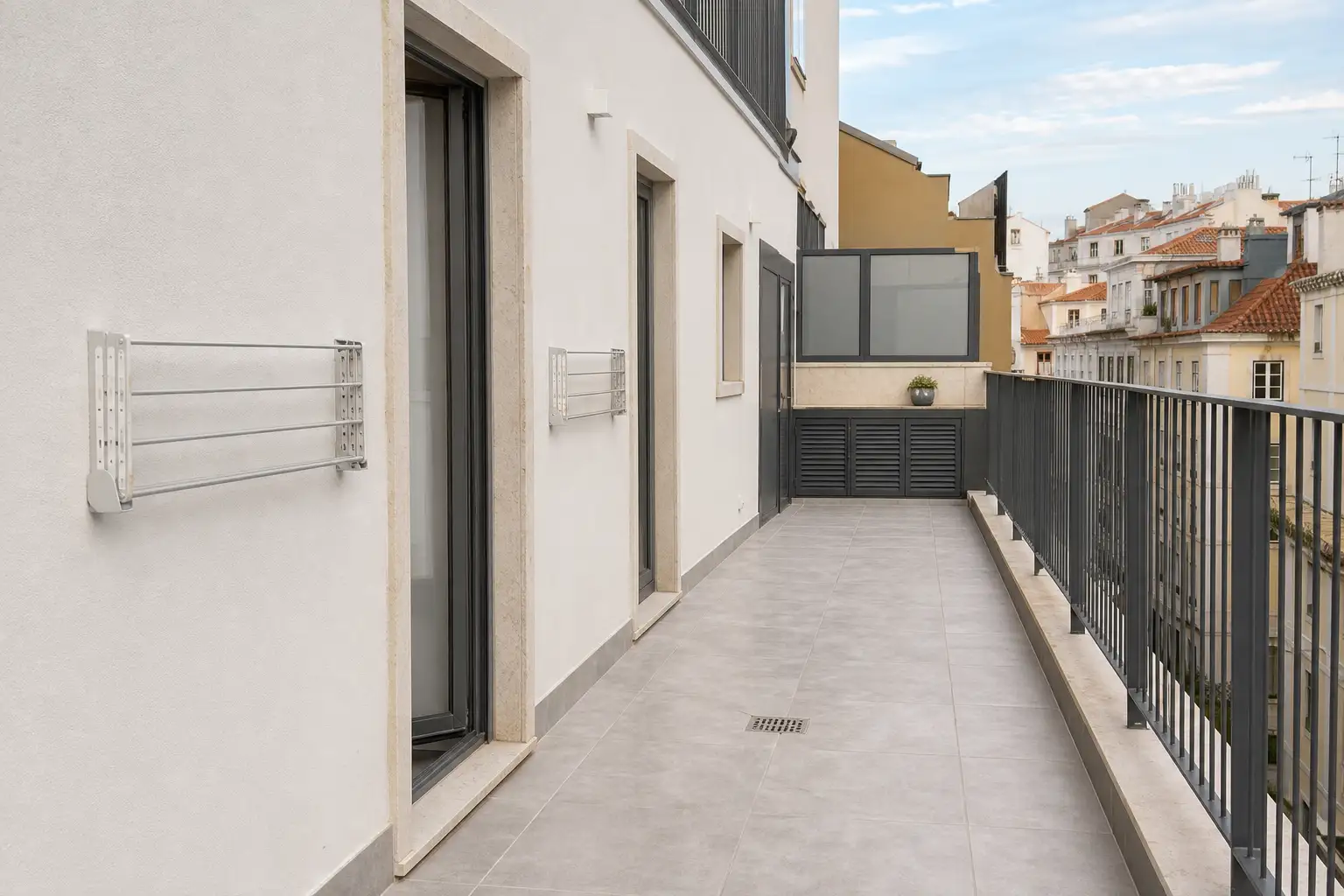
A resilient layout separates three bands: a clear route at the entrance; drying along one side; and an unobstructed margin around drains, parapets and equipment. Instead of every flat improvising its own line, choose matching, retractable modules arranged in a row. The space becomes easier to read and it is immediately clear what must remain free.
Where the building has shared laundry facilities, coordinate the external drying area with them. Our guide to a condominium laundry room is useful for thinking through access, noise and shared responsibilities.
Do not drill into a roof without knowing its build-up
A roof is more than its visible finish. Beneath it may sit waterproofing, insulation, falls, junction details and protective layers. Drilling through a slab or parapet to fix a pole can compromise that system and cause a defect that only becomes visible months later, when it is difficult to link it back to the installation.
Before fixing anything, check the roof drawings and seek technical assessment where anchors are needed. A freestanding rack with suitable bases, a system attached only to elements designed for that purpose, or wall brackets installed in a technically approved location may be safer choices. Avoid improvised ballast, loose blocks and arrangements that can topple in wind.
For work affecting a roof or another common part, Lisbon municipal documentation indicates that condominium authorisation minutes are required in applicable processes. See the council note on works affecting common building parts.
Keep drains, falls and joints clear of standing water
Dripping laundry should not discharge constantly onto a threshold, an open joint or a low point far from a drain. Standing water encourages dirt, can expose inadequate falls and makes slipping more likely. Watch how water travels on a rainy day before selecting the drying position.
Do not cover drains with mats, rack feet, buckets or fallen laundry. Keep a clear perimeter for cleaning and inspection. If puddles persist, staining appears on the top-floor ceiling or drains smell, deal with drainage first: adding clotheslines will not cure a roof that already handles water badly.
The same drainage and maintenance principles apply to external domestic spaces. See our guide to courtyard and patio drainage in Lisbon, then adapt those lessons to the roof’s construction.
Make safety part of the layout
A drying area must leave guards, doors and escape routes fully usable. Do not use lines as handholds, do not place benches or climbable structures near guards, and do not hang heavy items from components whose capacity has not been confirmed. On windy days, sheets and duvets can greatly increase the load on a light structure.
Set a straightforward rule for bulky items: use only the designated bay, bring them in during strong winds and never leave them out for long periods when nobody is home. In buildings with children, the layout should avoid footholds beside guardrails and narrow routes where someone carrying a basket might trip.
Consider lighting too if residents reach the roof in the evening. A useful shared facility should not require crossing a dark roof terrace with a load in both hands.
Agree cleaning, use times and what happens when something fails
Disputes rarely start with the clothesline itself. They start when laundry is abandoned, water drips, lines break or one flat occupies the entire area. A short resolution can define the number of bays per flat, maximum time before collection, a ban on unauthorised drilling and responsibility for periodic drain cleaning.
Add a seasonal check: tighten hardware, inspect corrosion, assess bases, remove leaves and confirm that drainage points remain clear. If the proposal requires building work, establish early whether it changes the roof form or other external elements. Lisbon City Council explains that exempt internal works cannot alter the form of façades, roofs or roof coverings; review the conditions for works exempt from prior planning control before assuming that a structure needs no further assessment.
A well-designed drying zone is discreet, washable and quick to put away. Above all, it allows the roof to perform its primary job: keeping water out of the building.
Planning to reorganise a roof terrace, shared rooftop or another common area? Obra Lisboa can help turn drainage, safety, condominium and day-to-day use requirements into a clear intervention plan before work begins.
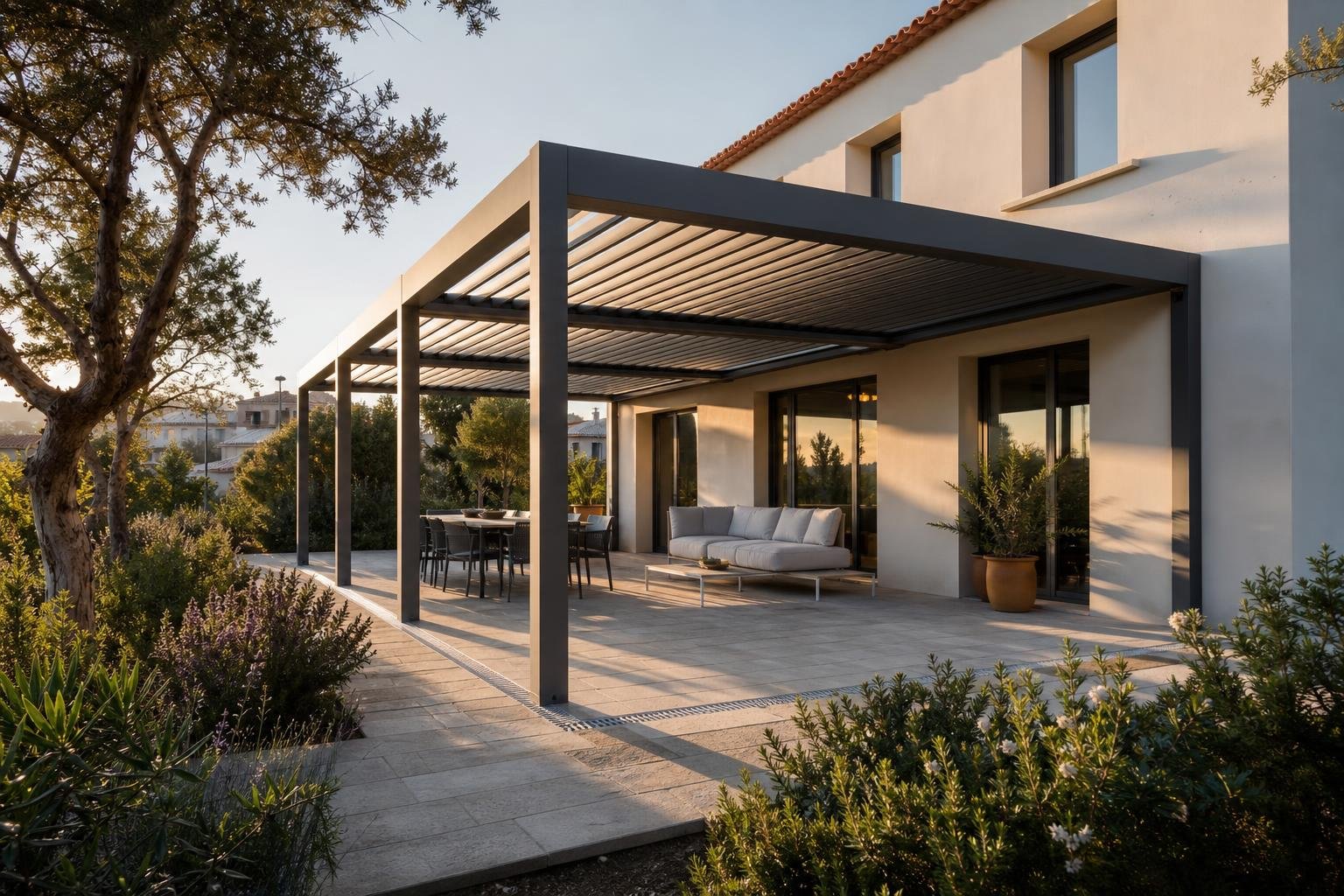
AI-generated editorial image; it does not depict an Obra Lisboa project.

Obra Lisboa