A ceiling stain that appears or grows after rain should be treated as water ingress until proven otherwise. Do not begin by painting, drilling into the ceiling or opening a shutter box: record the sign, reduce any electrical risk and check the connection between the stain, the weather and services above it. In Lisbon, this order avoids cosmetic repairs that hide a defective roof, a leaking stack or persistent condensation.
Contents
- Can the stain itself reveal the cause?
- What should you do in the first few hours?
- If it only appears after rain, where should you look first?
- What if the stain is below a bathroom or kitchen?
- When is it condensation, and how does that change the repair?
- What repair should you request, and when should you call a professional?
Can the stain itself reveal the cause?
It helps, but it does not provide a final diagnosis. A yellow or brown tide mark whose edges spread after rain often points to water entering through a roof, an upper balcony, a façade or external sealant. If the ceiling becomes damp without rain and is near a bathroom, kitchen, washing machine or service stack, a plumbing leak becomes more likely.
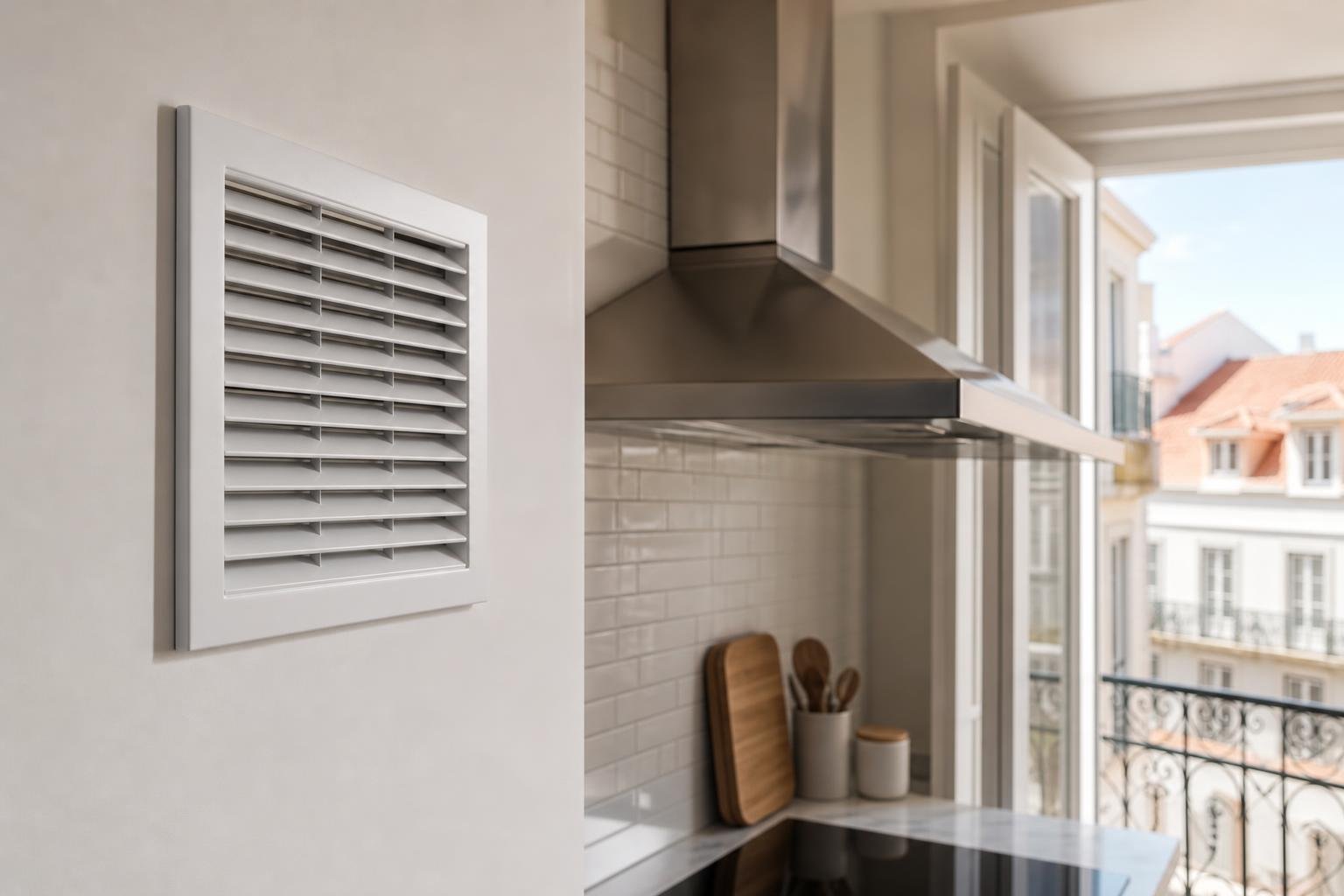
Condensation usually leaves surface mould, particularly at cold corners, behind furniture or around thermal bridges; it may also affect ceilings below poorly insulated roofs. The Portuguese health authority advises daily ventilation and ventilation during or after bathing, cooking, washing and drying clothes, because these activities raise indoor humidity.
- After rain: investigate the roof, drains, flashings, windows and façade.
- After water use: check appliances, traps, connections and installations in the flat above.
- On cold days, without a clear event: observe ventilation, surface temperature and moisture-producing habits.
Water can travel away from its source through slabs, beams, cables or voids before becoming visible. The stain is therefore evidence, not a guaranteed map of the defect.
What should you do in the first few hours?
If there are drips, a bulging ceiling, cracking sounds, a burning smell or water close to a light fitting, safety comes first. Keep people and belongings away, do not touch the fitting and isolate the circuit at the electrical panel only if access is dry and safe. If it is not, call an electrician or the appropriate emergency services.
- Photograph the stain from a distance and close up, with the date; repeat after rain or water use.
- Protect the floor and move furniture, textiles, books and electronic equipment away from the area.
- If water is coming from an installation in your own flat, close the relevant isolation valve; if you do not know which one it is, close the main supply only when needed to stop the leak.
- Notify the building manager and, where relevant, the neighbour above in writing. State the location, time, progression and whether rain or water use coincided with the issue.
- Do not pierce the ceiling to “drain” a water pocket without assessment: you may strike wiring, spread water or dislodge finishes.
Also avoid placing powerful heaters close to wet materials. Intense heat can distort finishes and does nothing to stop continuing water ingress.
If it only appears after rain, where should you look first?
Start by matching the ceiling to the exterior and to the building layout. On a top floor, consider the roof area above, gutters, downpipes, drains, skylights, chimneys, flashings and penetrations. In a room beside a façade, include window sills, window sealant joints and cracks in the external render. Beneath a balcony, check drainage, falls and wall junctions.
Check the IPMA weather-warning criteria before deciding that rainfall was “ordinary”: high intensity over a short period can expose faults that light, steady rain does not reveal. This information helps date the event; it does not replace a technical roof inspection.
In an apartment building, the roof or roof terrace is generally a common part, even where one flat has exclusive use; the Civil Code also lists general building services as common parts. Check the specific deed and building rules before assigning responsibility. The legal wording is available in the Diário da República.
Do not climb onto a wet roof or walk over tiles, fragile sheets or unprotected edges. External inspection belongs to people with safe access and suitable equipment.

What if the stain is below a bathroom or kitchen?
In that case, carry out simple, limited tests one at a time. Watch the water meter with all taps and appliances off; consumption without use may indicate a plumbing leak. Then, without soaking the room, use the basin, shower, toilet flush and washing machine separately. Record whether the stain changes over the following hours.
Look for secondary signs: split silicone around a shower tray, loose grout, a distorted cabinet below the sink, a damp trap, corroded hoses, slow drainage or a persistent smell. A waste-pipe leak may not alter meter readings; a failed shower waterproofing layer may only show during longer showers.
If the source is in your laundry area, a well-planned floor drain in a home laundry room can limit future damage, but it does not replace watertight connections, appliance maintenance and protected electrical work. In kitchens and bathrooms, keep valves, traps and inspection points accessible; hiding everything behind cabinets or finishes turns a small leak into a larger opening-up job.
When is it condensation, and how does that change the repair?
Suspect condensation when the mark is dark and speckled, returns in winter, follows cold surfaces and has no consistent link with rain or water use. A ceiling below a roof, a bathroom without effective extraction or a poorly ventilated bedroom are common locations. Opening windows briefly, using extraction during bathing and moving furniture away from colder walls can help you see whether the pattern changes.
The Portuguese health authority warns that infiltration and damp favour microorganisms including moulds, fungi and mites. Surface cleaning is temporary; a lasting repair requires controlling the moisture source and allowing the substrate to dry. Painting over mould, or applying a so-called damp-proof paint to a wet ceiling, traps the problem and delays proper diagnosis.
If daily use is creating high indoor humidity, review the air path through the home as well. Our guide to a CO₂ monitor and home ventilation can help organise fresh-air routines without leaving the home unnecessarily cold.
What repair should you request, and when should you call a professional?
First request a diagnosis identifying the source, the likely water path, the extent of damage and the repair sequence. The usual order is to stop ingress, dry and assess the substrate, repair the cause, replace degraded materials where needed, and only then prepare and paint. Ask for the quote to separate these stages; “treat stain and paint ceiling” does not describe a solution for water ingress.
Call a professional promptly if the ceiling is distorted, plaster is falling, new cracks appear, rust is visible, water is near electrics, mould is extensive, the issue returns after repair, or the roof and façade may be involved. In older buildings, do not demolish ceilings or walls to search for the cause without first checking services and construction elements.
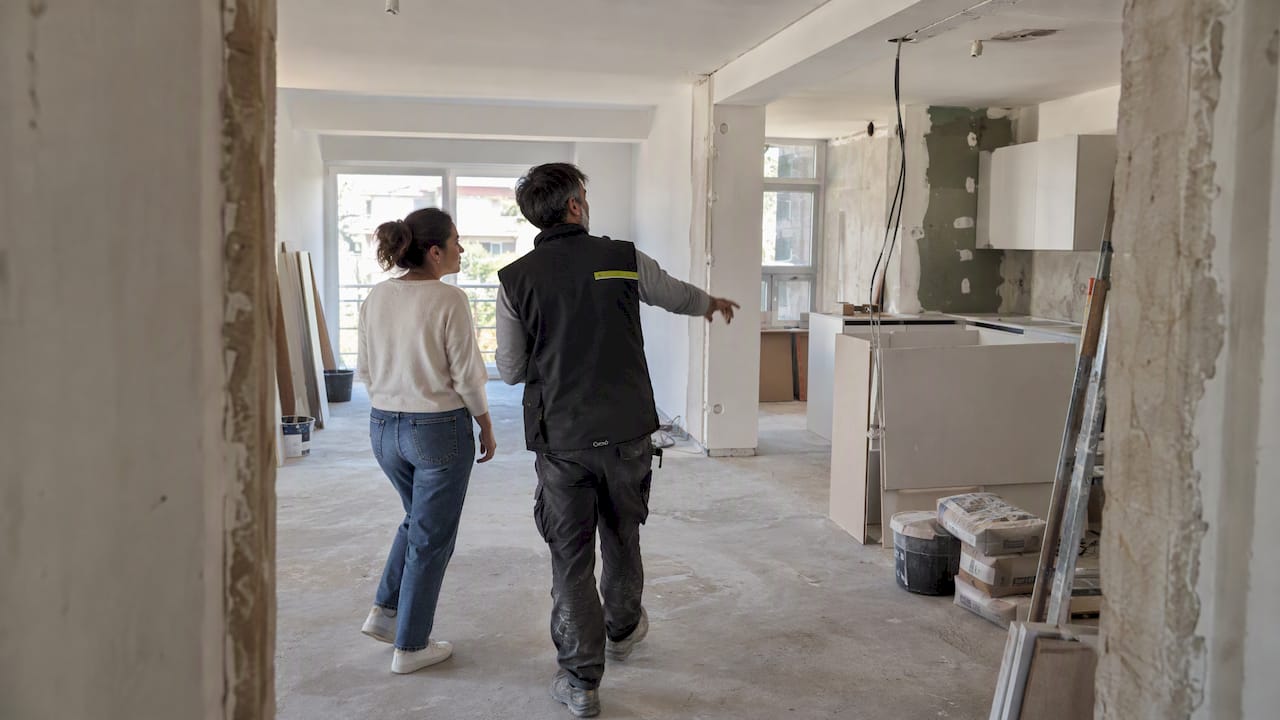
Keep photographs, messages, invoices and reports. They help coordinate the condominium, neighbours, insurer and works team. If the intervention will involve a suspended ceiling, waterproofing or services, include future access to critical points in the first site meeting; a renovation kick-off meeting is the right time to set responsibilities, materials and checks before closing up.
Key takeaways
- Record how the stain changes before covering it: its link with rain or water use guides diagnosis.
- Water near light fittings, a bulging ceiling or loose plaster requires distance and rapid assessment.
- Stop water ingress first; painting should only follow drying and repair of the affected substrate.
- In an apartment building, notify the manager early when the roof, façade or service stacks may be involved.
Do you have recurring water ingress, or are you preparing to repair a damaged ceiling? Ask Obra Lisboa for a proposal that sets out diagnosis, repair sequence and planned finishes before authorising the work.
Sources and further reading
- Portuguese health authority advises daily ventilation and ventilation during or after bathing, cooking, washing and drying clothes
- Portuguese health authority warns that infiltration and damp favour microorganisms including moulds, fungi and mites
- IPMA weather-warning criteria
- Diário da República
Editorial image; it does not depict an Obra Lisboa project.

Obra Lisboa