After heavy wind and rain, carry out a short inspection from ground level, record what you see, and do not climb onto roofs, exterior balconies or improvised ladders. Rushing to reset a tile, clear a gutter or pull down a loose item can turn a local defect into a fall or unnecessary exposure to unstable building elements.
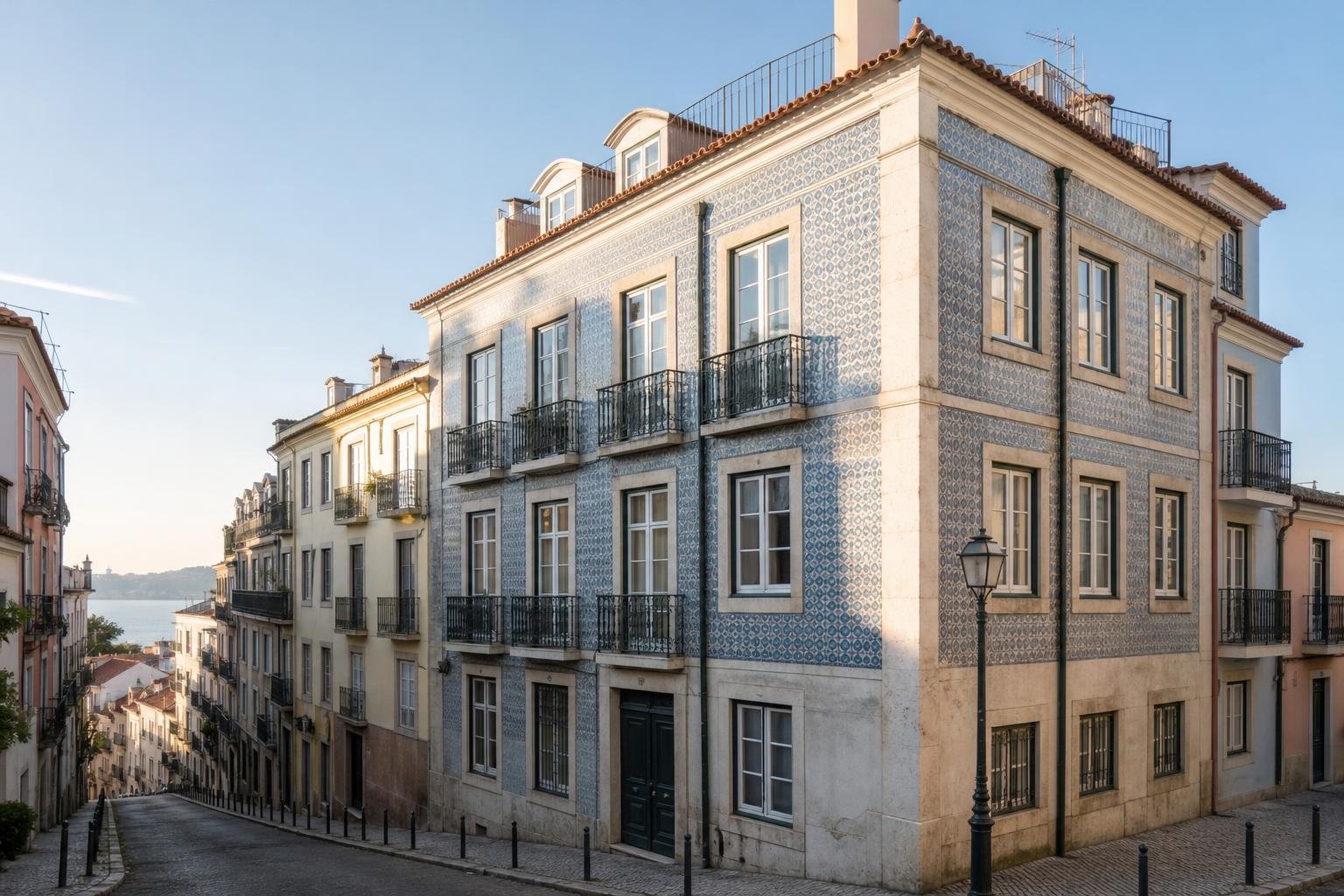
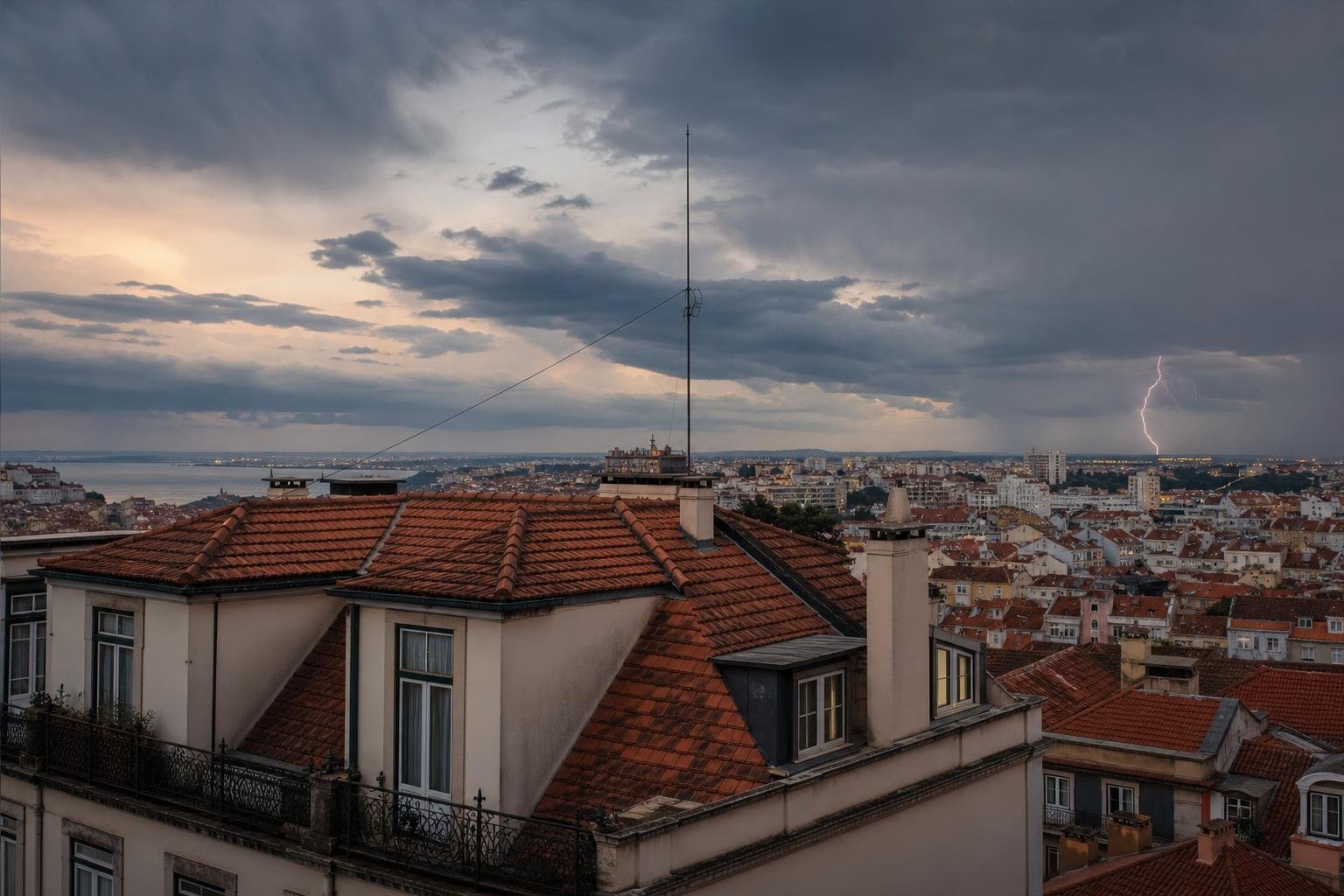
In Lisbon, gusts, intense rain and ageing façades deserve attention, particularly in buildings with pitched roofs, nearby trees, external shutters or balconies. The useful decision during the first few hours is to separate an inconvenience that can wait from a risk to people, the public street or common building parts.
Contents
- Check warnings first and wait for safe conditions
- What to look for from the pavement, courtyard or a safe window
- When to isolate the area and report it immediately
- What belongs to the flat and what needs condominium coordination
- Common mistakes during the first 24 hours
- Turn the incident into a maintenance plan
Check warnings first and wait for safe conditions
Before going outside, check whether the weather event has ended and whether warnings remain active. The Portuguese weather service explains its meteorological warning levels: yellow calls for attention, orange indicates moderate to high risk, and red indicates extreme risk. Do not treat a colour as an automatic instruction to inspect; use it to understand whether wind, heavy rain or thunderstorms may still worsen the situation.
Avoid an inspection while gusts continue, thunderstorms are present, water is falling from eaves, or puddles are close to electrical equipment. Wait for adequate daylight and take a phone, shoes with grippy soles and, if you need to approach a wet entrance, make sure someone else knows what you are doing. Do not bring a step ladder to get a better view.
IPMA publishes objective warning criteria: on mainland Portugal, a yellow wind warning may correspond to gusts of 70 to 90 km/h, while a yellow precipitation warning can mean 10 to 20 mm in one hour. Read the warning-issue criteria to put an event in context, without using those figures as permission to walk beneath loose elements.
What to look for from the pavement, courtyard or a safe window
Start with a brief exterior walk, staying away from the façade and avoiding routes beneath balconies, eaves or trees showing signs of damage. Look for recent changes rather than old defects you already knew about.
- Roof: displaced tiles, lifted flashings, items on the ground, overflowing gutters or water running down the façade.
- Façade and balcony: loose render, stone, tiles, railings, pots or panels; new cracks accompanied by stains or water trails.
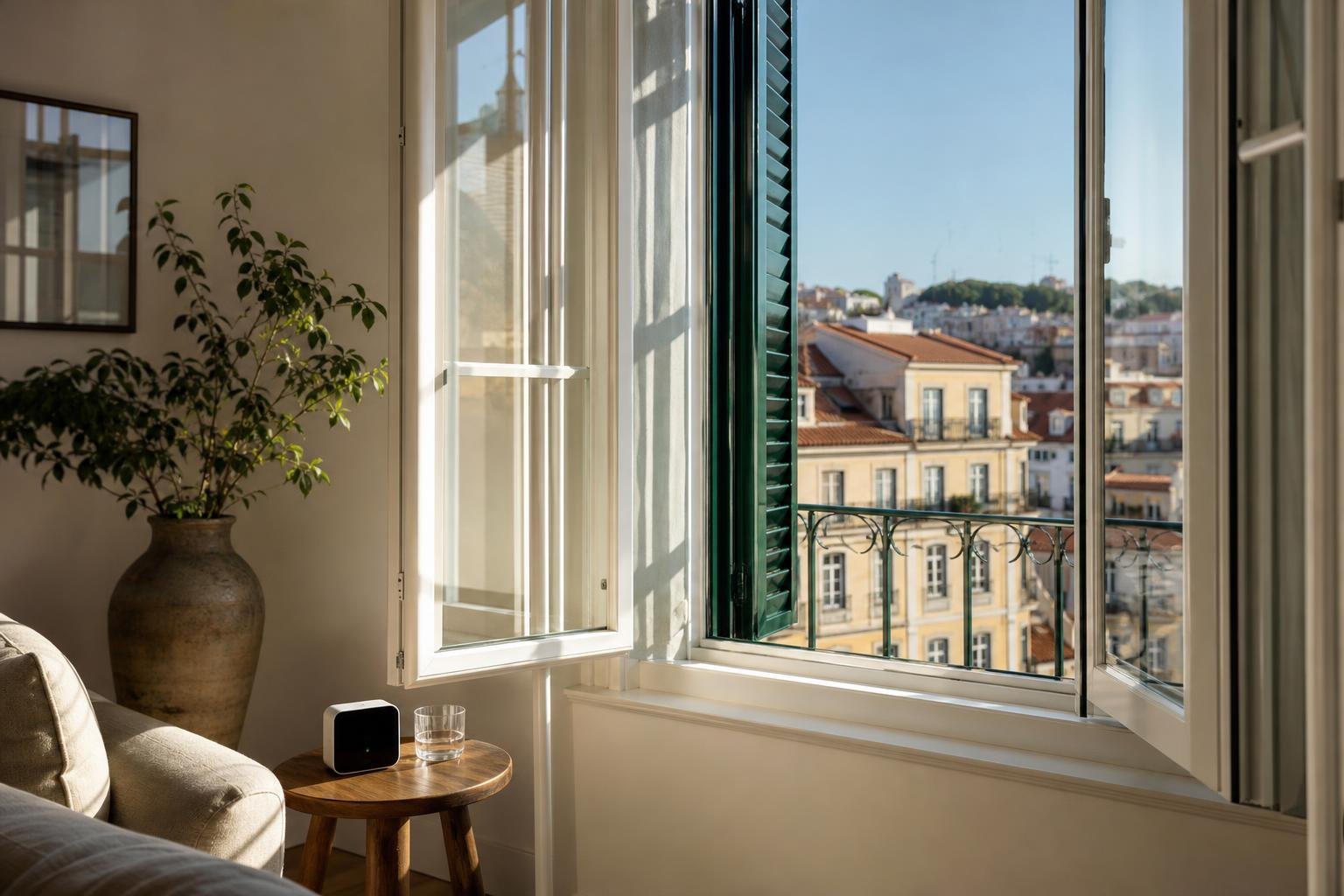
- Openings: shutters out of alignment, wind-opened frames, torn seals, cracked glass or water entering at the sill.
- Access routes: drains blocked by leaves, displaced covers, slippery flooring and failed lighting.
Take a wide photograph first, then a closer one only if it is safe, including a clear location reference. A photograph taken from the pavement, across the street or from an indoor window is usually more useful than one taken beside a hazard. If you notice a ceiling stain, compare its position, timing and progression; that record helps distinguish recent water ingress from recurring condensation. See also how to distinguish roof, plumbing and condensation causes behind ceiling stains.
When to isolate the area and report it immediately
Do not try to tighten a railing, remove a tile, push a leaning tree or clear a high gutter. Keep people away from the affected area and, if you can do so without exposing yourself, stop people passing through with a simple temporary warning. Do not park beneath the area or allow children to play there.
Treat any risk of falling material, damaged electrical cable, exposed broken glass, water near an electrical panel, a leak reaching light fittings, a strong burning smell or visible railing deformation as urgent. Where there is an immediate danger to people, call 112. For safety issues in Lisbon involving a degraded building, wall, slope or embankment, the city provides a safety intervention request service.
In a condominium building, notify the administrator in writing with photographs, the date, the precise location and a brief description. Avoid premature diagnoses such as “it is only one tile”: state what you observed, for example, “two tiles are on the pavement by the entrance and another is displaced at the west-facing eave”.

What belongs to the flat and what needs condominium coordination
A window admitting water may require action by the flat owner, yet the roof, façade, risers, common railings and elements affecting the exterior must be assessed with the building rules and condominium decisions in mind. Do not arrange a repair to a common element from your balcony without confirming responsibility, access and the replacement method.
The Portuguese Civil Code gives the administrator a duty to intervene in urgent situations, followed by the immediate calling of an extraordinary owners’ meeting to ratify that action. Read Article 1436 of the Civil Code before allowing an urgent event to become an argument over quotations or permissions.
A useful condominium message separates three decisions: protect people and property now; diagnose the source; appoint the permanent repair. Combining these stages often creates a temporary fix that conceals the symptom, traps moisture or leaves no future maintenance access.
Common mistakes during the first 24 hours
The most common mistake is climbing onto a roof or resting a ladder against a gutter, shutter or balcony. Another is sweeping leaves into a drain: they compact, conceal the grate and allow water to build up again. Remove only debris that is reachable from firm ground and from a place without a fall risk.
Do not seal cracks, joints or flashings while they are saturated, and do not paint over a stain to make it disappear. Water may still be moving through the wall or slab and can reappear elsewhere. Instead, ventilate the area when outdoor conditions allow, protect furniture and switch off an affected circuit only if you know which one it is and the electrical panel is dry and accessible.
Falls during domestic tasks are avoidable accidents. The Portuguese health authority advises good lighting, clear routes and suitable flooring to prevent falls; after a storm, that starts with recognising that outdoor surfaces and access routes may have changed.
Turn the incident into a maintenance plan
Once the situation is stable, do not simply save the photographs. Make a task list with a responsible person, priority and date: clear accessible drains, have exterior fixings checked by a professional, review seals, test drainage during the next moderate rainfall and confirm whether the work requires a condominium decision.
- Record what failed and where water or noise appeared.
- Have the source checked before ordering finishes.
- Set out maintenance access for gutters, shutters, outdoor equipment and roofs.
- Keep invoices, before-and-after photographs and details of the materials used.
If the issue involves a roof, drainage or façade, plan the repair for dry weather and safe access rather than leaving it until the next weather front. For small domestic tasks, also review how to use step ladders and ladders without creating an avoidable fall.
Key takeaways
- Inspect from ground level and wait until wind, rain and thunderstorms have passed.
- Photograph, locate and report observable facts before ordering repairs.
- Isolate the area where there is a falling-object risk, water near electricity or unstable elements.
- Keep urgent protection, cause diagnosis and permanent repairs as separate steps.
If the inspection points to roof, façade, drainage or interior-finish repairs, Obra Lisboa can help define a clear, coordinated scope of work. Start by gathering photographs, the location and the timeline of the issue before requesting an assessment.
Sources and further reading
- Portuguese weather service explains its meteorological warning levels
- warning-issue criteria
- safety intervention request service
- Article 1436 of the Civil Code
- Portuguese health authority advises good lighting, clear routes and suitable flooring to prevent falls
Editorial image; it does not depict an Obra Lisboa project.

Obra Lisboa