A sofa bed works in a small living room when the room is planned first for everyday movement and only then for the bed when open. Before choosing fabric, arms or mechanism, mark out the footprint when the sofa is closed and when it is made up, check the night-time route, and decide where the table, lamp, bedding and chargers will go. This order prevents a comfortable showroom purchase from becoming a dead end at home.
Contents
- Start with the open bed, not the closed sofa
- Where should the sofa bed go?
- Which mechanism suits the way you will use it?
- The right light changes how the bed is used
- Where to keep bedding without creating a second storage room
- What to check before ordering furniture or altering the room
Start with the open bed, not the closed sofa
The key dimension is the sofa bed when open. Ask the manufacturer or retailer for its full depth when made up, including back, mattress, frame and the clearance needed to open it without scraping a wall. Mark that rectangle on the floor with painter’s tape and test it with the furniture you already own.
Walk the route from the entrance door, balcony and corridor. Sit where you normally sit, go to the kitchen for a glass of water, and picture someone getting up in the night. If you need to move a heavy table, remove rugs or push chairs against a wall every time, the room is not set up for guests; it is only making do.
As an accessibility and comfort reference, Portuguese regulations for some alterations to accessible rooms use circulation widths of at least 0.80 m and turning areas of 1.20 m. This is not an automatic rule for every existing living room, but it is a useful design check where a route must remain genuinely usable. Read the official Diário da República document before changing doors or reworking a route that needs to stay accessible.
| Option | Best suited to | Watch for |
|---|---|---|
| A light coffee table with castors or handles | A room mainly used for relaxing | You still need a fixed place to park it at night |
| Slim side tables | A very compact room or a route beside the sofa | Check that they do not hit the open bed |
| Dining table placed against a wall | A living room with a defined dining area | It must not obstruct a door, window or kitchen access |
Where should the sofa bed go?
In many Lisbon flats, the longest wall looks like the obvious choice, yet it can be the worst one if the open bed blocks the only window or balcony door. Give priority to a wall without a radiator, technical access panel, cupboard door or curtain that must operate every day.
Avoid placing the back against a wall with active damp, especially in ground-floor homes and exposed façades. A bed brings textiles closer to the wall and reduces air movement behind the furniture. If there are stains, a persistent smell or flaking paint, deal with the cause before creating a sleeping area there.
Where the room also has a dining table, a built-in dining bench in a small kitchen can reduce the number of loose chairs and release the area needed to unfold the bed. Do not use that gain to fill the room with another piece of furniture: free floor area is what makes the arrangement livable.
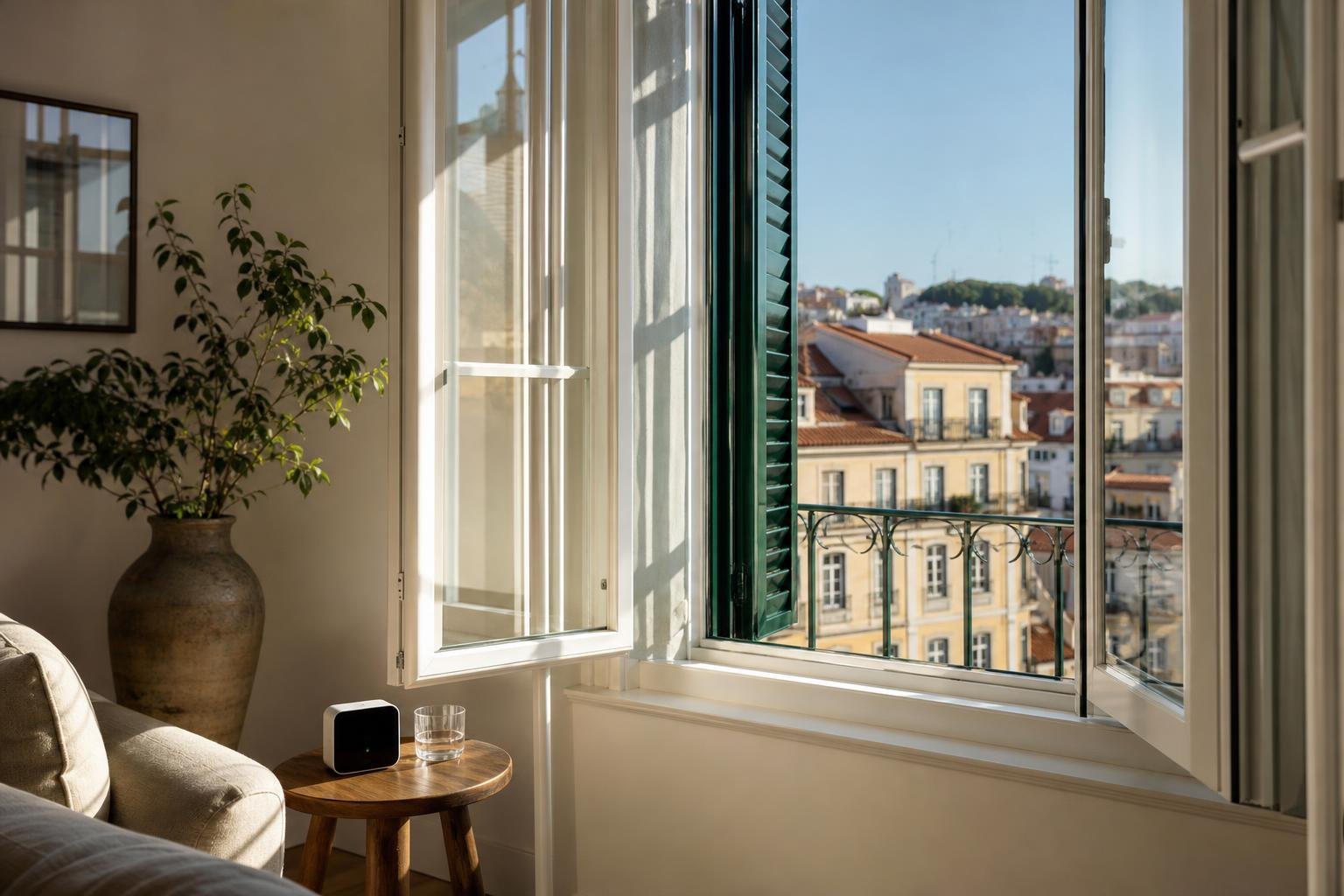
If the room receives strong late-afternoon sun, also check how shutters, blinds or curtains will close with the bed open. An open bed should not prevent control of daylight, normal ventilation or access to the balcony door. Test this with the bed footprint marked on the floor before fixing the sofa in one position.
Which mechanism suits the way you will use it?
There is no universally best mechanism. For occasional guests, a simple opening system may be enough if the mattress and frame are protected and there is room to make the bed without dismantling half the living room. For weekly or more frequent use, open and close the model in the shop and assess three actions: pulling, lifting and putting it away.
- Integrated fold-out bed: useful when you want to leave cushions and sofa storage in place, provided opening is smooth.
- Sliding seat: reduces the number of operations, but may require removing cushions and the coffee table.
- Modular or convertible chaise longue: useful for daily reading and relaxing, but check that joints do not create uncomfortable ridges for sleeping.
Try the mechanism wearing the footwear you usually use at home, and look for exposed metal, play in the structure or finger-trap points. Children, older people and guests unfamiliar with the room benefit from a simple, well-lit route. The DGS advises good lighting, no loose cables on floors and control of loose rugs to reduce falls at home.

The right light changes how the bed is used
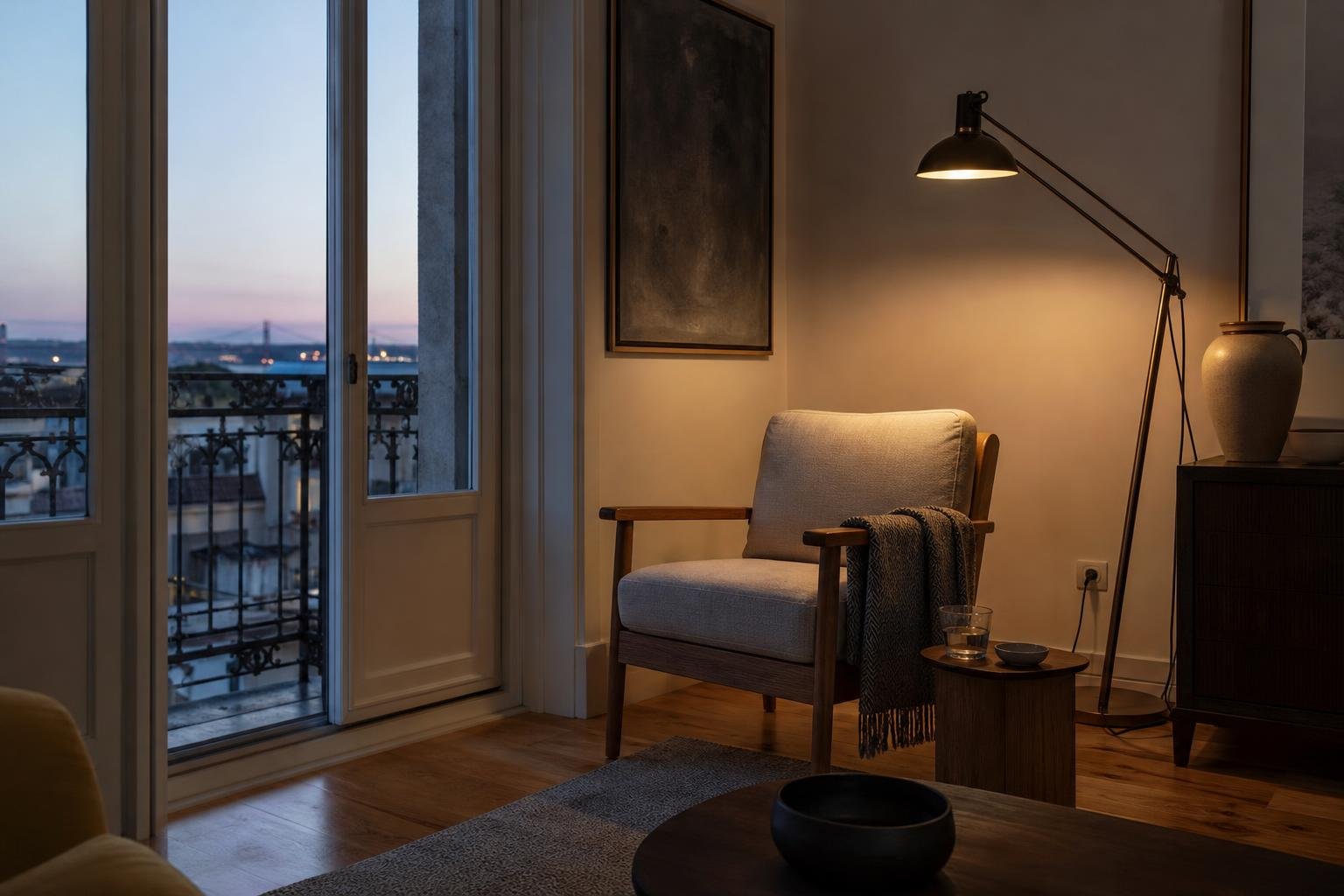
One ceiling fitting rarely serves a living room that also becomes a bedroom. Plan general light for entering and tidying up, reading light that does not glare into the sleeper’s eyes, and a low-level light for crossing the room at night. A wall or floor lamp positioned outside the bed’s opening arc avoids balancing a temporary light on an improvised bedside table.
Do not block daylight with a high backrest or an unnecessary side unit. ADENE includes keeping natural-light openings unobstructed among good building-use practices; in a small room, that becomes a simple decision: let the window do its work during the day and add useful lighting at night. Read the ADENE note on natural lighting.
Provide reachable sockets without cables crossing the route. A socket beside the sofa when closed may sit beneath the open bed; draw both positions before closing a wall or ordering custom joinery.
Where to keep bedding without creating a second storage room
Storage should be close by, though it does not have to be inside the sofa. A throw, two pillows and bedding take up more space than expected when stored tightly without airflow. Choose one location: a ventilated drawer, a tall cupboard with a dedicated shelf, a storage bench that does not affect opening, or a low box that slides under a console.
- Set aside one complete kit per bed: sheet, pillowcase, duvet cover, light blanket and mattress protector.
- Store it washed and fully dry, avoiding excessively compressed bags if the room tends to be humid.
- Keep a small light, a short extension lead only where needed, and somewhere to put a phone and glasses.
Do not hide bedding beside a cold wall or inside a cabinet next to a source of condensation. If the room remains closed for days, air it before guests arrive. A home CO₂ monitor can help show when fresh air needs attention, instead of turning ventilation into guesswork.
What to check before ordering furniture or altering the room
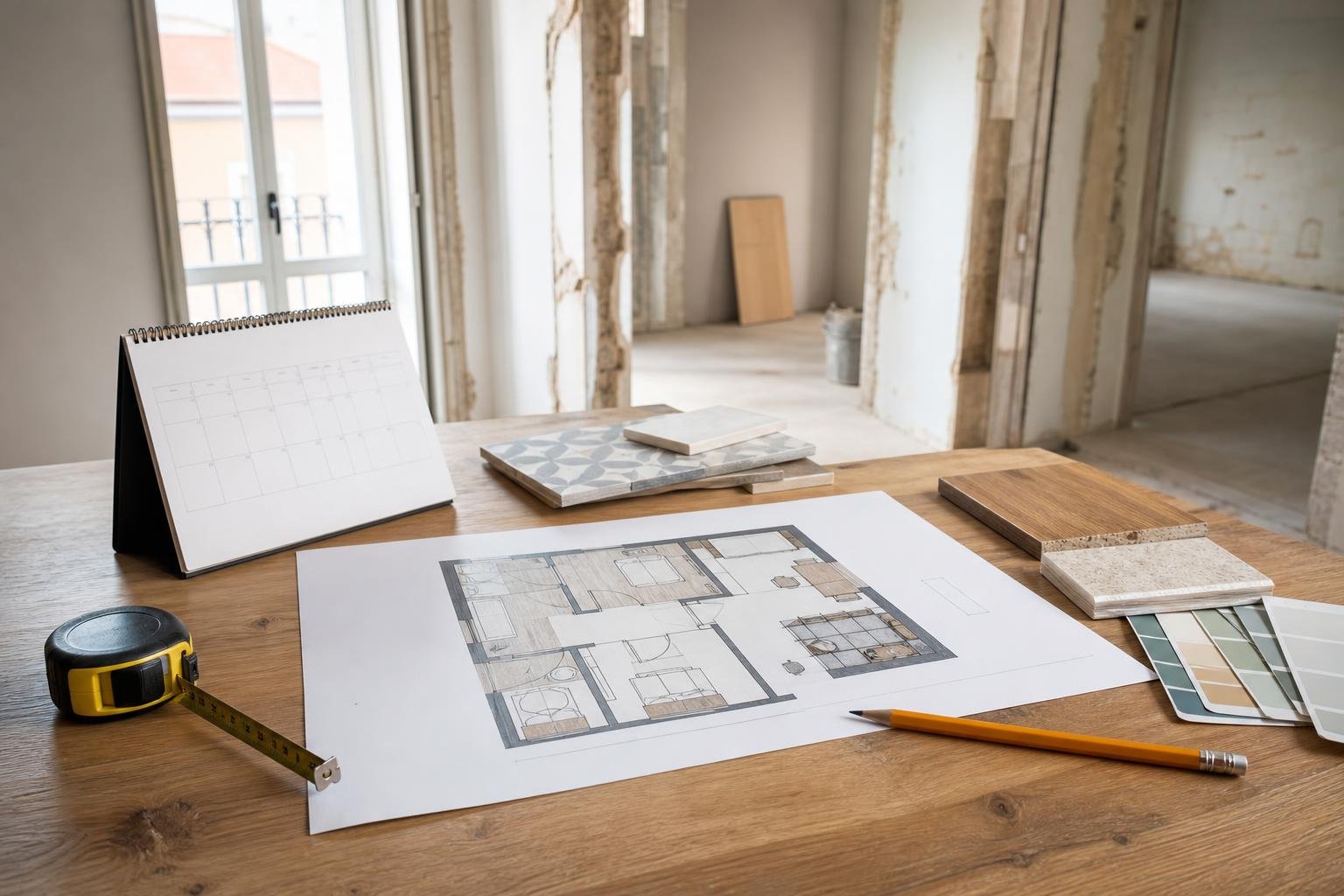
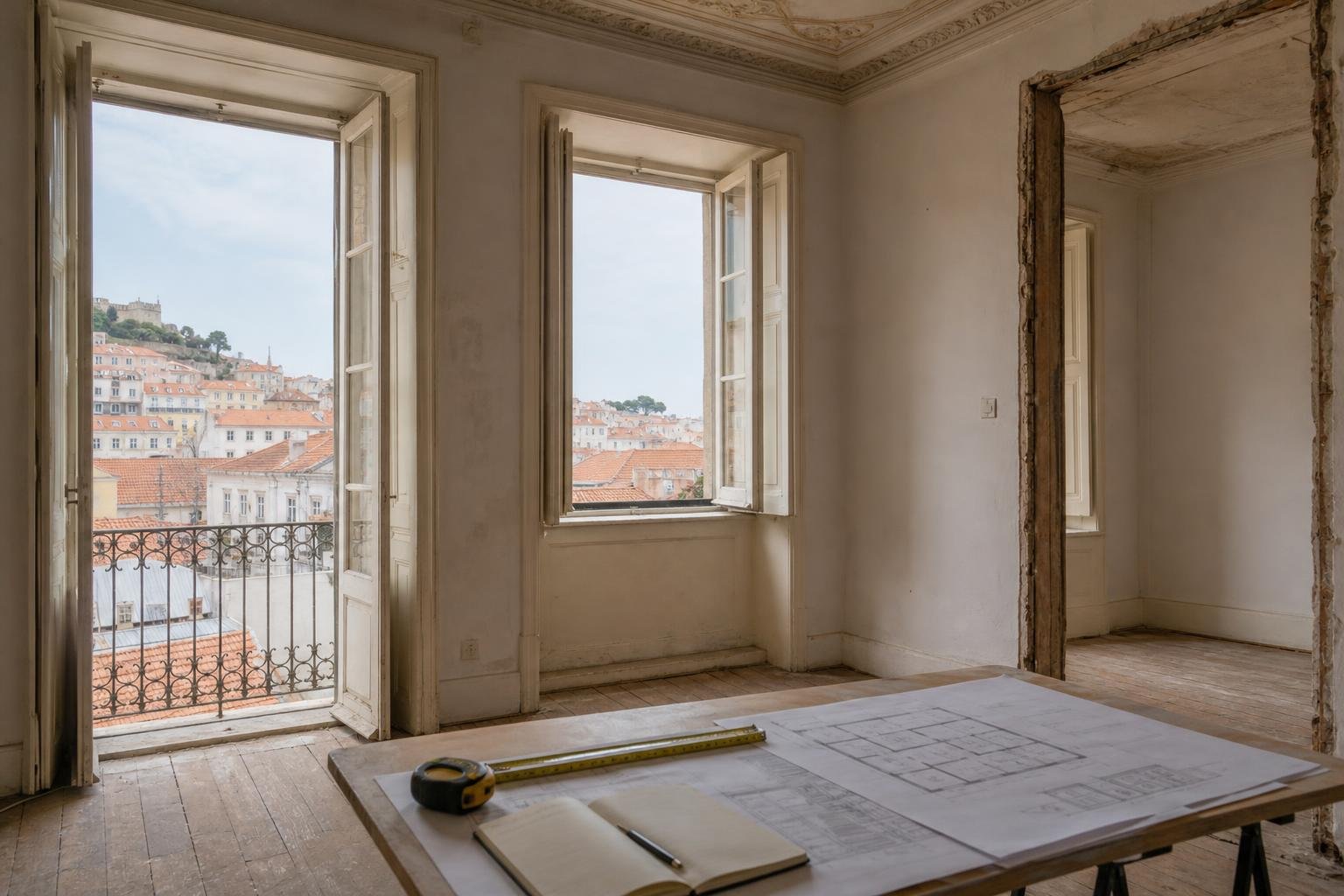
Make a simple scaled plan or use tape on the floor, but do not skip the final check. Photograph the room with the bed marked out, note the model, socket positions and opening dimensions. If you are moving sockets, adding wall lighting, building a cupboard or changing a partition, include these decisions in the renovation plan before work begins.
In Lisbon, alteration works may require prior planning control depending on the intervention, the building and any heritage constraints. The council advises checking the property file and applicable planning instruments before submitting an application; read its page on building works and licensing if your plan goes beyond loose furniture and simple finishes.
The most expensive mistake is to treat the sofa bed as a standalone purchase. Set it within the window position, night-time route, lighting, storage and electrical layout. The room then remains a living room on ordinary days and becomes a bedroom without a complicated operation.
Key takeaways
- Mark out the open bed on the floor before buying a sofa bed.
- Keep the route to doors, windows, balcony and bathroom clear.
- Plan reading light, a socket and bedside support for both sofa positions.
- Keep bedding close, dry and away from walls showing damp.
If your living room needs sockets, lighting, custom storage or small alterations to accommodate a sofa bed, include those decisions in the renovation scope before ordering furniture. Speak to Obra Lisboa about coordinating the interior layout and the required works in one realistic sequence.
Sources and further reading
- DGS advises good lighting, no loose cables on floors and control of loose rugs
- official Diário da República document
- ADENE note on natural lighting
- building works and licensing
Editorial image; it does not depict an Obra Lisboa project.

Obra Lisboa