If you suspect your home has lead plumbing, confirm the material before closing walls or choosing new taps, then plan the replacement of the affected run. Mains water may reach a building in good condition, while the internal installation and its components can still affect the water at the tap. In older Lisbon flats, this check is especially worthwhile when a kitchen or bathroom is already being opened up.
Contents
- Why does lead matter in an older plumbing system?
- What signs justify an inspection?
- How can you confirm the system without turning the whole home into a building site?
- What should you do while replacement is pending?
- How should replacement be included in the renovation scope?
- When should you stop and call a professional?
Why does lead matter in an older plumbing system?
The issue is not how the water looks. Lead can migrate into water through corrosion of pipes, solder or other parts of the installation, and the amount dissolved varies with standing time, wear, temperature, pH and hardness. The DGS guidance on chemical parameters in water highlights these factors and identifies babies and children as particularly susceptible.
This makes renovation a practical opportunity. Rather than concealing an unknown installation behind cabinets, finishes and a suspended ceiling, establish what remains and decide what should be replaced. Give priority to pipework feeding points used for drinking, cooking and food preparation. Do not assume, however, that an old home has lead pipes solely because of its age: partial replacements and isolated repairs are common, and different materials may be present within the same flat.
What signs justify an inspection?
Lead has a dull grey appearance, is relatively soft and may have an uneven surface. Visual inspection is rarely conclusive, though: paint, insulation, corrosion and poor access can all mislead. Yellowish or reddish metal pipework is more likely to be copper; grey pipework may be galvanised steel, lead or another material. Do not scrape, bend or cut a pipe in an attempt to identify it.
Arrange a review sooner if:
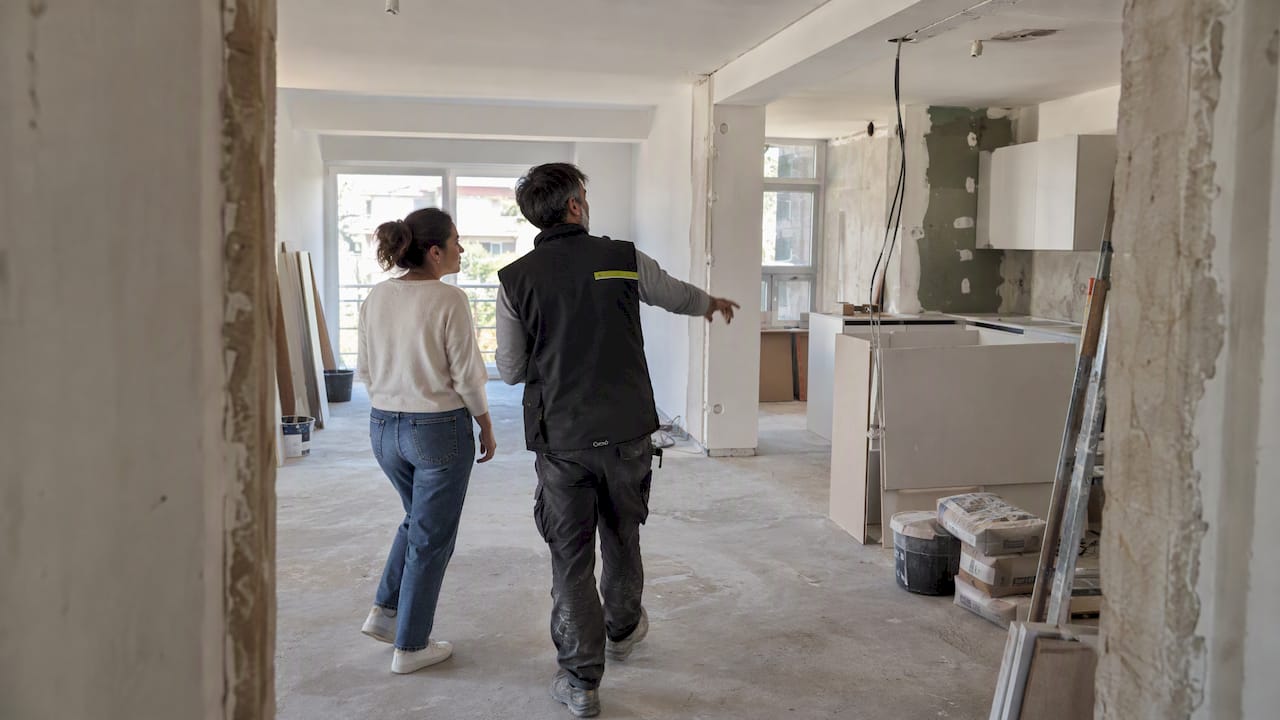
- work will open walls around a kitchen, bathroom or meter;
- young children, pregnancy or vulnerable residents are involved;
- old pipework is visible below the sink, near the meter or in service cupboards;
- low pressure, particles in water or recurring repairs are already occurring;
- there is no record of a full renewal of the internal water system.
Smell, taste and colour are not tests for lead. The DGS housing and health manual notes that old plumbing can be a domestic source of exposure without being detectable by the senses.
How can you confirm the system without turning the whole home into a building site?
Start with a simple map of the water system. Photograph the meter, isolation valves, visible pipes inside cupboards and the points where risers enter the flat. Mark what is confirmed, what seems to have been replaced and what remains concealed. In an apartment building, distinguish the installation inside the flat from common parts: renewing your own flat may not deal with an older section before the meter or within a shared riser.
- Ask a qualified plumber to identify accessible materials and connections between different materials.
- If there is a meaningful doubt, agree the water sampling method and collection point with a competent laboratory.
- Keep photographs, analytical results and the intervention drawing in the renovation file.
- Set the new route before ordering kitchen units, wall-mounted furniture or finishes.
A test result describes the sampled water; it does not replace a survey of the network. Likewise, modern pipe close to a tap does not prove that the full route back to the meter has been renewed.

What should you do while replacement is pending?
Do not treat a suspicion as certainty, yet do not postpone a clear decision when renovation is already planned. Use cold water for drinking and cooking, since temperature affects metal dissolution; run cold water after long periods without use, especially before the first use of the day; and clean tap aerators regularly, as particles can collect there. Keeping cold water in a clean container in the fridge can also reduce repeated use of the tap for drinking.
Boiling water does not remove dissolved metals. Nor should a filter be bought as an automatic answer: first confirm the problem, check that the product is designed for the contaminant concerned and follow its maintenance requirements. The DGS page on water intended for human consumption sets out the quality-control context; within a home, the condition of materials after the delivery point also matters.
If the home has been closed for a long time, stagnant water needs attention as well. The DGS guidance on Legionnaires’ disease identifies plumbing with low or no flow as a condition to consider in water-system maintenance.
How should replacement be included in the renovation scope?
The most expensive mistake is replacing only the pipe exposed after one wall is opened. Define the scope by complete routes and by use: kitchen supply, bathroom supply, water heater, appliances, and both cold- and hot-water branches. Provide accessible isolation valves, room for maintenance and a photographic record before chases are closed.
Ask for the quotation to separate clearly:
- safe removal or abandonment of old sections;
- the new route, materials and proposed pipe sizes;
- valves, fittings, hot-water insulation and inspection access;
- testing, wall reinstatement and finishes;
- the boundary between work inside the flat and any condominium work.
If the project also alters concealed services, coordinate this decision with planning a suspended ceiling. That reduces improvised crossings, inaccessible connections and future repairs that damage recent finishes.
When should you stop and call a professional?
Stop DIY work if you find old pipework whose purpose or material you cannot confirm, if a leak is close to electrical wiring, if a connection is heavily corroded, or if the work would affect risers, the meter or common parts. Never heat, cut or attempt to unsolder unknown metals inside an enclosed cupboard.
After the work, test every valve, check for leaks while outlets are in use and request photographs of the routes before closure. Keep the valve locations somewhere easy to find and consider simple protection against minor incidents: flood sensors under the sink and beside the washing machine can flag water where a slow leak would otherwise remain hidden. A renewed system is more useful when it remains understandable and accessible to the person who will maintain it later.
Key takeaways
- Do not identify lead only by pipe colour or building age; obtain technical confirmation where doubt remains.
- Map the installation before demolition and separate private branches from common risers.
- Include accessible valves, photographs and leak testing in the renovation scope.
- Until a decision is made, use cold water for consumption and run it after long periods of non-use.
If you are renovating a kitchen or bathroom, ask Obra Lisboa to include a survey of accessible pipework, a replacement route and future maintenance access in the renovation plan.
Sources and further reading
- DGS guidance on chemical parameters in water
- DGS housing and health manual
- DGS page on water intended for human consumption
- DGS guidance on Legionnaires’ disease
Editorial image; it does not depict an Obra Lisboa project.

Obra Lisboa