In 2026, the most reliable way to protect a Lisbon renovation is to settle the decisions that consume site time early and to order critical materials before the relevant work stage begins. In July, Portugal’s new-housing construction cost index rose 6.8% year on year; labour costs rose 7.3%, ahead of the 6.3% increase in materials. These figures are not a price list for a renovation, yet they explain why a vague proposal, delayed decisions and unresolved selections quickly make a quote less dependable. Read the INE construction-cost release.
Contents
- What has changed in the 2026 construction market?
- What should be settled before you request quotes?
- What should a fixed-price quote actually do?
- Where is a contingency genuinely worth keeping?
- How can you reduce delays without buying everything too early?
- What should you do before signing?
What has changed in the 2026 construction market?
The market is not defined only by the price of tile adhesive or ceramic finishes. A renovation relies on crews arriving when agreed, deliveries matching the work sequence and decisions being made before walls are opened. When labour rises faster than materials, redoing a work stage, keeping trades waiting or repeatedly stopping work to settle a detail has a greater effect on the final cost.
There are also signs of lower activity in rehabilitation licensing. In the second quarter of 2026, licensed rehabilitation works in Portugal fell 11.9% compared with the same quarter of 2025. That does not mean a capable Lisbon team will automatically be available at short notice or offer a discount. It does mean you should request genuinely comparable proposals rather than assume that a statistical slowdown will improve every commercial condition. See INE’s construction and housing publication schedule.
For a homeowner, the practical consequence is straightforward: treat programme, specification and site logistics as part of the price. A quote becomes comparable only when it explains what will be done, which materials are involved, in what order the work will happen and how changes will be handled.
What should be settled before you request quotes?
You do not need to select every cabinet handle before approaching a contractor. You do need to remove uncertainty that changes demolition, technical installations, quantities and working time. Kitchens, bathrooms, windows, continuous flooring and electrical alterations should be defined enough to price before appointment.
- Layout and interventions: walls to remove or retain, doors to move, areas left untouched and access through the building.
- Technical services: locations of appliances, water and waste points, sockets, lighting, data connections and climate-control equipment.
- Finishes: reference, size, layout and supply boundaries for finishes, sanitaryware, taps, joinery and paint.
- Site conditions: lift use, protection of common areas, delivery space, storage, working hours and any need to occupy public space.
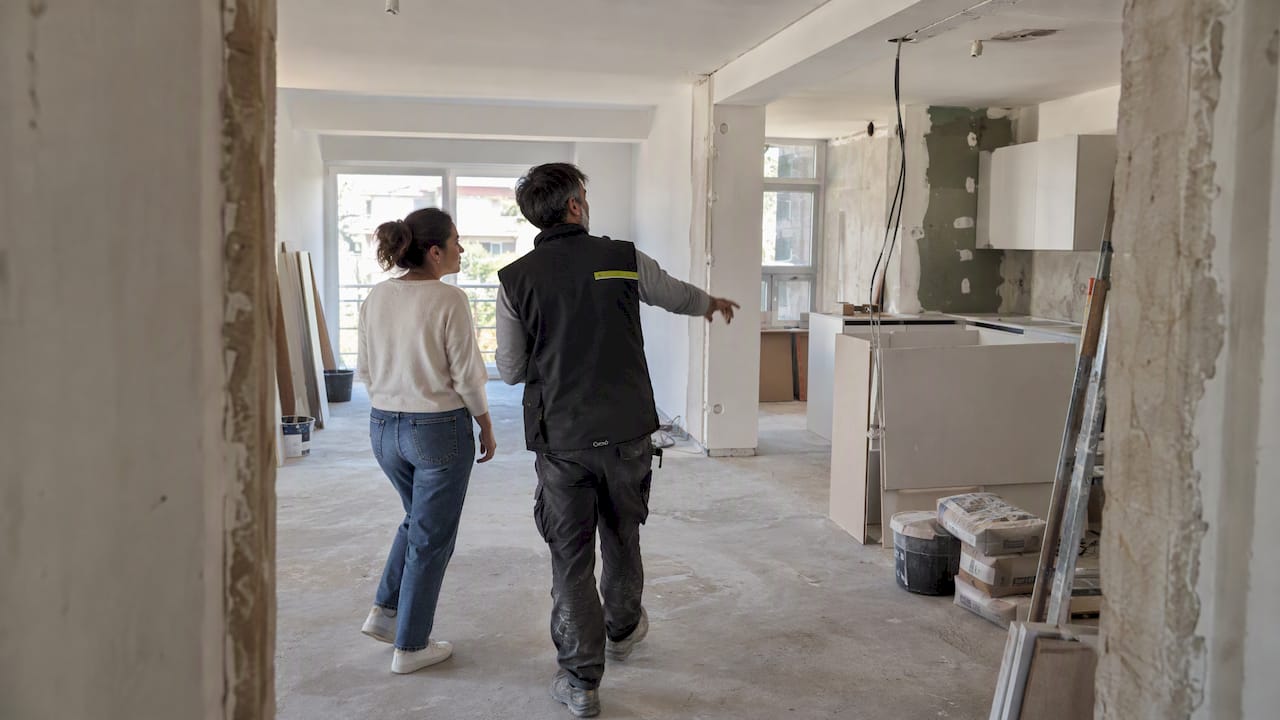
A phrase such as “complete bathroom” is not enough to compare quotes. It may include or exclude waterproofing, niches, waste removal, wall preparation, vanity unit, shower screen, accessories and final connections. Before accepting a lump sum, ask for a work schedule and exclusions list. A renovation kick-off meeting becomes far more useful when these decisions have already been recorded.
| Before appointment | Before walls or floors are closed | Before final installation |
|---|---|---|
| Layout, demolition and fixed equipment | Circuits, pipework, water points and service boxes | Taps, light fittings, handles and accessories |
| Long-lead materials | Heights, trims, layouts and access panels | Colours, sealants, adjustments and snag lists |
| Access, protection and waste removal | Approval of installed samples | Functional checks and handover |
What should a fixed-price quote actually do?
A fixed price is not a standalone number; it is a commitment to an identified scope. It should state included work, quantities or measurement criteria where relevant, materials supplied by the contractor, materials supplied by the client, expected programme, payment schedule and the procedure for additional work.
Two recurring mistakes deserve attention. The first is accepting provisional sums without knowing which decision will turn them into a final amount. The second is approving changes in a call or message without confirming cost, programme impact and who is responsible for ordering. Even a minor change can require a trade to stop, completed work to be removed or a specific part to be awaited.
It is reasonable for a proposal to have an expiry date, particularly where made-to-order materials or incomplete measurements are involved. The date should not be used as pressure: it should reflect the period during which the contractor can hold a crew, supplier terms and work sequence. Where subcontractors are involved, identify who coordinates each trade and who can approve site decisions. Read more in Subcontractors in a Renovation: Who Is Responsible for Each Task?.

Where is a contingency genuinely worth keeping?
Keep contingency for physical unknowns, not for postponed choices. In older Lisbon apartments, opening a wall can reveal stacks that are not where drawings suggest, deteriorated substrate, uneven floors or old installations that require more extensive replacement. The right response is not to invent a universal percentage. Instead, separate confirmed work from items that depend on investigation, opening-up works or a technical decision.
Ask for a simple rule for every risk: how it will be identified, who validates the solution, how it will be priced and whether it affects the programme. A local plaster repair, for example, may be measured after a finish is removed. Full replacement of a waste stack should not be concealed inside a generic “unforeseen works” allowance.
Site logistics also deserves an allowance. In a building with no loading area, delivering stone, windows or furniture may require scheduling, protection and additional manual handling. If the project needs a skip, scaffold or reserved street space, check the municipal procedure before committing to dates. Lisbon provides information and a calculator for urban-planning charges and public-space occupation. Check Lisbon’s guidance on urban-planning charges and reductions.
How can you reduce delays without buying everything too early?
Bringing purchasing forward does not mean filling your home with materials six months in advance. It means creating a short list of items that will stop the project if they do not arrive: made-to-measure windows, non-standard shower trays, finishes with an agreed layout, integrated appliances, doors, bespoke joinery and technical equipment.
- Link every order to the work stage that receives it.
- Confirm final dimensions before ordering bespoke items.
- Decide who receives, checks and stores each delivery.
- Record reference, finish, quantity, stated lead time and approved alternative.
- Do not close walls until technical equipment, access requirements and connection points are confirmed.
This discipline prevents chains of change. Replacing a tap may be simple; changing a shower tray after waterproofing, or altering joinery after services are closed, rarely is. Rather than asking the team to “keep moving”, use confirmation points: services before chases are closed, waterproofing before tiling, and final measurements before joinery is ordered.
Before appointment, check the contractor’s qualification in IMPIC’s public register and keep the search with the project records. The portal allows searches for licences, certificates, registrations and companies with recently cancelled titles. Access IMPIC’s public search service. For work involving several trades, that check should sit alongside the contract, insurance and identification of the person responsible on site.
What should you do before signing?
Read the quote one last time beside the plan, material references and exclusions list. Mark every item that still depends on an open choice. Then classify it: a decision needed before work starts, a decision needed before walls are closed, or a decision that can wait until final installation.
Ask the document to answer five questions without ambiguity: what is included, what is excluded, who supplies each item, how changes are approved and what condition can affect the programme. If the answer is not written down, conflict remains possible even where the total price looks attractive.
In a well-prepared quote, financial contingency protects real site discoveries rather than making up for missing definition. That distinction helps keep a renovation predictable while labour costs continue to put pressure on the market.
Key takeaways
- Settle decisions early when they alter services, demolition, quantities or made-to-measure orders.
- Compare quotes by scope, exclusions, sequencing and change rules, rather than the total alone.
- Keep contingency for identified site risks and give each risk a written validation route.
- Check the contractor’s qualification through IMPIC before appointment.
Planning to request quotations for a Lisbon renovation? Obra Lisboa can help turn your plan, priority choices and building conditions into a clearer work scope before appointment. A practical next step is to request an initial planning conversation and bring the plan, photographs and the decisions you have already made.
Sources and further reading
- Read the INE construction-cost release
- See INE’s construction and housing publication schedule
- Access IMPIC’s public search service
- Check Lisbon’s guidance on urban-planning charges and reductions
Editorial image; it does not depict an Obra Lisboa project.

Obra Lisboa