
When buying a home to renovate in Lisbon, treat the purchase price, bank valuation and renovation budget as three separate figures. The gap between them can mean a larger deposit, a smaller scope of work or delayed essential improvements. INE data released in October 2026 confirmed high Greater Lisbon prices, rising bank valuations and borrowing costs that still weigh on monthly payments. Before making an offer, establish what money will actually remain available after completion.
Contents
- What did the housing data released in October 2026 show?
- Why does a bank valuation not automatically fund the renovation?
- What money should remain outside the purchase price?
- How should you request quotes without hiding the financial risk?
- Which checks matter before you sign the promissory contract?
- How can you turn market data into a safer offer?
What did the housing data released in October 2026 show?
There are three useful dates for anyone looking at a flat that needs work. On 21 October 2026, INE reported that the implicit interest rate across housing-loan contracts had risen to 3.194% in September; for contracts agreed in the preceding three months, the rate was 2.959%. On 23 October, second-quarter transaction data showed median prices of €5,299/m² in Lisbon, €5,200/m² in Cascais and €4,704/m² in Oeiras. On 27 October, the national median bank valuation reached €2,278/m² in September. These releases are available in the INE statistical highlights.
These figures should not be compared as though they measured the same thing. A transaction price reflects completed deals; a valuation supports a lending decision; a quote prices a specific set of works. They do, however, give a practical warning: buying in an expensive market and expecting a generous valuation to fund the renovation as well is a weak plan. Ask your lender for an illustration based on the actual property, rather than on an advertised percentage.
| Figure | What it represents | Practical decision |
|---|---|---|
| Purchase price | The amount agreed by buyer and seller | Sets the deposit, taxes and borrowing requirement |
| Bank valuation | The estimate used by the lender in its credit assessment | May cap lending even where the purchase price is higher |
| Renovation quote | The cost of the defined technical scope | Requires its own allowance for unknowns, choices and additional works |
Why does a bank valuation not automatically fund the renovation?
A lender assesses the mortgage security and applies its own lending rules. The works may increase the home’s value later, but that does not mean the initial mortgage covers demolition, services, windows, kitchen and finishes. If the valuation falls below the agreed price, the difference usually increases the deposit requirement; if it is close to the price, the renovation still needs savings, separate finance or a facility specifically approved by the lender.
Do not base an offer on an informal claim that the property will be worth more “once the works are done”. First separate four lines: purchase, taxes and completion costs, essential intervention and contingency. Then confirm which documents your lender accepts for any works-related funding. A flat with leaks, ageing services or unclear internal alterations may need decisions before any visible improvement is made. For the acquisition side, also read how to test the margin before making an offer.
What money should remain outside the purchase price?
Contingency is not a decorative percentage added at the end. It is money held back before signing for probable events in a renovation: degraded pipework found after opening a wall, substrate repairs before flooring is laid, a delayed delivery that changes the sequence, or a technical requirement absent from the sales listing.
Build a simple sheet using maximum figures rather than optimistic estimates:
- Set the total amount you can use without relying on a future sale or finance that has not yet been approved.
- Deduct the purchase price, taxes, completion costs, valuation, lender charges and moving costs.
- Set aside the works required to make the home safe and usable.
- Only then allocate the remaining amount to comfort, appearance and equipment that can wait.
This order helps with decisions such as replacing ageing plumbing now or postponing bespoke joinery. If there is any possibility of lead pipework, confirm the material before finalising a finishes budget; see the warning signs and boundaries in our guide to old lead pipes before renovation.

How should you request quotes without hiding the financial risk?
Ask for comparable proposals and give every contractor the same information: plans, photographs, a work list, intended brands or quality levels, building-access conditions and a realistic proposed start date. A vague brief creates totals that look comparable while concealing different exclusions.
Ask each quote to identify:
- included and excluded work;
- demolition, waste removal and protection for shared areas;
- materials supplied by the contractor and materials purchased by the owner;
- lead times for critical items;
- how changes are approved and their effect on timing;
- a payment plan linked to confirmed work.
Availability also deserves care. The IMPIC reported a strong increase in applications for construction qualifications after July 2026, with response times above those seen before the end of June. That does not prove that every contractor is fully booked, but it is a reason to confirm the team, qualification and start date before arranging finance and a move.
Before appointing a contractor, also consult the IMPIC construction-activity frequently asked questions and confirm that the company has the appropriate framework for the work you intend to commission.
Which checks matter before you sign the promissory contract?
The cheapest point to change your plan is before the promissory sale agreement. Visit the property with a short list and record answers rather than impressions.
- Are there stains, damp smells, recent cracks or signs of hurried alterations?
- Do the electrical board, plumbing and vertical stacks support the layout you want?
- Could walls you intend to remove carry loads or conceal services?
- Do the balcony, façade, roof or shared parts require condominium approval?
- Can the lift, stairs and doors receive materials without damage or obstruction?
- Does the intended alteration require a licence, prior communication or technical design?
In Lisbon, the relevant prior-control route depends on the operation itself. The municipal page on building-work licences states that licensing can apply to construction, reconstruction, extension, alteration, conservation and demolition. Do not assume interior work is exempt without checking the particular case.
How can you turn market data into a safer offer?
The October 2026 figures do not tell you what to offer for a flat. They say something more useful: the purchase and the renovation should remain viable with a cautious valuation, interest costs that may weigh on monthly payments and work costs that do not disappear because the property needs intervention.
Make an offer with clear limits. Set a maximum acquisition price, a deadline for receiving documents, a condition for reviewing the valuation and a list of defects that change your decision. If the seller cannot provide essential information, do not make up for that absence with an artificially low provisional quote.
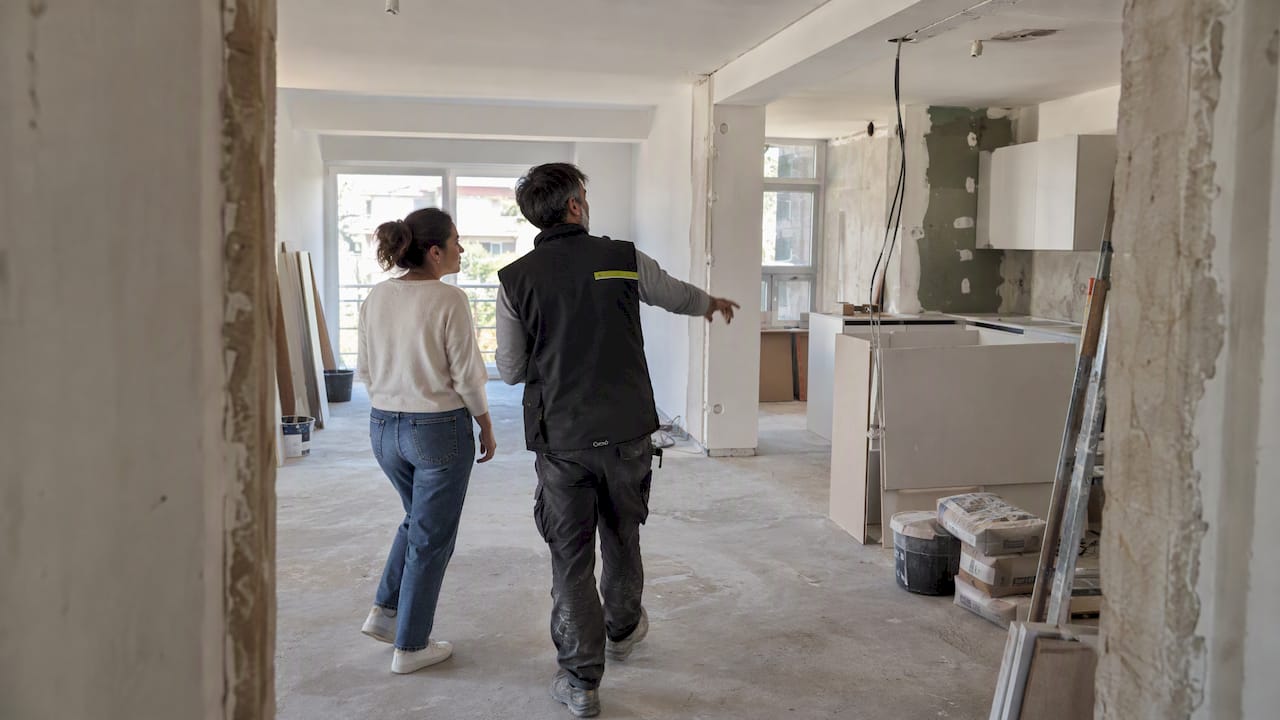
Once you proceed, keep the scope legible. A well-prepared first meeting prevents kitchen, electrical or finish choices becoming emergencies halfway through the project. Use this renovation kick-off checklist to establish responsibilities, outstanding decisions and critical materials before the first demolition work starts.
Key takeaways
- Do not treat a local sale-price figure as a forecast of the bank valuation for your property.
- Separate essential works from improvements that can be postponed.
- Request quotes that state exclusions, materials, access conditions and payments clearly.
- Before the promissory contract, check documents, building constraints and the feasibility of alterations.
If you are considering buying and renovating in Lisbon, gather plans, photographs, available documents and a priority list before requesting a renovation proposal. Obra Lisboa can help structure a renovation with a clearer scope, sequence and set of site decisions.
Sources and further reading
- INE data released in October 2026
- IMPIC reported
- IMPIC construction-activity frequently asked questions
- building-work licences
Editorial image; it does not depict an Obra Lisboa project.

Obra Lisboa