In a hot nursery, the first priority is to stop sunlight before it passes through the glass and to refresh the air only when outdoors is cooler. In Lisbon, that calls for a simple daily routine and carefully planned renovation details: effective solar protection, the ability to darken the room without blocking ventilation, safe airflow and a sleeping area away from the most exposed façade. Portugal’s Directorate-General of Health recommends lowering shutters or blinds during the hottest hours and airing the home at dusk when outdoor temperatures fall.
Contents
- Why does a nursery heat up so quickly?
- What kind of shade works without making the room gloomy?
- When should windows be opened or kept closed?
- How should the room be arranged for a more stable night?
- Which renovation decisions are worth making now?
- What should you do during a period of intense heat?
Why does a nursery heat up so quickly?
Small bedrooms can store heat quickly when it enters through glazing, roller-shutter boxes, the roof or a west-facing wall. A cot beside a window may receive direct radiant heat even when the room feels manageable in the middle of the day. The risk is greater in a top-floor flat, an enclosed balcony incorporated into the home, or a room with little external shade.
In mainland Portugal, heatwaves can happen at any time of year. For climate monitoring, the Portuguese Institute for Sea and Atmosphere defines a heatwave as at least six consecutive days with maximum temperatures more than 5°C above the reference average. At home, there is no need to wait for that label: two or three persistently hot days are enough reason to close solar protection early and review the room routine.
Watch three periods: morning sun, the afternoon peak and the temperature before bedtime. If the room receives direct sun between 3 pm and 7 pm, treat that façade as a design priority. Internal curtains reduce glare, but they receive heat after it has passed through the glass; shutters, exterior blinds, exterior awnings or a properly approved canopy work earlier in the process.
What kind of shade works without making the room gloomy?
The solution should achieve two things at once: reduce solar gains while keeping control of daylight, privacy and cleaning. In an apartment, check whether the change affects the appearance of the façade or common building elements before ordering an exterior installation.
- External shutters or roller shutters: provide strong protection when lowered in the critical hours and can be partly opened for diffuse daylight.
- Adjustable external blinds: can block direct sun while keeping some daylight and outward view, but their box, guides and maintenance access need to be planned.
- Exterior awning: works best where a window or balcony receives high sun for many hours; it does not replace a proper blackout solution for naps.
- Internal blackout curtain: is useful for sleep and privacy, but it should complement external shade rather than be the only defence against overheating.
Avoid fitting films, awnings or new boxes without checking the window frame, maintenance access and condominium rules. A solution that forces the window to stay closed all summer or prevents cleaning soon becomes impractical. If the work includes new windows, also consider what should be planned in a nursery renovation before walls are closed and furniture is ordered.
When should windows be opened or kept closed?
Airing a room does not mean leaving windows open throughout the afternoon. When the street is hotter than the bedroom, warm air enters and increases the thermal load. During the hottest hours, keep the most exposed openings closed and lower the solar protection. Later in the day, compare the feeling by the window with the corridor or the opposite façade: when outside is cooler, open up to refresh the air.
A brief cross-flow between two façades, or between a window and an internal door, can help remove stored warm air. Do this safely: the cot should not sit in the airflow path or against the window; use suitable opening restrictors or child-safety measures, and never treat an insect screen as fall protection.
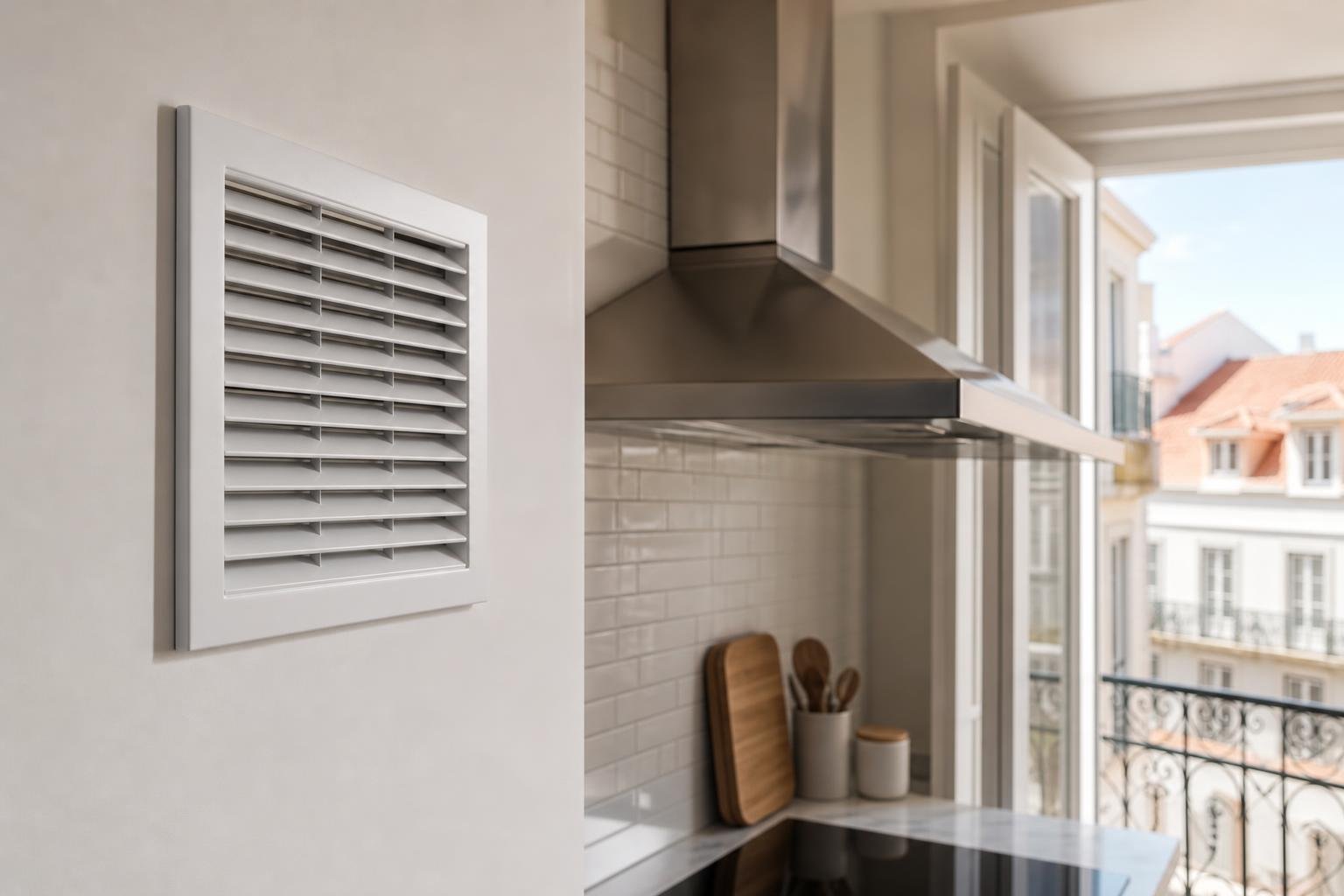
Ventilation remains necessary in cold spells and hot weather alike. The DGS advises airing the home for at least 10 minutes each day, with extra ventilation during and after bathing, cooking, washing and drying clothes indoors. The answer in a nursery is not to seal the room; it is to choose the timing and route of the fresh air.
If the home has several rooms, a CO₂ monitor can help indicate when the room needs fresh air without turning a single reading into a rigid rule.

How should the room be arranged for a more stable night?
Before adding equipment, remove what adds heat or restricts circulation: high-output lamps near the cot, chargers permanently plugged in, thick rugs that hold dust, and tall furniture pressed against an external wall. Leave a gap between the cot and the warmest wall; it prevents a pocket of still air and leaves room for cleaning and checking for condensation.
- Place the cot against an internal or side wall, away from direct sun, radiators, windows and equipment.
- Use light bedding appropriate to the room temperature and follow applicable safe-sleep guidance for the baby.
- Lower solar protection before the façade heats up instead of waiting until the room already feels stuffy.
- At dusk, air the room briefly and safely; then adjust the opening according to outdoor temperature, noise and window safety.
- If using a fan, aim it to move air around the room, never directly at the baby, and keep its cable, base and controls out of reach.
A fan can improve thermal comfort for adults, but it does not lower the temperature of building materials or the air by itself. It supports shade and night ventilation; it is not a reason to leave the room exposed to the sun.
Which renovation decisions are worth making now?
A well-planned intervention avoids temporary fixes every summer. When the bedroom is for a young child, thermal comfort and safety should be treated as connected choices: cot position, sockets, lighting, windows, solar protection and access to the opening need to work together.
- Plan electrical provision in a useful position for a ceiling or wall fan, without extension leads across the floor and without a point above the cot.
- Choose windows with controllable opening and straightforward access for cleaning, repairs and any vent maintenance.
- Address roller-shutter boxes, window edges and façade junctions to reduce unwanted winter draughts without removing the fresh-air renewal the home needs.
- If the room sits below a roof or faces west, assess the façade, roof and shading together before investing only in air conditioning.
- Allow for a blackout curtain that does not cover an air inlet or become reachable from the cot.
Do not install cooling equipment, alter a façade or change electrical circuits without assessing electrical capacity, drainage, noise, fixings and any approvals required. If the room remains excessively hot despite sensible shade and ventilation, or if there is mould, water by the window, damaged shutter boxes or cracking, diagnose the cause before covering or repainting it.
What should you do during a period of intense heat?
On very hot days, simplify. Close shade early, reduce internal heat sources and move demanding activities to another room or cooler hours. The DGS notes that babies, children, older people and people with chronic conditions are more vulnerable to heat. If there are signs of illness, fever, unusual drowsiness, difficulty waking the child or any clinical concern, seek health advice rather than relying only on household measures.
If the home cannot keep one room reasonably habitable, arrange a temporary alternative: spend part of the day in a safe cool place, or use the least exposed room in the home. For future work, note the critical façade, sun hours and points where hot air enters. That information is more useful than selecting materials on appearance alone.
In highly exposed homes, it can also help to revisit the decisions used for a north-facing bedroom: ventilation and moisture control still matter even when the main task is managing heat.
Key takeaways
- Lower shutters, blinds or other external shade before sunlight heats the glass.
- Air the room at dusk or early morning, when outdoors is cooler than the bedroom.
- Keep the cot out of direct sun, draughts and the reach of windows, cables and controls.
- During renovation, treat shade, windows, ventilation and sockets as one coordinated decision.
If you are renovating a bedroom or reviewing windows and solar protection, speak with Obra Lisboa about building summer comfort, ventilation and safety into the scope before key decisions are closed.
Sources and further reading
- Directorate-General of Health recommends lowering shutters or blinds during the hottest hours
- DGS advises airing the home for at least 10 minutes each day
- Portuguese Institute for Sea and Atmosphere defines a heatwave
Editorial image; it does not depict an Obra Lisboa project.

Obra Lisboa