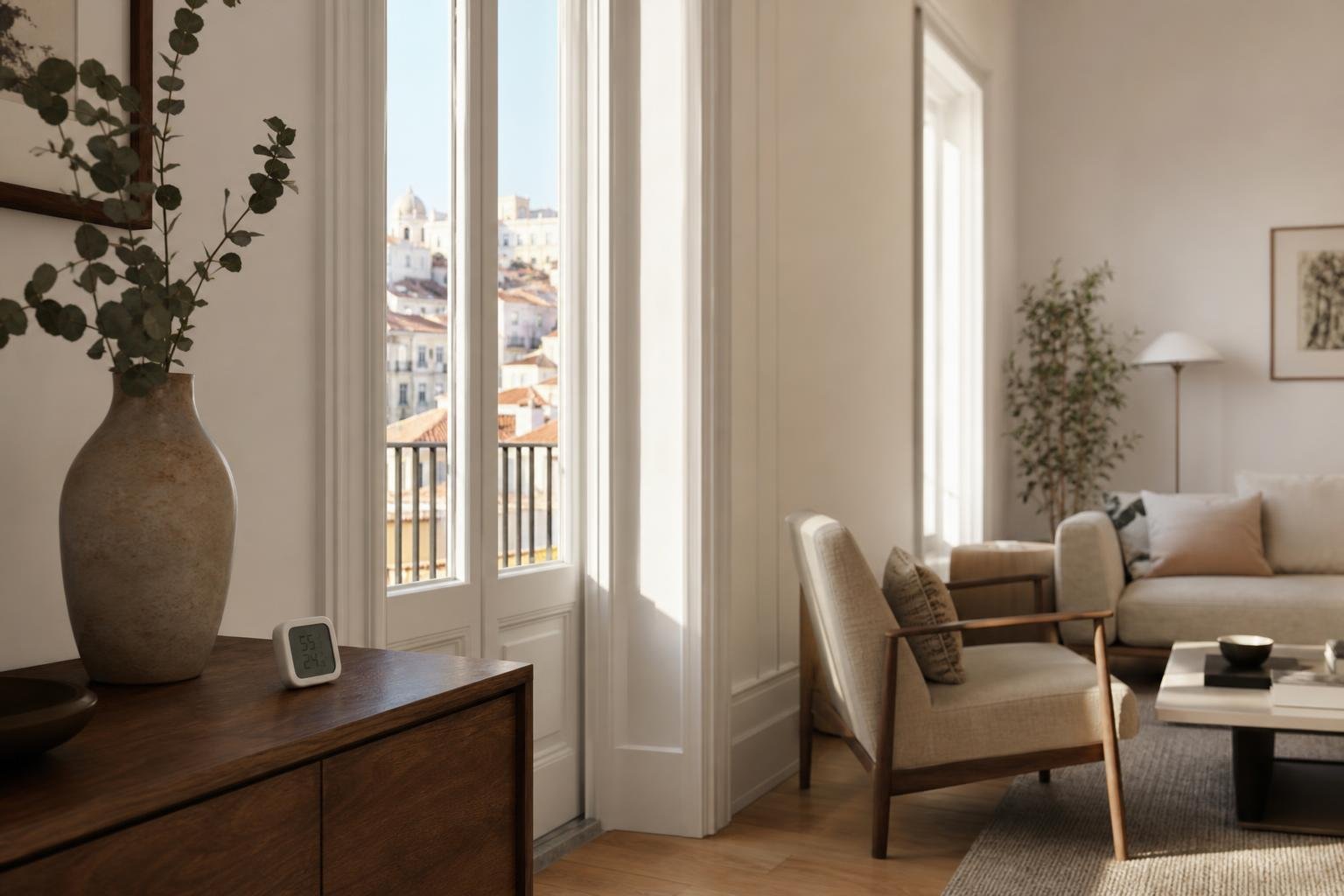
A dark patch behind furniture, persistent droplets on glazing or a stale smell should not automatically lead to buying a dehumidifier. Before choosing equipment or repainting a wall, it is important to understand where the moisture comes from and when it appears. A basic hygrometer does not replace a professional inspection, but it can turn a vague concern into useful observations: which room becomes humid, how long the reading remains high, and whether it changes after cooking, showering, drying clothes or airing the home.
Portugal’s Directorate-General of Health notes that excess humidity can cause condensation on cold surfaces, encouraging mould and affecting occupants’ wellbeing. The DGS guidance on indoor air quality is a useful starting point. The aim is not to chase one perfect number; it is to identify patterns, remove avoidable causes and recognise when a building defect needs investigation.
What a hygrometer measures — and what it cannot diagnose
A hygrometer measures relative humidity: the relationship between water vapour in the air and the maximum amount that air could hold at the same temperature. That means a reading needs to be considered alongside temperature, room use and time of day. The same air can reach saturation more easily as it cools against an external wall, a window or a thermal bridge.
The device cannot, on its own, identify a leak, failed waterproofing or a plumbing fault. It does not measure moisture inside a wall either. Its value lies in directing the right questions: does the reading rise only after a shower? Does it remain high in an empty bedroom? Is there a clear difference between the living room and bathroom? These observations help separate normal water-vapour loads from an issue that needs technical diagnosis.
For outdoor context, the IPMA publishes hourly relative-humidity observations from its weather-station network. Do not compare indoor and outdoor values as if they were equivalent: they react differently. Use the data simply to understand particularly damp, dry or rapidly changing days.
Where to place the device for useful readings
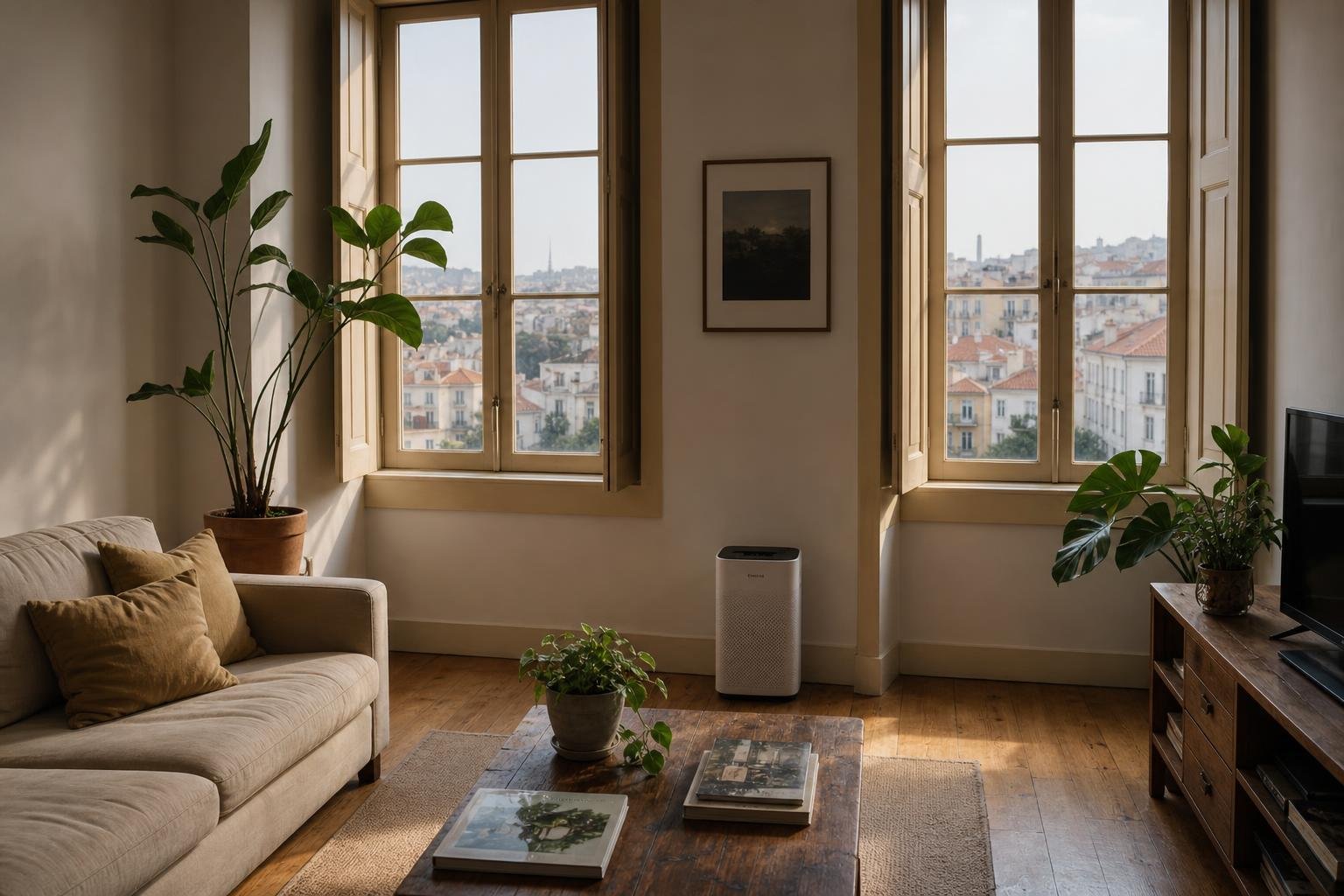
Start in a room where discomfort is noticeable: a bedroom with a stale smell, a living room with condensation on windows, or a bathroom without a window. Position the hygrometer at a mid-level height, away from open windows, radiators, air-conditioning units, the cooker, the shower and direct sunlight. If it is immediately beside a heat or moisture source, it will show a very local condition rather than the room’s general environment.
Avoid placing it inside cupboards, behind curtains or directly against a cold wall. Allow it to stabilise and record the same information each time: date, time, temperature, humidity, room, recent activity and whether windows were open. A simple phone note kept over one or two weeks is much more informative than a single reading.
If condensation is suspected behind furniture, leave several centimetres between the unit and wall and compare the room with a similar one. This does not prove a construction defect, but it can reveal areas with almost no air movement. For a broader preventive approach, see Obra Lisboa’s guide to preventive building maintenance.
Recognising patterns caused by everyday life
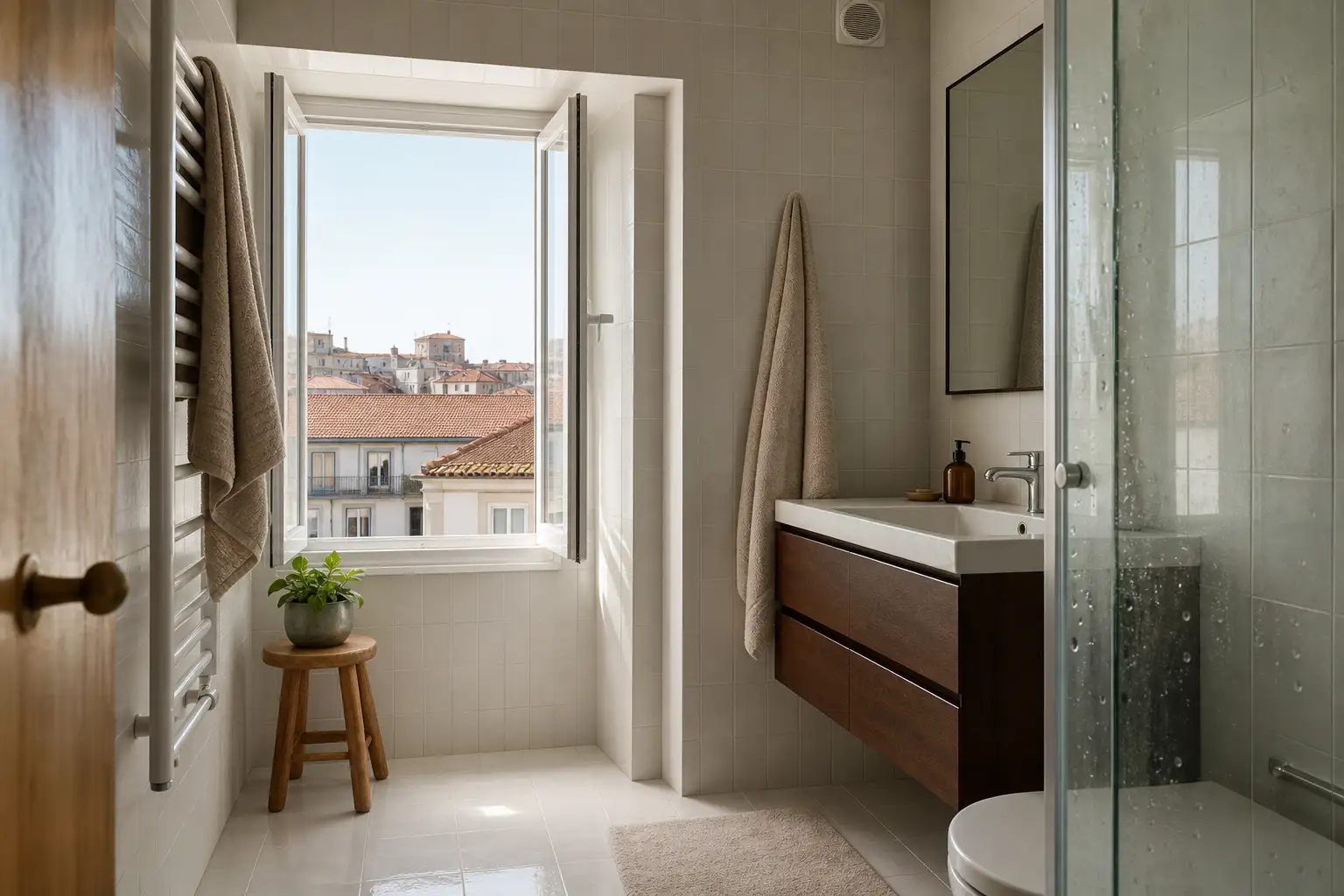
Ordinary activities create water vapour: showers, simmering pans, washing machines, drying laundry indoors and even people sleeping in a room. If humidity rises during these activities and falls after effective airing, the main issue may be air renewal rather than a building defect.
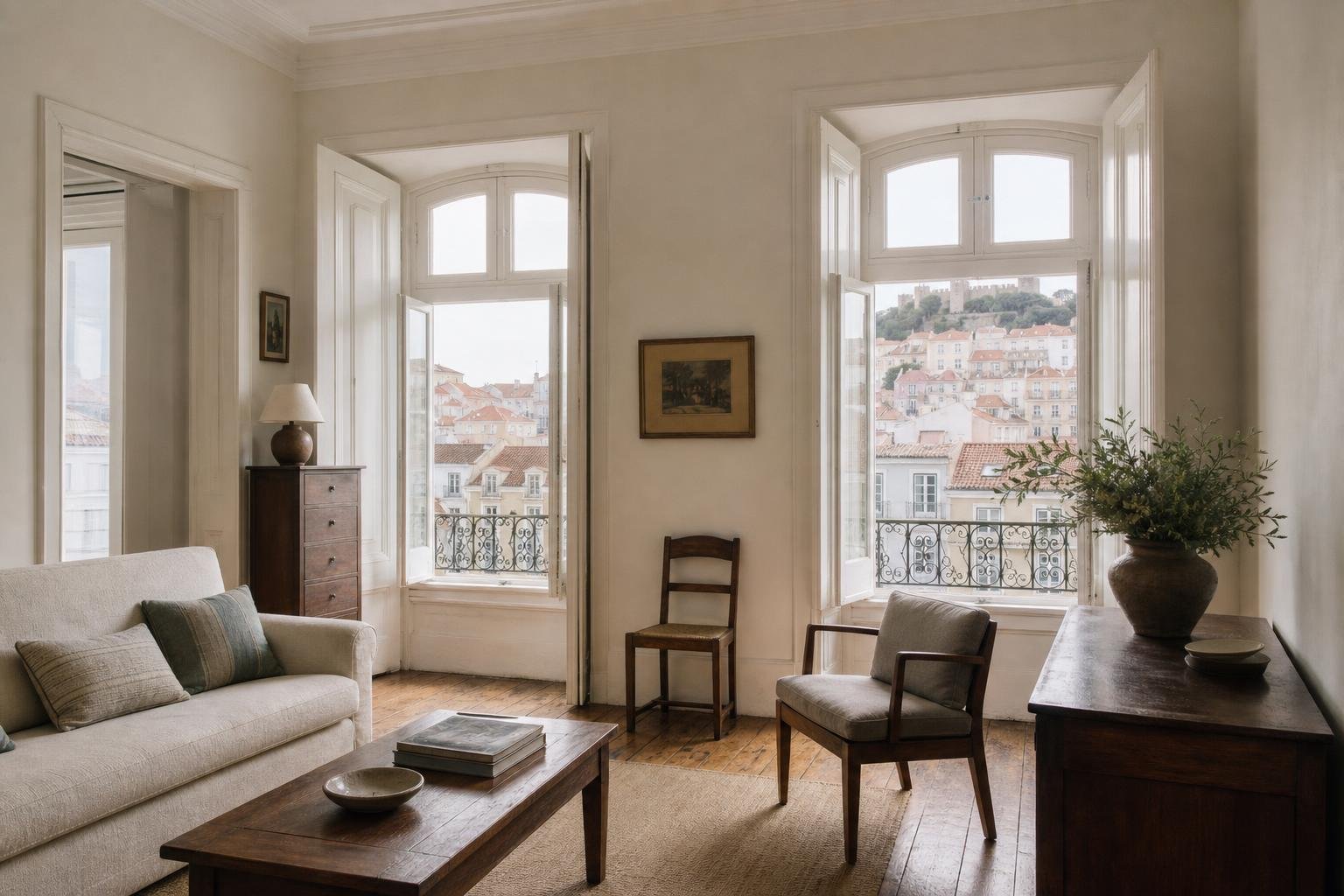
The DGS advises airing the home for at least ten minutes a day, as well as while cooking, cleaning, washing and drying clothes indoors, and during or after bathing. The DGS general indoor-air recommendations also highlight bathrooms as an important moisture source. In practical terms, open a window where possible, use extraction if fitted, keep the bathroom door closed while showering, then let moisture disperse without sending all of it into the rest of the home.
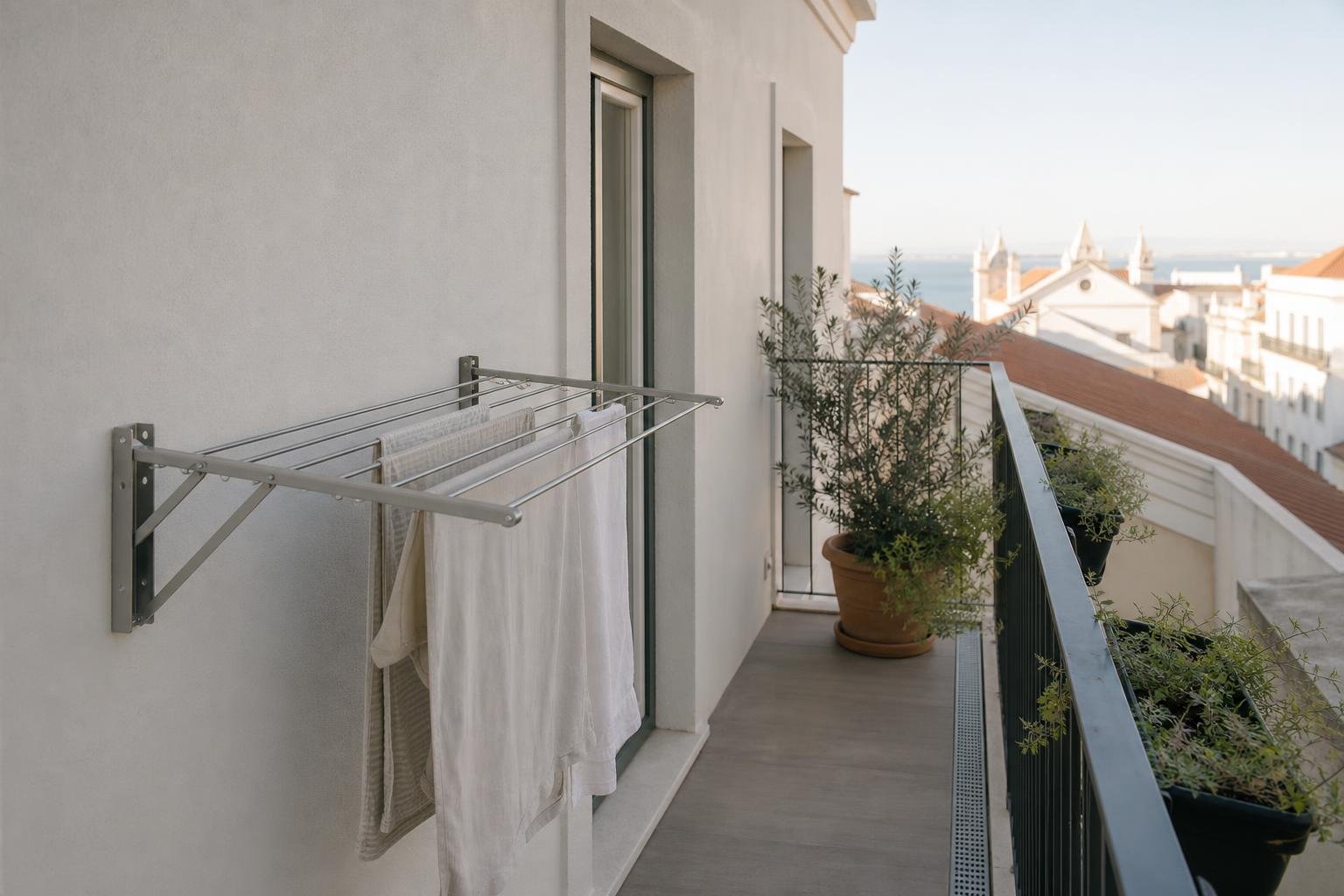
Dry clothes outdoors whenever possible. If that is not an option, reduce the amount dried at once, use a room that can be aired and avoid turning a bedroom into a laundry room. An effective solution should not create a new moisture problem elsewhere in the flat.
When to suspect a leak, water ingress or a building defect
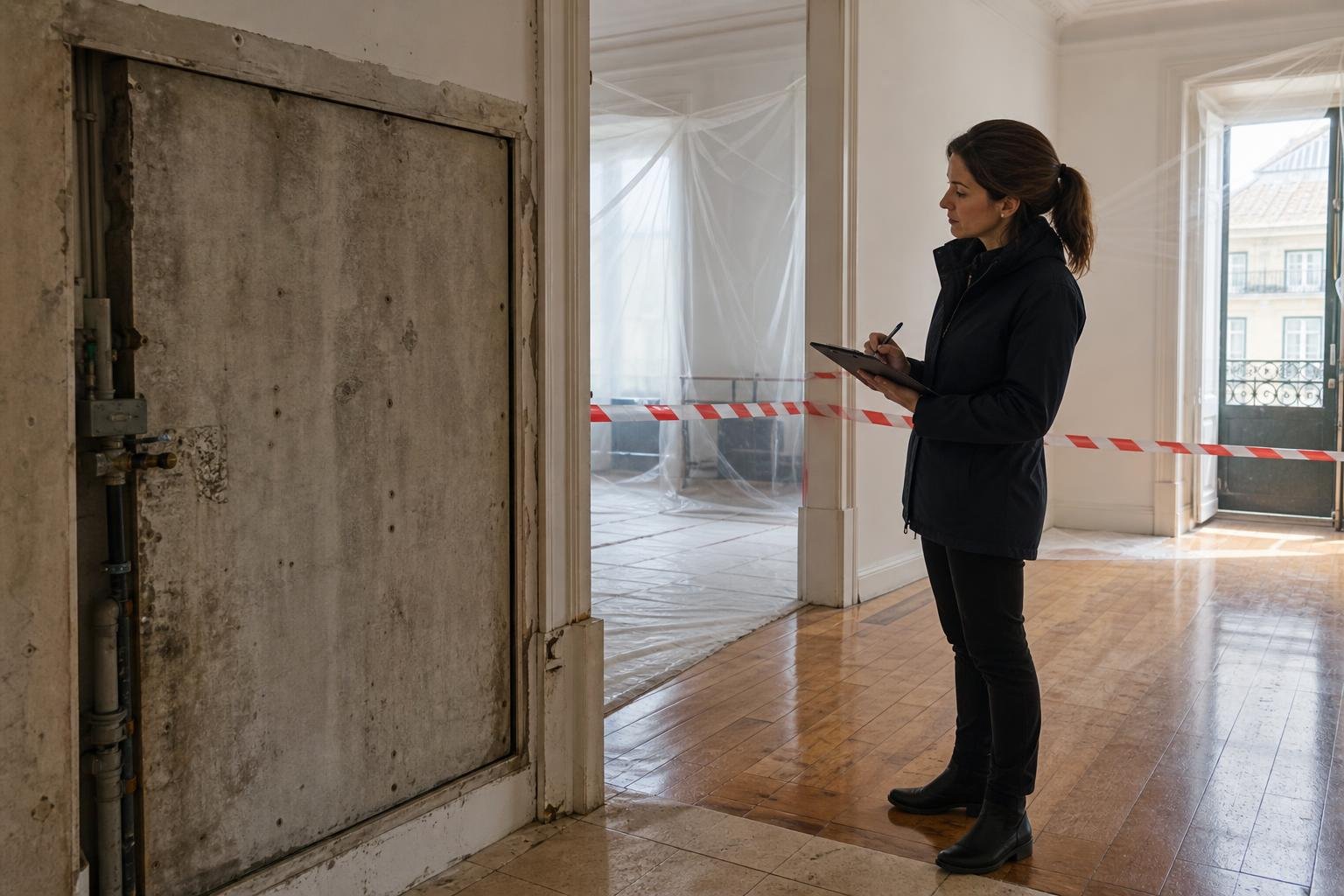
Some signs justify looking beyond the hygrometer: a stain that grows after rain, peeling paint on a wall or ceiling, warped skirting boards, water near window frames, a persistent smell in one specific area, or humidity that does not improve when a room is empty and properly aired. A localised rise that has no relationship with showers, cooking or laundry also needs attention.
Watch how the issue relates to weather. If it worsens with rain and wind, inspect the roof, façade, joints, balconies and windows. If it appears near kitchens, bathrooms or service risers, there may be a leak or a defective connection. Do not simply paint over a stain before finding the cause: a cosmetic repair may conceal the warning signs for a while, but it will not stop the damage progressing.
Obra Lisboa’s article on diagnosing leaks and damp can help distinguish common symptoms. If common building elements may be involved, keep dated notes and photographs so the situation can be clearly reported to the condominium and relevant professionals.
What to do before buying a dehumidifier or starting work
A dehumidifier can be useful as a complementary measure, particularly during damp periods or while an identified cause is being fixed. It does not repair a crack in the façade, a deteriorated roof, an active plumbing leak or missing extraction. Using one without investigating may increase electricity use and delay necessary work.
Before deciding, follow a simple sequence:
- Record readings in several rooms and at different times.
- Reduce avoidable moisture sources and improve daily airing.
- Check for condensation on cold surfaces or localised dampness.
- Visually inspect window frames, ceilings, external walls and areas near plumbing.
- Call a professional if there are persistent signs, material damage or suspected water ingress.
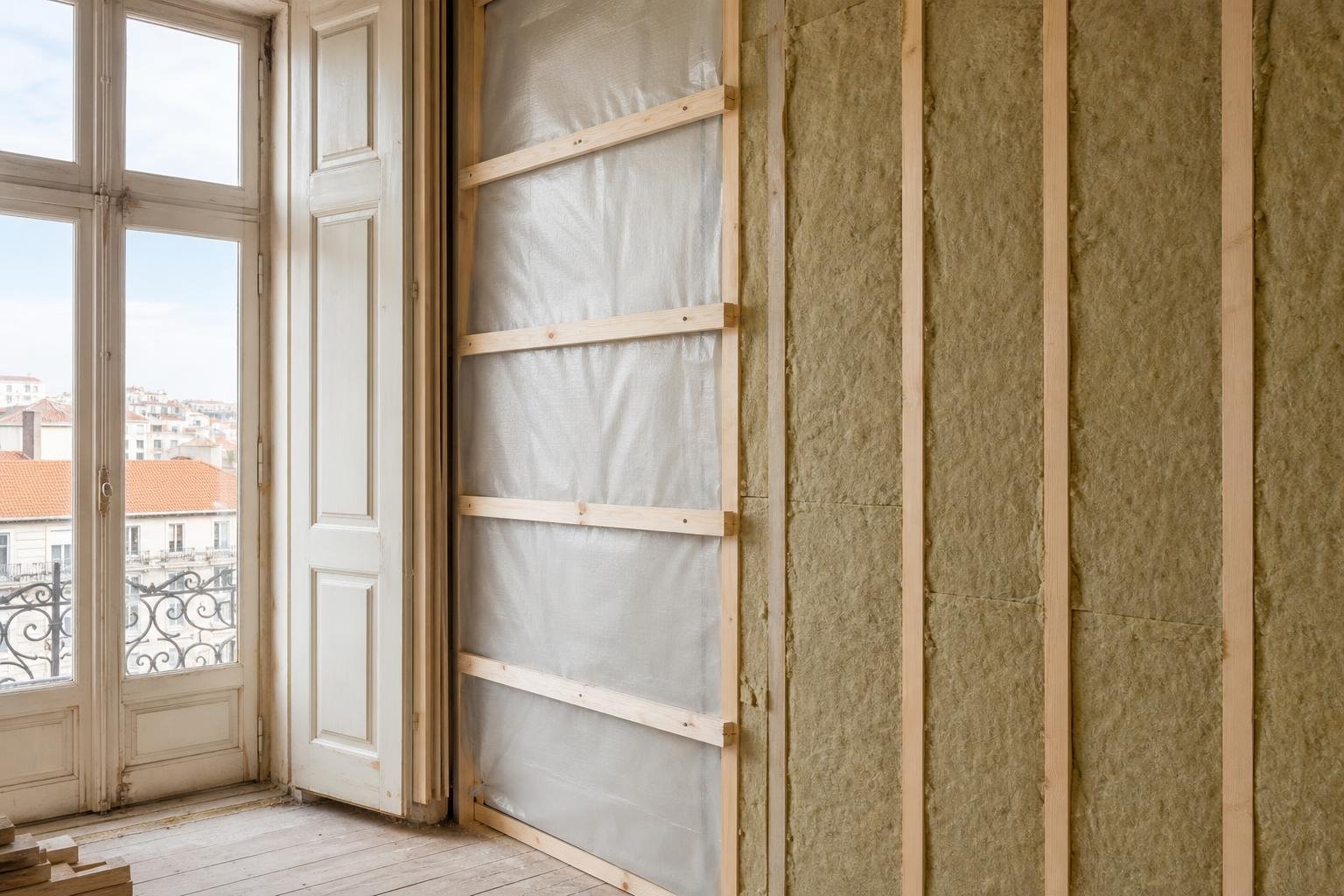
During a renovation, ventilation, insulation, thermal bridges and waterproofing should be treated as coordinated decisions. A lasting improvement comes less from one isolated appliance and more from a home that manages the moisture produced every day.
If humidity persists or you are seeing stains, recurring condensation or signs of water ingress, Obra Lisboa can help assess the situation before a renovation intervention is defined. A well-organised diagnosis avoids piecemeal work and solutions that only conceal the problem.
AI-generated editorial image; it does not depict an Obra Lisboa project.

Obra Lisboa