
An outdoor table can look like a straightforward purchase until lunch has no shade, rainwater gathers around chair legs, or an extension lead crosses the route from the kitchen. At a Lisbon house, an outdoor dining area has to deal with two conditions at once: long, bright, hot summers and wet spells that expose every weakness in falls, drains and joints.
The starting point is not the table. It is deciding where people sit, how food reaches them, where water goes and what will remain outdoors all year. The Portuguese Institute for Sea and Atmosphere records average summer maximum temperatures close to 28 °C in July and August for Lisbon/Instituto Geofísico; that makes solar control important without turning the patio into a dark enclosure. Use the IPMA Lisbon climate normal as context, not as a substitute for observing your own plot.
This guide puts decisions in the order that helps prevent repeat work: layout, shade, water, paving, services and upkeep.
Start with use and routes, not the table size
Map everyday use first. Is the area for four people at dinner, family lunches, or frequent larger gatherings? An extending table handles occasional numbers, but it needs clear floor area when open. Mark the table and chair footprint on the ground with tape, then walk the route between the kitchen door, the table, the garden and any side access.
Do not place the table in the only path between the house and storage, beside an outward-opening door, or in front of a low window that needs regular cleaning. Where children, pets or bicycles are part of daily life, keep the dining space separate from the service route. A built-in bench against a wall can reduce the required footprint, but make sure it is not against a damp-retaining surface or beneath roof runoff.
Being close to the kitchen is useful, but it should not mean carrying hot dishes over wet steps. Where work includes new openings, thresholds or level changes, apply the same thinking used for outdoor stairs with grip, drainage and safe access.
Watch how the plot receives sun before choosing shade
A fixed roof can feel excellent in August and excessive in January. Before ordering a pergola, spend several days noting where shade falls in the morning, at midday and late afternoon. Include the façade orientation, boundary walls and trees that may lose leaves in winter.
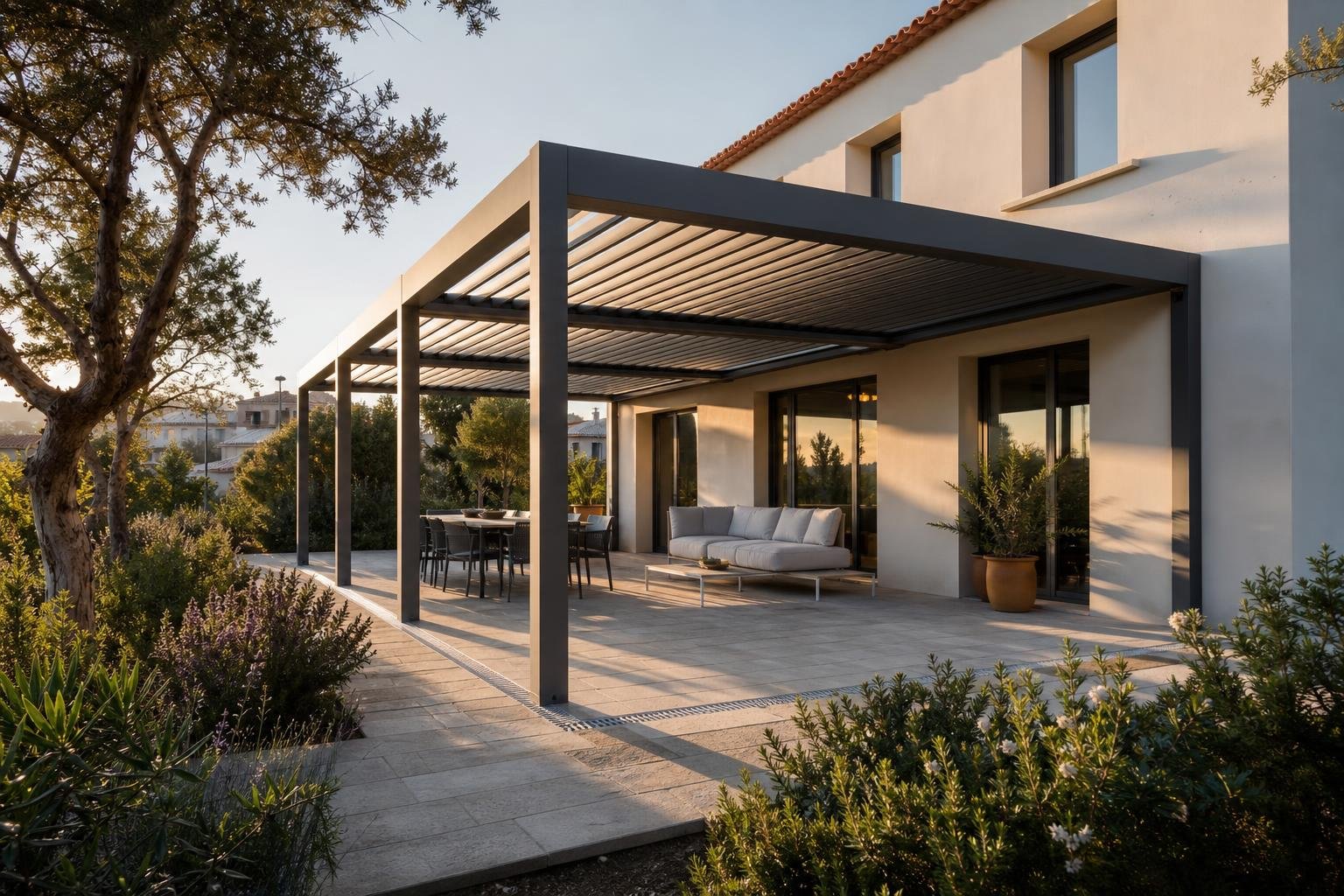
For a table used mainly in summer, adjustable shading often gives more control: an awning, a correctly tensioned sail, orientable louvres, or a structure designed to take an outdoor curtain. ADENE identifies shading as one of the common ways to limit solar gains in summer; night-time natural ventilation can complement it when outdoor air is cooler. See ADENE’s note on summer thermal comfort strategies.
Do not mistake shade for total enclosure. A heavily closed structure beside the façade can reduce indoor daylight and slow drying after rain. In exposed locations, confirm the fixing system and choose something that can be retracted or is designed for wind loads, rather than relying on improvised weights and ropes.
Solve water movement before the paving is finished
An outdoor dining area does not need to look technical, but rainwater needs a clear route. The fall should take water towards a planned collection point or permeable area, never towards the house threshold, a neighbour’s wall or beneath a timber structure.
In Lisbon, the municipal master-plan regulation requires projects affecting private yards to provide proper drainage for surface and subsurface water, minimising unsuitable runoff. Read the Lisbon municipal master-plan regulation when work changes a yard, increases impermeable ground or needs planning confirmation.
On site, identify existing gutters, downpipes and gullies. A drain hidden beneath the table will be hard to clear; a linear channel beside the house may be easier to maintain if its grate can be lifted. Rainwater drainage must be separate from domestic wastewater, as set out in the drainage regulation published in Diário da República. Do not connect outdoor solutions to pipework until a qualified professional has checked the route, levels and capacity.

Choose paving for water, grip and maintenance
The finish should feel pleasant underfoot, remain stable beneath chairs and stay safe when wet. Suitable exterior ceramic tile, properly finished stone, well-executed concrete and some permeable paving systems can all work, provided the base, joints and drainage are designed together.
A catalogue photograph is not enough. A very rough surface may collect dirt, while one that is too smooth can become slippery. Timber or composite decking needs attention to fixings, ventilation below and expansion gaps. When combining materials, plan levels and edges so a chair does not catch at a change of finish and water does not sit in the joint.
For a useful comparison of finishes and substrate preparation, see our guide to non-slip outdoor flooring. If the patio receives heavy runoff or replaces natural soil with hard surfacing, the review should also cover infiltration, site limits and access for maintaining collection points.
Plan power, lighting and water without permanent extension leads
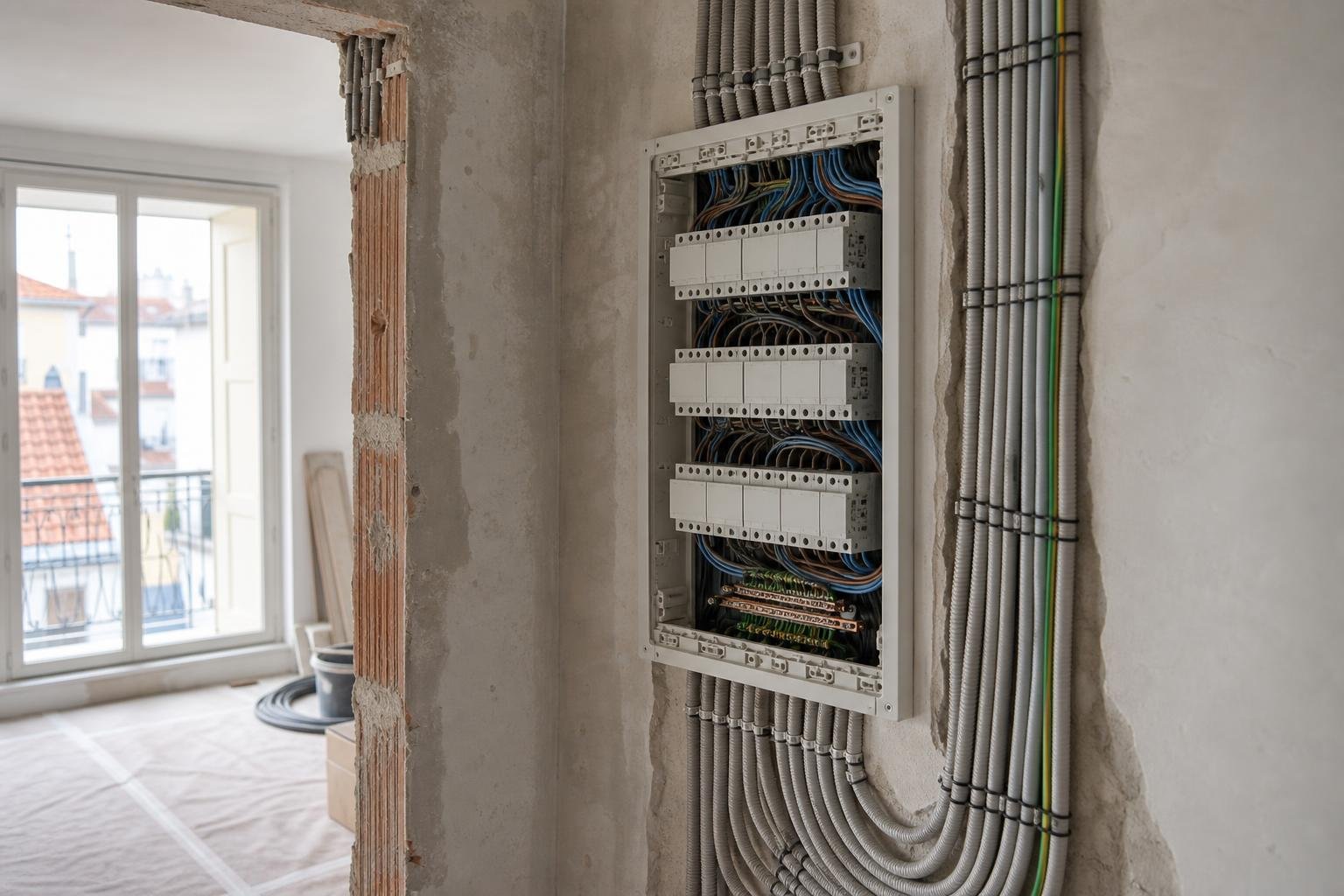
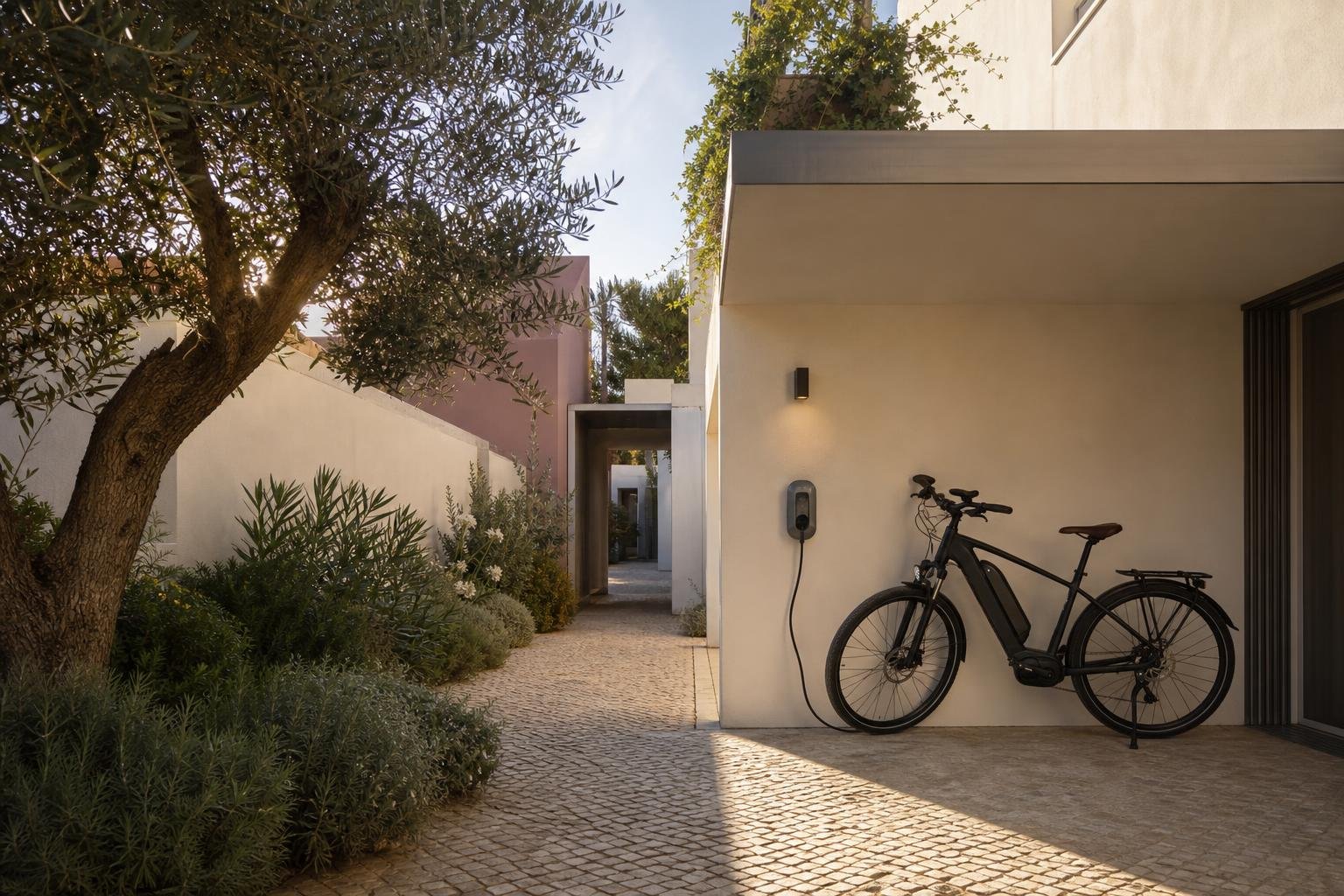
A well-positioned exterior socket is more useful than an extension lead through an open door: it can serve temporary lighting, charging, small kitchen equipment or cleaning. It should be suitable for outdoor conditions, accessible without receiving direct splashes, and planned with the right circuit and protection. Do not bury junction boxes behind planters or fixed furniture.
Lighting should guide movement without dazzling people at the table. Rather than using one strong floodlight, combine low route lighting, softer light above the table and, where useful, illumination at the door. Choose fittings that can be cleaned and replaced without dismantling the shade structure. Our article on outdoor lighting for entrances and paths explains how to separate safety from unnecessary brightness.
A nearby tap can make cleaning and watering easier, but it needs local drainage and leak protection. If the scheme includes an outdoor kitchen, fixed barbecue, fridge or sink, treat connections as part of the building work rather than as items added at the end.
Plan for cleaning and for the months when the table is unused
A durable outdoor area relies on repeated small decisions: enough room to pull chairs out, adjustable feet on the table, covers that do not trap moisture, furniture that can move for cleaning, and planting that does not constantly block the drain grille with leaves. Set aside storage for cushions, candles, leads and utensils; leaving everything outdoors speeds deterioration and makes the area feel cluttered.
Before handover, test the arrangement with controlled water, check the flow, open every chair, make sure doors and gates remain clear, and locate every drainage point. Keep a simple routine: remove leaves before wet weather, review sealants and fixings after summer, and move planters that prevent inspection.
The aim is not to build an indoor room outside. It is to create a place for meals that does not fight the climate, circulation or maintenance needs of the house.
If you are renovating a patio or yard, Obra Lisboa can help turn these decisions into a coordinated plan for paving, drainage, shade and services before work begins.
AI-generated editorial image; it does not depict an Obra Lisboa project.

Obra Lisboa