
A place to rinse paws, wash a dog after a walk or deal with muddy outdoor gear should not feel like an improvised corner. At a Lisbon house, the most useful position is often between the gate and a service door: close enough to stop dirt at the edge of the property, yet separate from the main entrance and living spaces.
The answer is not simply a hose and a drain. It is a short, deliberate sequence: arrive, secure the lead, rinse, dry and put everything away. Flooring, falls, water point, drainage and storage need to work together. Designed properly, this small area prevents mud and wet towels from taking over the hall, laundry room or kitchen.
Plan the route before choosing the tap
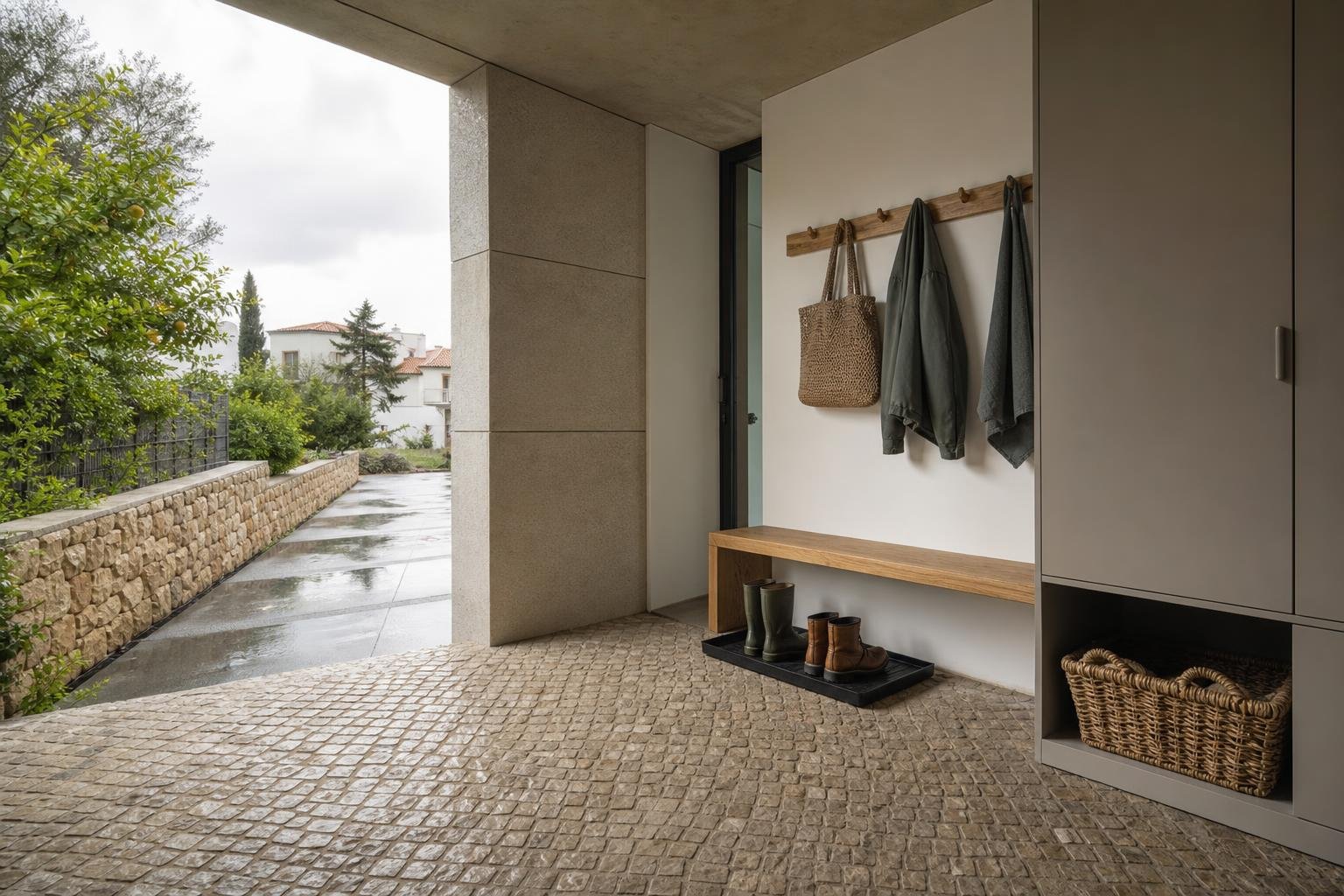
Start with the route the animal actually uses. A washing point works best beside a secondary door, garage, side courtyard or garden access rather than in the middle of a terrace. It keeps wet paws away from dining areas, glazed doors and the main circulation route.
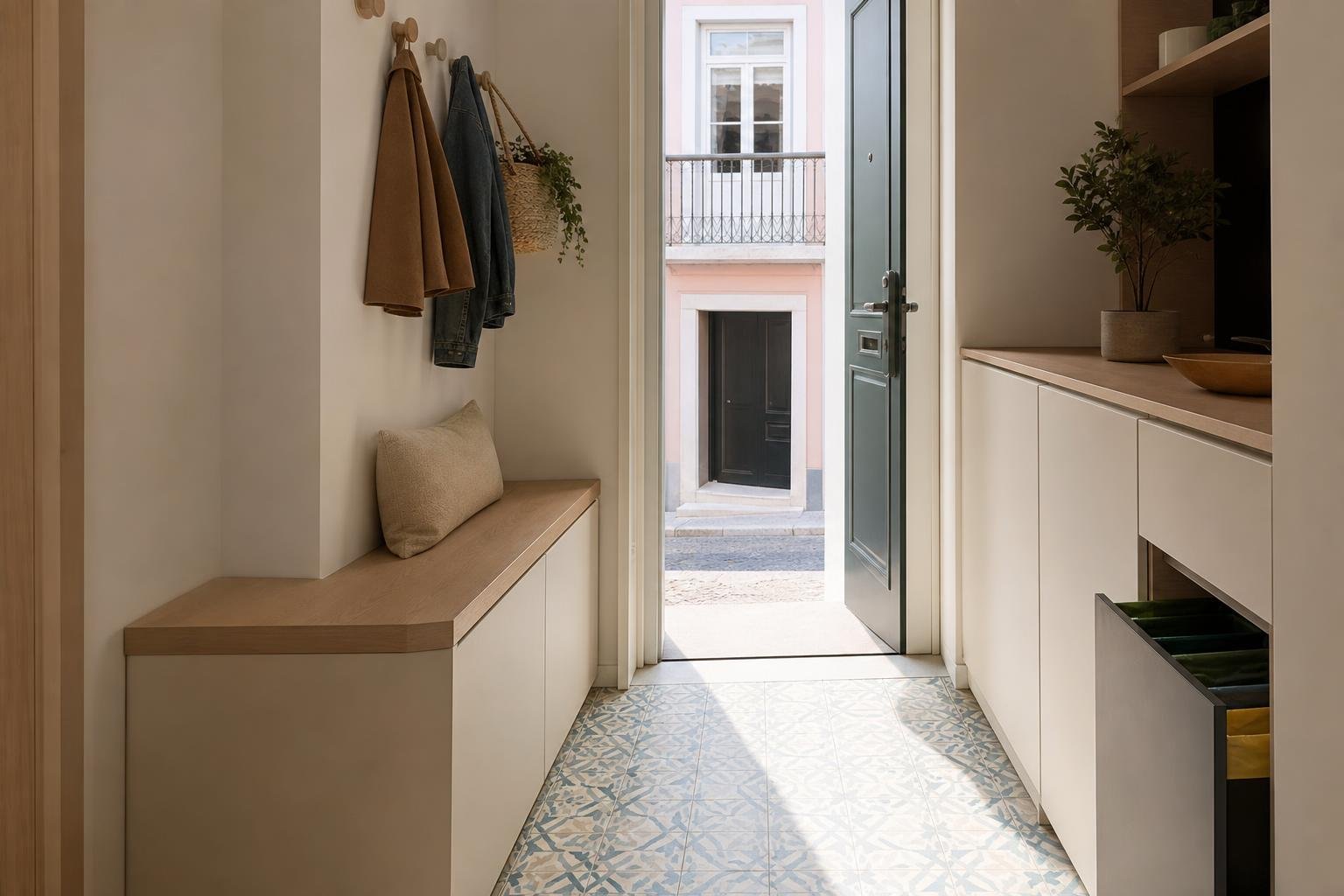
Allow enough standing room to open the door, remain beside the animal and set down a towel or bucket without narrowing access. There is no need to build a full outdoor bathroom. A compact, clearly defined area near a splash-resistant wall is usually easier to maintain and easier to fit into the architecture. If this entrance also receives boots, prams or sports gear, coordinate it with a well-planned service entrance.
Do not select the lowest point in the plot simply because water already gathers there. That is a drainage fault to correct, not a feature to use. Frequent washing on a surface that remains damp for days creates slipping, staining and persistent odours.
Use flooring that handles water, claws and cleaning
The finish needs to be washable, durable and safe when wet. Textured exterior porcelain, properly finished natural stone, or concrete with a non-slip finish can all work. The important test is grip after water, shampoo, leaves and mud have been introduced—not how the surface looks in a showroom.
Avoid highly polished finishes, wide open joints that are difficult to rinse, and porous materials without suitable protection. Extremely rough surfaces can trap dirt as well, so aim for a balance between texture and cleanability. At thresholds, avoid little ledges and awkward joints where water can sit.
When the washing area is part of a wider renovation, its finish should relate to adjoining outdoor surfaces and to door levels. Our guide to non-slip outdoor flooring explains the practical balance between grip, drainage and maintenance before materials are ordered.
Give wash water a controlled destination
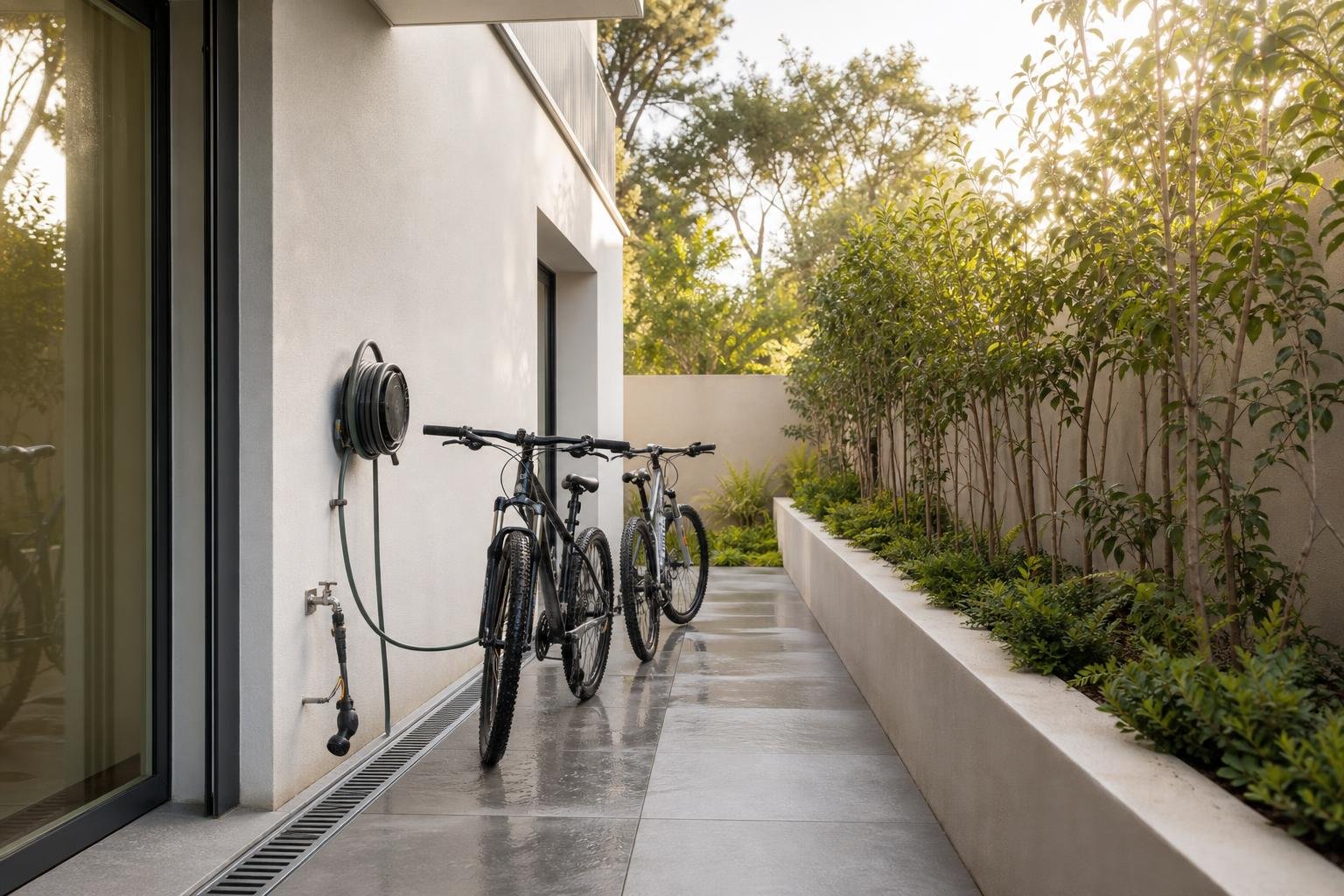
A tap without controlled drainage merely moves the problem a few metres away. Set a continuous fall towards a collection point and confirm finished floor levels before tiles or paving are installed. A linear channel beside the wall, or a point drain outside the place where the animal stands, is often more comfortable than a drain in the centre of the washing area.
Do not send wash water through improvised paths to planting beds, neighbouring land or the pavement. Building drainage needs appropriate networks and connections. Regulations published in the Diário da República distinguish urban wastewater drainage from rainwater drainage and provide for separate public systems; see the published water distribution and drainage regulation, then confirm the applicable solution for the property with a qualified designer and the relevant network operator.
Make the trap or channel easy to clean. Hair, sand and leaves are predictable, and a drain that cannot be accessed without lifting paving will quickly become an inconvenience.

Limit splashes, hot water and unnecessary use
A washable wall surface, a low splash guard or a tap located over a shallow basin can protect façades and nearby openings. If you use a hose, specify a proper reel or bracket and an accessible shut-off point. A hose left across the floor becomes both a trip hazard and a collector of dirty water.
Cold water is usually enough for paw washing. If warm water is genuinely needed for occasional baths, plan it as an installation: protect against scalding, insulate exposed pipework and use an exterior-rated mixer. Do not extend hot-water pipework casually without considering its route, heat losses and future access.
Flow restrictors and taps that close reliably can reduce waste. ADENE notes that a tap or shower with suitable flow and functions can substantially cut water use for the same purpose; see its article on water efficiency in taps and showers. Efficient does not mean inadequate water. It means using enough water in the right place, without leaks.
Store everything needed for the whole routine
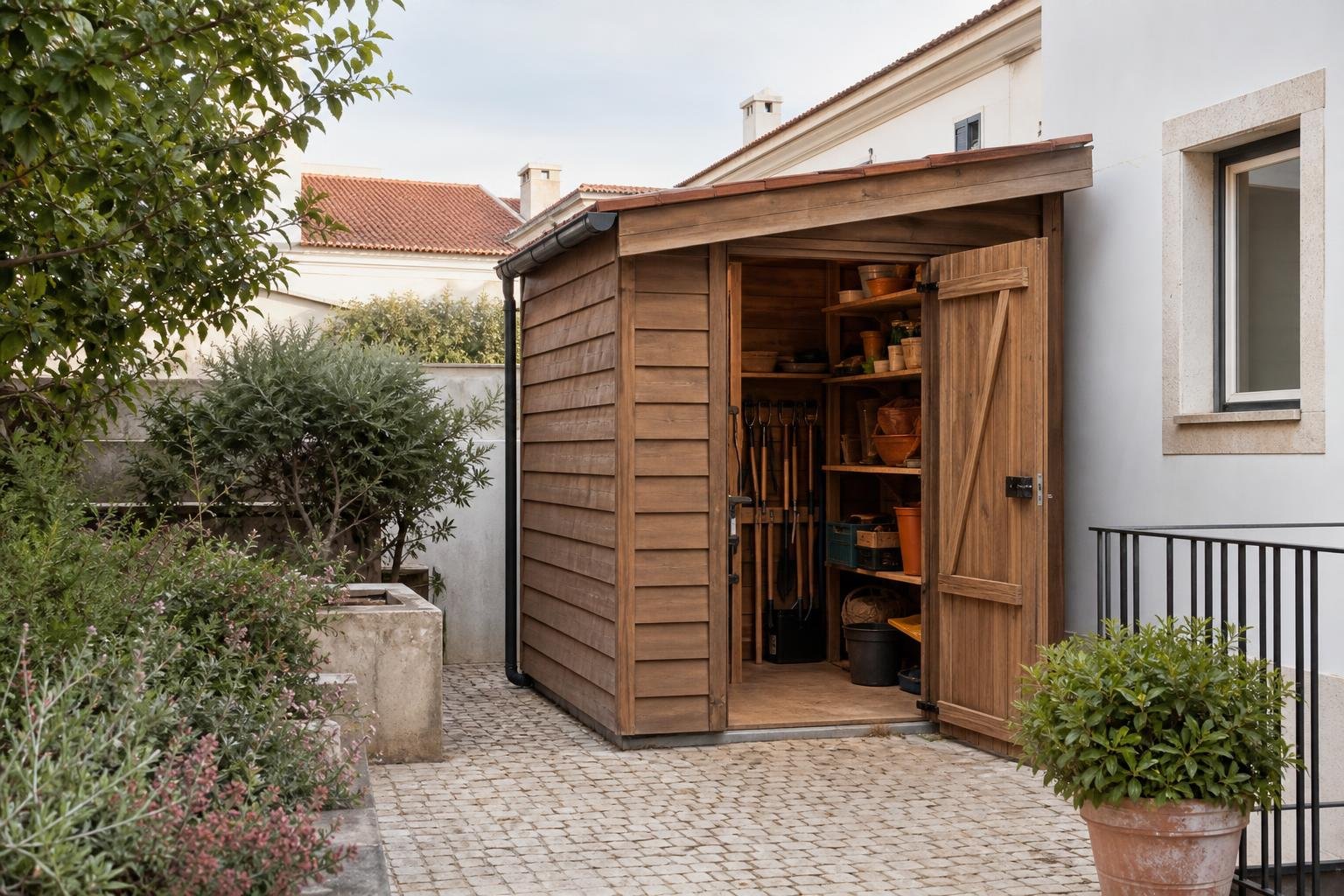
Towels, pet shampoo, brush, waste bags, a floor cloth and a spare lead all need a dry, ventilated home. A raised exterior cabinet with washable shelves and doors that will not slam in the wind keeps the area orderly and avoids carrying supplies back indoors after every wash.
Do not store household cleaning chemicals, medicines or garden products where animals can reach them. Keep washing supplies in separate, clearly recognisable containers and close all packaging securely. In a tight space, a storage bench can double as a drying perch and towel store, provided its lid does not trap damp air.
Add a robust lead hook outside the walking line, but do not treat it as a permanent tethering point. The practical aim is to work calmly without the animal pulling cables, knocking over bottles or stopping a door from closing.
Design for rain, heat and routine maintenance
Lisbon rainfall is not evenly spread through the year. The IPMA 1991–2020 climate normals for Lisboa/Geofísico show higher average monthly rainfall from October through January, so test drainage before the wetter season rather than waiting for water to reach the door. Use the IPMA climate normal for Lisbon as local context.
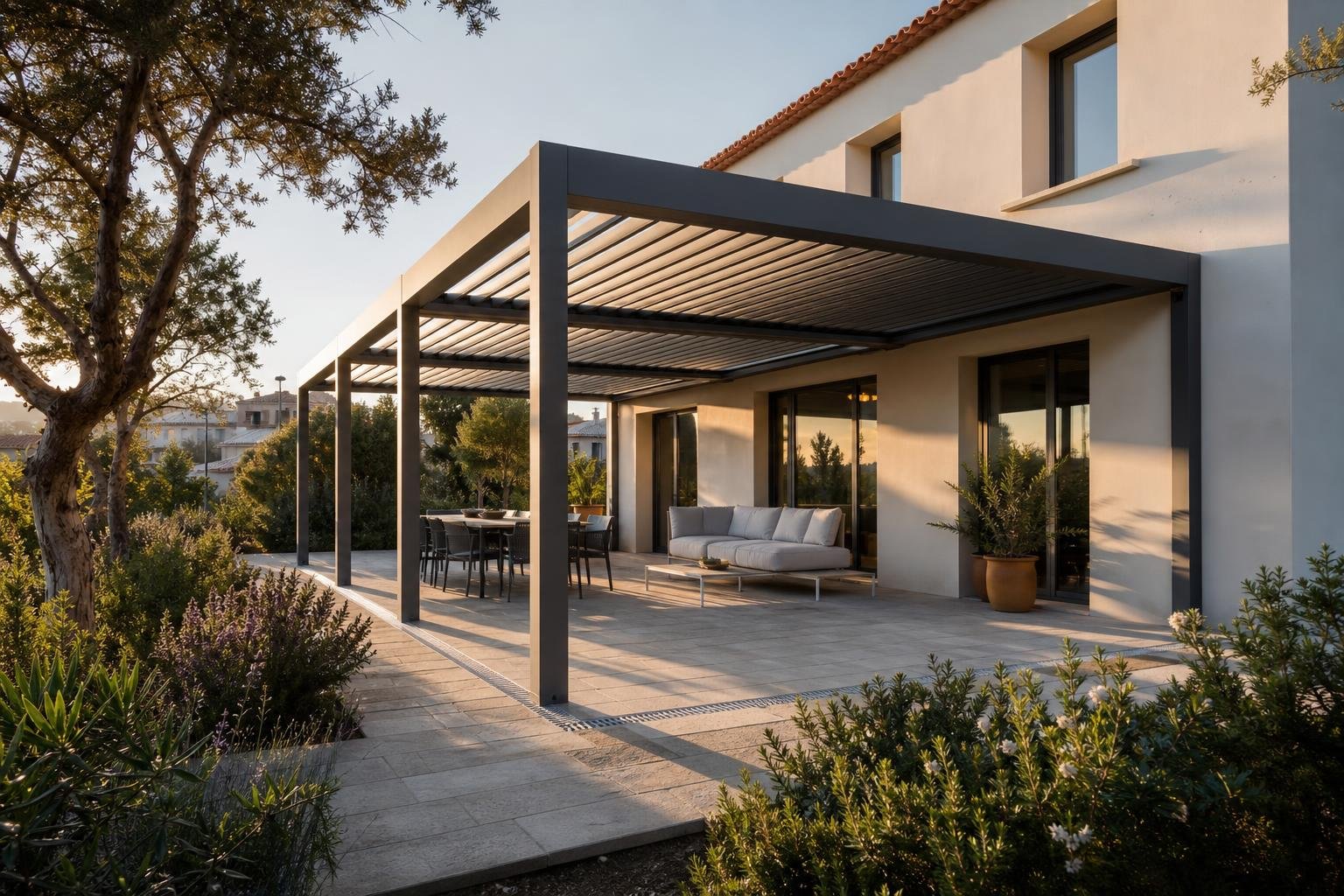
In summer, a fully exposed washing point can become uncomfortable for both people and animals. A modest shaded element that does not block ventilation or prevent the floor from drying is generally more useful than a heavy cover chosen at the last minute.
Add simple checks to the monthly maintenance routine: clear the drain, inspect joints and sealants, test the tap and look for standing water after washing. Water returning towards the door, marks at the wall base or drain odours are small warnings worth resolving before they affect finishes and structure.
A useful pet-washing area depends on coordinated levels, drainage, finishes and services before work begins. If you are integrating one into a Lisbon house renovation, Obra Lisboa can help turn everyday requirements into an executable plan.
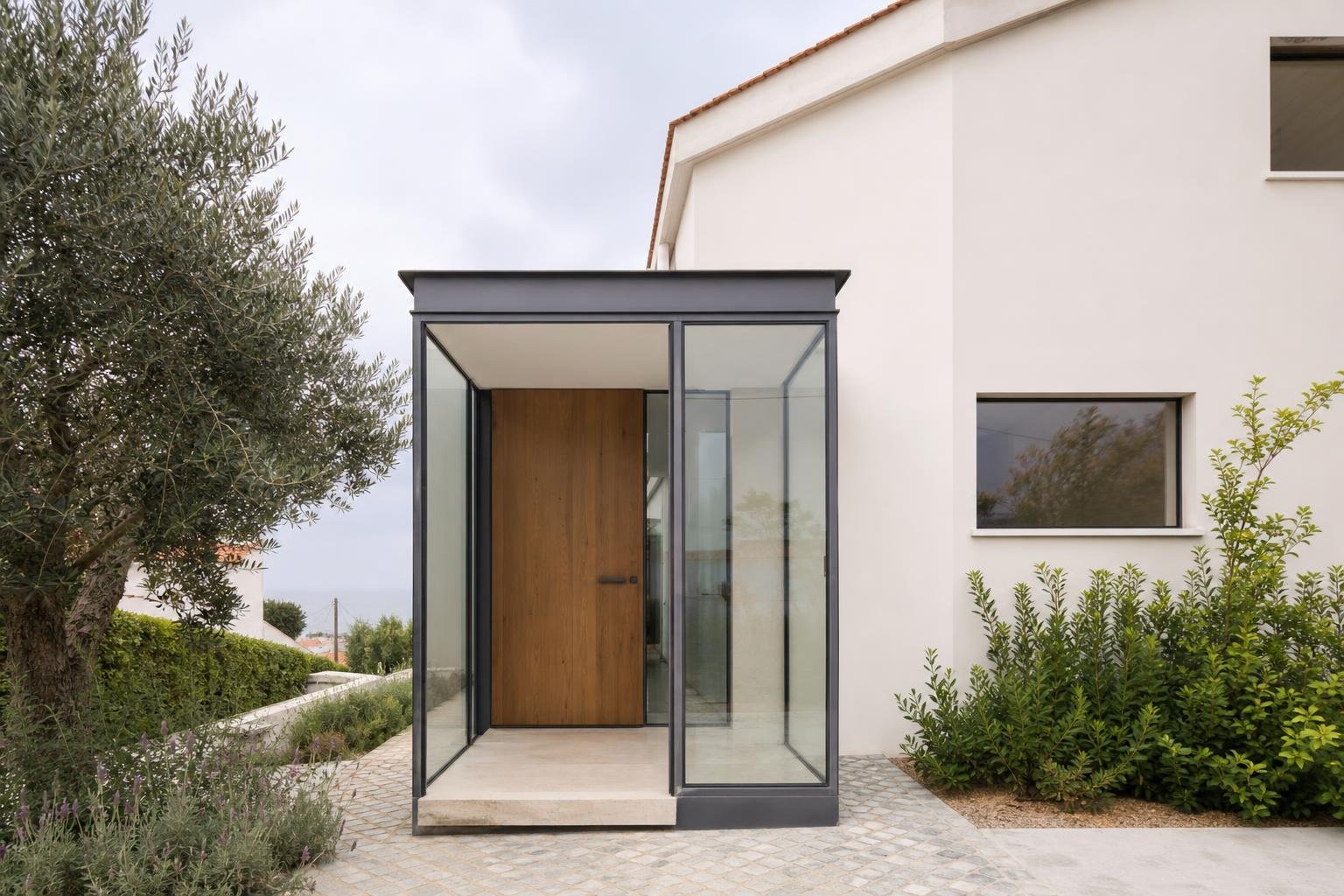
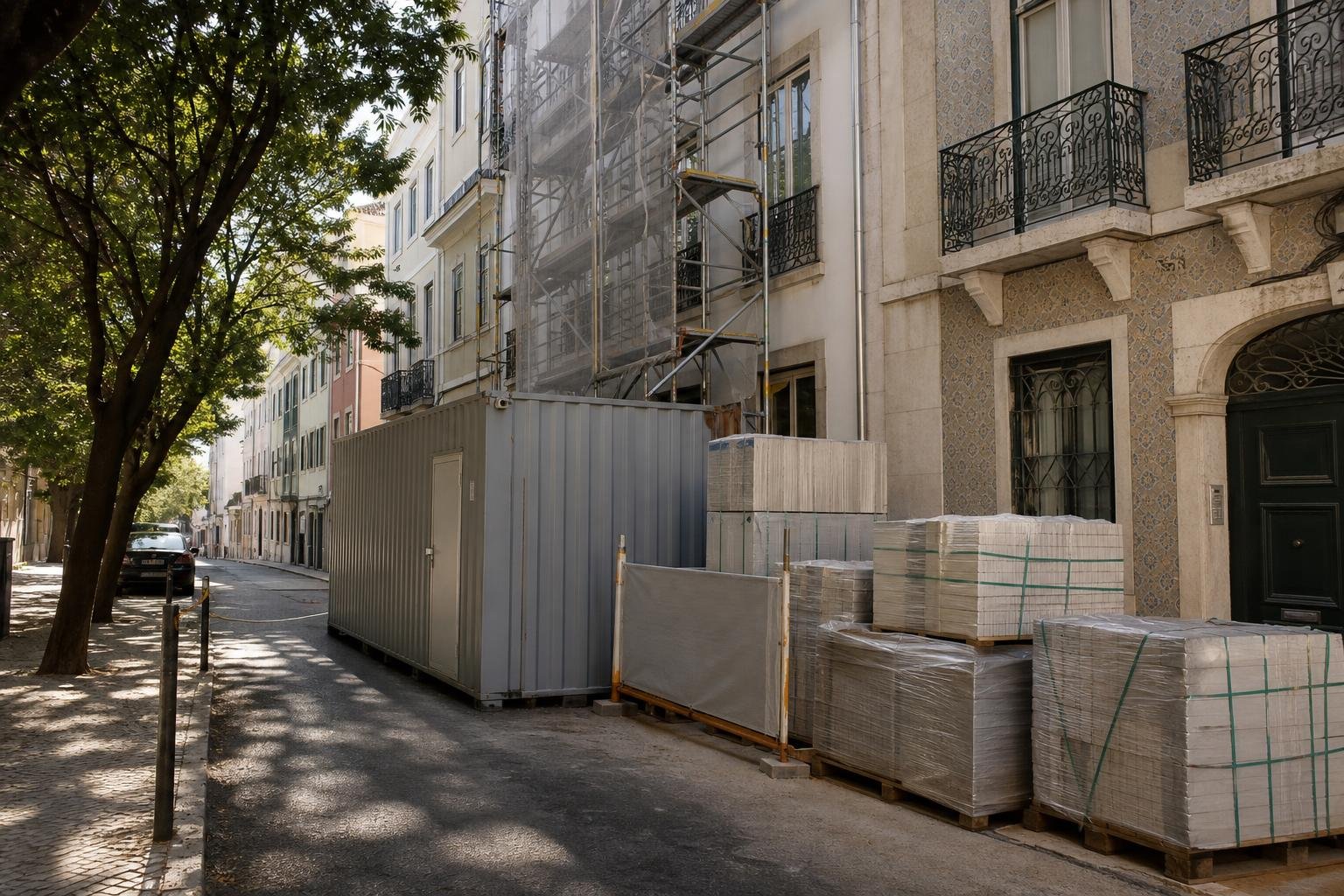
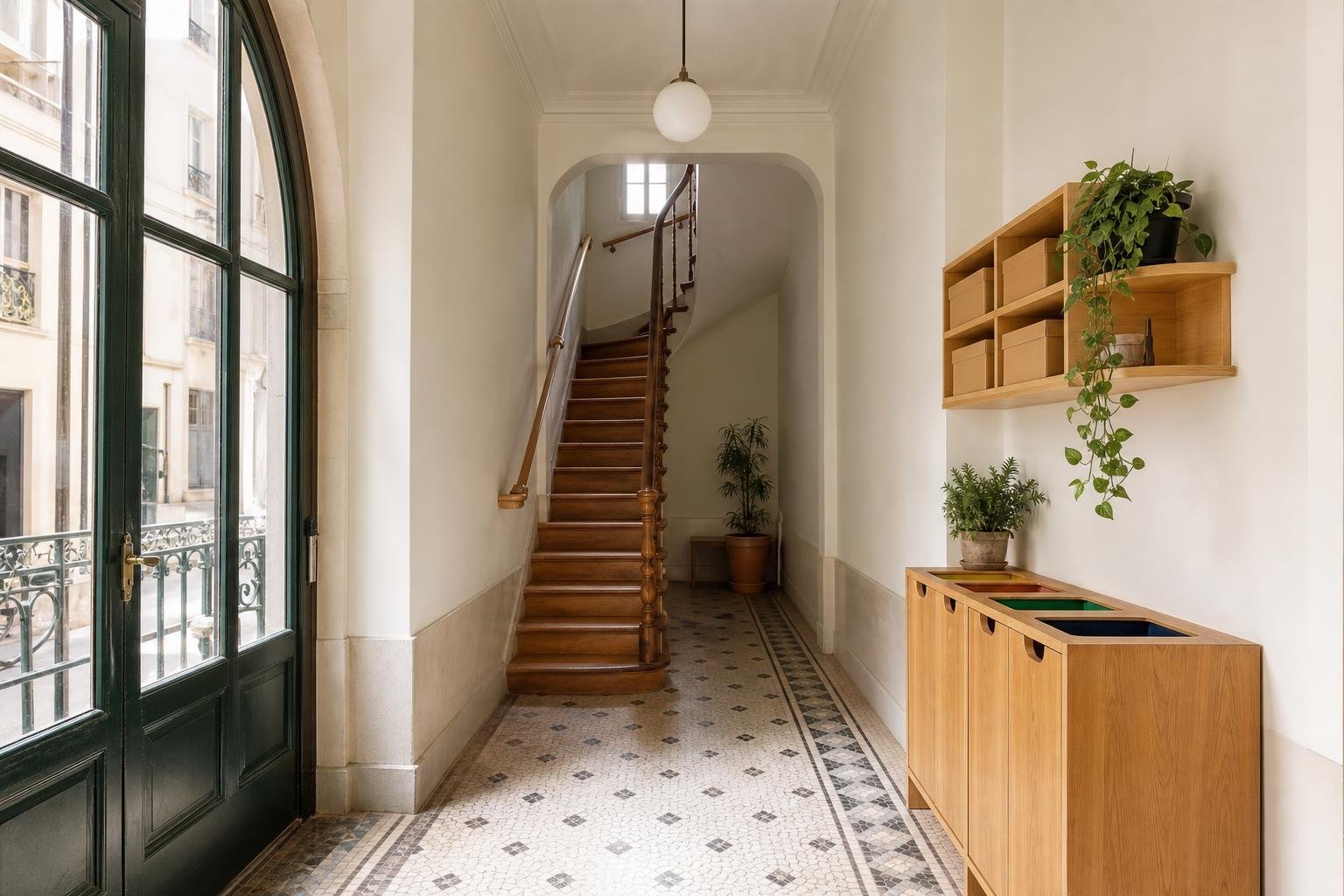
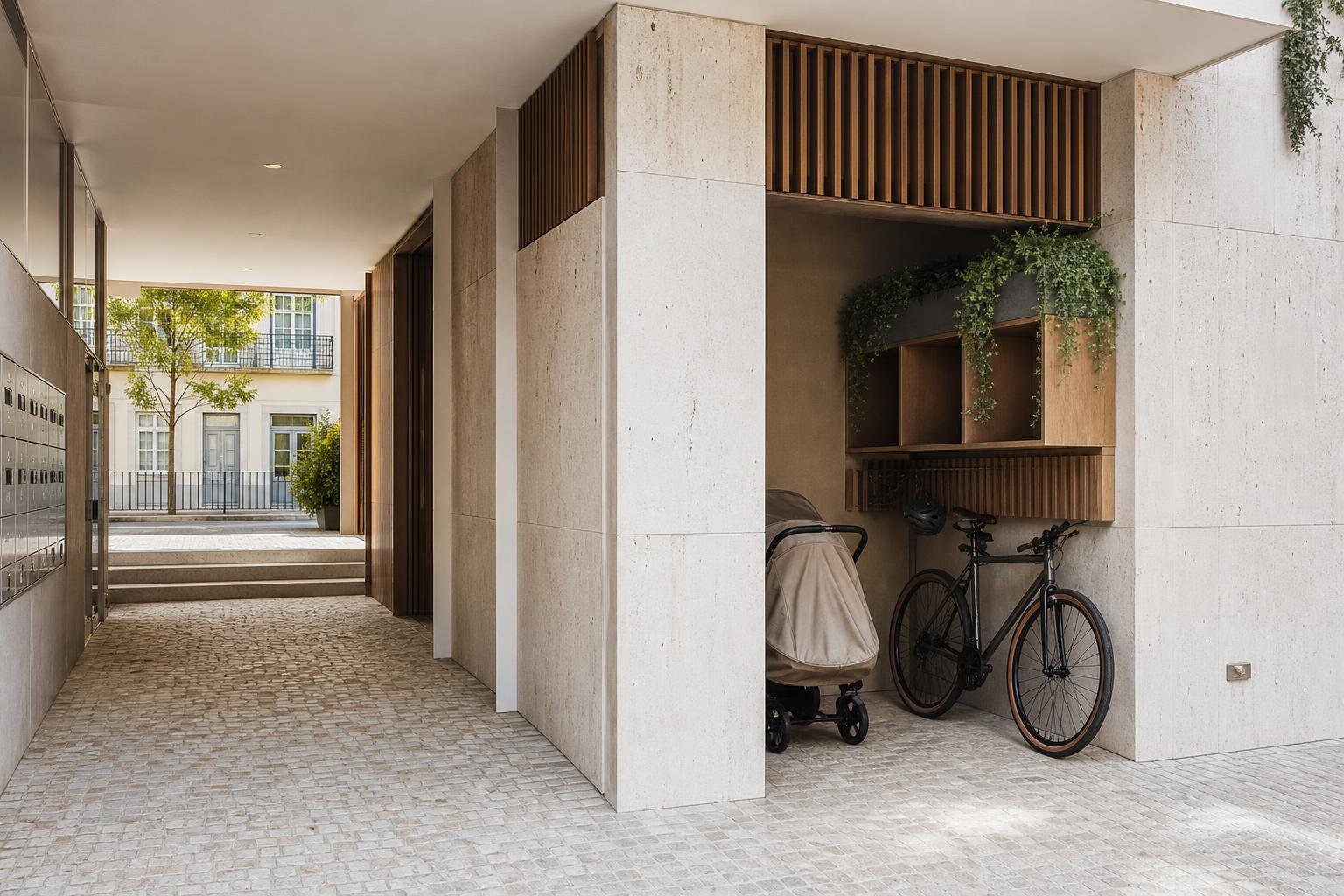
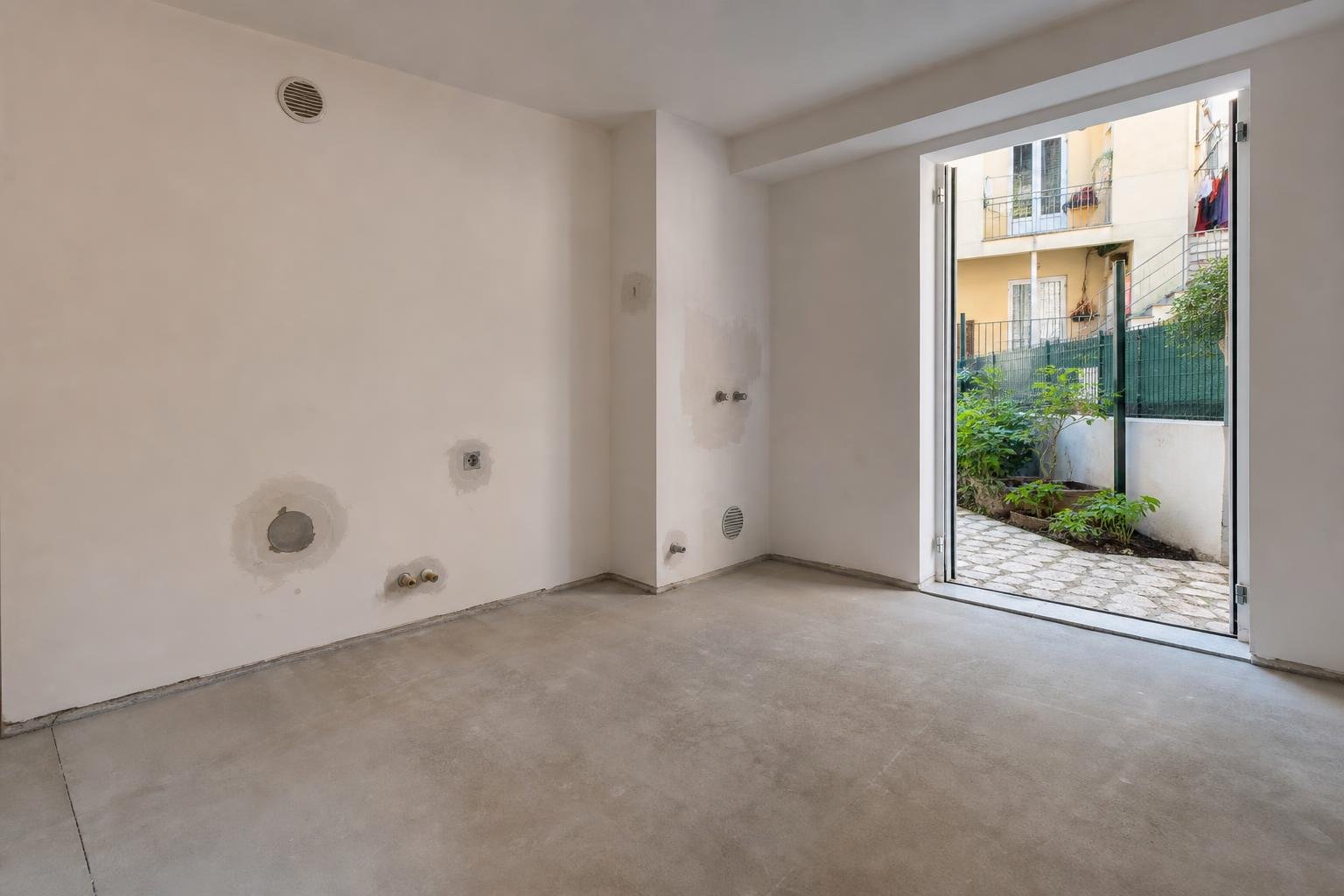
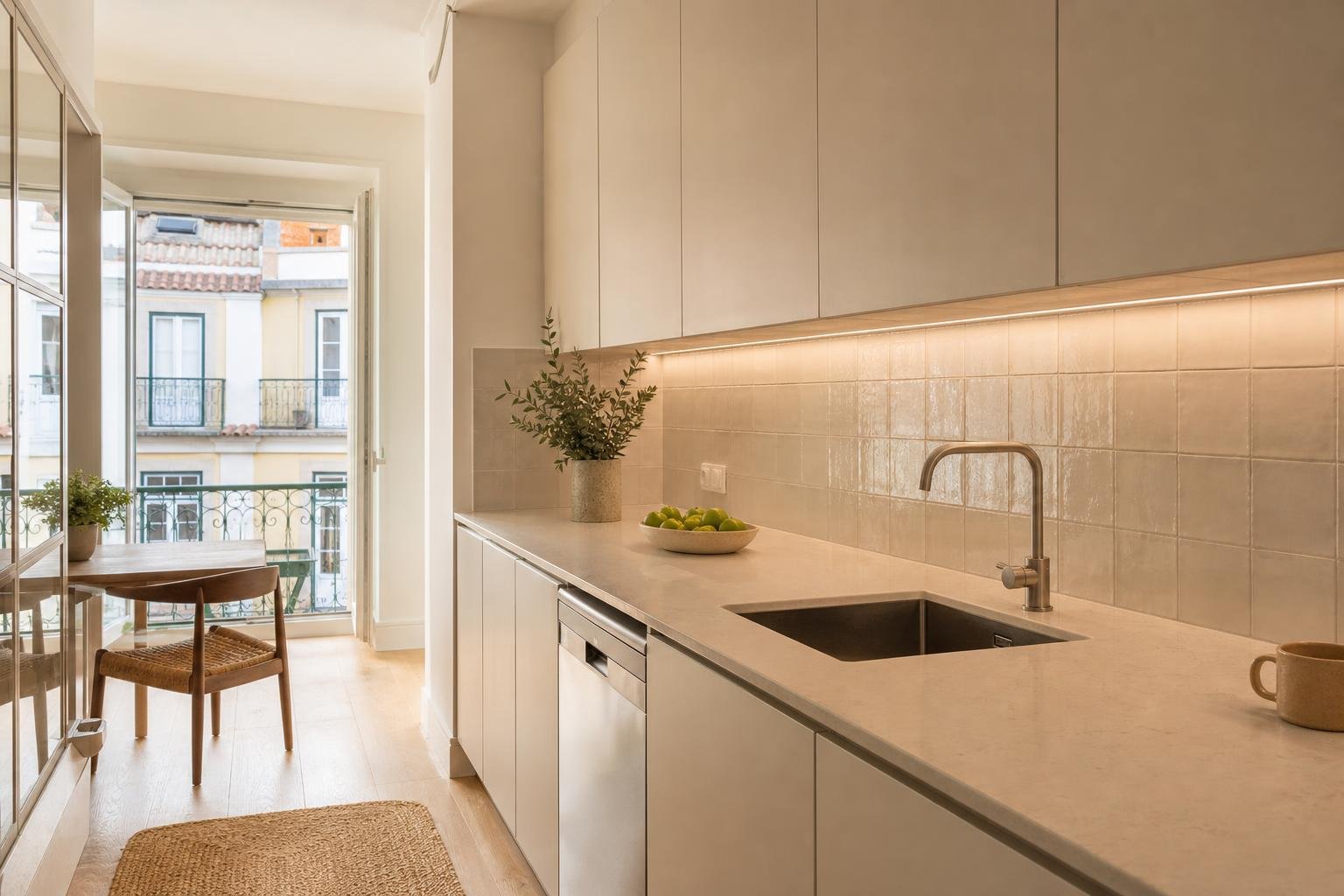
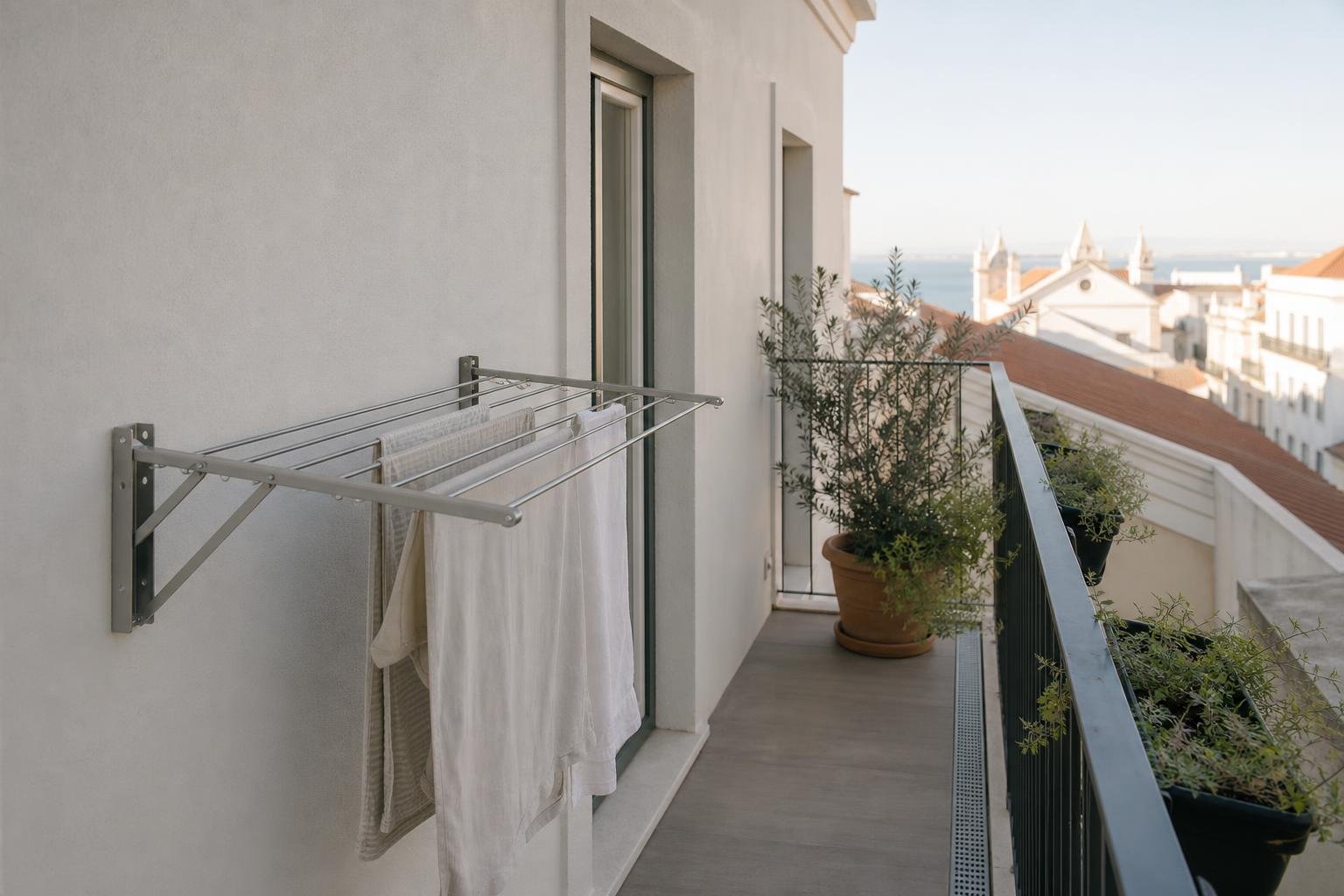
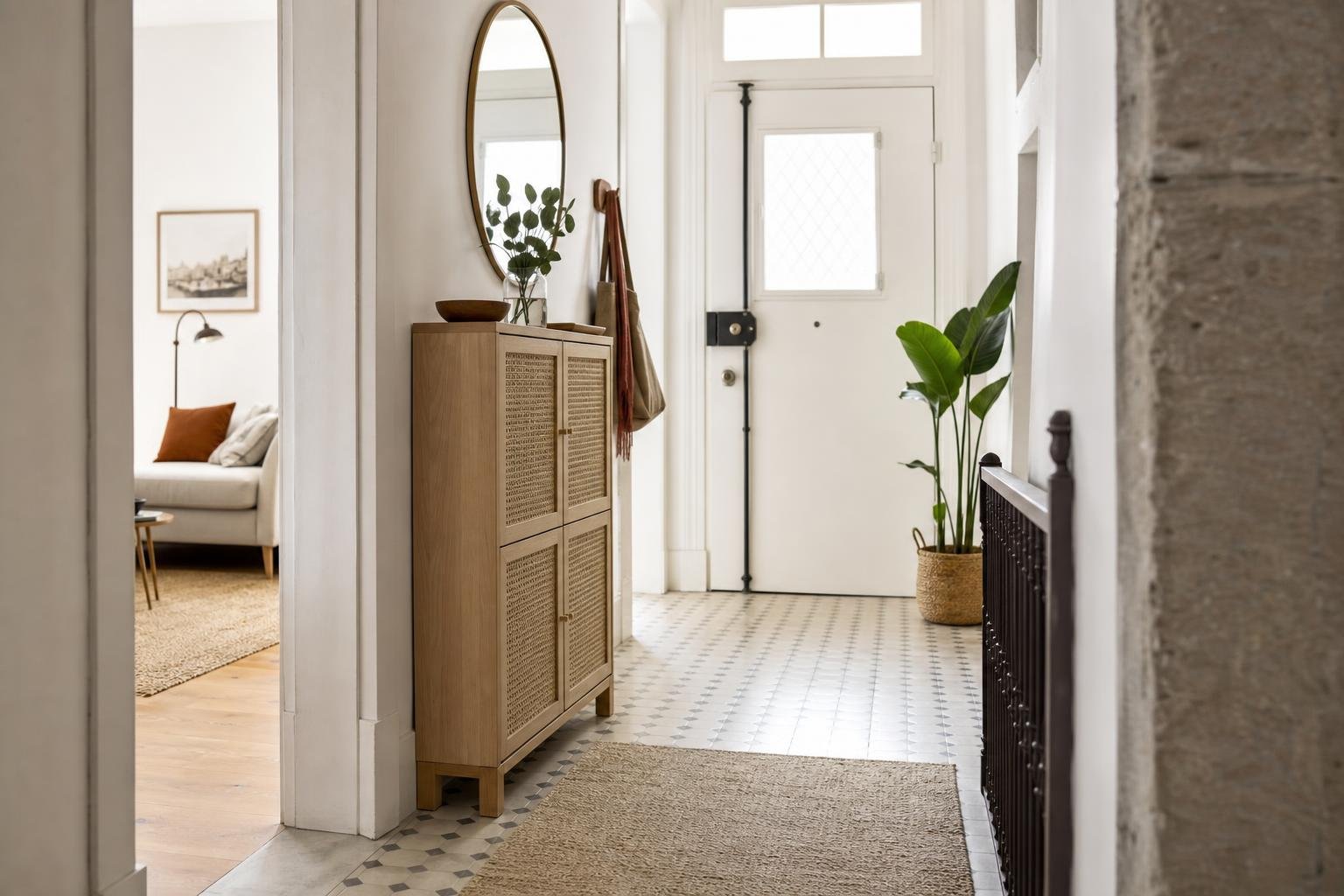
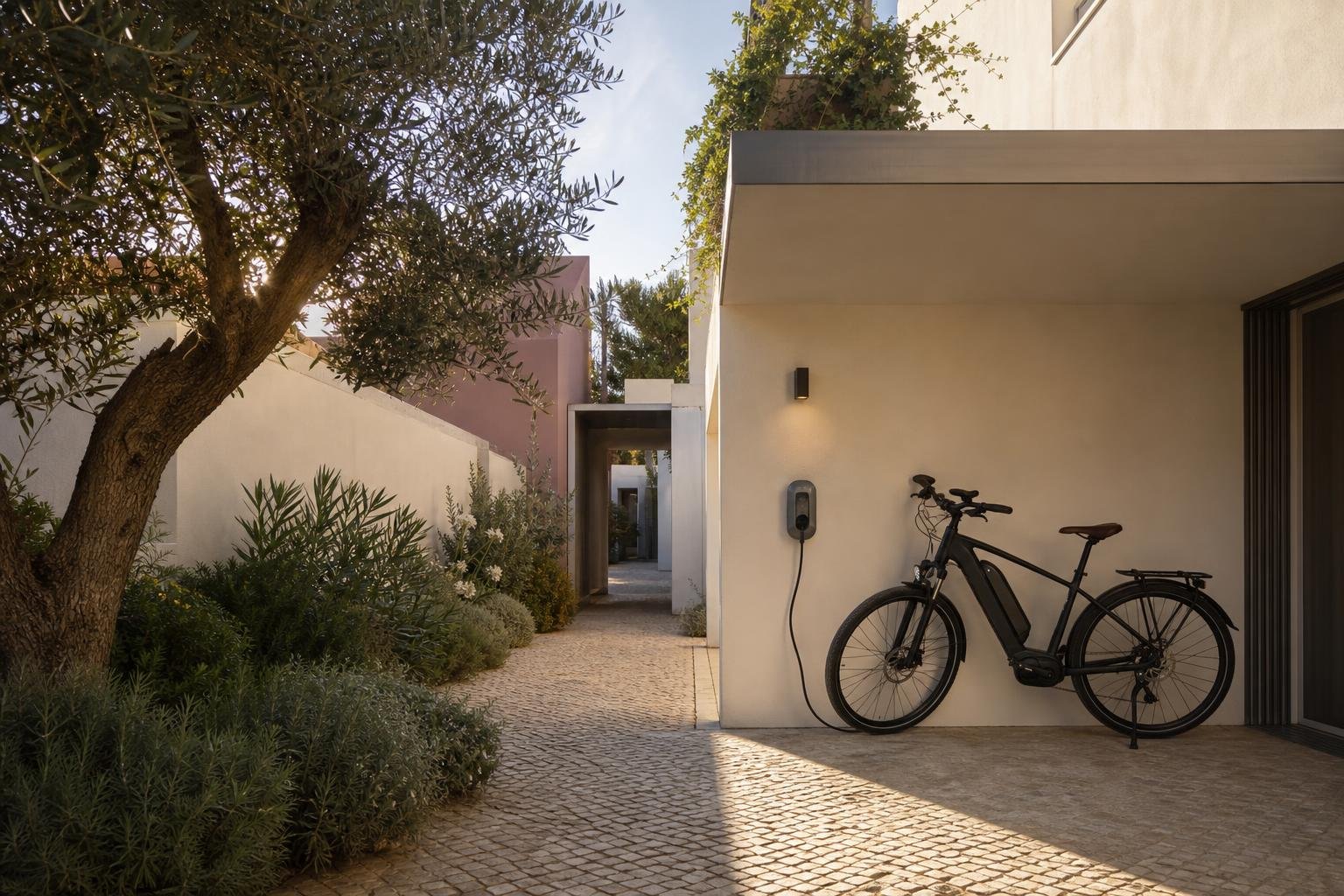
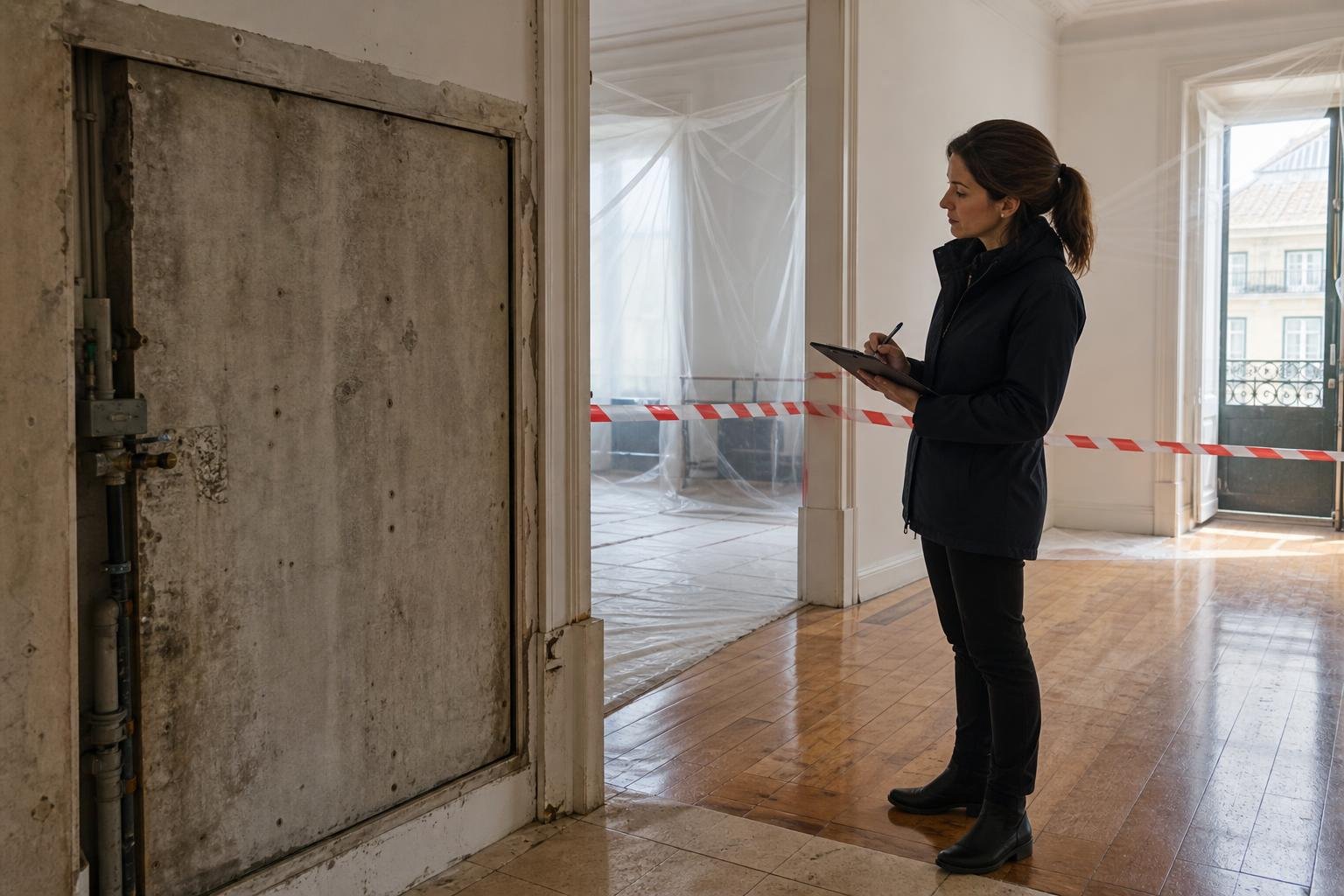
AI-generated editorial image; it does not depict an Obra Lisboa project.

Obra Lisboa