
An outdoor air-conditioning unit may look like a minor balcony detail, yet its condensate water often determines whether the installation works well over time. A poorly routed drain can drip onto a neighbour, stain a façade, leave a puddle by the balcony door or discharge into a drain that cannot cope. In Lisbon, cooling is used during dry weather but balconies must also withstand intense rainfall, so the arrangement needs to work in both conditions.
The aim is not simply to hide a pipe. It is to create a continuous, accessible route that suits the balcony, the building and future maintenance. This guide sets out what to decide before drilling walls, closing service boxes or fixing the outdoor unit in place.
Separate condensate, rainwater and household drainage from the outset
Water produced by air conditioning should not be treated as an aesthetic afterthought. It is a recurring flow while the system runs, so it needs a controlled discharge. The first decision is where it can go: to an existing balcony drain, to a properly designed connection to the building drainage system or, in limited cases, to a temporary container emptied regularly. Do not assume that leaving the pipe end on the floor is enough.
Equally, do not connect condensate indiscriminately to a rainwater downpipe or a concealed pipe. Drainage networks have distinct purposes and routes; any alteration should be checked on site and coordinated with the existing installation. Portuguese technical rules treat building drainage as a system intended to carry water to an appropriate destination, not as a place for inaccessible improvised connections.
For a first sketch, draw three routes: condensate, rainwater and people. If all three finish in one narrow balcony corner, redesign the arrangement before work starts.
Create a continuous fall and avoid low points in the pipe
Many domestic condensate systems rely on gravity. The pipe should therefore leave the unit and run continuously down to the discharge point. A low bend, widely spaced clips or a route behind planters can create a sag where water remains. Typical consequences are gurgling, water backing up, unpleasant smells where a trap is present, or irregular discharge from the unit.
Ask for a short, readable route. A nearly direct pipe run, protected from knocks and clipped at regular intervals, is better than a long pipe winding around the balcony. If there is not enough height for gravity drainage, do not solve the issue merely by raising the unit without considering vibration, loads, access and visual impact. A condensate pump may be needed, but it introduces noise, electrical supply requirements, cleaning and another possible failure point.
Before closing any service box, run a water test and watch the full length of the pipe. Flow should remain steady, joints should stay dry and water should not return towards the unit.
Choose a discharge point that does not create puddles or drips below
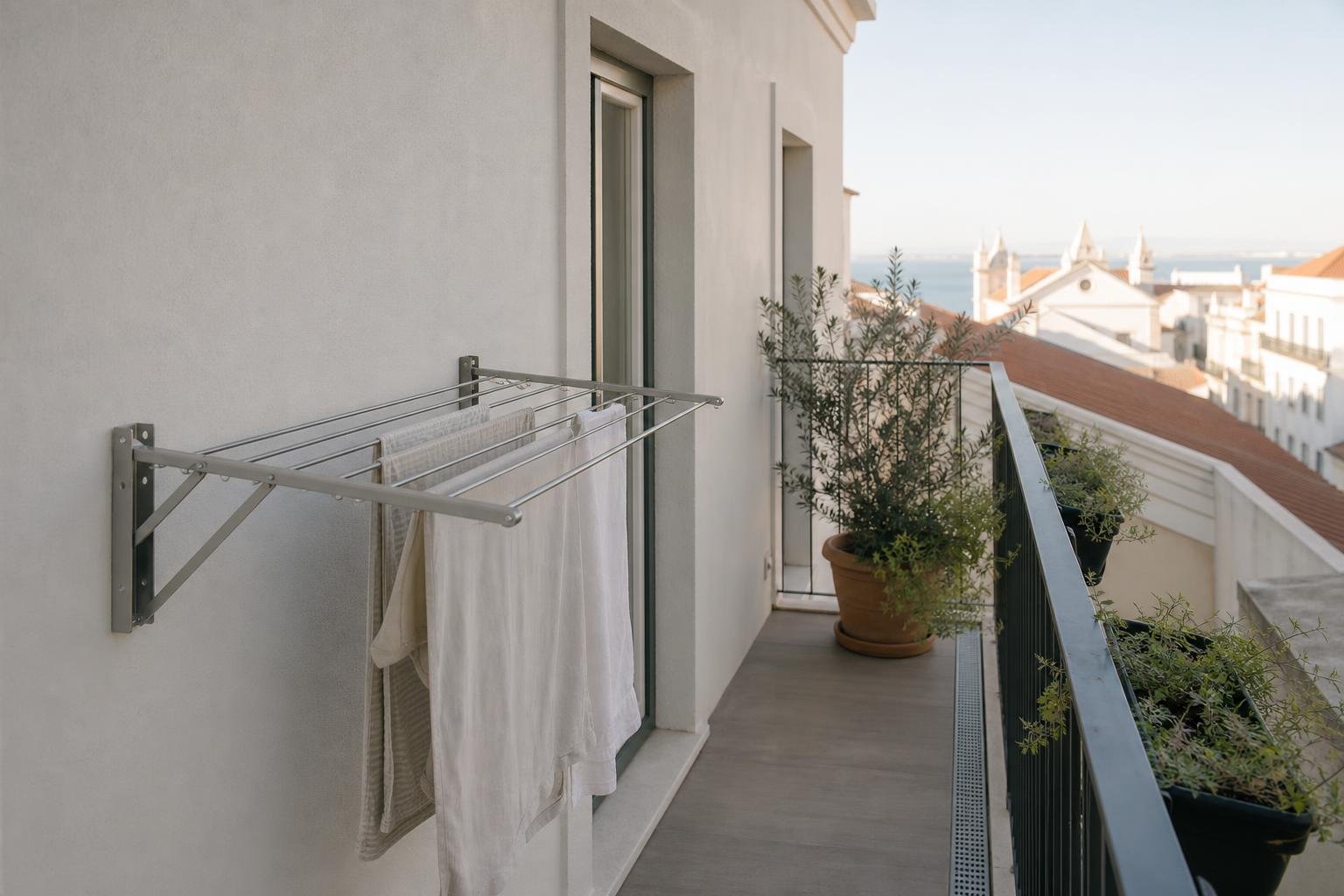
Discharging into the balcony drain can work well when the drain is functional, has sufficient capacity and the pipe finishes safely and accessibly. It is not a sound arrangement when the grate is routinely covered by mats, planters or leaves. Water then spreads over the paving and may reach the threshold.
Free discharge onto the façade, public pavement or the balcony below should also be avoided. Beyond the inconvenience to others, continual dripping leaves marks and can create condominium disputes. Where the unit sits beside a circulation route, do not discharge onto a surface where water can splash or become slippery.
Lisbon’s 1991–2020 climate normal for the Lisboa/Geofísico station records 793.5 mm of average annual rainfall, with higher average monthly rainfall in autumn and winter. That is a practical reason to keep balcony drains, grates and exterior routes clear even if the air conditioner is used mainly in summer. See the IPMA Lisbon climate normal for the seasonal figures.

Treat noise and vibration as part of the drainage design
Noise does not come only from the fan. A loose pipe can vibrate against a railing, sheet metal or wall; a condensate pump may be noticeable on a quiet balcony; and drops falling onto a metal sill can be surprisingly disruptive. The drain should be secured without being crushed, and kept away from surfaces that amplify vibration.
If a pump is used, provide access for cleaning and replacement. Do not conceal it behind fixed finishes or inside an unventilated cabinet. The same applies to the outdoor unit: its location, maintenance access, noise constraints and integration with the building should be addressed in the project brief. Ordinance No. 255/2023 specifically identifies location, noise, access and maintenance constraints for HVACR systems.
When selecting equipment, compare the outdoor noise figure on the energy label as well. The ADENE energy-label guide explains that the label includes seasonal efficiency, indicative annual consumption and indoor and outdoor sound emissions.
Do not hide maintenance behind a neat-looking finish
A tidy installation should not be impossible to inspect. The discharge point, joints, any trap and any pump need to be visible or reachable without dismantling the entire balcony. This matters especially in apartments where the pipe runs through a shutter box, a tiled wall or behind outdoor furniture.
Build a simple routine into the household: look for drips outside the intended route; remove leaves and dust from the drain; check that clips remain firm; inspect for staining around the threshold; and test drainage before summer. If the unit stops draining, solving the issue with an improvised hose can move water indoors or towards a neighbour instead.
For work involving HVACR systems, it is sensible to check whether the contractor has the appropriate qualification. The IMPIC guidance notes the relevant heating, ventilation, air-conditioning and refrigeration subcategory. It is a useful check when the work goes beyond routine cleaning.
A checklist before approving the installation
Before accepting a quotation or starting work, request clear answers to these questions:
- What is the exact condensate discharge point?
- Will the pipe maintain a continuous fall along its entire route?
- Is a pump required, and where will it sit and be maintained?
- Has the existing drain been checked, and will it remain accessible?
- How will water be prevented from dripping onto another flat, façade or pavement?
- Which fixings will limit vibration and protect the pipe from sun and impact?
- How can joints be reached if there is a blockage or leak?
This discussion is most effective before supports, finishes or service boxes are installed. If you are reorganising the balcony, pair it with Obra Lisboa’s guide to water points on a balcony. If the central issue is the outdoor unit itself, see the article on outdoor air-conditioning units in Lisbon apartments. For a wider renovation, the guide to checking building and planning records before renovating in Lisbon helps put the property’s constraints in context.
Planning to install or reorganise air conditioning on a balcony? Obra Lisboa can help coordinate drainage, fixings, electrical work and finishes into one practical solution, without leaving maintenance as an afterthought.
AI-generated editorial image; it does not depict an Obra Lisboa project.

Obra Lisboa