
A house rarely develops a problem on the day a ceiling stain becomes visible. The decisive warning may have appeared much earlier: a gutter full of leaves, a slow patio drain, a tile moved by wind, or an exterior joint that has lost adhesion. An autumn check is about finding those weak points while repairs can still be planned calmly rather than carried out in the rain.
In Lisbon, historical average rainfall rises sharply from October onwards. The Lisboa/Geofísico climate normal records 97.7 mm for October, 127.5 mm for November and 126.2 mm for December. These figures are not a forecast for one property, but they are a practical reason to prepare early. Review the IPMA climate data for Lisbon/Geofísico and schedule the inspection before prolonged wet spells begin.
Start with a ground-level survey, not a climb
Make the first round from ground level, walking around every side of the house in good light. Look for cracked, displaced or unusually dark roof tiles; loose flashings around chimneys, skylights and walls; water streaks on the façade; and bent or detached downpipes. Binoculars or a phone camera zoom can help you document details without introducing unnecessary risk.
On a pitched roof, a tile that looks slightly out of line is not merely a visual issue. Water may get beneath the roof covering and travel through the structure before showing up indoors, far from its entry point. On flat roofs, look for standing water after a light shower or wash-down. Repeated ponding calls for an assessment of falls, outlets and waterproofing.
Take dated photographs of all elevations, gutters and junctions. This gives you a useful comparison point for a crack, stain or shifted component, and clearer information if a specialist later needs to inspect the property.
Clean gutters and test the whole water route
A gutter only works if water can reach the downpipe and leave safely at the base. Remove leaves, seeds, moss, light debris and built-up soil. Use gloves and suitable hand tools; do not force fragile components or use high-pressure water on ageing joints, cracked tiles or flashings that may be loosened.
Once clean, test with a moderate flow of water, starting at the point furthest from the downpipe. Watch for a continuous run, overflow at a joint, water returning behind the gutter, or discharge against the wall. A downpipe can look clear at the top but still be partly blocked lower down; in that case water drains slowly or backs up into the gutter.
If mature trees stand close to the house, repeat the check after periods of heavy leaf fall. Exterior upkeep is part of sensible property care; our guide to preventive building maintenance can help you turn isolated tasks into a workable schedule.
Include patio, balcony and doorway drains
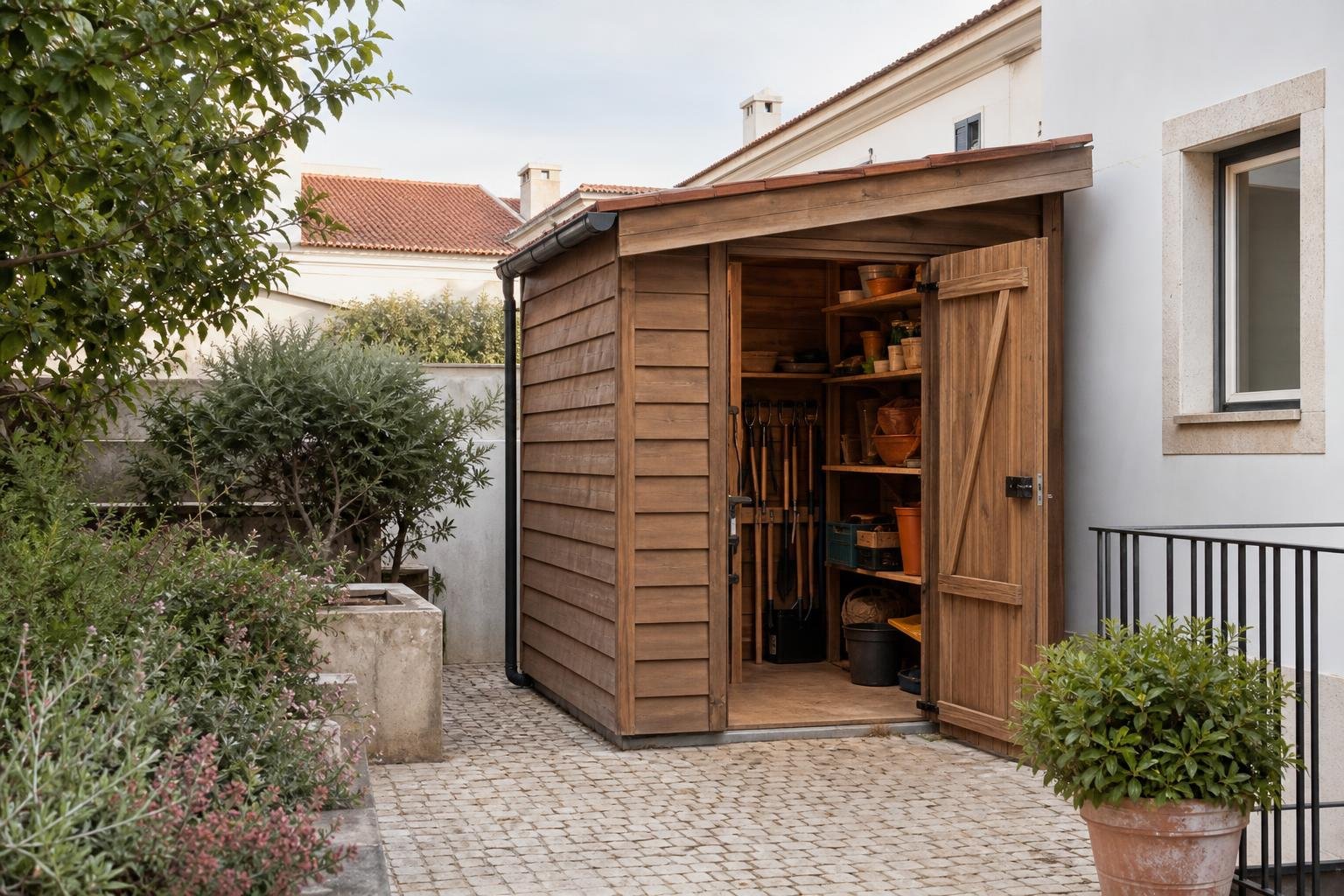
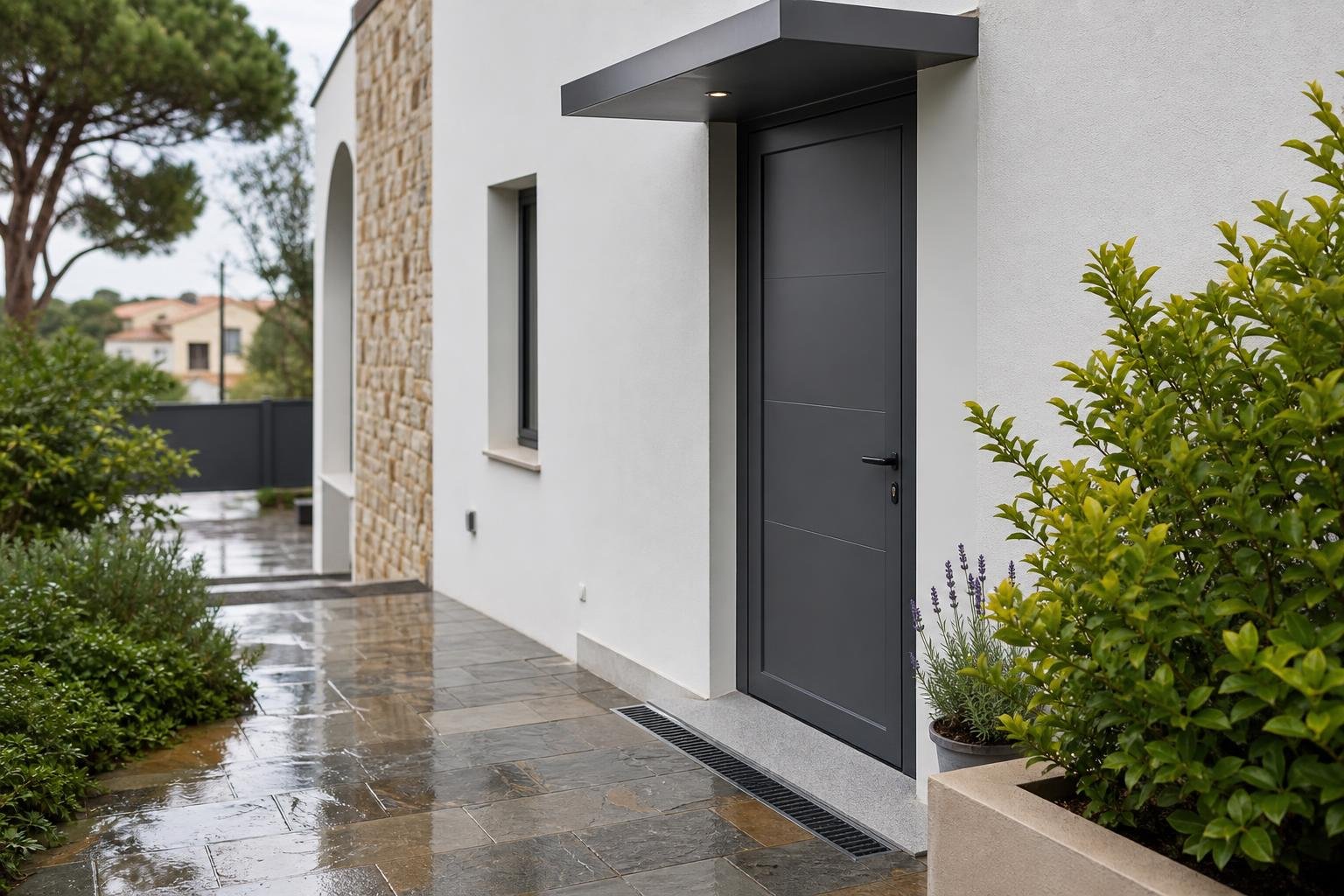
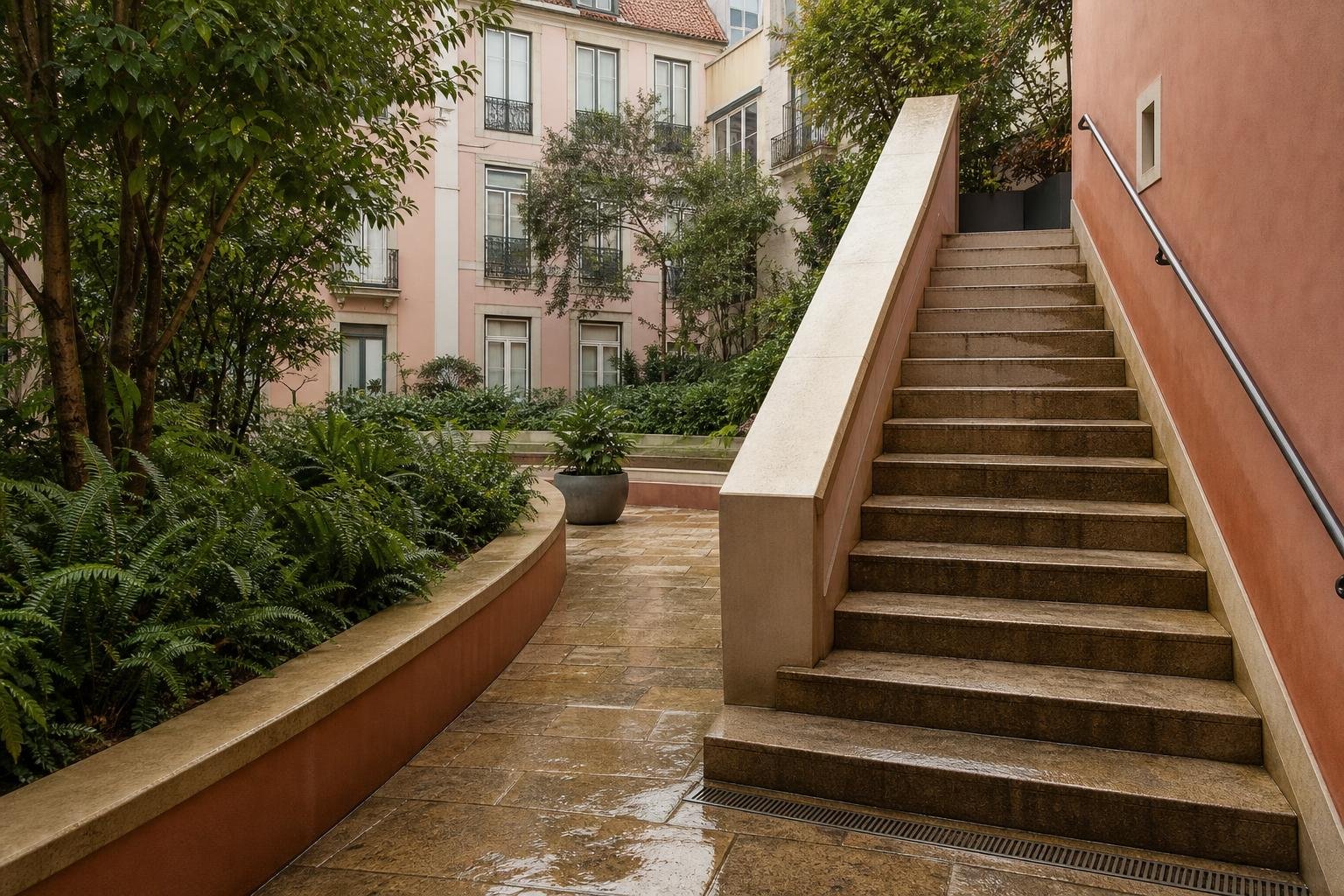
The lowest point in a patio matters just as much as the roof. Lift removable grilles, remove leaves and sediment, and check that the inspection chamber is not full. Include drains on balconies, accessible terraces, exterior stairs and washing areas. When these outlets drain slowly, water can sit against thresholds, walls or doors during intense rainfall.
Check the direction of the paving. A small fall in the wrong direction close to the house can channel water towards the façade even when the drain itself is clean. Do not try to solve that with a line of sealant spread over the paving: the proper answer may involve correcting falls, repairing joints or creating suitable drainage. For a fuller explanation, see our guide to courtyard and patio drainage in Lisbon.
After wet weather, Portugal’s public health authority advises removing standing water containing organic debris. This supports both property care and healthier conditions around the home. Read the DGS guidance for adverse weather conditions.

Inspect seals where different materials meet
Persistent leaks often begin at transitions: window frame to wall, sill to façade, downpipe to wall, roof to chimney, skylight to roof finish, or metal flashing against a higher wall. Look for sealant that is brittle, shrunken, detached, continuously cracked or marked in a way that suggests water is getting behind the bead.
Do not mistake a finishing joint for a structural repair. Applying new sealant over a damp, dirty, cracked or poorly prepared surface usually postpones rather than solves the problem. First identify where water enters, remove loose material, check material compatibility and follow the product conditions specified by its manufacturer.
At windows, also inspect drip details, frame drainage openings and the condition of the sill. Where interior signs already exist, do not assume they are only condensation. Excess moisture can contribute to condensation and mould, but water ingress through the building envelope needs to be traced and corrected at its source.
Know what you can do and what needs professional access
Cleaning a ground-level grille, removing leaves from an accessible drain or observing exterior joints are realistic tasks for many homeowners. Climbing onto a pitched roof, working close to exposed edges, lifting tiles, repairing waterproof layers or clearing concealed downpipes requires safety measures, access equipment and technical judgement that should not be improvised.
Call a professional when tiles are loose, membranes have lifted, flashings are cracked, overflows recur, timber deterioration is visible, interior staining grows, or water is close to electrical installations. If the work needs scaffolding, lifting equipment or a skip on the street, check the applicable local requirements first. In Lisbon, conservation works can be exempt from prior planning control, but public-space occupation may still require a licence or notification; check the municipality’s page on public-space occupation for exempt works.
This division of responsibility protects people and the building: a rushed repair in the wrong place can trap water in the construction and conceal the real cause for months.
Turn the inspection into a short, repeatable routine
Do not wait for a weather warning to look for defects. IPMA publishes seasonal outlooks that can help frame broader patterns, although they do not replace daily forecasts or a property-specific assessment. Before the wetter part of the year, check the IPMA seasonal forecast, choose a dry day and complete a simple list.
- Photograph the roof, eaves, flashings and façades.
- Clean accessible gutters, downpipes, grilles and inspection chambers.
- Test drainage using controlled amounts of water.
- Check window sills, balcony outlets and joints beside exterior doors.
- Record defects and decide whether they need monitoring, repair or technical assessment.
An inspection becomes valuable when it ends with a clear action. A broken tile should go on the repair list; a clean gutter can simply be logged; a new stain should be monitored after the next rainfall. That is how maintenance moves from a reaction to a deliberate way of protecting the house.
If your house has overflows, stains or unanswered questions about roofs, drainage and exterior junctions, Obra Lisboa can help structure a technical assessment and an appropriate intervention plan before isolated repairs begin.
AI-generated editorial image; it does not depict an Obra Lisboa project.

Obra Lisboa