
A carbon monoxide detector can give an early warning before a situation becomes serious, but it only works properly as part of a wider approach: well-maintained combustion appliances, unobstructed ventilation and careful everyday use. In Lisbon homes and flats, the risk deserves particular attention where there are water heaters, boilers, fireplaces, wood burners, gas hobs or attached garages.
Carbon monoxide (CO) has no colour or smell. The Portuguese Directorate-General of Health information on the health effects of pollutants explains that this gas interferes with oxygen transport in the body. That is why waiting for a smoky smell is not sensible, and why an alarm should never be treated as a nuisance. This guide answers the practical question: where should CO detectors go, and which decisions actually reduce risk?
Start by identifying every combustion source
The size of the home does not determine whether a detector is worthwhile; the relevant issue is the presence and location of sources that can produce CO. Make a straightforward list: gas water heaters or heating appliances, fireplaces, stoves, wood burners, charcoal braziers, gas cookers, and any garage or storage space with combustion engines. Generators and charcoal braziers should never be used indoors or in semi-enclosed areas.
The Portuguese Directorate-General of Health lists gas appliances, water heaters, boilers, ovens, fireplaces, braziers, charcoal grills and combustion engines among potential sources of CO. Read the DGS guidance on carbon monoxide and the safe use of equipment before rearranging a utility area or buying portable heating.
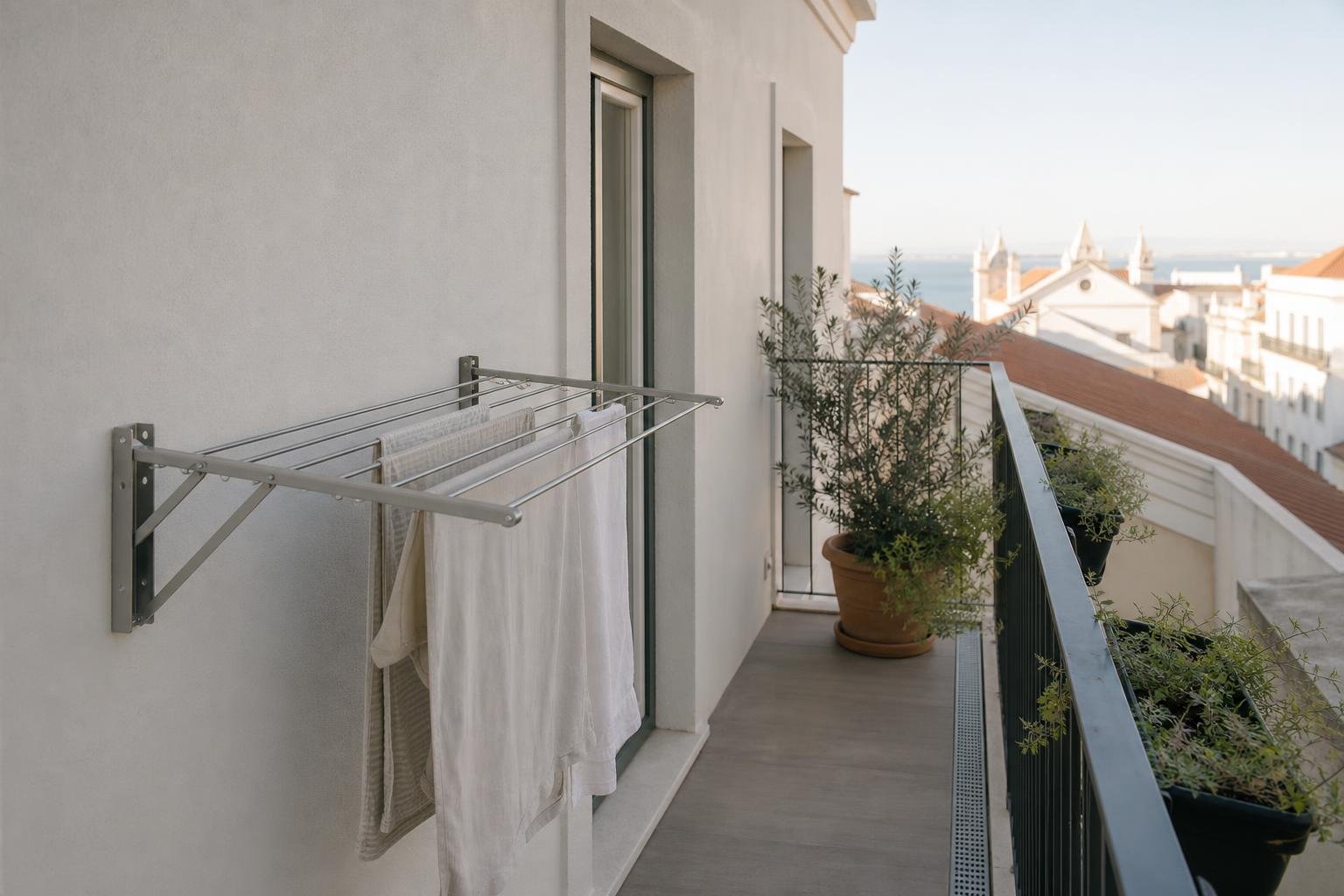
In a two-bedroom flat, for example, a water heater in an enclosed balcony and a wood burner in the living room justify considering more than one detection point. One device in a corridor may not provide the same warning across all areas, particularly when doors are shut.
Choose the location around people’s routes, not instinct
Always read the instructions for the specific model: mounting height, minimum distances from appliances and locations to avoid differ according to detector technology. As a planning principle, place detectors where the alarm can be heard and where people sleep or pass regularly, without fixing one directly beside the combustion source. A detector near the bedroom area is often useful when combustion appliances are present in the home.
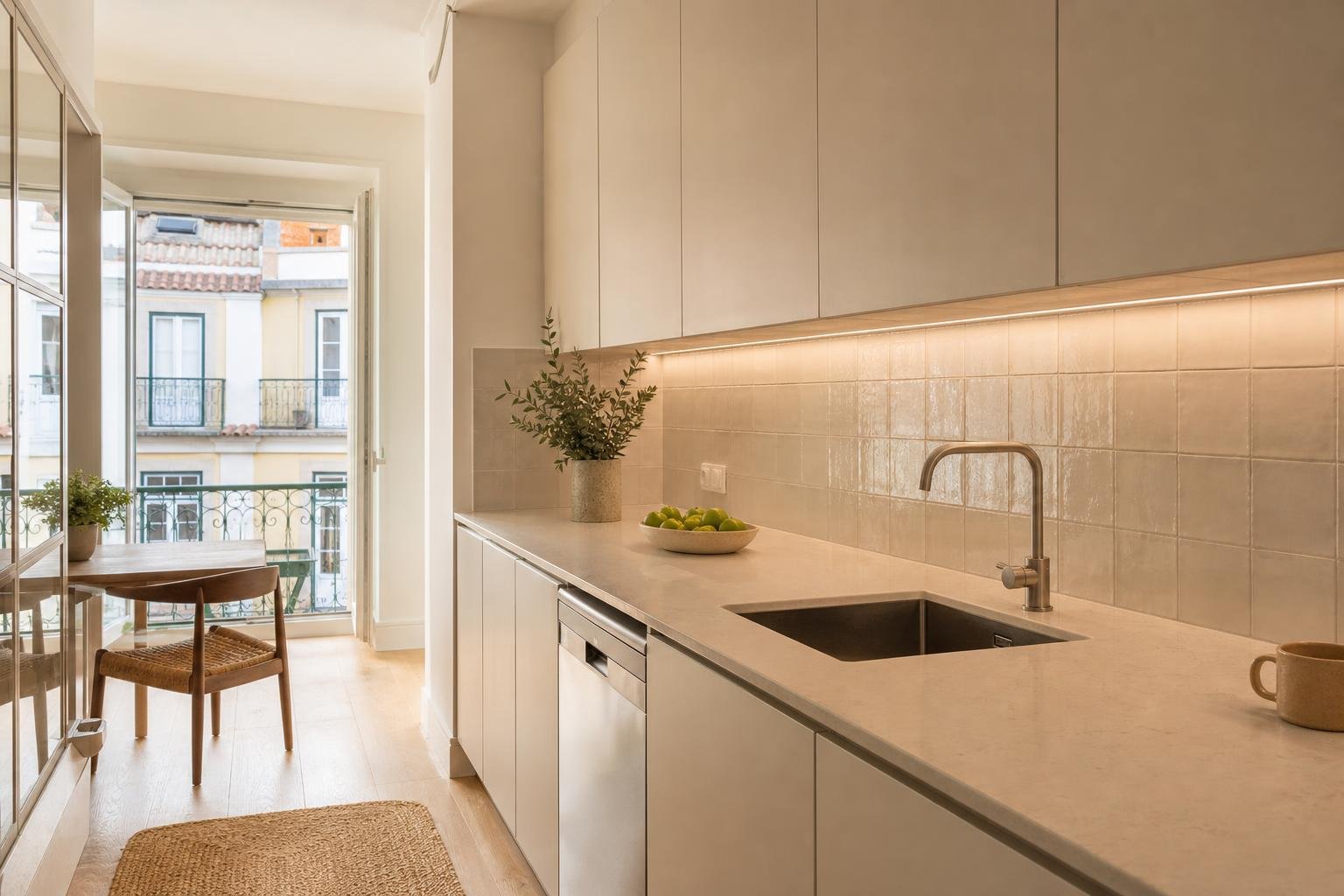
Do not hide it inside cupboards, behind curtains, next to widely open windows, above the cooker, in persistently steamy areas or immediately beside an extraction grille. Draughts, grease, moisture and localised heat can impair detection or lead to unwanted alarms.
If the kitchen has no direct external outlet, extraction and air renewal need their own considered solution. See our article on kitchen extraction without direct outdoor venting: a detector does not turn inadequate ventilation into a safe arrangement.
A detector is a warning device, not a repair
A CO alarm does not check whether a flue is correctly sized, whether a ventilation grille has been blocked, or whether an appliance was installed to the manufacturer’s instructions. It also does not replace an inspection by a qualified technician where there are ignition faults, yellow flames, soot, unusual smells, unusual condensation or recurring health complaints.
Portugal’s technical framework for combustible-gas installations lists CO detection devices as auxiliary safety equipment and states that their use is generally optional unless another provision requires them. Read the technical framework for combustible-gas installations published in the Diário da República, and always confirm the requirements that apply to your own circumstances with a competent professional.
In practical terms, the best order is to correct the cause, confirm ventilation and flue performance, maintain the equipment, and then add detection as a further layer of protection. Reversing that order creates false reassurance.

Ventilation should not make the home uncomfortable
On cold days, it is tempting to seal every draught and permanently close grilles. Yet a home with combustion appliances needs the planned air renewal required by the design and appliance instructions. Do not block permanent ventilation grilles to reduce noise or draughts; if they are uncomfortable, seek a technical solution that preserves their ventilation function.
The DGS advises keeping the home warm while ensuring appropriate ventilation, taking particular care with fireplaces, wood burners and braziers, and switching heating systems off before sleeping or leaving home. These points appear in its general winter safety guidance.
A renovation that improves windows and airtightness should also review ventilation. For context on balancing comfort and indoor air quality, read ventilation in renovated homes. Tightening the building envelope without considering existing appliances can alter how air moves through the property.
Know how to respond to an alarm without delay
When a CO detector sounds, treat the warning as genuine until proven otherwise. Move everyone outside or into fresh air, if you can do so without exposure, and call 112 where CO release or poisoning symptoms are suspected. Do not re-enter to open windows, search for the cause or switch off an appliance if that means remaining in a potentially contaminated environment.
Persistent headache, dizziness, nausea, weakness, confusion, unusual sleepiness and shortness of breath can be associated with CO poisoning. These symptoms can be mistaken for flu, tiredness or general illness, especially if several people in the home feel unwell at once or feel better after leaving.
Do not remove batteries simply to silence the alarm, and do not assume it is faulty because the gas appliance appears to be working. Once everyone is safe, the cause needs to be identified before the combustion source is used again.
Installation, testing and replacement: a plan that prevents omissions
Choose a CO detector intended for domestic use, with clear instructions that everyone in the household can understand. Before fitting it, confirm its power supply, battery autonomy, test button, end-of-life indication and the replacement date stated by the manufacturer. Record that date on the electrical panel, household calendar or appliance manual.
- Test the alarm at the interval specified by the manufacturer.
- Keep the area clean and do not obstruct the device.
- Do not paint over or cover the detector during building work.
- Coordinate cleaning and servicing of chimneys, extraction systems and combustion appliances before the period of highest use.
- Make sure every occupant recognises the alarm sound and knows what to do.
It is sensible to pair this protection with smoke detection, but they perform different functions. See smoke detectors at home: placement, maintenance and limits to plan both without confusing their roles.
If you are renovating a kitchen, living room or utility area containing combustion appliances, Obra Lisboa can help coordinate ventilation, access, finishes and works that support safer use. Find out more through Choosing a Construction Company in Lisbon.
AI-generated editorial image; it does not depict an Obra Lisboa project.

Obra Lisboa