
In a bedroom, flooring is felt before it is noticed: when getting out of bed, walking barefoot, moving a chair or trying to soften everyday footfall. Cork can suit that kind of use very well, provided it is chosen as a complete system rather than as a surface finish alone. There are floating planks, glue-down tiles, products with integrated cork layers and very different protective finishes.
The decisive issue is not colour or pattern. It is whether the base is dry, level and stable; whether doors, skirtings and furniture leave room for movement; and whether the household routine suits the finish. Cork manufacturing is a recognised Portuguese industrial activity, but local provenance does not replace checking the technical sheet, use class and manufacturer’s instructions. See the INE classification for the cork industry.
This guide explains when cork makes sense in a Lisbon bedroom, what to establish before ordering it, and how to prevent a comfortable floor from becoming an early repair job.
Start with how the bedroom is actually used
A main bedroom, children’s room and guest room do not place identical demands on a floor. The first may carry beds, chests of drawers and sometimes a desk chair; the second has toys on wheels, spills and more frequent cleaning; the third may prioritise barefoot comfort and straightforward upkeep. Define these situations before comparing samples.
Cork commonly feels less cold underfoot than mineral finishes and can soften footfall within the room. That does not mean it will independently solve airborne sound between flats or impact noise travelling through the structure. In an apartment, coordinate the choice with acoustic flooring during a renovation: rigid connections, wall edges and the layer beneath the finish can reduce the benefit you expect.
Bring a simple room plan to the decision, showing the bed, wardrobe, desk and doors. It makes concentrated loads, repeated routes and areas needing protection easier to identify.
Choose between a floating floor and glued tiles
A floating cork floor is assembled over a prepared base without being bonded rigidly across its whole area. It can be a practical choice where a cleaner intervention is wanted and the additional build-up can be accepted. That build-up must be checked against internal doors, thresholds, fitted wardrobes and transitions to the hallway.
Glue-down cork tiles rely even more on a dry, level base, but can be useful where every millimetre matters or where a more continuous floor is desired. Do not choose between the formats on price alone: request the full build-up, including primer, adhesive where relevant, underlay, finish and transition profiles.
In either case, confirm compatibility with underfloor heating in writing if it exists or may be added later. “Cork” is not a complete specification; each product has its own limits.
Prepare the subfloor before opening the boxes
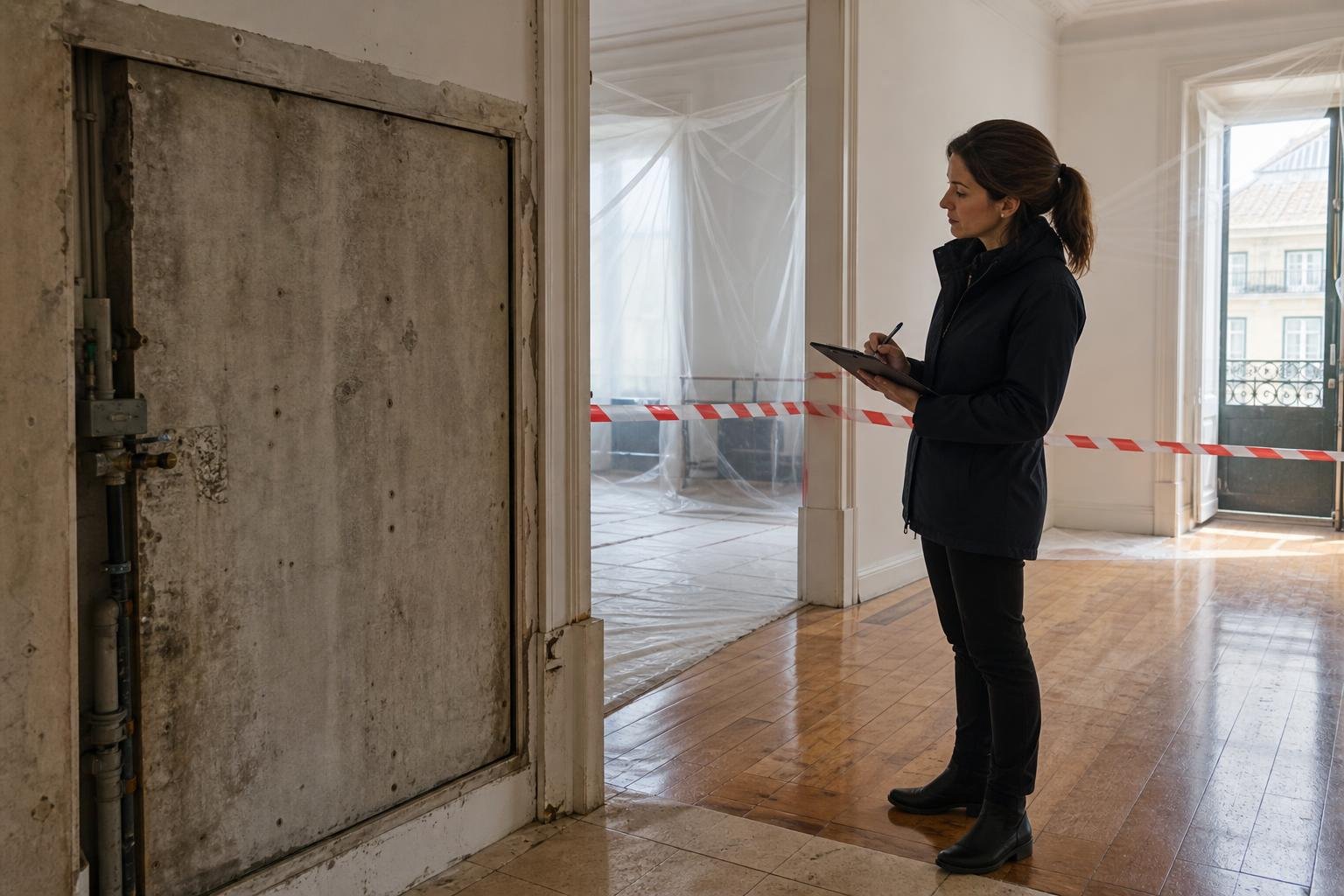
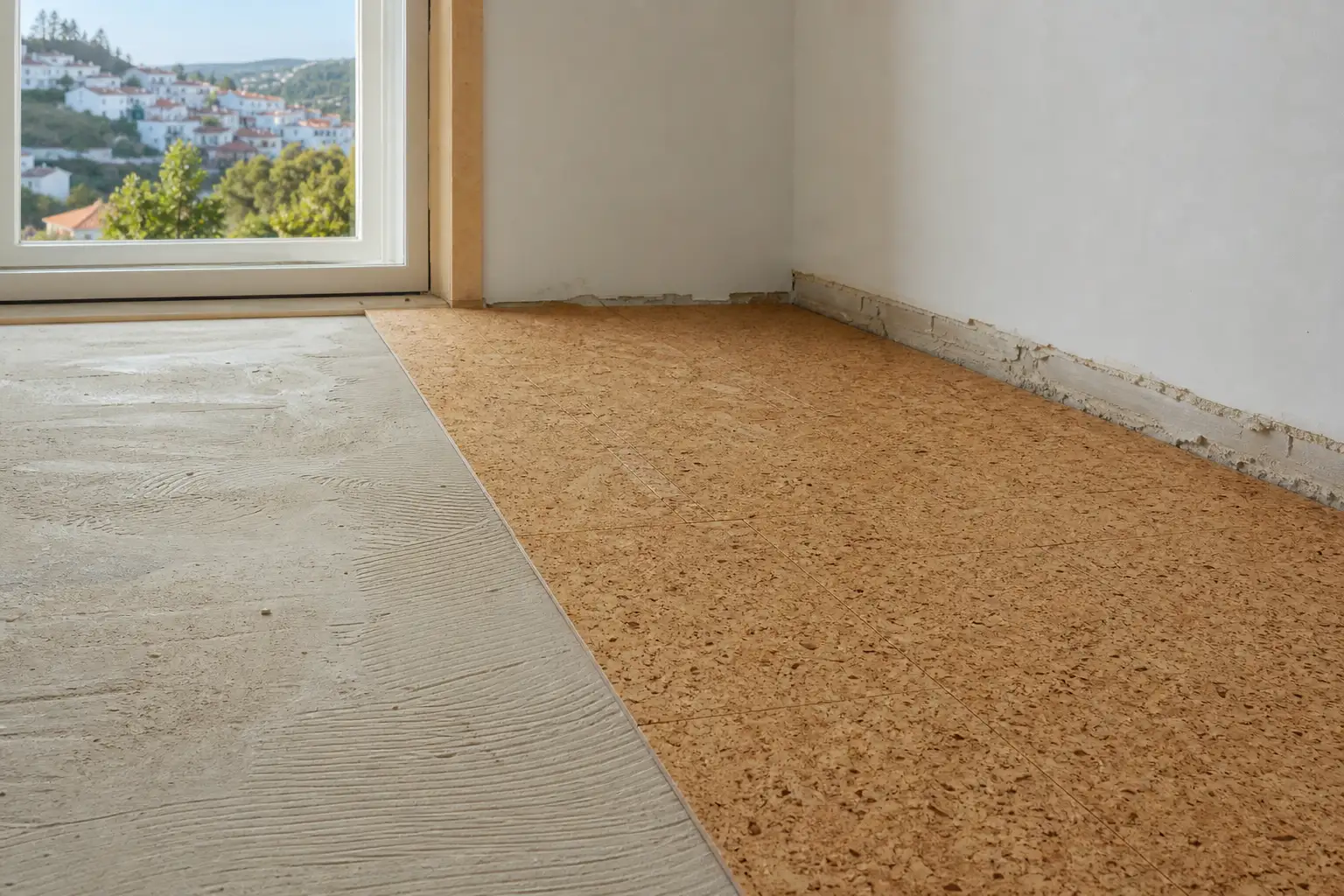
An attractive plank cannot correct a damp screed, loose boards or a localised dip. Before fitting, the base should be checked for active cracking, loose material, hollow areas, adhesive residues, moisture and unevenness. Moisture testing and acceptable limits must follow the chosen system and the manufacturer’s instructions; a judgement based only on touch is not enough.
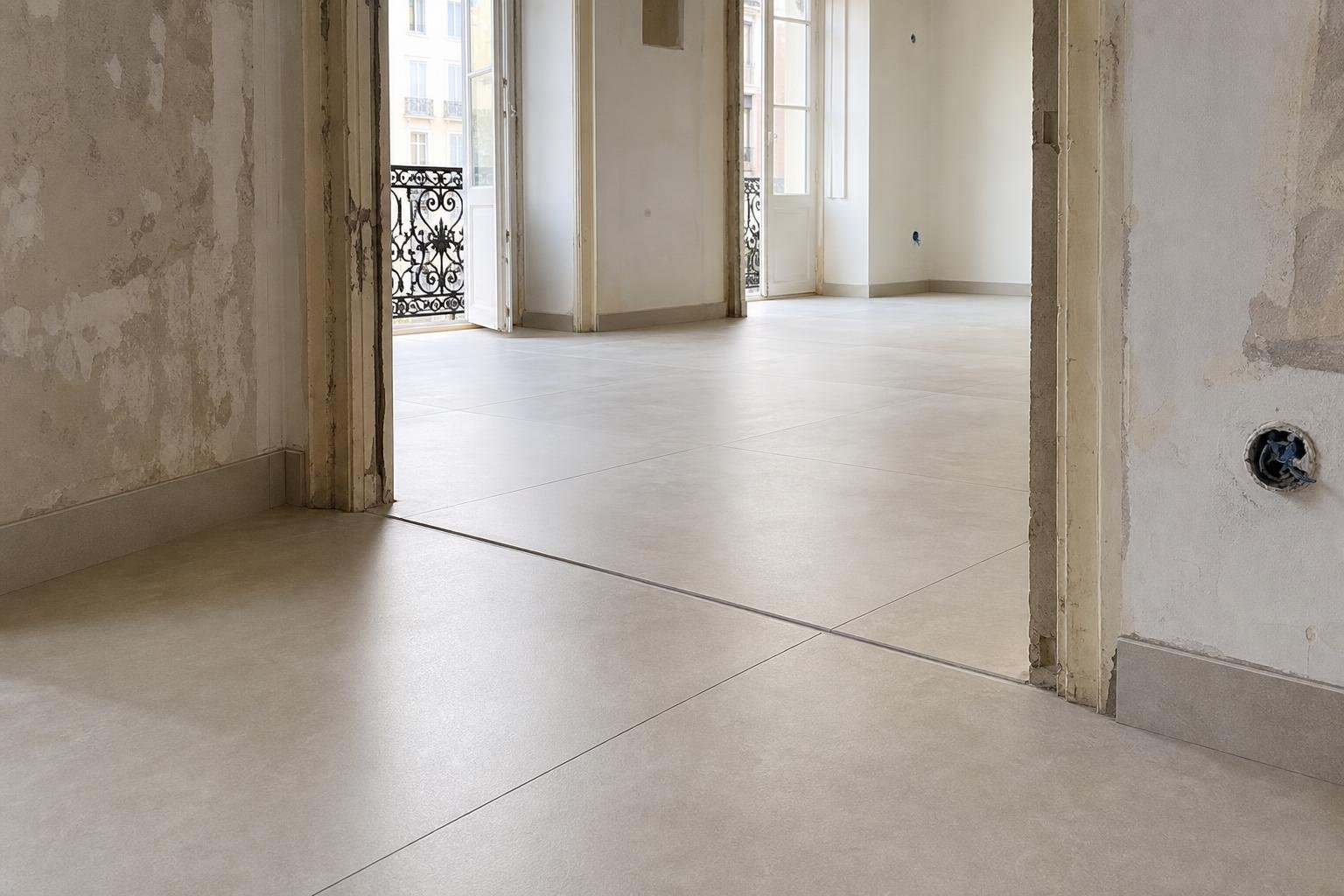
In an older Lisbon flat, different bases can coexist from room to room: timber, ceramic tile, recent screed or patches left by earlier work. The correct solution may involve local repairs, levelling, removing an old layer or building a suitable new base. Hiding the issue with a thick soft underlay usually postpones movement, noise and opening joints.
If the renovation includes partitions, plumbing or electrical work, lay the floor after wet trades and the more disruptive wall repairs. For a broader work sequence, see how to avoid common renovation problems.
Moisture, ventilation and indoor air
A comfortable bedroom is not created by flooring alone. Portugal’s Directorate-General of Health notes that construction materials, furniture, household activities, temperature and humidity all affect indoor air quality. Excess moisture can cause condensation on cold surfaces and encourage mould. Read the DGS guidance on indoor air before treating stains or odours as a decorative issue only.
For that reason, do not install new cork over a base with a persistent musty smell, damaged skirtings, salt deposits or marks that return after rain. First establish the cause: external water ingress, a leak, condensation, insufficient ventilation or rising damp. Only then should repair work and drying time be decided.
During the project, keep the material in the conditions specified by the manufacturer and avoid fitting it in a closed, cold, damp room. Afterwards, ventilate regularly, without assuming that an open window can solve a building leak.
Installation details that prevent marks and distortion
The floor needs perimeter gaps to accommodate the movement allowed for by the system. These gaps are covered by skirting or a profile; they should never be filled rigidly with mortar. Sliding-door frames, columns, pipes and fixed furniture require the same logic: the finish must not be trapped between immovable elements.
Before starting, confirm the direction of the boards in relation to daylight and the room shape. In a long room, running the length with the dominant direction can make the floor read more calmly; in a small room, the layout should also avoid narrow cuts at the walls. A simple set-out prevents ending at the doorway with a weak strip.
Use wide furniture pads under bed and drawer-unit feet, particularly if furniture will be moved. Hard castors and small feet concentrate load and can mark the finish. A breathable rug beneath a work chair can help, provided it is lifted periodically for cleaning and inspection.
Cleaning, maintenance and early warning signs
Daily care should be gentle: vacuum with a suitable brush head or use a soft broom, then a well-wrung mop where the finish permits damp cleaning. Excess water, abrasive products, harsh pads and improvised waxes can leave residue, reduce grip or damage the protective layer. Follow the cleaning product specified for that particular finish, not merely one labelled for cork floors in general.
Wipe spills promptly and keep sand brought in from shoes or balconies away from the bedroom. Fine grit acts as an abrasive, especially by the door. A superficial scuff is different from a raised joint, dark stain or area that gives underfoot; the latter signs justify investigating moisture, subfloor failure or water ingress before refinishing the surface.
Portugal regulates acoustic requirements in buildings. The Building Acoustic Requirements Regulation provides the legal framework, but no single finish is an automatic acoustic solution. Sound results come from the product, base, perimeter treatment, installation and use together.
Planning a bedroom renovation in Lisbon? Obra Lisboa can help coordinate the flooring choice with subfloor condition, the wider work programme and finishing details before work begins.
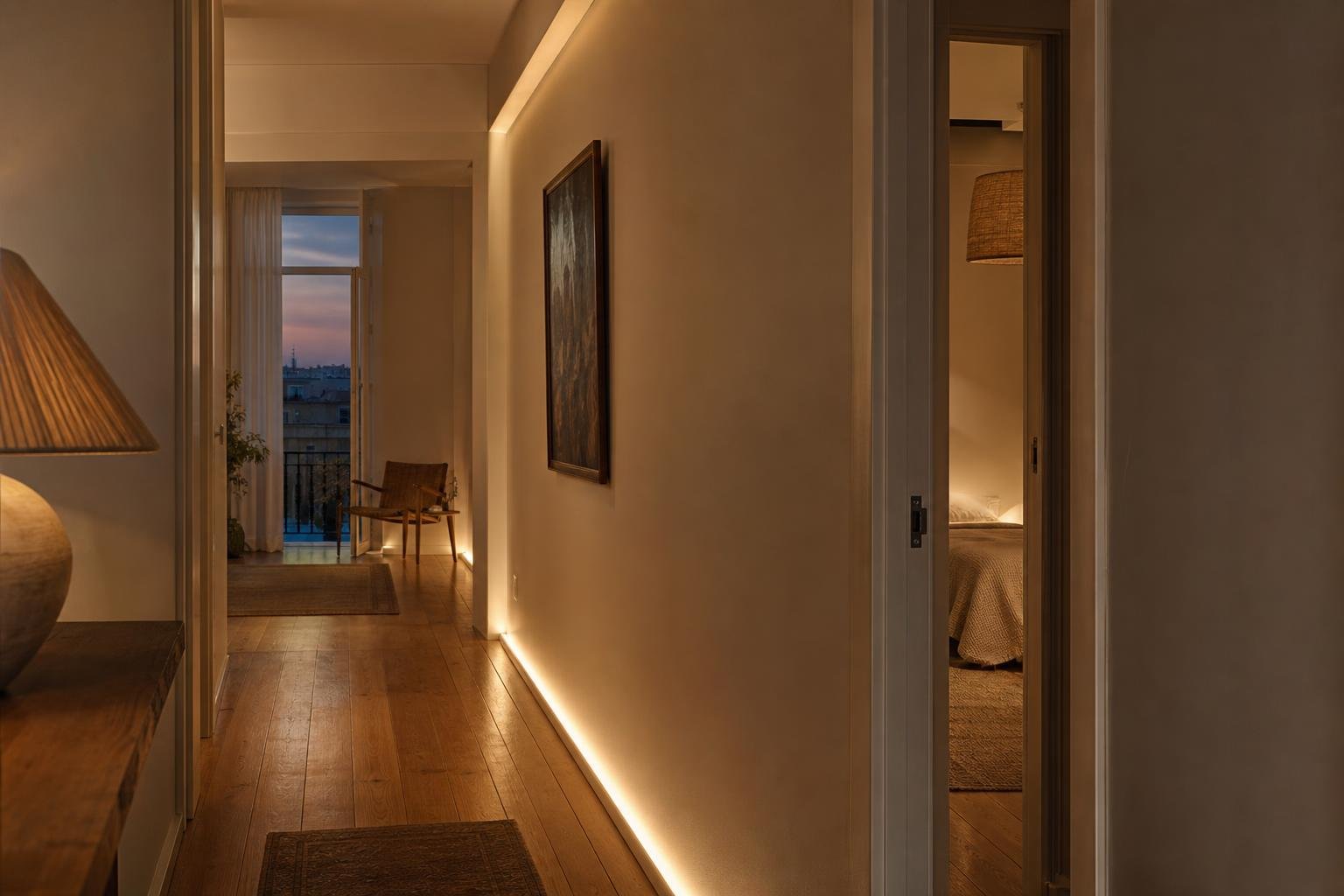
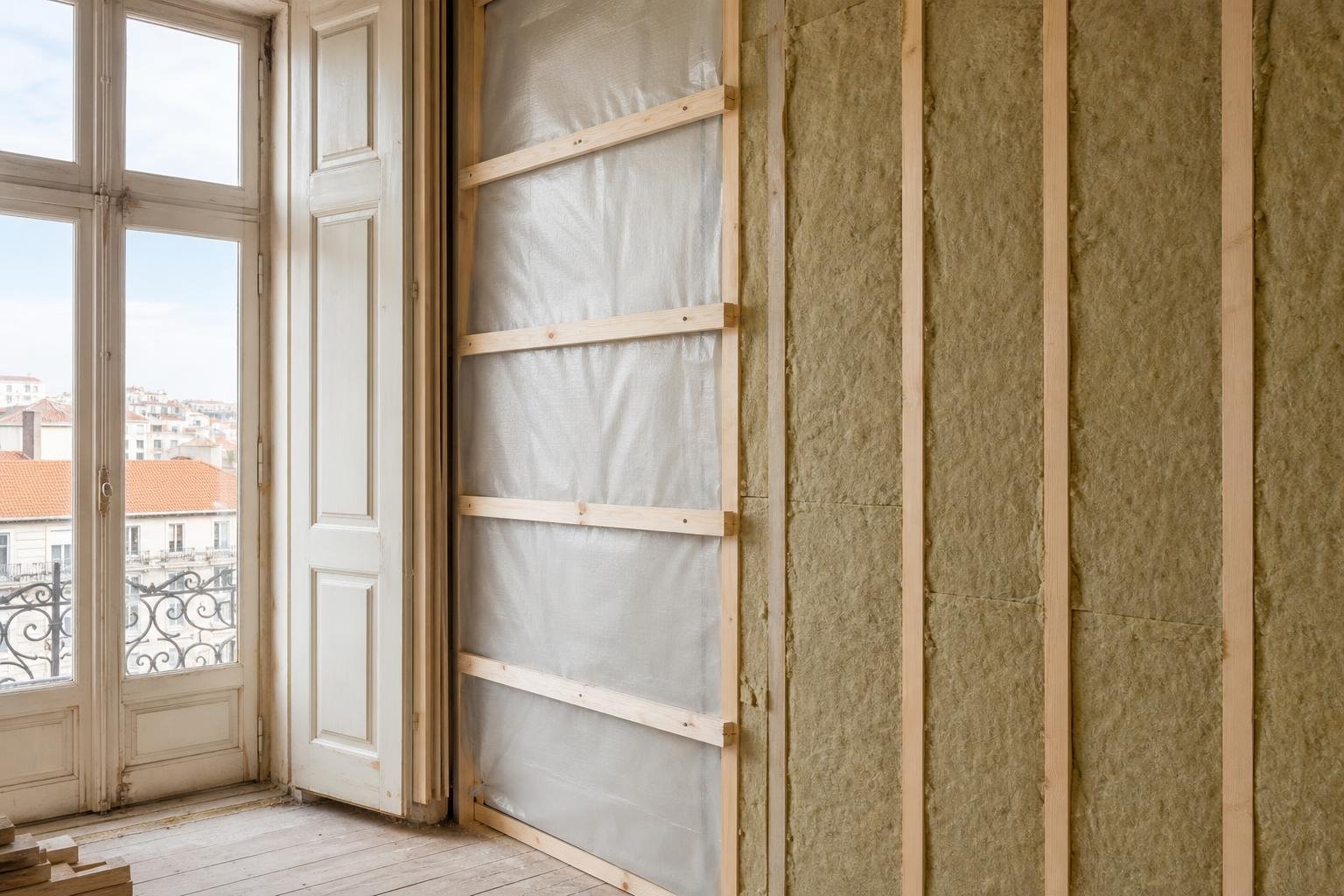
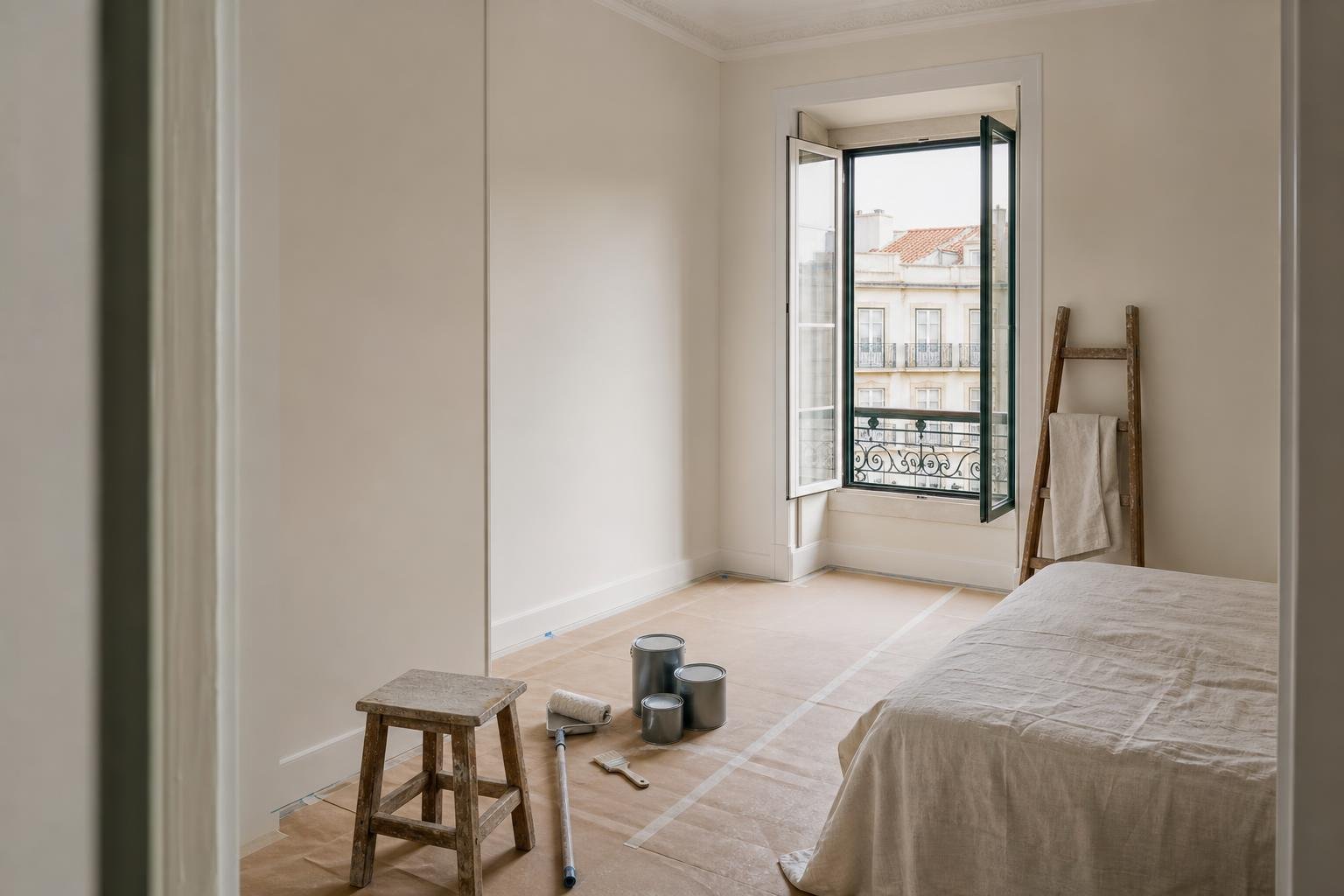
AI-generated editorial image; it does not depict an Obra Lisboa project.

Obra Lisboa