For a nursery, the best first move is to plan sleep, nappy changing, feeding and storage routines before choosing colours or furniture. That prevents outlets hidden behind a chest of drawers, harsh ceiling light at three in the morning and drawers that take over the route through the room. Portugal’s Directorate-General of Health recommends a calm sleep setting and states that a baby should have their own cot, without pillows, bows or ribbons inside it. Read the DGS guidance on healthy and safe children.
Contents
- Start with the route through an ordinary night
- What lighting is needed beyond the ceiling fitting?
- Where should outlets go so you do not rely on extension leads?
- How should storage work for a baby and the child who follows?
- Which materials and curtains make everyday life easier?
- What should be confirmed before ordering or starting work?
Start with the route through an ordinary night
Plan the room around how it will be used at two in the morning, rather than how it looks in a photograph. Walk in through the door, reach the cot, find nappies, clothes and low-level light without crossing a dark room. This quick exercise makes it clear which items need to stay close and which can go into a tall cupboard.
Keep a clear route between the door, cot and changing area. The chest of drawers and changing top should open without meeting the cot or forcing the carer to walk around a chair. In a small room, choose a changing unit that can later work as an ordinary chest of drawers; it avoids buying temporary furniture that soon has nowhere to go.
- Place the cot on a wall away from long curtains, cords or reachable shelves.
- Keep everyday clothing between an adult’s waist and chest height.
- Store duvets, travel bags and future-size clothes in high or deep storage.
- Do not use the floor as storage: it is the space needed to move while carrying a baby.
To decide furniture, finishes and electrical points in advance, it helps to make a renovation decision and sample register before walls are closed or joinery is ordered.
What lighting is needed beyond the ceiling fitting?
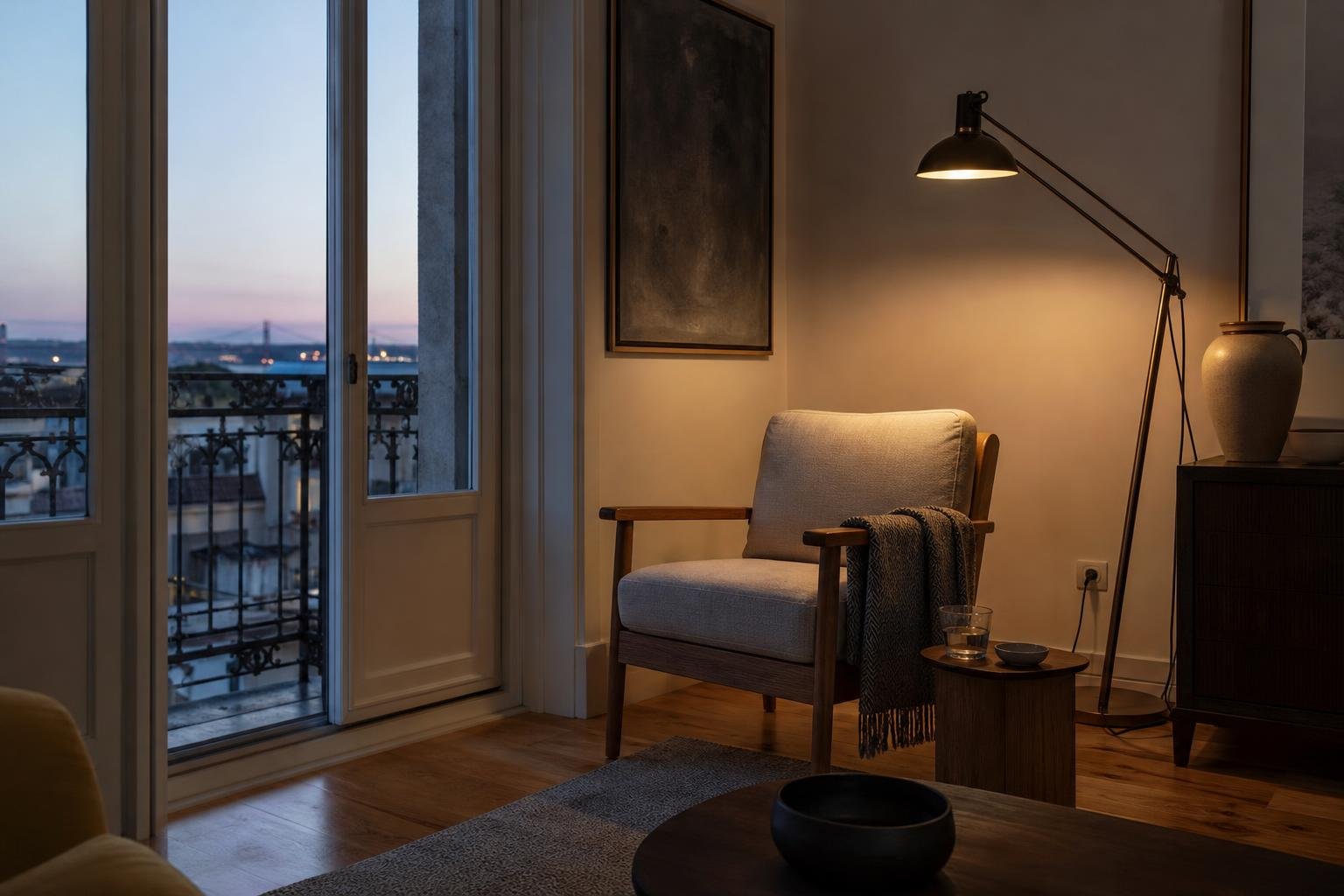
One central fitting is useful for cleaning, but it rarely supports the whole routine. Plan at least two layers: general light for dressing, tidying and cleaning, plus a night or task light aimed at the changing area or route through the room. The second layer should let you care for the baby without lighting the whole room or shining directly into the eyes of someone sitting down.
Choose a properly fixed wall light or joinery-integrated light rather than a portable lamp with a loose lead by the cot. A dimmable fitting can be useful when it is selected and installed for the intended circuit. For efficiency, ADENE recommends LED lighting and, where appropriate, motion sensors; in a nursery, a sensor often works better inside a wardrobe or in a small corridor than close to the cot, where night movement may become distracting. See ADENE’s electricity measures.
Avoid positioning a reading light directly above the mattress. Aim it at the wall, changing unit or the place where an adult sits. You need enough light to see a nappy, thermometer or pyjama fastening without turning the room into a fully awake space.
If the room also needs an armchair, use the same principle as layered lighting in a multifunctional room: each task needs its own source, rather than a more powerful central fitting.
| Layer | Location | Purpose |
|---|---|---|
| General light | Ceiling or high wall | Dressing, cleaning and tidying |
| Task light | By the changing unit or route | Night-time changing and orientation |
| Wardrobe light | Inside wardrobe or drawer | Finding clothes without waking the room |
Where should outlets go so you do not rely on extension leads?
Outlets should serve identified equipment: a baby monitor, lamp, breast pump, charger and later a reading light or desk. Mark these uses on the plan before choosing the cot and changing-unit position. An outlet hidden behind heavy furniture is of limited use; one that is too exposed near a play area calls for suitable protection and supervision.
Portuguese technical rules require electrical distribution to be designed in accordance with applicable regulation. A technical document published in the Diário da República says the number of outlets should reflect a room’s use and the equipment expected there, including references for bedrooms. The practical lesson is to plan for current and future use instead of filling the room with extension leads. Read the technical reference published in the Diário da República.
- Set the likely cot wall, but do not place every outlet behind it.
- Provide an accessible outlet at the changing area, without leads crossing the route.
- Allow for power where an armchair, reading light or child’s desk may later be placed.
- Ask the electrician to confirm circuits, protection and equipment compatibility before chases are closed.
Do not open walls or alter circuits as a DIY job. Electrical renovation should be designed and carried out by a qualified professional, especially when it involves the consumer unit, concealed cabling or new points.

How should storage work for a baby and the child who follows?
The most effective storage separates frequent use from occasional use. Nappies, bodysuits, towels and everyday hygiene items should be reachable with one hand and close to the changing area. Next-season clothes, spare bedding and rotated toys can sit in high cupboards, closed boxes or deep drawers.
Choose drawers with controlled closing and stable furniture. Once a child starts pulling, climbing and opening doors, an apparently harmless chest of drawers becomes a risk if it is not securely fixed to the wall. Before ordering tall furniture or wall-mounted units, check the wall build-up and any reinforcement required; this matters particularly with old plaster or uneven masonry walls. See what to check before fixing tall furniture to older walls.
Avoid displaying medicines, small items or decorative hangers on low shelves. Decoration should remain out of reach and should not replace closed storage. A handsome shelf above the changing unit only works if it is securely fixed, not overloaded and does not create a hazard above the place where the baby is changed.
Which materials and curtains make everyday life easier?
Choose washable, durable surfaces before thinking about a decorative theme. A wall paint finish suitable for cleaning, flooring that is easy to vacuum and removable curtains make the first months easier. Very deep rugs, heavily layered beds and open baskets create more work; use them only when they can be cleaned and do not narrow the route through the room.
The DGS advises a comfortable, quiet and dark sleep environment and recommends avoiding electronic devices before bedtime. In a nursery, this means simple, controllable blackout without hanging cords within reach, plus discreet night lighting used only when needed. Read the DGS guidance on sleep and rest environments.
In a Lisbon flat with an east- or west-facing window, test the curtains in daylight before deciding. The room needs to darken for naps, while still opening easily in the morning for ventilation and natural light. Do not push the cot against a window simply to free up a wall: curtain operation, ventilation and solar control must remain straightforward.
What should be confirmed before ordering or starting work?
Finalise the layout and services first; leave colours, handles and decoration until later. Visit the room with masking tape on the floor and simulate doors, drawers and the cot. Check that an adult can open the window, use the wardrobe and reach the child without moving furniture.
- Final location of door, cot, changing unit and wardrobe.
- Light points, controls and outlets linked to an identified use.
- Fixing method for tall furniture and shelves.
- Curtains, blinds and their cords kept out of reach.
- Washable finishes and space to vacuum behind furniture.
If the intervention changes approved elements, building services or solutions requiring a design, check the relevant framework before starting. In Lisbon, the council states that notice of starting work must be submitted up to five days beforehand where applicable. Consult Lisbon City Council’s notice-of-starting-work information.
The most durable outcome is not an overly themed baby room. It is a calm, safe and adaptable base where decoration can change without reopening walls.
Key takeaways
- Plan the nursery around the night-time route and keep the path between door, cot and changing unit clear.
- Use general light for tasks and low-level task light for night care; keep loose leads and lamps away from the cot.
- Plan outlets around real equipment as well as the room’s future use.
- Secure chests of drawers, shelves and tall furniture to a suitable wall before a child begins exploring.
Planning a nursery as part of a wider renovation? Bring a simple plan showing the cot, changing unit, wardrobe and intended equipment to the first conversation. Obra Lisboa can help turn those decisions into a coordinated plan for building work, lighting, joinery and services.
Sources and further reading
- Read the DGS guidance on healthy and safe children
- Read the DGS guidance on sleep and rest environments
- Read the technical reference published in the Diário da República
- See ADENE’s electricity measures
- Consult Lisbon City Council’s notice-of-starting-work information
Editorial image; it does not depict an Obra Lisboa project.

Obra Lisboa