An entrance cupboard for wet umbrellas and coats needs to contain water, allow air to move and use surfaces that are easy to wipe clean. If damp textiles are shut inside a deep, unventilated unit, moisture transfers to clothing, the cupboard base and eventually the adjoining wall. In Lisbon, where concentrated rainy spells can alternate with mild days, a small controlled drying zone is more useful than quickly hiding everything brought in from outside.
Contents
- Decide what will enter the cupboard while wet
- Where should the wet zone go?
- Which materials cope best with droplets and regular cleaning?
- How to ventilate without turning the cupboard into a draughty space
- A five-minute routine after heavy rain
- When is this suitable for DIY, and when should you call a professional?
Decide what will enter the cupboard while wet
Do not treat the entrance as an ordinary wardrobe. A dripping umbrella, a child’s raincoat and wet shoes have different needs from a dry winter coat or a suitcase. Define a daily-use strip close to the door, then keep the more protected part of the unit for items that are already dry.
Make a short list before buying ready-made units or commissioning joinery:
- long and folding umbrellas;
- raincoats used during the week;
- shoes or boots that need to dry;
- leads, backpack covers and cloths for wiping droplets.
Avoid filling this area with winter coats stored for months. A cupboard that receives water needs spare capacity so air can move around each item. The Portuguese Directorate-General of Health advises daily home ventilation and ventilation during moisture-producing activities; the practical rule inside an entrance cupboard is similar: nothing damp should be pressed against a closed door.
Where should the wet zone go?
Put it close to the front door, without narrowing the route through the hall or forcing people to leave an open umbrella over timber, a mat or floating flooring. In a narrow corridor, a low unit or a shallow tall cupboard with easy front access and a removable tray at the bottom can work well.
If the entrance door opens inwards, test its full swing with the cabinet, handles and an umbrella in hand. Leave enough room to remove the tray without dragging water across the floor. An absorbent mat can deal with small droplets, but it does not replace a waterproof base and should not remain soaked. For related details around thresholds and water, see how standing water near a door can affect flooring and thresholds.
Do not place the back of the cupboard against a wall that already has staining, peeling paint or mould. First establish whether there is a leak, condensation or moisture from everyday use; the cabinet can conceal the warning sign and slow drying further.
Which materials cope best with droplets and regular cleaning?
The base is the critical part. Choose a rigid, removable tray with a low lip, wide enough to catch water without making it awkward to lift out. Painted metal, durable plastic or another waterproof, washable material can work. Do not use cardboard, felt, unfinished timber or a woven basket as a water collector.
For internal faces, choose continuous, wipeable finishes. Timber can work when edges are properly sealed and kept away from persistent water; cuts, drill holes and panel joints need the most care. At the back of the unit, leaving a small gap from the wall helps avoid trapping condensation.
For coats, use sturdy hangers or hooks that leave space between garments. A waterproof coat folded onto itself takes longer to dry than one hung open at the front. If you plan to add a hook panel to an older wall, check the substrate and fixings first: walls in older flats may need carefully selected anchors and load points.
| Component | Purpose | Mistake to avoid |
|---|---|---|
| Removable tray with raised edge | Collects droplets and allows the base to be washed | Leaving standing water for days |
| Spaced hooks or a short rail | Lets coats dry without being crushed together | Layering several wet coats |
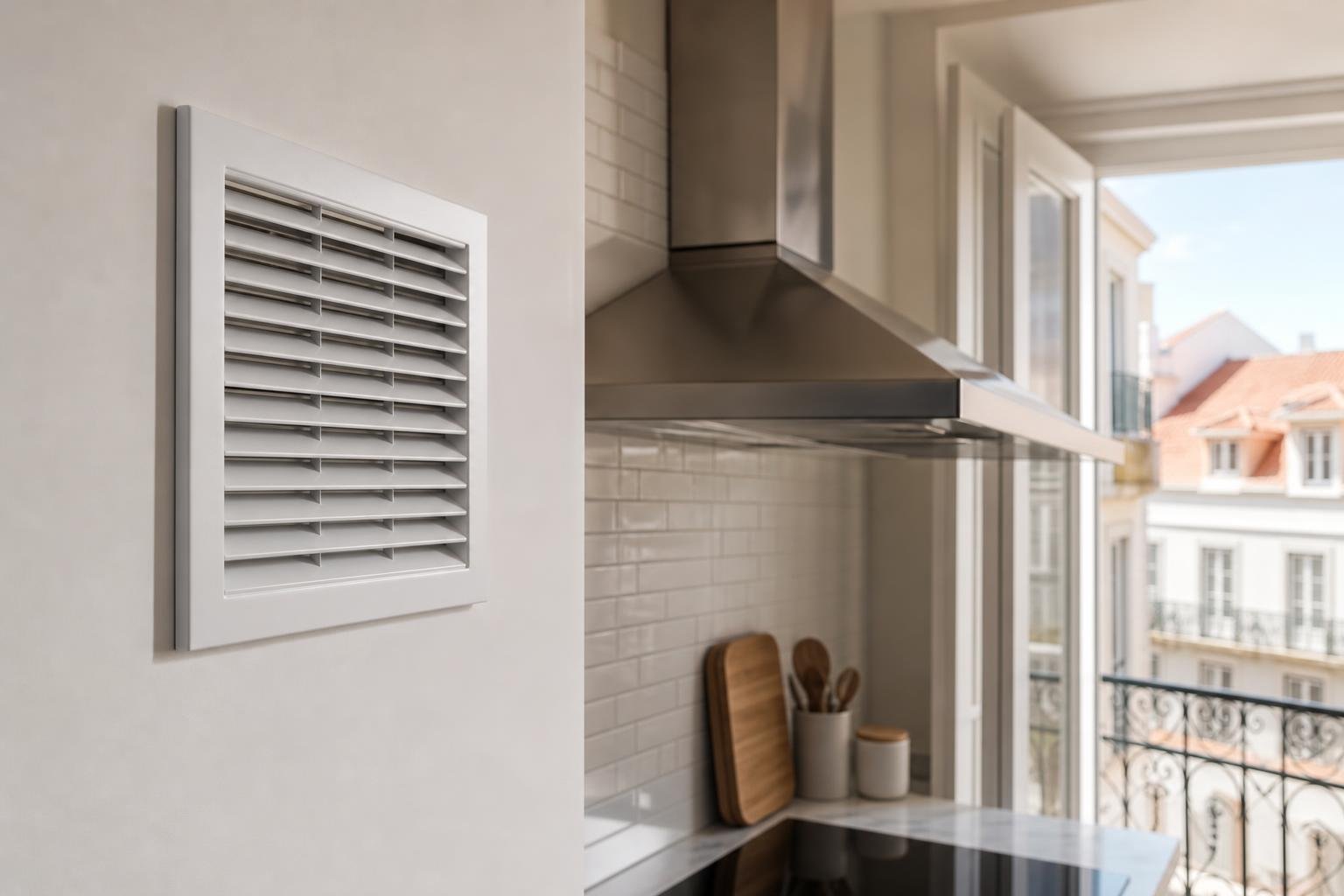
| Discreet ventilation openings | Helps refresh the air inside the compartment | Blocking the openings with boxes or clothing |
| Washable absorbent cloth | Deals with small droplets as people arrive | Using it as the only protection from water |

How to ventilate without turning the cupboard into a draughty space
Ventilating the unit does not mean leaving it entirely open. You can allow a small continuous gap around the door, use discreet grilles at high and low level, or create an open compartment for items that are still drying. What matters is that air has a way in and out, with no bags, boxes or clothing blocking those points.
After a rainy day, leave an umbrella open in a safe place until it has stopped dripping, then store it. Shake out coats, open zips and pockets, and do not put wet garments on heat sources. The DGS guidance on damp and mould identifies moisture control and increased ventilation as key measures for preventing mould.
A windowless entrance does not rule out this arrangement, but it makes the routine more important: leave the compartment open for a while, ventilate the home and empty the tray. A dehumidifier may reduce moisture in the air, but it does not dry pooled water or solve a hidden leak.
A five-minute routine after heavy rain
The entrance works best when maintenance is brief and frequent. DGS advises paying attention to leaks and damp, which encourage microorganisms such as mould and fungi, and removing standing water after rain. Read the DGS advice for rain and adverse weather for the wider household context behind this routine.
- Close the umbrella and let it drain over the tray, rather than over the mat.
- Hang the coat with space around it and leave the zip open.
- Move very wet boots to a washable base outside the cupboard if needed.
- Wipe droplets from the threshold and empty the tray when water is visible.
- Keep the cupboard door open while items dry, closing it only when they are dry.
During wetter months, check once a week for stale smells, dark spots in corners, swollen panels, corroded hardware or water beneath the tray. Lisbon/Instituto Geofísico climate normals from IPMA include rainfall and average rainy-day data, a useful reminder that this part of the home benefits from planning rather than improvisation.
When is this suitable for DIY, and when should you call a professional?
Buying a suitable tray, arranging hooks, replacing a worn mat and cleaning the compartment regularly are reasonable DIY tasks. Stop before drilling if you do not know where cables or pipework run, if the wall is deteriorated, or if the unit is tall enough to create a tipping risk.
Ask for professional assessment when mould keeps returning behind the cupboard, a stale smell persists despite drying and ventilation, water enters through the front door, skirting boards deform or there are signs of a leak. In those cases, the wet zone is only exposing a problem with sealing, façade details, the threshold or plumbing; more storage will not fix it.
If your entrance is being renovated, include the tray, ventilation and fixing points in the cupboard design from the outset. Obra Lisboa can build these everyday-use details into a renovation plan instead of leaving them until after the joinery is installed.
Key takeaways
- Keep a ventilated or open zone for items that are still wet; enclosed storage is for them once dry.
- Use a washable removable tray with a raised edge, rather than absorbent materials, to collect droplets.
- Empty water and let the compartment dry after heavy rain; a stale smell is a warning sign, not normal.
- Recurring mould, warped timber or water at the threshold calls for diagnosis of the moisture source.
Before ordering an entrance unit, draw the position of the tray, hooks and ventilation gaps. If you are renovating the hall or replacing joinery, speak with Obra Lisboa about including these details in the scope of work.
Sources and further reading
- Portuguese Directorate-General of Health advises daily home ventilation and ventilation during moisture-producing activities
- DGS guidance on damp and mould
- DGS advice for rain and adverse weather
- IPMA
Editorial image; it does not depict an Obra Lisboa project.

Obra Lisboa