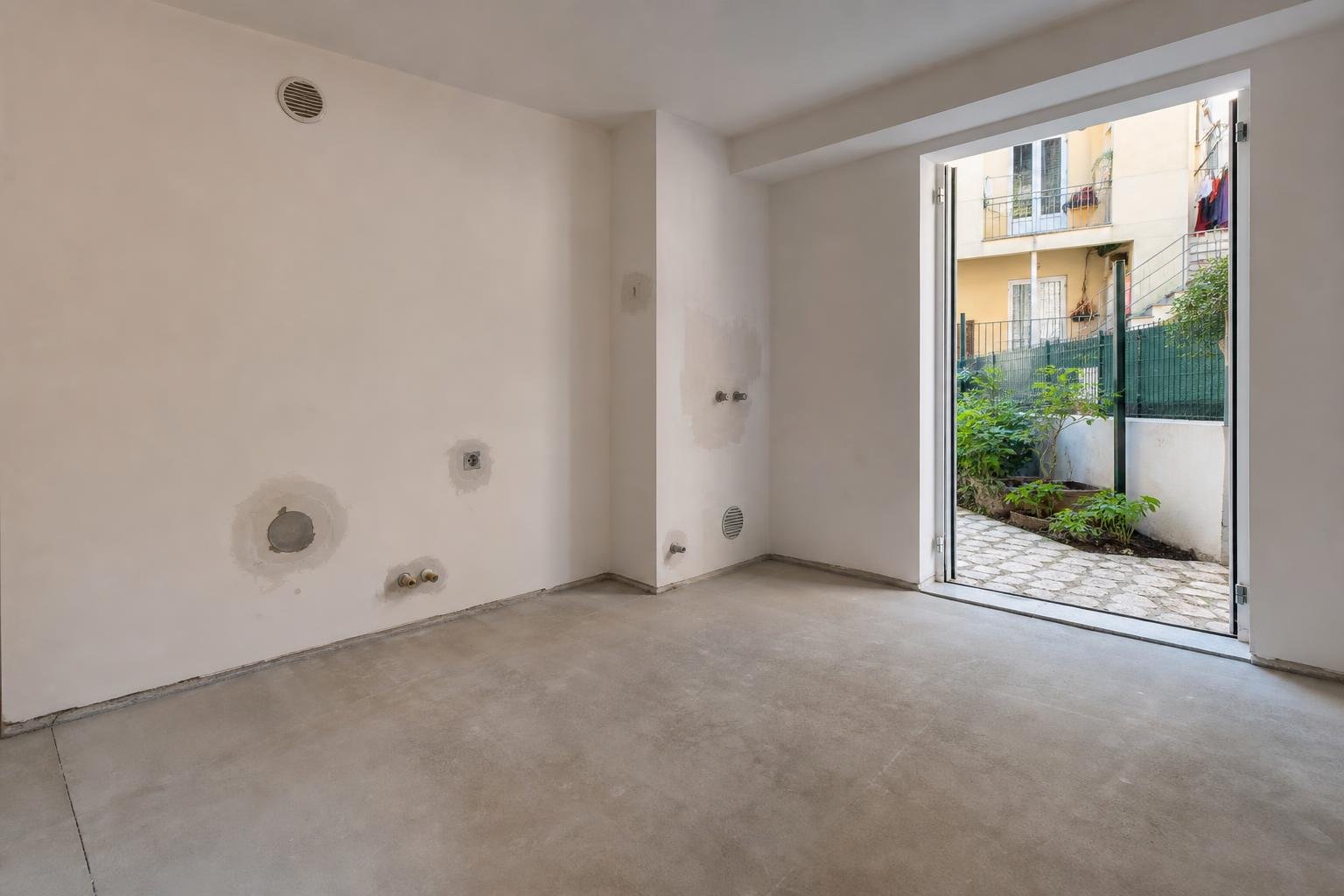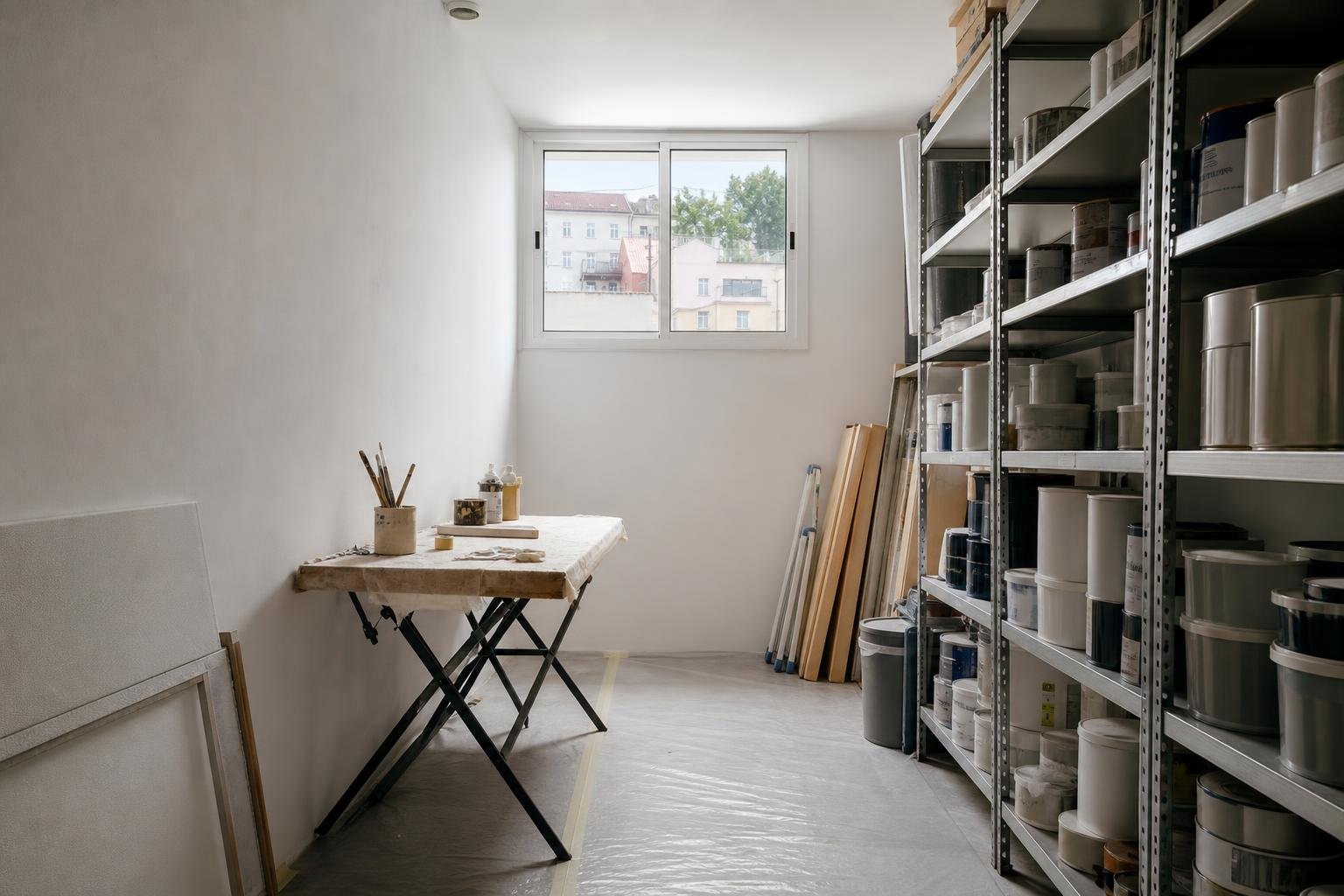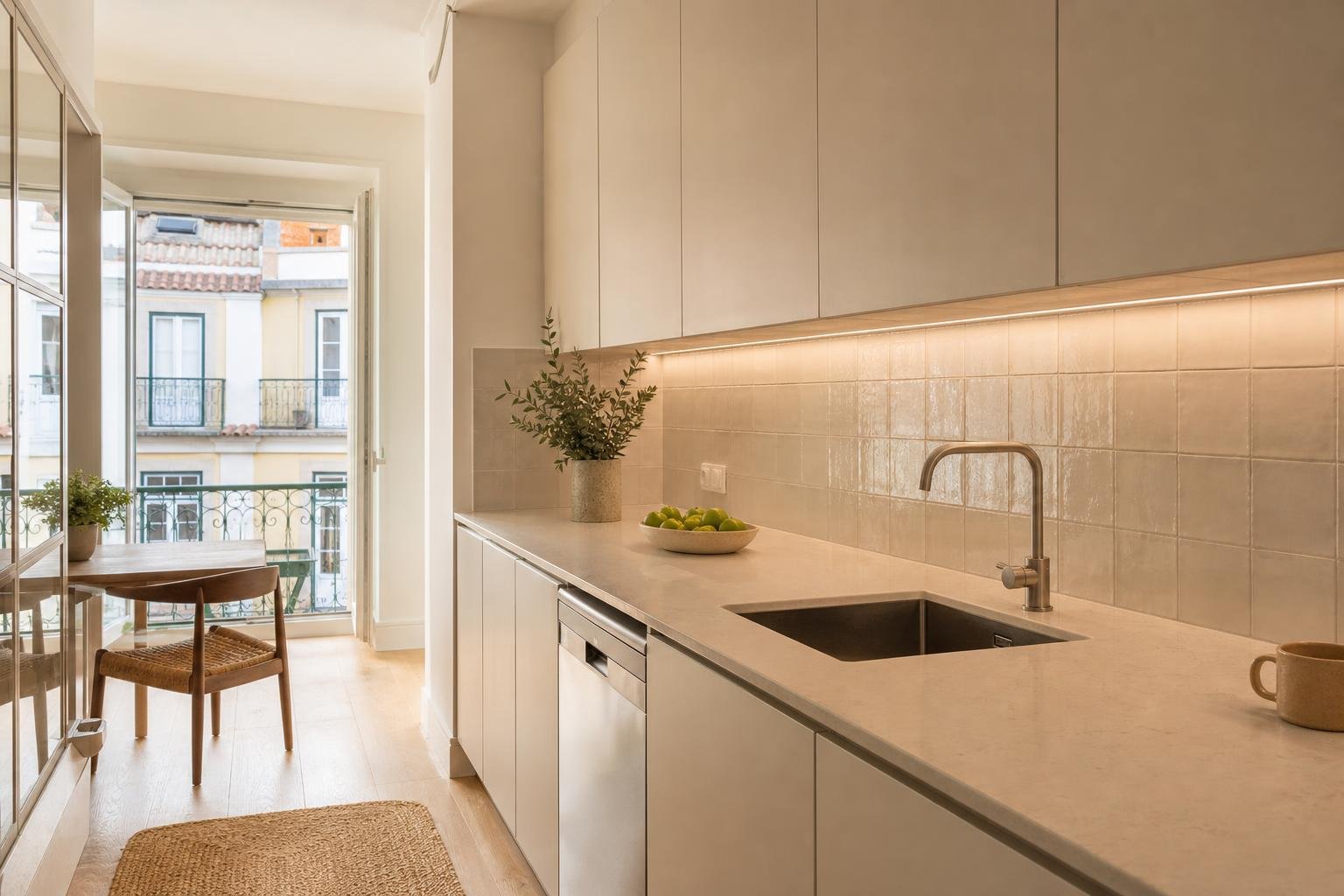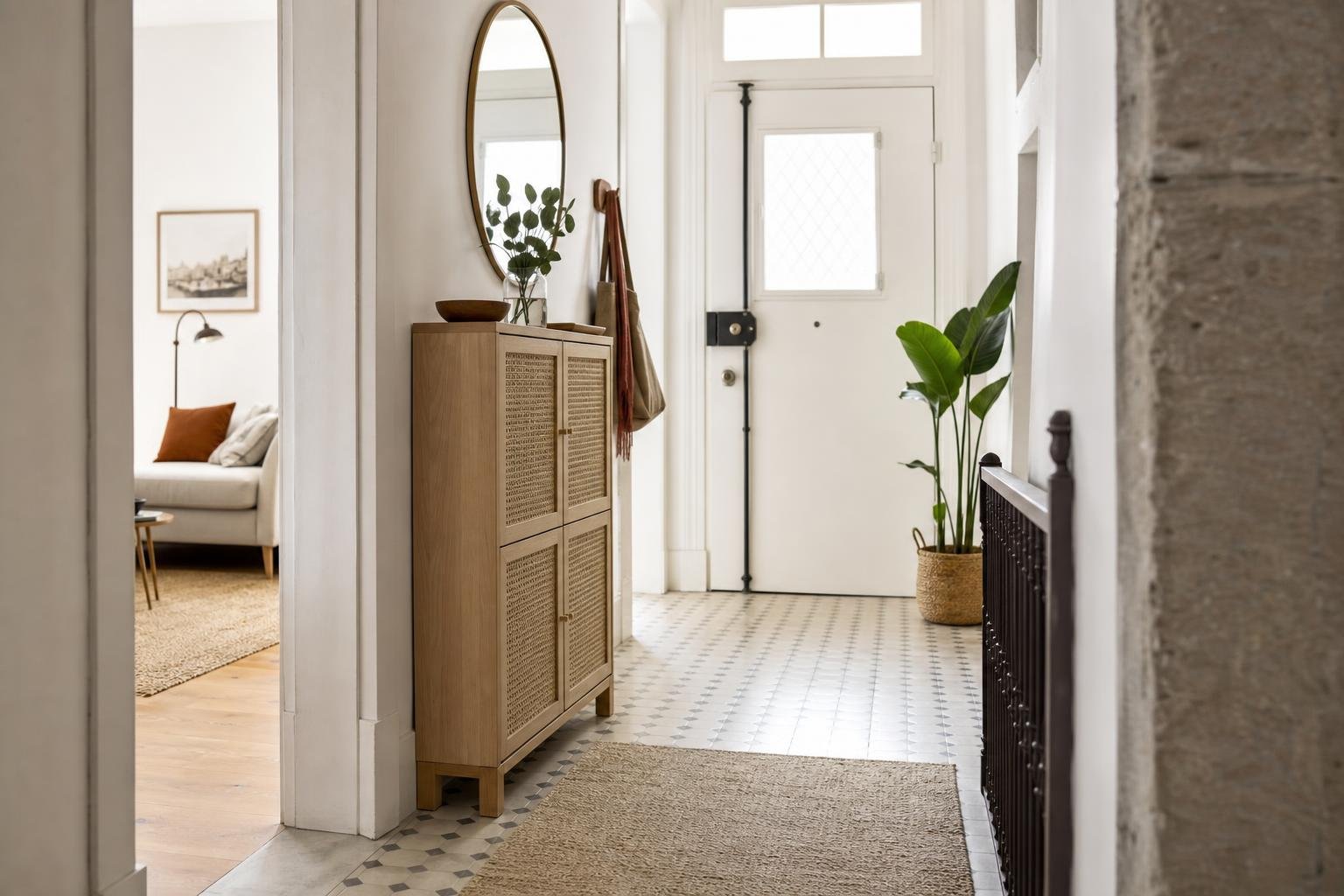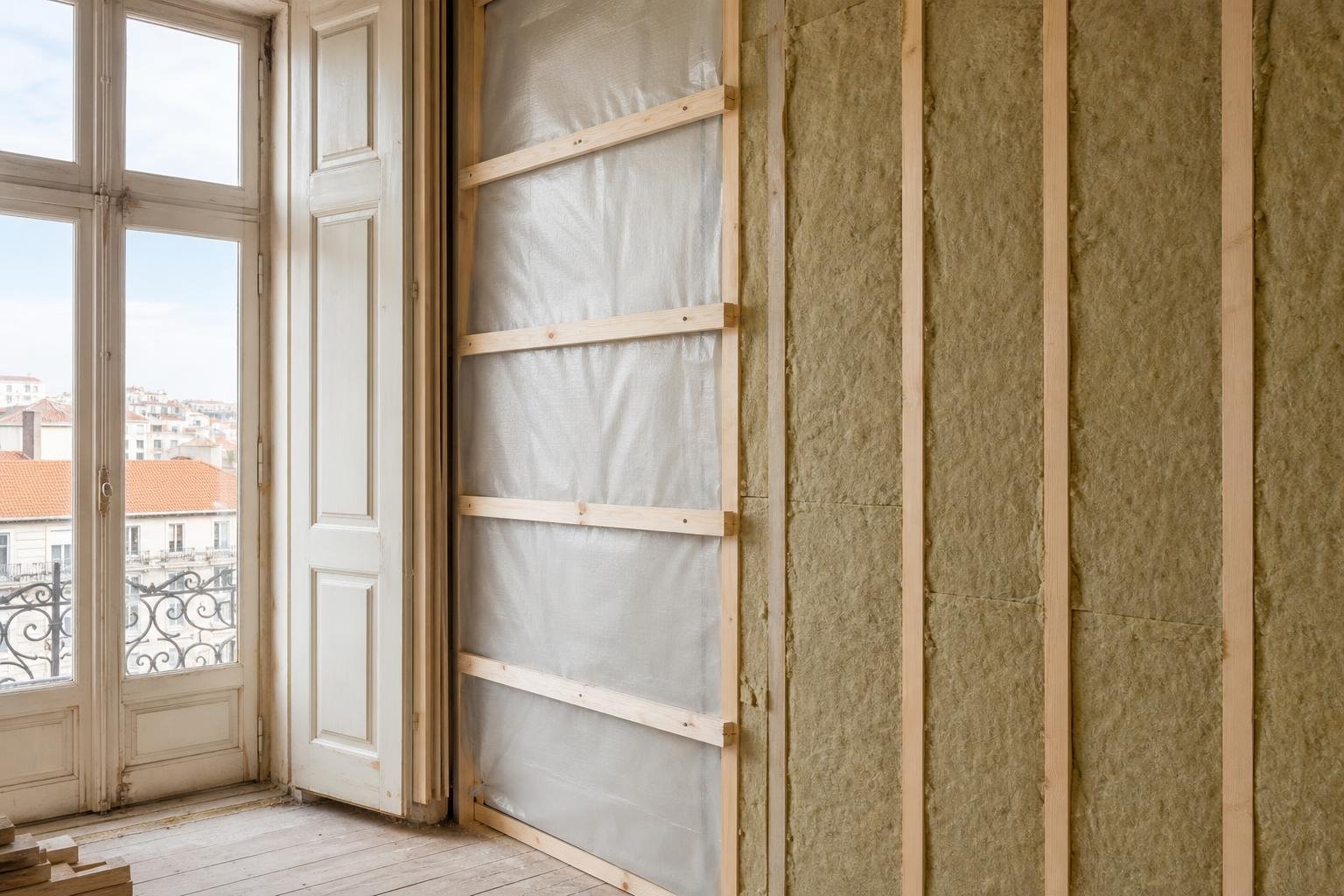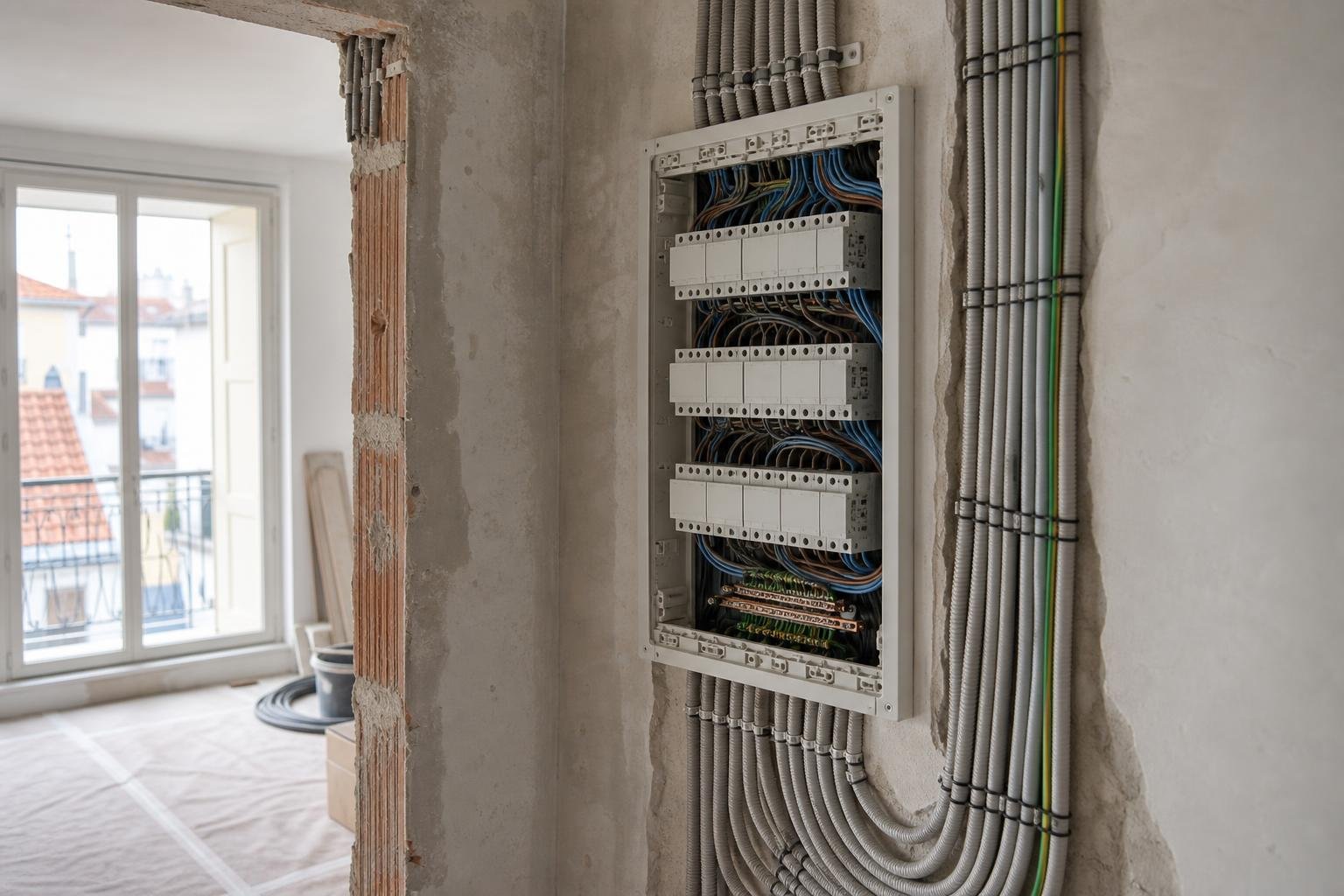

Living at home during a renovation can save on temporary accommodation and make daily decisions easier to follow, but it quickly becomes a logistical exercise. The disruption is not only noise: fine dust travels through gaps, doors stop working as usual, water or power may be temporarily unavailable, and ordinary routes can become unsafe or too narrow.
The first step is not buying extra plastic sheeting. It is deciding which rooms must remain usable, in what order the work will happen, and on which days the home needs to be empty. Portugal’s Directorate-General of Health notes that people spend much of their time indoors and that activities, materials, dust and poor ventilation affect indoor air quality. Read the DGS guidance on indoor air before finalising the plan.
This guide is aimed mainly at partial renovations in Lisbon apartments: a kitchen, bathroom, flooring or localised alterations. It does not replace the contractor’s assessment where there is extensive demolition, deteriorated services or suspect materials.
First, decide whether staying at home is genuinely workable
Do not treat remaining at home as the automatic choice. List the functions you cannot do without: sleeping, washing, preparing simple meals, storing medication, working remotely, or caring for children, older relatives and pets. Then compare that list with the real construction schedule, rather than only the promised completion date.
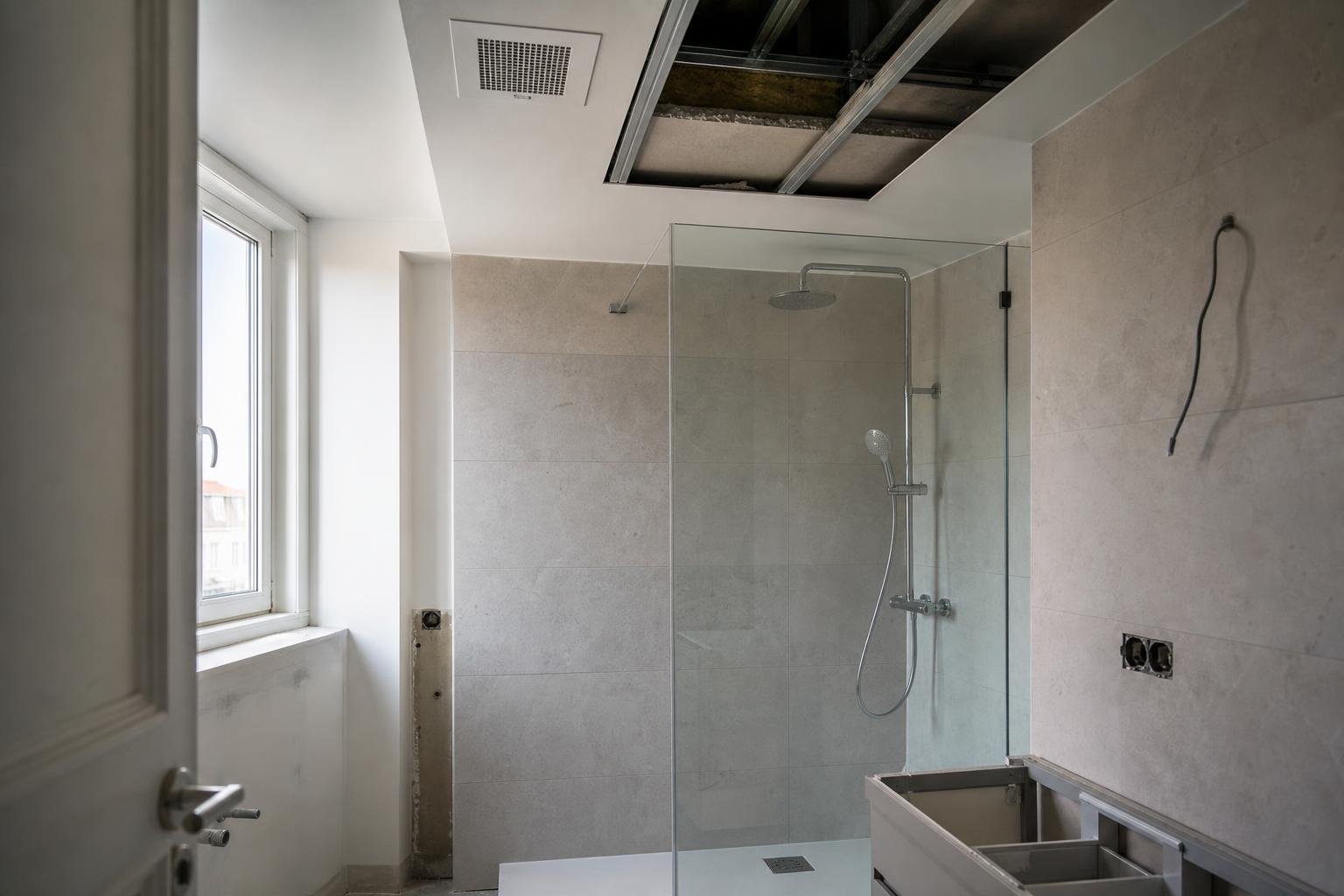
Some tasks call for a temporary absence: heavy demolition, floor sanding, strong-smelling products, works that disconnect water or electricity, and a full replacement of the only bathroom. A sensible approach may be to stay at home through preparation and finishing stages, while arranging two or three nights away for the most disruptive period.
If there is only one bathroom, agree in writing when it will be unavailable and what alternative is planned. If the kitchen is being removed, decide where a temporary water point, fridge and safe sockets will be located. For a useful pre-work checklist, see how to avoid common renovation problems.
Create a liveable zone that work crews do not need to cross
Choose a refuge area with a door, a window and a simple route to the exit. It might be one bedroom and the living room, provided neither becomes a corridor for carrying bags, tools or materials. The fewer people who need to pass through this area, the easier it is to keep clean.
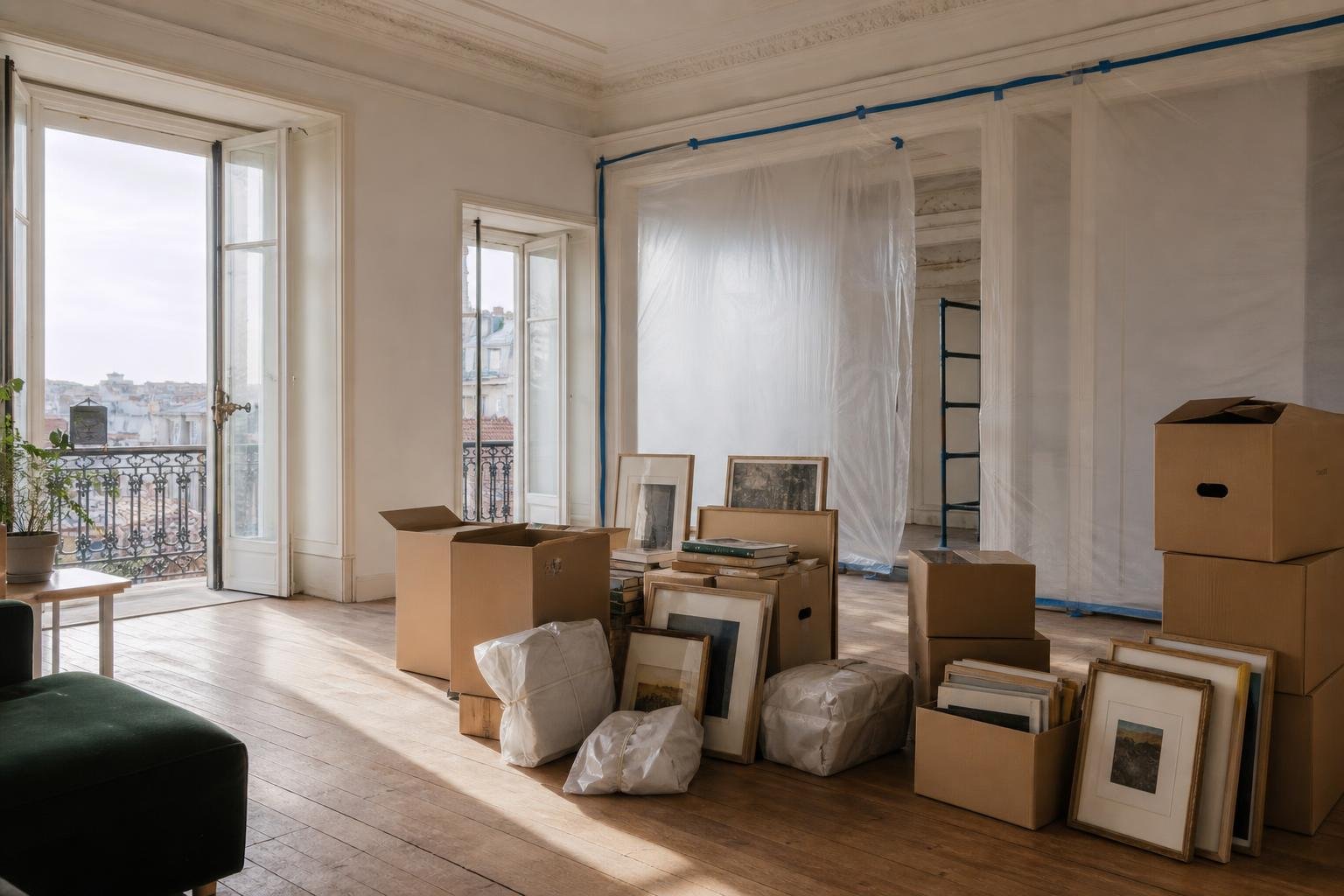
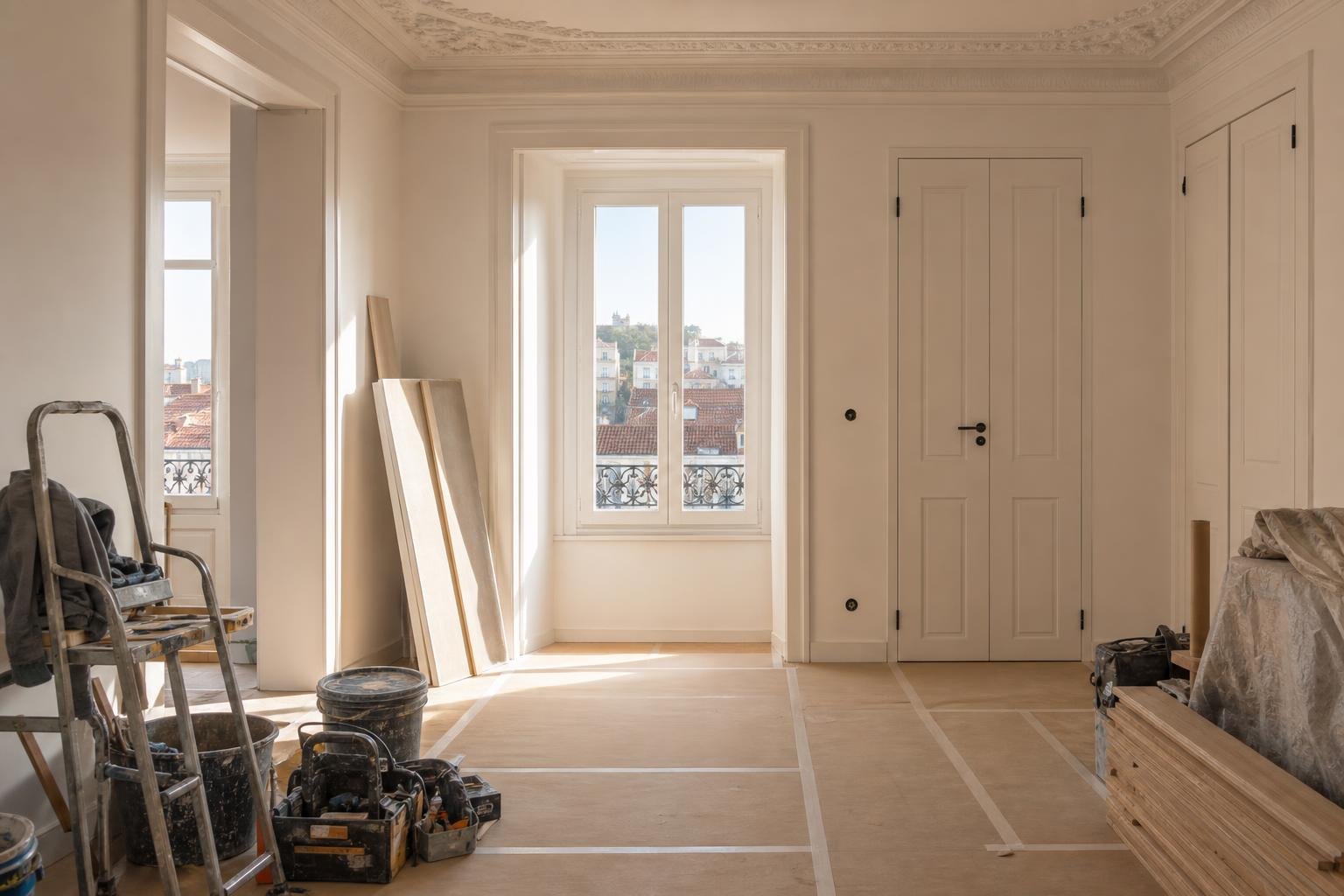
Effective separation combines a continuous physical barrier, properly sealed edges and a clear circulation rule. Plastic film held up with tape alone soon fails at the ceiling, door jambs and floor; a temporary closing door or a properly installed partition gives better control. Do not block exits, electrical boards, meters, building fire equipment or maintenance access.
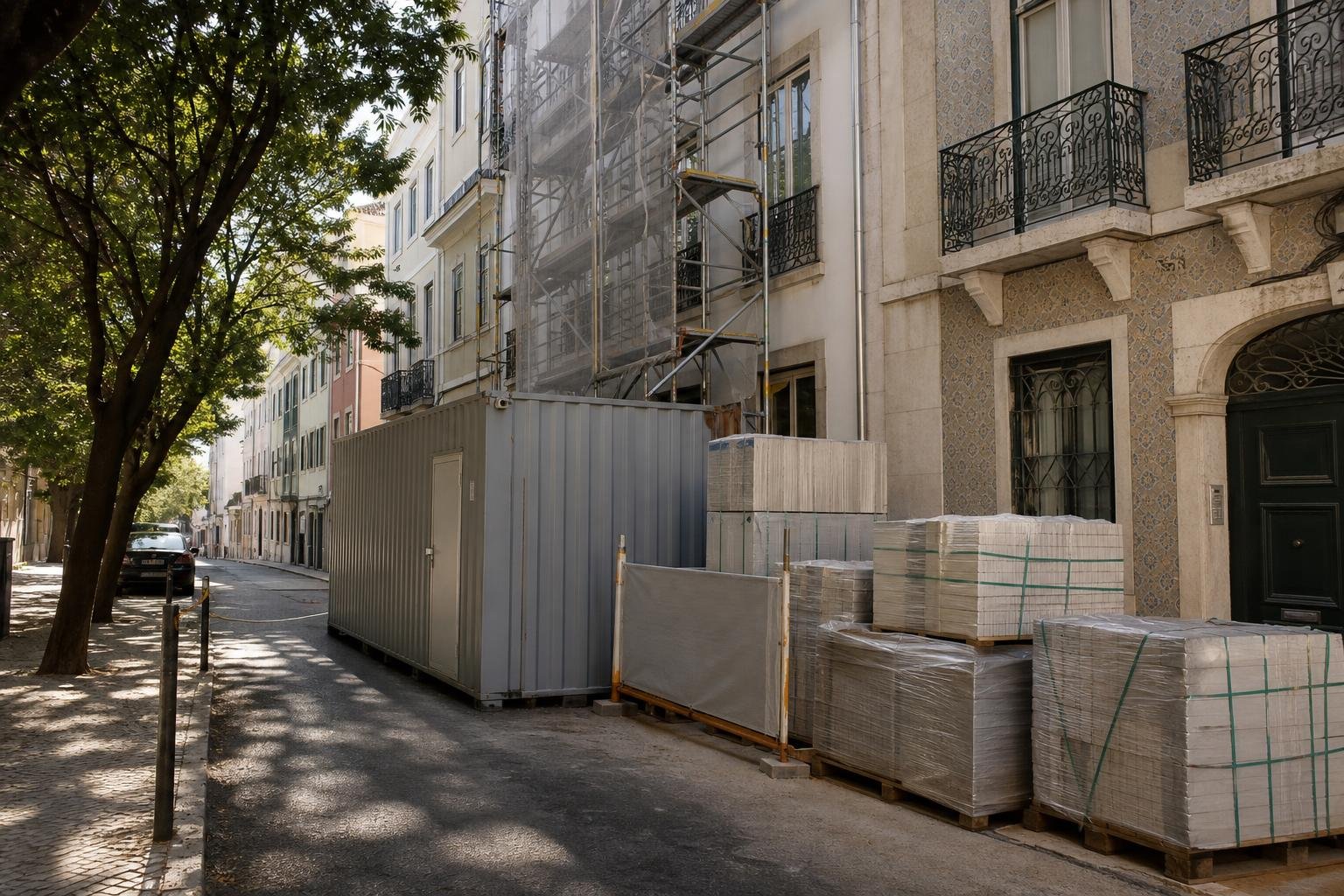
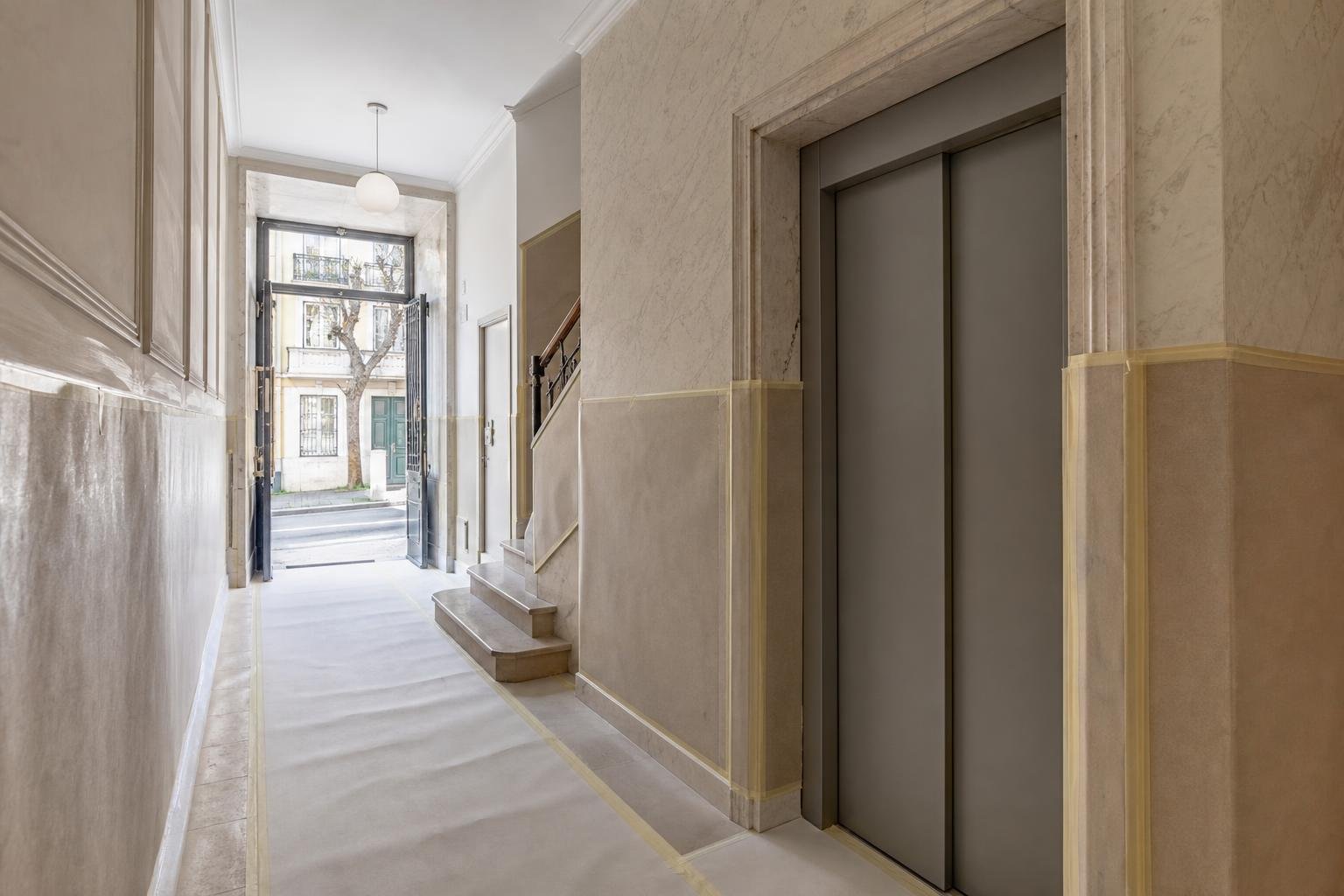
Protect sofas, clothes, books and electronic equipment before work starts. Small items should leave the flat or be stored in closed boxes; covering an open bookcase merely traps dust inside it. In shared areas, agree protection and delivery routes in advance. Our guide to protecting lifts and shared areas during renovation covers this often overlooked part of the job.
Control dust at its source instead of chasing it around the home
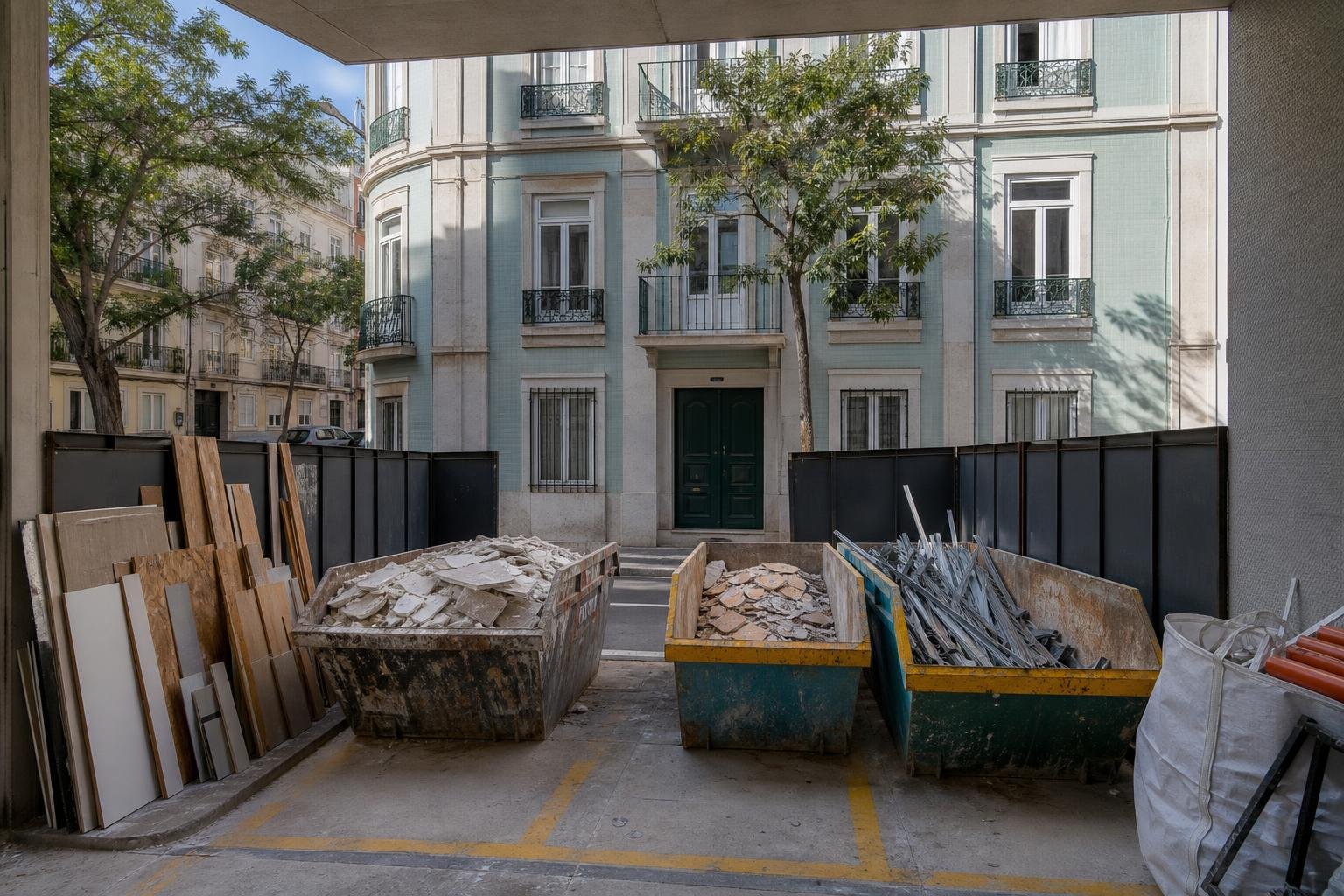
Construction dust cannot be dealt with at the end of the day using a broom. Cutting, chasing, sanding and demolition should be planned to reduce spread where it is created. Ask the team to group these tasks, use suitable dust-capture methods where appropriate, and remove bagged waste regularly instead of allowing it to build up in the hallway.
Close internal doors, seal vents or openings that are not needed, and remove loose rugs. On high-dust days, avoid opening every window indiscriminately: ventilation should renew the air without creating a draught that carries particles from the work zone into bedrooms.
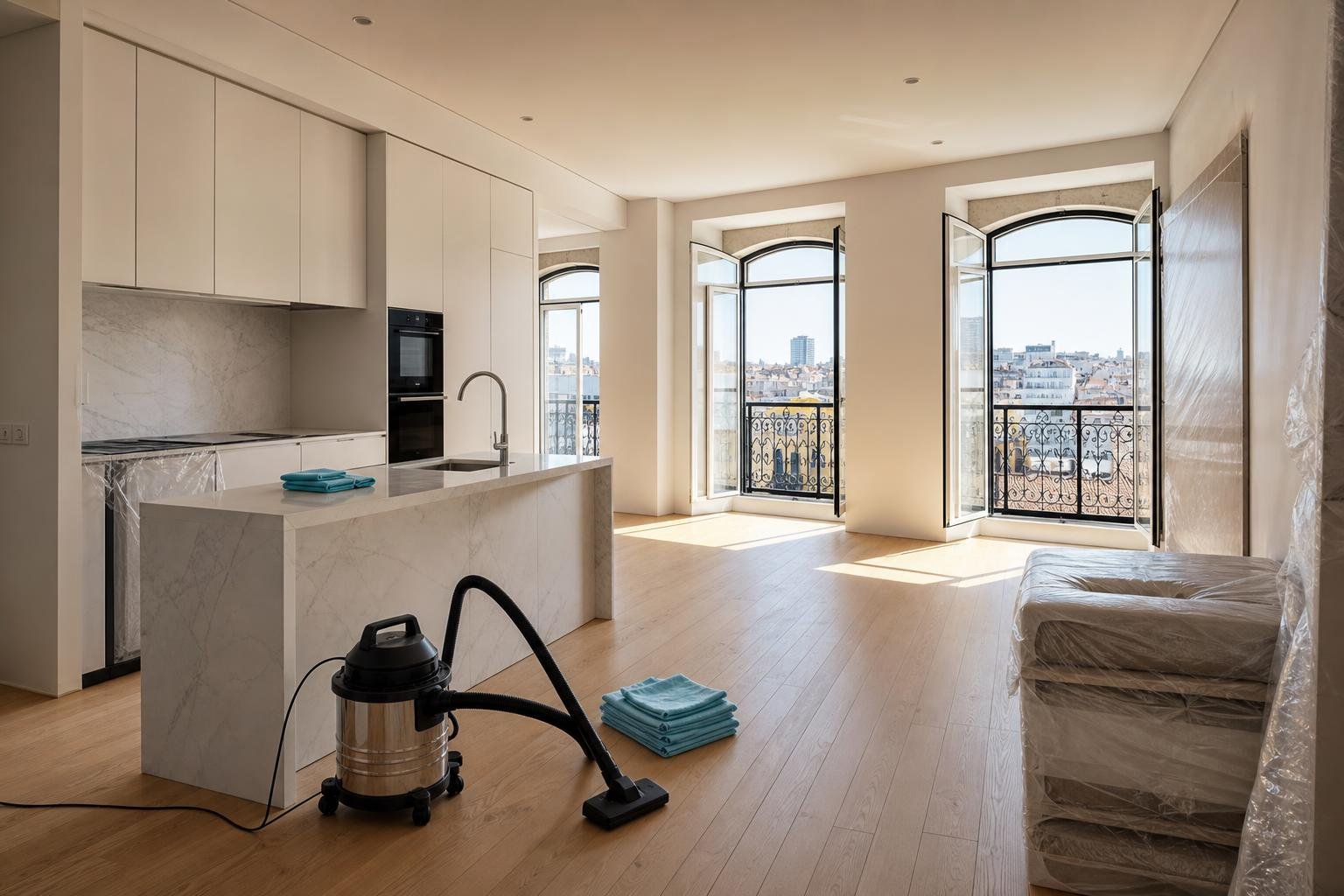
The DGS recommends using a vacuum rather than a broom and a damp cloth rather than dry dusting for household dust. Those measures are especially useful during renovation; consult the DGS general recommendations for indoor air. Use a vacuum with suitable filtration, clean high surfaces before the floor, and change or wash cloths without shaking them indoors.
Ventilate deliberately and treat lingering smells as a planning signal
Ventilation is not simply leaving a window slightly open all day. Open windows at controlled times, particularly after cleaning, painting, adhesive application or dust-producing work. If mechanical extract ventilation is present, check that it is not drawing air from the work area into the occupied area. Air-conditioning and fan-coil filters also deserve attention before the system is switched back on.
Persistent smells from paint, varnish, adhesives or sealants should not be covered up with air fresheners. Check that the product has been applied in line with its technical instructions, keep the area isolated, and allow for the stated drying and air-renewal periods. The DGS advises avoiding surface-treatment materials that may release harmful compounds and maintaining ventilation systems properly.
On a busy Lisbon street, opening windows can be less appealing at peak traffic hours. In that case, choose quieter periods and use cross ventilation only when the apartment layout allows it. The priority is preventing stale work-zone air from remaining in rooms where people sleep.
Treat water, electricity, meals and work as temporary services
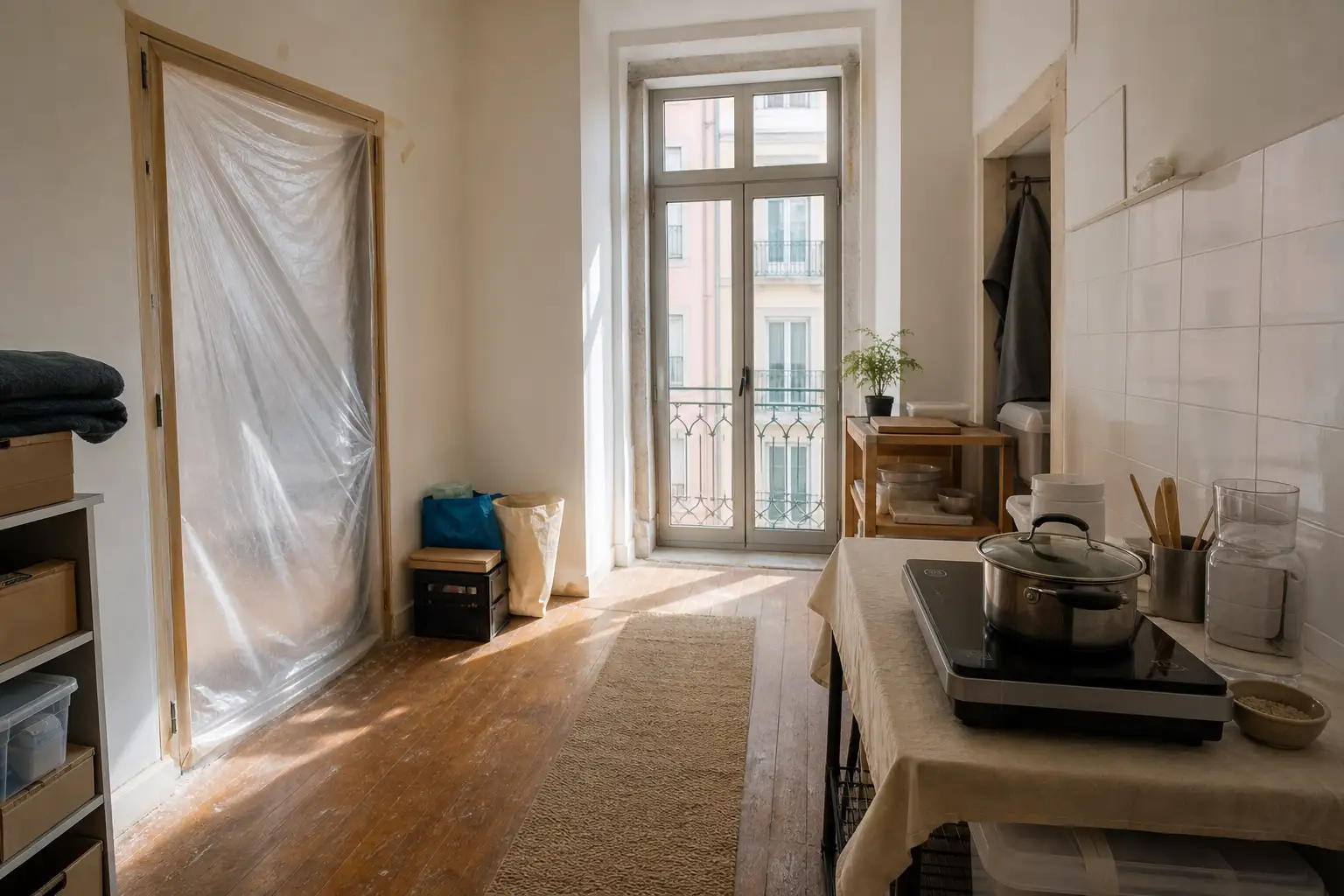
A home under renovation works better when certain services are deliberately treated as temporary. Set up a meal station away from the work area: fridge, microwave or a portable hob compatible with the electrical installation, water, essential crockery and a lidded waste container. Do not improvise extension leads near wet areas, closing doors or routes where they can be stepped on.
Before any planned shut-off, confirm the start time, estimated duration and the responsible person’s contact details. Charge phones and computers, keep torches accessible, and know where documents, medication and keys are kept. If you work from home, agree any possible quieter periods, but recognise that drilling, cutting and material deliveries do not fit around important calls.
Also plan a clean daily route to the front door. Bags, buckets, boxes and tools must not take over stairs, landings or escape routes. For issues involving safety, noise or unlawful works, Lisbon City Council provides a safety intervention request channel; use it sensibly, after trying direct communication where appropriate.
Set firm boundaries for children, pets and unknown materials
Children and pets should not move through the work zone, even when it appears tidy. Create a closed door or barrier that cannot easily be shifted, store sharp tools and products out of reach, and never leave cables, nails or blades in a daily route. One simple rule helps: everything connected with the work stays on one side; everyday domestic life stays on the other.
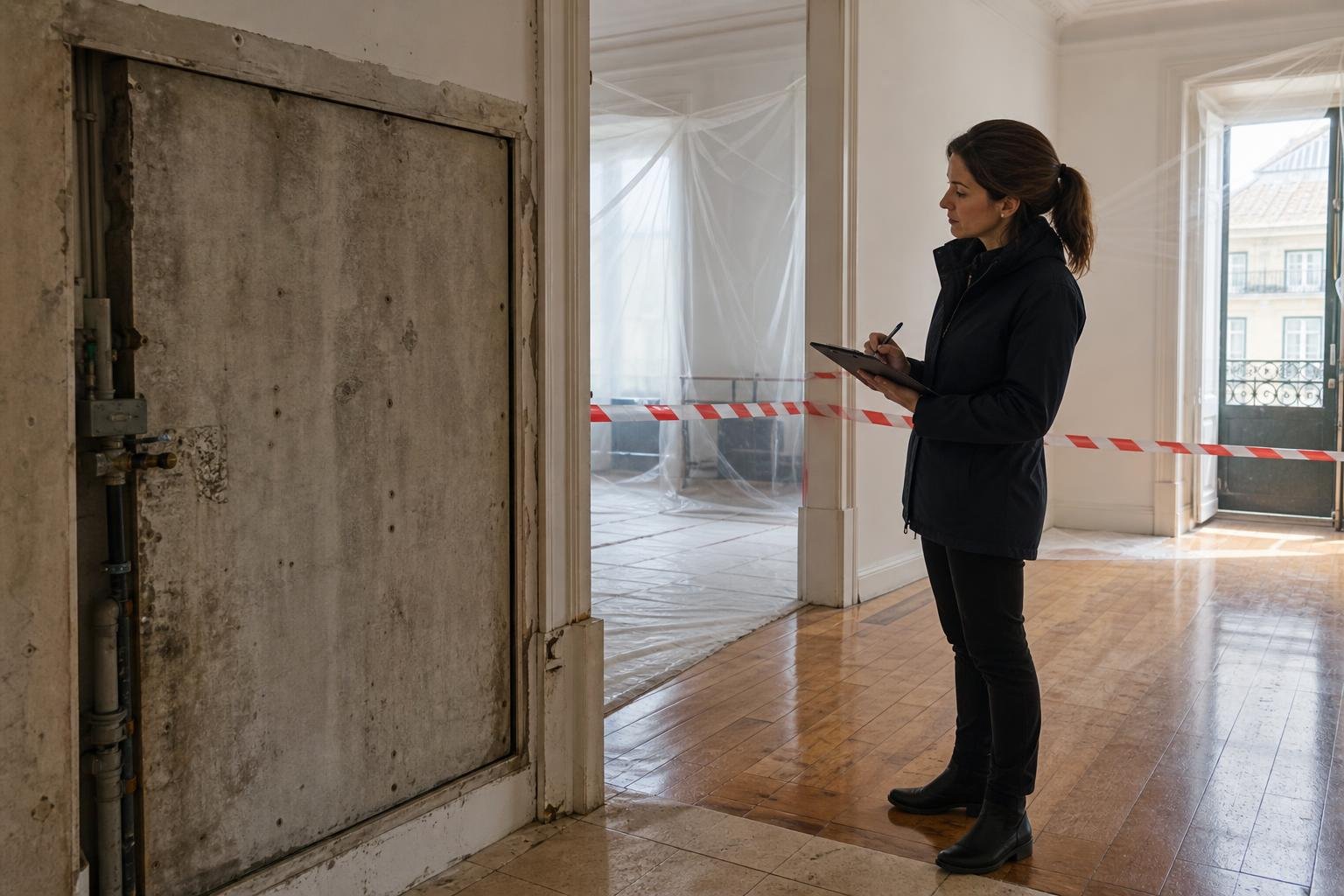
If the building is older and you uncover a board, insulation layer, coating or pipe whose composition is unknown, stop before cutting, drilling or sanding it. Asbestos can be present in various elements of older buildings, including certain finishes, fibre-cement products and insulation. The DGS information on asbestos explains that removal and waste need suitable procedures based on a risk assessment. Do not turn uncertainty into a hurried demolition task.
The aim is not to create a perfect home in the middle of building work. It is to maintain one safe, sufficiently clean and predictable area until the next stage is complete.
A lived-in renovation needs more than good materials: it needs clear phases, well-installed protection and daily communication. If you are planning work in Lisbon, Obra Lisboa can help turn real household needs into a more controlled delivery plan.
AI-generated editorial image; it does not depict an Obra Lisboa project.

Obra Lisboa