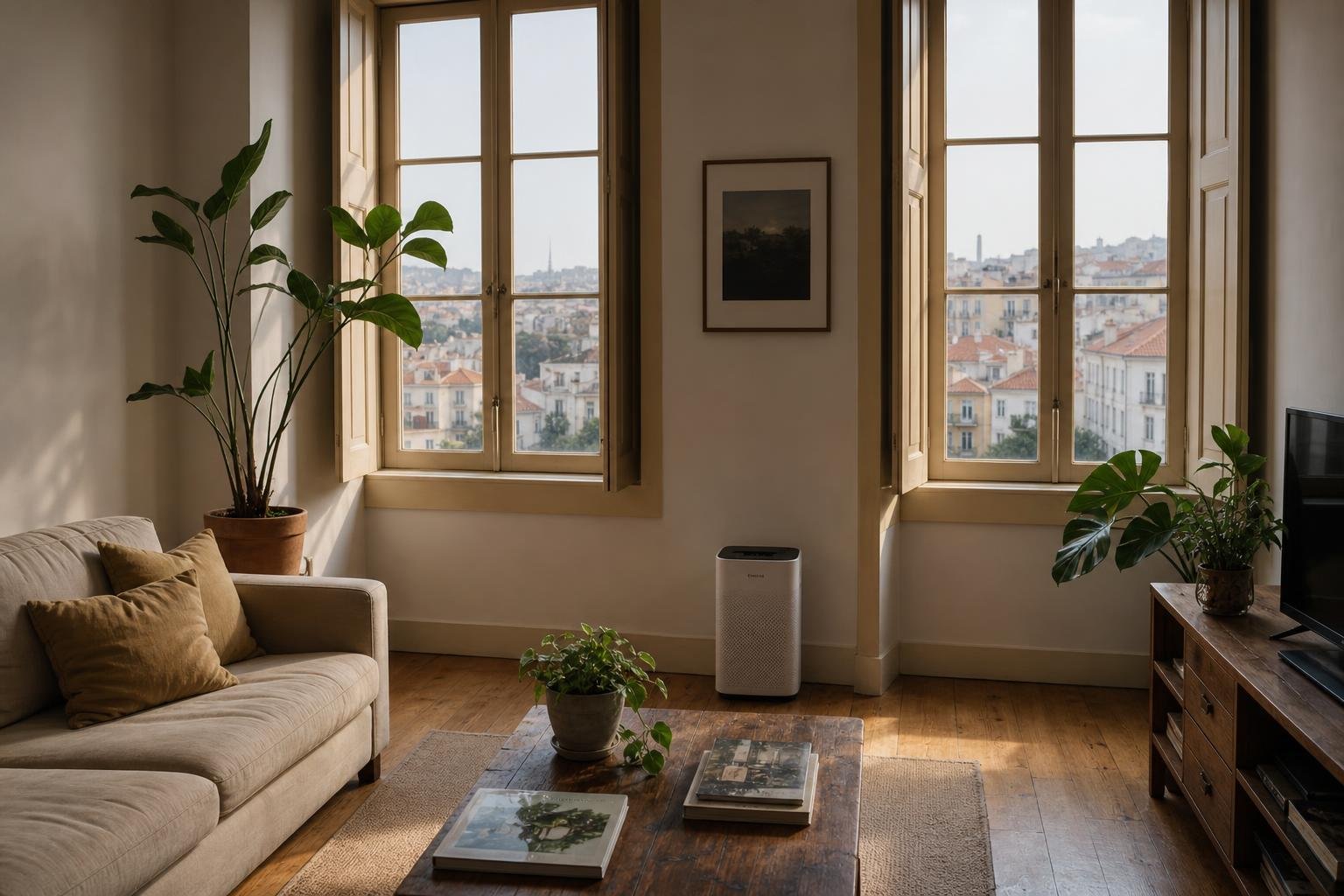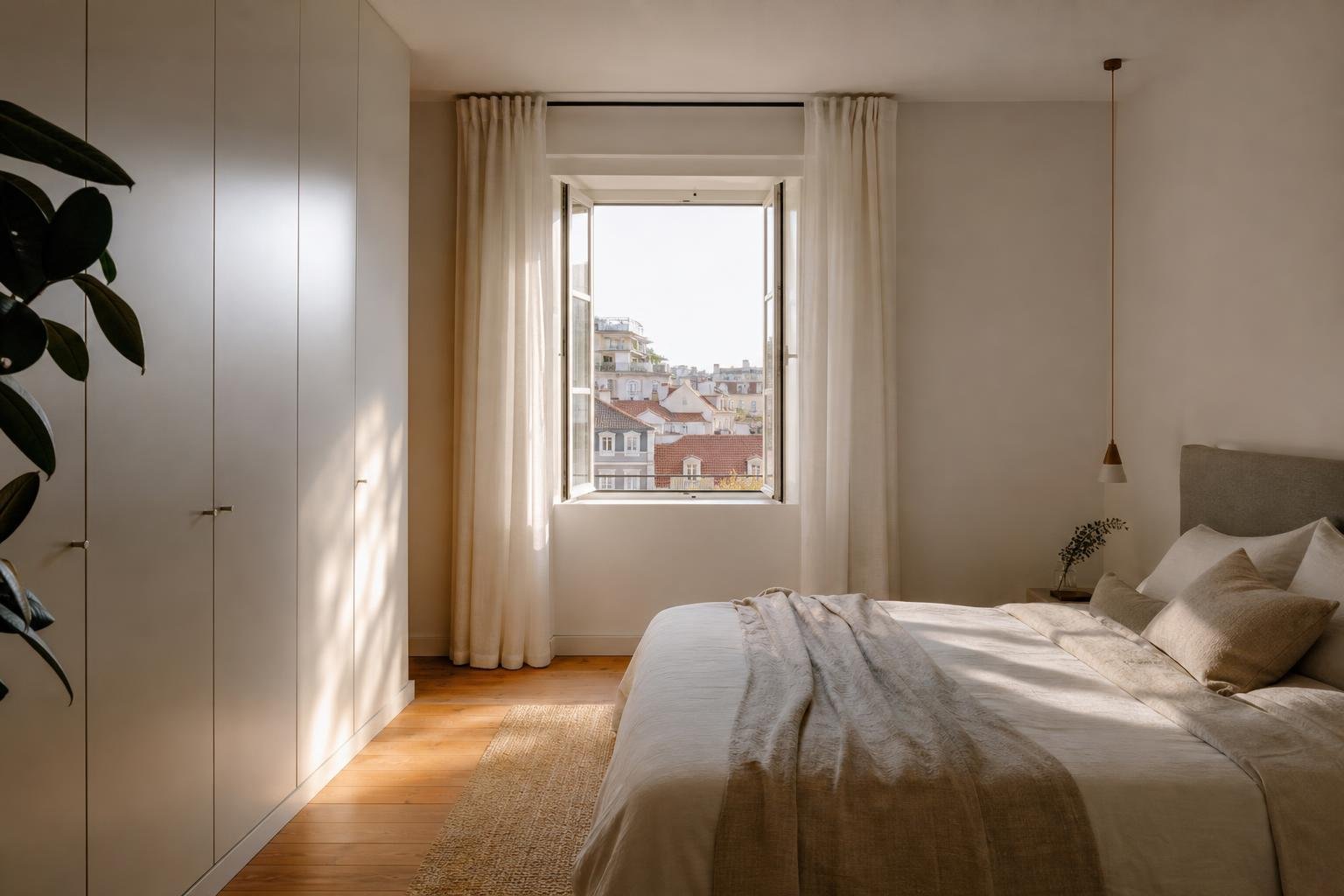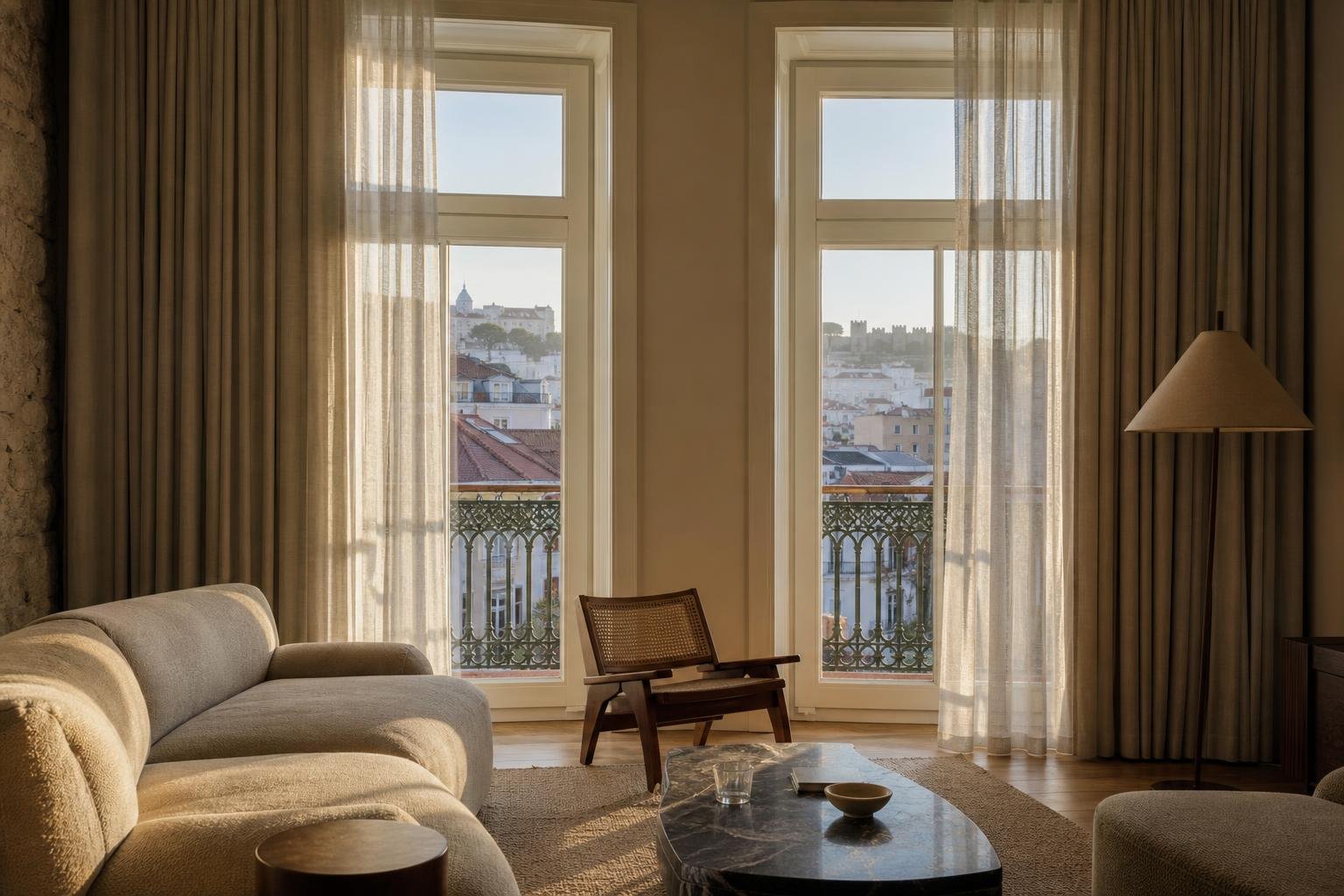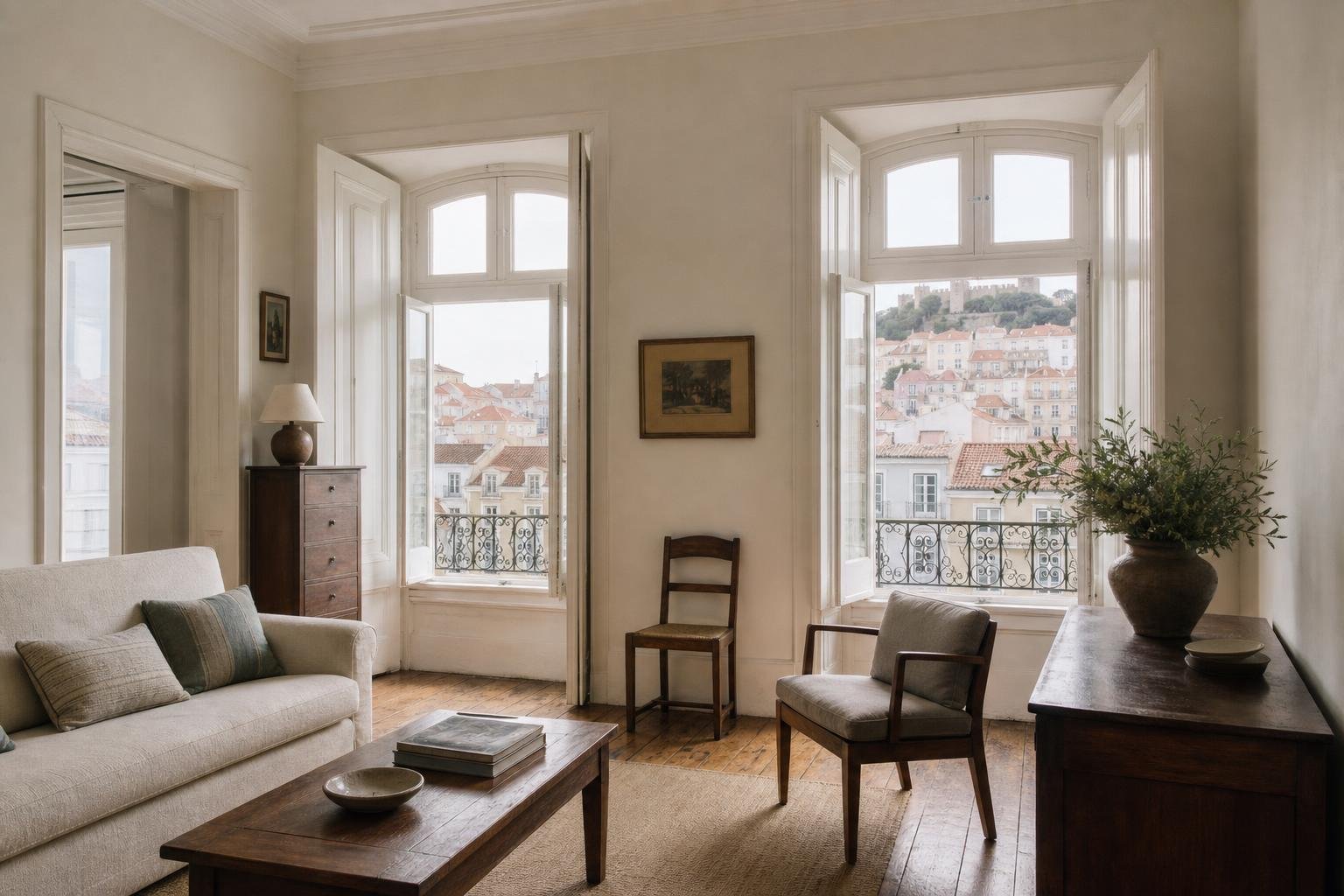

In a Lisbon apartment, a south-, west- or south-west-facing window can make a living room uncomfortable by late afternoon. Closing blinds solves part of the problem, but it also removes daylight and the view. Solar-control window films offer another route: they are applied to glazing to reduce incoming solar radiation, glare and, depending on the product, part of the ultraviolet radiation.
They are not, however, a universal fix or a purely decorative finish. A film that is too dark can leave a bedroom gloomy in winter; an unsuitable product can increase thermal stress in the glazing; and a strongly visible change may cause issues in an apartment building. This guide explains when the option is worth considering, what to ask before ordering and how to include it in a more complete summer-comfort plan.
Define the real problem first: heat, glare or privacy
Before choosing a tint, identify the main source of discomfort. If the room overheats mainly from 3pm until sunset, west-facing exposure and low-angle sun are crucial factors. If the difficulty is working beside a window, glare may matter more than air temperature. And if curtains stay closed because the apartment feels exposed, the requirement is privacy rather than thermal control.
This distinction prevents the wrong purchase: a mirrored film for a room that only needs a light technical curtain, or a very dark film where an uninsulated roof is the real source of heat. ADENE notes that shading can limit solar gains and that night-time natural ventilation can help remove accumulated heat when outdoor air is cooler. Read ADENE’s guidance on summer thermal-comfort strategies before deciding on the work.
Keep a simple record during a hot week: direct-sun hours, perceived temperature, affected rooms and blind positions. It gives an installer useful information and makes comparison between options more honest.
Film does not replace external shading
Film works on the glazing itself; an overhang, awning, exterior blind or shutter intercepts sunlight before it reaches the window. That is why external shading should usually be assessed first on heavily exposed façades. Film can be particularly useful where exterior systems are not feasible, where a broad view must be retained or where reflections need to be reduced in a room used throughout the day.
In Lisbon, this is no longer a marginal issue. The summer of 2026 was classified by IPMA as Portugal mainland’s third warmest since 1931. See the IPMA seasonal climate bulletin for context on why homes need to cope with more demanding hot periods.
Combine measures rather than expecting one product to do everything: a moderate film, well-fitted blinds, secure night ventilation and reduced internal heat gains can outperform an overly dark film used on its own. For related options, see our guide to external shading for apartments.
Check the glass specification before selecting a film
Not all glazing is the same. Windows may use single, double, laminated, toughened or low-emissivity glass, as well as combinations with cavities and specialist coatings. An absorptive film can heat the pane itself; in certain glazing assemblies, uneven temperatures between shaded and exposed areas can increase the risk of thermal breakage. That cannot be judged from the frame alone: the window build-up and the manufacturer’s stated compatibility must be checked.
Ask for the product identification, technical data sheet, proposed application side — internal or external — limitations for your glazing and warranty terms in writing. Also ask whether stickers, bars, close-fitting curtains or permanent partial shadows may change the pane’s exposure.
If the existing windows already leak air or water, or perform poorly against noise, film will not fix the underlying issue. In that situation, first review how to plan window replacement during a Lisbon renovation.
Balance visible light, reflection and solar reduction
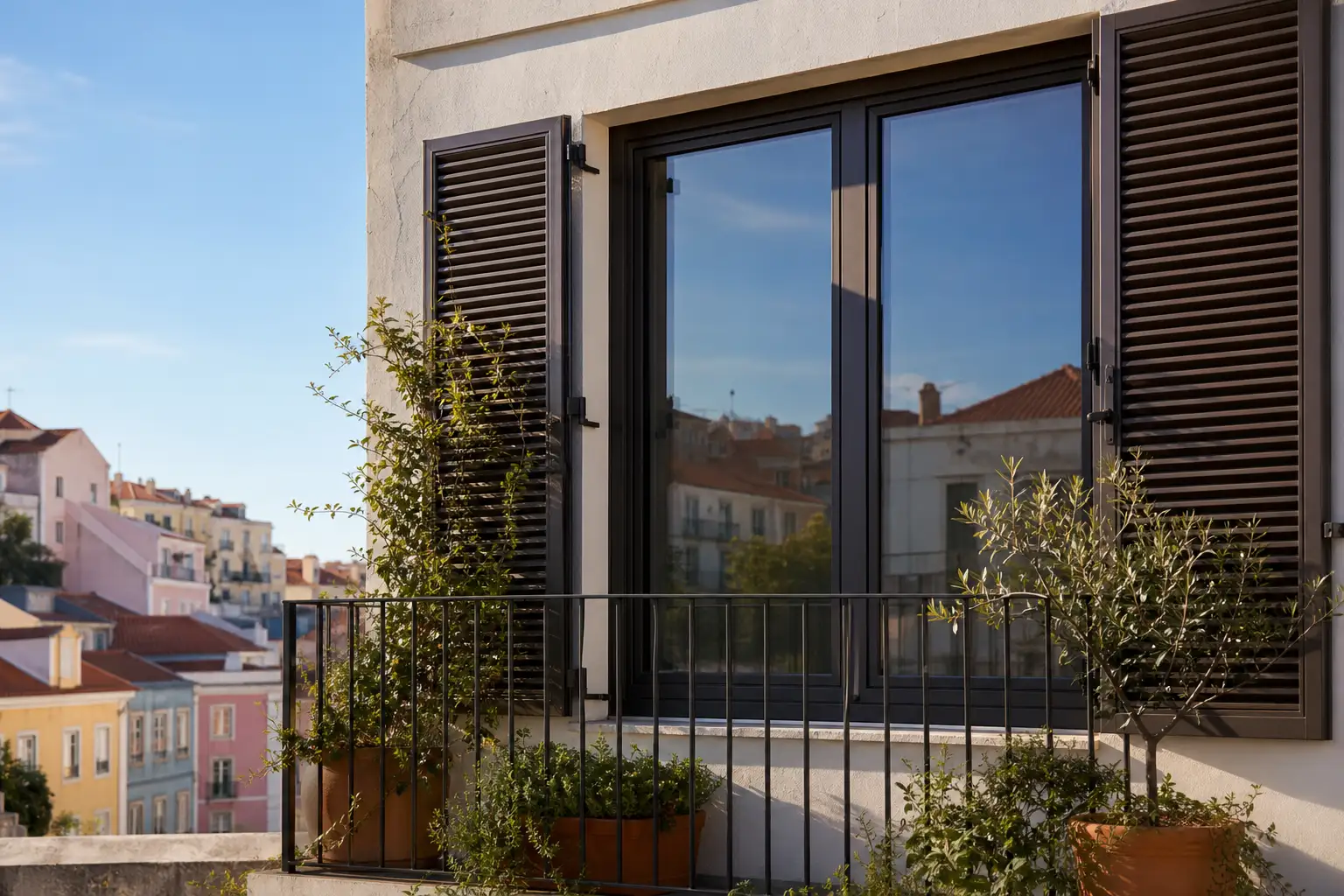
Commercial names can be misleading. Instead of choosing by labels such as “smoked”, “silver” or “clear”, compare three effects: visible-light transmission, reflectivity and solar-energy rejection. A product with strong solar reduction may alter the façade more noticeably and make the interior less bright. A near-neutral film preserves colour and the view more successfully, but may produce a more limited effect during the hottest hours.
Ask for a sample on the actual glazing and look at it in the morning, late afternoon and with interior lights on. Assess the view from inside out and the building’s appearance from the street. In living rooms and bedrooms, do not decide from a catalogue photo: visual comfort depends on room depth, interior colours and the daylight already available.
Be realistic about privacy after dark. Many films reflect effectively by day because outdoor light is stronger; at night, when lights are on indoors, that relationship may reverse. Curtains, blinds or shutters still have a role.
In an apartment building, the façade matters too
Even when installed on the inside face, a film can change the colour, shine or reflection visible from outdoors. In a block of flats, different solutions on each window can create an uneven façade. Before proceeding, check the condominium deed, building rules and previous decisions; where there is uncertainty, show the manager a sample and a clear description of the external appearance.
This care is particularly important in buildings with specific rules, historic areas or planned façade work. Portuguese performance regulations support measures that control solar exposure and make use of natural ventilation, but they do not remove the need to assess the building’s particular circumstances. Refer to the requirements on performance and shading published in the Diário da República.
Record the decision and keep the product sheet. If windows are later replaced or the apartment is sold, this information explains exactly what was installed and why.
Treat installation as a small building task, not a last-minute detail
Good installation requires clean, dry, residue-free glass, accurate cuts around seals and frames, and enough curing time. Schedule it when the room can be cleared and protected from dust; do not put it on the same day as painting, sanding or furniture installation. Film fitted before a renovation can easily be scratched by the work that follows.
Ask the quotation to state surface preparation, access to high windows, removal of any existing film, final cleaning and workmanship warranty. Confirm the cleaning method afterwards as well: abrasives, blades and some products can damage surface layers or edge finishes.
Finally, revisit the broader strategy. Film may improve a west-facing façade, but it does not eliminate thermal bridges, repair distorted frames or replace ventilation. Use the energy certificate as a priority map; our guide on turning an energy certificate into a renovation plan can help sequence decisions before money is committed.
If you are considering solar-control film as part of a renovation, Obra Lisboa can help place the decision within the wider window, shading, ventilation and building-rule picture — before choices become difficult to reverse.
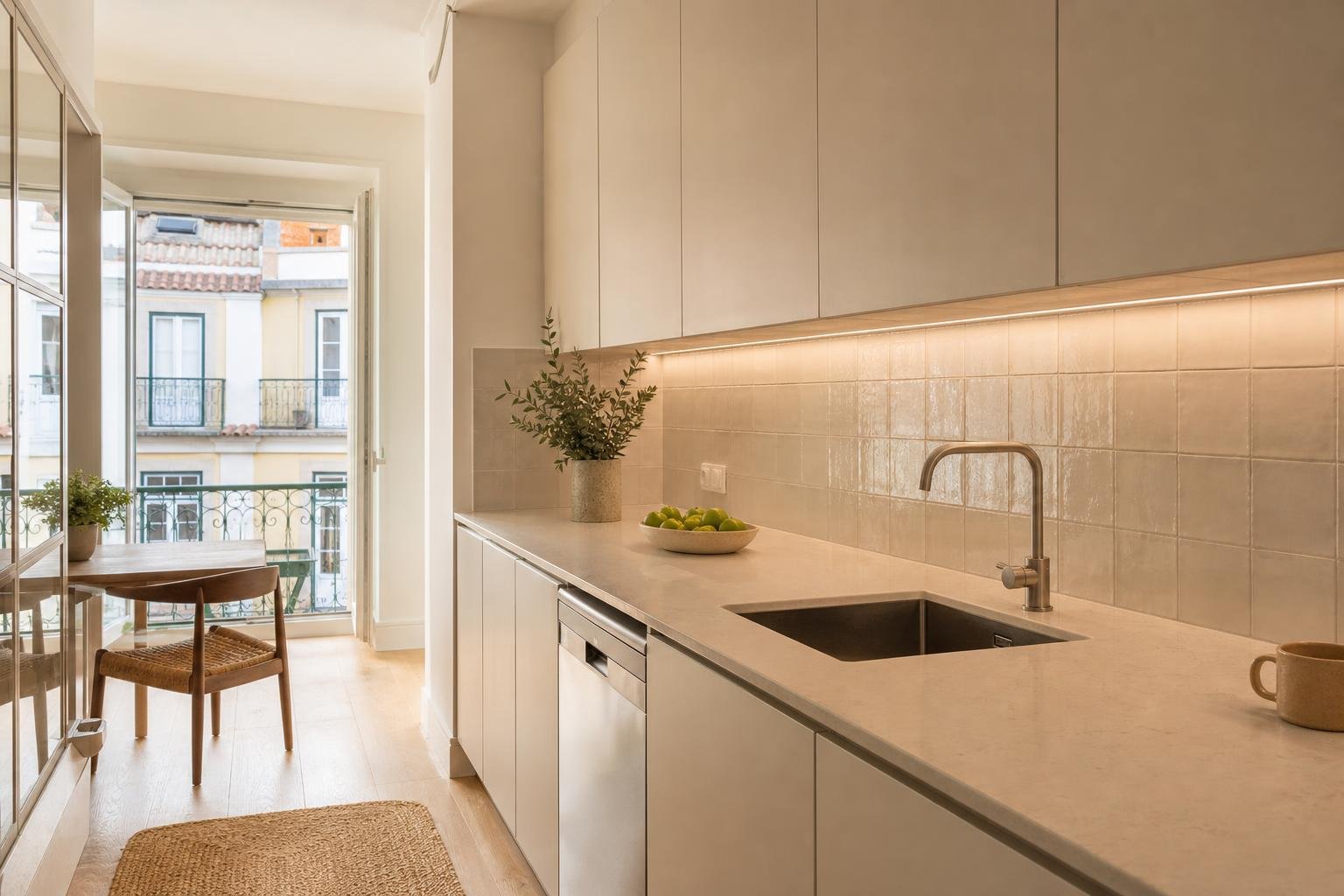
AI-generated editorial image; it does not depict an Obra Lisboa project.

Obra Lisboa