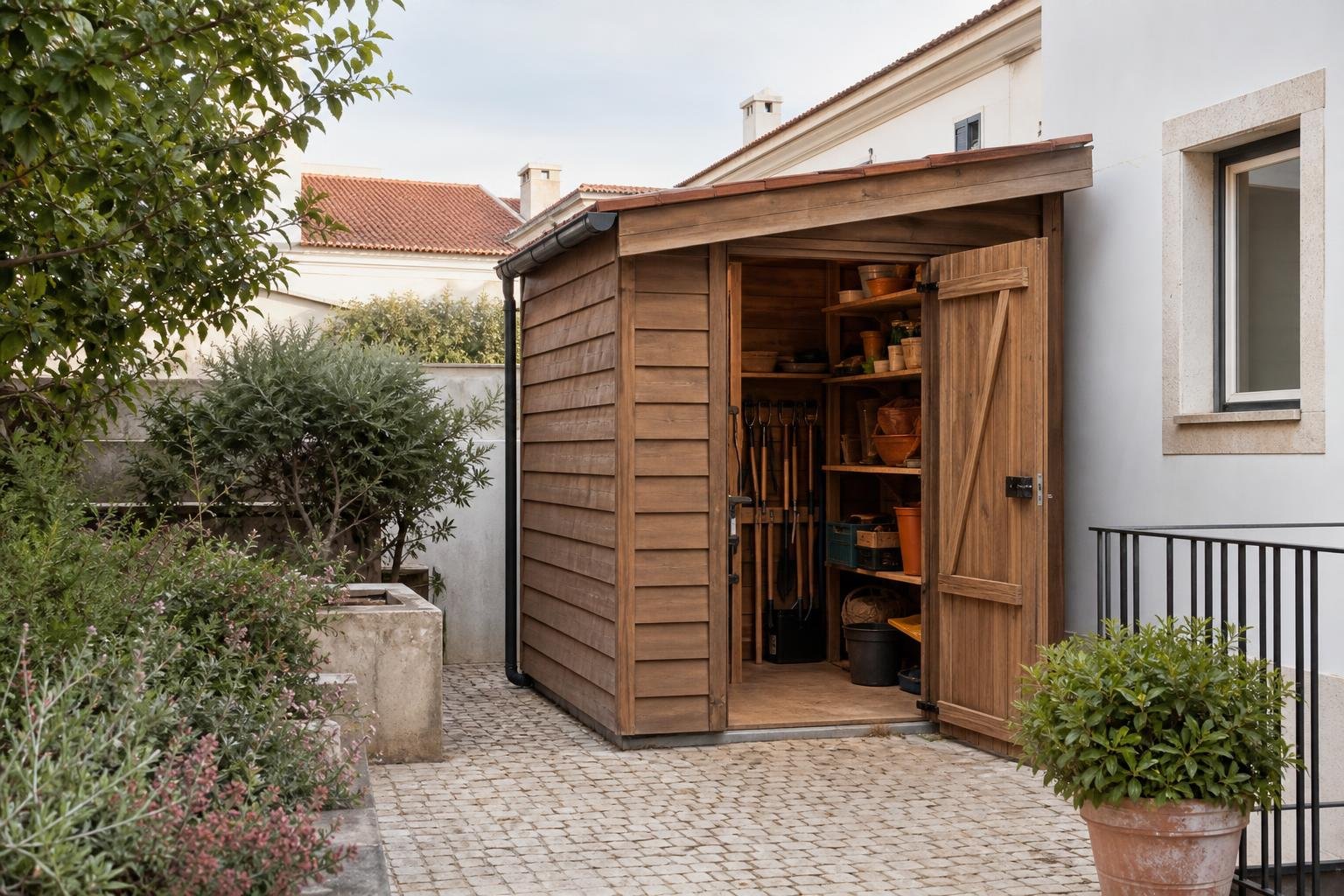

A storage room rarely gets the attention given to a kitchen or living room, yet its floor often takes harder treatment: dragged boxes, bicycles, tools, plant pots, ladders, small repairs and moisture brought in from outside. Choosing on appearance alone, or painting an inadequately prepared base, usually postpones the problem rather than solving it: recurring dust, peeling, stains or a surface that is difficult to clean.
The right decision starts with understanding what the room will store, where moisture may come from and the actual condition of the slab or screed. In Lisbon, basement storage rooms, annexes and spaces beside courtyards can have very different requirements. This guide explains how to specify a robust, proportionate finish without turning a support area into an unnecessarily complex project.
Start with real use, not the finish that looks best
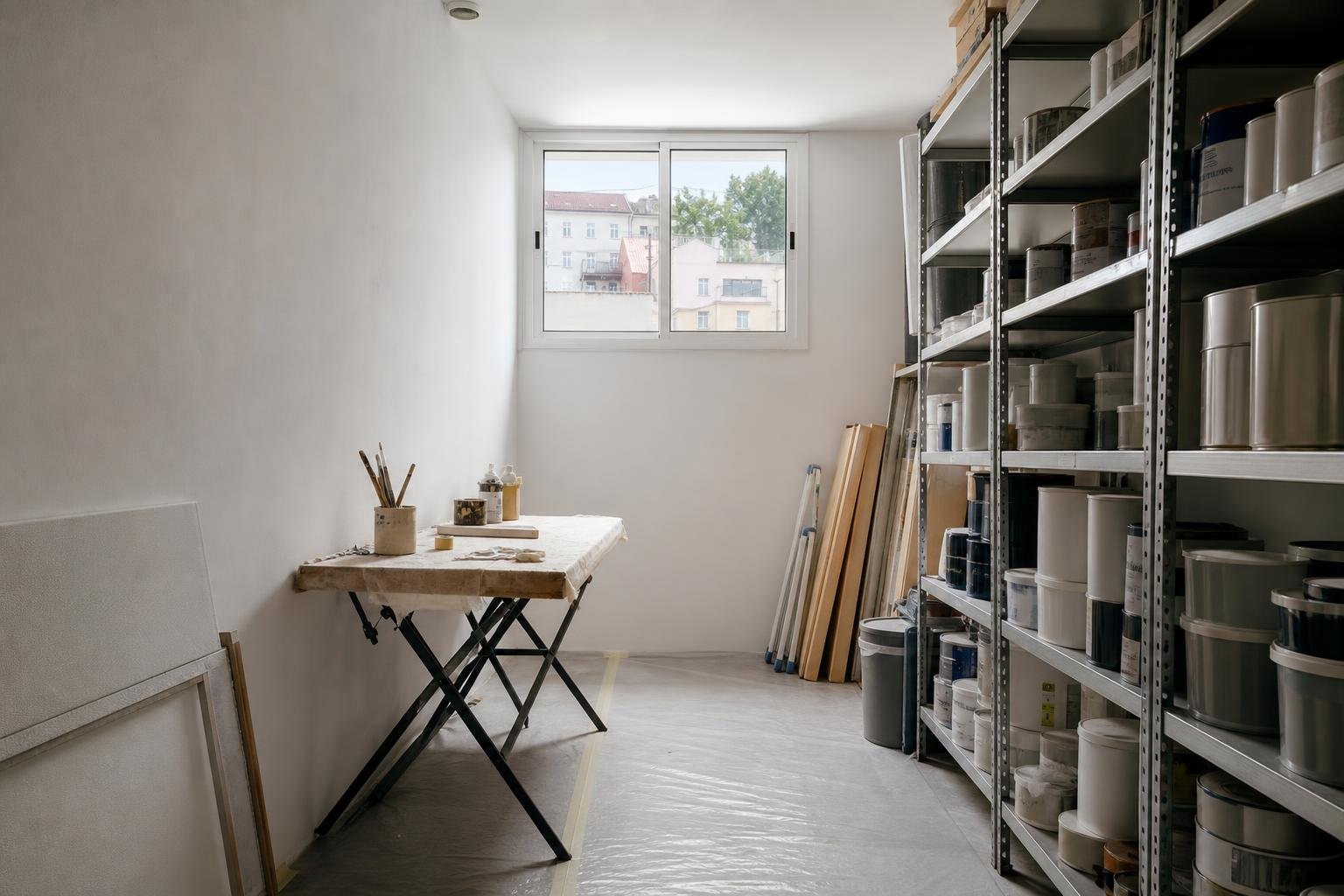
First, make a straightforward list of what moves in and out of the room. A space used only for suitcases and seasonal decorations needs something different from one used for bicycles, tools, washing objects or supporting heavy equipment. The floor has to answer three questions: what load will it take, what dirt will it receive and how often will it be cleaned?
Cardboard boxes and textiles need a dry floor that is easy to vacuum. Bicycles and trolleys call for scratch and wheel resistance. Paints, varnishes and DIY products also require careful storage and cleaning; the Portuguese Directorate-General of Health advises ventilation during cleaning and DIY work and following product instructions.
There is no need to design a domestic storage room as an industrial garage. Equally, do not choose a delicate surface simply because the room is hidden away. The aim is a continuous, washable and repairable floor suited to its intended domestic use.
Inspect the base before buying any flooring
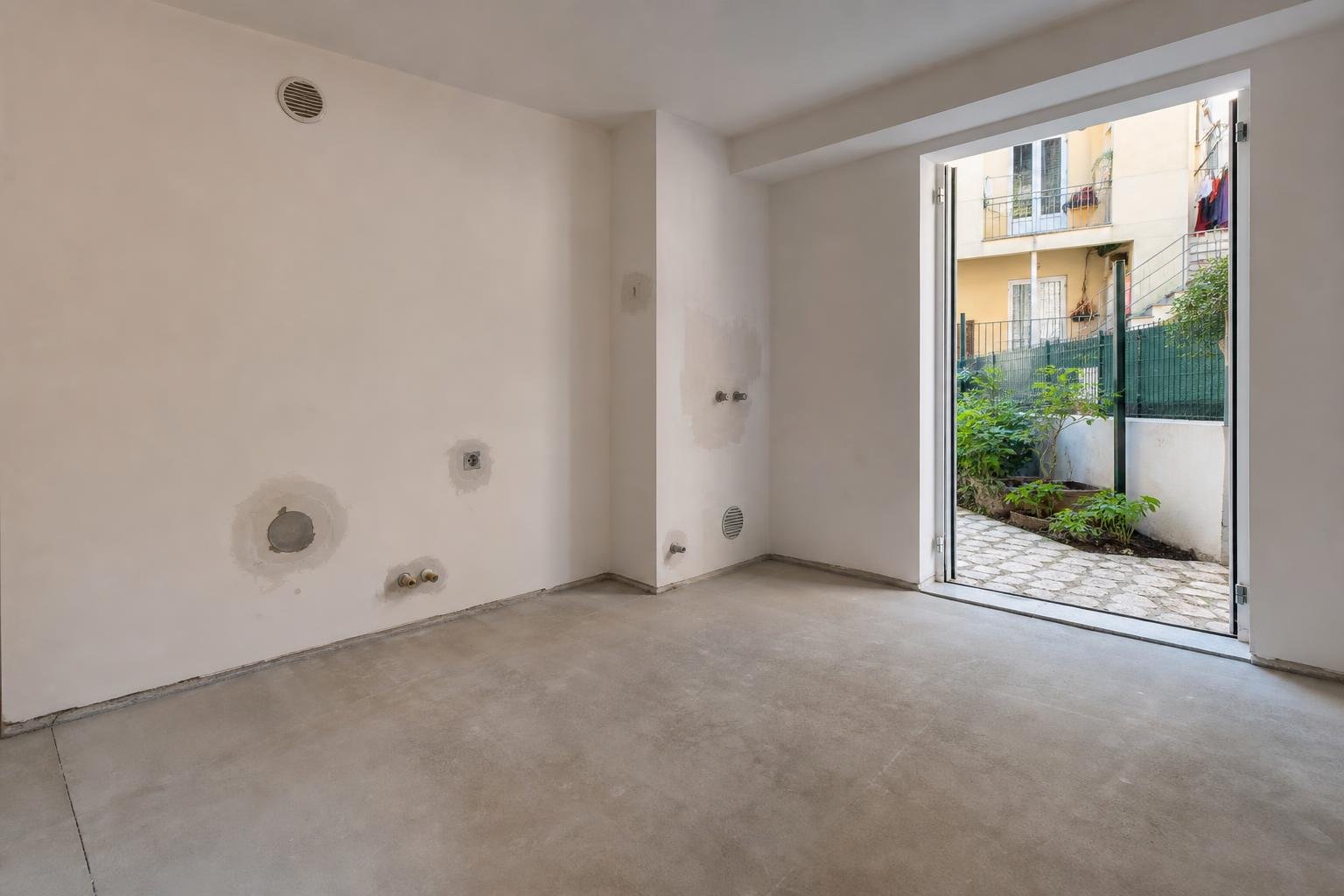
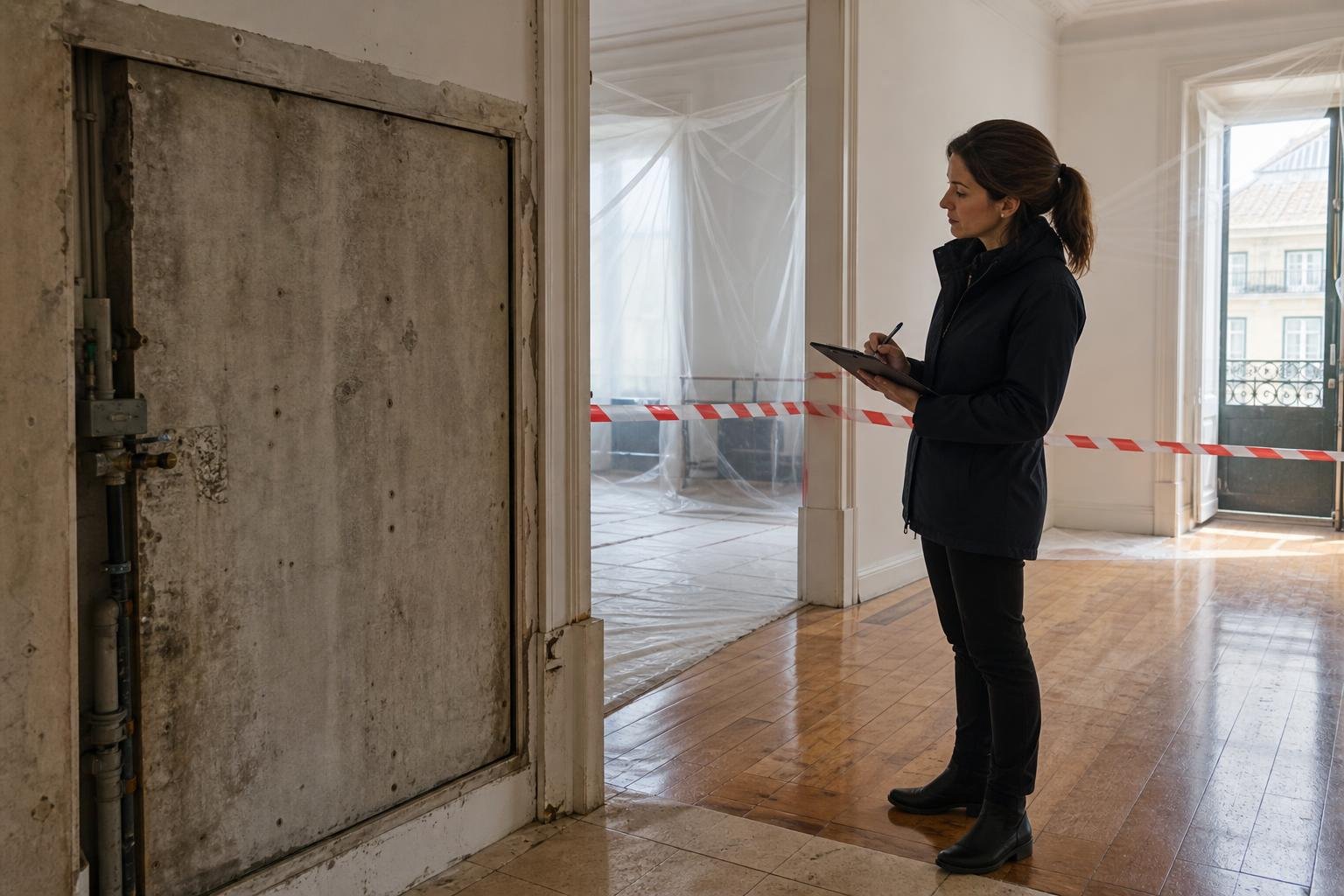
A finish cannot make up for a failing base. Look for cracks, crumbling areas, loose dust, dark marks, white salt deposits, open joints and hollow-sounding patches. Run your hand over the concrete or screed: if it comes away dusty, the surface needs consolidation, repair or mechanical preparation before paint, resin or adhesive is applied.
Also investigate the source of any moisture. A mark at the foot of a wall may come from condensation, water ingress, a plumbing leak or poor outside drainage. Sealing everything beneath an impermeable coating without addressing the cause can trap moisture in the base and undermine adhesion. For a useful starting point, see Obra Lisboa’s guide to using a hygrometer to understand household humidity.
If cracks are growing, water is actively entering, or there is any uncertainty around structural elements, pause the finish selection and seek technical advice. Flooring is the final layer; it is not a cure for movement or flowing water.
Match the finish to moisture exposure and load
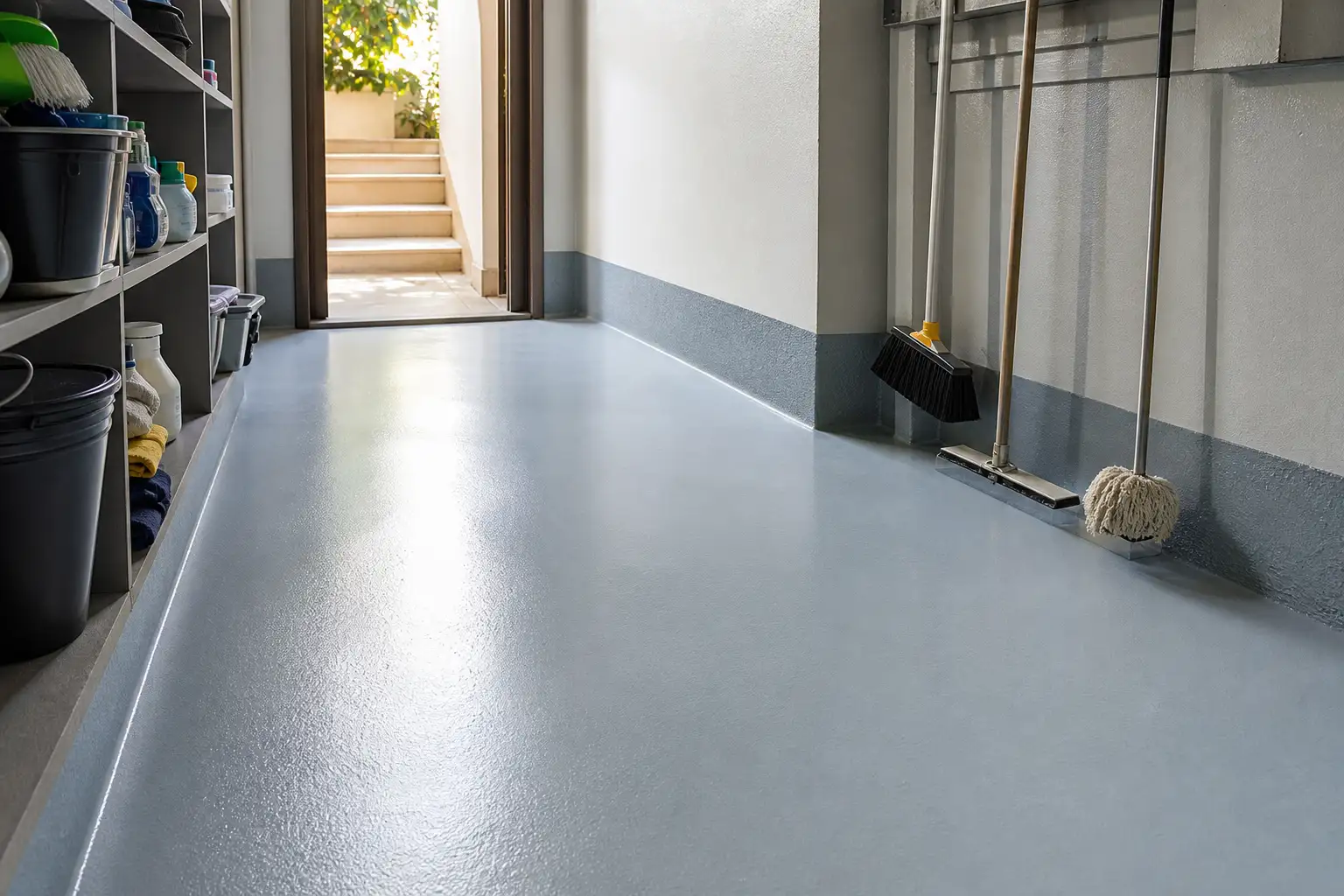
On a stable, dry base, floor paint can be a cost-conscious option for light storage. It needs thorough cleaning, defect repair and a compatible primer where specified. It is useful for reducing concrete dust and simplifying cleaning, but it may mark under persistent dragging or sharp impacts.
Ceramic tile resists washing and many everyday demands, provided that the base is even, joints are properly completed and the chosen surface provides suitable grip. Avoid highly polished tiles where wet tyres may enter or objects are washed. For a more continuous surface and stronger chemical resistance, resin systems can work well, but they depend even more on proper base preparation and moisture control.
Avoid laminate, unprotected timber and floating solutions in storage rooms without reliably dry conditions. A finish lasts only when the complete system — base, moisture-control layer or primer, coating and edge details — makes sense as one assembly.
Prepare the substrate: the stage that determines longevity
Clear the entire room before work begins. Sweep, vacuum and degrease where oil, wax or old products have marked the floor. Remove paint that has lost adhesion and take out loose material. Stable cracks should be opened, cleaned and filled with a compatible product; low areas should be levelled so that puddles and concentrated loads beneath shelving or wheels are avoided.
Then observe the drying times. Applying a new product over a damp base, or over repairs that have not cured, is one of the quickest ways to create blisters and detachment. It is not enough for a tin to say “floor paint”: check that it is suitable for the existing base, whether it requires primer and whether it will tolerate the cleaning routine you intend to use.
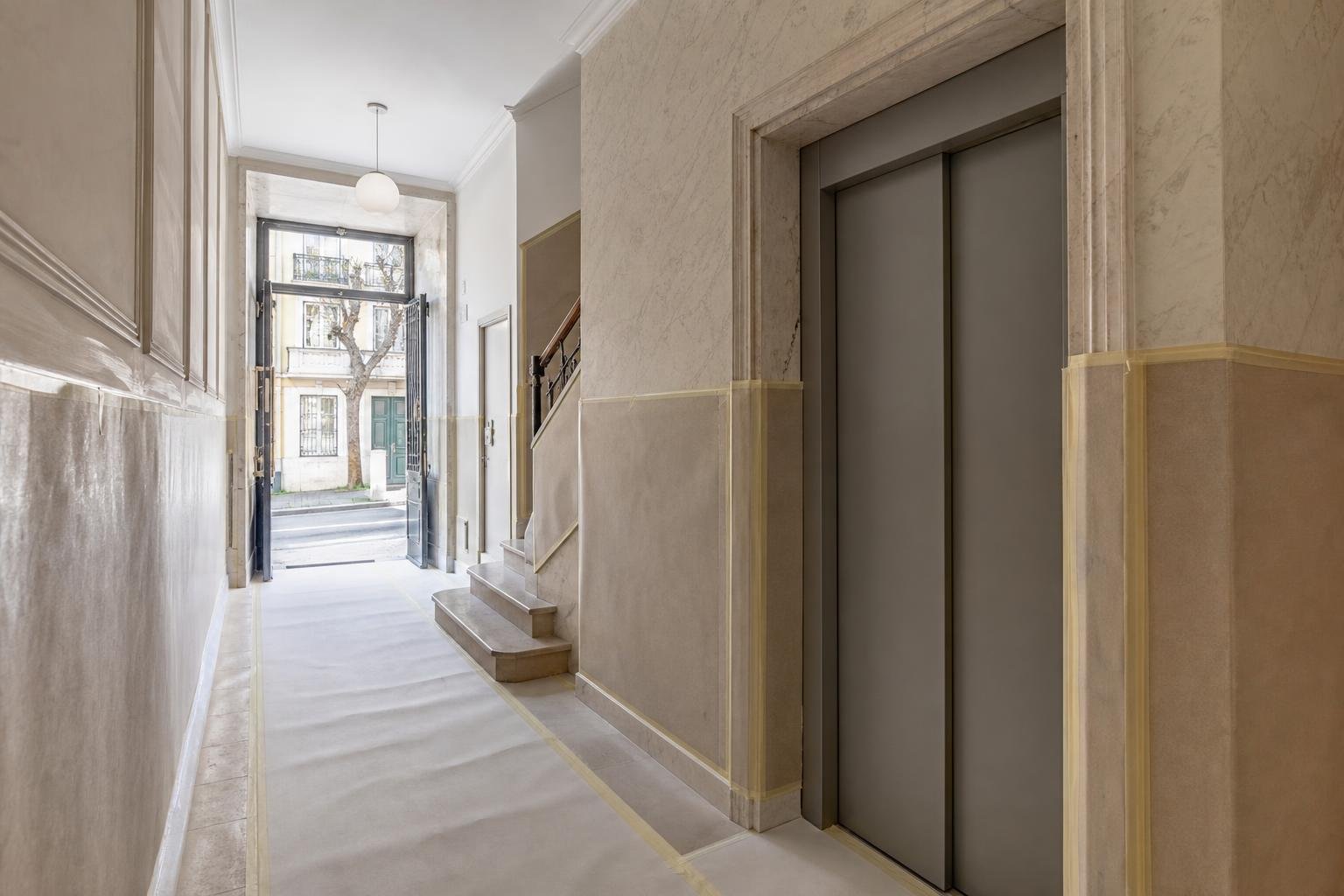
During the work, protect doors, thresholds and circulation routes. If the storage room is in an apartment building, arrange deliveries and protection for shared routes in advance. Obra Lisboa’s guide to protecting lifts and shared areas during renovation is useful for organising that stage without avoidable damage.
Deal with water, ventilation and cleaning before fitting shelves
The best floor is of limited use if water remains trapped against walls or beneath boxes. Do not place vulnerable items directly on the floor; use shelving, legs or suitable plastic pallets, leaving enough space for inspection and cleaning. Keep a zone close to the entrance for tyres, umbrellas, pots or tools that may bring in soil and moisture.
The Portuguese Directorate-General of Health recommends good lighting and avoiding floor obstacles and loose cables. In a storage room, that becomes a simple rule: do not let the floor become an extension of the shelving. Cables, extension leads and packages should be raised or put away, never left across the walking route.
Ventilate when using cleaning products, paint or varnish, and keep containers closed. The health authority also advises storing cleaning products securely and not mixing substances. If the room smells persistently musty, do not mask it with fragrance: find the moisture source and improve air movement.
Plan edge details, maintenance and future repairs
Details at the wall line deserve attention. A durable skirting or a modest upstand in the same finish can make cleaning easier and protect the wall from splashes, but it is not a substitute for waterproofing where water is entering. At doorways, make sure the final floor build-up will not prevent the door from opening or create an awkward threshold.
Think about maintenance before choosing a colour. Mid-tones conceal light dust better, but still need cleaning; overly textured surfaces trap dirt; very smooth finishes show scratches and may become slippery when wet. Keep a small reserve of repair material and record the product, colour and application date. A local repair is far easier when the original system is known.
When selecting paints, sealants and related products, favour lower-emission options where they suit the task. The ADENE SMARTER framework includes preference for products with lower VOC concentrations, a particularly worthwhile consideration in compact rooms with limited ventilation.
If your storage room needs more than a coat of paint — substrate repair, moisture control, new electrical points or a better layout — Obra Lisboa can help plan a solution that works with the building and with everyday use.
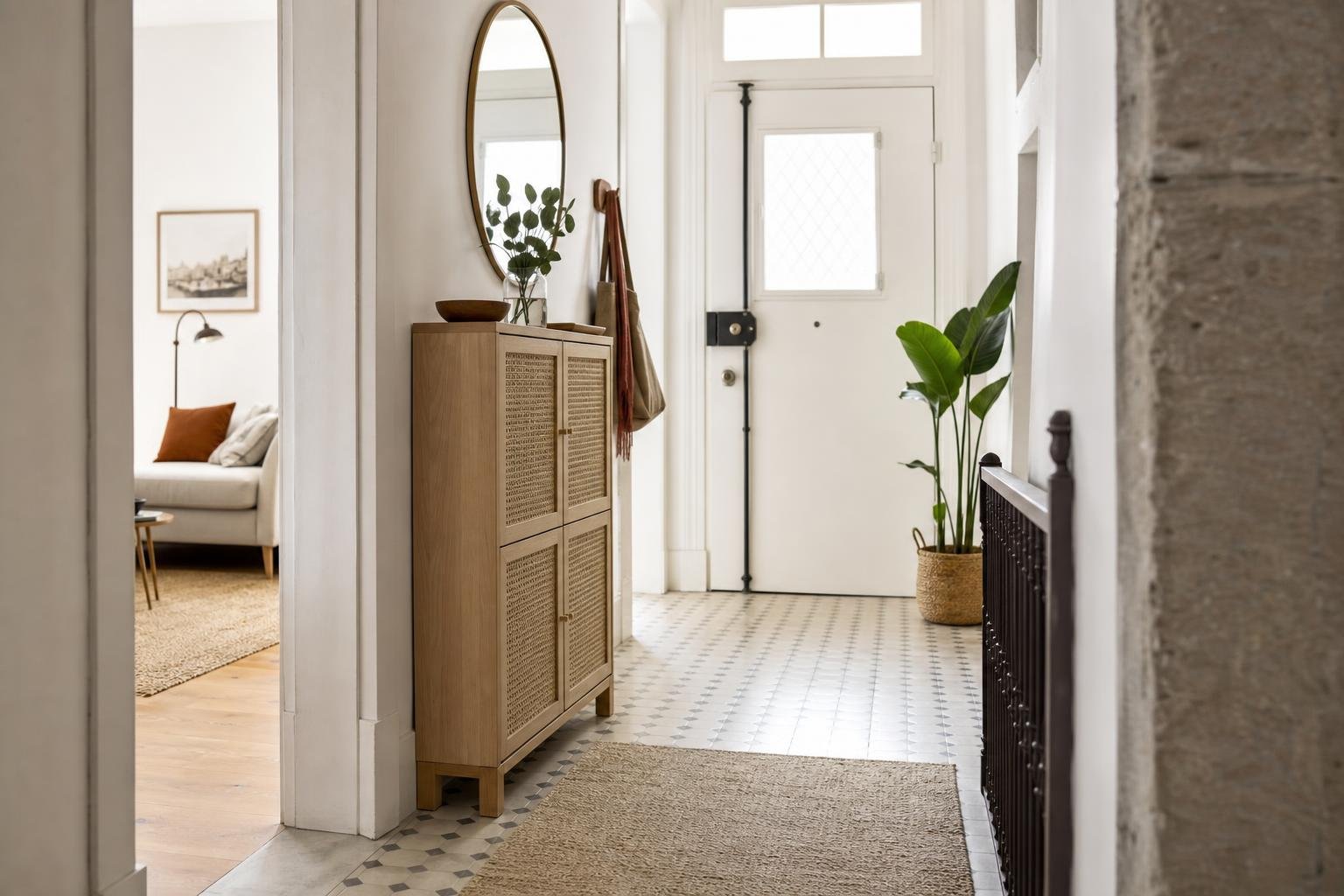
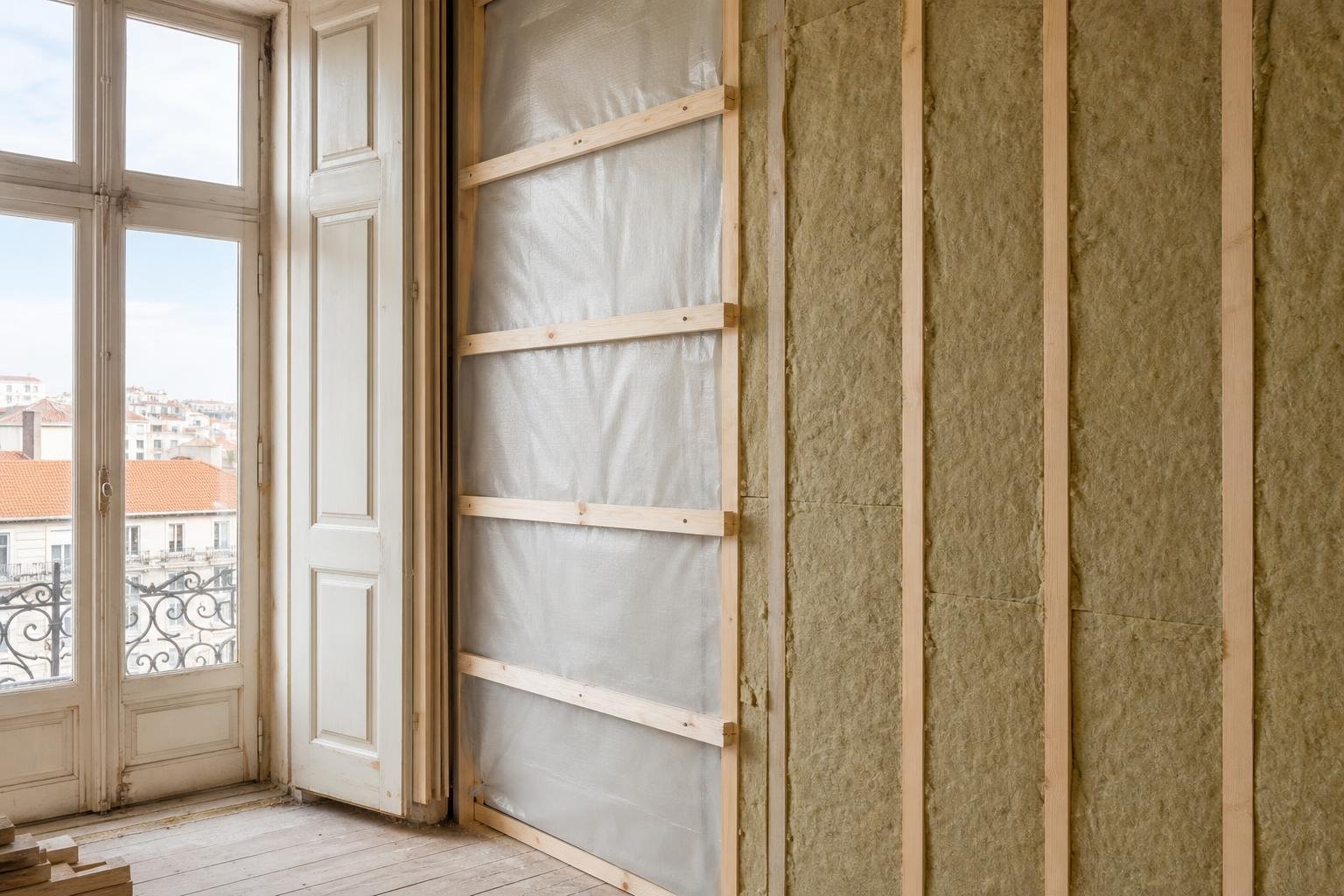
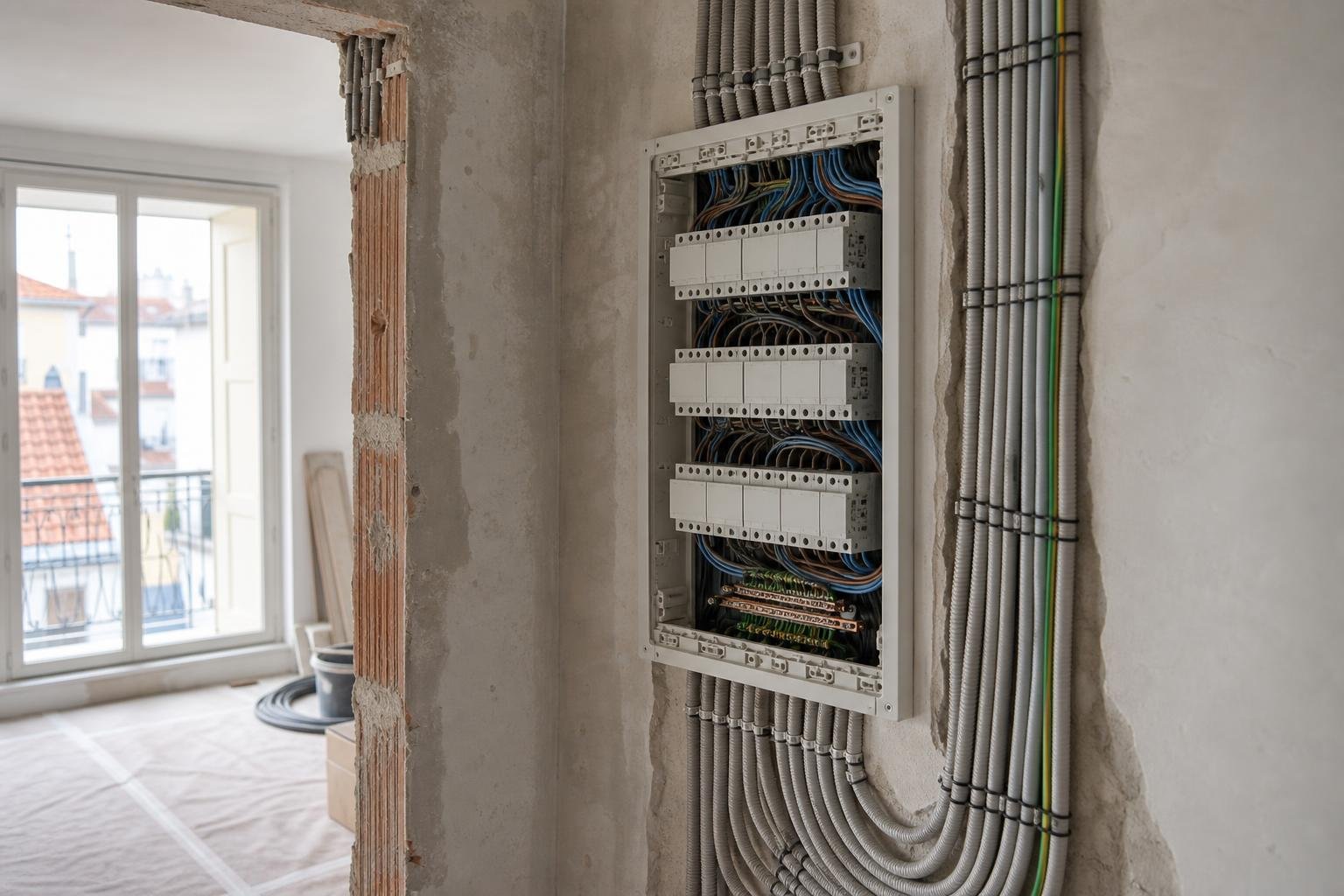
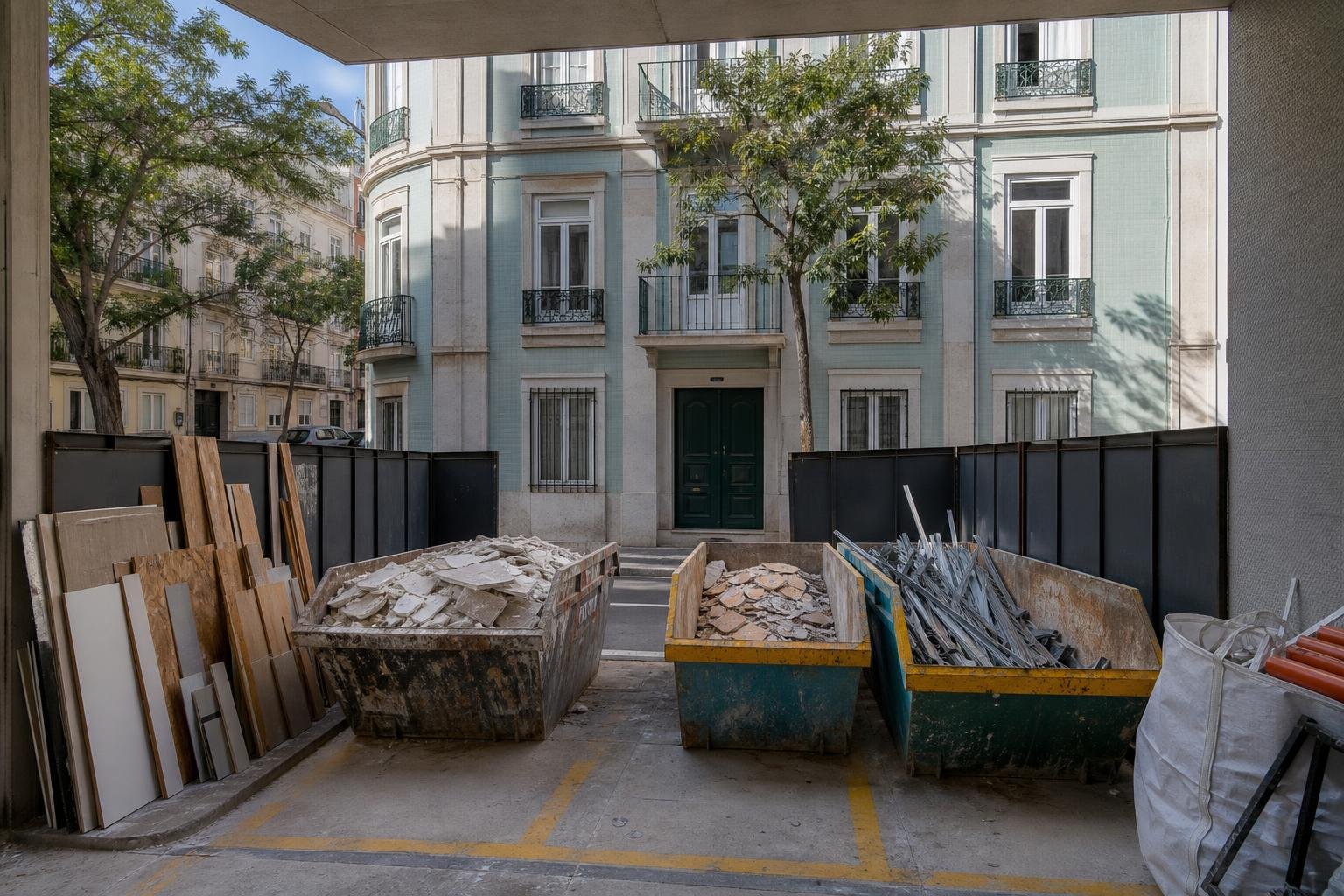
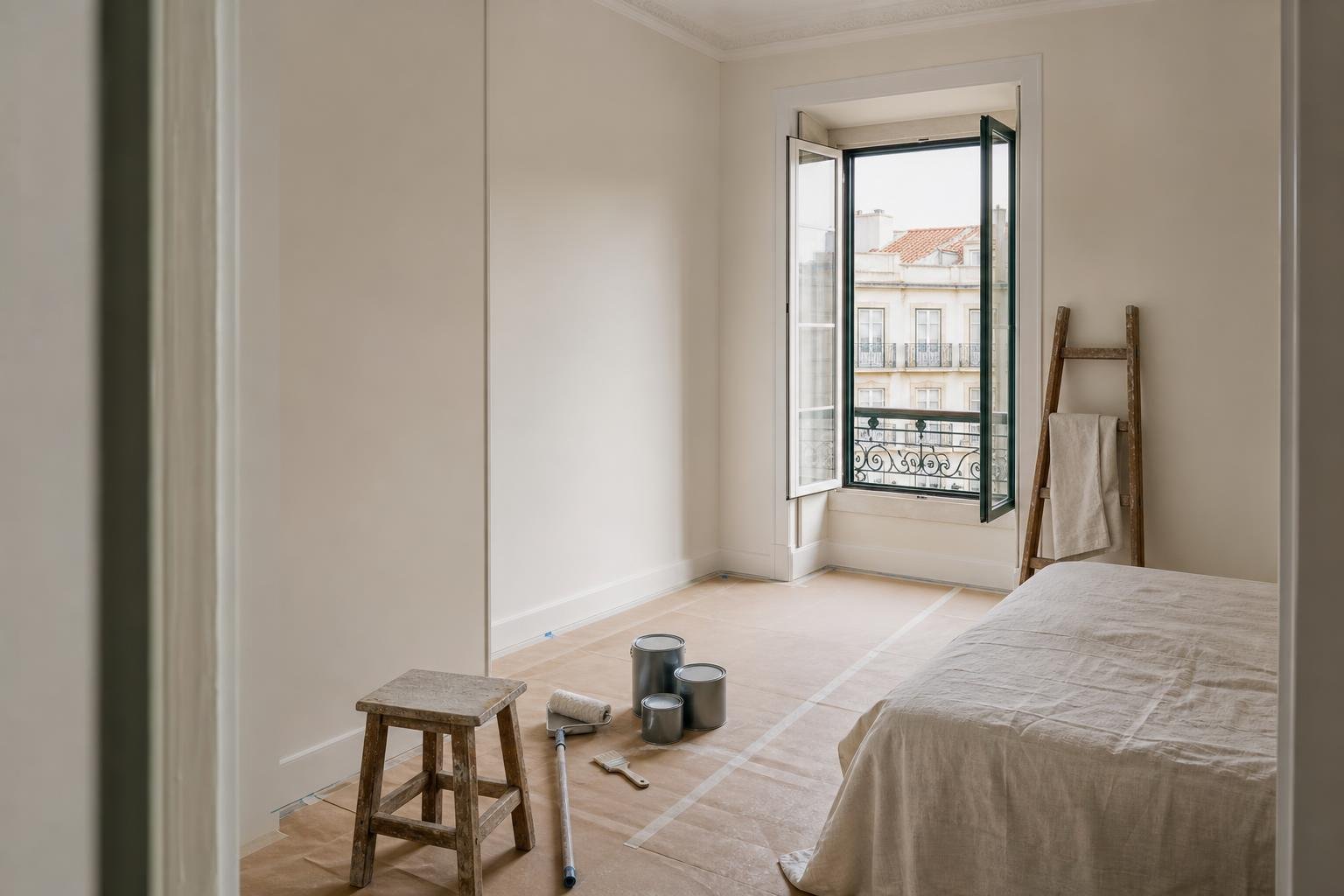
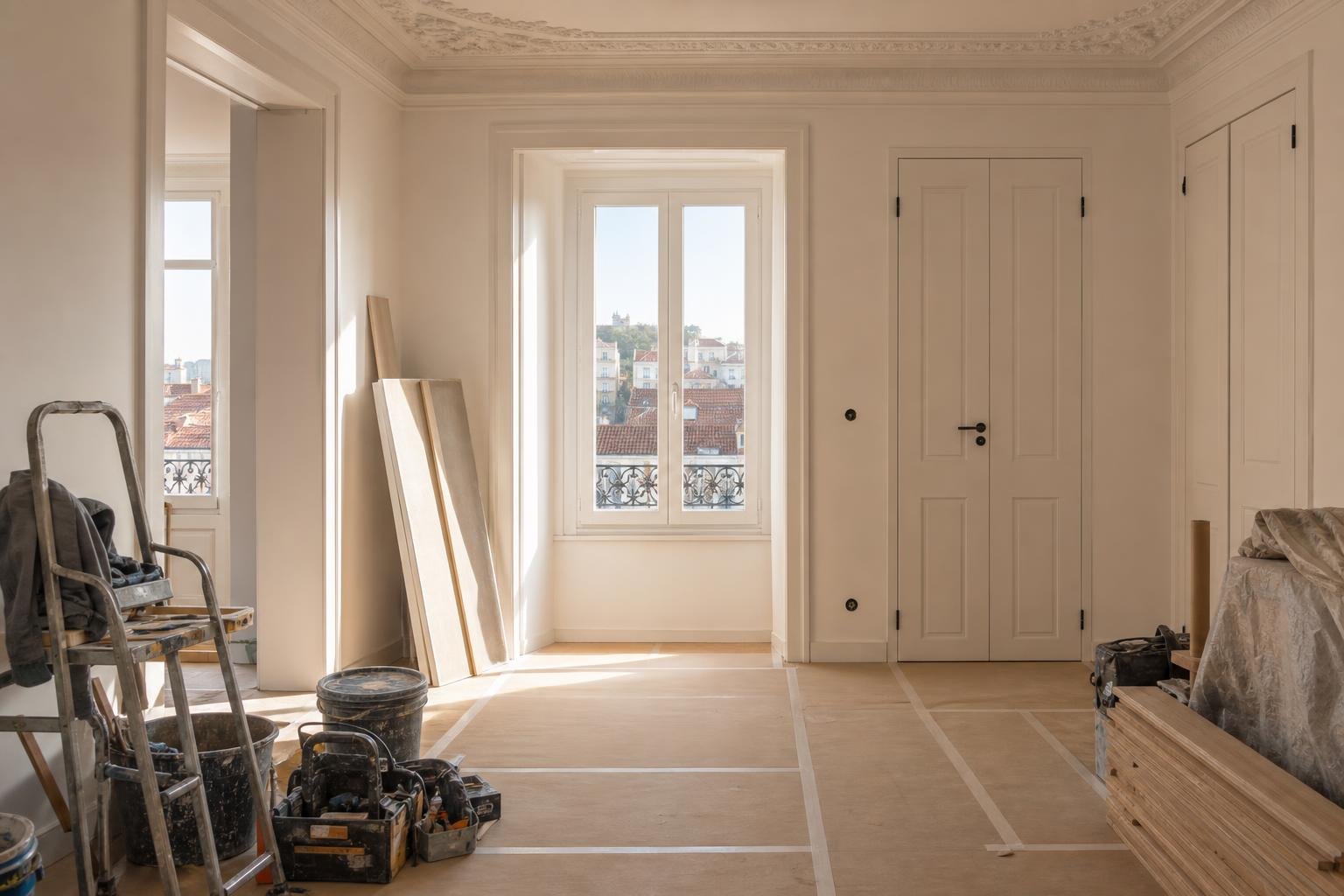
AI-generated editorial image; it does not depict an Obra Lisboa project.

Obra Lisboa