
A small storage room can do more than collect boxes, yet it should not become a cramped corner for drilling, cutting and painting with no room to move. A fold-down workbench is a practical answer for small household repairs, furniture assembly and tool maintenance when floor space must still remain available.
The first decision is not which bench looks strongest or which accessories to buy. Start by understanding what physically fits, how the door swings, where technical services run, which access routes must stay clear and whether the intended use is appropriate for the room. In a Lisbon apartment building, those details matter just as much as the worktop itself.
This guide covers dimensions, lighting, electrical planning, storage and installation order. The aim is a simple work point that can be folded away, kept tidy and used without turning the storage room into an obstacle course.
Define the jobs the bench must handle first
A bench for tightening hardware, repairing a chair or preparing a wall for a small paint job does not need the footprint of a joinery workshop. List the likely tasks and the items that will sit on the worktop: toolbox, drill driver, hand saw, small parts or paint tin. That prevents an overly deep surface in a room where there is no longer enough space to stand comfortably.
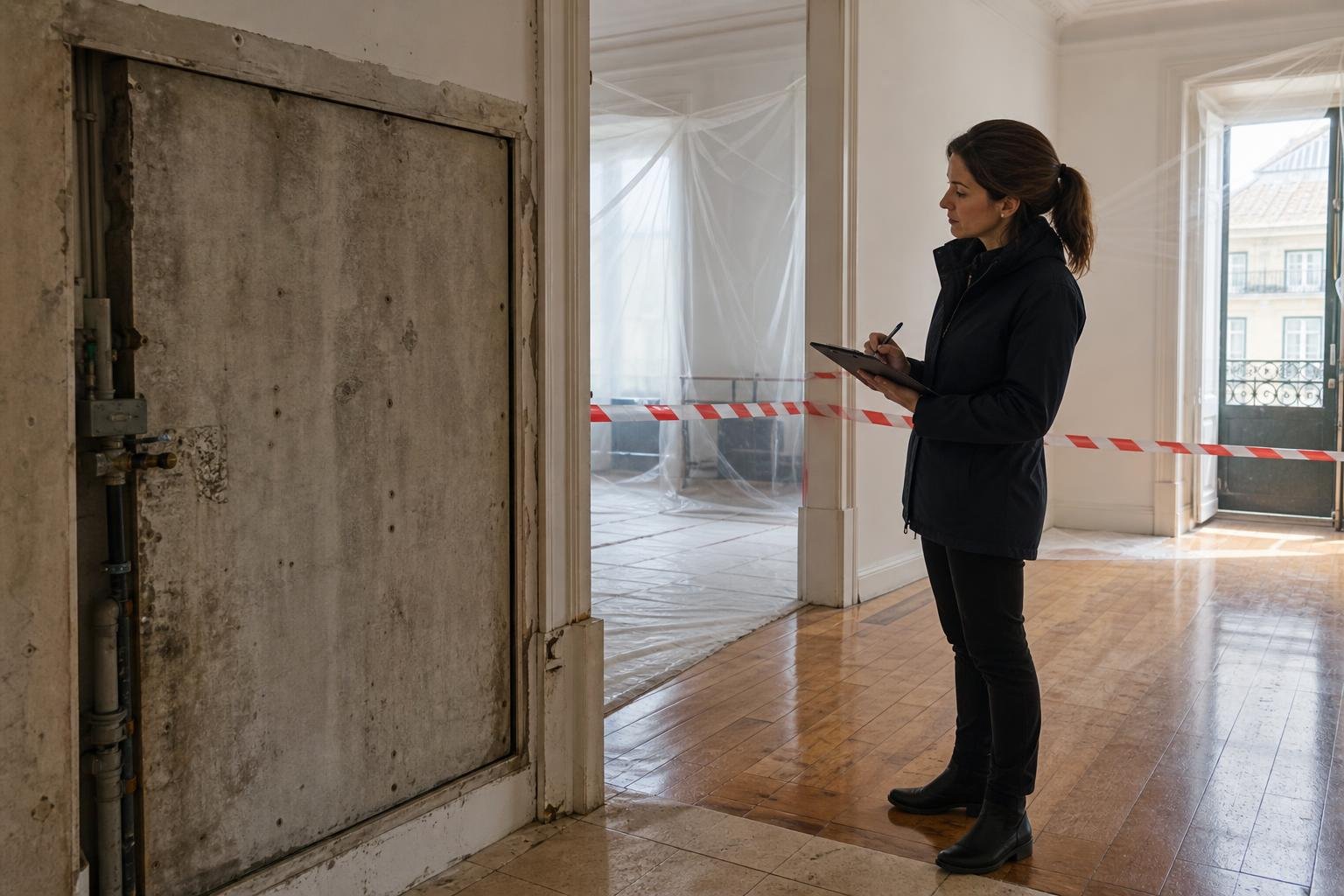
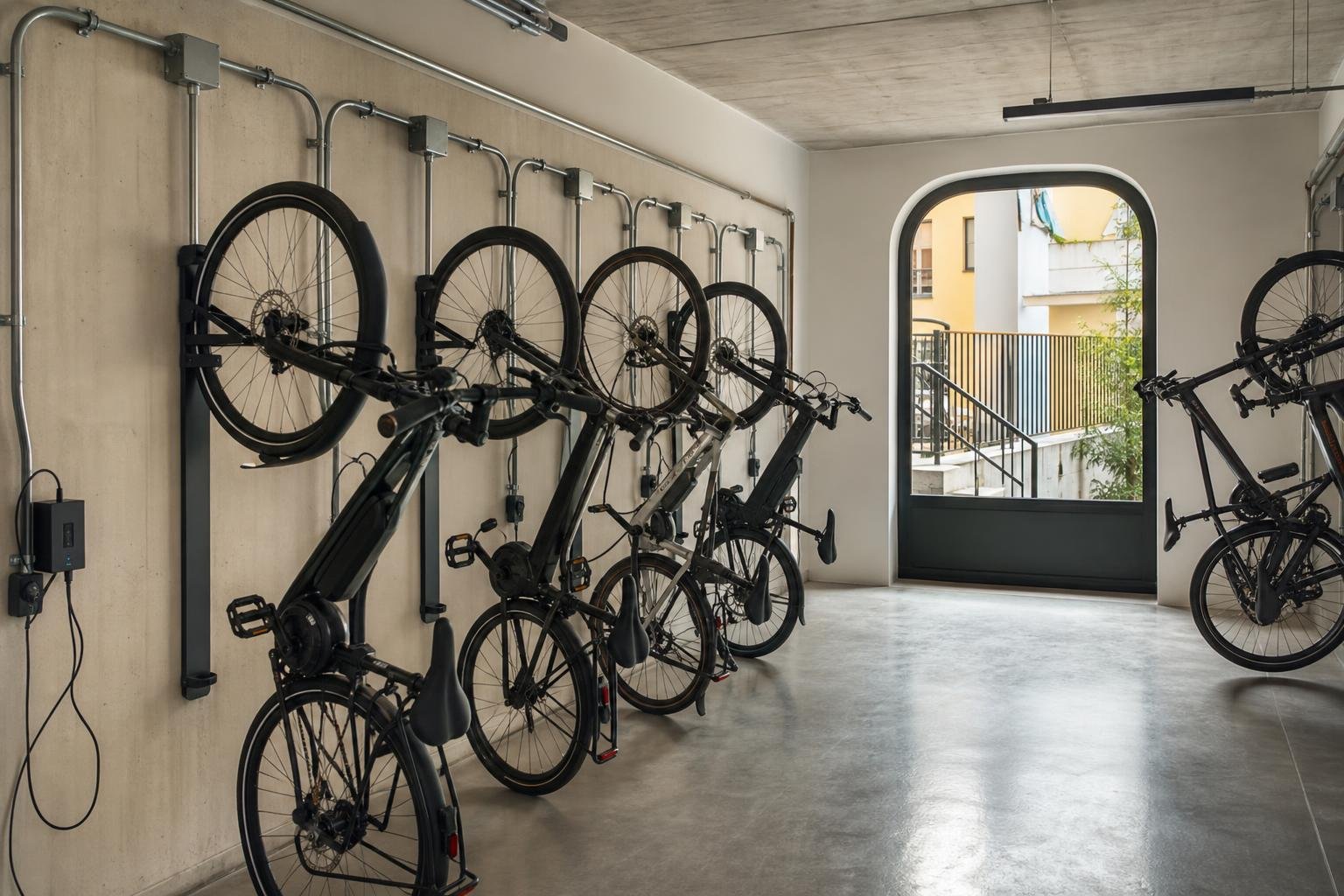
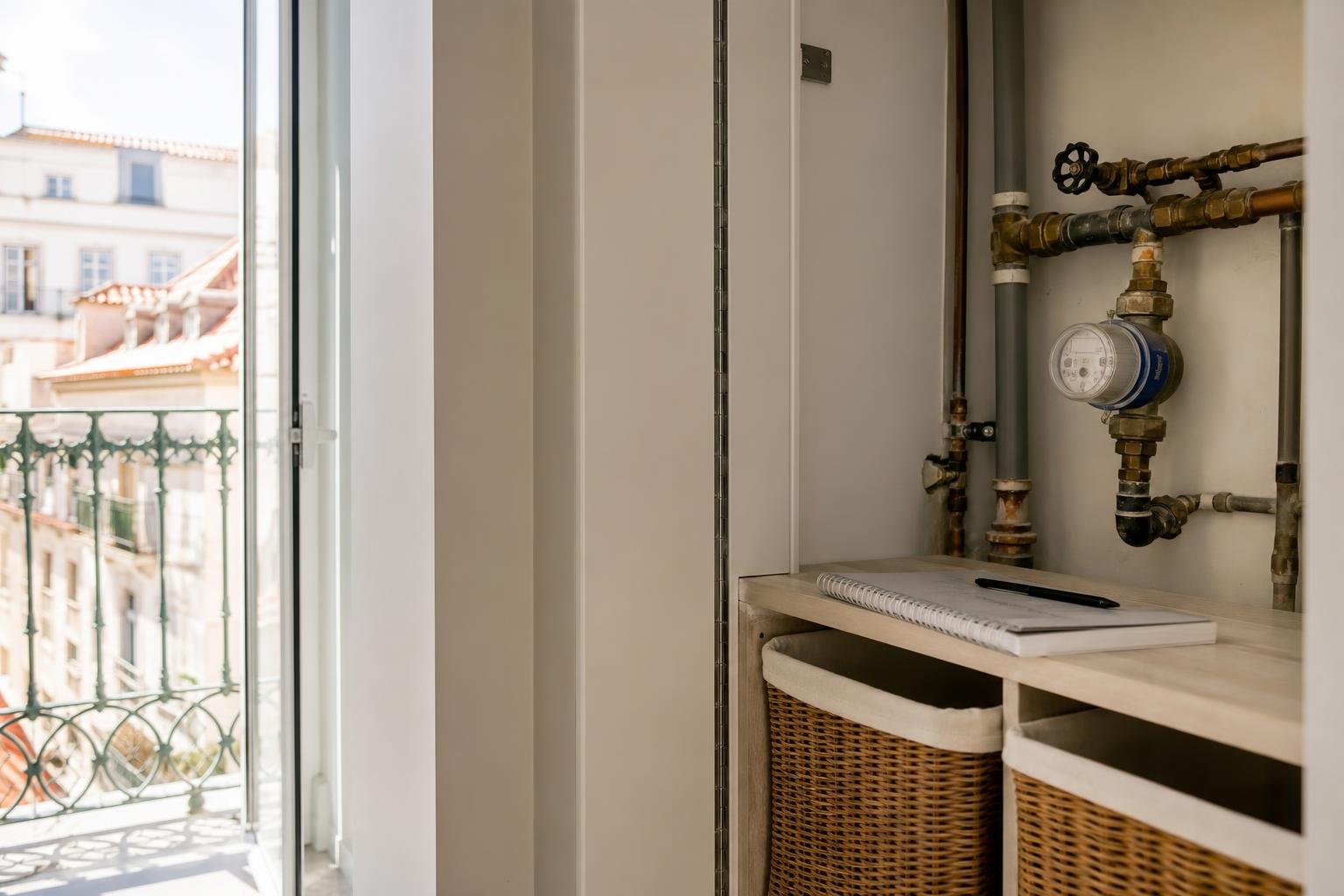
Measure the room with the door fully open and mark every fixed element: meter boxes, electrical panel, valves, vents, columns and inspection hatches. They must remain accessible. Avoid using the bench as a place to lean bicycles, luggage or cartons; a worktop that requires clearing half the room before it can open will soon stop being used.
Keep a clear strip in front of the bench for both the user and the folding leaf. In a condominium building, also check that you are not altering shared elements or changing the room’s intended use. The City of Lisbon documentation on building works highlights the importance of verifying technical requirements when an intervention goes beyond straightforward interior fitting. Review the City of Lisbon information on building-work procedures before assuming that a fixed alteration needs no further assessment.
Choose a wall that can take the load and the right fixings
A fold-down bench transfers load to the wall, especially when a machine, a long component or pressure near the outer edge is involved. Before buying brackets, identify the wall build-up: masonry, concrete, lightweight partition or a metal-stud wall. Fixings must match that build-up; choosing plugs by appearance alone often leads to movement, loose screws and eventually failure.
Do not drill where pipes or cables may run unless their route has been checked. In older buildings, services are not always where you expect them to be. If there is uncertainty, consider a freestanding solution or ask for an assessment before drilling. Folding legs reduce part of the wall load, but they do not remove the need for sound fixings.
Choose a height that lets you work standing up without lifting your shoulders. For light domestic jobs, ergonomics matters more than copying a universal dimension. Test a board on trestles and try the movements you expect to make: driving screws, sanding or leaning over a repair. If more than one person will use the area, a slightly lower surface with a movable support may be more adaptable than a bench that is too high.
Leave side clearance for clamps or a long piece of timber. A compact worktop with clear space beside it is usually more useful than a wider one that interferes with the door.
Make the worktop quick to close and easy to clean
Worktop thickness and finish should follow its intended use. A stable board with eased or protected edges is kinder to hands, cables and stored boxes. If glue, paint or small amounts of solvent will be used, select a wipeable finish and consider a replaceable sacrificial cover to protect the main surface.
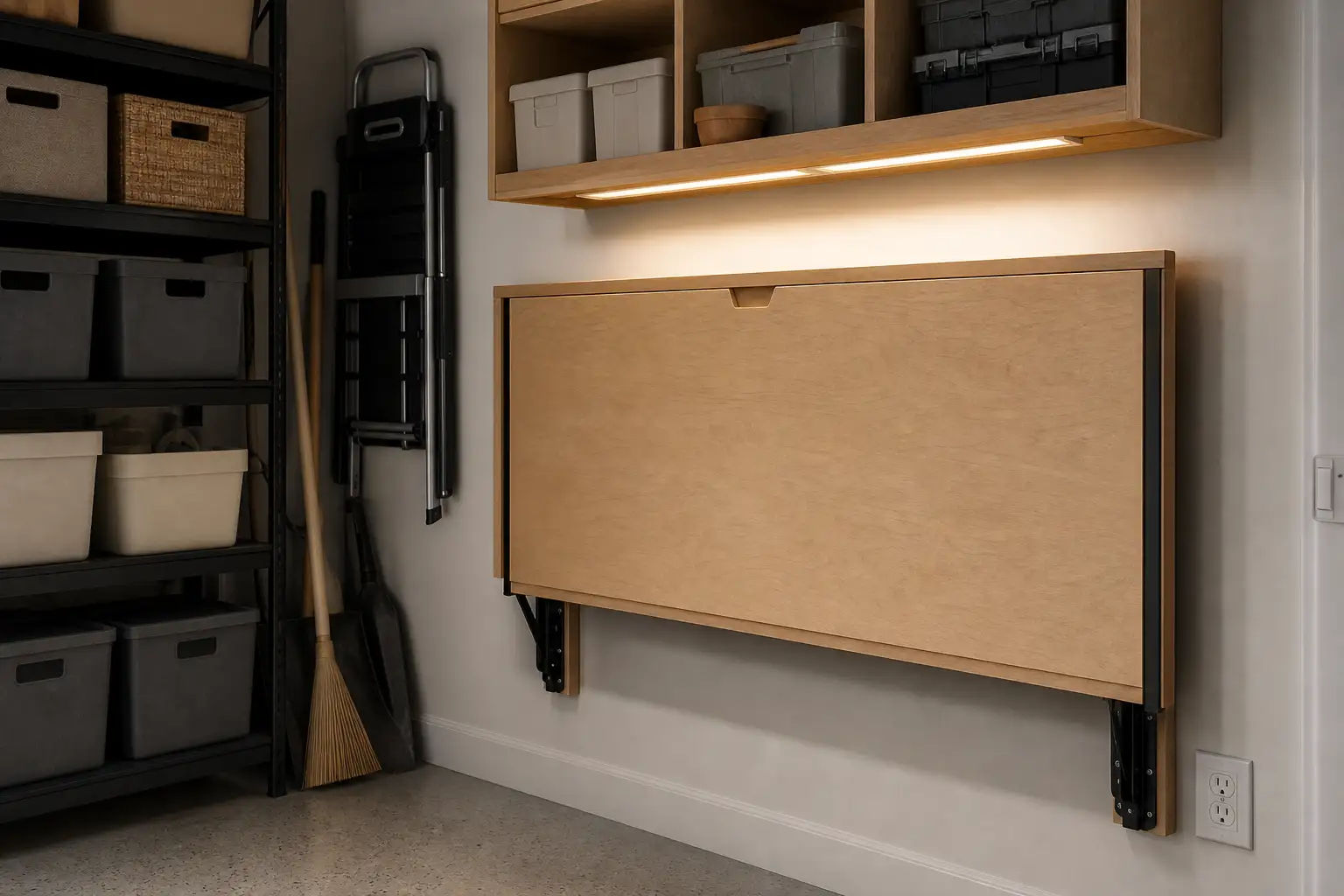
When folded up, the bench should not trap extension leads, tools or items left on the wall. Plan a simple, visible catch that prevents accidental opening. Check that folding legs stow without scraping the floor or striking skirting boards. A small gap behind the worktop can accommodate an uneven wall, but it should not become a slot for dropped screws and dust.
Store heavier supplies low down, while keeping frequently used items between waist and eye level. Paint tins, power tools and boxes of fixings do not belong on high shelves above the work area. The Portuguese Directorate-General of Health guidance on basic household tools and safe handling offers a sound principle: keep only what is needed nearby, use suitable protection and do not improvise with equipment you do not know how to use safely.
Plan task lighting, rather than relying on one ceiling bulb
Storage rooms often have one central ceiling fitting, frequently blocked by the person standing at the bench. The shadow then falls exactly over the pencil line, screw head or cut. Add task lighting aimed at the worktop, but position it so that it will not glare or be exposed to knocks.
An evenly distributed LED fitting placed above and slightly in front of the surface usually works better than a tight, high-intensity spotlight. Put the switch within easy reach of the entrance and, if the room is used only occasionally, choose a straightforward control that makes it less likely the light will be left on. Efficiency does not replace good lighting quality, but both choices can work together: ADENE includes LED lighting among practical home-efficiency measures in its casA+ home-energy guidance and lighting recommendations.
Do not cover ventilation grilles with tall cabinets or storage panels. If the room shows signs of damp, solve the cause before fitting out the bench, and keep timber, steel and cardboard away from the floor and cold walls. A tidy bench in a damp room quickly develops rust, mould and stale odours.
Provide outlets without making permanent use of extension leads
An extension lead across the floor is awkward and can become hazardous in an already narrow room. If you expect to use a drill driver, battery charger, vacuum or small sander, plan the outlet before filling the wall with storage. It should be accessible, away from likely splashes and positioned so a lead does not cross the route through the room.
Do not hide multi-socket strips behind boxes or overload adaptors. Higher-demand tools, chargers and lighting deserve an installation assessed for the intended use. Portugal’s technical framework for low-voltage installations is referenced in the Diário da República technical requirements and outlet-planning document. In practical terms, a properly planned additional outlet is preferable to a temporary arrangement that quietly becomes permanent.
If there is damp, a leak or condensation, stop using electrical equipment until the cause is understood. A storage room is not the place to charge batteries on cardboard, next to flammable products or without appropriate supervision.
Organise by frequency, risk and preparation time
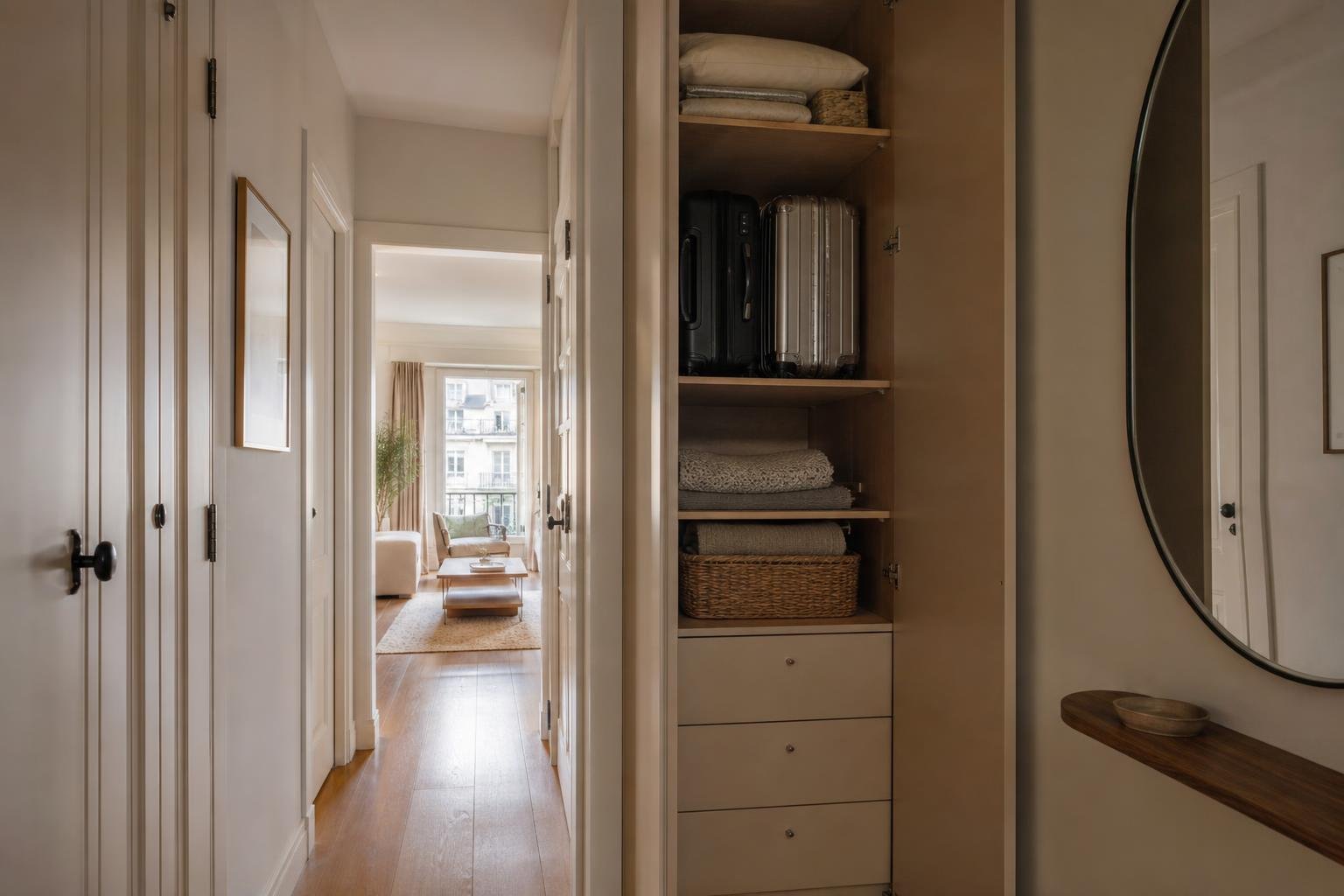
A successful fold-down bench opens in less than a minute. Divide items into three groups: frequently used tools, small consumables and occasional equipment. The first group can live in shallow drawers or a removable tool case; screws, drill bits and plugs need divided containers; bulky objects should stay outside the bench opening zone.
Simple labels, a list on the inside of the door and closed containers prevent duplicate purchases and wasted time searching for parts mid-job. Keep gloves, safety glasses, a tape measure and a small waste bag within reach. Give chemical products a dedicated location, follow their manufacturer instructions and never store incompatible materials together.
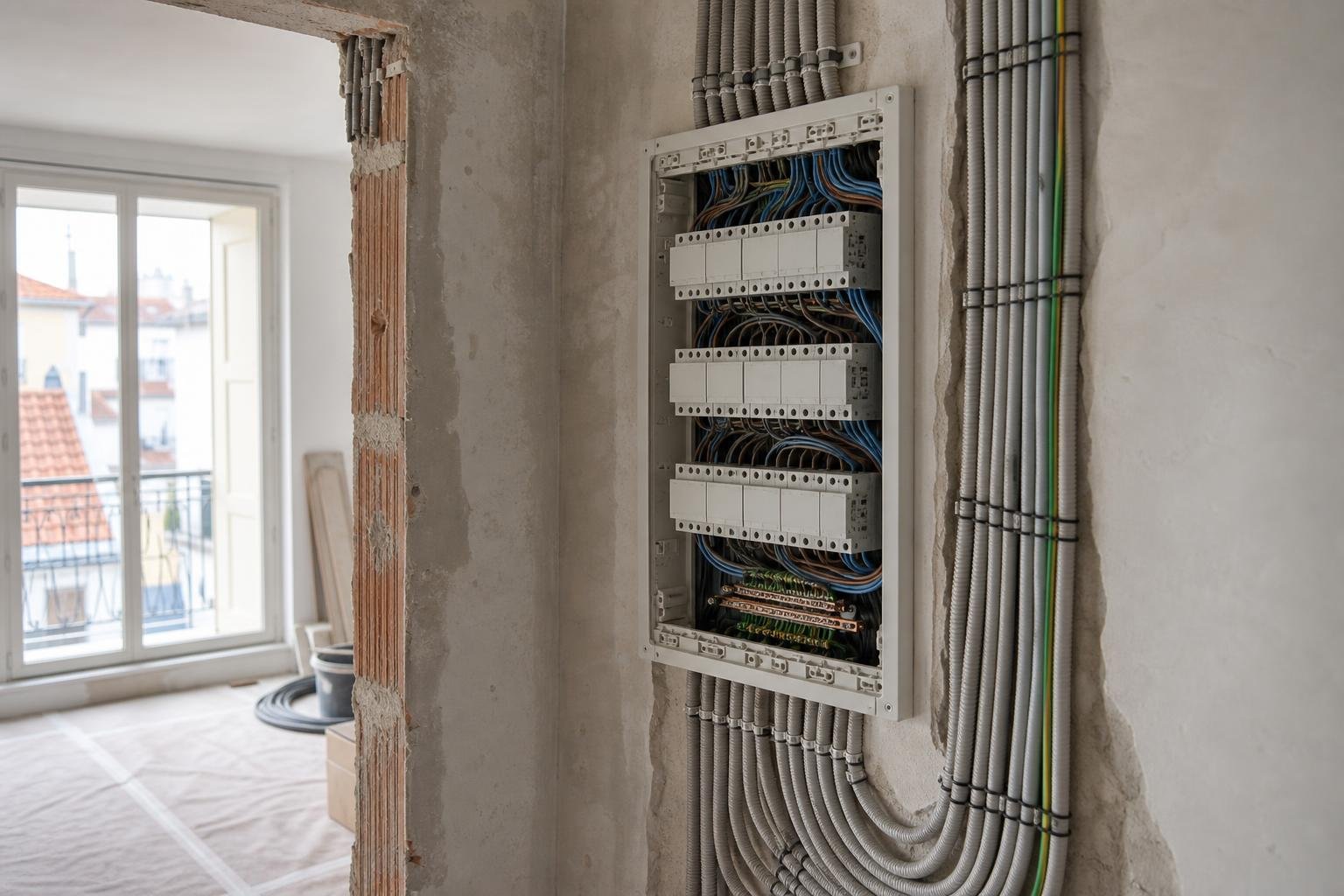
Before calling the space finished, open and close the bench with everything stored, simulate entering with a box and confirm that technical equipment remains unobstructed. For more demanding home projects, compare this arrangement with Obra Lisboa’s advice on planning a home tool area; if the work includes new circuits, also review the decisions involved in planning an electrical panel for a house renovation.
Planning a workbench, lighting or outlets in a storage room as part of a renovation? Obra Lisboa can help coordinate the layout, materials and technical trades before work begins.
AI-generated editorial image; it does not depict an Obra Lisboa project.

Obra Lisboa