Interior blinds may look like a minor finishing choice, yet they shape how an apartment works every day. They control glare at a desk, improve privacy in the evening, make a bedroom darker and help manage intense daylight at windows. But choosing only by colour or a catalogue image can lead to fabric catching on handles, brackets that do not fit the frame, or an attractive solution that leaks light exactly where it is least welcome.
Before ordering, treat blinds as a small design decision: observe the orientation, measure the true opening, check how the window operates and identify what needs controlling — view, privacy, daylight, heat or sleep. This guide sets out how to organise that process without turning an ordinary purchase into a series of avoidable alterations.
Start with the purpose of each window, not with the blind style
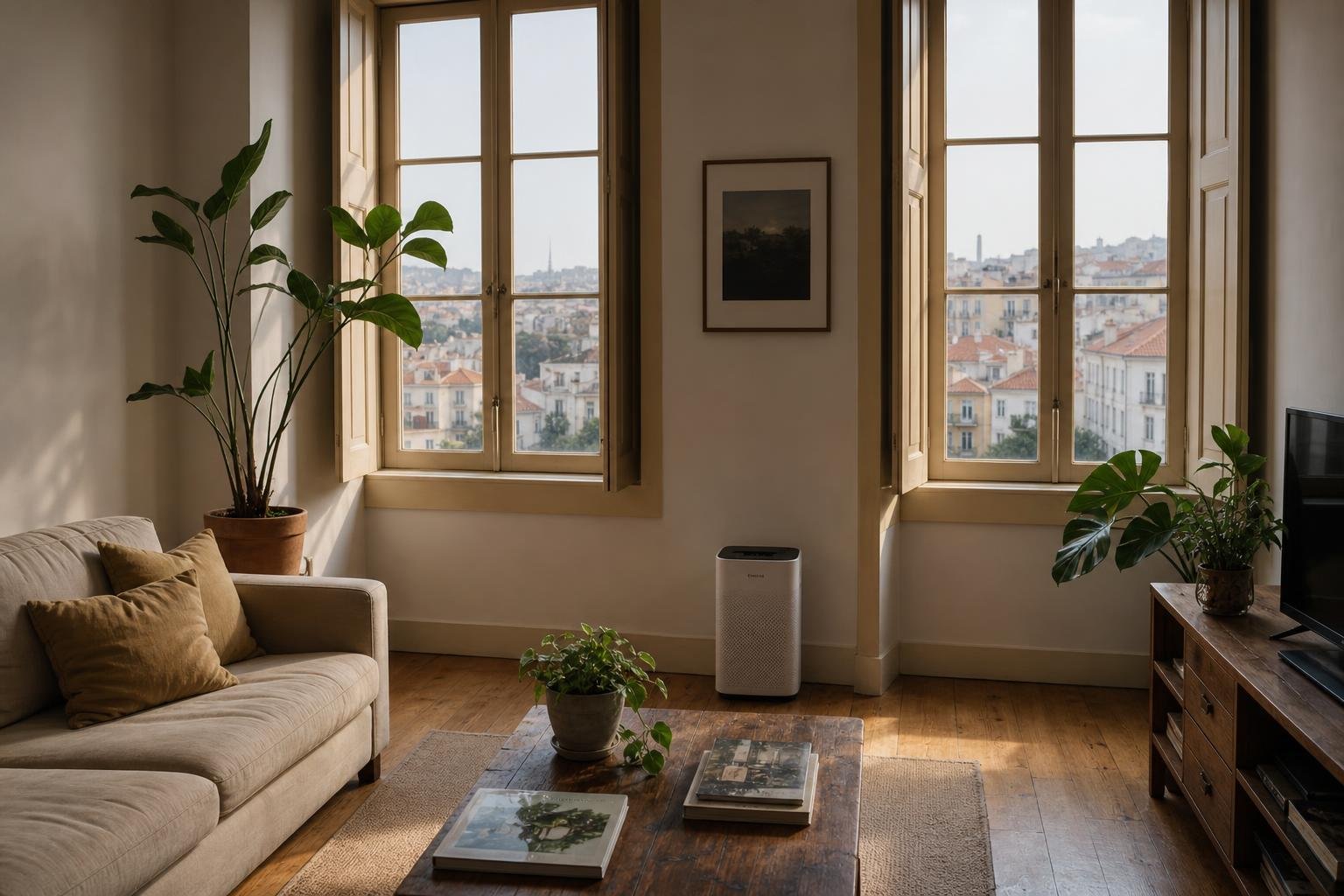
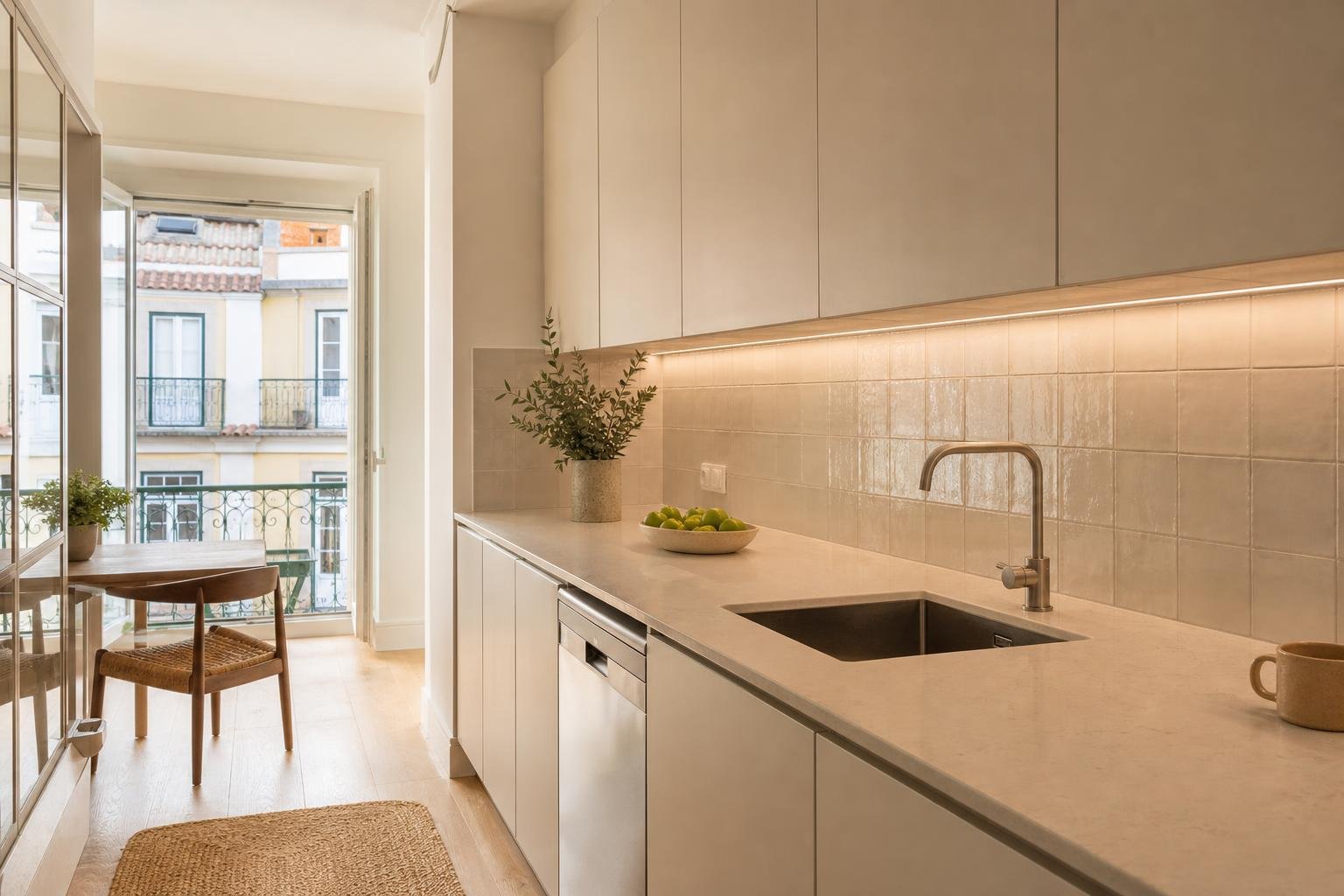
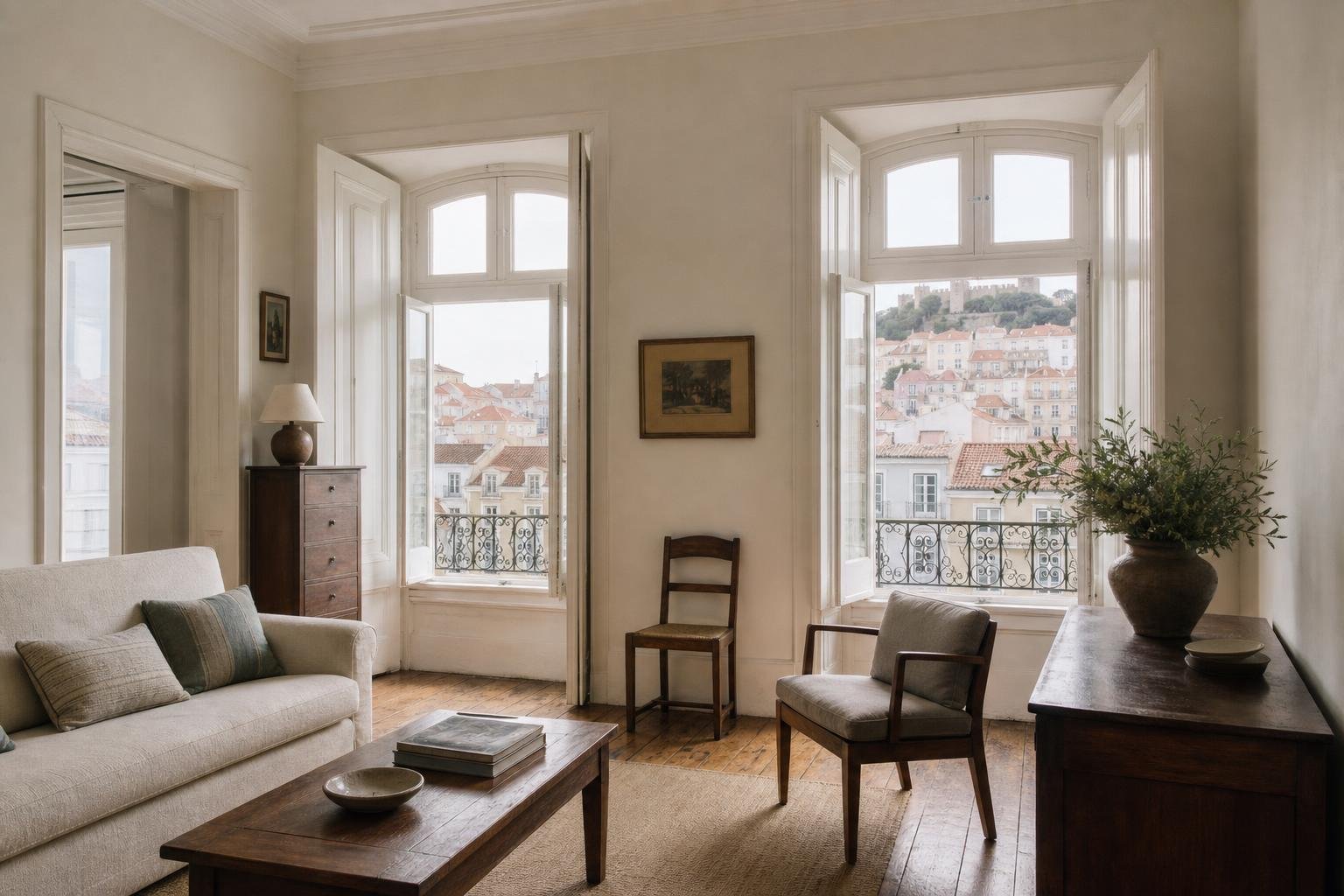
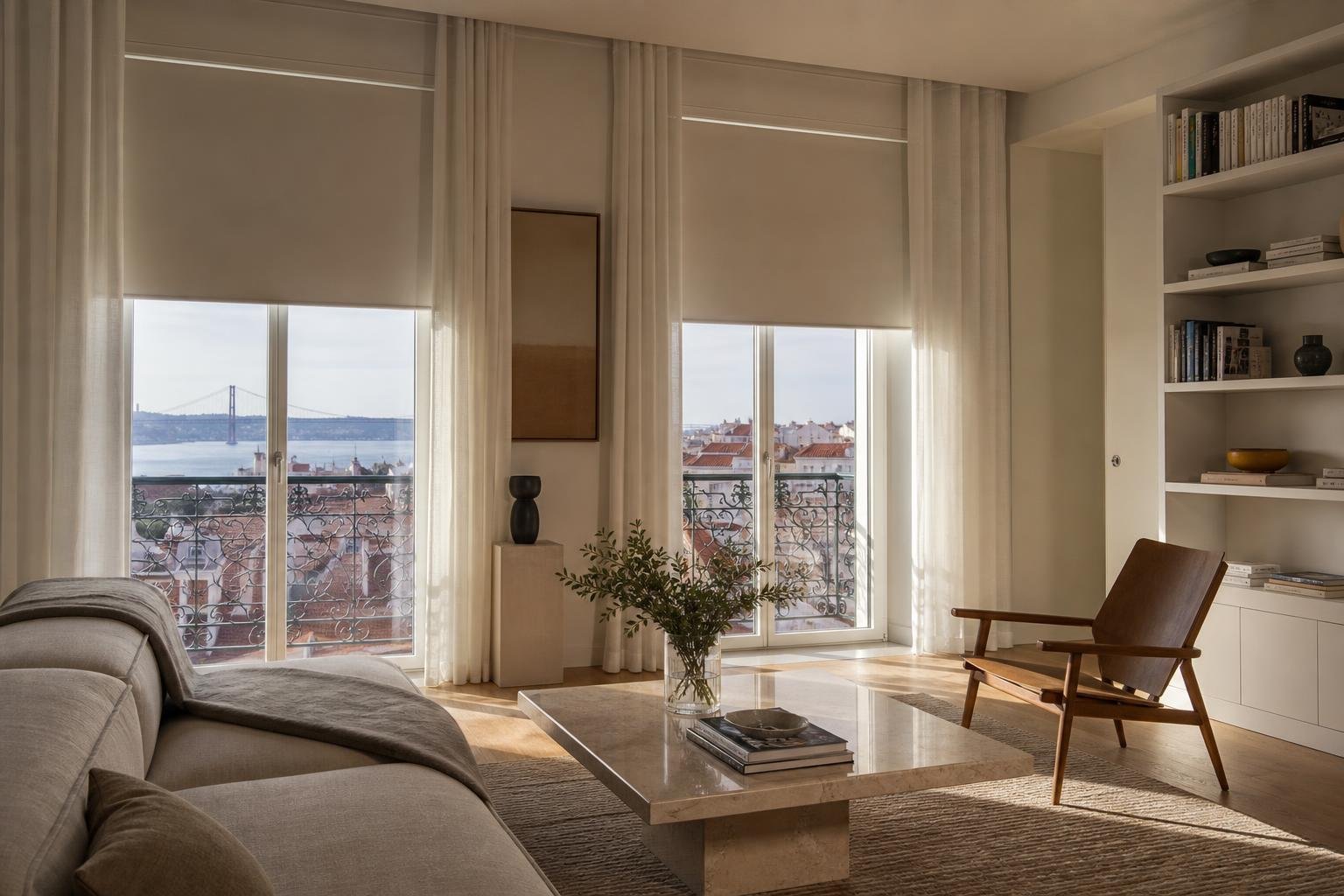
There is no single blind that works equally well throughout a home. In a living room with a view and abundant diffuse daylight, a translucent roller blind may reduce reflections without closing the space in. In a bedroom facing east or west, an opaque or blackout option may be needed, especially where there is external light at night. In a kitchen, prioritise finishes that are easy to clean and kept clear of steam, grease and heat sources.
Orientation changes the decision. Portuguese technical guidance on thermal performance notes that east-facing and particularly west-facing openings need stronger protection in warm months, while north-facing openings mainly receive diffuse light. Read the technical guidance on openings and shading to understand why one solution rarely performs in the same way on every façade.
Create a room-by-room list: when direct sun enters, what activity happens by the window, whether neighbours overlook it and whether maintaining an outward view matters. This moves the decision from buying “blinds for the home” to choosing the right transparency level for each use.
Privacy and daylight are two different controls
A translucent fabric softens daylight, but it may not provide privacy at night when the interior is lit and the exterior is dark. A screen fabric can preserve some outward view in daytime, but its performance depends on its openness, colour and the difference in light levels on each side of the glass. It should not be treated as a blackout curtain.
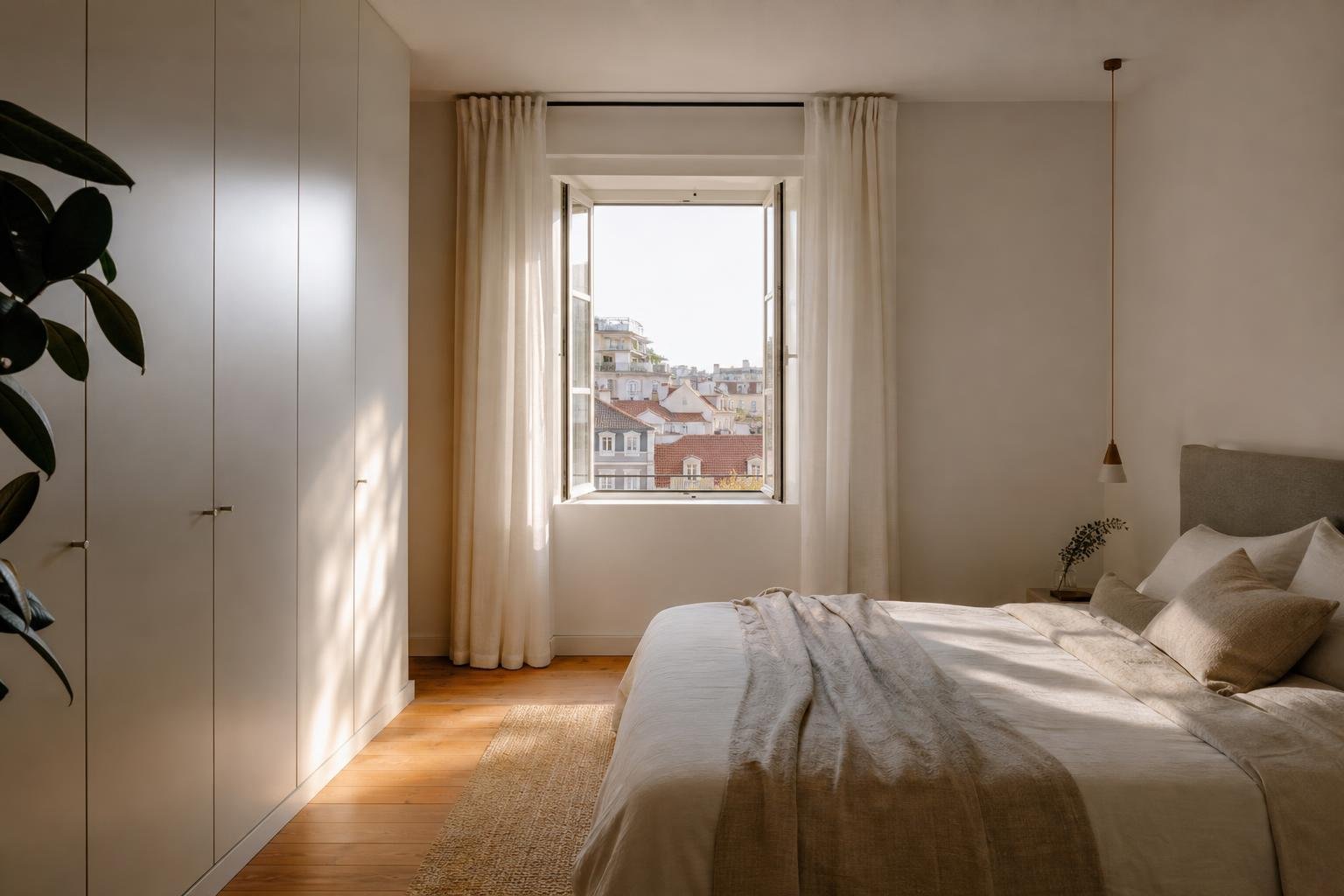
A practical combination is often a light-filtering blind for daytime and a second layer — curtain, panel or opaque blind — for night-time. In bedrooms, the need for darkness must be considered together with side and top gaps: a good blackout fabric cannot eliminate light that enters around its edges.
It is also important not to confuse visual control with total protection from solar radiation. The Portuguese Institute for Sea and Atmosphere explains the UV Index in Portugal, including very high average levels between May and September. Interior blinds support visual comfort, but the choice should also account for the existing glazing, façade exposure and everyday use of the room.
Measure the installation location, not just the glass
The first question is straightforward: will the blind sit inside the recess, over the recess or on the window frame itself? Each option requires different measurements. For an inside-recess installation, measure width and height in three places — top, middle and bottom — because older walls, tiles and trims are rarely perfectly square. Record the narrowest available width when the supplier requests a manufacturing measurement for an internal fit.
For wall- or trim-mounted blinds, measure the area you intend to cover, allowing enough overlap at the sides and above to reduce light leakage. Do not assume a universal allowance: always check the specific system instructions, the bracket type and the presence of shutter boxes, pipes, ceiling details or window boards.
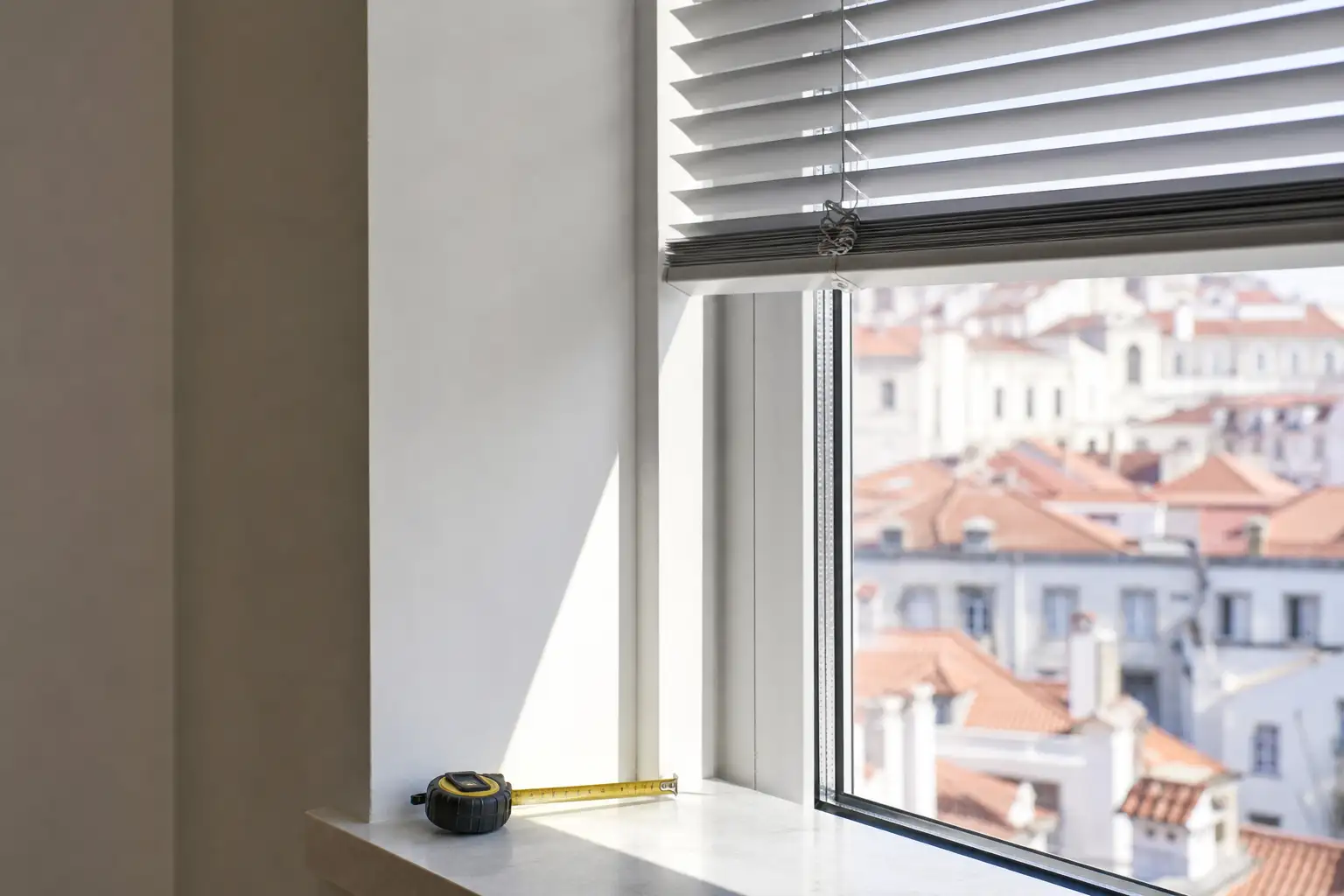
Measure the available recess depth too. A crank, handle, hinges, sill and the operation of a tilt-and-turn window can make an apparently simple solution unsuitable. Photographing every window with a tape measure in view is an efficient way to resolve questions before ordering or fitting.
Check opening, ventilation and cleaning before drilling
A blind should not prevent normal window use. Open each sash fully, test the tilt position where applicable and check whether the fabric or mechanism conflicts with handles. In kitchens and bathrooms, make sure the arrangement does not obstruct vents, air inlets or the window opening needed for ventilation. Decoration should not create an obstacle to the safe, regular use of the opening.
Select the operating method according to access as well. Side chain, cord, spring, crank and motorised systems have different requirements. Behind a sofa, work desk or bed, a difficult-to-reach control quickly becomes one that is not used. In homes with children, avoid loose loops and use suitable safety devices for chains and cords.
If the fitting touches the window frame, check the window manufacturer’s instructions and the profile type first. Drilling without verification can damage finishes, seals or warranties. During a larger renovation, coordinate this choice with window replacement in a Lisbon renovation rather than installing a temporary blind that will not work with the future frame.
Thermal comfort: helpful, but not a complete solution
Interior blinds can reduce glare and make sun exposure easier to live with, but they do not replace a complete strategy for an overheating home. Portuguese energy-performance regulations consider the solar factor of glazed openings and shading devices; where dwellings have significant glazed areas, they set checks related to solar gains. Consult the building energy-performance regulation to understand why glazing, orientation and shading must be considered together.
In practical terms, exterior shading usually intercepts radiation before it passes through the glass, whereas interior shading works after part of that energy has already entered. This does not make an interior blind pointless: it makes it a valuable component for visual comfort, privacy and everyday light management, to be combined with ventilation, suitable windows and, where needed, external shading.
If persistent heat is the real issue, begin by diagnosing its cause. Our guide to external shading for apartments helps distinguish façade-based measures from strictly internal options.
Condominium rules, façades and an order without surprises
As a rule, a fully internal blind does not alter the building’s external appearance. The situation changes, however, if you intend to replace exterior shutters, install visible façade guides, add awnings or alter shutter boxes and common elements. In Lisbon, municipal documentation for construction alterations states that works affecting common parts of a building, including façades, balconies or roofs, require condominium authorisation minutes in the relevant application. Review the Lisbon municipal document list for construction alterations before assuming an exterior change is simply decorative.
Before paying, request a final specification stating the room, model, colour, transparency, control side, bracket type, confirmed measurements, lead time and responsibility for measurement. If the supplier takes the measurements, clarify in writing who is responsible for incompatibilities. Keep the fabric and component references for future repairs.
A well-planned blind is unobtrusive: it opens easily, admits the right light, closes when needed and looks as though it has belonged to the window from the start.
Planning a renovation and want windows, lighting and finishes to work as one system? Obra Lisboa can help turn small decisions — such as blind positions and electrical points — into a coherent, buildable renovation plan.
AI-generated editorial image; it does not depict an Obra Lisboa project.

Obra Lisboa