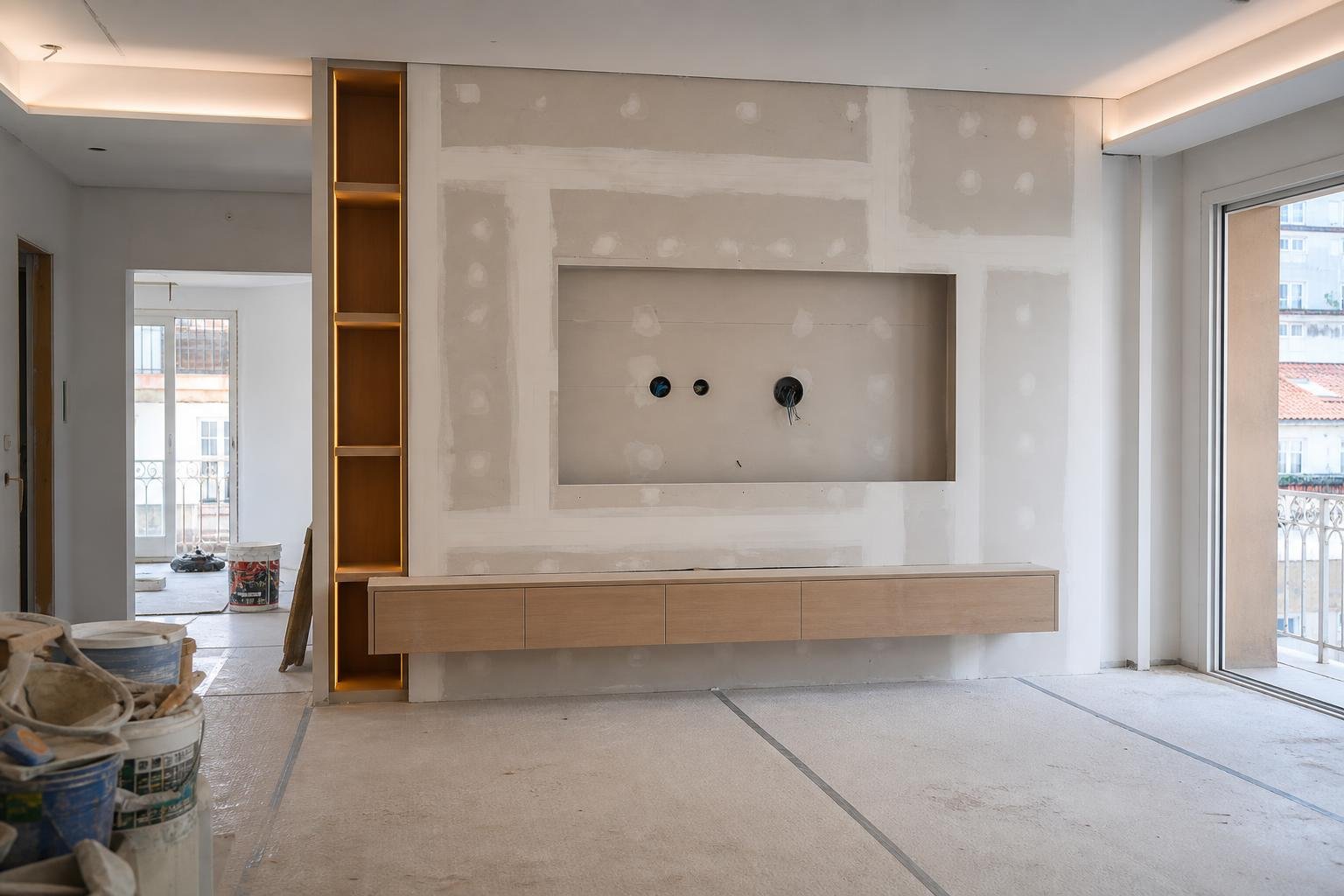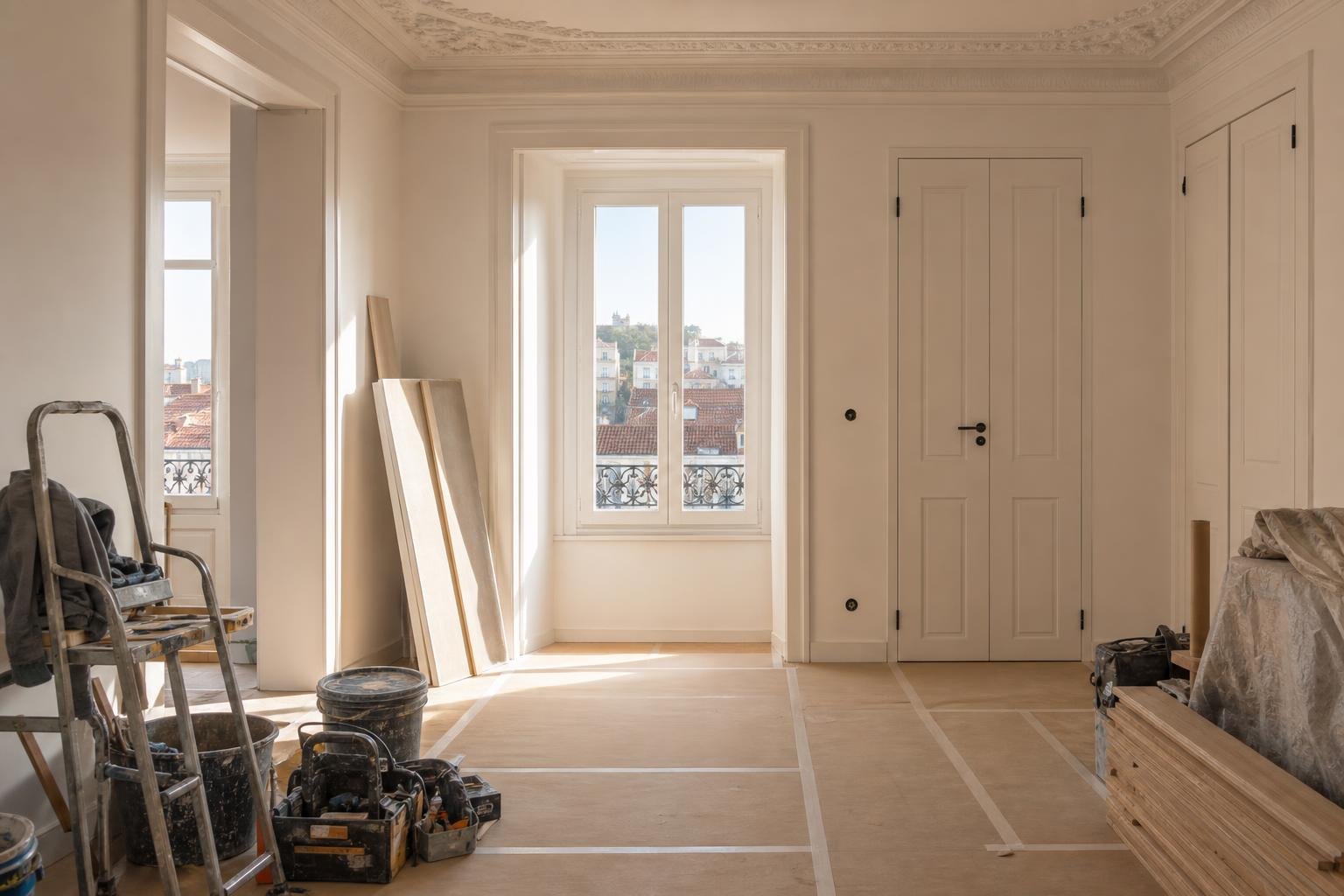

In a Lisbon apartment, a fine crack beside a doorway, where a wall meets the ceiling, or above a window can look like a simple decorating issue. Often it is. Yet a stucco wall should not be treated as an anonymous surface: it may be showing local movement, persistent moisture, poor adhesion between old layers, or an earlier repair that was not properly carried out.
The right decision comes before sanding and filling. Look at the crack pattern, check for loose dust, staining, blistered paint or hollow areas, and try to establish whether the defect has changed over time. Lisbon’s dry spells and wetter months make it especially important to rule out water ingress and condensation; the IPMA climate normal for Lisbon records notably higher average monthly rainfall from October to January. Consult the IPMA Lisbon climate normal for that context.
This guide sets out what can safely be prepared for painting, what needs diagnosis first, and how to specify a clean, durable repair that works with the walls of an older apartment.
Read the crack before filling it
The line of a crack offers useful clues. A very fine, isolated surface crack with no ridge and no change over several months may come from shrinkage in old filler or minor variation between materials. A crack that runs diagonally from an opening, returns after repair, has offset edges, or appears alongside doors that have started to catch deserves a more careful assessment.
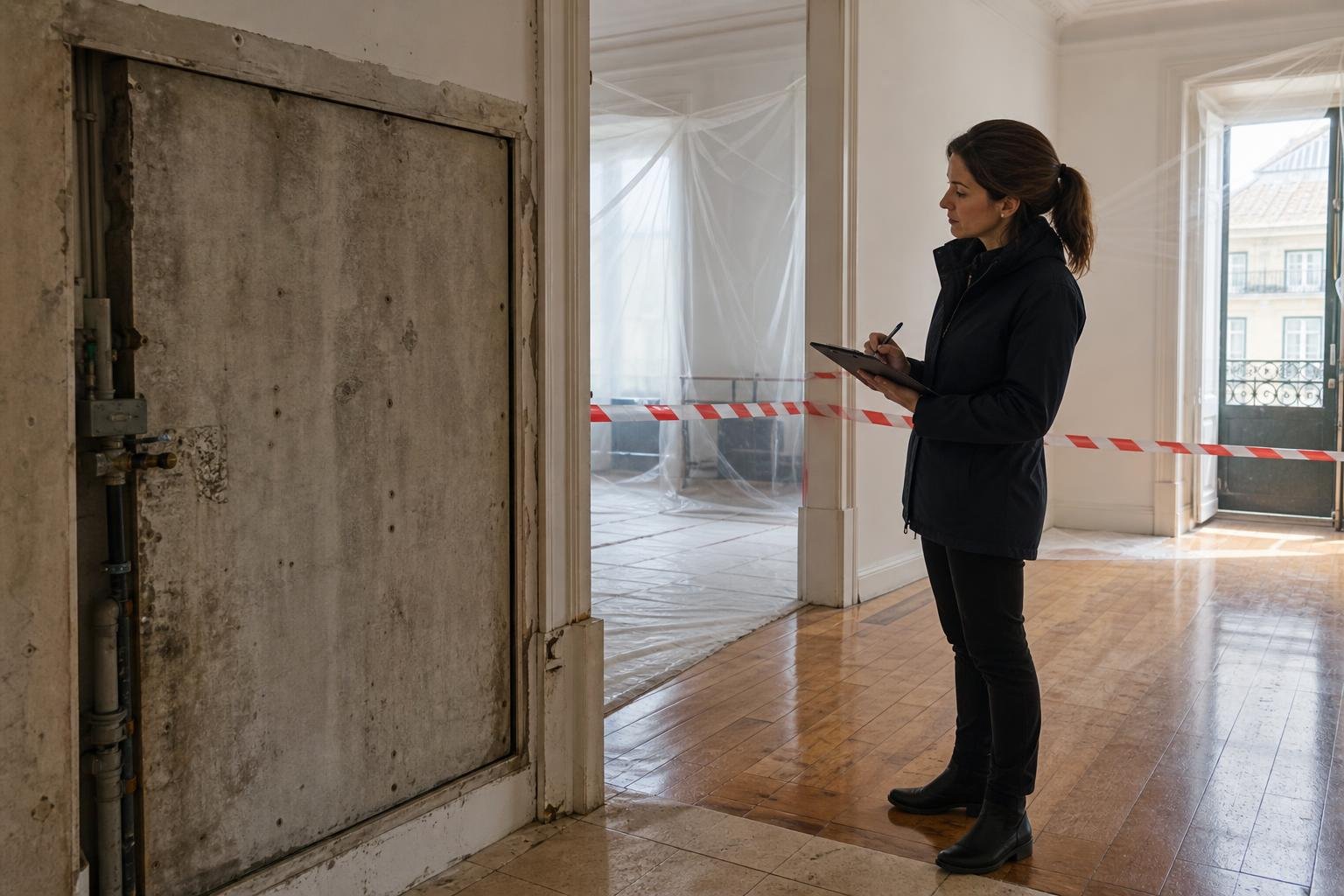
Create a simple record before doing anything: photograph the wall in side light, note the date, estimate its length and mark the ends on a room sketch. There is no need to turn every hairline crack into an emergency; there is a need to avoid a new coat of paint removing the evidence needed to identify an active issue.
- Surface crack: usually narrow, with no hollow sound and confined to the finish.
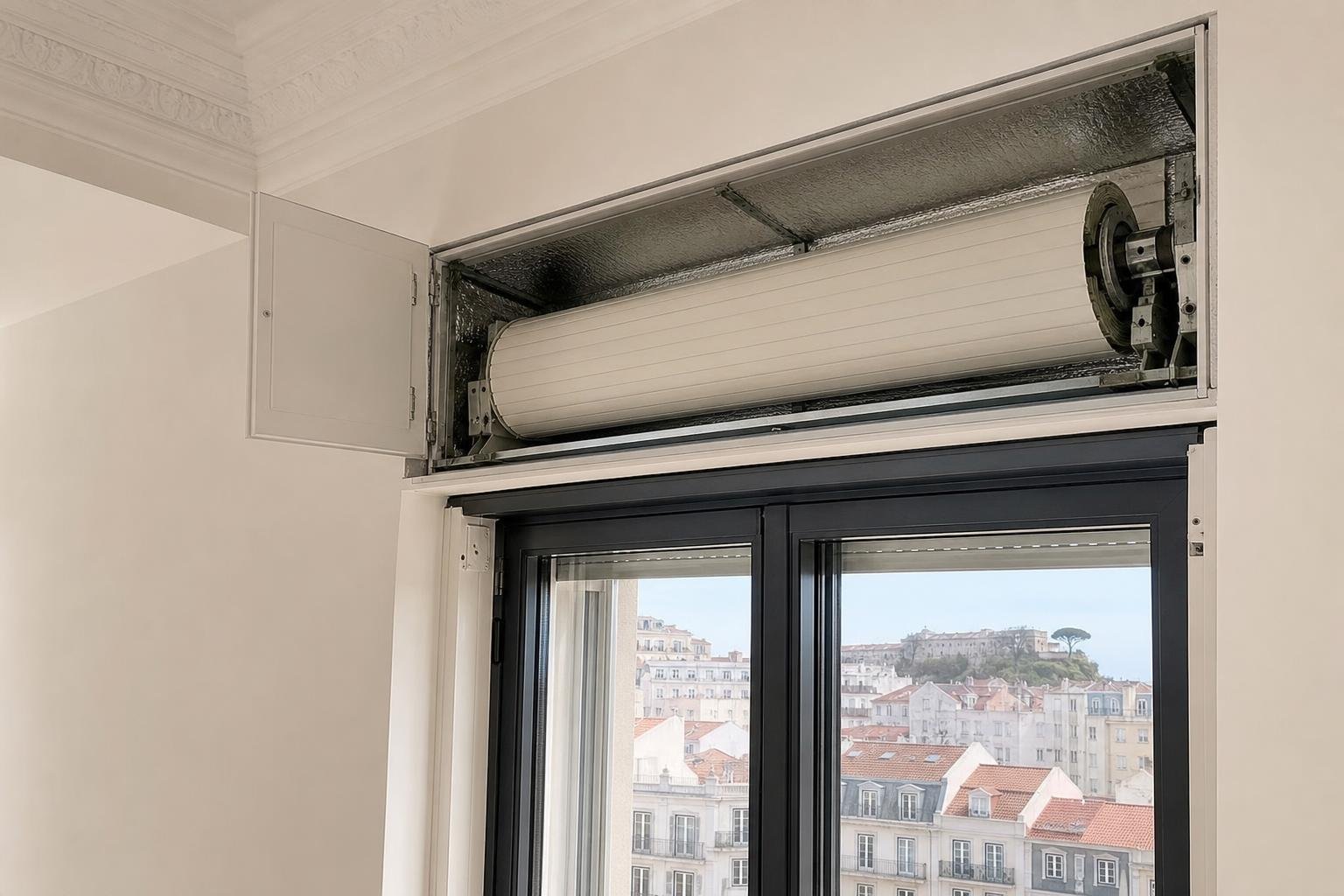
- Crack at a material junction: common around walls, lintels, shutter boxes or plumbing patches.
- Crack with damp: may come with staining, salts, peeling paint or a musty smell.
- Crack with distortion: should not be treated as routine paint preparation.
If there is any doubt about structural stability, water ingress or previous structural alteration, pause the cosmetic repair and seek appropriate technical advice. Filler does not solve the cause of a moving crack.
Tell condensation, damp and water ingress apart
A wall may be cracked and damp for separate reasons at the same time. Painting over a cold surface with recurring condensation usually speeds up peeling and may make the defect disappear for a few weeks rather than remove it. Portugal’s Directorate-General of Health explains that excess moisture can cause condensation on cold surfaces, particularly walls, encouraging mould and affecting indoor air quality. See the DGS guidance on indoor air, moisture and condensation.
Look for patterns before repairing. Does the stain grow after rain? Does it appear mainly behind furniture pushed against an external wall? Does it show up in winter at corners, near window frames or in rooms where laundry is dried? A mark tied to rainfall may point to a façade, roof, sill, sealant joint or external pipe; one tied to everyday moisture and cold surfaces may require ventilation, vapour control and, in some cases, thermal improvement.
Do not seal a damp wall before resolving the source. Pull furniture away, allow air circulation, check nearby drains and plumbing, and postpone painting until the base is dry and stable. The DGS advises daily airing and ventilation during moisture-producing activities such as cooking, bathing, washing and drying clothes; see its general indoor-air recommendations.
Check whether the stucco is still properly bonded
A wall that looks smooth can still hide detached stucco. Move across it carefully and tap lightly rather than striking it: a hollow sound, a soft area or edges releasing dust suggest that the work must go beyond filling the visible crack. It is also worth testing existing paint with adhesive tape in a discreet area; if the coating lifts easily, any new paint will depend on a weak base.
Scraping everything indiscriminately is a common mistake. The aim is to remove only poorly bonded paint, filler or stucco, open a crack slightly where necessary to reach sound material, and remove dust thoroughly. In older walls, an overly rigid patch placed over a weak substrate can telegraph back through the finish.
Where there are many paint layers, repairs from different periods or widespread degraded plaster, ask for a trial repair area. This small sample can confirm absorption, texture, filler thickness, primer and final finish before the whole room is treated. It is a practical way to prevent patchiness, inconsistent sheen or repairs that become visible in raking light.

Use the right sequence for an unobtrusive repair
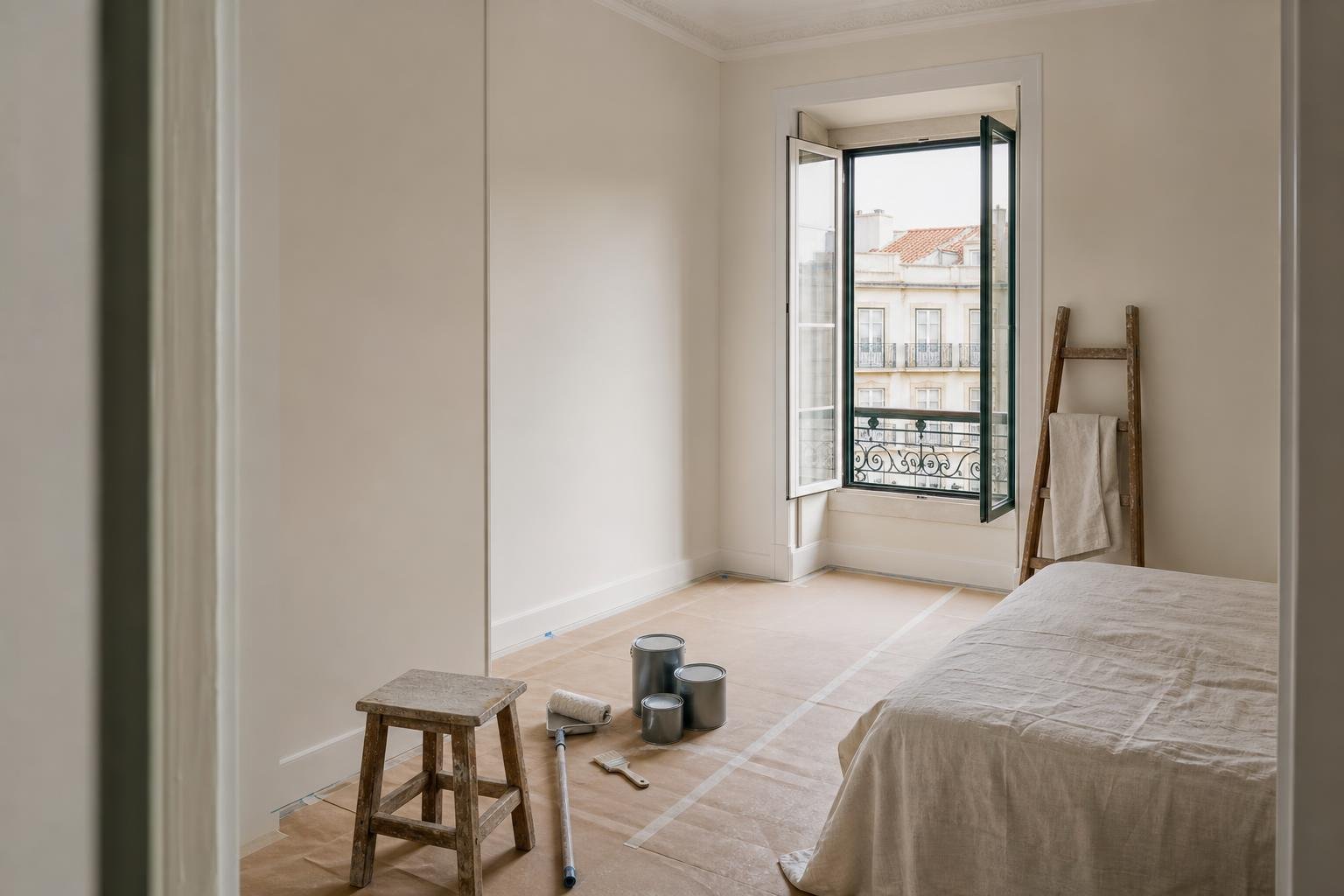
A sound sequence reduces repeat work. Floors, skirtings, sockets and frames are protected first. Loose material is then removed and the cause of any moisture is addressed. Only after that should the substrate be prepared for repair.
- Remove dust, grease and weak particles.
- Open and consolidate only the cracks or damaged areas that require it.
- Apply a compatible levelling product in controlled layers.
- Use local reinforcement at junctions or wider repairs where technically appropriate.
- Respect drying times between coats and sand without creating hollows.
- Apply a primer suited to the wall’s absorption before the final paint.
- Paint whole panels or full walls to avoid differences in colour and sheen.
Avoid applying a thick layer of filler in one pass simply to save time. Overbuilt areas can shrink, crack or remain visible under matt paint. On walls exposed to raking light — opposite tall living-room windows, for example — the evenness of the substrate matters more than the number of paint coats.
For a closer look at substrate preparation, read Preparing Interior Walls Before Painting: The Work That Determines the Finish.
Choose paint and sheen after the diagnosis
Paint should answer to the room and the substrate, not simply to the chosen colour. In a dry, well-ventilated living room, a matt finish can soften minor irregularities. In corridors exposed to contact and cleaning, a washable paint may be more practical, provided the wall has been correctly prepared. In areas with steam, solving ventilation and moisture comes before looking for a paint that claims to withstand everything.
Do not confuse a so-called damp-resistant paint with waterproofing a wall. A very closed coating applied internally can make the issue harder to read and may peel if water continues to reach the substrate. Always request the technical data sheet for the selected system and confirm drying times, required preparation and compatibility between primer, filler and topcoat.
If several rooms are involved, establish the order of work: wet trades and repairs first, sanding and cleaning next, painting last. This protects recent finishes and follows the wider principles in How to Avoid Common Renovation Problems.
Know the limits of the work in a Lisbon building
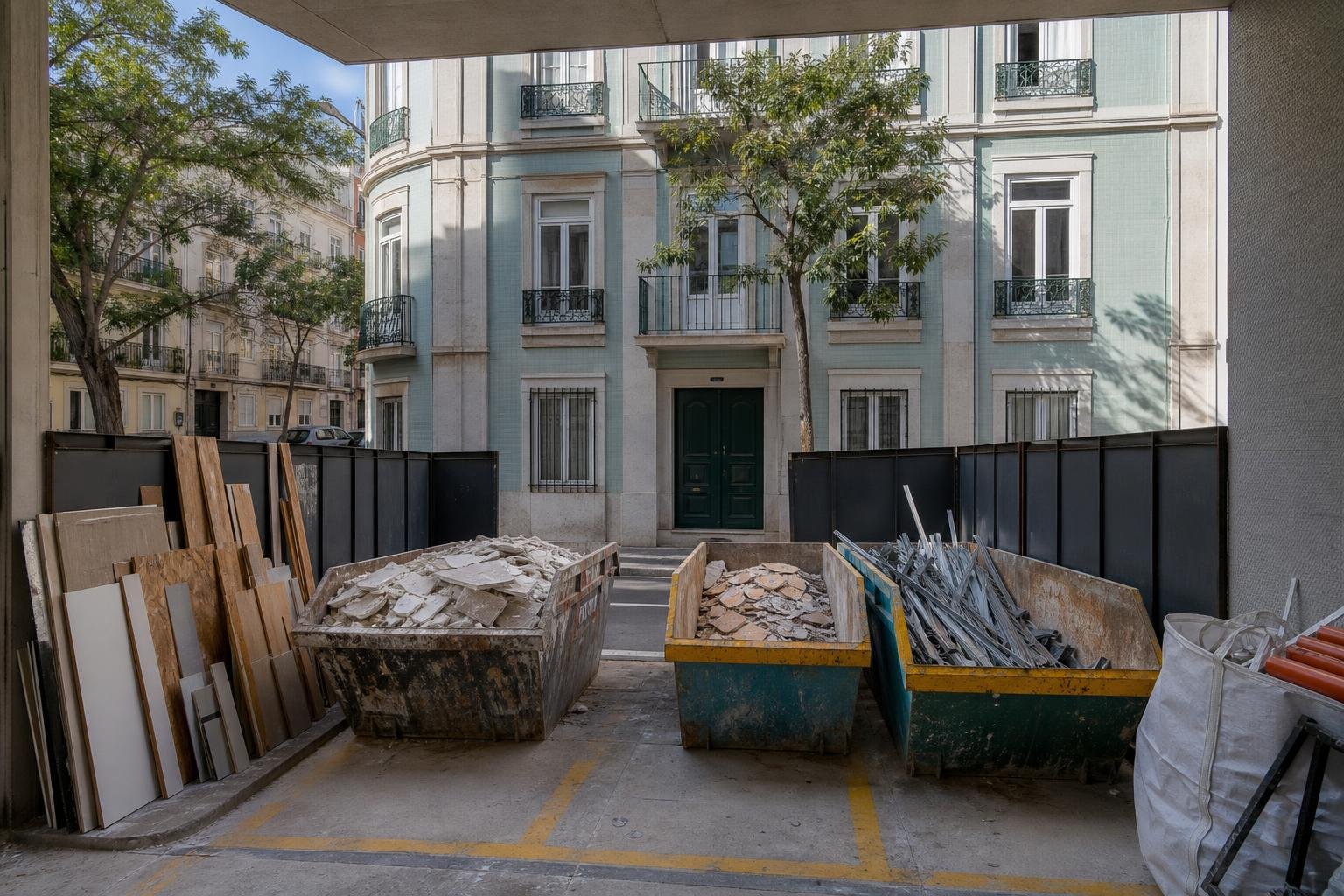
Repairing stucco and painting inside a flat may fall within conservation work, but it is unwise to assume that every intervention requires no further checks. Lisbon City Council distinguishes conservation works and certain interior alterations exempt from prior control, provided they do not affect structural stability, façades, roofs or other applicable limits; listed buildings and protected areas have their own rules. Check the city’s page on works exempt from prior control and public-space occupation before arranging skips, scaffolding or external work.
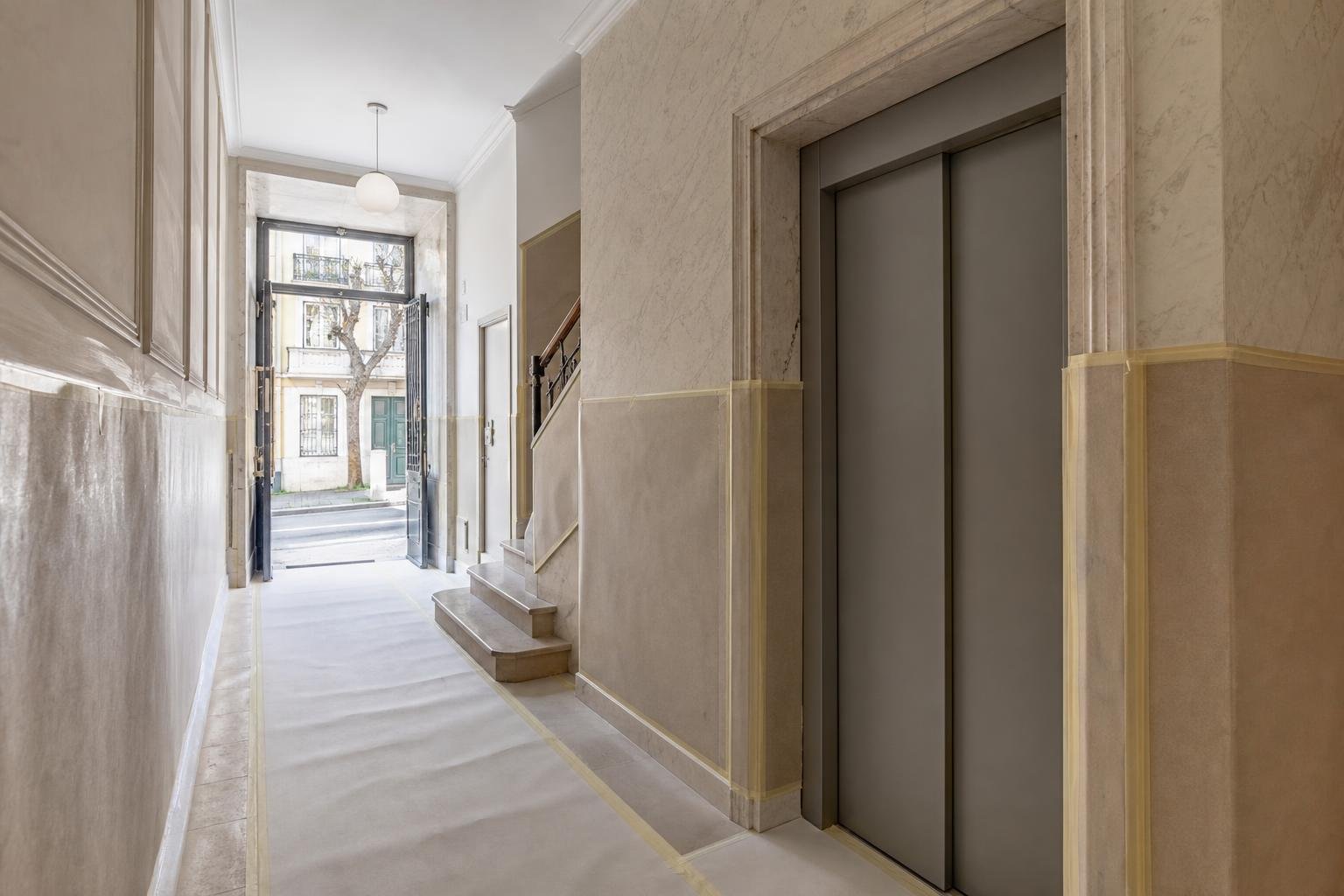
In a condominium building, notify neighbours about sanding periods, protect lifts and shared areas when materials are moved, and do not wash tools at points that could block the drainage network. If a crack is on a façade wall, a shared wall or beside an element that may belong to common parts, document it and inform the building manager before intervening.
A successful repair is not the one that leaves a wall looking new on painting day. It is the one that keeps the substrate dry, stable and understandable once the smell of fresh paint has gone.
Planning to repaint or restore walls in a Lisbon apartment? Obra Lisboa can help structure the diagnosis, preparation and work sequence so that a new finish does not conceal problems likely to return later.
AI-generated editorial image; it does not depict an Obra Lisboa project.

Obra Lisboa