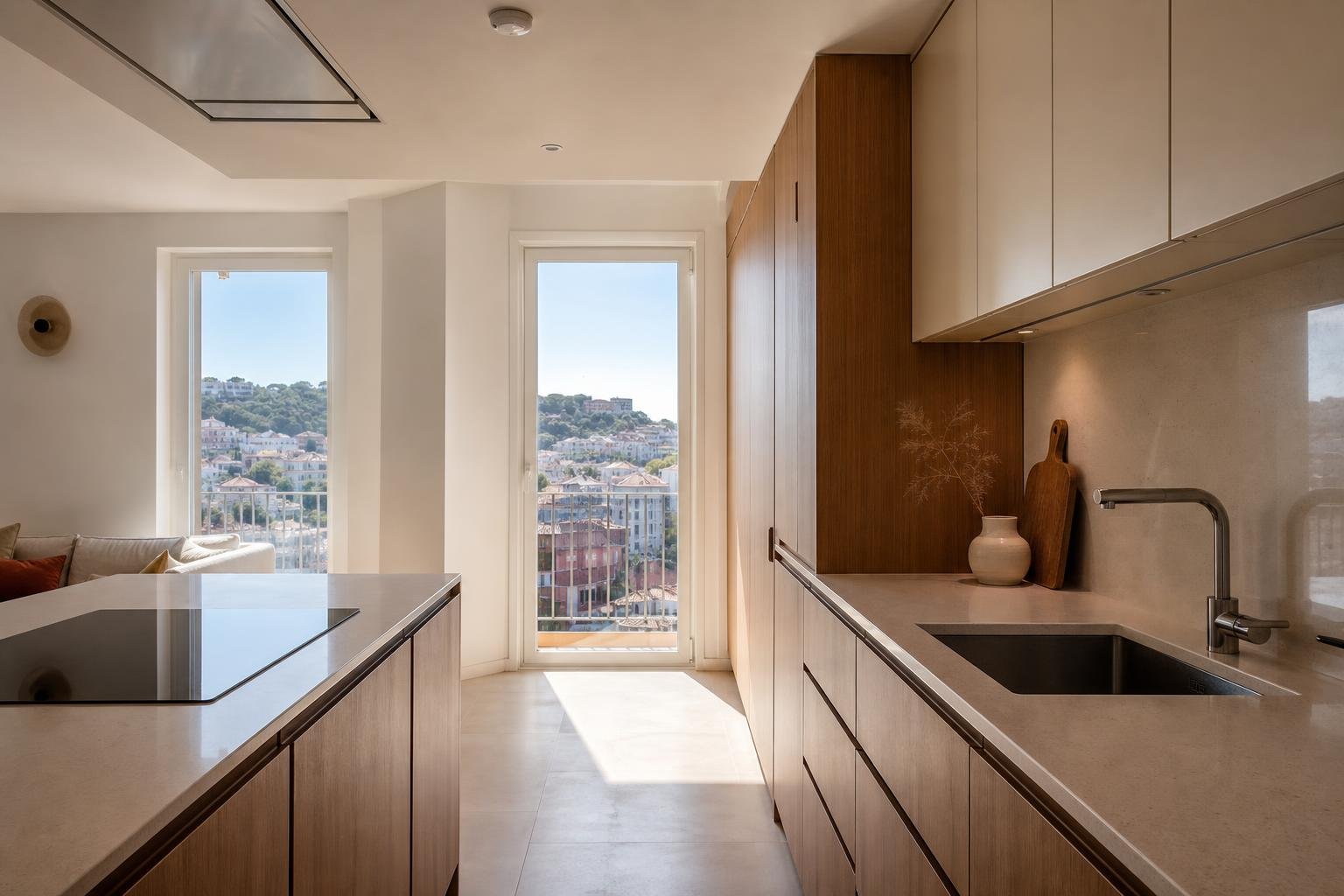

Reusable bottles, insulated cups, lids, lunch boxes and snack containers take up far more room than expected. In a compact kitchen, the issue is rarely just the number of cupboards: it is storing awkward shapes that may still be damp, finding them quickly on busy mornings and keeping the area easy to clean.
The strongest solution is not buying a collection of organisers. It is creating one everyday-use zone, separating containers from lids, allowing everything to dry fully and setting a simple reset routine. This guide explains how to plan that zone before ordering new cabinetry or making better use of an existing cupboard.
Count what genuinely needs to live in the cupboard
Before measuring shelves, gather every bottle, cup, lunch box, snack container, reusable cutlery set, thermal bag and spare part on one worktop. Remove containers without lids, lids without containers and bottles that no longer seal. This first edit often frees more useful room than a new storage accessory would.
Split the remaining items into three groups: daily use, weekly use and backup. Keep daily items between waist and eye level; place weekly items higher up; keep backup pieces at the back or elsewhere. In a compact Lisbon flat, six clean, reachable bottles are more useful than twenty mixed together on a deep shelf.
If the kitchen is still being designed, add this list to your kitchen planning. A modest cabinet can work exceptionally well when it is based on the objects the household actually uses.
Choose a spot close to washing, not beneath the sink
A tall cabinet or cupboard near the preparation area and sink is usually the most practical choice, provided it is not the under-sink unit with its trap, hoses and potential for minor leaks. Being close shortens the route from washing to drying to putting away; being separate helps keep clean items away from lingering damp and cleaning products.
In a base unit, deep drawers with adjustable dividers make heavier lunch boxes easier to reach. In a tall cupboard, shallower shelves prevent a hidden second row. Reserve an uninterrupted vertical bay for tall bottles and a horizontal one for containers that can nest without being tightly sealed inside one another.
If the kitchen is poorly ventilated or cabinets show condensation, address the cause first. Our guide to ventilation in renovated homes provides useful context for that decision.
Measure heights, depths and door movement
Do not choose baskets solely by cabinet width. Measure usable depth up to the hinge, clear height between shelves and the room needed to open doors and drawers. Then measure the tallest bottle, the widest lunch box and the insulated cup with a handle. Leave enough clearance to remove each item without pulling out everything around it.
An overly deep shelf encourages clutter. In a 60 cm-deep cabinet, a pull-out tray or open basket can bring the second row forward. Clear containers or restrained basket labels can help, but they do not replace a logical layout: bottles in one area, lunch boxes in another and lids in a third.
Avoid stacking bottles on their sides on a high shelf. They roll, knock together and make selection harder. A simple rail, vertical dividers or a narrow basket holds them steady without committing to permanent fittings.
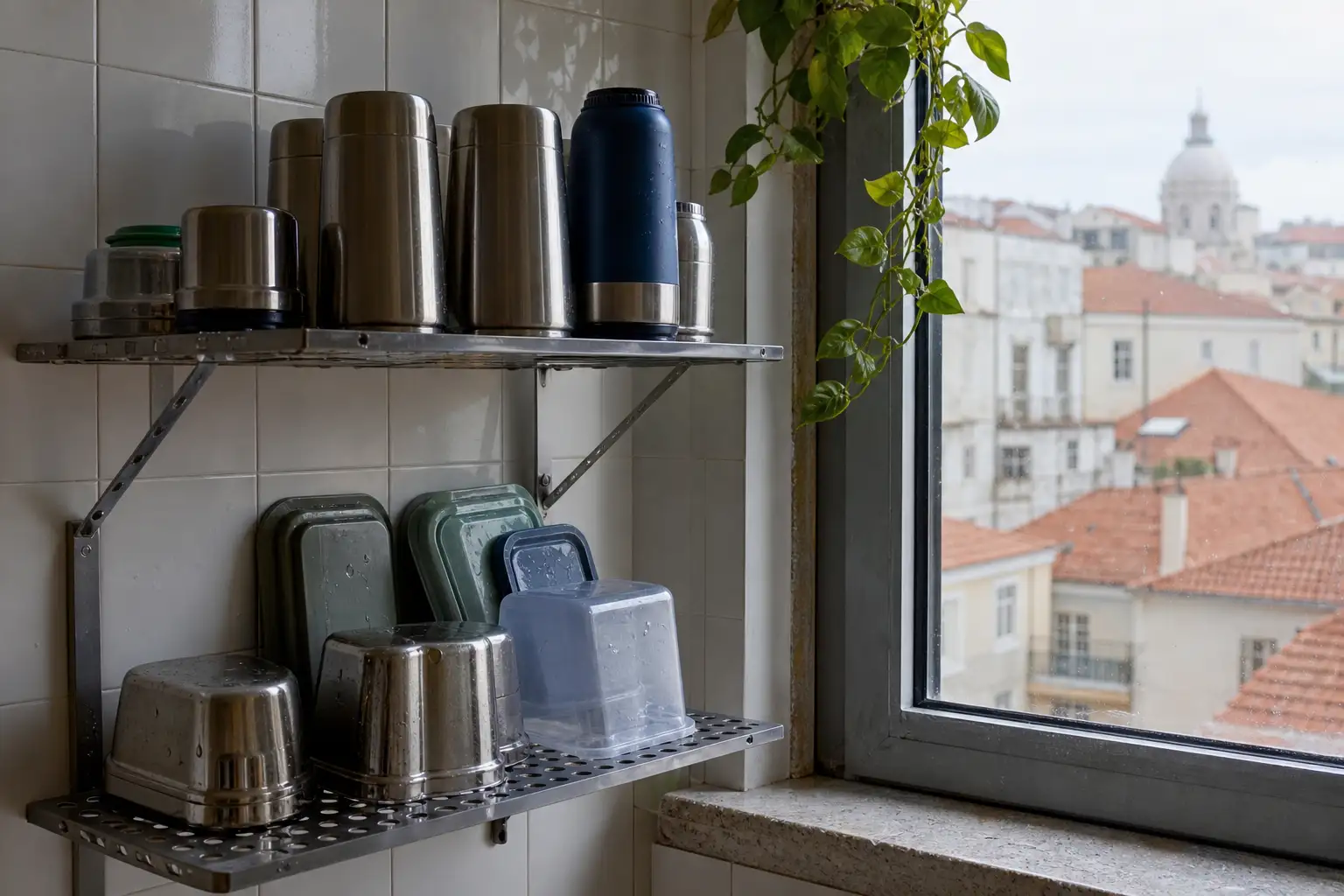
Make drying part of the storage plan
Moisture is the critical issue in this cupboard. Portugal’s Directorate-General of Health guidance stresses washing hands, utensils and food-contact surfaces properly. With reusable containers, that means cleaning threads, straws, seals and lid corners, then storing them only once dry.
Leave bottles open and upside down on a rack that allows air to circulate. Keep lunch boxes open until internal moisture has gone; remove detachable seals periodically for cleaning and drying. Closing a still-damp lunch box inside a cabinet is a quick route to persistent odours.
Relative humidity is one of the meteorological variables monitored by IPMA, and Lisbon’s climate normals show that it varies through the year. During damper periods, thorough drying deserves extra attention. Use the IPMA Lisbon climate sheet as context, not as a substitute for observing how your own kitchen behaves.
Treat lids, seals and accessories as separate items
Loose lids are the main reason a cupboard looks untidy. Use a low open box, drawer divider or narrow basket solely for lids. Separate round from rectangular shapes, and keep straws, brushes and reusable cutlery in a small washable pouch or perforated cup.
There is no need to store every box closed with its matching lid. For frequently used lunch boxes, it is often faster to keep base and lid in the same zone but slightly apart, making it clear that both are dry. Backup pieces can be nested, provided they are clean and completely dry.
For plastic containers, check markings, wear, cracking and distortion. A damaged container does not become suitable for food use merely because it is neatly stored; replace it or dispose of it according to the material and local collection rules.
Use a short cleaning and reset routine
Set aside five minutes each week to remove crumbs, wipe the cabinet base, check that no damp container has been closed away and return lids to their place. A washable shelf liner can make cleaning easier, but it should also be removed and dried regularly.
Reducing disposables still requires a clear route for the packaging that enters the home. Lisbon’s municipal rules distinguish streams such as paper/cardboard, glass and packaging; consult the Lisbon urban-waste regulation and follow the collection arrangements available in your area.
Finally, avoid running water unnecessarily while washing containers. ADENE identifies flow restrictors and efficient fittings as practical water-saving measures in buildings; see the ADENE AQUA+ example. Regular cleaning, full dishwasher loads where suitable and an organisation that prevents repeat washing are small but reliable choices.
Planning a kitchen renovation or improving an existing cupboard? Obra Lisboa can help turn real household habits into storage, materials and construction details that work every day.
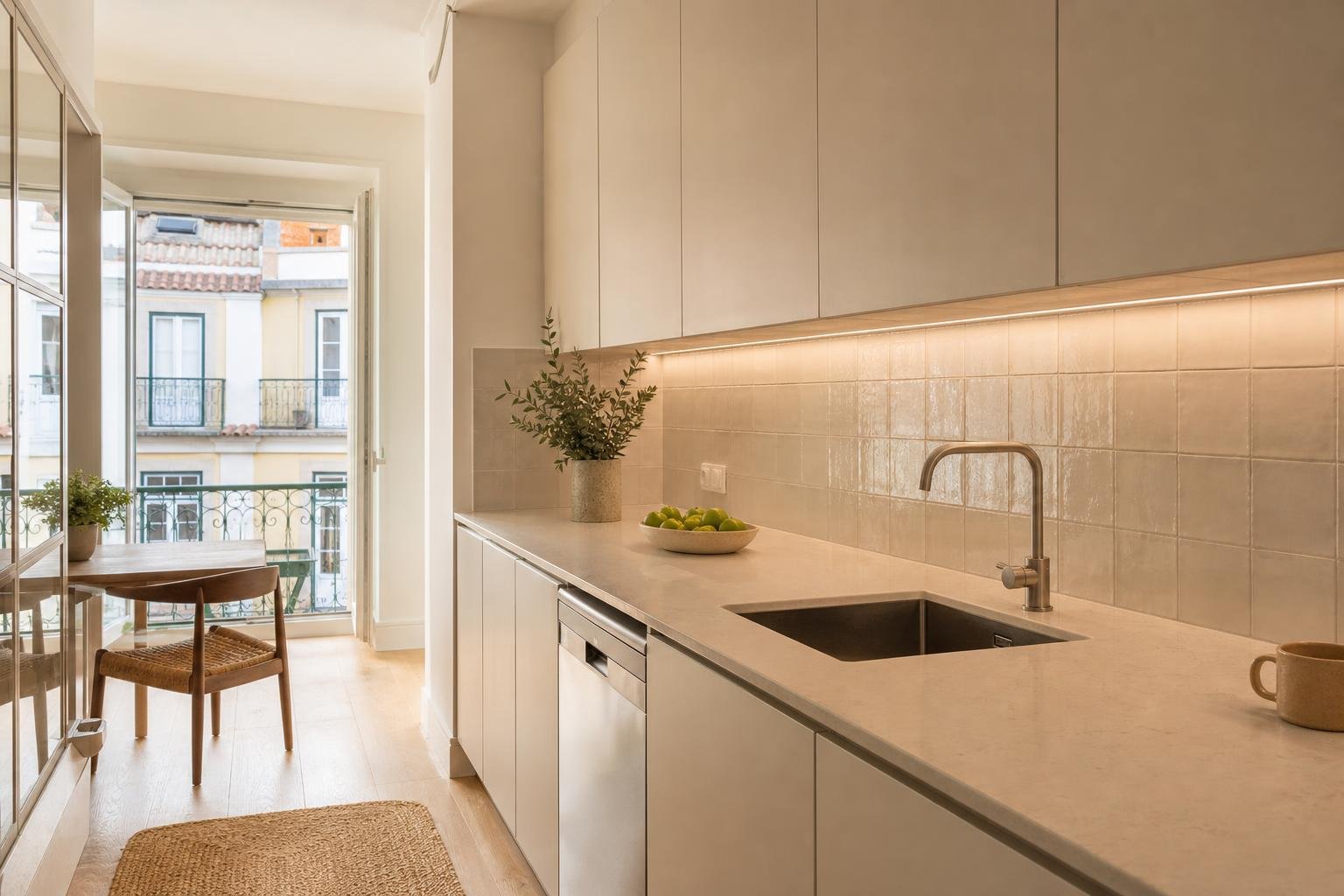
AI-generated editorial image; it does not depict an Obra Lisboa project.

Obra Lisboa