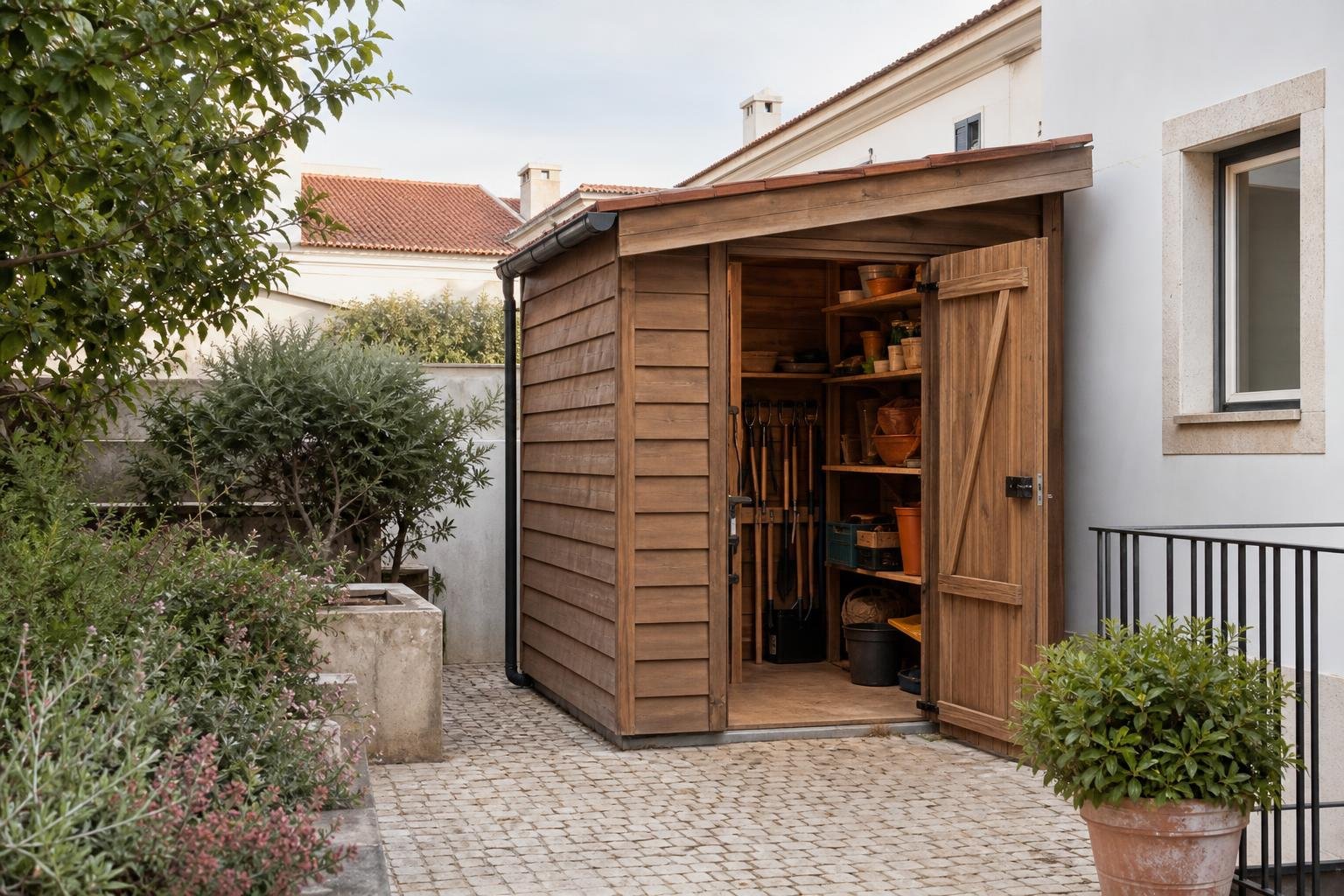
A storage room can seem like the obvious place to touch up a door, paint a shelf or prepare timber pieces. It is not always suitable. In many Lisbon apartment buildings, these rooms are small, poorly ventilated, close to shared circulation areas and also used for bicycles, luggage or textiles. One improvised painting session can leave persistent odours, dust on stored belongings or a difficult stain on the floor.
The answer is not to cover everything in thin plastic or rely on a half-open window. It is to decide which jobs genuinely suit the room, separate preparation, application and drying, protect the building and store each product as a technical material. Portugal’s Directorate-General of Health advises following the stated procedures for DIY products, including paints and varnishes, and favouring isolated spaces with suitable ventilation for polluting equipment or sources. Read the DGS indoor-air recommendations.
First, decide whether the room is actually suitable
Before buying a dust sheet, check the essentials: is there genuine ventilation to the outside, comfortable access and enough room to work without obstructing the door? An internal room without a window, a shared area, a damp basement or a compartment used as a route through the building is not a good painting workshop. Ventilation is not only about odour: indoor air quality can be affected by VOCs, particles and humidity, all highlighted in the DGS guidance on indoor air quality.
Keep the room for small, short manual jobs using products appropriate to that setting. Spray painting, aggressive paint strippers, large quantities of solvent, extensive sanding or flammable products require very different conditions and controls. When the room connects directly to stairs, a garage or corridors, the cautious rule is simple: do not carry vapours, dust or materials through shared spaces.
- Measure the clear working area with the door fully open.
- Make sure there is adequate light without trailing leads across the floor.
- Identify nearby sensitive materials: cardboard, clothing, bare timber and electrical equipment.
- Check condominium rules before changing ventilation, electrics or the use of the room.
Ventilation means replacing air, not simply opening a crack
A small window opened for five minutes may not be enough while painting or leaving an item to dry. Plan for air renewal before, during and after application, without sending contaminated air towards the building entrance or a neighbour’s window. Where possible, work with an opening to the exterior and keep the storage-room door closed to common areas.
Do not assume a domestic fan is the answer: it can stir up dust, spread vapours in the wrong direction or dry paint too quickly on a surface, affecting the finish. Product choice matters too. Portuguese rules set VOC limits for categories of paint and varnish, so compare the technical sheet and label instead of choosing only by colour or price. See the regulatory framework for VOC limits in paints and varnishes.
If you experience eye irritation, headache, dizziness or respiratory discomfort, stop work, leave the room and increase ventilation. Air fresheners do not solve the problem; they only mask it.
Protect floors, walls and belongings before preparing paint
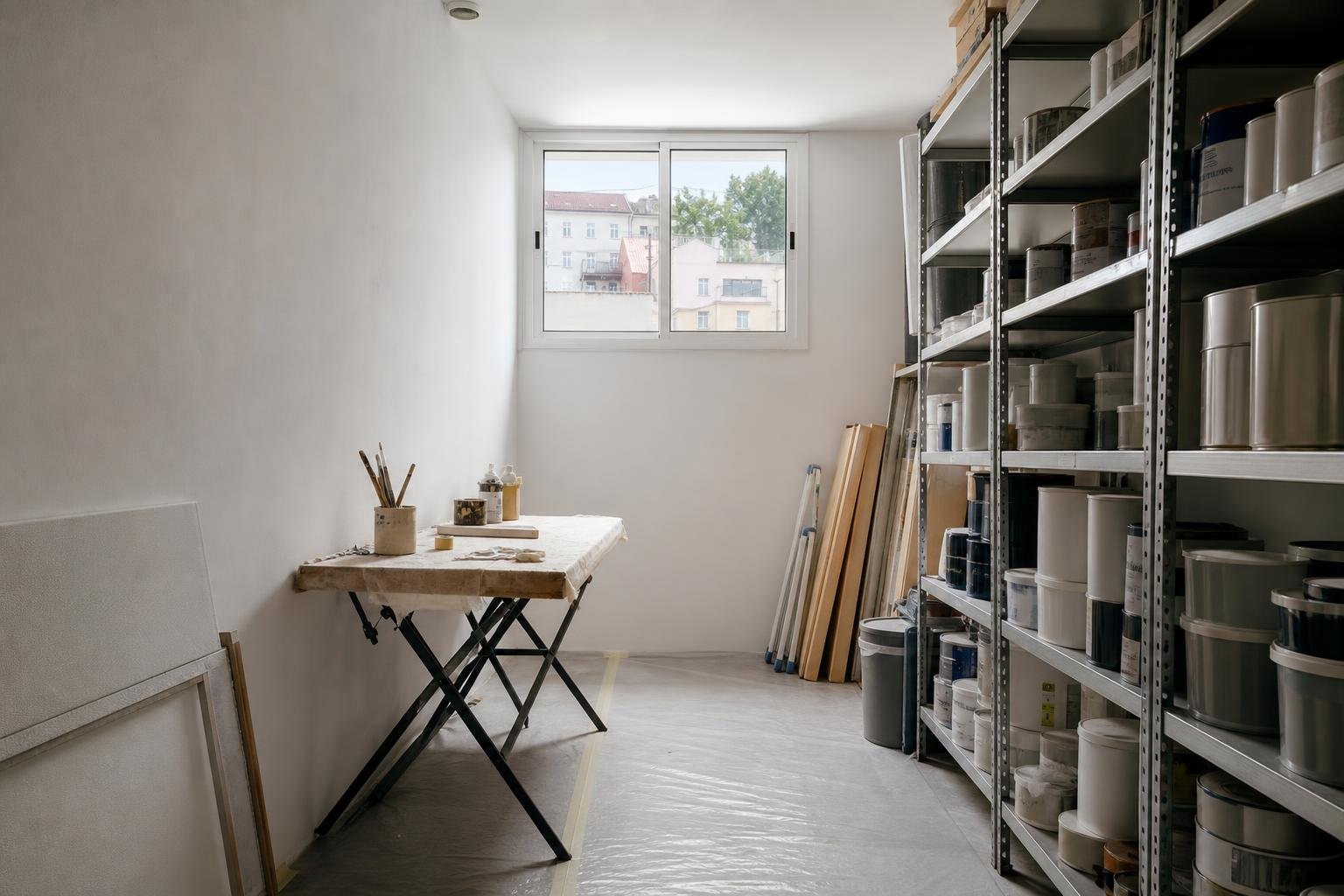
Protection should follow the work sequence. First remove everything that is not needed; then cover elements that must remain; only afterwards open tins, sand or mix. A fold-down workbench is useful because it frees the floor when not in use, but it must be stable and allow a containment tray beneath containers.
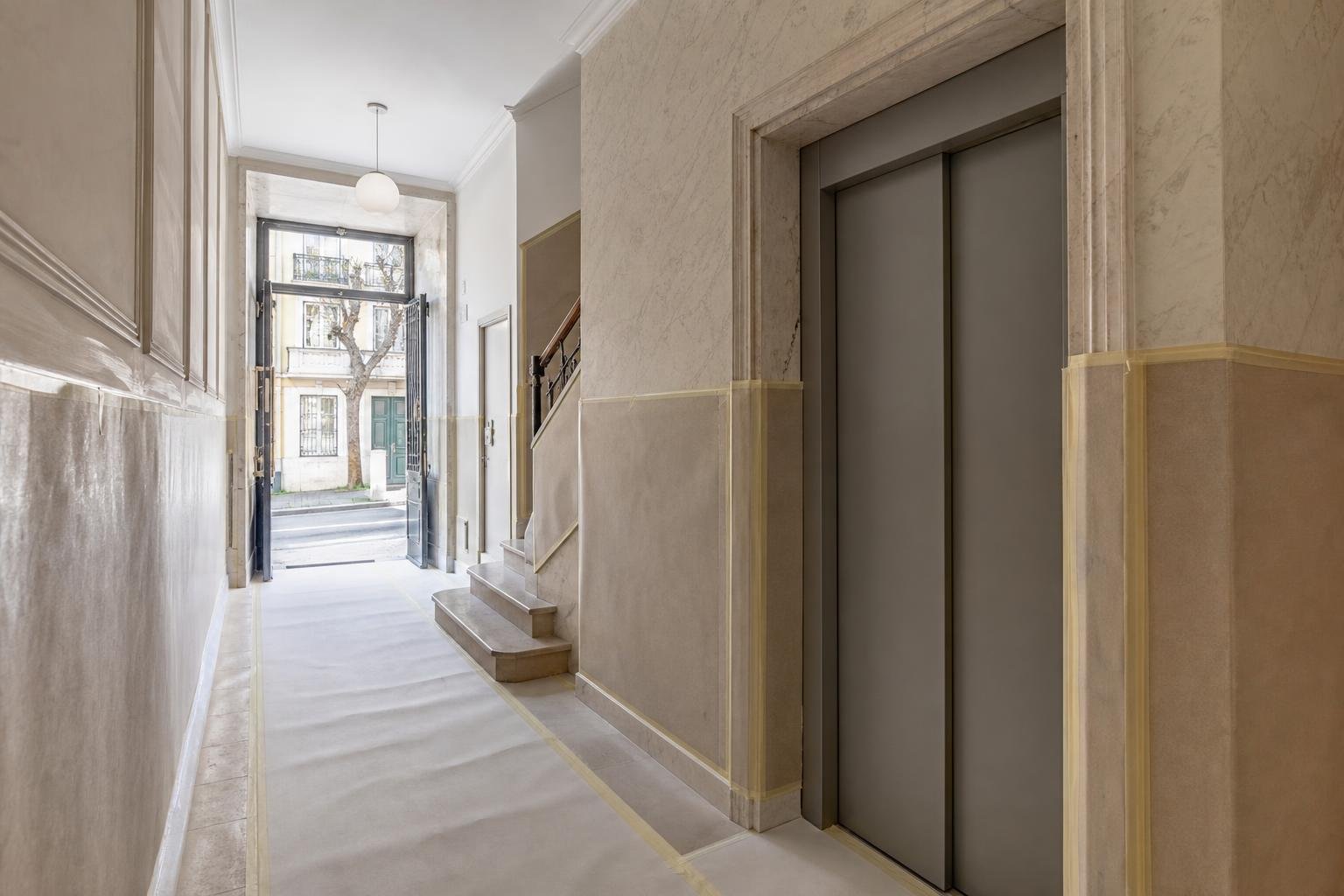
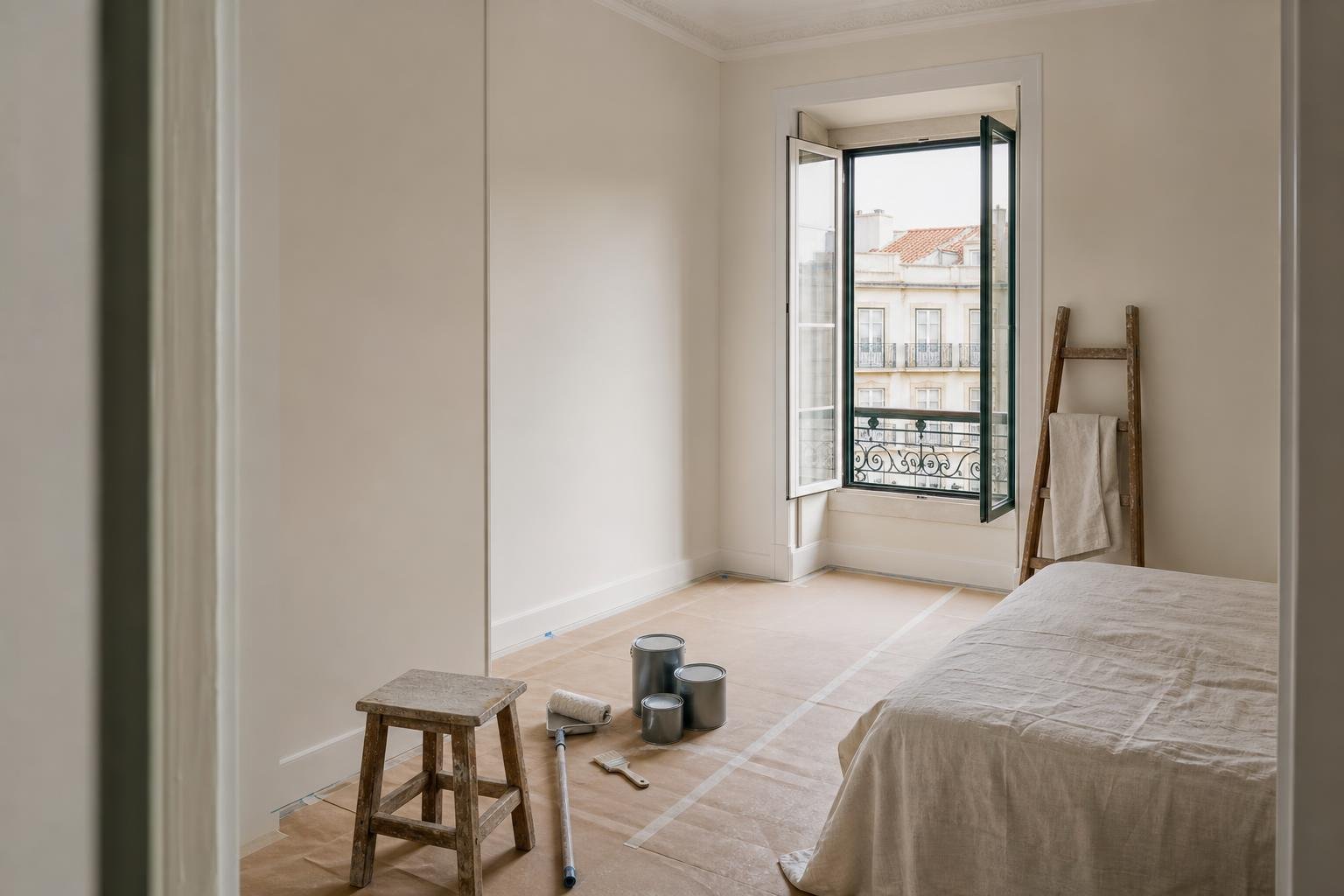
For the floor, a robust continuous covering is better than lightweight sheets that curl at the edges. On walls, protect only areas exposed to splashes and keep sockets, electrical panels and technical access visible. Never seal ventilation grilles. Small items should go into closed boxes; textiles and books absorb odours and should leave the room before painting begins.
Create one clean zone and one working zone. The clean zone holds rollers, brushes and masking tape; the working zone holds open tins, trays and the item being painted. This simple division makes it less likely that a wet brush ends up on a phone, the storage-room key or an electrical cable.
Choose materials and tools that reduce waste
Not every task needs a large tin. Calculate the surface, consider the number of coats and buy a modest allowance for future touch-ups. Different products should not be mixed simply to use leftovers: water-based paints, enamels, varnishes, primers and thinners behave differently and have distinct cleaning systems.
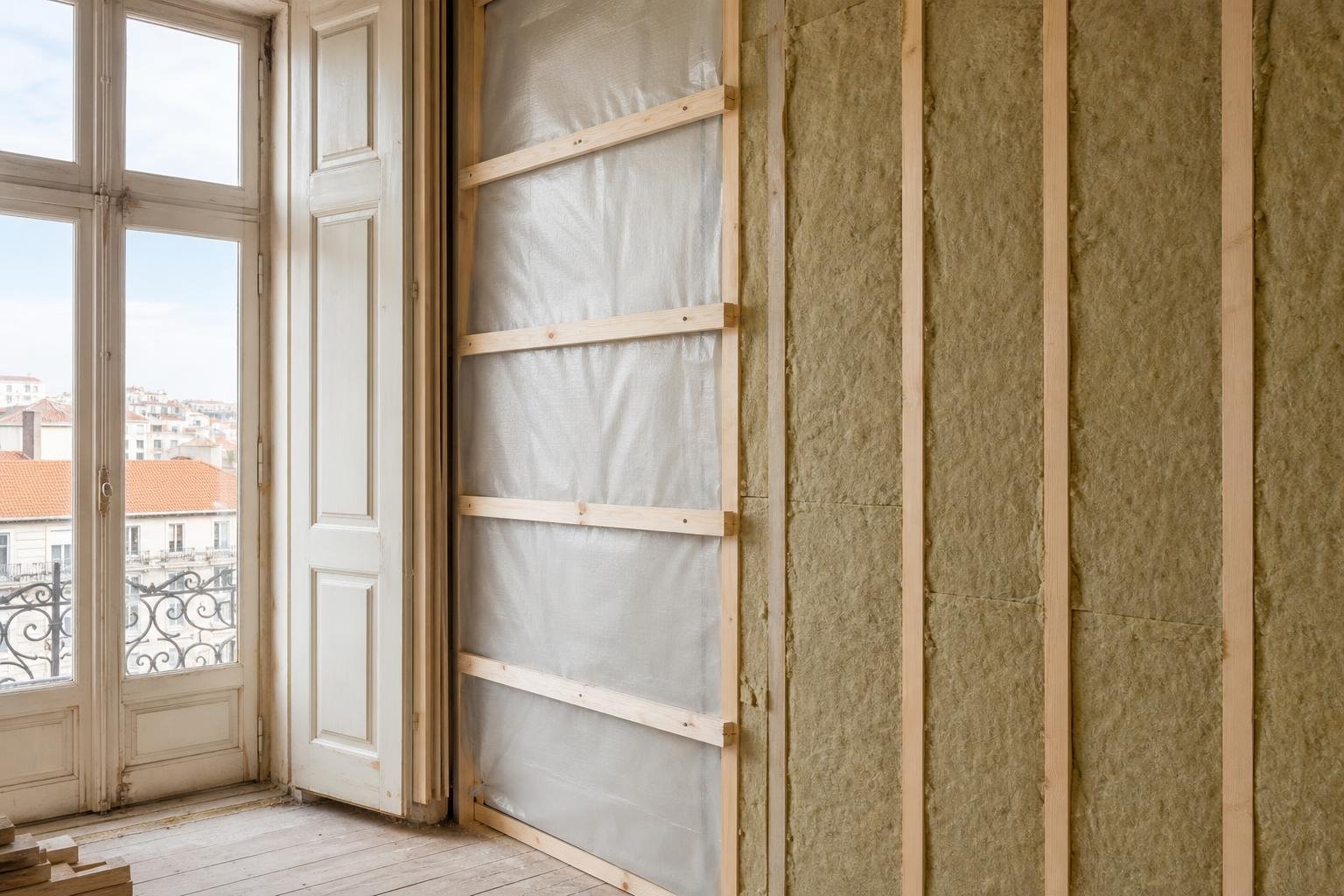
Read the technical sheet before starting, particularly for substrate, preparation, recoat time, temperature and tool cleaning. A paint that is unsuitable for timber, metal or masonry can force you to repeat the job and create more waste. Where existing walls are involved, it is worth reviewing how interior-wall preparation determines the finish.
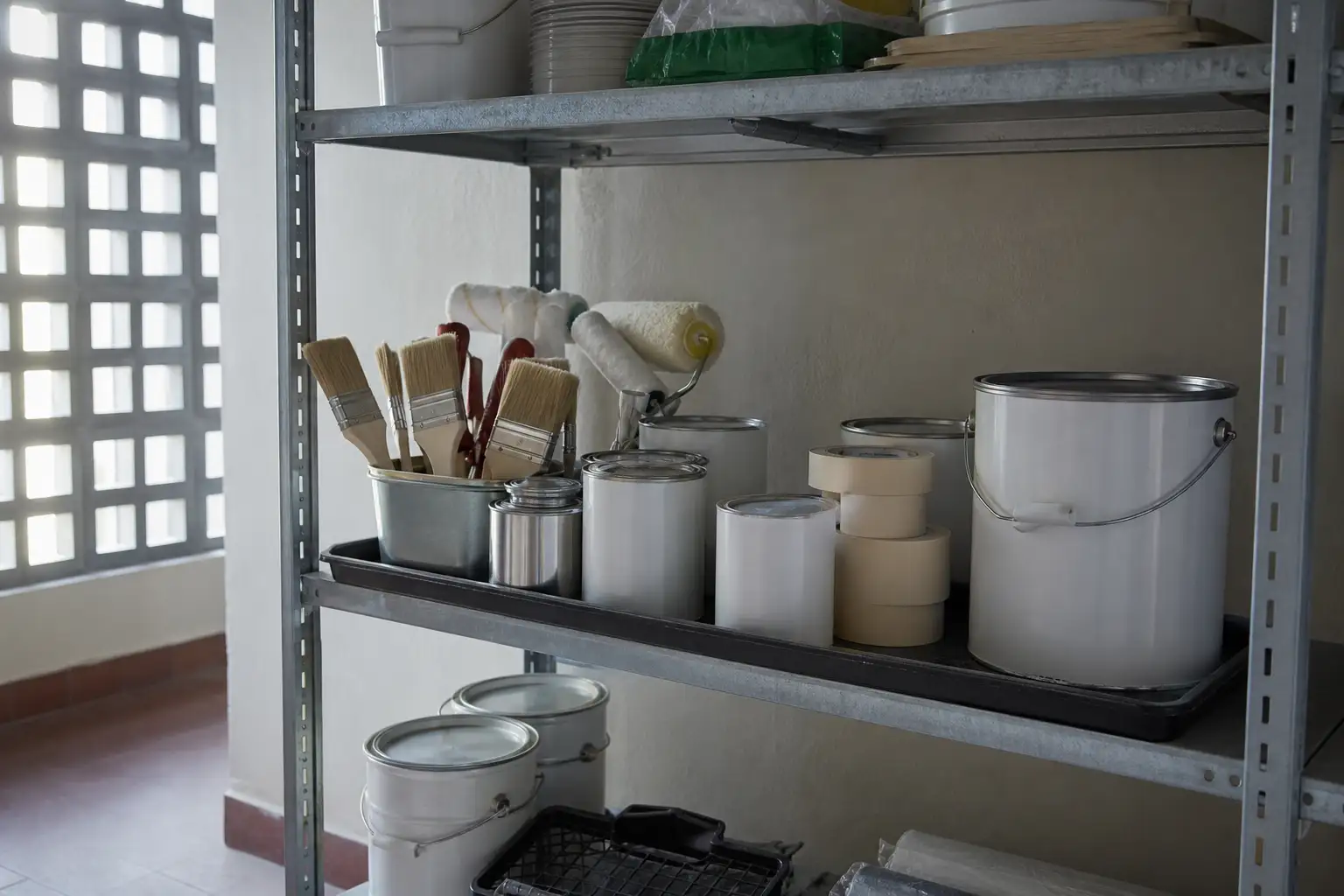
- Use small containers for the amount of paint needed at that moment.
- Keep lids, labels and technical sheets together.
- Choose washable, reusable tools where the product allows it.
- Never rinse leftover paint, varnish or solvent into a sink or garage drain.
Plan drying without turning the room into a chemical clothesline
A freshly painted piece needs stability, air movement and protection from dust. Plan a temporary shelf or trestles that do not obstruct access. Do not hang doors, frames or shelves in circulation routes, and do not press damp pieces against a wall: it can mark the finish and trap moisture between materials.
“Touch dry” does not necessarily mean an item is ready to stack, put in a box or return to use. Follow the manufacturer’s curing guidance. In a cold or damp storage room, this stage can take longer; trying to speed it up with improvised heaters adds risk and may damage the result.
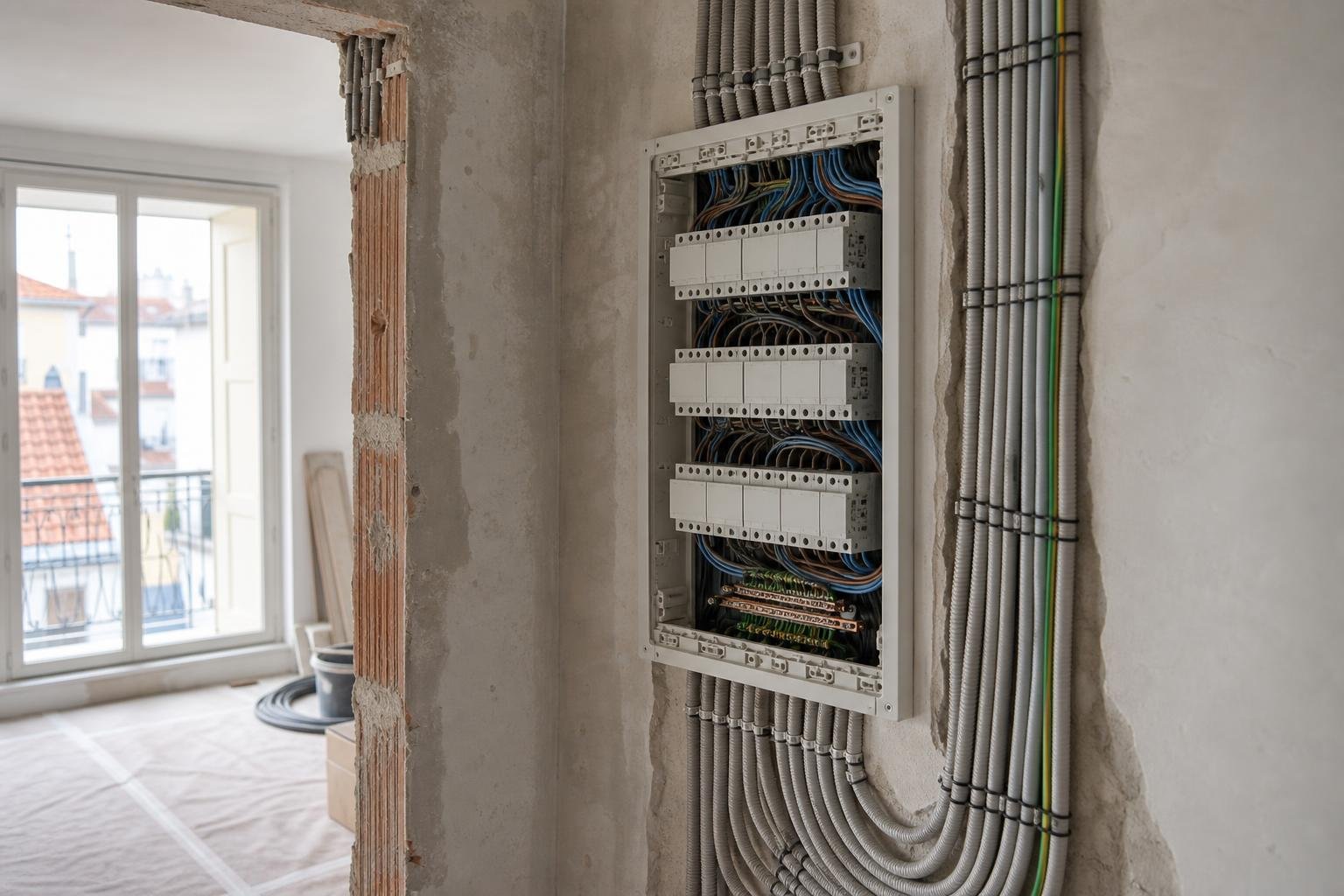
If you want a lasting improvement, plan lighting, sockets and storage together rather than adding isolated fixes. For a broader refurbishment, our guide to ventilation, damp and electricity in a condominium storage room helps frame those decisions.
Store and dispose of leftovers responsibly
Store tightly closed containers upright, with readable labels, away from heat, ignition sources and damp. Never transfer product into water bottles or unidentified jars. Note the colour, the room where it was used and the date: a small label prevents opening several tins to find the correct shade two years later.
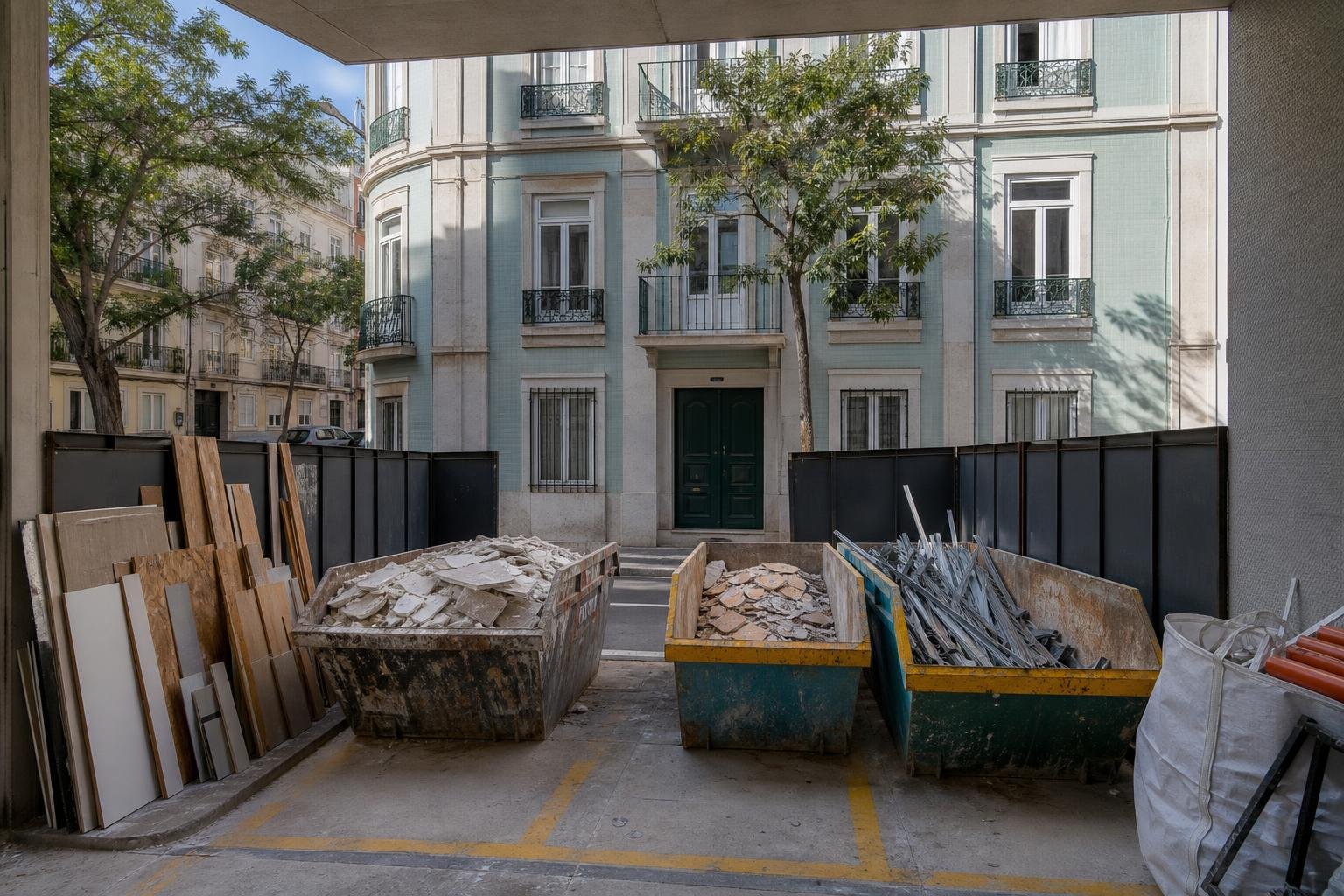
When paint is no longer usable, do not place it in general waste or recycling bins. Municipal recycling-centre regulations can accept paint, varnish, thinner and solvent from small household repairs when they remain in their original packaging, tightly closed and free from spills. Read an official example of rules for handing in these materials, then confirm the procedure that applies in your own municipality before travelling.
A well-resolved painting area takes little room: a bench, reusable protection, washable or metal shelving, closed containers and clear space to move. The benefit is not just tidiness; it is being able to carry out small jobs without compromising the home, the building or indoor air quality.
Renovating a storage room, home workshop or another technical area? Obra Lisboa can help turn ventilation, electrical, protection and storage needs into a coherent renovation plan.
AI-generated editorial image; it does not depict an Obra Lisboa project.

Obra Lisboa