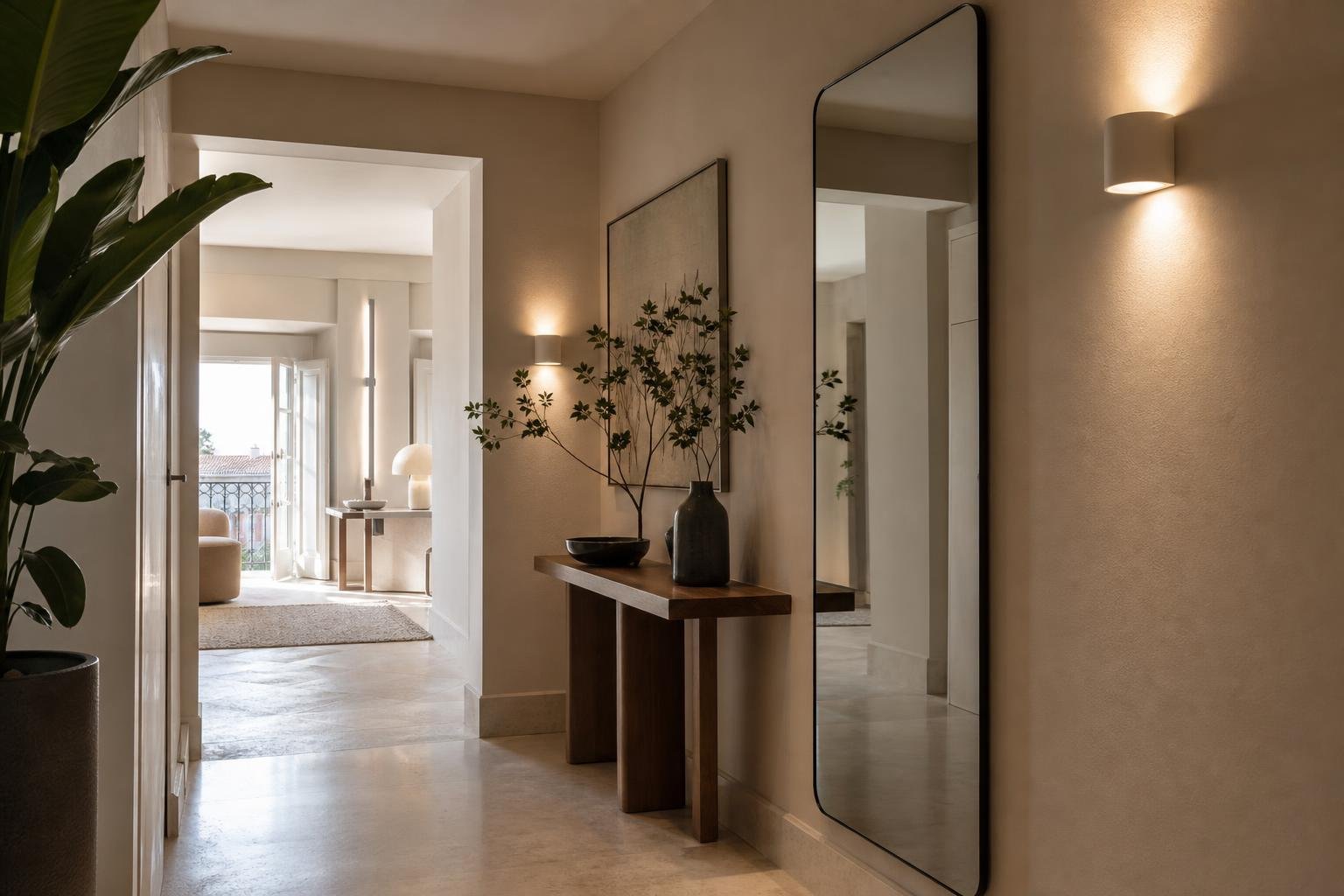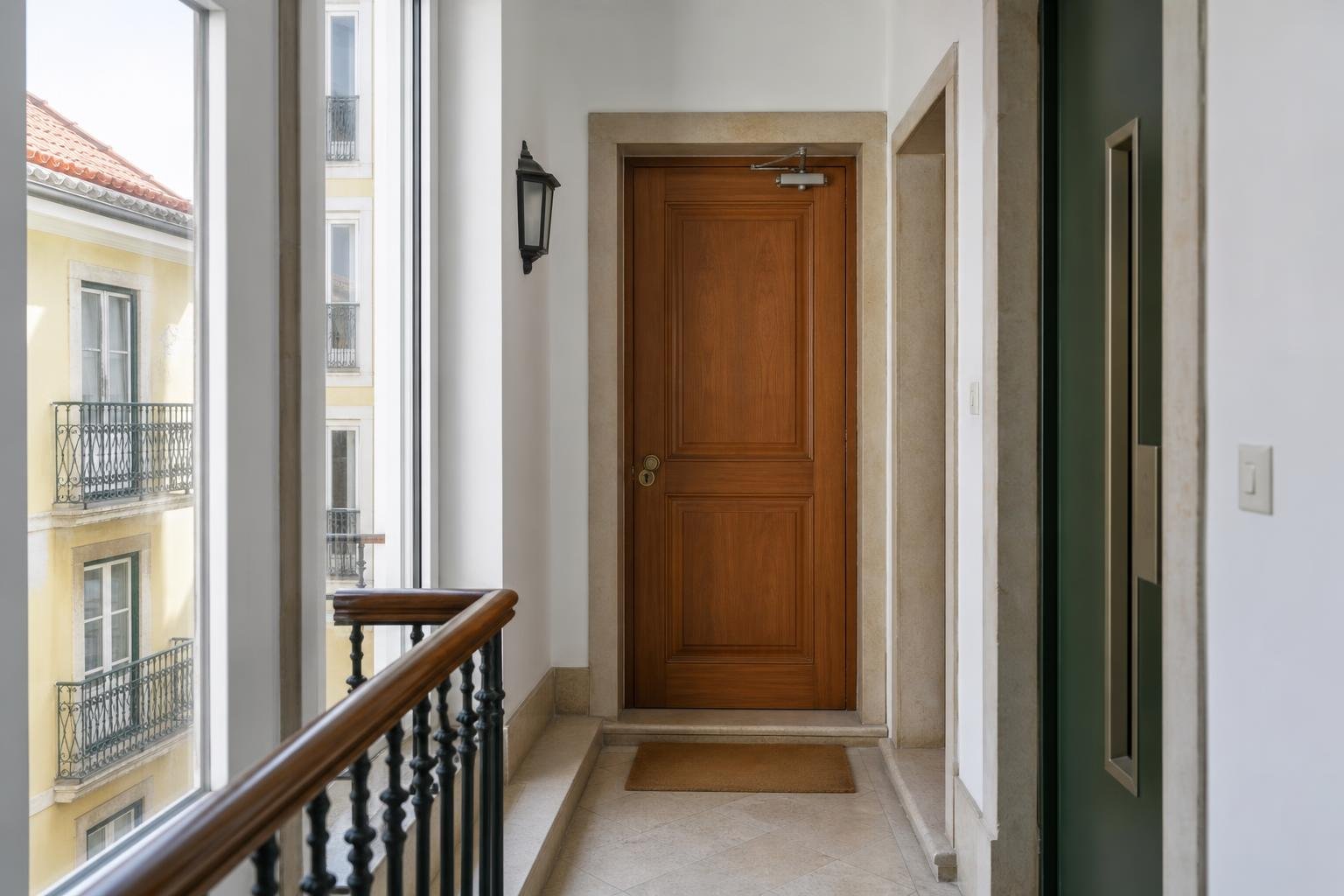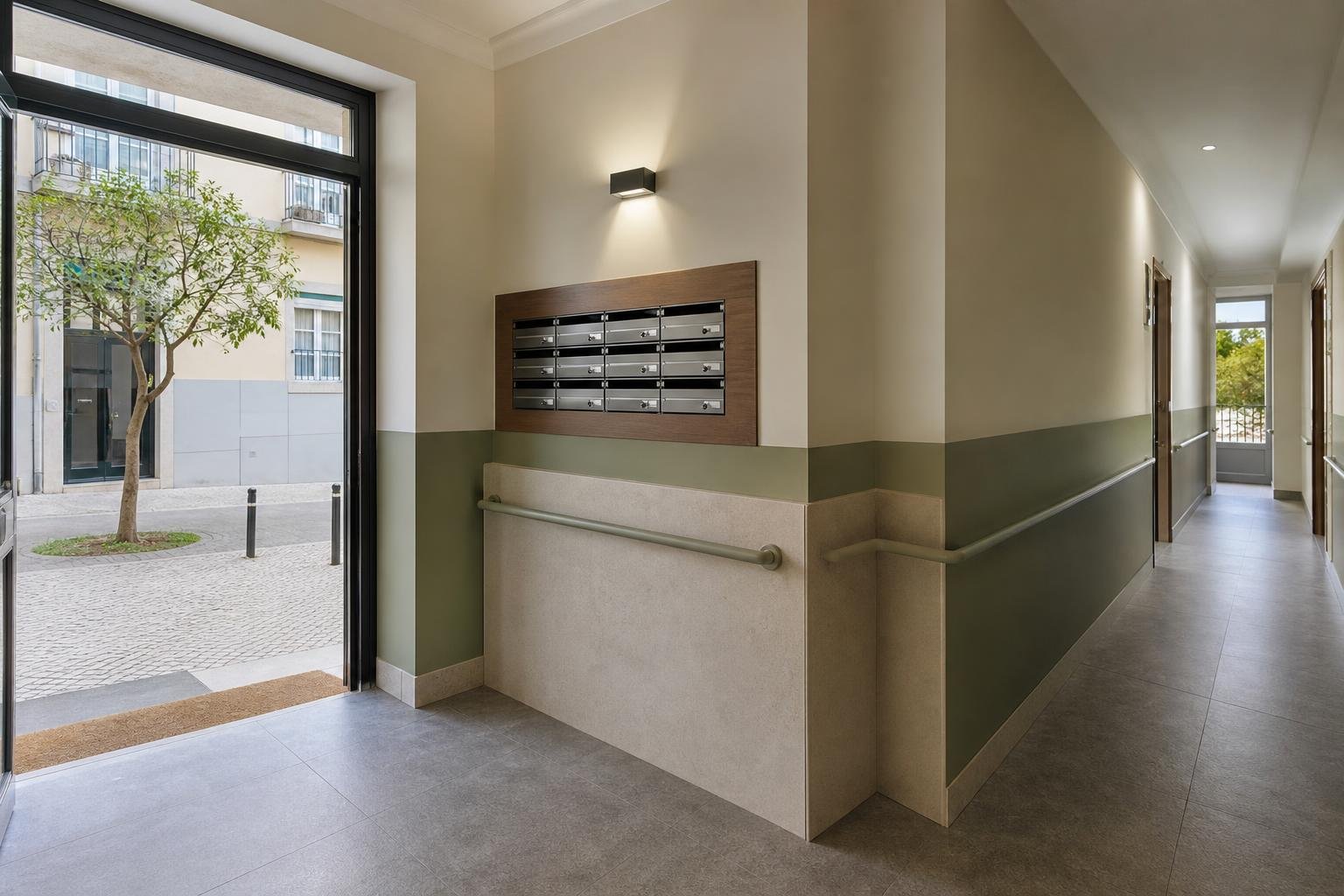
An entrance sets the tone long before anyone reaches the living room. It is where keys, post, bags, headphones, umbrellas and—more often now—cables and small chargers are dropped. Without a defined place for them, an improvised surface expands, the floor fills up and leaving home becomes a rushed search.
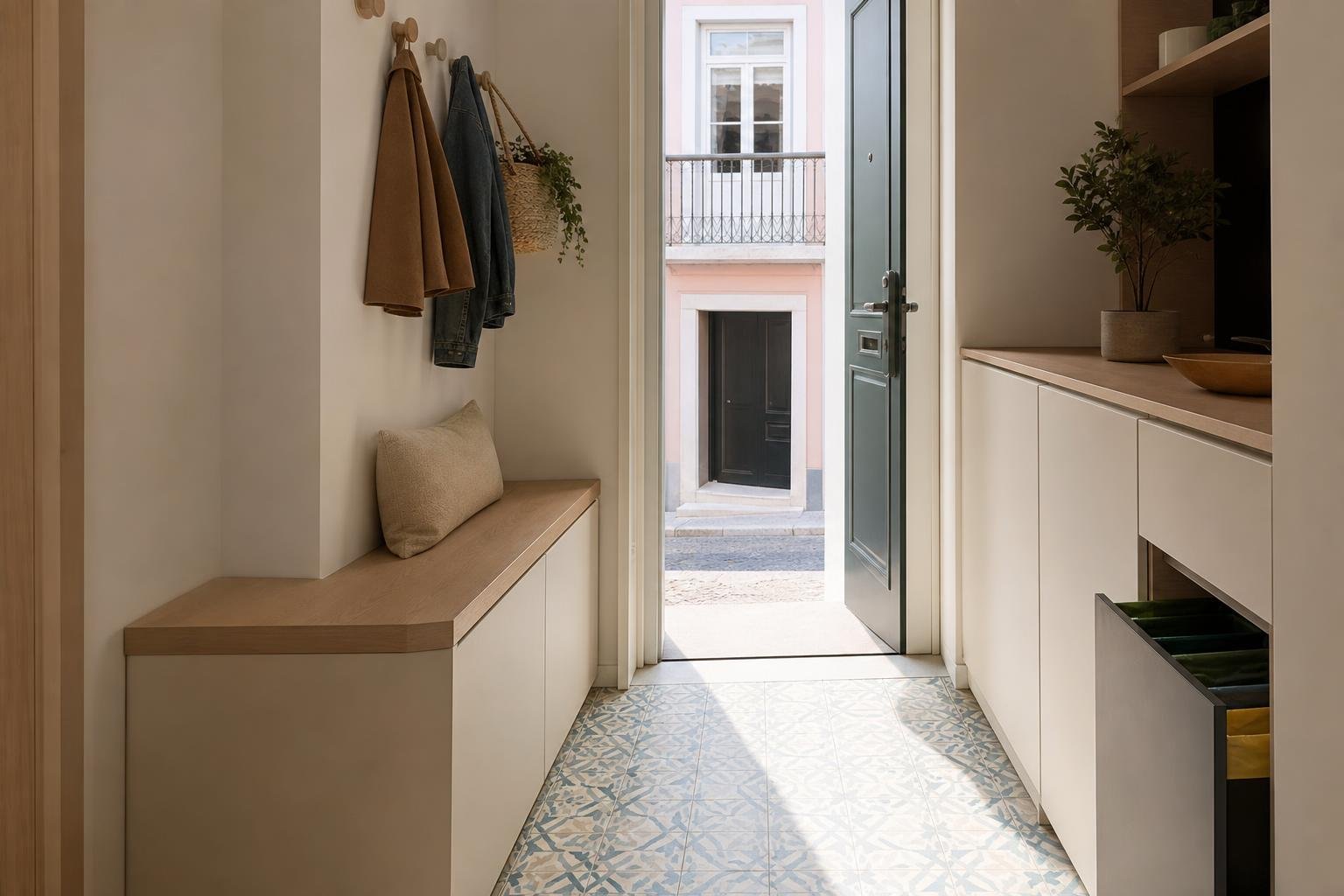
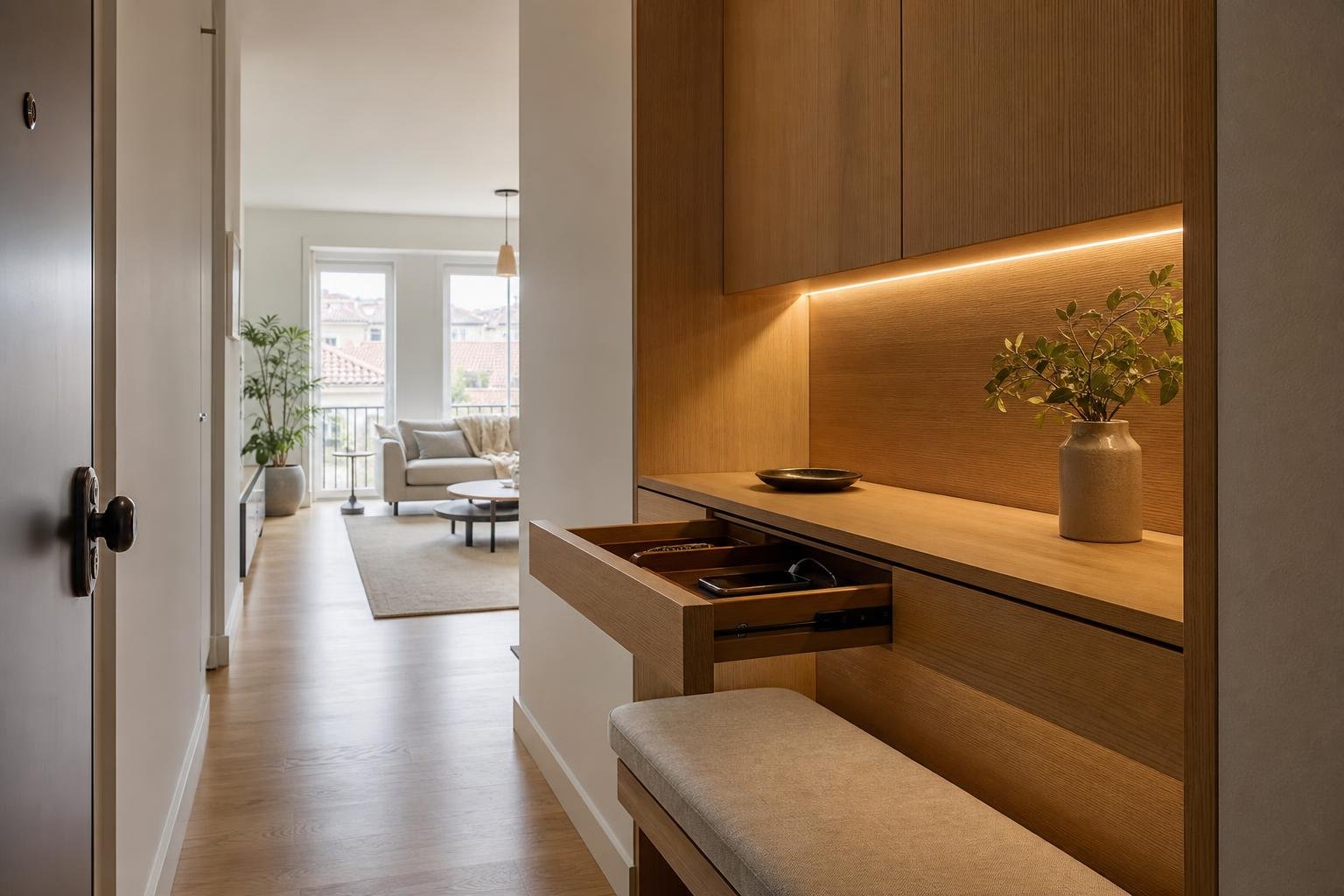
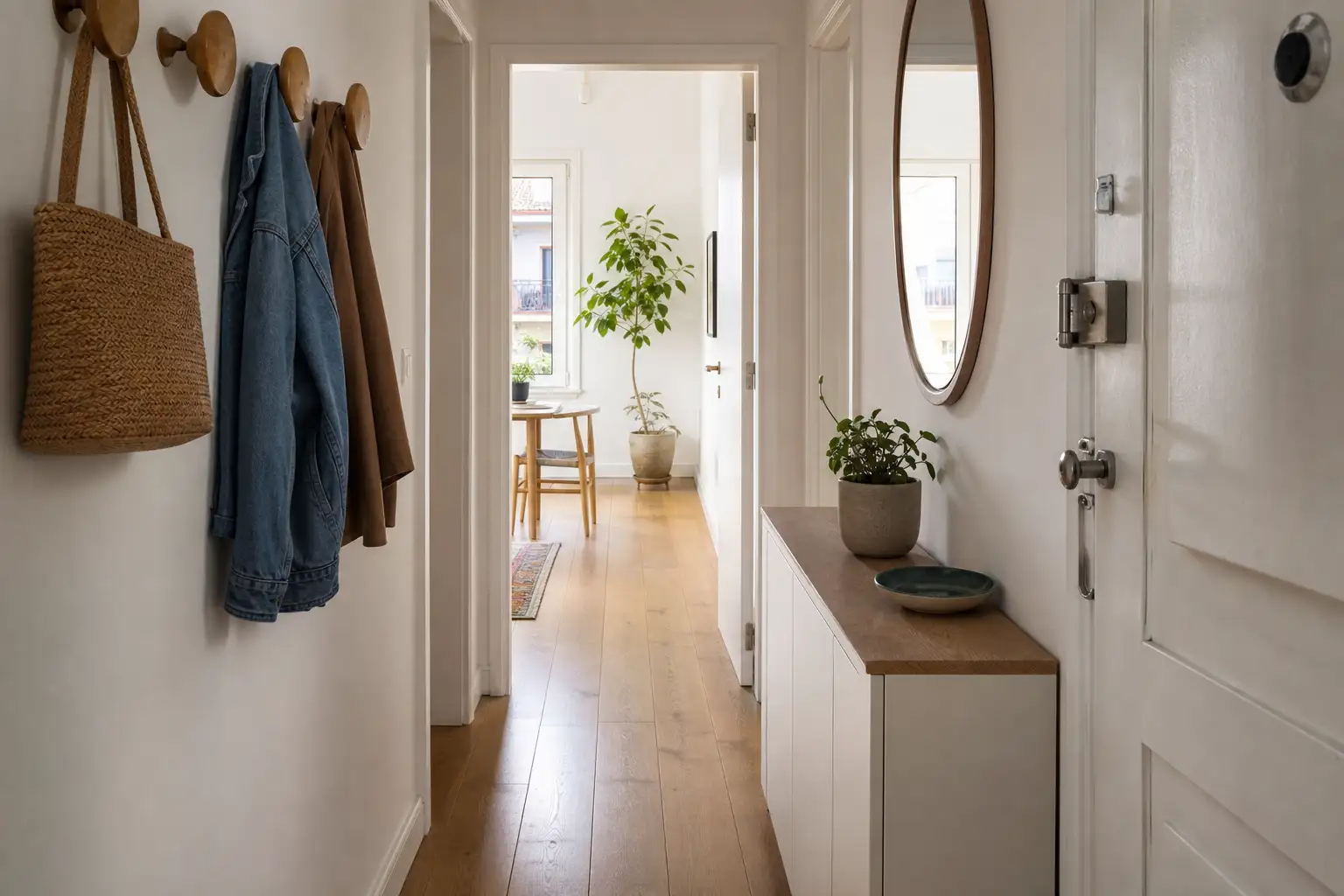
A good entrance drop zone does not require a large piece of furniture or extensive work. It needs to support a real sequence: come in, set down what has arrived from outside, hide what should not be on display, charge the essentials and preserve a clear route. In Lisbon flats, where halls are often narrow, that order matters more than buying a decorative console.
This guide explains how to plan that zone through practical priorities, proportions and safety details. For wider decisions about independent living and clear circulation, see Obra Lisboa’s guide to preparing a home for ageing well.
Start with the route, not the furniture
Before choosing a bench, shoe cabinet or shelf, open the front door and walk the usual route carrying a shopping bag, backpack or pushchair if that applies to your household. Notice where the door leaf reaches, where someone needs to turn and where things are usually dropped. The furniture should occupy the space left after movement is protected—not the other way round.
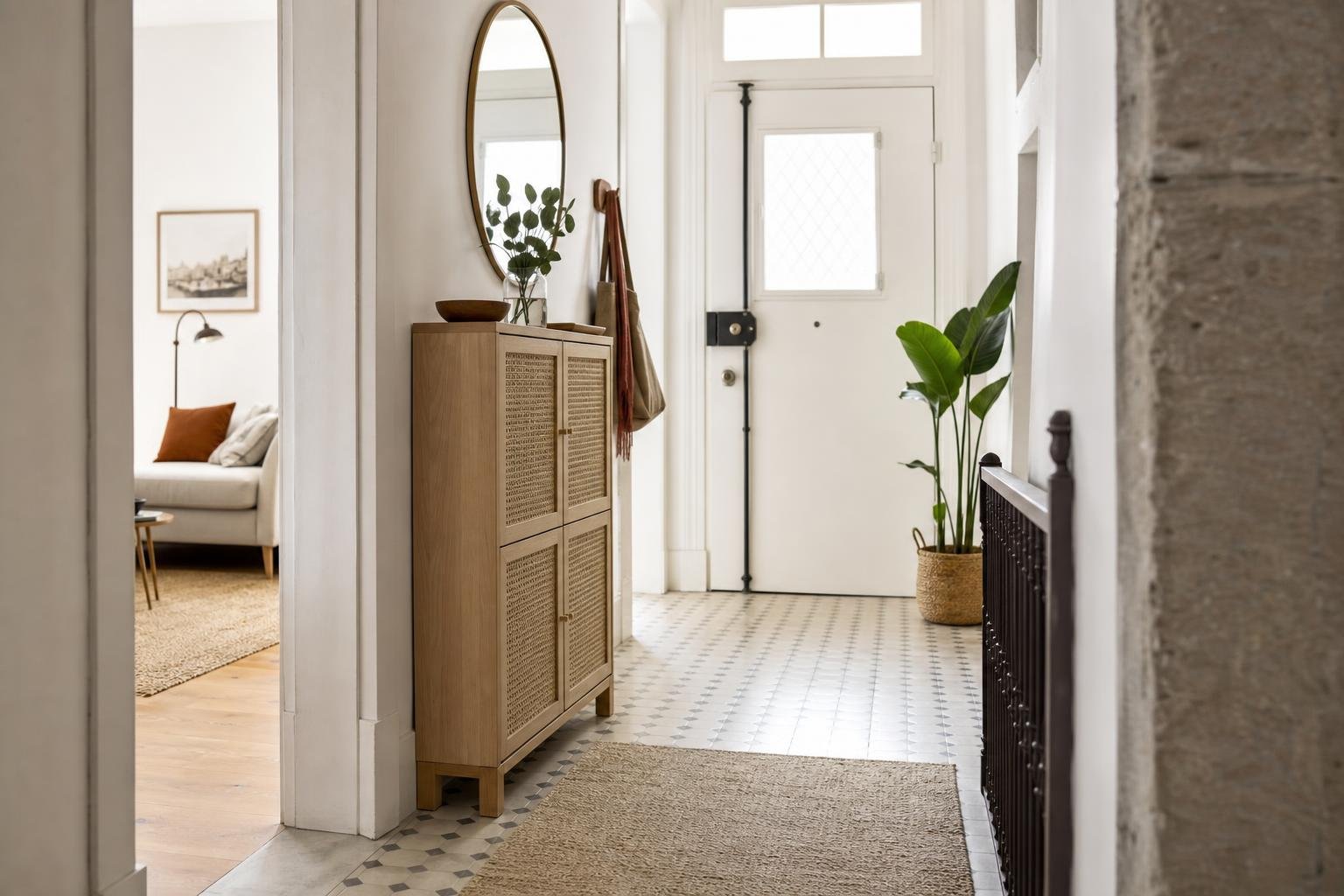
A deep console may look tidy in a photograph but becomes an obstruction if people have to turn sideways to pass it. Favour shallow options instead: a wall shelf, suspended cabinet, hook panel or tall narrow cupboard. Keep as much floor visible as possible. It makes cleaning simpler and also makes forgotten items easier to spot.
Portugal’s accessibility technical standards emphasise continuous, safe and comfortable routes for people with reduced mobility. An existing flat will have its own constraints, but the principle is useful in every home: an arrival area should not create barriers or unnecessarily narrow circulation. Read the Portuguese accessibility technical standards under Decree-Law 163/2006 before fixing permanent elements into a tight access route.
Give every item arriving from outside a job
The most common mistake is trying to solve everything with one tray. It works for two days; then letters, spare keys, receipts, glasses, batteries, coins and packaging appear. Create four simple destinations instead:
- immediate drop: a tray or niche for keys and wallet;
- temporary paper: a vertical holder for post that still needs a decision;
- daily departure: hooks for a backpack, lead or reusable bag;
- closed storage: a drawer for items that should not stay on show.
Post should not live in the entrance indefinitely. Set a firm limit, such as one divider for “deal with” and another for “file”. Empty both weekly. If your household receives frequent deliveries, treat boxes as transit rather than décor: open them, recycle them and remove them from the walking route that same day.
In an apartment building, this organisation also helps prevent bags, shoes and packaging from spilling into shared areas. If your work includes more substantial changes by the entrance, revisit the principles in our article on the hidden logistics of renovation work inside buildings, especially where deliveries, stairs and lifts are involved.
Plan charging without permanent extension leads
An outlet near the entrance can be useful for a cordless vacuum, phone, headphones, bike light or the battery for a small device. The answer should not, however, be a permanent extension lead running across the floor. Portugal’s Directorate-General of Health advises against leaving electrical wires loose on the floor as part of preventing falls at home.
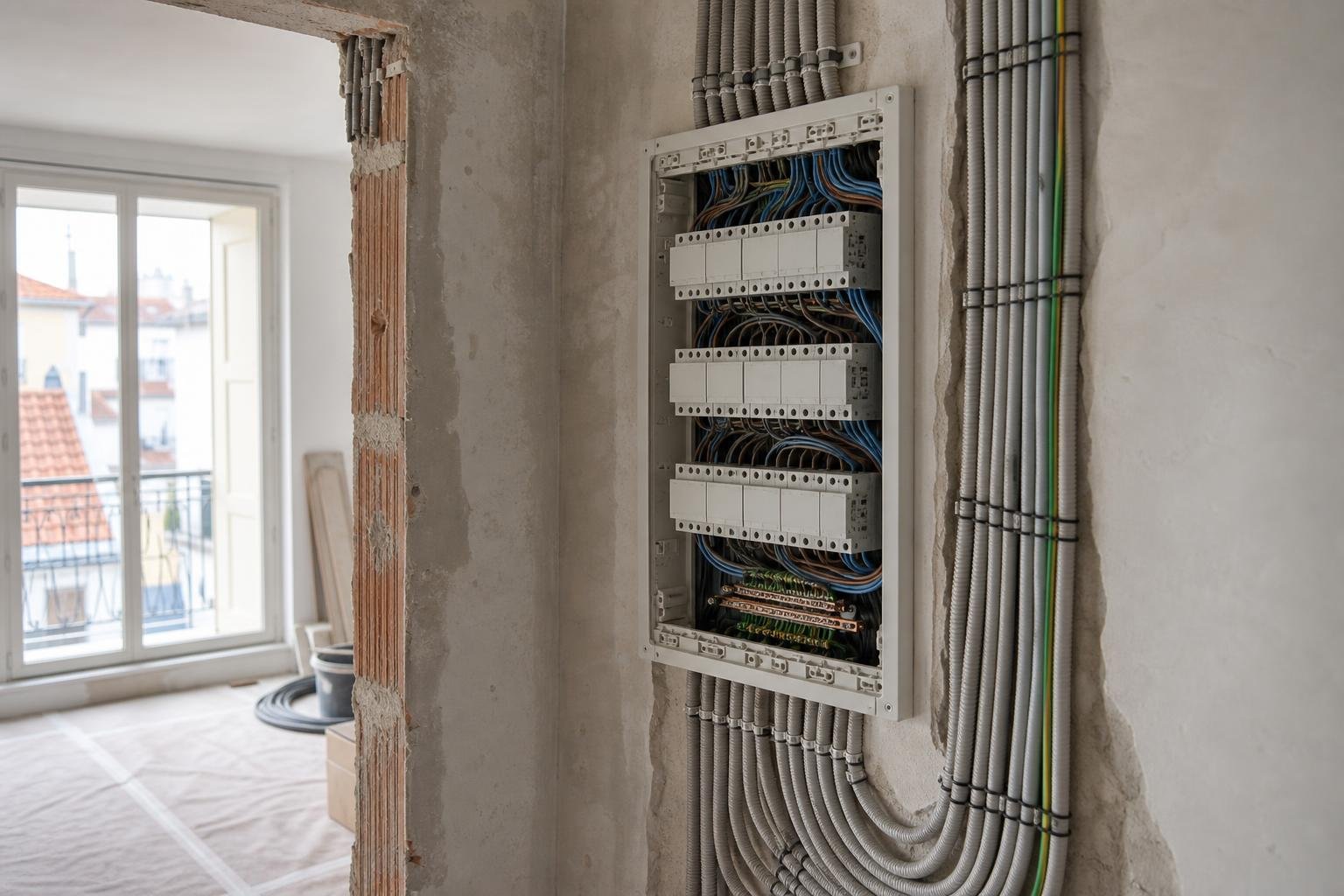
When renovating, specify an outlet in a protected, reachable position—ideally inside a ventilated cabinet or beside a small shelf. Without building work, choose a fixed power strip on top of a unit, keep leads short and use discreet cable channels or grommets. Do not hide chargers inside completely sealed boxes or cover them with papers, coats or textiles.
This charging point should be for small, predictable devices. Higher-power charging, including e-bikes, needs a specific review of the installation, circuit and location. The DGS guidance on preventing domestic accidents also highlights good lighting and the need to keep cables out of routes through the home.
Choose lighting that helps you arrive and leave
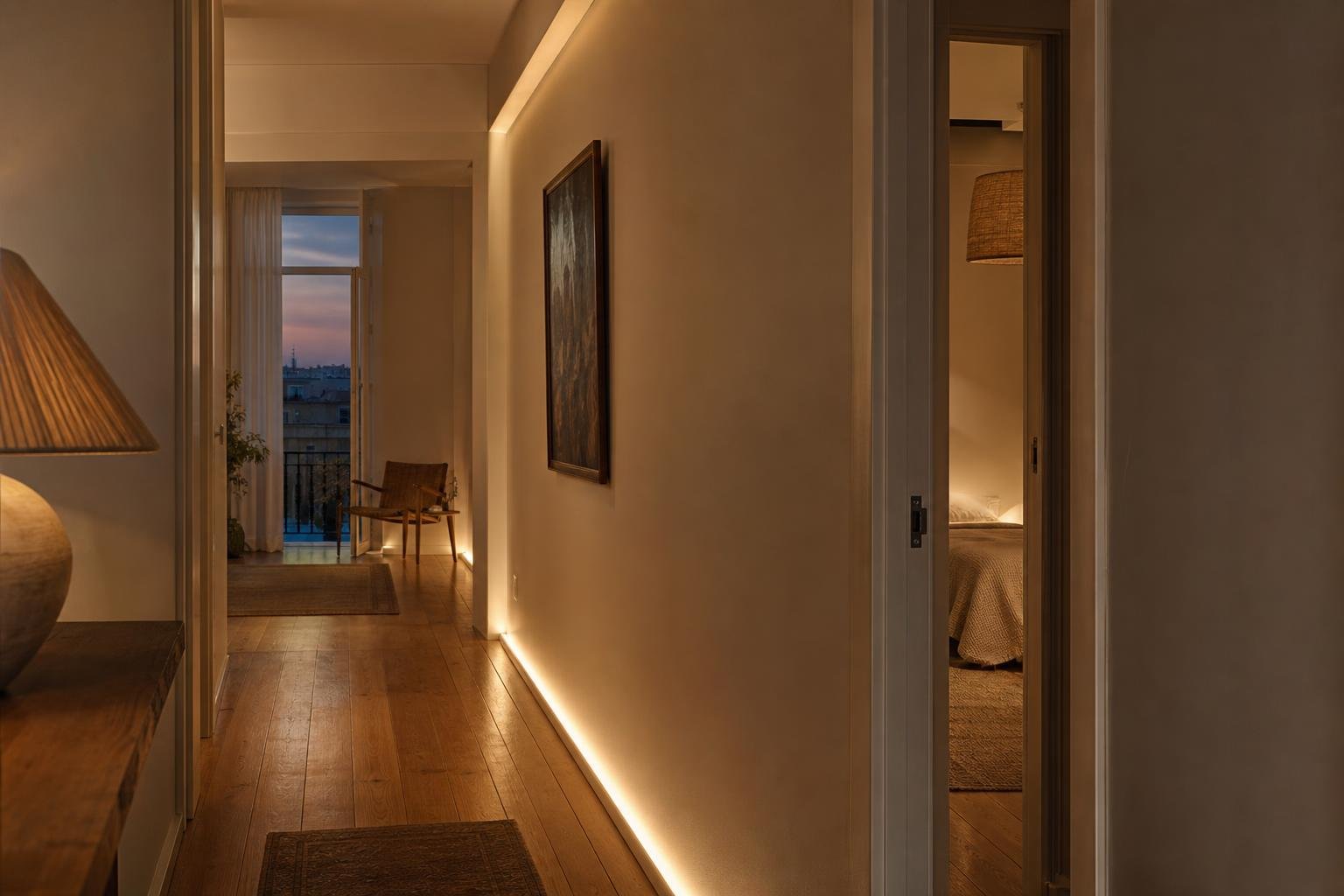
An entrance needs task lighting, not only atmosphere. You should be able to find a key, see a step, read a label or put on shoes without harsh shadows. A properly placed ceiling fitting provides the base layer; gentle light by a mirror, console or cupboard makes the task easier.
In an internal corridor, a sensor can be convenient if it does not switch off too soon or leave someone in the dark while putting on shoes. For homes with children, older residents or frequent visitors, provide an easy-to-find switch at the entrance and another by the route into the home. The DGS recommends good lighting in every room and on stairs, as well as attention to loose mats—two particularly relevant points in an area where people arrive in a hurry.
Avoid floor lamps, exposed leads and benches that require you to switch off the light before opening a drawer. At the entrance, every component should support a legible route.
Bench, mirror and shoe storage: include only what the routine needs
A bench is useful when someone genuinely sits down to put on shoes, wait for another person or set down a bag. Otherwise, it can become a clothes pile. If you include one, choose a stable design without sharp corners and leave sufficient room to sit and stand without blocking the door.
A mirror can visually enlarge a dark hall and is useful before leaving, but it should not require moving objects to get close enough. Fix it to a wall that will not receive the impact of the door or reduce the way through. Closed shoe storage can contain clutter better than open shelves, but size it for daily use rather than every pair in the home.
To reduce trip risks, choose a low, firm entrance mat suited to the floor finish. The DGS advises avoiding loose mats; if you use one, make sure its edges do not curl and it cannot slide. Obra Lisboa’s guide to entrance mats in apartments can help compare materials, dimensions and safety issues.
Let the entrance reduce clutter, not add standby consumption
The drop zone can include a small switched power strip for turning chargers off when they are not needed, provided it remains accessible and is not overloaded. ADENE notes that devices with indicator lights or active sensors can keep using electricity in standby mode. The aim is not to unplug everything obsessively; it is to avoid leaving equipment permanently powered when it has no current purpose.
An outlet drawer can look elegant, but it only works with ventilation, orderly cables and enough room to unplug items without tugging leads. Label similar chargers discreetly, keep only the ones in use and remove old or damaged adaptors. ADENE’s article on hidden energy consumption at home is a helpful starting point for reviewing standby habits.
Finally, test the entrance on an ordinary morning. Can you collect keys, coat and wallet without putting anything on the floor? Does the door open fully? Can a visitor find the light and walk through freely? If the answer is yes, the arrangement is doing its job—even if it consists only of a shelf, two hooks and one well-organised drawer.
Planning to renovate an entrance or improve a difficult hall? Obra Lisboa can help coordinate storage, lighting, outlets and circulation before walls are closed or made-to-measure furniture is ordered.
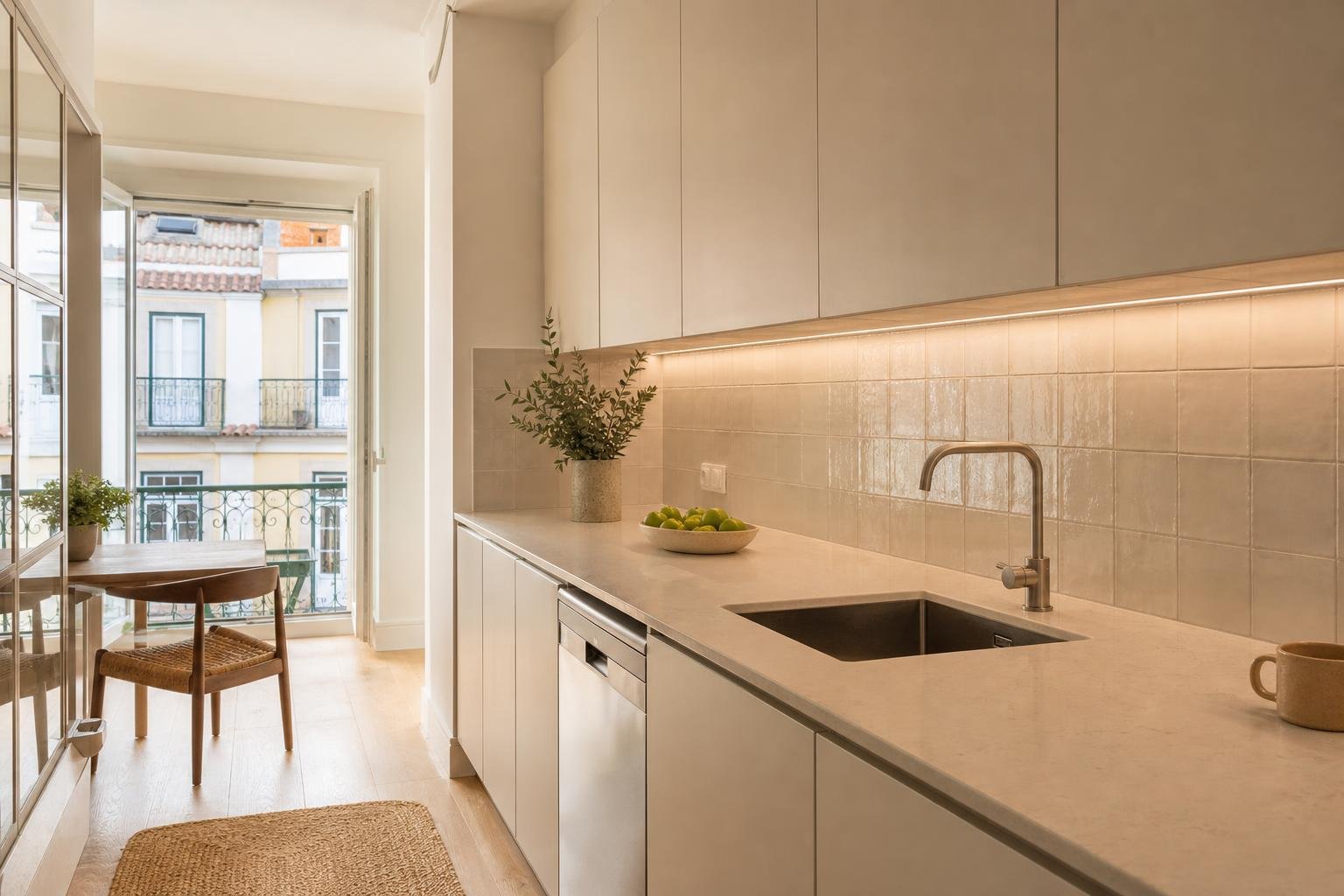
AI-generated editorial image; it does not depict an Obra Lisboa project.

Obra Lisboa